
What Causes Low Water Pressure in a House (And Why It Matters)
What causes low water pressure in a house is one of the most common plumbing questions homeowners ask — and for good reason. Weak flow from your faucets and showerheads can turn simple daily tasks into a real chore. Filling a pot, rinsing dishes, or getting through a morning shower all depend on steady, reliable water pressure.
The most common causes include:
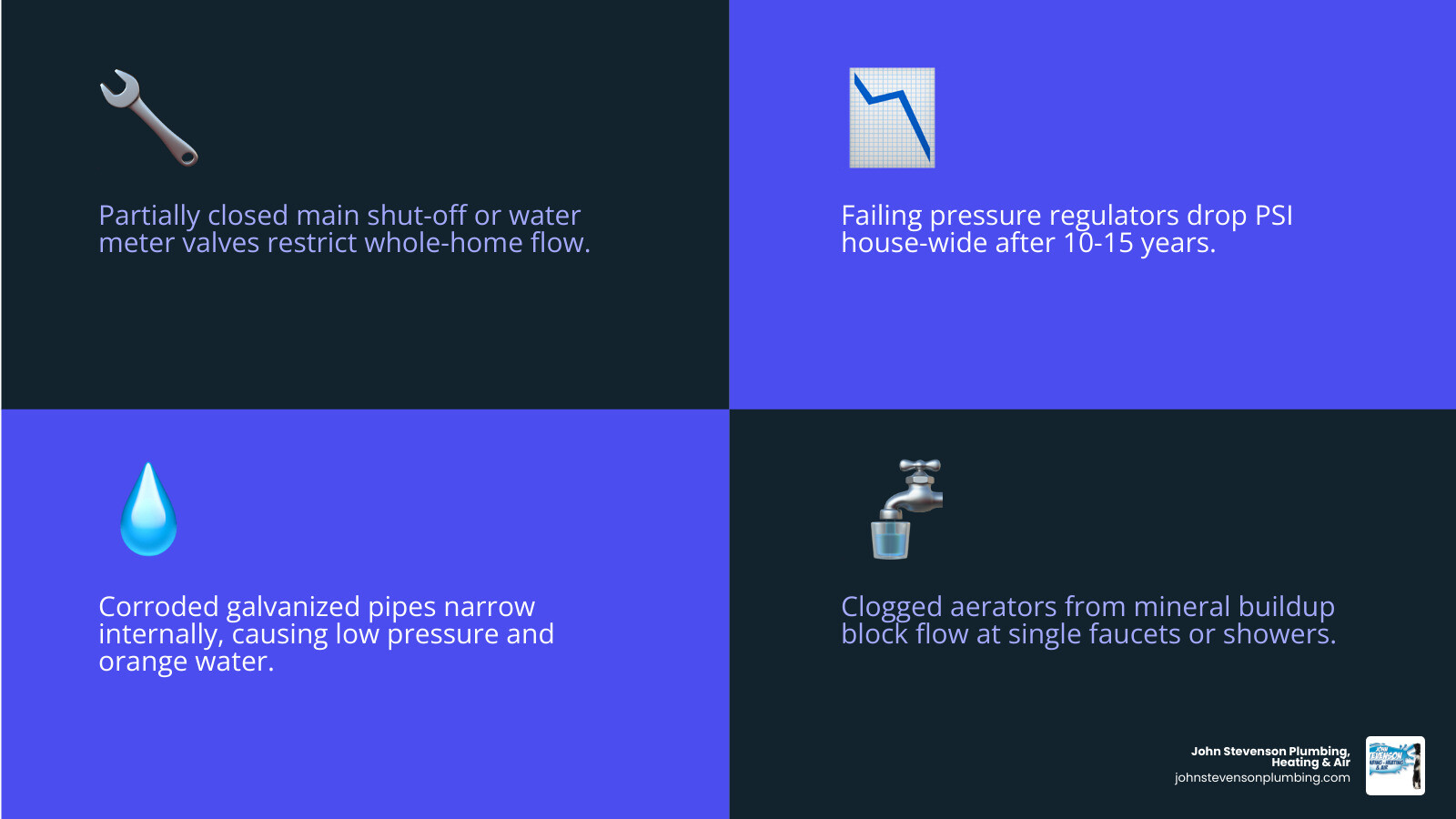
- Partially closed shut-off valves — the main or water meter valve may not be fully open
- Failing pressure regulator (PRV) — these wear out after 10–15 years and can drop pressure house-wide
- Pipe corrosion or mineral buildup — especially in older galvanized steel pipes
- Hidden leaks — in walls, slabs, or underground supply lines
- Clogged faucet aerators or showerheads — mineral deposits block flow at individual fixtures
- Municipal supply issues — city maintenance, main breaks, or peak-hour demand
- Shared water lines — pressure drops when neighbors draw from the same supply
- Water heater sediment — restricts hot water flow specifically
Normal residential water pressure sits between 45 and 80 PSI. Anything below 40 PSI is considered low, and American households use around 300 gallons of water per day on average — so consistent pressure isn’t a luxury, it’s a necessity.
Whether it’s one weak faucet or a whole-home issue, the cause makes a big difference in how you fix it. This guide walks through each culprit so you can diagnose the problem quickly.
Understanding Residential Water Pressure Standards in 2026
As of May 2026, the standards for residential plumbing haven’t changed, but our reliance on high-performing appliances has only grown. To understand why your shower feels more like a drizzle than a downpour, we first need to look at the numbers. Water pressure is measured in Pounds per Square Inch (PSI).
In the Carlsbad and San Diego areas, most homes operate between 30 and 80 PSI. However, there is a “sweet spot” for comfort and safety. Typical residential water pressure should fall between 45-80 PSI. If your pressure dips below 40 PSI, you will definitely notice the “squeeze.” Conversely, pressure above 80 PSI is actually dangerous for your pipes and can lead to Plumbing Services being needed for burst lines or failing seals.
How to Measure Your Pressure
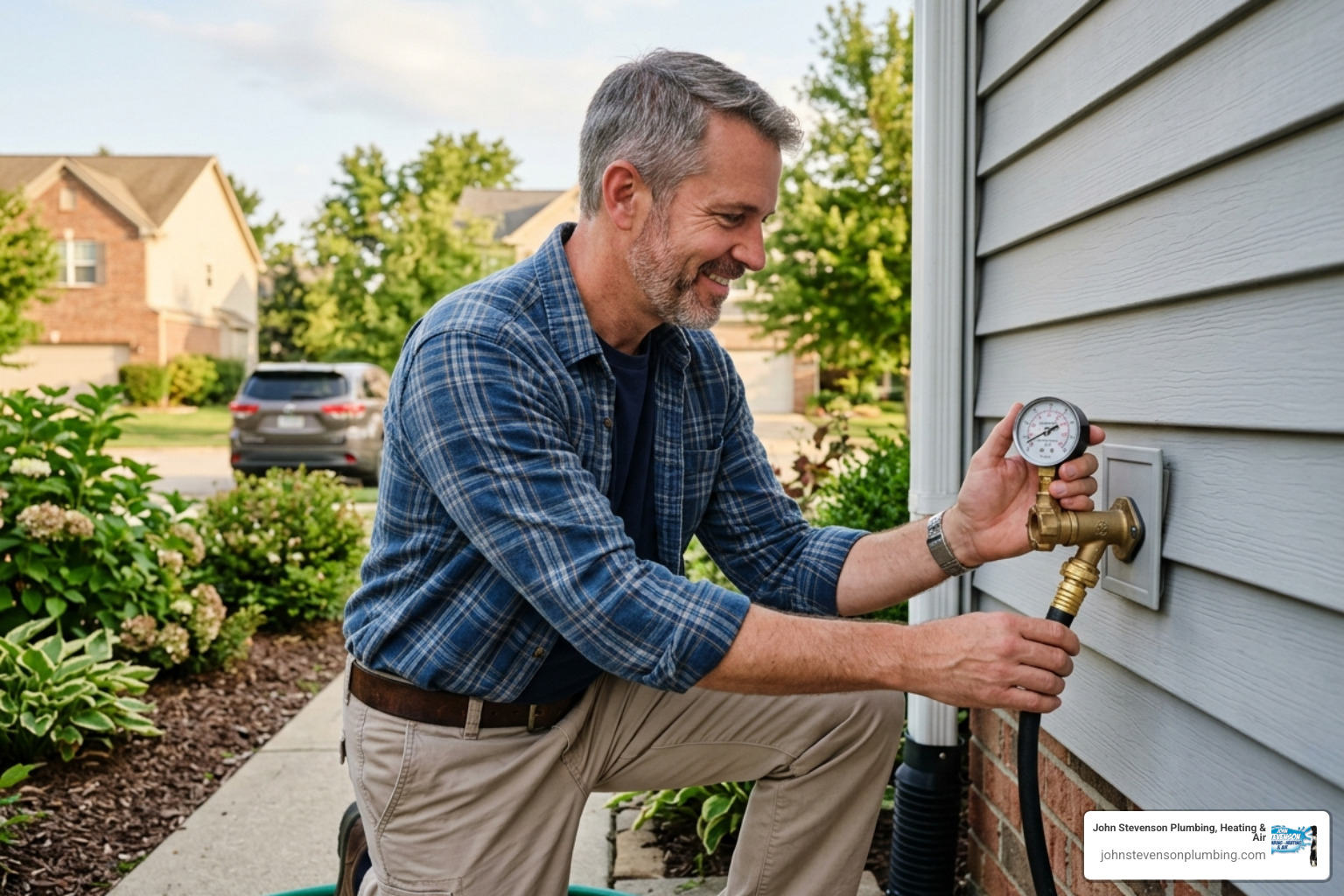
You don’t need to be a scientist to check your home’s PSI. You can pick up a simple pressure gauge at a local hardware store in Oceanside or Vista. Simply screw it onto an exterior hose bib (spigot), ensure all other faucets in the house are turned off, and open the spigot all the way. This gives you a baseline reading of the force entering your home.
It is important to distinguish between water pressure (the force of the water) and flow rate (the volume of water, measured in Gallons per Minute or GPM). If your pressure gauge shows 60 PSI but the water barely trickles, you likely have a flow restriction—like a clog—rather than a pressure problem.
What Causes Low Water Pressure in a House: Whole-Home Culprits
When the low pressure affects every single sink, toilet, and shower in the house, the problem is likely “upstream.” Before you assume the worst, we always recommend checking the simplest mechanical points of failure first.
1. Partially Closed Shut-Off Valves Your home has at least two major shut-off valves. The first is the main water shut-off valve, usually located where the water line enters the house (often in a garage or near the front hose bib). If you’ve recently had Water Line Install & Repair work done, a technician might have bumped the valve. For a ball valve (lever), the handle should be parallel to the pipe. For a gate valve (wheel), it should be turned fully counterclockwise.
The second is the water meter valve. This one belongs to the city or water supplier. Sometimes, after municipal repairs, this valve isn’t opened all the way, restricting flow to your entire property.
2. Peak Usage Times If you only notice the drop at 7:00 AM while everyone in your Carlsbad neighborhood is showering and getting ready for work, you might be a victim of peak demand. High demand on the municipal main can cause temporary drops.
Signs of a failing pressure regulator as what causes low water pressure in a house
Many homes in our service area, from Scripps Ranch to Lake Forest, are equipped with a Pressure Reducing Valve (PRV) or pressure regulator. This bell-shaped brass fixture is usually located near your main shut-off valve. Its job is to slow down high-pressure city water so it doesn’t blow out your home’s pipes.
However, these regulators have a lifespan of about 10 to 15 years. When they fail, they can fail “closed,” which suddenly throttles your water pressure to a crawl. If you notice a sudden, house-wide drop in pressure, or if the pressure starts strong for a second and then immediately fades, a failing PRV is a prime suspect. Replacing this is a job for a professional to ensure your Leak Detection & Repair needs are met and your system is recalibrated to that safe 50-60 PSI range.
How municipal water main breaks act as what causes low water pressure in a house
Sometimes, the problem isn’t in your house at all. A water main break down the street can cause a massive loss of pressure for the entire block. If you notice a sudden drop, check with your neighbors. If everyone is experiencing the same “squeeze,” it’s time to call your local water department.
Furthermore, your home’s elevation relative to the city’s water tank matters. If you live on a hill in Rancho Santa Fe, you might naturally have lower pressure than someone in the valley due to the effects of gravity on the municipal Water Quality delivery system.
Internal Plumbing Failures and Pipe Obstructions
If your valves are open and the city says everything is fine, the issue might be hiding inside your walls. This is especially true for older homes in established communities like Del Mar or Escondido.
The Role of Pipe Materials The material your pipes are made of dictates how they age. Over time, minerals in our Southern California water can lead to significant buildup.
| Pipe Material | Average Lifespan | Common Issues |
|---|---|---|
| Galvanized Steel | 20 – 50 Years | Internal rust, corrosion, “closing up” |
| Copper | 50+ Years | Pin-hole leaks, Water Descaling needs |
| Brass | 40 – 70 Years | Corrosion at joints, mineral buildup |
| PEX / PVC | 40+ Years | Kinking (PEX), joint failure |
Identifying what causes low water pressure in a house through pipe corrosion
If your home was built before the 1970s and still has original galvanized steel pipes, they are likely corroding from the inside out. Think of it like a clogged artery; rust and calcium deposits build up on the inner walls, narrowing the path for water.
A classic sign of this is “rusty” or orange-tinted water first thing in the morning. When the water sits overnight, it picks up the rust from the pipe walls. Eventually, the opening becomes so small that the pressure vanishes. In these cases, Pipe Repair in San Marcos CA or a full repipe may be the only permanent solution.
Hidden leaks and their role in reduced household pressure
A significant leak is a major reason for low pressure. If water is escaping the system before it reaches your faucet, the pressure will drop. While a dripping faucet is obvious, slab leaks (leaks under your home’s foundation) or underground supply line leaks are much more sinister.
Watch for these signs:
- A sudden, unexplained spike in your water bill.
- The sound of running water when all faucets are off.
- Damp spots on floors or soggy patches in your yard.
- The water meter dial spinning even when no water is being used.
If you suspect a hidden leak, prompt Slab Leaks detection is vital to prevent structural damage and mold.
Localized Flow Issues and Fixture Maintenance
Is the low pressure only happening at the kitchen sink? Or perhaps just in the master shower? If so, you can breathe a sigh of relief—the fix is likely much simpler and cheaper.
How fixture clogs act as what causes low water pressure in a house
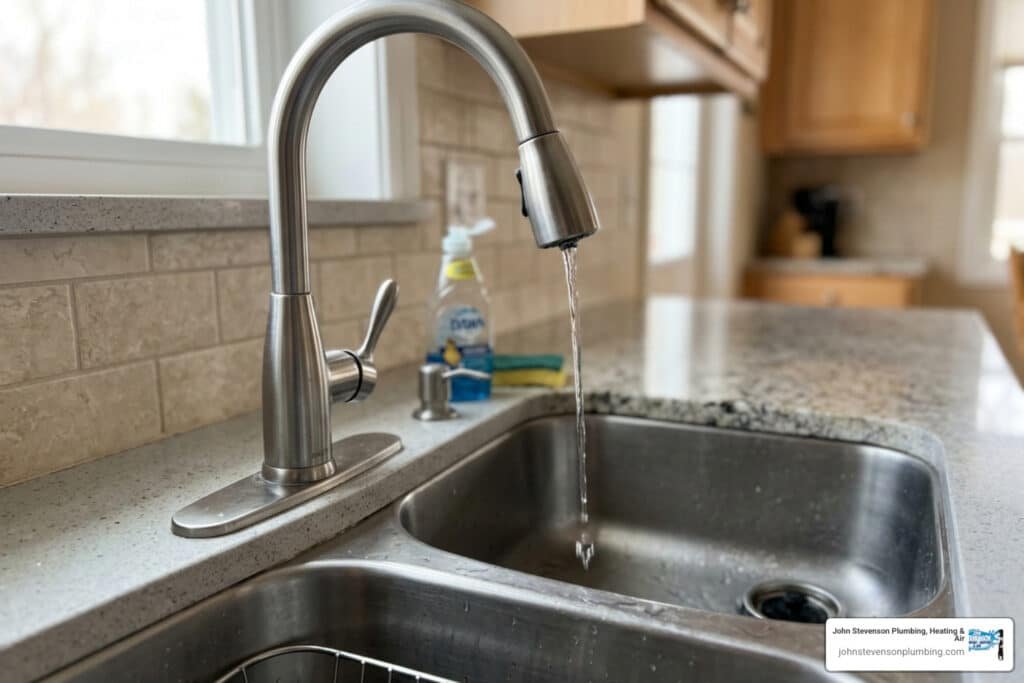
Most modern faucets have an aerator—a small mesh screen at the tip of the spout. Its job is to mix air with the water to create a steady stream. However, these screens are magnets for sediment and limescale.
DIY Fix:
- Unscrew the aerator by hand or with a wrench (wrap it in a cloth to prevent scratching).
- Look for small pebbles or white “crusty” buildup.
- Soak the aerator in white vinegar overnight to dissolve the minerals.
- Scrub with a toothbrush and reinstall.
This same process applies to showerheads. If the nozzles are clogged, you can tie a bag of vinegar around the showerhead and let it soak for a few hours. This simple Drain Cleaning of your fixtures can often restore “like-new” flow. If the fixture is old and beyond saving, upgrading to a modern WaterSense-certified model can provide better performance while using less water. Our Drain Services team often finds that sediment from aging water heaters or city work is the primary culprit for these localized blocks.
Hot water pressure drops and water heater sediment
If your cold water has great pressure but the hot water is a weak trickle, the problem is localized to your water heater. Over time, calcium and magnesium (hard water minerals) settle at the bottom of the tank. This sediment can block the hot water outlet pipe.
To prevent this, we recommend flushing your water heater once a year. This removes the “gunk” before it can travel into your pipes and clog your Water Filtration systems or fixtures. If you have a tankless water heater, it requires regular descaling to prevent the heat exchanger from narrowing due to mineral scale.
Professional Solutions for Persistent Pressure Problems in Carlsbad
If you’ve cleaned your aerators, checked your valves, and confirmed there are no leaks, but you’re still unhappy with your flow, it’s time to look at professional upgrades.
Initial Diagnostic Steps for Homeowners:
- Check multiple faucets: Is it hot, cold, or both?
- Compare with neighbors: Is it just your house?
- Test the PSI: Buy a $10 gauge and get a real number.
- Inspect the PRV: Look for leaks or a “bell” that looks ancient.
The Water Pressure Booster For homes in naturally low-pressure areas, a water pressure booster is a game-changer. This system consists of a pump and an expansion tank that works to maintain a steady, high PSI throughout the home, even when multiple appliances are running at once.
Repiping: The Ultimate Fix For homes with severely corroded galvanized pipes, Water Line Repair might just be a band-aid. A full repipe using modern materials like PEX or Copper can restore your home’s plumbing to peak performance. PEX is often preferred for its flexibility and resistance to scale buildup, while Copper is the “gold standard” for durability.
Frequently Asked Questions about Home Water Pressure
Is 30 PSI too low for a modern house?
Yes. While 30 PSI might have been acceptable decades ago, modern dishwashers, washing machines, and multi-head showers require more force to operate efficiently. Most professionals consider 40 PSI the absolute minimum, with 50-60 PSI being the ideal range for comfort.
Can a water softener cause a drop in water pressure?
Absolutely. If a water softener is undersized for the home, or if the internal resin bed has become clogged with sediment or iron, it can act as a massive bottleneck. If you suspect your softener is the cause, try putting it on “bypass” mode. If your pressure suddenly returns to normal, you’ve found your culprit.
Why does my pressure drop when the neighbor uses their sprinklers?
This usually happens in older neighborhoods where two or more homes share a single “service lateral” (the pipe connecting the homes to the city main). When the neighbor draws a large volume of water for their lawn, there is less volume available for your home. Upgrading your service line to a larger diameter can help mitigate this “shared squeeze.”
Conclusion
Low water pressure isn’t just an annoyance; it’s a symptom of how your home’s most vital system is performing. From a simple vinegar soak for your showerhead to the more complex replacement of a failing pressure regulator, identifying what causes low water pressure in a house is the first step toward a more comfortable home.
At John Stevenson Plumbing, Heating & Air Conditioning, we’ve been helping homeowners across Carlsbad, San Diego, and Orange County “stop the squeeze” for years. Whether you’re in Poway, Encinitas, or Newport Beach, our certified technicians are ready to provide thorough diagnostics and upfront pricing.
We stand behind our work with a 5-Star Service Guarantee and 24-hour satisfaction check-ins because we believe you deserve plumbing that works perfectly every time you turn the tap. If you’re tired of weak showers and slow-filling sinks, don’t wait for a small leak to become a big disaster. Contact us today for expert Orange County Plumbing Services and let’s get your water flowing right again!