
Why Clean Tap Water Isn’t Something You Can Take for Granted
What is backflow prevention and why does it matter comes down to one simple idea: keeping contaminants from flowing backward into the water you drink, cook with, and bathe in. Here’s the short answer:
Backflow prevention is a system of devices, methods, and regulations designed to stop water from reversing direction inside your plumbing — which can pull fertilizers, sewage, pool chemicals, or other harmful substances into your home’s clean water supply.
Why it matters:
- Contaminated water entering your potable supply is a direct public health risk
- Backflow can happen silently — you may never know until someone gets sick
- Cross-connections between clean and non-clean water lines exist in most homes (think garden hoses, irrigation systems, or pool fill lines)
- Local water utilities and health departments require backflow prevention devices on many properties — and require annual testing to confirm they still work
- Failing to maintain these devices can result in fines, water service interruption, or worse
In Carlsbad and across San Diego County, many homeowners don’t think about backflow until there’s a problem. But by then, the damage — to your water, your health, or your compliance record — may already be done. This guide breaks down exactly how backflow works, what prevents it, and what you need to know to protect your home’s water supply in 2026.
Understanding the Mechanics: What is Backflow Prevention and Why Does It Matter?
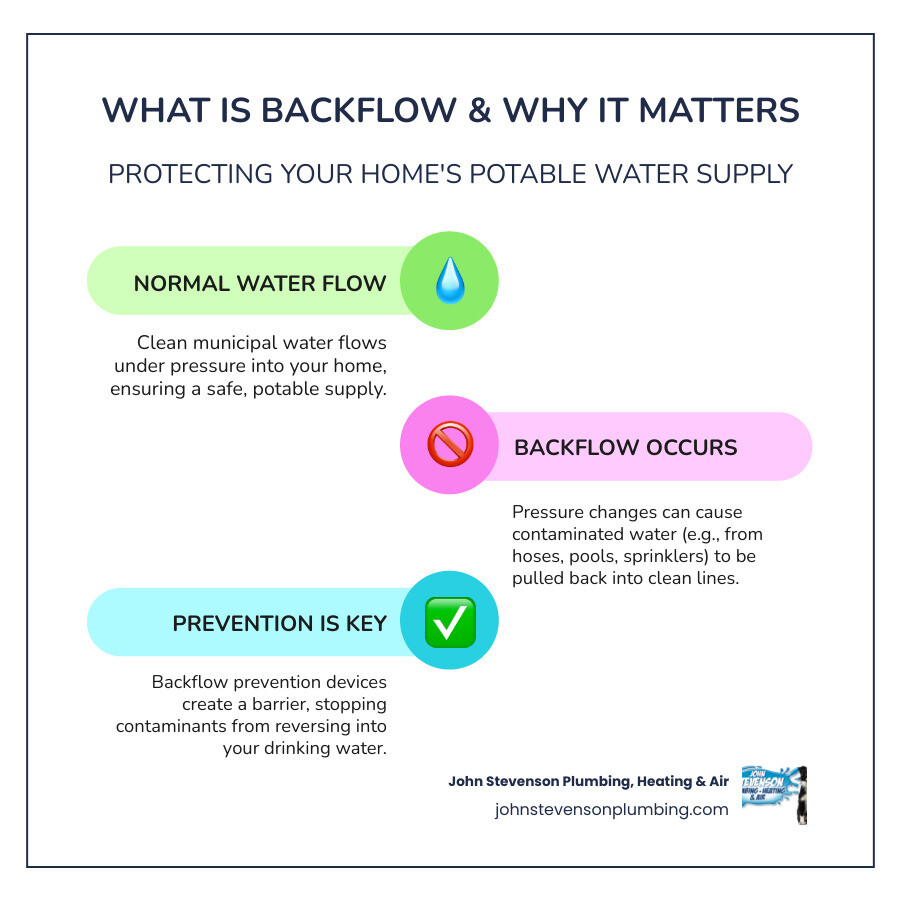
At its core, your plumbing system is designed to be a one-way street. Clean water from the municipal supply in Carlsbad or San Diego travels under pressure into your home, through your faucets, and eventually down the drain. However, plumbing systems are dynamic. When that one-way flow is interrupted or reversed, we face an “undesirable reversal” of liquids—otherwise known as backflow.
Understanding what is backflow prevention and why does it matter is essential for any property owner. Without these systems, contaminated water from “non-potable” sources (like your sprinkler system, your swimming pool, or even a garden hose sitting in a bucket of soapy water) can be sucked back into the main distribution lines. This isn’t just a plumbing nuisance; it is a significant public health concern. To ensure your system is operating safely, professional Backflow Prevention Testing is the primary way we verify that these “one-way gates” are still holding strong.
What is Backflow and How Does It Occur?
Backflow occurs when the hydraulic mechanics of your plumbing system fail. Normally, the water utility maintains high pressure in the street mains to push water into your home. If that pressure drops suddenly, or if the pressure on your side of the meter becomes higher than the city’s pressure, the water stops moving forward and begins to move backward. This reverse flow can pull whatever is at the end of a pipe—chemicals, bacteria, or waste—directly into the drinking water supply.
Why Backflow Prevention is Critical for Public Health
Drinking water safety is the foundation of a healthy community. The EPA provides strict guidance under the Safe Drinking Water Act, requiring water utilities in all 50 states to operate cross-connection control programs. These regulations exist because backflow incidents have historically led to outbreaks of illness and even mortality. When we talk about contamination risks, we aren’t just talking about “dirty” water; we are talking about toxic chemicals, fertilizers, and biological hazards entering the pipes that lead to your kitchen sink and shower.
The Two Main Culprits: Backsiphonage and Backpressure
To understand how backflow happens, we have to look at the two specific ways pressure differentials can cause a plumbing failure. Whether you live in Oceanside, Encinitas, or Vista, your home is susceptible to these two hydraulic forces.
How Backsiphonage Occurs
Think of backsiphonage as the “straw effect.” When you sip through a straw, you create negative pressure at the top, which pulls the liquid upward. In your plumbing, if there is a sudden drop in pressure in the city’s water main—perhaps due to a water main break or heavy fire hydrant usage during an emergency—it creates a vacuum. This vacuum “sucks” water from your home’s pipes back toward the street. If you have a garden hose submerged in a pool or a pesticide sprayer attached to a faucet, that contaminated liquid can be siphoned right into your drinking water.
Understanding Backpressure in Plumbing
Backpressure is the opposite. It occurs when the pressure inside your home’s plumbing exceeds the pressure coming from the city supply. This can be caused by:
- Booster pumps: Used to increase water pressure in larger homes or multi-story buildings.
- Thermal expansion: Created by water heaters or boiler systems that heat water until it expands and pushes back against the incoming supply.
- Elevation: Water stored in tanks or pipes at a high point on a property can create enough pressure to push backward if the city pressure dips.
Identifying Cross-Connections and Device Types
A “cross-connection” is any physical link between your clean water supply and a potential source of pollution. These links are often hidden in plain sight. Ensuring these connections are protected is why regular Backflow Prevention Testing is so vital for Southern California homeowners.
Common Sources of Cross-Connections
Most people are surprised to learn how many cross-connections exist on their property. Common risks include:
- Irrigation Systems: These are the most frequent offenders. If a sprinkler head is submerged in a puddle of fertilizer or pet waste, backflow can pull those contaminants into your home.
- Swimming Pools and Spas: Fill lines that aren’t properly protected can allow treated pool water to enter the potable supply.
- Fire Sprinkler Systems: Stagnant water in fire lines often contains anti-corrosion chemicals or antifreeze.
- Garden Hoses: If a hose is left in a bucket, a sink, or a pond, it becomes a direct “straw” for contamination.
What is Backflow Prevention and Why Does It Matter for Device Selection?
Not all backflow risks are the same, which is why there are different types of mechanical assemblies. Choosing the right one depends on the “hazard level” of the connection.
| Device Type | Level of Protection | Best Use Case |
|---|---|---|
| Air Gap | Highest (Non-mechanical) | Sinks, tubs, and tanks where a physical gap exists. |
| RPZ (Reduced Pressure Zone) | High (Mechanical) | High-hazard areas like commercial boilers or medical tools. |
| DCVA (Double Check Valve) | Moderate (Mechanical) | Low-hazard areas where pollutants (not toxins) are present. |
| PVB (Pressure Vacuum Breaker) | Specific (Mechanical) | Irrigation systems and outdoor hose bibs. |
High-Hazard vs. Low-Hazard Protection
In plumbing, we distinguish between a “pollutant” (which affects taste and smell) and a “contaminant” (which affects health).
- Reduced Pressure Zone (RPZ) Assemblies: These are the gold standard for high-hazard situations. They feature two independent check valves and a relief valve that will dump water onto the ground if the system fails, ensuring no backflow can occur.
- Double Check Valve Assemblies (DCVA): These are used for low-hazard applications. They consist of two valves that provide redundancy but lack the relief valve found in RPZs.
- Vacuum Breakers (AVB and PVB): These are common on outdoor faucets and irrigation systems to prevent backsiphonage only.
Compliance and Maintenance: Why Testing Matters in 2026
In 2026, the regulations surrounding water safety in Southern California have never been more stringent. Local water authorities in areas like San Diego County and Orange County mandate that backflow prevention devices be inspected and tested to ensure they are still functioning correctly.
What is Backflow Prevention and Why Does It Matter for Regulations?
Regulatory compliance isn’t just about following rules; it’s about community safety. Most local ordinances require property owners to submit an annual test report to the health department or the local water utility. For example, in many parts of our service area, if you have an irrigation system or a swimming pool, you are legally required to have a certified technician verify your device’s performance every year.
How Often Must Devices Be Tested and Maintained?
Because backflow preventers are mechanical devices with moving parts, springs, and rubber seals, they are subject to wear and tear. Over time, mineral deposits from our local water can cause valves to stick or seals to leak.
- Annual Testing: This is the standard 12-month cycle for most residential and commercial devices.
- Certified Testers: Testing must be performed by a professional with specific certification. At John Stevenson Plumbing, Heating & Air, our techs are trained to handle these inspections and file the necessary paperwork for you.
Frequently Asked Questions about Backflow
Which properties or situations require backflow prevention devices?
Generally, any property with a “high-risk” connection requires a device. This includes homes with in-ground irrigation systems, swimming pools, large boilers, or solar water heating systems. Commercial properties like restaurants, car washes, and medical clinics are almost always required to have them.
What are the consequences of failing to prevent or test for backflow?
The risks range from technical to tragic. On the technical side, you may face fines from your water district or have your water service disconnected until you comply. On the tragic side, failing to maintain a device could lead to the contamination of your family’s drinking water, resulting in serious illness.
Is an air gap better than a mechanical backflow preventer?
Yes, an air gap is considered the highest level of protection because it is a physical separation between the water outlet and the flood level of a fixture. It has no moving parts to fail. However, air gaps aren’t always practical for pressurized systems like irrigation or fire sprinklers, which is where mechanical assemblies come in.
Conclusion
Protecting your home’s water supply is a responsibility we take seriously. What is backflow prevention and why does it matter? It matters because your health and the safety of your neighbors depend on the integrity of your plumbing. From Carlsbad to San Diego, we are here to help you navigate the complexities of Southern California’s water regulations.
At John Stevenson Plumbing, Heating & Air, we provide expert Backflow Prevention Testing backed by our 5-Star Service Guarantee. Our certified technicians ensure your devices are compliant, functional, and ready to protect your home for another year. Don’t wait for a pressure drop to find out if your water is safe—give us a call today and let us help you keep your clean water clean.