
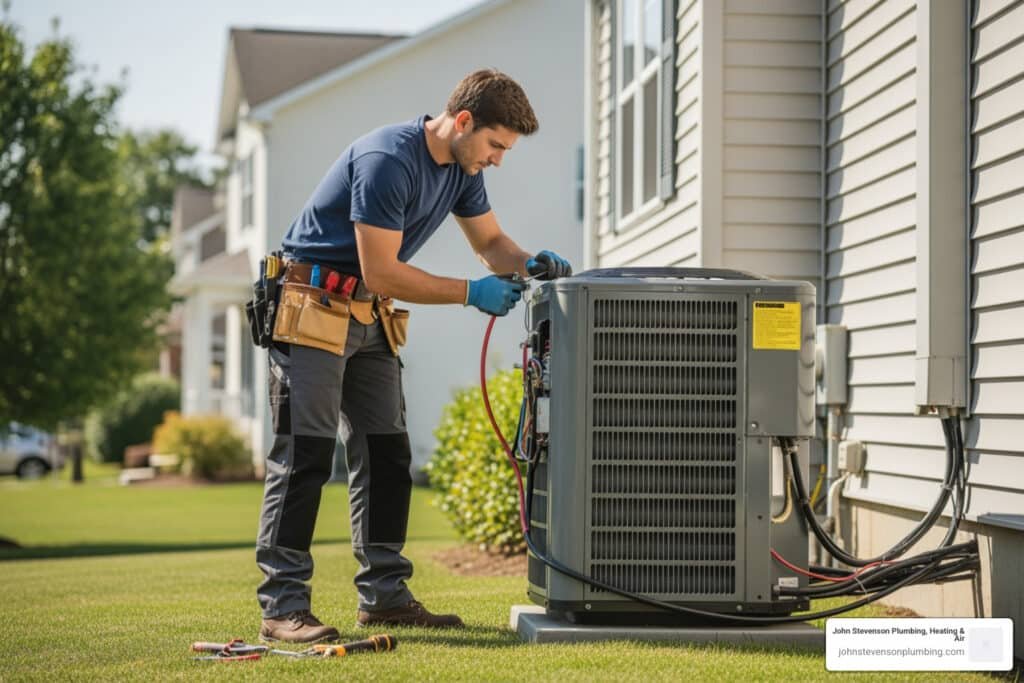
Why Knowing How to Extend the Life of Your AC Unit Can Save You Thousands
Knowing how to extend the life of your AC unit is one of the smartest things you can do as a homeowner in Carlsbad, CA. A new central air conditioning system is a major investment — and with average lifespans ranging from 12 to 17 years, the difference between a system that quits at 10 years and one that runs strong past 15 often comes down to a few consistent habits.
Here is a quick summary of the most effective ways to extend your AC’s lifespan:
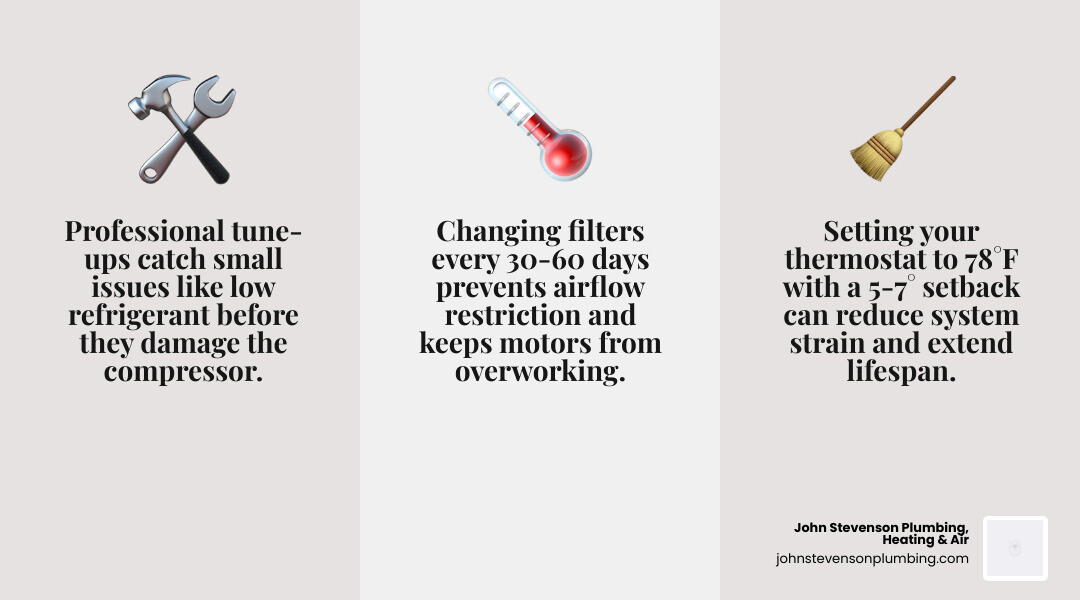
- Change air filters every 30 to 60 days — dirty filters force the motor to work harder and can reduce efficiency by up to 15%
- Schedule professional tune-ups at least once a year — ideally each spring before the cooling season starts
- Keep the outdoor condenser clear — maintain at least 2 feet of clearance on all sides and remove debris after storms
- Use smart thermostat habits — set to 78°F when home, use a 5 to 7 degree setback when away, and always use the “Auto” fan setting
- Seal leaky ductwork — the typical home loses 25% of cool air through duct leaks, which forces your system to run longer and wear out faster
- Improve home insulation — less heat gain means fewer run cycles and less strain on the compressor
- Address small repairs promptly — a loose wire or dirty coil left unattended can escalate into a compressor failure
The good news is that most of these steps are simple, low-cost, and well within reach for any homeowner. Whether your system is brand new or already a decade old, the right maintenance habits can add years to its life and hundreds of dollars back into your pocket each year.
In this guide, we will walk through every major factor that affects AC longevity — from Carlsbad’s coastal climate to ductwork, thermostat settings, and the warning signs that something is wrong.
How to Extend the Life of Your AC Unit: Start With the Biggest Lifespan Factors
If you want your AC to last, start with the factors that matter most: system type, installation quality, climate, and daily workload. Maintenance is huge, but even a great system can age faster if it was installed incorrectly or has to run harder than it should.
Average lifespan by AC and HVAC system type
Here is a practical look at average lifespans when systems are properly installed and maintained:
| System type | Average lifespan |
|---|---|
| Central air conditioner | 12 to 17 years |
| Standard AC unit | 10 to 15 years |
| Heat pump | 10 to 16 years |
| Furnace | 15 to 20 years |
| Boiler | 15 to 20 years |
| Ductless mini-split | often similar to central AC, around 10 to 15 years with good care |
| Geothermal heat pump | 25 to 30 years |
| Geothermal ground loops | up to 50 years |
| Evaporative cooler | 5 to 15 years |
For most homes in our Southern California service area, central AC systems and heat pumps are the most relevant. A well-maintained central air unit commonly lands around the 15-year mark, while neglected systems often fail much sooner.
Why climate, installation, and daily use change how long a system lasts
Two systems with the same model number can have very different lifespans. Why? Because real life is harder on equipment than a brochure.
Key lifespan factors include:
- Proper installation
- Correct sizing
- Local climate
- Indoor air quality and dust
- Duct leakage
- Thermostat habits
- How quickly repairs are handled
Installation is a big one. Research shows roughly half of HVAC equipment is installed improperly, and poor installation can increase heating and cooling bills by about 30%. It can also shorten equipment life. An oversized system may short cycle, turning on and off too often. An undersized system may run constantly and never really catch up. Neither is good for compressors, motors, or overall efficiency.
Usage matters too. A system that runs long hours every warm season naturally sees more wear. And in coastal areas, salt in the air can speed up corrosion on outdoor components if they are not cleaned and inspected regularly.
How to extend the life of your AC unit in Carlsbad and coastal Southern California
For homeowners in Carlsbad, Encinitas, Oceanside, San Diego, Orange County, and nearby coastal communities, AC longevity has a few local twists.
Salt air can collect on outdoor condenser coils and metal components. Even if you do not live right on the beach, coastal exposure can still contribute to corrosion over time. That makes these habits especially helpful:
- Check filters monthly during heavy-use periods
- Rinse the outdoor condenser gently with a garden hose when dirty
- Keep at least 2 feet of clearance around the unit
- Schedule seasonal tune-ups so corrosion, weak electrical parts, and airflow issues are caught early
- Use moderate thermostat setbacks instead of extreme temperature swings
- Improve attic insulation and air sealing to reduce heat gain
In other words, how to extend the life of your AC unit in coastal Southern California is not just about maintenance. It is also about reducing strain and protecting the system from salt, dust, and long summer runtimes.
The Maintenance Habits That Add Years to AC Life

Consistent maintenance is the single most important thing you can do for AC longevity. Filters, coils, fins, refrigerant levels, electrical parts, and drain lines all affect how hard the system has to work. When one part struggles, the rest of the system pays for it.
How to extend the life of your AC unit with regular filter changes
If we had to pick one homeowner task that delivers the most benefit, it would be filter changes.
Dirty filters restrict airflow. That makes the blower motor and the rest of the system work harder, increases energy use, and can even contribute to frozen coils and compressor strain. Research shows changing filters regularly can reduce energy use by up to 15%.
For most homes, a good rule is:
- Check filters every month
- Replace standard filters about every 30 to 60 days during cooling season
- Replace more often if you have pets, allergies, construction dust, or lots of occupancy
A mid-range pleated filter in the MERV 8 to 11 range is often a solid choice for many homes because it balances airflow and filtration. The important part is using the manufacturer-recommended size and type. A filter that is too restrictive or improperly fitted can create its own airflow problems.
A simple test: hold the filter up to the light. If it looks gray, fuzzy, or blocked, it is time.
Why professional tune-ups help your AC last longer
DIY care matters, but professional service catches the things homeowners usually cannot see safely or accurately.
A quality spring AC tune-up should include checks such as:
- Refrigerant charge and leak inspection
- Evaporator and condenser coil condition
- Airflow testing
- Duct leakage concerns
- Thermostat calibration
- Electrical terminals and wiring
- Capacitor and contactor condition
- Condensate drain and pan inspection
- Fan motor and moving component checks
These small checks matter. A slightly low refrigerant charge, dirty coil, or failing capacitor can make the system run hotter, longer, and less efficiently. Left alone, those minor issues can snowball into bigger failures.
If you want help with professional maintenance and inspections, you can learn more about our HVAC services.
The DIY AC maintenance tasks homeowners can safely do
There is a lot homeowners can do between tune-ups without opening electrical panels or handling refrigerant.
Safe DIY tasks include:
- Replace or clean the air filter regularly
- Clear leaves, weeds, and debris from around the outdoor unit
- Gently rinse outdoor condenser fins with a garden hose
- Check that supply and return vents are open and not blocked by furniture or rugs
- Inspect the condensate drain area for visible clogs or water buildup
- Flush the drain line periodically if your system setup allows and your technician recommends it
- Check insulation around accessible refrigerant lines for deterioration
- Review thermostat schedules and fan settings
- Inspect the outdoor unit after storms for debris or damage
A few things not to do:
- Do not use a pressure washer on condenser fins
- Do not bend fins or poke inside the unit
- Do not try to top off refrigerant yourself
- Do not ignore unusual noises because “it still works”
Why keeping the outdoor condenser clean and clear matters
Your outdoor condenser is where your AC dumps the heat it removed from inside your house. If that heat cannot escape easily, the system has to work much harder.
That is why clearance matters. Keep at least 2 feet of open space around the unit. Trim shrubs, remove weeds, and avoid stacking anything against it. Leaves, grass clippings, and storm debris can all block airflow.
Also look for bent fins. Fins help the unit release heat, and when they are crushed or clogged, performance drops. Even a well-maintained indoor system can struggle if the outdoor unit is basically trying to breathe through a blanket of dust and ivy. Dramatic? Yes. Accurate? Also yes.
Reduce System Strain Inside the House
Longevity is not just about the equipment itself. It is also about how much cooling your home asks the system to deliver. The easier it is to keep your home comfortable, the longer your AC tends to last.
How insulation and ductwork affect AC lifespan
Leaky ducts and poor insulation quietly add wear every single day.
Research shows the typical home loses about 25% of its cooled air through leaky ductwork. Sealing ducts can save up to 20% on cooling bills, but it also helps your equipment by reducing runtime. Less runtime means less wear on the compressor, blower, and electrical components.
Insulation matters for the same reason. If attic heat pours into the house all afternoon, your AC has to keep fighting that heat gain. Better attic insulation, weatherstripping, and air sealing reduce the load.
Duct cleaning can help in certain cases too, especially when buildup is restricting airflow or when ducts contain heavy dust and debris. More importantly, ducts should be inspected for leaks, disconnected sections, crushed flex duct, and poor airflow balance.
If you want your AC to last, focus on the whole system:
- Seal duct leaks
- Improve attic insulation
- Air seal around penetrations and gaps
- Keep vents open and unobstructed
- Make sure returns are not blocked
Better thermostat habits that prevent wear and tear
Thermostat habits can either reduce strain or create it.
Good rules for many homes in our area include:
- Set the thermostat around 78 degrees when home
- Raise it 5 to 7 degrees when away instead of turning the system completely off
- Use the “Auto” fan setting instead of leaving the fan set to “On”
- Avoid dramatic temperature swings
Why not turn the AC completely off all day? Because coming home to a hot house and then setting the thermostat to 65 does not cool the home faster. It just forces the system to run at full speed for a long stretch. A moderate setback is usually gentler on the equipment and better for humidity control.
Programmable and smart thermostats help because they automate better habits. They can reduce unnecessary runtime, limit short cycling, and keep schedules consistent. Research also suggests many homeowners own programmable thermostats but never use the actual programming features. That is a missed opportunity.
Common homeowner mistakes that shorten AC life
Some of the most common AC-killers are surprisingly ordinary:
- Closing too many vents
- Blocking return grilles with furniture
- Using the wrong filter size or type
- Setting the thermostat extremely low
- Turning the system fully off and then demanding instant cooling
- Skipping maintenance year after year
- Ignoring strange noises or smells
- Letting minor repairs linger
- Crowding the outdoor unit with plants or storage
Another mistake: running the fan continuously on “On” instead of “Auto.” That can increase wear, move more dust through the system, and sometimes worsen humidity issues.
Catch Problems Early Before They Turn Into Major Breakdowns
A lot of major AC failures start as minor issues. Catch them early, and you may protect the most expensive parts of the system.
Small repairs that protect the compressor and other major parts
Prompt repairs matter because AC systems are interconnected. A clogged drain, loose wire, weak capacitor, dirty coil, or refrigerant issue can all increase strain elsewhere.
Examples of small issues that deserve attention:
- Loose electrical connections
- Dirty evaporator or condenser coils
- Refrigerant leaks or improper charge
- Clogged condensate drains
- Worn contactors or capacitors
- Fan motor problems
- Bent fins reducing heat transfer
- Weak airflow caused by blocked ducts or filters
The compressor is one of the most critical components in the system. When airflow is restricted or refrigerant conditions are wrong, the compressor can overheat or cycle improperly. That is why fixing small issues quickly is one of the best answers to how to extend the life of your AC unit.
Signs your AC may be nearing the end of its life
Even a well-maintained unit eventually reaches the end of the road. Common warning signs include:
- System age of 15 years or more
- Frequent repairs or repeat breakdowns
- Rising energy bills without a change in usage
- Weak airflow
- Uneven cooling from room to room
- Short cycling
- Grinding, banging, or squealing noises
- Strange odors
- Ice buildup on lines or coils
- Water leaks around the indoor unit
Age alone does not always mean replacement is necessary, but age plus declining performance usually deserves a serious evaluation.
When repairing no longer makes sense
There comes a point when repeated repairs on an aging system stop being practical. If your AC is older, breaks down often, struggles to cool evenly, and cannot maintain efficiency even after service, replacement planning may be the better long-term move.
We usually recommend looking at the full picture:
- Age of the equipment
- Reliability during peak weather
- Frequency of repairs
- Overall comfort
- Condition of major components
- Whether airflow and duct issues can be corrected
The goal is not to replace a system too early or hang onto it too long. It is to make a smart decision before a total breakdown leaves you with no cooling during a heat wave.
A Simple Year-Round Plan for How to Extend the Life of Your AC Unit
The easiest maintenance plan is the one you will actually follow. You do not need a complicated spreadsheet and three clipboards. You just need a repeatable routine.
Monthly and seasonal tasks homeowners should follow
Use this simple schedule as a starting point:
Monthly
- Check the air filter
- Make sure vents and returns are clear
- Look around the outdoor unit for debris or overgrowth
- Watch for water around the indoor unit
- Listen for new noises
Every few months
- Gently rinse the outdoor condenser if dirty
- Check thermostat schedules and batteries if applicable
- Inspect the condensate drain area
- Review insulation and visible duct condition in accessible areas
Spring
- Schedule a professional AC tune-up before heavy summer use
- Test cooling performance early
- Clear debris from around the condenser
- Check for storm damage
Summer
- Check filters more often during heavy runtime
- Keep blinds or curtains closed during the hottest part of the day
- Use ceiling fans to help you feel cooler at a slightly higher thermostat setting
- Monitor bills for unexplained spikes
Fall and winter
- Inspect the outdoor unit after storms
- Keep the area around the unit clear year-round
- Continue periodic filter checks if your system also handles heating
- Plan ahead for any repairs or replacement discussions before the next cooling season
How to extend the life of your AC unit with a maintenance routine you’ll actually keep
The best routine is simple enough to become automatic.
Try these habits:
- Put filter reminders on your phone calendar
- Save your filter size in a note so you do not have to guess
- Use thermostat alerts if your smart thermostat offers them
- Keep a small home maintenance log
- Schedule annual service at the same time every year
Consistency is what adds years. Not one heroic weekend of cleaning. Not one panic service call in August. Just steady, boring, effective habits. AC systems love boring.
Conclusion
Learning how to extend the life of your AC unit comes down to reducing strain, improving airflow, and catching problems early. Clean filters, professional tune-ups, a clear condenser, good ductwork, proper thermostat settings, and prompt repairs all work together to help your system last longer and run better.
At John Stevenson Plumbing, Heating & Air Conditioning, we help homeowners throughout Carlsbad and surrounding Southern California communities protect their comfort with thorough diagnostics, certified technicians, upfront pricing, and our 5-Star Service Guarantee. If you want help keeping your system in top shape, explore our HVAC services and let us help you get more life out of your AC with less stress.