
Is Your AC Worth Saving? A Quick Guide to the Cost of Repairing Old AC vs Buying New System
The cost of repairing old ac vs buying new system is one of the most common — and most stressful — decisions homeowners in Carlsbad, CA face when their unit breaks down in the middle of a Southern California summer. Do you pay for the repair and hope for the best? Or is it finally time to cut your losses and invest in something new?
Here’s a quick answer to help you decide:
Quick Decision Guide: Repair vs. Replace Your AC
| Situation | Recommended Action |
|---|---|
| Unit is under 8 years old, minor repair needed | Repair |
| Unit is 8-12 years old, moderate repair needed | Use the $5,000 Rule (age × repair cost) |
| Unit is 12+ years old, major repair needed | Lean toward replacement |
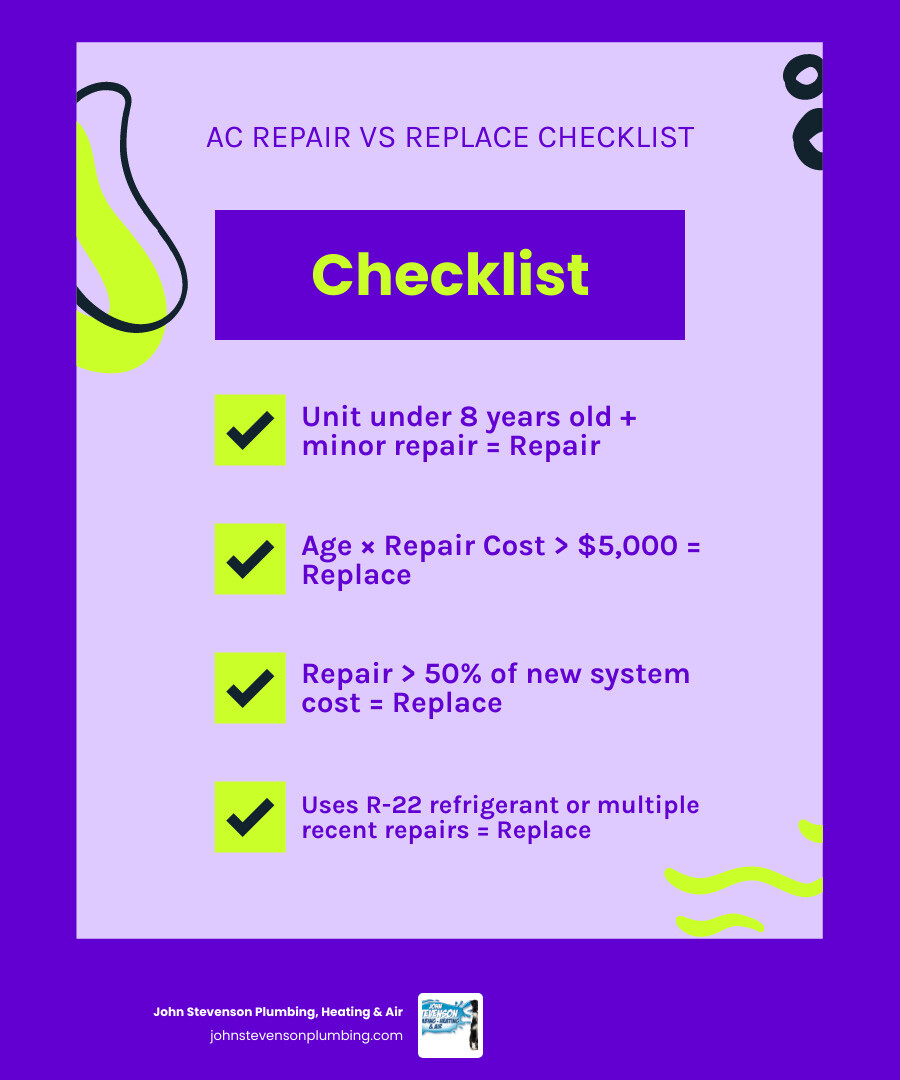
| Repair cost exceeds 50% of new system price | Replace |
| System uses R-22 (Freon) refrigerant | Replace |
| Multiple repairs in the past 2-3 years | Replace |
| Unit is still under manufacturer warranty | Repair |
The core decision rule most HVAC professionals use is the $5,000 Rule: multiply your AC unit’s age (in years) by the estimated repair cost (in dollars). If the result is over $5,000, replacement is generally the smarter financial move. If it’s under $5,000, a repair may still make sense.
For example:
- A 10-year-old unit with a $400 repair = $4,000 → consider repairing
- A 12-year-old unit with a $500 repair = $6,000 → lean toward replacing
But age and repair cost are just part of the picture. Refrigerant type, energy efficiency ratings, repair history, and even your local climate all play a role — especially here in coastal San Diego County, where salt air and year-round cooling demands can age a system faster than national averages suggest.
This guide walks you through all of it, so you can make a confident, informed decision.
Understanding the Cost of Repairing Old AC vs Buying New System
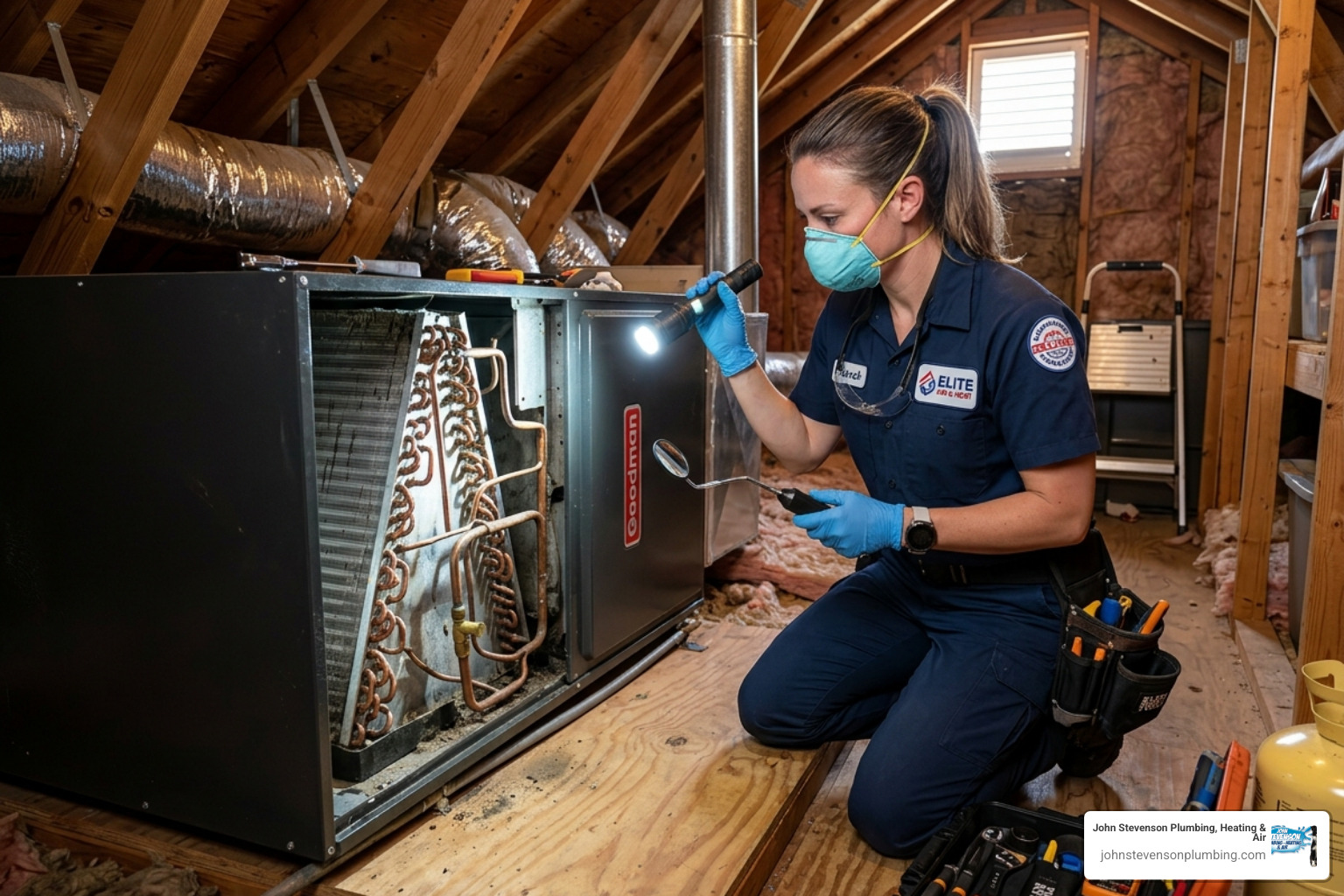
When we talk about the cost of repairing old ac vs buying new system, we aren’t just looking at the number on a single invoice. We are looking at the long-term financial health of your home. An air conditioner is a complex machine, and like a car, it has a predictable lifespan. Most central AC systems are designed to last between 15 and 20 years, but in our neck of the woods — from Carlsbad to San Clemente — environmental factors can shorten that window.
Major component failures, such as a dead compressor or a leaking evaporator coil, are often the “check engine light” for your HVAC system. These aren’t just minor hiccups; they are signs that the system’s primary organs are failing. If you are starting to notice odd sounds, weak airflow, or a sudden spike in your utility bills, it is vital to know how to know if your AC is going bad before the heatwave hits.
Repairing a system that is already past its prime often leads to what we call the “Repair Spiral.” This is when you fix one part, only for another to fail a few months later. Before you know it, you’ve spent a significant portion of what it would have cost to simply start fresh. Understanding the baseline AC Installation Costs can help you realize when you’re throwing good money after bad.
Calculating the cost of repairing old ac vs buying new system with the $5,000 Rule
The $5,000 Rule is the industry-standard tiebreaker for a reason: it takes the emotion out of the decision. By multiplying the age of your unit by the repair quote, you get a numerical “score” that reflects the system’s remaining value.
Think of it this way: a $500 repair on a 4-year-old unit is a smart investment (Score: 2,000). You still have over a decade of expected life in that machine. However, that same $500 repair on a 14-year-old unit (Score: 7,000) is a gamble. At 14 years, the risk of a secondary failure is high, and you are better off putting that money toward a down payment on a new, high-efficiency system.
If you find yourself on the fence, it might be time for a professional assessment. We often help homeowners navigate this by determining if your AC needs a tune-up or a retirement party.
How efficiency impacts the cost of repairing old ac vs buying new system
In April 2026, energy efficiency is no longer just a “green” choice; it is a financial necessity. Older units typically operate with SEER (Seasonal Energy Efficiency Ratio) ratings between 10 and 13. Modern systems, particularly those meeting the newer SEER2 standards, often reach 18, 20, or even 25+.
The jump from a 10-year-old unit to a new SEER2 18+ system can reduce your cooling energy consumption by 30% to 50%. In high-demand areas like Irvine or Mission Viejo, those monthly savings add up fast. Over the next five years, the energy savings alone can often offset a large portion of the replacement cost. Regular Orange County AC Maintenance can help keep an old unit running, but it can’t magically upgrade the technology inside to modern efficiency levels.
The 50% Rule and Southern California Climate Factors
While the $5,000 Rule is great for minor to moderate repairs, the 50% Rule is the ultimate threshold for major failures. If a repair quote exceeds 50% of the cost of a brand-new system, the choice is clear: replace it. Spending half the price of a new unit to keep a 10-year-old machine running is statistically a poor investment.
When your system is struggling, especially in high-heat zones like Pauma Valley or Escondido, you need to know if Oceanside AC Repair is a viable band-aid or if you’re just delaying the inevitable. Similarly, residents needing Temecula AC Repair often face extreme summer temperatures that put immense strain on aging compressors.
Regional Wear and Tear
Geography matters. If you live in Solana Beach, Del Mar, or Oceanside, your AC unit is fighting a constant battle against salt air corrosion. This “salt spray” can eat through aluminum fins and copper coils much faster than in inland areas like Yorba Linda.
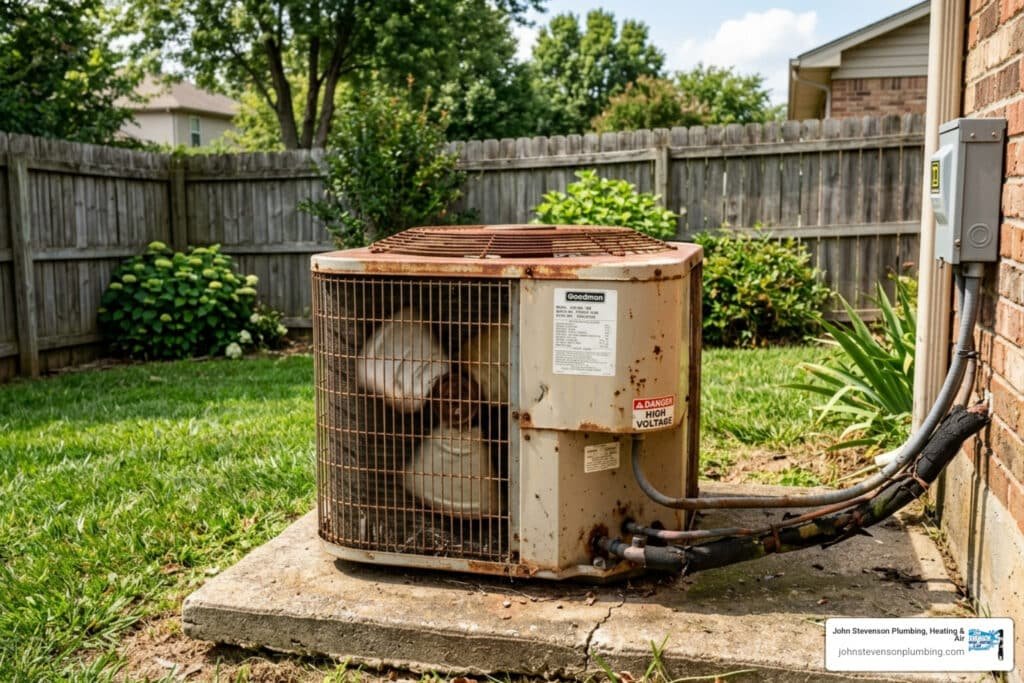
In these coastal environments, a 12-year-old unit might look and act like a 20-year-old unit from the Midwest. If you are noticing rust or “pitting” on your outdoor condenser, the cost of repairing old ac vs buying new system shifts heavily toward replacement. For those in more rural or hilly areas, AC Repair in Fallbrook might involve dealing with dust and debris that has overworked the motor for years.
Why R-22 Refrigerant and SEER2 Ratings Tip the Scales
One of the biggest factors in the cost of repairing old ac vs buying new system is something you can’t even see: the refrigerant. If your system was manufactured before 2010, it likely uses R-22 (Freon). The EPA officially banned the production and import of R-22 in 2020 because it depletes the ozone layer.
Today, in 2026, the remaining stockpiles of R-22 are incredibly scarce and expensive. A simple “recharge” for an R-22 system can now cost as much as a major repair on a modern unit. If your old unit has a refrigerant leak, repairing it is often a losing battle. You are paying a premium for an obsolete chemical to fill a system that will likely leak again. This is a major reason why Orange County AC Repair for R-22 units is becoming a thing of the past.
The Hidden Expense of Obsolete Coolants
Modern systems use R-410A or the even newer low-GWP (Global Warming Potential) refrigerants like R-454B. These are not only better for the environment but are significantly more affordable to service. If you are currently paying for frequent “top-offs” for an old unit in Mission Viejo, you are trapped in a cycle of waste. Switching to a new system eliminates the R-22 tax and ensures your AC Repair Mission Viejo remains affordable in the future.
Should You Replace the Entire HVAC System or Just the AC?
When it’s time to replace the AC, many homeowners ask: “Can I just replace the outdoor unit and keep my old furnace?” While it’s technically possible in some cases, it is rarely recommended.
Your HVAC system is a “matched system.” The indoor evaporator coil and the outdoor condenser are designed to work together. If you pair a brand-new, high-efficiency AC with an old, inefficient furnace blower, you won’t actually achieve the SEER2 ratings promised on the box. It’s like putting a Ferrari engine in a 1990s minivan—the components just aren’t built to handle each other’s performance.
If you are already investing in AC Installation, replacing the full system ensures that the airflow and static pressure are perfectly balanced. This leads to better comfort, quieter operation, and a much longer lifespan for the new equipment. For a seamless transition, look into a complete AC Replacement that addresses both heating and cooling.
Benefits of a Full System Upgrade
A full system upgrade usually comes with a comprehensive manufacturer’s warranty that covers both the indoor and outdoor components. Additionally, you save on labor. It is much cheaper to install a furnace and AC at the same time than to do them separately two years apart. For homeowners in the North County area, choosing a professional Oceanside AC Replacement means your entire home comfort system is under one unified warranty.
Maximizing Value with Rebates, Tax Credits, and Financing
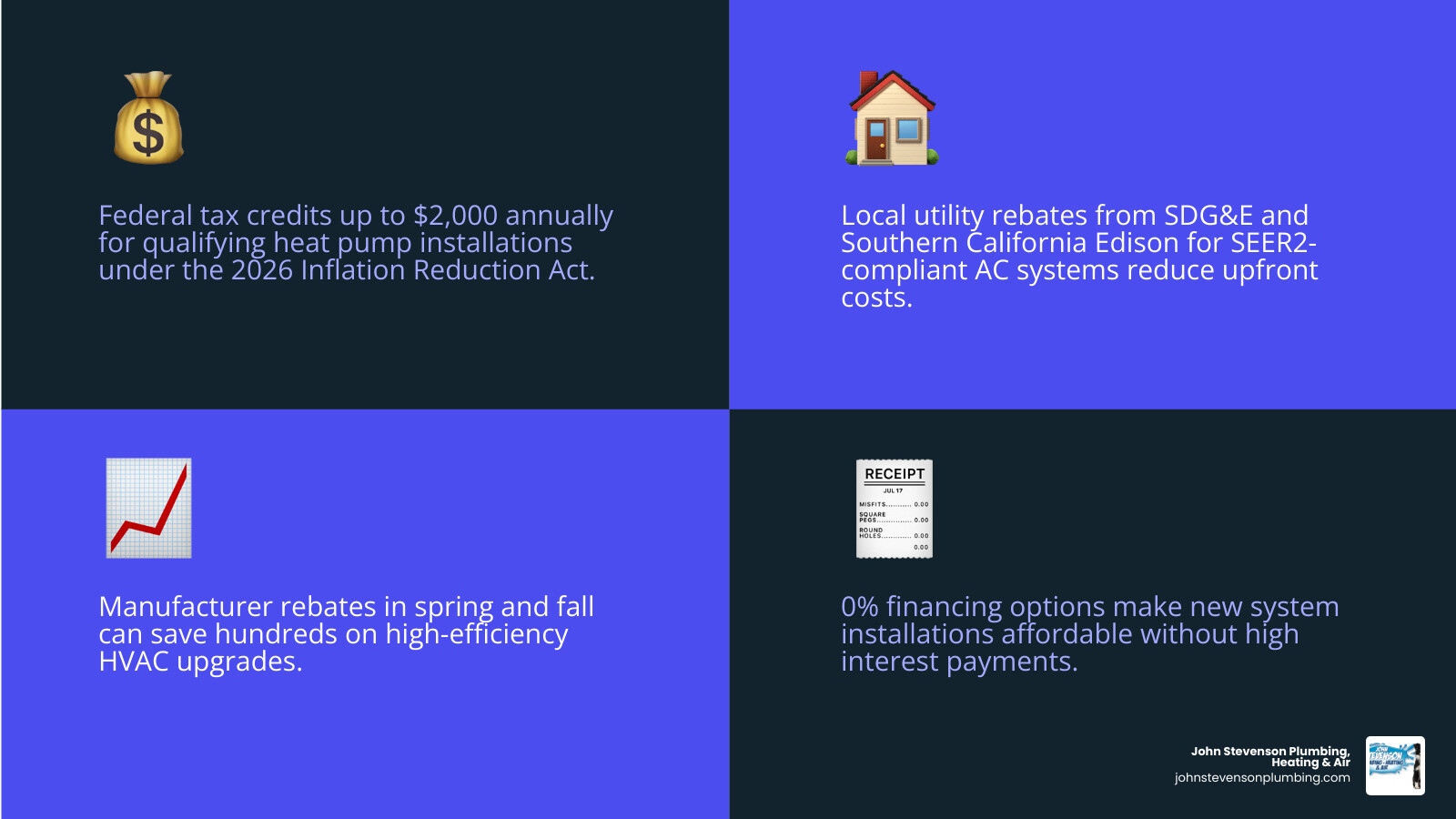
One of the best ways to offset the cost of repairing old ac vs buying new system is by taking advantage of current incentives. As of 2026, the Inflation Reduction Act (IRA) continues to provide substantial federal tax credits for high-efficiency HVAC upgrades.
- Federal Tax Credits: You may be eligible for up to $2,000 in annual tax credits for heat pump installations or up to $600 for high-efficiency central AC units.
- Local Utility Rebates: Companies like SDG&E and Southern California Edison often offer localized rebates for homeowners who switch to SEER2-compliant systems.
- Manufacturer Rebates: During the “off-season” (typically spring and fall), manufacturers often offer instant rebates that can save you hundreds.
Navigating these can be tricky, but we are here to help you find the best HVAC Rebates available. By navigating the California energy rebate application process like a pro, you can significantly lower your net investment.
Furthermore, many homeowners find that 0% APR financing makes a new system more affordable than a surprise repair bill. If a repair costs $1,500 upfront, but a new system costs $150 a month with no interest, the new system often provides better cash flow and immediate energy savings.
Frequently Asked Questions about AC Replacement
What is the $5,000 Rule for air conditioners?
The $5,000 Rule is a simple formula: Age of Unit × Cost of Repair. If the result is greater than $5,000, you should replace the unit. If it is less, a repair is likely a better value. For example, a 10-year-old unit needing a $600 repair scores 6,000—indicating it’s time for a replacement.
Is it worth repairing an AC unit that uses R-22 Freon?
Generally, no. Because R-22 has been phased out, the cost of the refrigerant alone can make even minor repairs prohibitively expensive. Furthermore, R-22 units are significantly less efficient than modern systems. If your R-22 system has a major leak or component failure, replacement is almost always the smarter financial choice.
How much energy does a new SEER2 system save compared to a 10-year-old unit?
A modern SEER2 system (rated 18 or higher) can save you between 30% and 50% on your monthly cooling costs compared to a 10-to-15-year-old unit. Over the lifespan of the system, these savings can total thousands of dollars, often paying for a significant portion of the initial installation cost.
Conclusion
Deciding between the cost of repairing old ac vs buying new system doesn’t have to be a guessing game. By using the $5,000 Rule, considering the R-22 phase-out, and factoring in the massive energy savings of modern SEER2 units, you can make a choice that protects both your comfort and your wallet.
At John Stevenson Plumbing, Heating & Air Conditioning, we’ve spent decades helping our neighbors in Carlsbad, San Diego, and Orange County stay cool. Our 5-Star Service Guarantee means you get thorough diagnostics, upfront pricing, and the peace of mind that comes with certified technicians. Whether you need a quick fix to get through the week or a brand-new system to carry you through the next two decades, we are here to provide honest, expert advice.
Ready to stop the “repair spiral” and start saving? Contact our experts for a professional AC Repair consultation today, and let’s find the perfect solution for your home.