
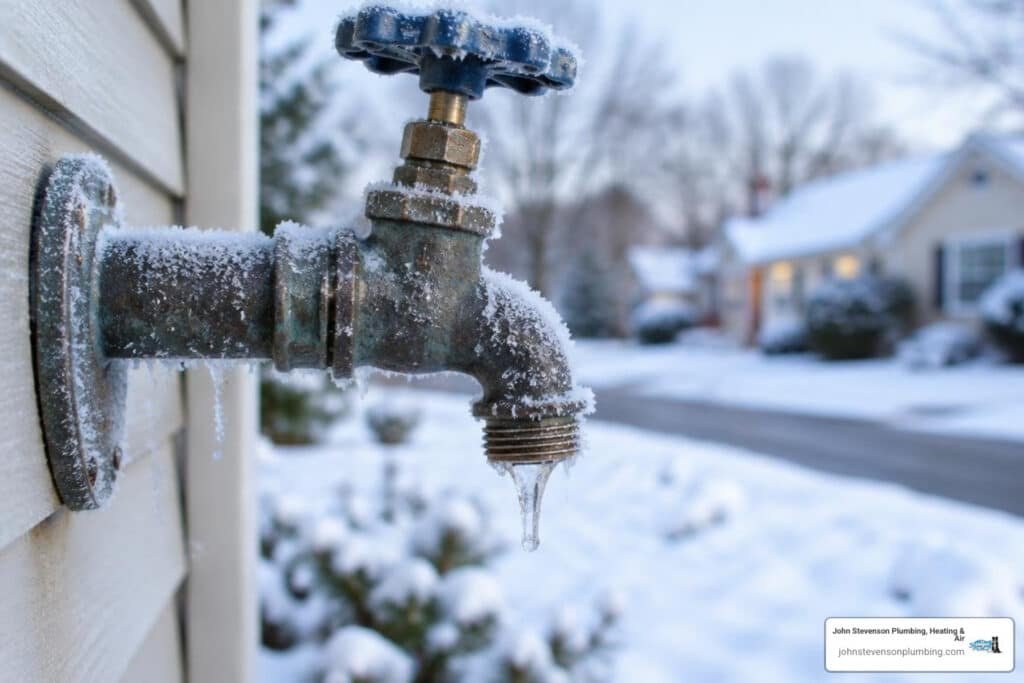
How to Protect Your Pipes in Cold Weather in Carlsbad, CA
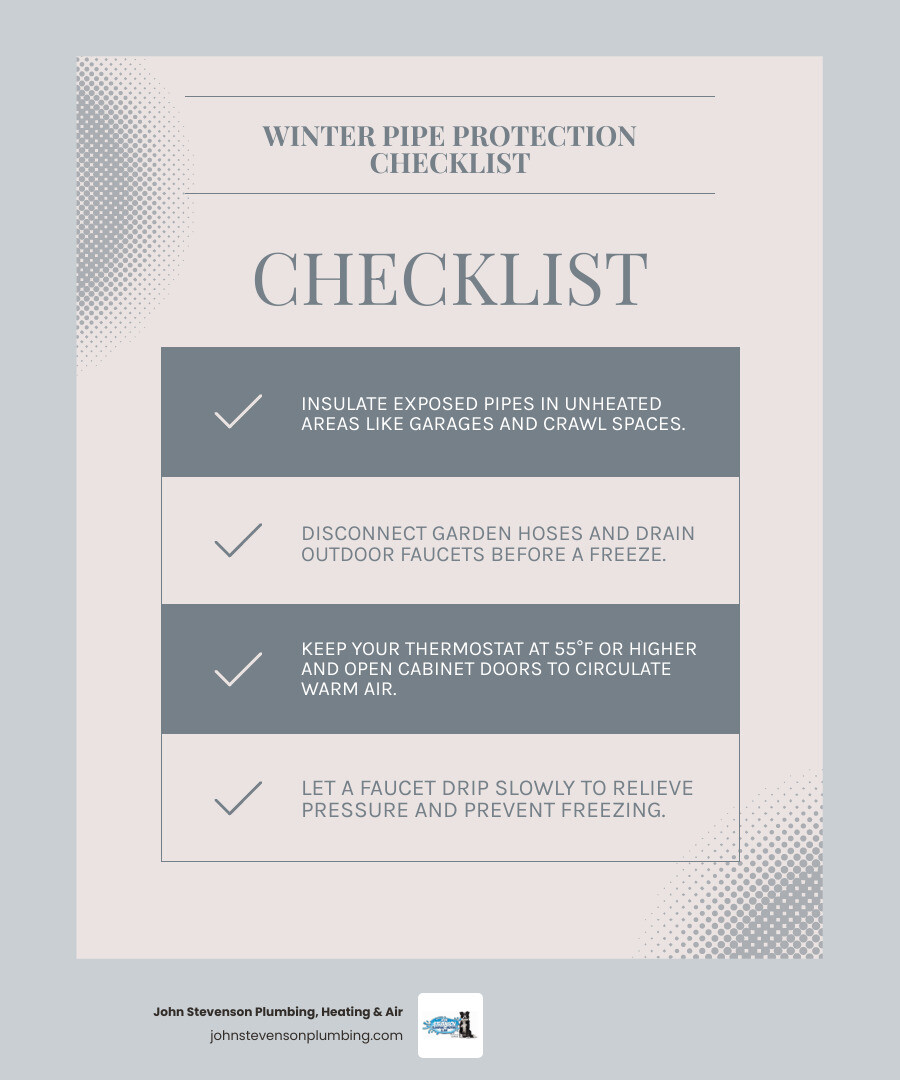
To learn how to protect your pipes in cold weather, insulate exposed water lines, disconnect garden hoses, and drain outdoor faucets before a freeze. During a cold snap, keep the heat on, open sink cabinets, and let a faucet served by a vulnerable pipe drip slowly. If water stops flowing, check for leaks and be ready to shut off the main water supply. Even in Carlsbad, CA, pipes in an unheated garage or crawl space can be at risk. Pipe insulation and freeze protection matter most where cold air reaches your plumbing. These steps can help you avoid a burst pipe and water damage.
Explore our plumbing services or get help with a plumbing repair.
I’m John Stevenson, and I’ll walk you through what to do before, during, and after a freeze.
Why Freezing Temperatures Threaten Household Plumbing
Winter weather can take a heavy toll on residential plumbing systems. Across the country, a quarter-million homes suffer property damage each winter due to frozen water pipes. Many homeowners assume that moderate regions like Southern California are immune to these risks, but unexpected cold snaps can quickly catch uninsulated plumbing off guard.
When water freezes, it undergoes a physical transformation that puts immense mechanical stress on your plumbing. It is not just an inconvenience that halts your morning routine—it is a structural hazard. An eighth-inch crack in a frozen pipe can leak up to 250 gallons of water per day once thawed, destroying flooring, drywall, cabinetry, and personal belongings. According to the Insurance Institute for Business and Home Safety (IBHS), burst pipes represent one of the leading causes of residential property damage during freezing weather.
The Science of Water Expansion and Burst Risks
The primary reason pipes burst in freezing weather comes down to basic physics. Unlike most liquids, which contract as they cool, water expands as it nears its freezing point. As water molecules form a rigid, crystalline lattice structure to create ice, its overall volume increases by approximately 9 percent.
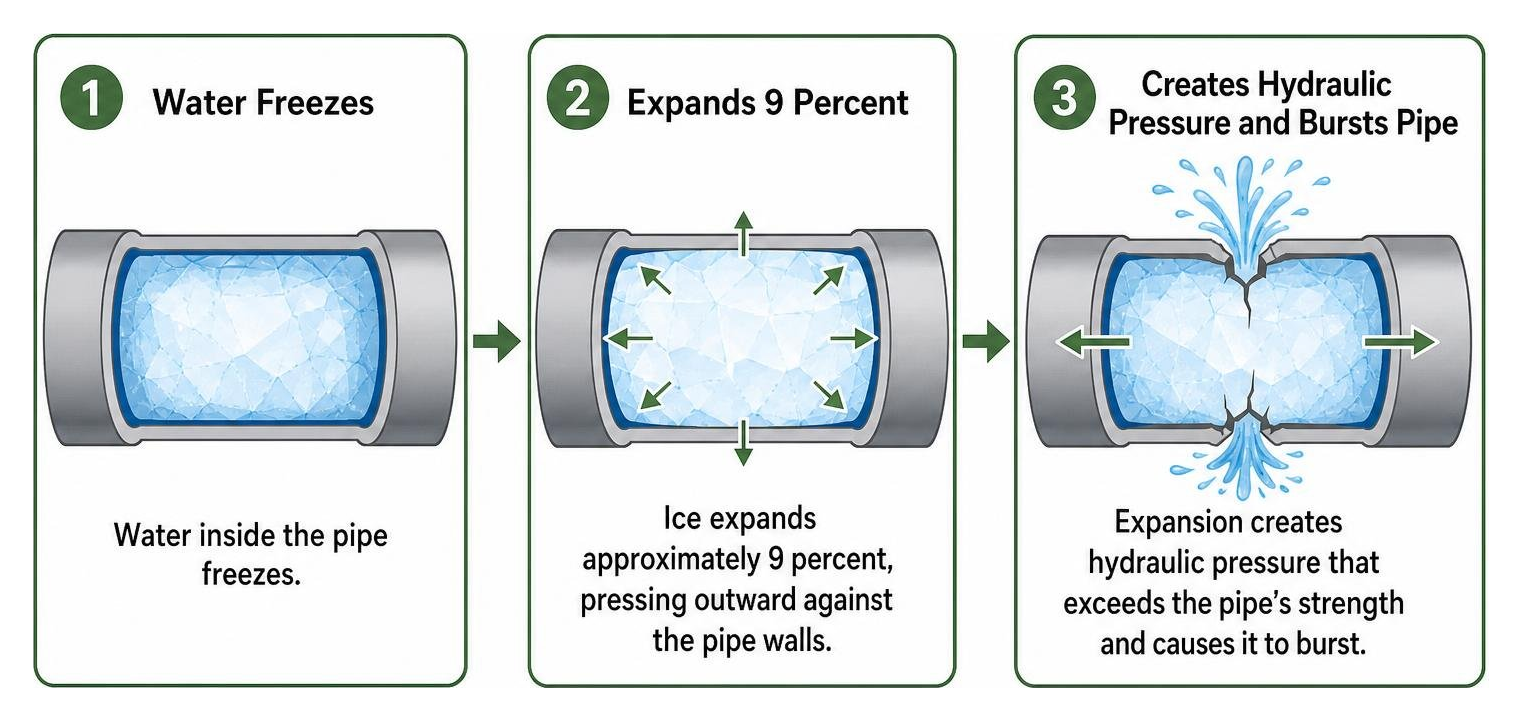
This expansion does not just press outward against the pipe walls at the site of the ice blockage. Instead, the forming ice plug creates immense hydraulic pressure between the frozen blockage and closed fixtures downstream (like a closed faucet). As ice continues to grow, it forces trapped water into an increasingly tight space. Eventually, this extreme hydrostatic pressure exceeds the tensile strength of copper, PVC, CPVC, or galvanized iron, causing the pipe wall to split or rupture. When the ice block thaws, high-pressure water surges freely through the breach, causing catastrophic flooding. If your plumbing system is older or has suffered repeated stress over the years, whole-home repositioning and repiping services can replace fragile lines with modern, durable materials.
Most Vulnerable Plumbing Areas Across Southern California Homes
Homes in coastal and inland Southern California—from Oceanside and Carlsbad down through Del Mar, Poway, and inland valleys like Escondido and Ramona—are often constructed without the heavy insulation found in colder climates. As a result, certain areas are particularly vulnerable during sudden cold snaps:
- Pipes running along exterior walls: Kitchen and bathroom supply lines positioned inside outside-facing walls often lack sufficient thermal barriers.
- Unheated attics and crawl spaces: Overhead lines or underfloor plumbing running through unconditioned spaces are directly exposed to dropping ambient temperatures.
- Attached or detached garages: Water lines feeding laundry sinks, water heaters, or hose bibs in unheated garages freeze easily if garage doors remain open.
- Outdoor hose bibs and spigots: Exterior faucets that protrude directly from outside walls are the first point of contact for cold air.
- Main water lines: Exposed main lines entering the foundation from the ground or meter boxes require proper protection. If your main line is damaged by cold weather, prompt water line repair and installation is essential to restore your household water safely.
How to Protect Your Pipes in Cold Weather: Essential Pre-Winter Steps
Preparation before cold weather arrives is the most effective way to safeguard your property. Autumn is the ideal time to inspect your plumbing, eliminate drafts, and add protective coverings to exposed supply lines. Understanding 5 essential plumbing tips every homeowner should know gives you a major advantage when preparing your home for seasonal weather shifts.
Start by sealing air leaks. Inspect your home’s foundation, attic, and exterior walls for cracks where cold drafts can enter. Use exterior-grade caulk, expanding foam sealant, or weatherstripping to seal openings around dryer vents, electrical wiring penetrations, and outdoor sill plates. On homes built with pier-and-beam foundations, closing or temporarily covering foundation vents prevents freezing winds from blowing directly across underfloor pipes.
Insulating Exposed Lines and Exterior Fixtures
Adding pipe insulation provides an indispensable barrier against dipping temperatures. Wrapping pipes keeps ambient warmth around the line and significantly delays the freezing process during sudden drops below freezing.
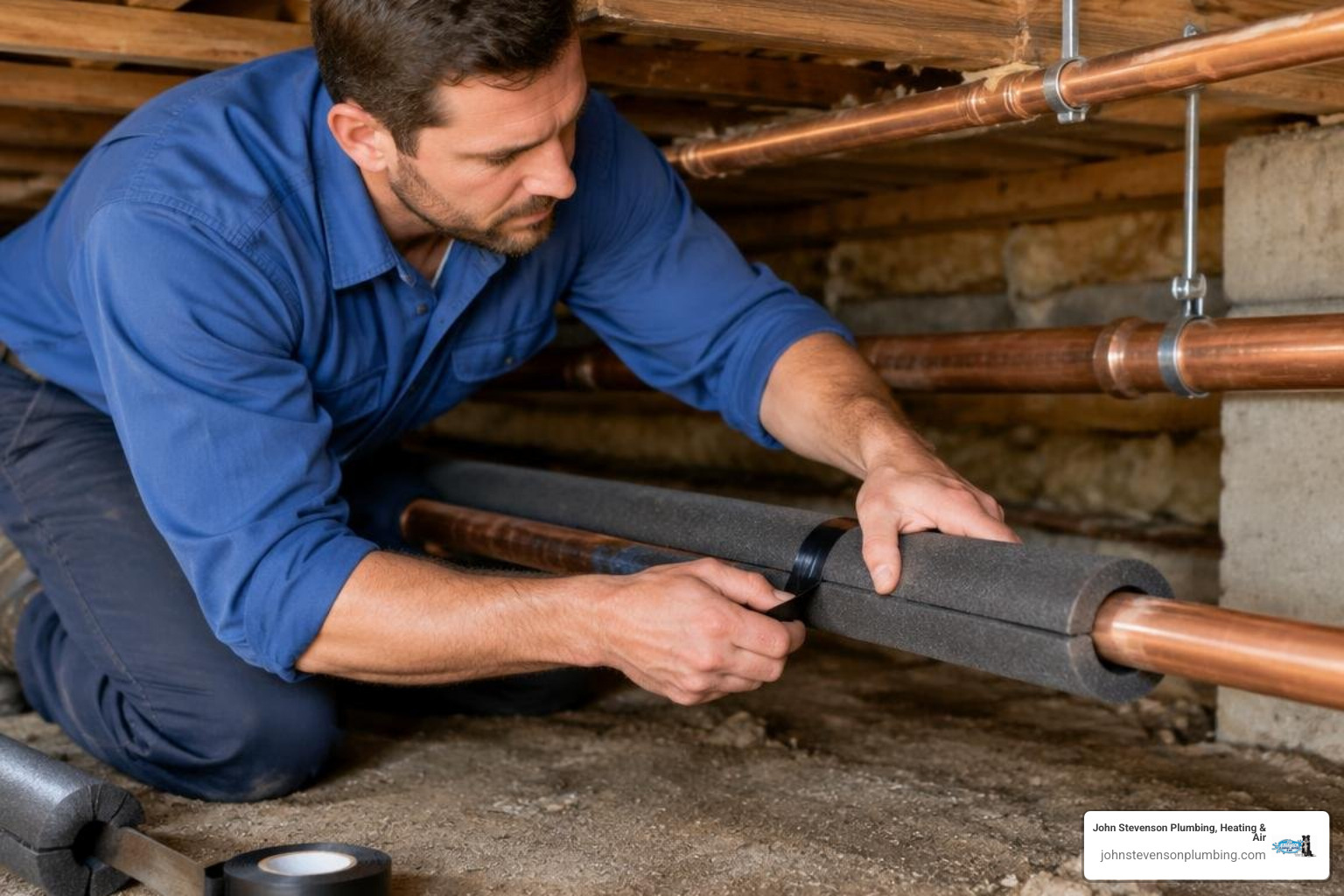
Several insulation options are available for DIY application and professional installations:
- Pre-slit tubular foam sleeves: Easy to slip over straight runs of copper or PEX tubing, securing joints with duct tape or heavy-duty zip ties.
- Self-adhesive rubber insulation tape: Excellent for wrapping around tight corners, valves, T-joints, and elbows where rigid sleeves cannot bend.
- Fiberglass pipe wrap with vapor barrier: Ideal for unheated basements or crawl spaces where moisture protection and high thermal resistance are required.
- Thermostatically controlled heat cable (UL-rated): Heat tape applies low, electric warmth directly to pipes in especially cold spots, activating automatically when temperatures plunge. Always ensure heat cables are installed strictly following manufacturer instructions and are never overlapped.
| Insulation Material | Best Application | Key Benefit | Installation Notes |
|---|---|---|---|
| Foam Pipe Sleeves | Long straight runs in garages, attics, crawl spaces | Budget-friendly and quick DIY installation | Seal all slit seams and corner joints with weather-resistant tape |
| Rubber Pipe Wrap Tape | Valves, elbows, outdoor spigot connections | Flexible wrap fits irregular plumbing shapes | Overlap wraps by 50% for complete thermal coverage |
| Fiberglass Blanket Wrap | High-moisture crawl spaces and large diameter pipes | High thermal resistance and moisture barrier | Wear protective gloves and ensure vapor barrier faces outward |
| UL-Rated Heat Cable | High-risk exposed outdoor or sub-floor lines | Active electric heating turns on automatically | Must be plugged into a protected GFCI outlet; do not overlap lines |
Securing Outdoor Faucets, Hoses, and Irrigation Backflow Systems
Outdoor fixtures are exposed directly to night air. Taking a few minutes to winterize exterior plumbing prevents ice from traveling backward into your interior walls:
- Disconnect all garden hoses: Leaving a garden hose connected allows trapped water to freeze, creating high backpressure that bursts the indoor portion of the sillcock. Disconnect, drain, and store hoses indoors.
- Drain hose bibs: If your home features interior shut-off valves for outdoor spigots, turn them off and open the outside faucet to allow remaining water to drain completely.
- Install insulated faucet covers: Fit inexpensive hard foam or insulated fabric covers over all exterior hose bibs to create a dead-air insulation pocket.
- Protect irrigation systems and backflow preventers: In-ground sprinkler systems and backflow assemblies hold standing water. Shut off the dedicated water supply to the irrigation system and drain the backflow device. When winterizing backflow assemblies, turn the internal test-cock valves slightly (about an eighth-of-a-turn or 45 degrees) rather than leaving them completely closed; this prevents water from being trapped inside the valve body and cracking the casting. Wrap exposed backflow assemblies with insulating blankets or specialized insulated pouches.
Actions to Take During a Hard Freeze to Prevent Pipe Damage
When local forecasts predict uncharacteristic freezing temperatures, taking immediate preventative steps can keep your lines flowing and intact.
- Maintain a steady indoor temperature day and night.
- Open under-sink cabinets in kitchens and bathrooms to circulate room warmth.
- Allow a small, steady trickle of cold water from faucets connected to exposed pipes.
- Keep garage doors fully shut if water supply lines or water heaters are located inside.
- Ensure foundation vents and crawl space entry doors are sealed tightly against wind.
How to Protect Your Pipes in Cold Weather Using Faucet Drips and Airflow
Allowing a faucet to drip is one of the simplest and most effective active freeze-prevention techniques. Running water through a pipe—even at a slow, continuous trickle—relieves the intense hydraulic pressure that causes pipes to burst if an ice pocket begins to form.
Choose the faucet served by the most exposed plumbing lines (such as a kitchen sink on an exterior wall or the faucet farthest from your main water supply). A steady drip about the thickness of a matchstick is sufficient. The movement of water brings slightly warmer underground water into the system, keeping the line active.
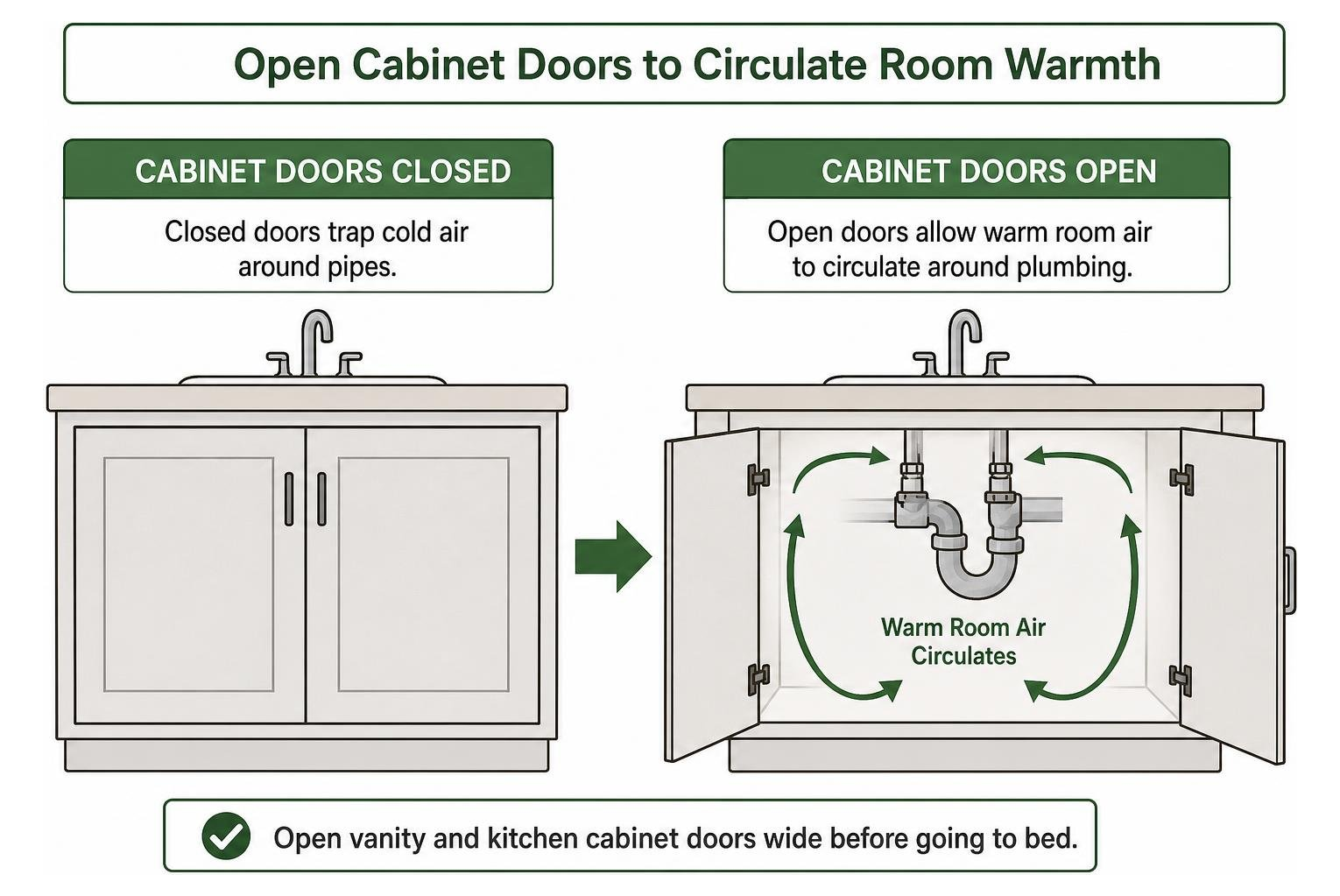
At the same time, improve interior airflow. Kitchen and bathroom sinks built into exterior walls often sit inside closed, dark cabinets that trap cold air. Open vanity and kitchen cabinet doors wide before going to bed. This allows the warm ambient air produced by your central heating system to circulate around the p-traps and supply risers. If you have young children or curious pets, make sure to remove any household cleaning chemicals or detergents stored under the sink before leaving the doors open.
Managing Indoor Thermostats and Garage Water Lines
Consistency is vital during a cold snap. While you might normally lower your thermostat at night or while away at work to save on heating, doing so during severe weather increases freeze risks.
- Maintain a baseline temperature: Set your thermostat to at least 55 degrees Fahrenheit (13 degrees Celsius) both day and night. If you are traveling for the holidays, never shut your heating system off completely.
- Protect garage plumbing: If your home has laundry connections, a water filtration unit, or a water heater in the garage, keep garage doors tightly closed. Opening the large overhead door lets in cold air that can freeze garage lines in minutes.
- Space heater precautions: If using a portable space heater to warm an unheated laundry room or utility closet, keep it at least three feet away from all combustible materials (cardboard boxes, curtains, towels). Never leave space heaters unattended, never power them through extension cords, and always plug them directly into a Ground Fault Circuit Interrupter (GFCI) outlet.
Recognizing and Handling Frozen or Burst Water Lines
Catching a frozen pipe early allows you to resolve the problem before the line cracks. Pay close attention to these common warning signs:
- No water or only a trickle: Turning on a faucet produces only a slight sputter or nothing at all.
- Visible frost on pipes: Exposed pipes in basements, crawl spaces, or under sinks show visible frost, heavy condensation, or ice crystals.
- Unusual plumbing odors: An ice blockage can trap sewer gas or cause odors to back up through drains.
- Gurgling or banging sounds: Strange noises when operating fixtures indicate trapped air pockets and pressure imbalances caused by expanding ice.
- Running water sounds when fixtures are off: If you hear water rushing behind walls or notice your water meter spinning while all taps are closed, you likely have an active leak.
If you suspect an unaddressed fracture behind your drywall or beneath your flooring, learning how to find hidden water leaks will help you identify the source before secondary water damage spreads.
How to Protect Your Pipes in Cold Weather When Thawing Frozen Lines Safely
If you discover a pipe has frozen, you must thaw it safely and methodically to avoid rupturing the metal or plastic.
- Open the affected faucet: Turn the faucet handle on before applying heat. As the ice begins to melt, water and steam need an open path to escape and relieve internal pressure.
- Start heating closest to the faucet: Always work backward from the faucet toward the coldest section of the frozen line. This ensures melted water can run freely out of the open tap rather than getting trapped behind remaining ice blocks.
- Use safe, gentle heat sources: Safe heating tools include an ordinary handheld hair dryer, electric heating pads wrapped around the pipe, or towels soaked in hot water. Move the heat source back and forth continuously along the pipe.
- NEVER use open flames: Never use blowtorches, propane heaters, kerosene heaters, or open-flame devices to thaw pipes. Direct flame can make trapped water boil instantly inside the line, causing a steam explosion. Furthermore, open flames against interior framing create severe fire hazards and produce lethal carbon monoxide gas in confined spaces.
- Inspect thoroughly after thawing: Once full water pressure returns, slowly inspect the entire run of pipe for hairline cracks, dripping joints, or bulging fittings. If you suspect a hidden leak or are unable to locate the frozen section safely, schedule professional leak detection and repair immediately.
Emergency Response Steps for Ruptured Pipes
If a pipe splits, acting quickly can save your home from thousands of dollars in water damage. Follow these emergency steps:
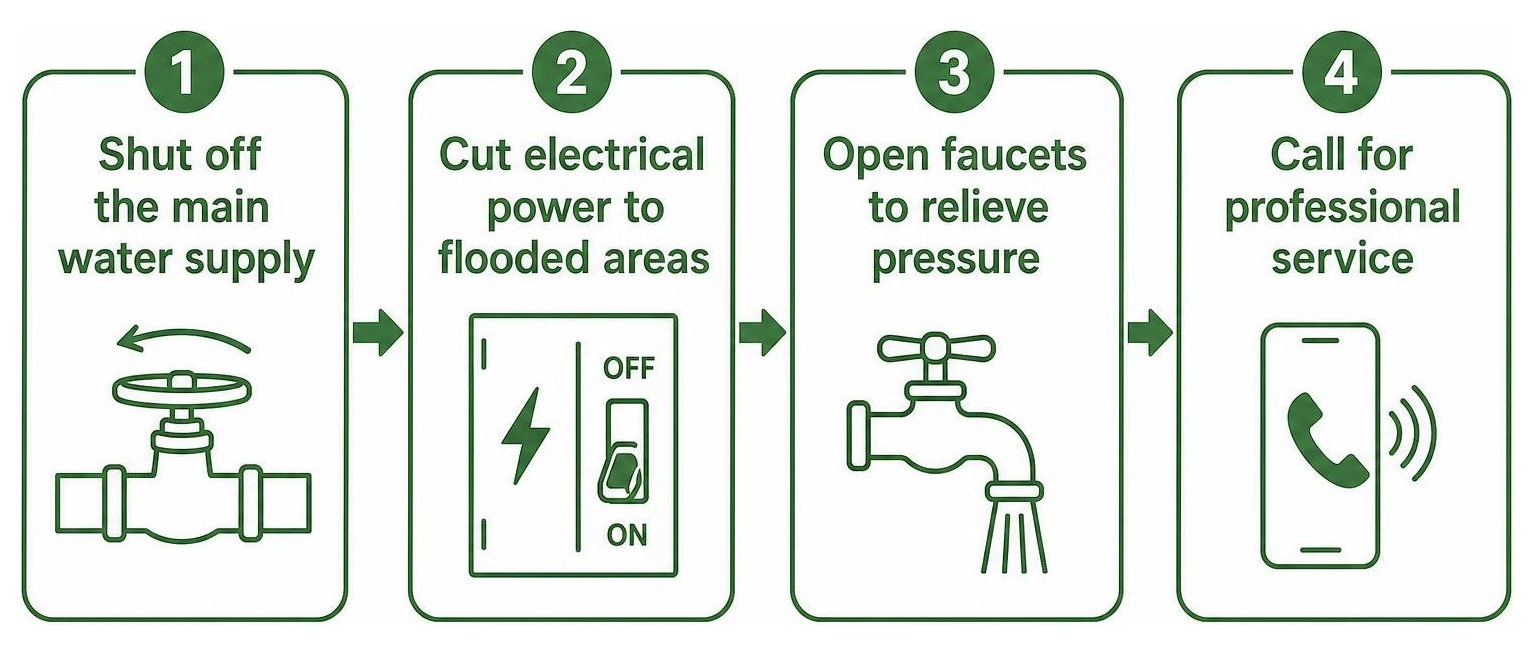
- Shut off the main water supply immediately: Turn your household main shut-off valve completely off to stop the flow of pressurized water.
- Cut electrical power to flooded areas: If leaking water is near electrical outlets, appliances, breaker panels, or light fixtures, switch off power at the main electrical panel. Do not walk through standing water to reach an electrical switch.
- Open faucets to relieve pressure: Open all sink, shower, and tub faucets around the home to drain remaining water out of the plumbing lines and away from the leak.
- Mitigate water damage: Mop up standing water, remove rugs, lift furniture away from wet carpets, and place buckets under active drips. Take photos and videos of the damage for your homeowner’s insurance claim.
- Call for professional service: Contact licensed technicians for emergency plumbing repair services to cut out the ruptured pipe section and restore your water line safely.
Frequently Asked Questions About Winter Pipe Protection
At what temperature do household water pipes freeze?
Household water pipes are generally at the highest risk of freezing when outside temperatures drop below 20 degrees Fahrenheit (-6 degrees Celsius). However, pipes can easily freeze at temperatures above that threshold if they are uninsulated, run through unheated crawl spaces, or are exposed to cold drafts and wind chill. In Southern California, uninsulated exterior pipes can freeze during unexpected cold snaps that dip into the upper 20s or low 30s.
What should I do if my municipal water meter freezes?
If the municipal water meter located near the street or sidewalk freezes, you should contact your local water utility department’s customer service line immediately. The water meter and the supply line running to the street are the property and responsibility of the water utility. Do not attempt to thaw the water meter yourself with torches, hot water, or mechanical tools, as this can damage sensitive electronic metering equipment.
How do I safely locate and shut off my main water valve?
Every adult in your household should know the location of your main water shut-off valve before an emergency occurs. In Southern California homes, the main shut-off valve is typically located:
- Outside the home near the front hose bib where the main supply line enters the building.
- Inside a garage, utility closet, or laundry room.
- In an underground ground box near the front property line or curbside sidewalk.
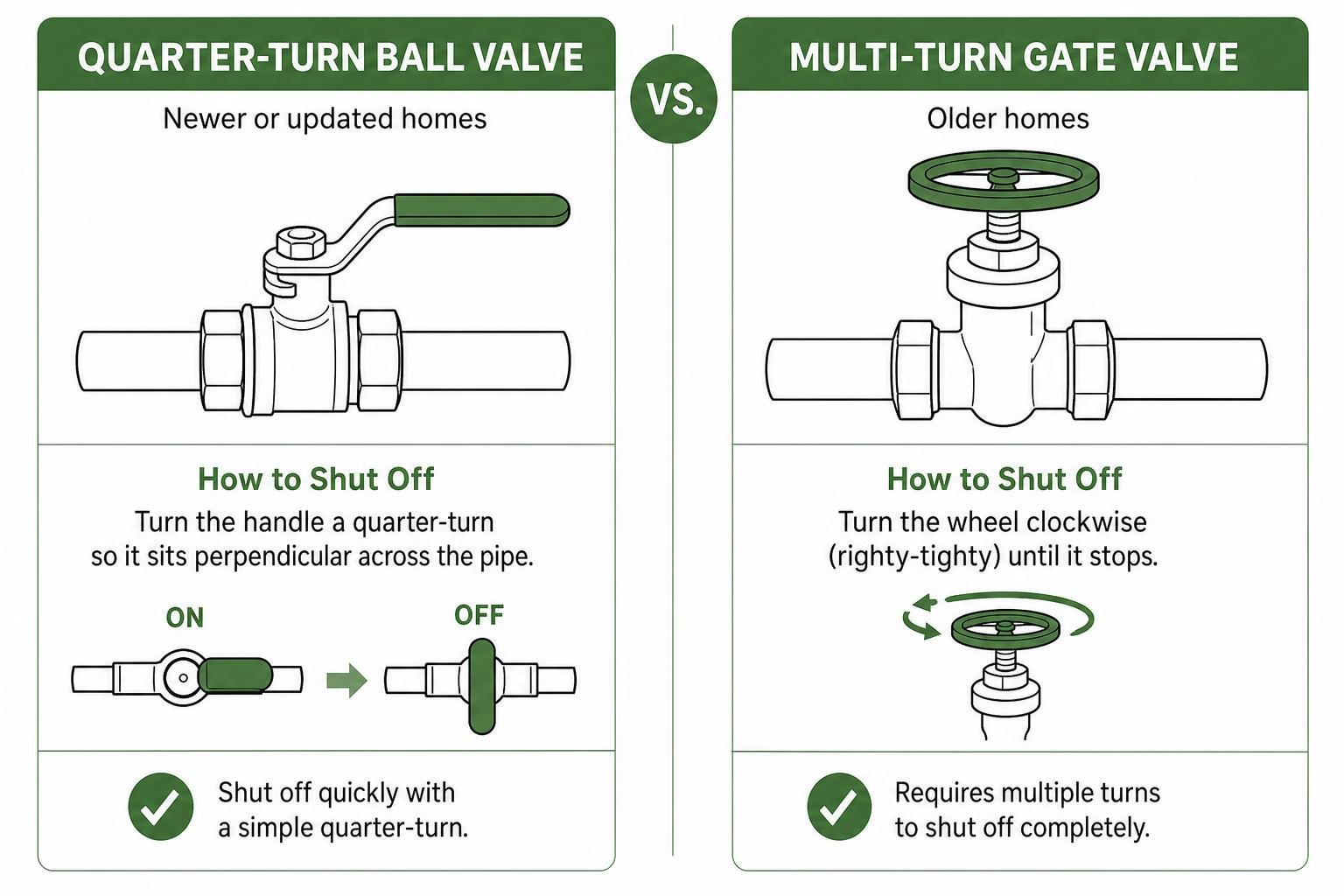
Older homes often feature a round, wheel-style gate valve (turn it clockwise—”righty-tighty”—until it stops). Newer or updated homes feature a lever ball valve (turn the handle a quarter-turn so it sits perpendicular/across the pipe to shut the water off). We recommend marking this valve with bright fluorescent paint, tape, or a dedicated tag so it is easy to find in the dark during an emergency.
Conclusion
Protecting your household plumbing against cold snaps is all about simple preparation, smart heating practices, and quick action during freezing weather. By insulating exposed lines, disconnecting exterior hoses, maintaining steady indoor heat, and keeping faucets dripping during severe drops in temperature, you can safeguard your home against unexpected bursts and costly water leaks.
When you need dependable pipe insulation, whole-home winterization, or prompt repairs across Carlsbad, San Diego County, Orange County, and surrounding Southern California communities, John Stevenson Plumbing, Heating & Air Conditioning is here to help. Our certified technicians provide thorough diagnostics and our 5-Star Service Guarantee backed by 24-hour satisfaction check-ins. Contact us today to schedule your preventative plumbing inspection or explore our full range of plumbing services.