
Why the Water Softener vs Water Filtration System Comparison Matters for Carlsbad Homeowners
Water softener vs water filtration system comparison is one of the most common questions homeowners ask when they notice something is off with their water — whether that’s white scale crusting around faucets, spots on dishes, dry skin after a shower, or water that tastes or smells strange.
Here’s the short answer:
| Water Softener | Water Filtration System | |
|---|---|---|
| Primary purpose | Removes hardness minerals (calcium, magnesium) | Removes contaminants (chlorine, lead, bacteria, PFAS) |
| Main benefit | Protects pipes, appliances, skin, and hair from scale | Improves water safety, taste, and odor |
| What it does NOT do | Does not remove chemicals, bacteria, or other contaminants | Does not remove hardness minerals or prevent scale |
| Best for | Scale buildup, soap scum, spotty dishes, stiff laundry | Bad taste, chemical odors, health-related water concerns |
| Can you use both? | Yes — and for most homes, combining both is the best approach | Yes — installed in sequence for complete water treatment |
These are two very different systems solving two very different problems. Buying the wrong one — or assuming one replaces the other — is a common and costly mistake.
With 85% of U.S. homes dealing with moderately hard to very hard water, and Southern California consistently ranking among the hardest water regions in the country, this is not a small issue for Carlsbad homeowners. Hard water quietly damages water heaters, corrodes pipes, and shortens appliance lifespans — while unfiltered contaminants can affect your family’s health and the way your water tastes every single day.
This guide breaks down exactly how each system works, what each one solves, and how to figure out which one — or which combination — your home actually needs.
Understanding the Water Softener vs Water Filtration System Comparison
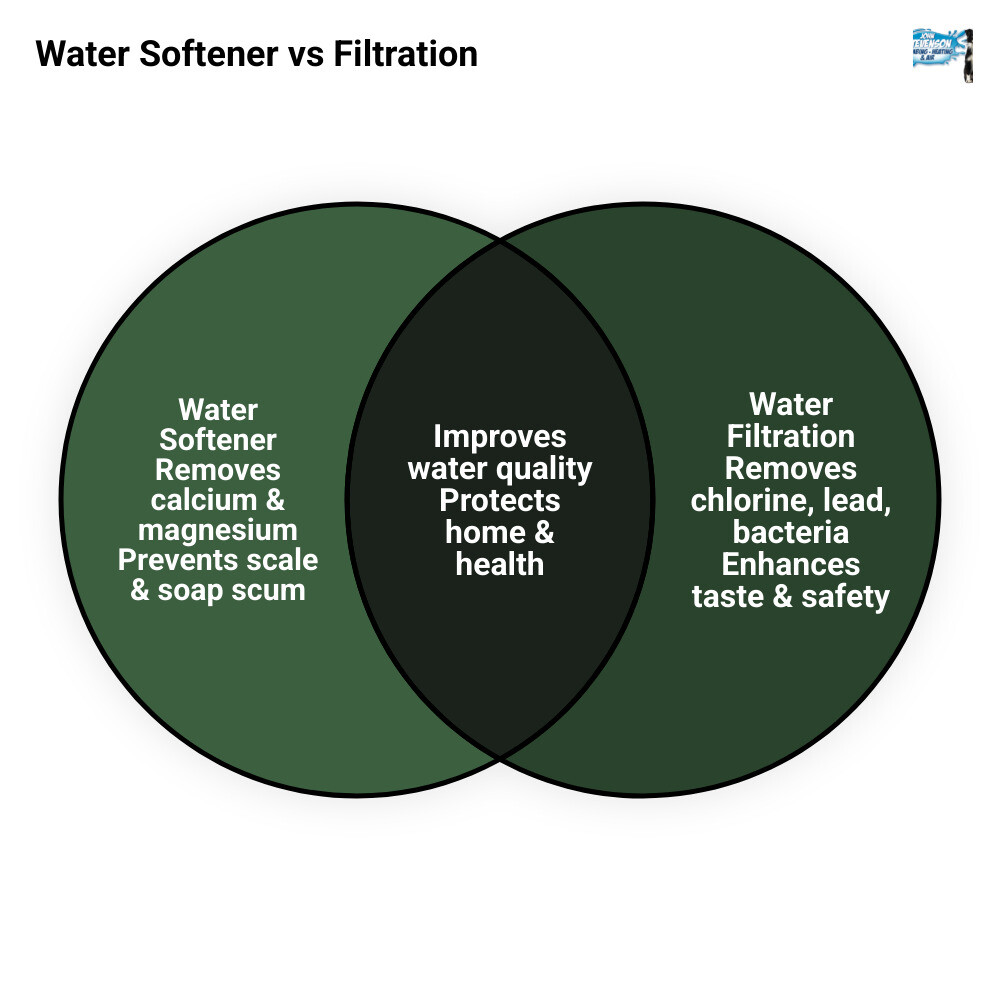
When we talk about water quality in Southern California, we are really talking about two distinct categories of “stuff” in your pipes. On one hand, you have minerals like calcium and magnesium. These aren’t necessarily bad for your health, but they are a nightmare for your home’s infrastructure. On the other hand, you have contaminants like chlorine, lead, pesticides, and bacteria that can affect the safety and taste of your drinking water.
A water softener vs water filtration system comparison begins with understanding their core technologies. A water softener is a specialized tool designed for one specific job: mineral reduction. It uses a process called ion exchange to physically remove the “hardness” from your water.
In contrast, a water filtration system is a broader category of treatment. Whether it’s a whole-home carbon filter or a localized reverse osmosis unit, the goal is contaminant removal. These systems act like a high-tech sieve, trapping chemicals, metals, and biological impurities.
At John Stevenson Plumbing, Heating & Air, we believe that understanding your Water Quality is the first step toward a healthier home. Many homeowners in Carlsbad and San Diego County find that their water is both hard and contains chemical residues from municipal treatment, meaning a single system might only solve half the problem.
Salt-Based vs Salt-Free Water Softener vs Water Filtration System Comparison
If you’ve decided you need to address hard water, you’ll encounter the debate between salt-based softeners and salt-free conditioners.
- Salt-Based Softeners: These are the traditional heavy hitters. They use resin beads and sodium ions to swap out calcium and magnesium. This actually removes the minerals from the water. The downside? They require regular salt refills and produce a brine discharge during their maintenance cycles.
- Salt-Free Conditioners: Technically, these don’t “soften” the water because they don’t remove the minerals. Instead, they use template-assisted crystallization (TAC) to change the chemical structure of the minerals so they can’t stick to your pipes. These are great for preventing scale without the need for electricity or salt, but they won’t give you that “slippery” feeling in the shower or help soap lather better.
When we look at the water softener vs water filtration system comparison in this context, even a salt-free conditioner is still focused on scale, not on removing the chlorine or lead that a dedicated filter handles.
Choosing the Right Water Softener vs Water Filtration System Comparison for Your Needs
The “right” choice depends entirely on what’s in your water. Are you tired of scrubbing white crust off your showerhead? You need a softener. Does your water smell like a swimming pool or taste metallic? You need a filtration system.
In areas like Irvine, Mission Viejo, and Oceanside, municipal water is often treated with chlorine or chloramines. While these keep the water safe from bacteria, they can irritate the skin and taste unpleasant. For these concerns, a carbon-based filtration system is the gold standard. However, if you ignore the hardness, those same filters can become clogged with mineral deposits, shortening their lifespan. This is why evaluating your Water Quality comprehensively is so important.
Identifying Hard Water Issues in Carlsbad Homes
If you live in Carlsbad or anywhere in San Diego County, you are living in a “hard water” zone. In fact, some of the hardest water in the country is found right here in the Southwest, where groundwater regularly exceeds 15 GPG (grains per gallon). For reference, anything over 7 GPG is considered “hard.”
You don’t need a lab coat to spot hard water. Common signs include:
- White Scale Buildup: That chalky, white residue on your faucets and showerheads.
- Soap Scum: A film that develops on shower doors and tubs that seems impossible to clean.
- Dry Skin and Dull Hair: Hard minerals strip the natural oils from your body, leaving you itchy after a shower.
- Spotty Dishes: Even after a full dishwasher cycle, your glasses look cloudy or etched.
If you’re seeing these signs, you likely need Water Descaling solutions to protect your home.
How Water Softeners Protect Your Plumbing and Appliances
Hard water isn’t just an aesthetic annoyance; it’s an economic drain. When hard water is heated, the calcium and magnesium minerals solidify, forming a rock-hard scale inside your appliances.
Research shows that hard water can reduce water heater efficiency by up to 48%. Think about that: nearly half of the energy you pay for to heat your water is being wasted because of mineral buildup. Furthermore, hard water can cut the lifespan of appliances like dishwashers and washing machines by 30% to 50%.
By using resin beads to catch these minerals before they enter your heater, a softener acts as a bodyguard for your plumbing. This preventative Water Descaling ensures that your pipes stay clear and your energy bills stay low. For homeowners in Rancho Santa Fe or Del Mar, where homes often feature high-end appliances, a softener is one of the smartest investments you can make.
The Role of Whole-Home Water Filtration Systems
While softeners protect your “stuff,” filtration systems protect “you.” A whole-home filtration system treats every drop of water that enters your house, from the kitchen tap to the backyard hose.
There are several technologies used in these systems:
- Activated Carbon: Excellent for removing chlorine, bad tastes, and odors.
- Reverse Osmosis (RO): Often used for drinking water, RO can remove up to 99% of total dissolved solids (TDS), including lead, fluoride, and arsenic.
- UV Sterilization: Uses light to kill 99.99% of bacteria and viruses, which is particularly vital for homes on well water in more rural areas like Pauma Valley or Ramona.
A high-quality Water Filtration system ensures that whether you’re brushing your teeth or cooking pasta, the water is as pure as possible.
When to Combine Softening and Filtration Technologies
In May 2026, we are seeing more homeowners than ever opting for “dual-system” setups. Why? Because Southern California water presents a “double whammy” of extreme hardness and high chlorine levels.
If you install a water filter without a softener, the hard minerals can foul the filter media, making it less effective. If you install a softener without a filter, you’ll have soft water that still tastes like chemicals.
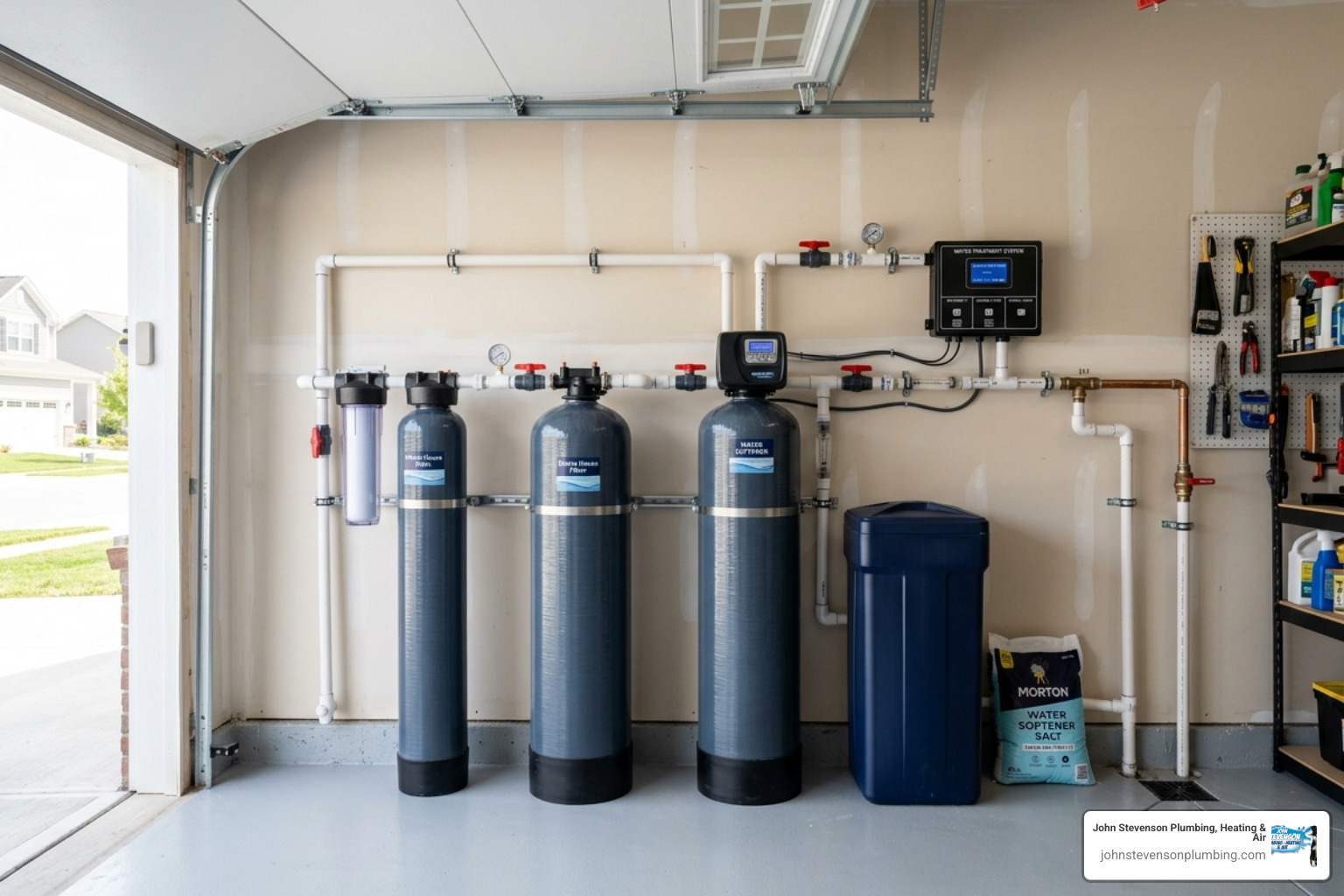
The Correct Installation Order: For the best results, we typically recommend a specific sequence:
- Sediment Pre-filter: To catch dirt and rust.
- Carbon Filtration: To remove chlorine (this also protects the softener’s resin from chemical damage).
- Water Softener: To remove the hardness minerals.
- Reverse Osmosis (Optional): At the kitchen sink for ultra-pure drinking water.
Combining these ensures comprehensive treatment. This is the ultimate water softener vs water filtration system comparison winner: the hybrid approach. For more on how these work together, check out our guide on Water Filtration.
Frequently Asked Questions about Water Treatment
Do I need a water filter if I already have a water softener?
Yes, quite often you do. A water softener only removes minerals like calcium and magnesium. It does not remove chlorine, lead, pesticides, or bacteria. If you want water that is both soft on your skin and safe/tasty to drink, you need both.
Can a water softener remove bacteria or chemicals like chlorine?
No. In fact, high levels of chlorine can actually damage the resin beads inside a water softener, causing them to break down prematurely. This is why we often recommend a carbon filter be installed before the softener to strip away the chlorine first.
How do I test my water to see which system is necessary?
You can start with simple at-home test strips for hardness, but for a detailed look at contaminants like lead or PFAS, a professional laboratory test is best. We can help you analyze your local water report—whether you’re in San Marcos, Escondido, or Laguna Niguel—to determine exactly what’s coming out of your taps.
Conclusion
Choosing between a water softener and a filtration system doesn’t have to be a guessing game. By understanding the water softener vs water filtration system comparison, you can make an informed decision that protects your home’s plumbing and your family’s health.
At John Stevenson Plumbing, Heating & Air, we’ve been serving the Carlsbad and greater San Diego area for years with our 5-Star Service Guarantee. Our certified technicians don’t just “sell units”; we provide thorough diagnostics to ensure you get the exact system your home requires. Whether you need a simple sediment filter or a complex whole-home softening and purification suite, we are here to help.
Don’t let hard water or contaminants dictate your home’s comfort. Improve your home’s water quality today and experience the difference that truly clean, soft water can make. Give us a call, and let’s get your water right!