
After the Storm: Why Every Carlsbad Homeowner Needs a Post-Storm Plumbing and HVAC Checklist
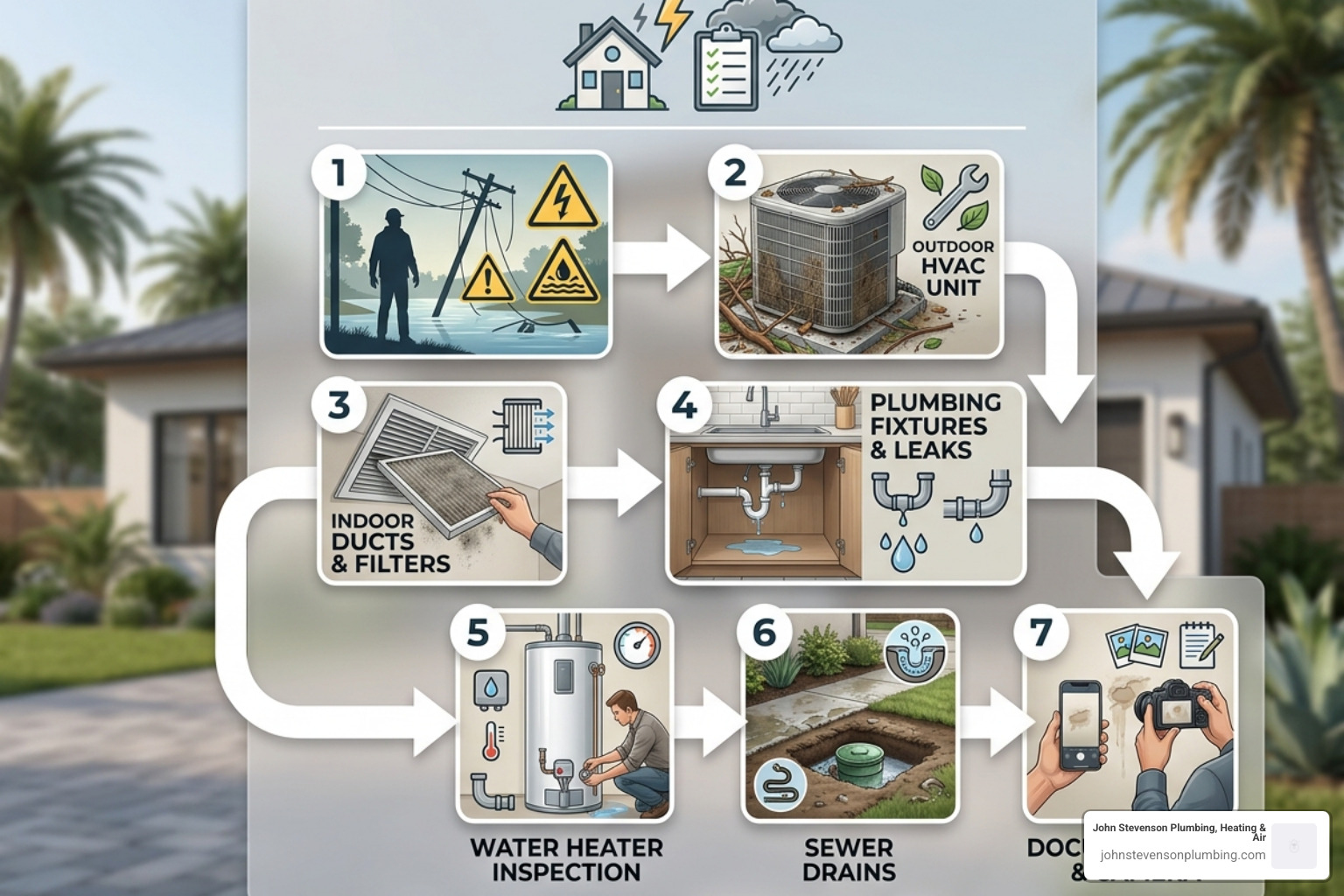
A post storm plumbing and hvac checklist is the fastest way to find hidden damage before it turns into a costly repair. Here’s what to cover right after a storm hits:
- Safety first – Check for gas leaks, standing water, and tripped breakers before touching anything
- Outdoor HVAC unit – Look for debris, dented fins, bent fan blades, and standing water
- Indoor HVAC systems – Inspect air filters, ductwork, and air handlers for moisture or mold
- Plumbing fixtures and pipes – Run all faucets, check water pressure, and look for leaks or water stains
- Water heater – Check for flood exposure, corrosion, and pressure relief valve function
- Sewer and drains – Watch for slow drains, gurgling toilets, or sewage odors
- Document everything – Take photos and videos before any cleanup or repairs for insurance purposes
Southern California doesn’t see storms as often as other parts of the country — but when they do hit Carlsbad and the surrounding San Diego County area, they hit hard. Heavy rain, strong winds, and power surges can quietly damage your plumbing and HVAC systems in ways that aren’t obvious right away. A small leak or a bent condenser fin today can become a flooded crawl space or a failed AC system by summer.
The tricky part? A lot of storm damage stays hidden. Flooding can corrode HVAC electrical components without leaving visible signs. High post-storm humidity can trigger mold growth inside ductwork within days. And a partially blocked sewer line might not back up until the next heavy rain. That’s why working through a clear, step-by-step checklist right after a storm is so important for protecting your home and your budget.
Immediate Safety and Your Post Storm Plumbing and HVAC Checklist
Before you start poking around your outdoor AC unit or checking the pipes in the crawl space, we need to talk about safety. Storms create hazards that aren’t always visible. In Carlsbad and across San Diego County, heavy rainfall can lead to localized flooding that interacts with electrical systems, creating a high risk of shock.
Gas Leaks are Priority One: If you smell “rotten eggs,” hear a whistling or hissing sound near gas lines, or see bubbles in standing water, evacuate immediately. Do not use your phone, light a match, or flip a light switch inside the home. Once you are at a safe distance, call your gas company and emergency services.
Electrical Hazards and Power Surges: Lightning and downed power lines often cause power surges that can fry the delicate circuit boards in modern HVAC systems. If your power went out and came back on, check your electrical panel for tripped circuit breakers. If a breaker trips again immediately after you reset it, do not try a third time—this indicates a short circuit that needs professional attention.
Personal Safety Equipment: When beginning your post storm plumbing and hvac checklist, wear sturdy shoes and gloves. If you are dealing with a situation that requires Emergency Plumbing services, such as a burst pipe or a major backup, avoid contact with the water, as it may be contaminated. Finally, ensure your carbon monoxide detectors are functioning and have fresh batteries, especially if you’ve been running a furnace or gas water heater continuously during a cold snap.
Visual Inspection: Outdoor Unit Post Storm Plumbing and HVAC Checklist
Your outdoor condenser is the front line of defense against the elements, and it’s also the most vulnerable. High winds in coastal areas like Encinitas or Oceanside can turn patio furniture and tree branches into projectiles.
- Debris Clearance: Check for leaves, mud, and branches lodged inside the unit. Even a small amount of debris can block up to 25% of the airflow, forcing your system to work harder and potentially causing the compressor to overheat. Clear a 2–3 foot radius around the unit to ensure proper ventilation.
- Bent Fins and Coils: Inspect the aluminum fins on the side of the unit. Hail or flying debris can dent these easily. If more than 30% of the fins are flattened, it can significantly impact heat exchange. While you can use a fin comb for minor fixes, major damage often requires professional AC Repair.
- Refrigerant Lines: Look for the copper lines running from the unit into your house. If they look shifted or if you see oily stains around the connections, you likely have a refrigerant leak. Refrigerant oil leaks out along with the gas, leaving a tell-tale sign.
- Leveling: Check if the concrete pad has shifted. Heavy rain can wash away the soil beneath the pad, causing the unit to tilt. An unlevel unit can cause the fan motor to wear out prematurely or put stress on the refrigerant lines. Regular HVAC Maintenance can help catch these shifts before they cause a total system failure.
Indoor Systems: Completing Your Post Storm Plumbing and HVAC Checklist
Once the outside is clear, head indoors. Storms often stir up a massive amount of dust, pollen, and debris that ends up in your indoor air.
- Air Filters: This is the easiest DIY step. Check your air filters immediately. If they are damp or excessively dirty from the storm’s dust, replace them. A wet filter is a breeding ground for mold and will restrict airflow, leading to a frozen evaporator coil.
- Ductwork and Air Handlers: If you have an attic or crawl space air handler, check for water stains on the unit or the surrounding insulation. Flex ducting is particularly vulnerable to wind vibration and can become disconnected or crushed.
- Thermostat Responsiveness: Test your thermostat. Ensure the display is clear and that the system responds correctly to temperature changes. If the screen is blank or the system won’t kick on, it may have suffered a power surge.
- Humidity and Mold: Southern California’s “atmospheric rivers” bring high humidity. If your home feels muggy or smells musty after a storm, your HVAC system may not be dehumidifying properly. This is a crucial part of Heating Maintenance and AC care to prevent mold from taking hold in your vents.
Assessing Plumbing Fixtures and Water Heater Health
Plumbing damage can be sneaky. While a burst pipe is obvious, many storm-related issues start as tiny drips or shifts in water pressure.
| Issue | Signs to Look For | Severity |
|---|---|---|
| Minor Leak | Small water spots, damp cabinets, dripping faucets | Low (but can lead to mold) |
| Pipe Shift | Rattling noises when water runs, low pressure | Medium |
| Major Pipe Burst | Standing water, rushing sound, zero pressure | High (Emergency) |
| Sewer Backup | Foul odors, gurgling drains, water rising in tubs | High (Health Hazard) |
Start by running every faucet in the house. Is the water pressure consistent? Low water pressure after a storm can indicate a broken pipe somewhere on your property or a municipal issue. Check under every sink for new moisture or water stains. If you suspect a hidden leak, Leak Detection & Repair is essential to prevent structural damage. For any visible cracks or dripping joints, prompt Plumbing Repair will save you from a much larger bill down the road.
Inspecting the Water Heater After Flooding
Your water heater is often located in a garage or a basement area—the first places to flood. If water reached the base of your water heater, do not attempt to relight the pilot or turn it on.
- Submerged Components: For gas heaters, the control valve and burner assembly can be ruined by water. For electric heaters, the thermostat and heating elements are at risk of short-circuiting.
- Corrosion and Insulation: Even if the water recedes quickly, the internal insulation can act like a sponge, holding moisture against the steel tank and causing it to rust from the outside in.
- Sediment Buildup: Storms can stir up sediment in the municipal water lines. If your hot water is discolored or has a strange odor after a storm, you may need to flush the tank to remove debris that settled inside.
- Pressure Relief Valve: Check the T&P (Temperature and Pressure) valve. If it’s leaking or looks corroded after being exposed to floodwater, it needs to be replaced by a professional to ensure the tank remains safe.
Identifying Sewer Backups and Hidden Water Damage
Heavy rain is the number one enemy of your sewer system. When the ground becomes saturated, or the municipal sewer lines become overwhelmed, that water has to go somewhere—and sometimes, it tries to come back into your home.
If you notice foul odors coming from your floor drains or hear gurgling sounds from your toilets when you run the sink, you are likely facing a backup. This is not a DIY fix. You may need Drain Cleaning or, in cases where heavy debris has entered the lines, Hydro Jetting to clear the blockage.
Signs of Main Sewer Line Issues
Sometimes the damage is further down the line. In areas with older trees like Rancho Santa Fe or Del Mar, heavy rain can cause the ground to shift, allowing tree roots to penetrate weakened sewer pipes.
- Sinkholes or Soggy Patches: If you see a random patch of grass that is much greener or soggier than the rest of the yard, or a literal dip in the ground, your main line may have collapsed.
- Foundation Cracks: Significant water pressure from a broken sewer or main water line can actually cause the soil around your foundation to shift, leading to new cracks in your walls or floors.
- Multiple Clogged Drains: If every drain in the house is slow at the same time, the problem is almost certainly in the main line. Depending on the severity, we may recommend Sewer Line Repair or, for older clay pipes that have crumbled, a full Sewer Line Replacement.
Documenting Damage and Knowing When to Call a Pro
If you find damage while going through your post storm plumbing and hvac checklist, your first instinct might be to start cleaning. Stop! Before you touch anything, grab your phone.
- Take Photos and Video: Document the “as-is” state of the damage. Take wide shots of the area and close-ups of specific damaged components (like a dented AC coil or a leaking pipe).
- Keep Records: Dig out your recent AC Maintenance receipts. Insurance adjusters are much more likely to approve a claim if you can prove the system was in good working order before the storm.
- Don’t DIY Complex Repairs: While clearing branches is fine, trying to fix a refrigerant leak or a gas water heater yourself can void your warranty and create serious safety risks.
At John Stevenson Plumbing, Heating & Air, we provide thorough diagnostics and upfront pricing. Our certified technicians will walk you through exactly what happened during the storm and what needs to be done to get your home back to 5-star comfort.
Frequently Asked Questions about Post-Storm Inspections
Is it safe to turn on my AC if the outdoor unit was submerged?
No. Even if the water has receded, mud and silt can be trapped inside the electrical components or the fan motor. Turning it on could cause a short circuit or permanent motor failure. Always have a professional inspection first.
Why is my water pressure low after a major rainstorm?
It could be a municipal issue, but it often indicates a leak in your main water line. If the ground shifted or a tree root was disturbed, your pipe might have cracked. If the pressure doesn’t return to normal within a few hours, call for leak detection.
What should I do if I smell sewage coming from my floor drains?
Stop using water immediately. Do not flush toilets or run the dishwasher, as this will only add more volume to the backup. This is a health hazard and requires professional sewer line service to clear the blockage and sanitize the area.
Conclusion
A storm doesn’t have to result in a financial flood of repair bills. By staying proactive and using this post storm plumbing and hvac checklist, you can catch small issues before they escalate. Whether you are in Carlsbad, Mission Viejo, or San Diego, your home’s comfort depends on systems that are often out of sight and out of mind until something goes wrong.
At John Stevenson Plumbing, Heating & Air, we’ve spent years helping Southern California homeowners recover from unexpected weather. Our 5-Star Service Guarantee means you get thorough diagnostics, upfront pricing, and the peace of mind that comes with a 24-hour satisfaction check-in. Don’t leave your home’s safety to chance after a big storm.
Schedule your post-storm inspection today and let our certified experts ensure your plumbing and HVAC systems are ready for whatever the Carlsbad skies bring next.