
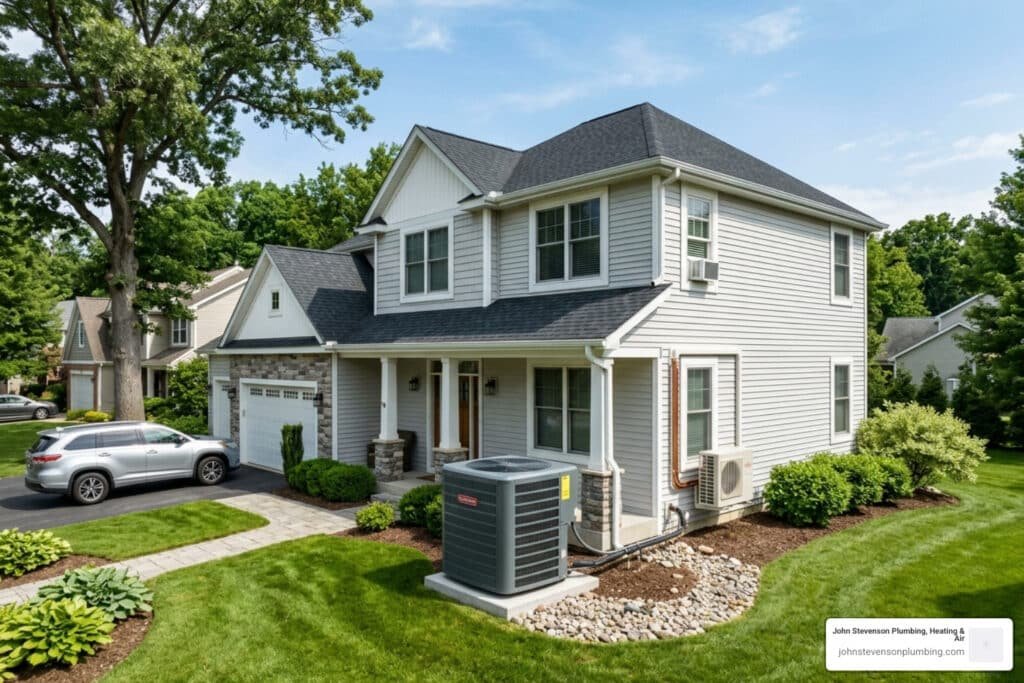
Why Knowing How to Choose the Right AC System for Your Home Matters in Carlsbad
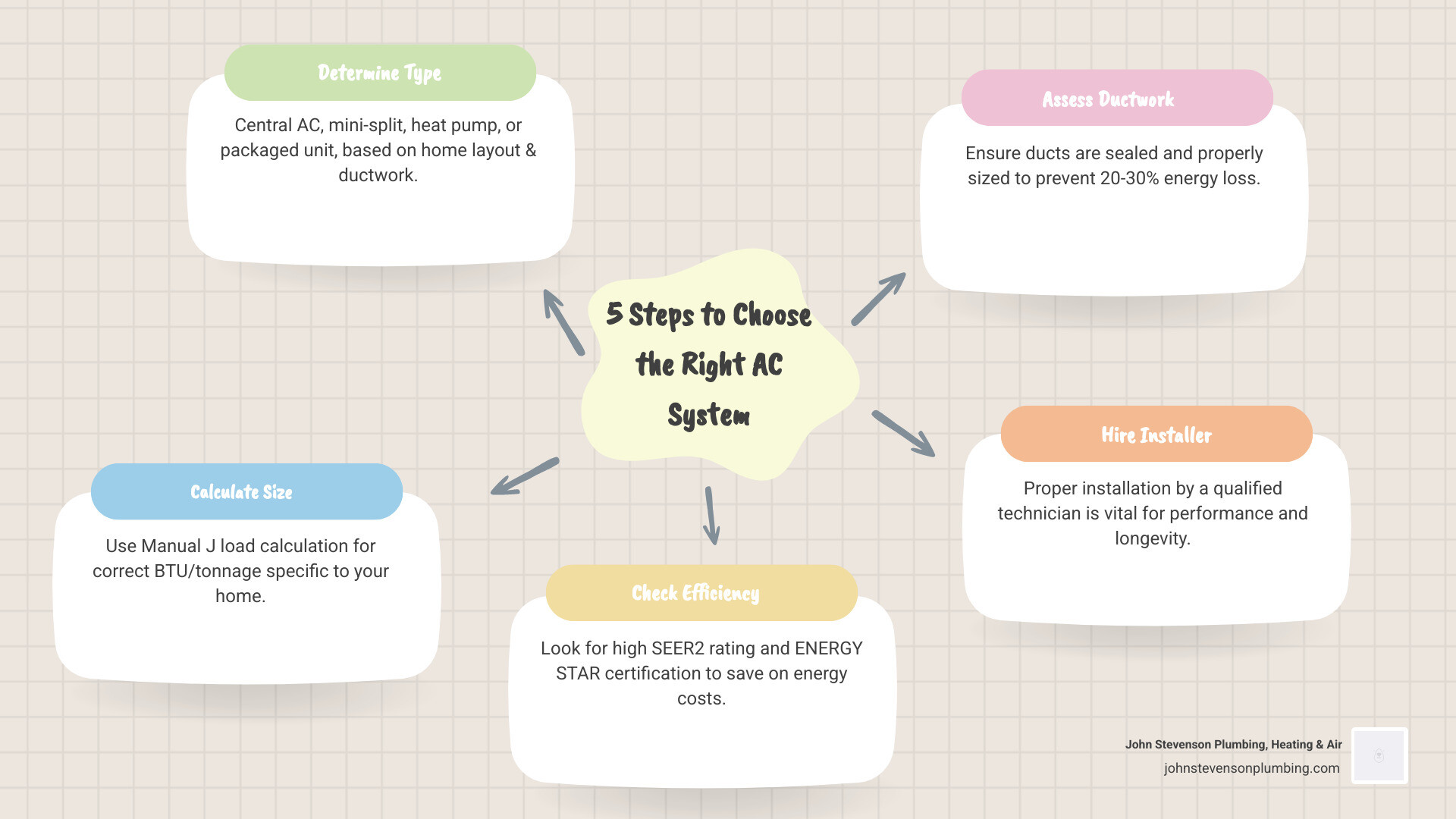
Knowing how to choose the right ac system for your home comes down to five key steps:
- Determine the right type – Central AC, ductless mini-split, heat pump, or packaged unit based on your home’s layout and existing ductwork
- Calculate the correct size – Use a professional Manual J load calculation to find the right BTU/tonnage for your square footage and climate
- Check efficiency ratings – Look for a high SEER2 rating and ENERGY STAR certification to lower long-term energy costs
- Assess your ductwork – Leaky or undersized ducts can waste 20–30% of your energy before cool air ever reaches a room
- Hire a qualified installer – Proper installation is just as important as the unit itself for performance and lifespan
Around 90% of U.S. households use air conditioning — and in Carlsbad, CA, where warm coastal summers are the norm, a reliable, efficient AC system isn’t a luxury. It’s a necessity. Yet many homeowners end up with the wrong system — one that’s too large, too small, or poorly installed — and they pay for it every month on their energy bill.
In fact, a typical home AC system uses more than 2,000 kilowatt-hours of electricity per year. Choosing the wrong unit or skipping a proper load calculation can push that number even higher, while leaving your home feeling humid, uneven, or uncomfortable. With 2026 federal SEER2 efficiency standards now in effect, there’s never been a better time to make a smart, informed decision.
This guide walks you through everything you need to know — from system types and sizing to efficiency ratings, ductwork, and what to look for in a qualified HVAC contractor here in Southern California.
Comparing AC System Types for Southern California Homes
Selecting the foundation of your home comfort begins with understanding the different Cooling Services available. In April 2026, homeowners have more sophisticated options than ever, ranging from traditional ducted systems to hyper-efficient zoned technology.
Split Systems vs. Packaged Units
The most common setup in Carlsbad and surrounding Orange County areas is the split system. This consists of an outdoor condenser unit (the noisy part that sits in your yard) and an indoor evaporator coil, usually paired with a furnace or air handler. It’s the gold standard for Air Conditioning in homes that already have a network of ducts.
On the other hand, packaged units house all components—compressor, coils, and air handler—in a single outdoor cabinet, usually installed on the roof or a concrete slab. These are excellent space-saving solutions for homes with limited indoor square footage or those lacking an attic or basement.
The Versatility of Heat Pumps in 2026
If you are looking for a “two-for-one” deal, an air-source heat pump might be the smartest move for your HVAC Services. Unlike a traditional AC that only cools, a heat pump can reverse its cycle to provide heat during our chilly coastal winter nights.
Because Southern California enjoys a relatively moderate climate, heat pumps are incredibly efficient here. They don’t “create” heat; they move it from one place to another. In 2026, newer models are designed to handle both high-heat summer days and the occasional cold snap with ease, often serving as a more eco-friendly alternative to gas furnaces.
For homes without existing ductwork, Ductless Mini-Splits offer incredible versatility. These systems use an outdoor compressor connected to one or more sleek indoor units mounted on the wall. They allow for “zoning,” meaning you can cool the living room while keeping the guest room off, saving a significant amount on utility bills.
How to Choose the Right AC System for Your Home Based on Size and Capacity
One of the biggest mistakes we see is homeowners assuming “bigger is better.” In HVAC, an oversized unit is just as problematic as one that’s too small. To truly understand how to choose the right ac system for your home, you have to look at cooling capacity, which is measured in BTUs (British Thermal Units) and Tonnage.
Cooling Capacity Table
| Home Square Footage | Required Capacity (BTUs) | Tonnage Equivalent |
|---|---|---|
| 1,000 – 1,200 | 21,000 – 24,000 | 1.5 – 2.0 Tons |
| 1,200 – 1,500 | 24,000 – 30,000 | 2.0 – 2.5 Tons |
| 1,500 – 2,000 | 30,000 – 42,000 | 2.5 – 3.5 Tons |
| 2,000 – 2,500 | 42,000 – 54,000 | 3.5 – 4.5 Tons |
| 2,500 – 3,000+ | 60,000+ | 5.0 Tons |
Note: 1 Ton of cooling equals 12,000 BTUs per hour.
Step-by-Step: How to Choose the Right AC System for Your Home’s Layout
While square footage is a starting point, a professional AC Installation requires a Manual J Calculation. This is a detailed load calculation that considers:
- The orientation of your home (which rooms get the afternoon sun?)
- The number and type of windows
- Insulation R-values in your walls and attic
- Ceiling heights (vaulted ceilings require more cooling power!)
- Local climate zones
For multi-story homes or open floor plans, a single central unit might struggle to keep every room at the same temperature. In these cases, we often recommend Ductless Mini-Split Installation Lake Forest or zoned central systems to ensure comfort on every level without overworking the equipment.
The Dangers of Improper Sizing
If your unit is too small, it will run constantly, struggling to reach the set temperature, which leads to high bills and a shortened lifespan. However, an oversized unit is often worse. It will engage in “short cycling,” where it turns on, blasts the house with cold air, and shuts off before it can properly dehumidify the space. This leaves you feeling “cool but clammy” and can even lead to mold growth in your ducts. Proper AC Replacement ensures the system runs long enough to “wring” the moisture out of the air.
Understanding Efficiency: SEER2, EER2, and ENERGY STAR Ratings
Efficiency ratings tell you how much “bang for your buck” you’re getting. In 2026, the industry has fully transitioned to SEER2 (Seasonal Energy Efficiency Ratio 2). This rating measures efficiency over a range of temperatures (65°F to 104°F) and accounts for the static pressure found in real-world ductwork.
Why Climate Matters When Learning How to Choose the Right AC System for Your Home
In Carlsbad and coastal San Diego, we have unique environmental factors. While SEER2 is a great general guide, EER2 (Energy Efficiency Ratio 2) is often more relevant for those inland areas that see extreme heat (95°F+).
Additionally, coastal homes must contend with salt air corrosion. When performing AC Maintenance Orange County, we often check for signs of “coil rot.” Choosing a unit with specialized coastal coatings can add years to your system’s life.
Interpreting the EnergyGuide Label
Every new unit comes with a bright yellow EnergyGuide label. This is your best tool for AC Installation Costs comparisons. It provides:
- The unit’s specific SEER2 rating.
- An estimate of the yearly operating cost based on average national electricity prices.
- A scale showing how the model compares to similar units in terms of efficiency.
Look for the ENERGY STAR logo, which signifies the unit is at least 15% more efficient than standard models. Many modern systems also feature variable-speed compressors. Unlike traditional units that are either 100% “on” or “off,” variable-speed units can drop down to 25% capacity, maintaining a steady temperature and using significantly less power. Consider an Energy Efficient Thermostat Installation to maximize these savings.
Critical Factors Beyond the Unit: Ductwork and Air Quality
Your AC unit is only half of the equation. The other half is the delivery system. Even the most efficient AC in the world will underperform if it’s connected to failing ducts.
Assessing Your Ductwork
Ducts that leak or are poorly insulated can waste 20% to 30% of your energy. Before a new installation, a professional Duct Cleaning and inspection are vital. We look for:
- Airflow restrictions: Crushed or kinked flex ducts.
- Leaks: Gaps at joints that suck in attic dust and blow out expensive cold air.
- Insulation: Ensuring ducts in unconditioned spaces have the proper R-value.
For our neighbors in the region, Duct Cleaning Orange County is a great way to ensure your new system isn’t immediately bogged down by years of accumulated debris.
Enhancing Your System with Indoor Air Quality Solutions
Modern cooling is about more than just temperature; it’s about health. You can integrate Indoor Air Quality products directly into your new HVAC system. Whole-home filtration, UV lights to kill bacteria on the cooling coils, and advanced humidity control can transform the air you breathe. If you’re looking for Indoor Air Quality Orange County solutions, 2026 tech offers medical-grade filtration that catches even the smallest pollutants.
Smart Technology and Automation
The days of manually adjusting a dial are over. WiFi Thermostats Home Automation allows you to monitor your energy consumption from your smartphone and set schedules that align with your lifestyle. Whether you need a simple Thermostat Installation Lake Forest or a fully integrated smart home setup, these tools can save you roughly 10% on cooling costs by preventing the AC from running in an empty house.
Ensuring Long-Term Performance Through Professional Installation
A new AC system is a major investment, and its performance depends heavily on the quality of the installation. In fact, nearly 25% of new systems encounter problems within the first few years, often due to poor setup.
When we perform an AC Repair, we frequently find that issues stem from improper refrigerant charging or mismatched ductwork. That’s why hiring a qualified contractor for AC Repair Orange County or installation is non-negotiable.
What to Look for in a Contractor:
- NATE Certification: This ensures the tech has passed rigorous industry testing.
- Load Calculations: Never trust a “rule of thumb” estimate based solely on square footage.
- Airflow Verification: The tech should verify that the blower is moving the correct amount of air for the unit’s tonnage.
- Manufacturer Specifications: Every brand has specific requirements for refrigerant levels and electrical connections.
The Role of Preventative Maintenance
Once your new system is in place, AC Maintenance is the key to protecting your warranty and your wallet. Annual inspections, monthly filter replacements, and regular coil cleanings can prevent 90% of common breakdowns. For those in the South County area, HVAC Maintenance Lake Forest plans provide peace of mind, ensuring your system is ready for the first heatwave of the year.
Frequently Asked Questions About Choosing a New AC
What is the most important factor when selecting a new air conditioner?
The single most important factor is proper sizing via a Manual J load calculation. If the unit is sized incorrectly, its efficiency ratings won’t matter because it will never operate under its intended conditions. Following that, the quality of the professional installation determines whether the unit will last 10 years or 20.
How do I know if I should choose a heat pump or a traditional AC?
If your current furnace is old and needs replacement, a heat pump is an excellent choice as it handles both heating and cooling. If you live in a moderate climate like Carlsbad and want to reduce your carbon footprint, a heat pump is the way to go. However, if you have a relatively new, high-efficiency furnace, a traditional split-system AC may be more cost-effective.
Can I use my existing ductwork with a new high-efficiency AC system?
Maybe, but it requires a professional assessment. Modern high-efficiency systems often require more airflow than older units. If your ducts are too small, leaky, or uninsulated, they will “choke” the new AC, leading to ice-ups and compressor failure. We always recommend a duct integrity test before pairing new equipment with old pipes.
Conclusion: Partnering with Carlsbad’s Home Comfort Experts
How to choose the right ac system for your home doesn’t have to be a daunting task. By focusing on the right type, precise sizing, and high-efficiency ratings, you can ensure your family stays cool while keeping your energy bills under control for years to come.
At John Stevenson Plumbing, Heating & Air Conditioning, Inc., we take the guesswork out of the process. Serving Carlsbad, San Diego County, and Orange County, we back every project with our 5-Star Service Guarantee. This includes thorough diagnostics, upfront pricing, and a 24-hour satisfaction check-in to ensure your new system is performing perfectly.
Our NATE-certified technicians are experts in the local Southern California climate, from coastal humidity to inland heat. Whether you need a traditional central system or a modern ductless solution, we are here to provide the professional AC Installation Orange County residents have trusted for decades.
Ready to upgrade your comfort? Contact us today to schedule your professional load calculation and find the perfect cooling solution for your home.