
Why Some Rooms Feel Warm While Others Stay Cold
If you’re dealing with a furnace not heating house evenly, you’re not alone — and the fix is often simpler than you think. Here’s a quick overview of what to do:
- Check all supply vents and return grilles — make sure none are blocked by furniture, rugs, or closed registers
- Replace your air filter — a clogged filter restricts airflow and is the most common culprit
- Seal drafts around windows, doors, and attic access points
- Inspect visible ductwork for leaks, loose joints, or crushed sections
- Call a professional if cold spots persist, your furnace short cycles, or you notice strange noises or smells
Some rooms in your home run cold while others feel like a sauna. Your furnace is running. The thermostat is set. And yet, the bedroom at the end of the hall stays freezing. This is one of the most common comfort complaints homeowners in Carlsbad, CA face — and it rarely means you need a brand-new system right away.
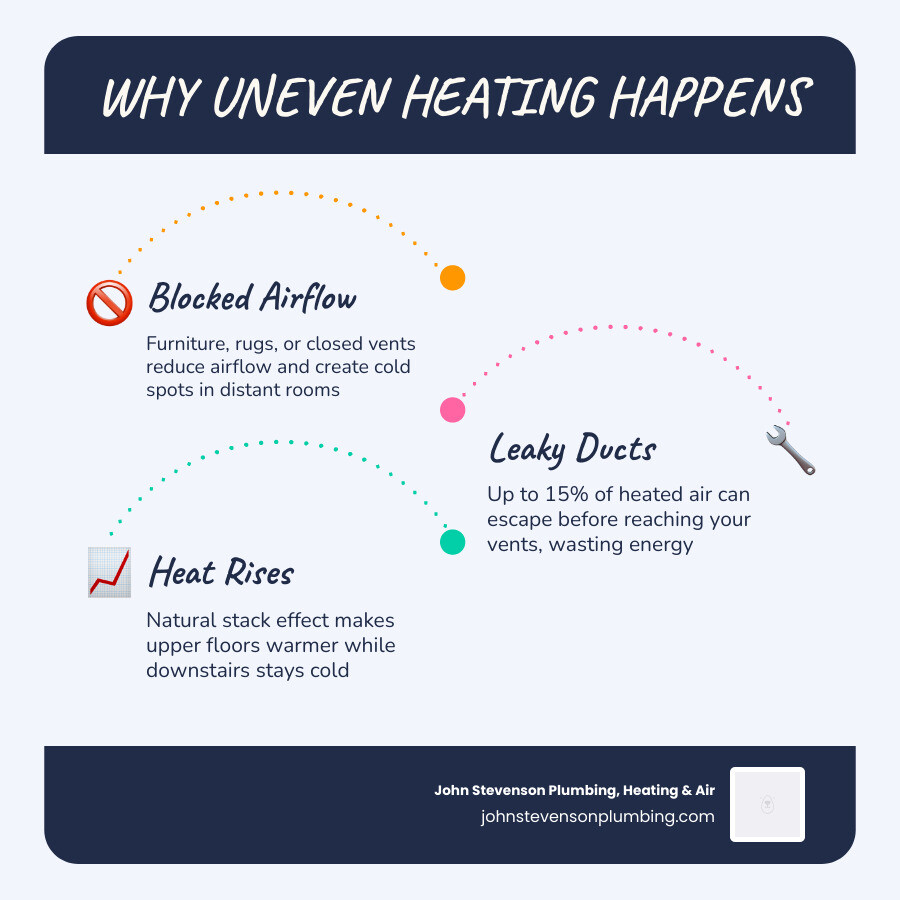
Uneven heating happens for a handful of well-understood reasons: blocked airflow, leaky ducts, a mismatched furnace size, poor insulation, or a thermostat that’s reading temperatures in the wrong spot. According to industry data, duct leaks alone can cause you to lose up to 15% of the heated air you paid for before it ever reaches a single vent. Heat also rises naturally, which means upper floors often warm up faster than lower levels — making multi-story homes especially prone to temperature imbalances.
The good news? Most causes are diagnosable and fixable. This guide walks you through five clear steps to find the problem and restore even, comfortable heat to every room.
Step 1: Start With the Fastest Fixes for Furnace Not Heating House Evenly What to Do
Before we get fancy, start with the boring stuff. In HVAC, the boring stuff fixes a surprising number of problems.
The most common causes of uneven heating are simple:
- Blocked supply vents
- Obstructed return grilles
- A dirty air filter
- Closed interior doors
- Poor air circulation between floors
If your furnace seems fine but your house feels patchy, these are the first things we would check.
Check Every Supply Vent and Return First
Walk room to room and inspect every register and return grille.
Look for:
- Closed or partially closed supply vents
- Furniture covering vents
- Rugs over floor registers
- Curtains blocking airflow
- Dust buildup on return grilles
Supply vents push warm air into rooms. Return grilles pull air back to the system so it can be reheated and redistributed. If either side is blocked, airflow gets out of balance. That can leave one room chilly and another too warm.
A quick reminder: closing lots of vents usually does not fix uneven heating. It often creates pressure problems and can reduce overall airflow. Small adjustments may help in some homes, but slamming shut every vent in unused rooms is usually a myth, not a strategy.
Replace the Air Filter Before Anything Else
If you only do one thing tonight, check the filter.
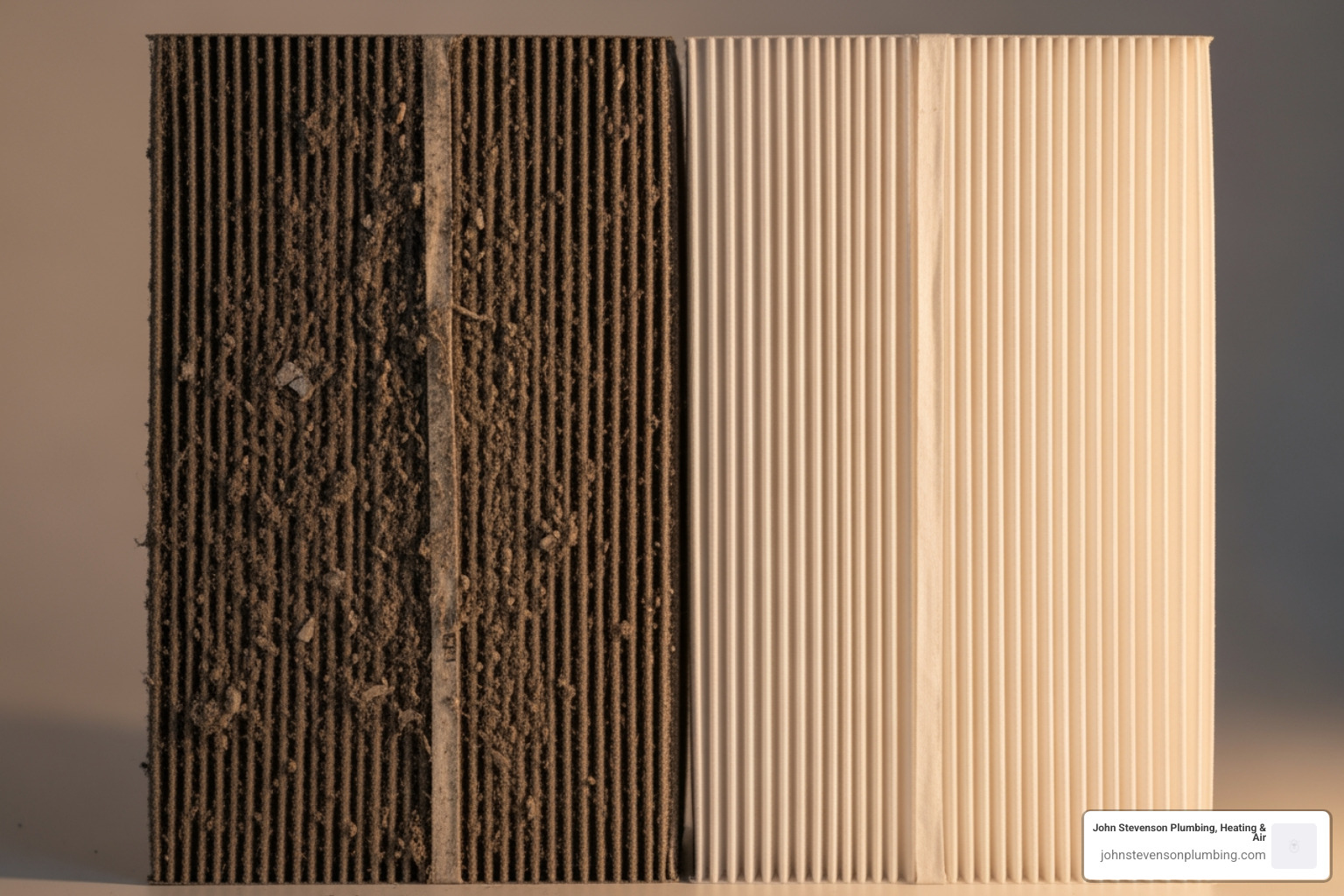
A clogged filter restricts airflow, makes the blower work harder, and can cause weak heat delivery to parts of the house. It is one of the most common reasons homeowners search for furnace not heating house evenly what to do.
Best practices:
- Check the filter monthly during heating season
- Replace most disposable filters every 30 to 90 days
- Clean washable filters about once a month
- Make sure the replacement size and type match your system
Be careful with high-efficiency pleated filters if they are overdue for replacement. Even a good filter can become an airflow problem when it is packed with dust.
For more on tune-ups and airflow issues, see our Furnace Maintenance page.
Try Simple Airflow Balancing Tonight
You may be able to improve comfort the same day with a few airflow tricks:
- Set the thermostat fan to On for an hour to circulate air
- Run ceiling fans on low in the clockwise direction to push warm air down
- Keep interior doors open if possible so air can move back to returns
- Make sure upstairs and downstairs vents are not accidentally closed
This is especially helpful in two-story homes, where warm air naturally rises. If the upstairs is comfortable and the downstairs feels like a garage in January, you are seeing basic physics at work, not necessarily furnace failure.
Step 2: Diagnose the Real Cause of Uneven Heating Room by Room
If the quick fixes did not solve it, the next step is figuring out whether the issue is airflow, heat loss, thermostat control, or equipment performance.
Common clues include:
- One room always colder than the rest
- Weak airflow from one or two vents
- Large temperature swings between floors
- A room over the garage staying cold
- Areas near windows or exterior walls feeling drafty
- The furnace running often but comfort not improving
Furnace Not Heating House Evenly What to Do: A 10-Minute DIY Check
Here is a fast room-by-room check we recommend:
Compare room temperatures
- Use a simple thermometer or a smart sensor
- A difference of 5 degrees or more between rooms is a sign the problem needs closer attention
Test airflow at each vent
- Put your hand near each supply register
- Note rooms with weak or barely warm airflow
Check thermostat accuracy
- Compare the thermostat reading with a separate room thermometer nearby
- If it is off, your system may be cycling based on bad information
Look for drafts
- Check windows, doors, attic access, and exterior wall outlets
- Cold air leaks can make one room feel underheated even if the vent is working
Make notes on room conditions
- South-facing rooms may warm faster from sun exposure
- Rooms over garages or with lots of windows lose heat faster
- Recently remodeled areas may have duct or insulation mismatches
Signs the Problem Is Ductwork, Insulation, or Thermostat Placement
Once you start spotting patterns, the likely cause gets clearer.
| Symptom | Likely cause |
|---|---|
| Weak airflow in one room | Duct leak, crushed duct, blocked branch line, damper issue |
| One side of house colder | Duct imbalance or insulation gap |
| Upstairs warmer than downstairs | Heat rising, single-zone control, airflow imbalance |
| Room cold near windows or doors | Drafts, poor sealing, insulation loss |
| Furnace shuts off before cold rooms warm up | Thermostat placement or oversized furnace |
| Thermostat area feels fine, other rooms do not | Thermostat in a bad location |
Duct problems are especially common when ducts run through attics, garages, or crawlspaces. Research shows up to 15% of heated air can be lost through duct leaks before it reaches the vents.
Thermostat placement matters too. If the thermostat is near direct sunlight, a supply vent, a drafty door, an exterior wall, or the top of a stairway, it may think the house is warmer or colder than it really is.
How Furnace Size and Age Affect Heating Balance
Sometimes the issue is not blockage or leakage. It is the furnace itself.
An oversized furnace can short cycle, which means it heats quickly and shuts off before warm air has time to circulate evenly. Far rooms often stay colder because the heating cycle ends too soon.
An undersized furnace has the opposite problem. It may run and run on colder days but still struggle to keep up, especially in homes with heat loss or long duct runs.
Age matters too. Furnaces typically last about 15 to 20 years. As they get older, components like the blower motor, burners, and heat exchanger can lose efficiency. That can lead to weaker airflow, less consistent heat, and more noticeable hot and cold spots.
If your system is in that age range and uneven heating has become more noticeable over time, it may be time for a professional evaluation.
Step 3: Fix Heat Loss and Air Distribution Problems
Once you know the likely cause, focus on the places warm air is escaping or getting interrupted. We often find that comfort problems are really distribution problems.
Seal Obvious Drafts Around Windows, Doors, and Attic Access
If a room loses heat faster than your furnace can replace it, it will always feel cold.
Start with:
- Weatherstripping around doors
- Door sweeps at exterior doors
- Caulk around window trim
- Sealing attic hatch edges
- Checking rim joists and visible gaps around penetrations
Drafts are especially common in older homes and in rooms with lots of glass. If one bedroom feels cold even though the vent airflow is decent, the room may be leaking heat.
Inspect Visible Ducts for Leaks or Damage
If you can access ducts in an attic, garage, basement, or crawlspace, inspect what is visible.
Look for:
- Loose joints
- Disconnected sections
- Torn flexible duct
- Crushed duct runs
- Missing insulation on ducts in unconditioned spaces
Small accessible leaks can sometimes be sealed with mastic or metal HVAC tape. Do not use standard cloth duct tape. Ironically, it is bad at ductwork.
For deeper issues, hidden duct leakage, or airflow balancing, professional service is the right move. Our Heating Maintenance team can help identify system issues that are not obvious from the living room.
Adjust Dampers and Airflow Without Closing Too Many Vents
Some duct systems have manual balancing dampers, usually located near the main trunk lines. These can help direct more air to colder rooms and reduce airflow to rooms that overheat.
A few smart rules:
- Make small adjustments, not extreme ones
- Wait and recheck temperatures after changes
- Keep most vents open
- Do not choke off airflow to “force” heat elsewhere
If rooms near the furnace get too warm while far rooms stay cold, balancing dampers may help more than register adjustments alone. This is one of the most overlooked fixes for uneven heating.
Step 4: Know When to Call a Professional HVAC Technician
DIY works for basic airflow and draft issues. But some uneven heating problems need testing, measurement, and repair tools most homeowners do not keep next to the flashlight drawer.
Warning Signs DIY Fixes Are Not Enough
It is time to call for help if you notice:
- Persistent cold spots after checking vents and changing the filter
- Temperature differences of 5 degrees or more between rooms
- Weak airflow throughout the house
- Frequent short cycling
- Strange banging, rattling, or squealing noises
- Burning odors or gas smells
- The thermostat reading does not match room conditions
- The furnace runs constantly without making the house comfortable
These symptoms may point to blower issues, control problems, hidden duct leakage, or a furnace that is no longer performing the way it should.
Problems That Need Professional Testing and Repair
Some causes of uneven heating are hard to confirm without proper diagnostics, including:
- Duct leakage behind walls or above ceilings
- Poor duct design from the original installation
- Pressure imbalances
- Blower motor performance problems
- Heat exchanger or burner issues
- Thermostat calibration or control faults
- Furnace sizing errors
Professional testing may include airflow measurement, pressure testing, thermostat verification, and inspection of internal furnace components. If your system needs repair, visit our Heating Repair page. You can also learn more about our full Heating Services.
Uneven Heating in Older or Recently Remodeled Homes
We see persistent comfort issues more often in:
- Older homes with aging insulation
- Homes with additions or converted rooms
- Houses that had HVAC equipment replaced without duct upgrades
- Multi-level homes with only one thermostat
- Floor plans with long duct runs to remote bedrooms
A remodel can unintentionally throw off system balance. Add a room, change walls, or alter airflow paths, and suddenly the old duct setup no longer fits the home. If uneven heating started after renovation, that detail matters.
Step 5: Choose Long-Term Solutions for Persistent Uneven Heating
If your home has had hot and cold spots for years, you may need a solution that goes beyond maintenance and small fixes.
When a Smart Thermostat Helps and When It Won’t
A smart thermostat can help with:
- Better scheduling
- More consistent temperature control
- Reduced temperature swings
- Monitoring and adjusting runtime habits
It can also help if your current thermostat is old, inaccurate, or in a poor location and can be relocated to a better interior wall.
But a thermostat upgrade will not fix:
- Leaky ducts
- Missing insulation
- Major airflow restrictions
- Furnace sizing problems
In other words, a smarter thermostat is helpful, but it is not magic. If the heat cannot get to the room, no app will sweet-talk it there.
Best Upgrades for Multi-Level Homes and Problem Rooms
For homes with chronic upstairs-downstairs differences or one stubborn room, longer-term improvements may include:
- Zoning systems with separate thermostats for different areas
- Variable-speed blowers that run longer at lower speeds for steadier temperatures
- Duct modifications or added returns
- Duct sealing and insulation upgrades
- Ductless support in room additions or hard-to-condition spaces
Zoning is especially effective in larger homes and multi-story layouts because it allows each area to call for heat independently instead of forcing one thermostat to represent the whole house.
When Furnace Replacement Makes More Sense
If your furnace is aging, struggling, or repeatedly failing to heat evenly, replacement may be the better long-term move.
Replacement is worth discussing when:
- The furnace is 15 to 20 years old
- Uneven heating keeps returning after repairs
- The unit is clearly oversized or undersized
- Airflow and comfort remain poor despite duct and insulation improvements
Proper sizing is critical. A too-large furnace can short cycle. A too-small one may never fully catch up. A correctly sized system, paired with healthy ductwork, gives you the best shot at true whole-home comfort.
Learn more about Heating Installation and ongoing Heating Maintenance.
Maintenance Habits That Help Prevent Uneven Heating
Good heating balance is easier to keep than to rebuild from scratch.
A Simple Heating Maintenance Routine for Homeowners
Use this seasonal routine:
- Check your air filter monthly during heating season
- Replace disposable filters every 1 to 3 months as needed
- Vacuum supply registers and return grilles
- Keep vents clear year-round
- Test carbon monoxide detectors monthly
- Schedule annual furnace service before heavy winter use
- Review thermostat settings at the start of the season
- Inspect visible ductwork for loose sections or damage
- Use ceiling fans on low to recirculate warm air when needed
Regular maintenance helps catch airflow and performance issues before they turn into comfort complaints. You can explore HVAC Maintenance and read Twice a Year or Once a Decade: How Often Your HVAC Needs Love or The Secret to a Stress-Free Summer is a Spring HVAC Tune-Up for more upkeep tips.
Homes in Orange County and Nearby Areas May Need Extra Attention
In our service areas across Carlsbad, San Diego County, and Orange County, uneven heating can be affected by:
- Older duct systems
- Insulation gaps in aging homes
- Long duct runs in larger layouts
- Multi-story floor plans
- Rooms above garages or at the ends of the house
If you are local to nearby communities, these service pages may help:
Frequently Asked Questions About Furnace Not Heating House Evenly What to Do
Is it normal for the upstairs to be warmer than the downstairs?
Yes, to a point. Warm air rises, so upper floors usually run warmer. But large differences are not ideal. Ceiling fans, airflow balancing, duct adjustments, and zoning can reduce that gap.
Should I close vents in unused rooms to push heat elsewhere?
Usually no. Closing too many vents can create pressure issues and may reduce overall system performance. Slight balancing adjustments can help in some homes, but if you want true room-by-room control, zoning is the better answer.
Will replacing the thermostat fix uneven heating?
Sometimes, but only if the thermostat is inaccurate, poorly placed, or outdated. It will not fix duct leaks, insulation problems, blocked airflow, or a mismatched furnace.
Conclusion: Get Even Heating Back in Every Room
If your furnace is not heating the house evenly, start simple: check vents, change the filter, seal drafts, and inspect visible ductwork. Those steps solve more problems than most homeowners expect. When they do not, the issue is often deeper in the duct system, thermostat setup, insulation, or furnace performance.
At John Stevenson Plumbing, Heating & Air Conditioning, we help homeowners in Carlsbad and surrounding Southern California communities get back to steady, reliable comfort with thorough diagnostics, upfront pricing, certified technicians, and our 5-Star Service Guarantee. If your cold spots will not quit, we are here to help.
Explore our full HVAC services to schedule the next step toward even heating in every room.