
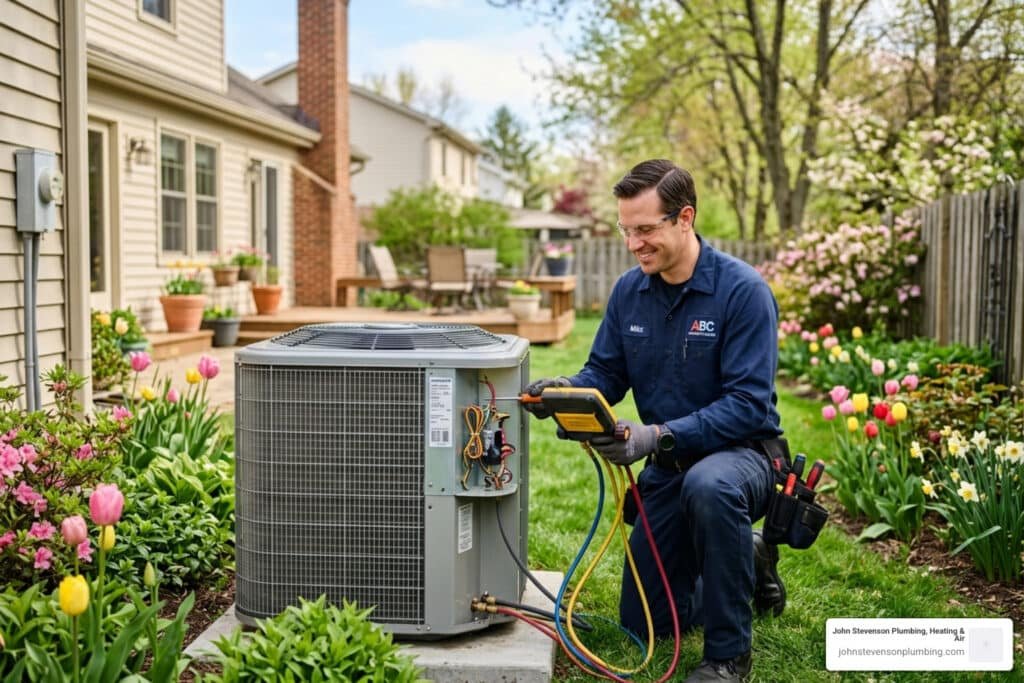
Why Spring Is the Best Time for System Tune Ups
Why spring is the best time for system tune ups comes down to one simple idea: your HVAC system just worked hard all winter, and summer heat is right around the corner. Spring is the window between those two demands — and it’s the smartest time to make sure everything is ready.
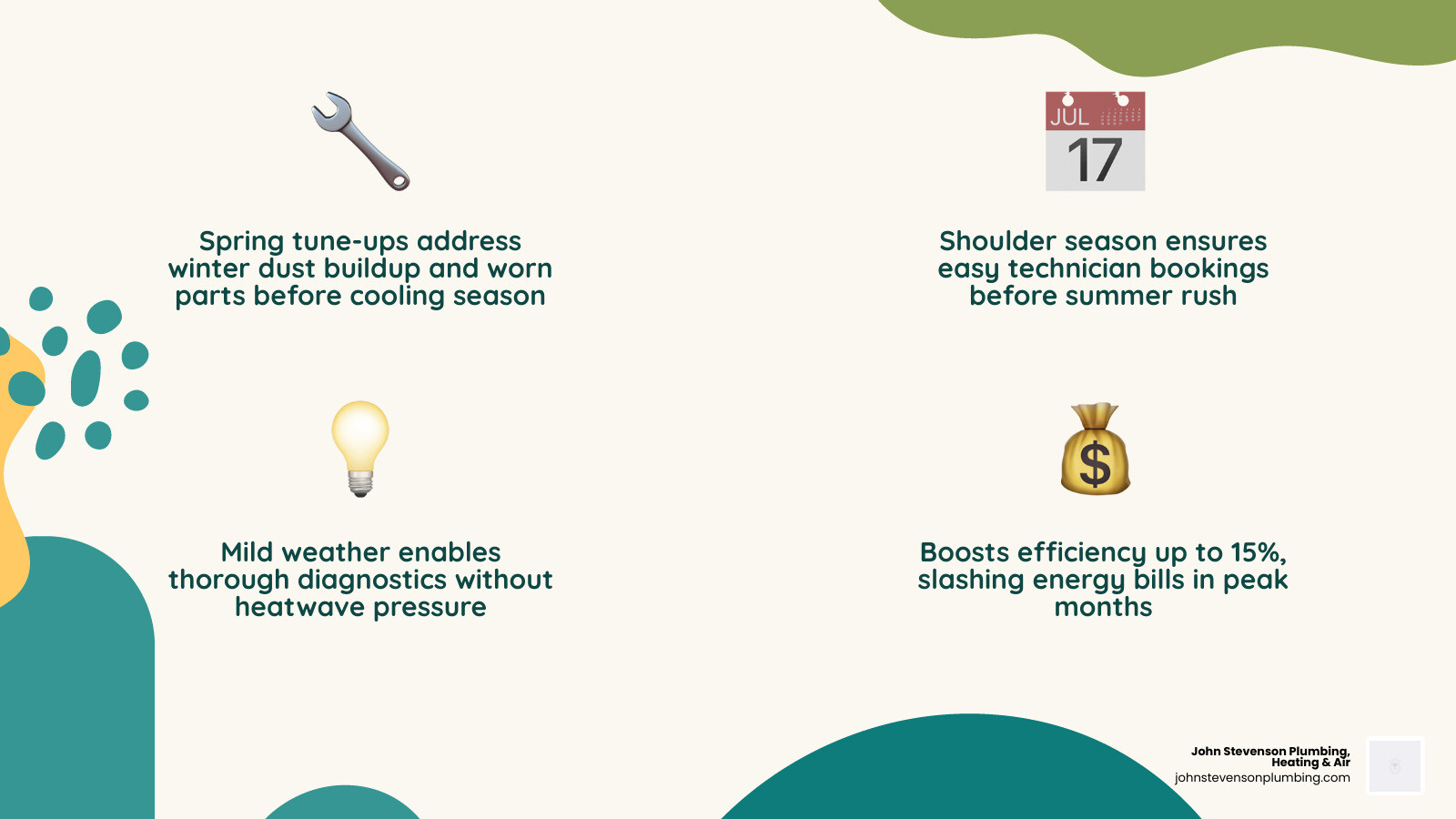
Here’s a quick summary of why spring wins:
- Your system just finished heating season — winter wear like dust buildup, worn parts, and stressed components needs to be addressed before cooling season begins
- Technicians are available — spring is the “shoulder season,” meaning you can book appointments easily before summer rush hits
- Problems are easier to catch — mild spring weather lets technicians run full diagnostics without the pressure of an active heatwave
- Energy bills stay lower — a tuned system can improve efficiency by up to 15%, saving real money before peak cooling months
- You avoid emergency repairs — small issues found in spring cost far less to fix than a full breakdown in July
For homeowners in Carlsbad, CA, where summer temperatures climb fast and HVAC systems work overtime, skipping a spring tune-up is a gamble that rarely pays off.
Why Spring is the Best Time for System Tune Ups
In the industry, we call spring the “shoulder season.” It is that sweet spot between the heavy lifting of winter heating and the high-demand cooling of summer. For residents in areas like Carlsbad, Mission Viejo, and Lake Forest, this timing is strategic.
During the shoulder season, the weather is mild. This means if we need to shut down your system for an hour or two to perform a deep clean or replace a component, your home won’t become an oven or an icebox. It also means our expert technicians have more flexible schedules. Once the first 90-degree day hits in June, our phones ring off the hook with emergency calls. By scheduling your HVAC Maintenance now, you beat the peak season rush and ensure you have a technician’s undivided attention.
Furthermore, proactive HVAC Maintenance in Lake Forest or San Diego ensures system reliability. Think of it like a marathon runner: you wouldn’t ask them to run a second race immediately after finishing one without a check-up and some hydration. Your HVAC system just finished the “winter marathon” of heating; spring is its recovery and preparation period for the summer sprint.
Why spring is the best time for system tune ups to prevent breakdowns
Nothing ruins a summer weekend in Orange County quite like a central air conditioner that decides to quit on a Saturday afternoon. Most emergency repairs happen because a small, undetected issue finally gave way under the stress of a heatwave.
During a spring tune-up, we focus on early diagnostics. We look for worn capacitors (the “batteries” that start your motors), frayed wires, and debris in the outdoor unit. By catching these issues during AC Maintenance, we prevent the “domino effect” where one failing part causes the entire system to overheat and shut down. Research shows that routine maintenance can extend the life of an HVAC system by 5–10 years—that is a decade of extra service just by being proactive in the spring.
Why spring is the best time for system tune ups for energy savings
We all want lower utility bills, especially when the summer rates kick in. A system that is struggling with dirty coils or poor airflow has to run longer and work harder to reach the temperature set on your thermostat.
System calibration and airflow optimization are key parts of a professional visit. Whether you have a traditional AC or need Heat Pump Maintenance, ensuring the refrigerant levels are precise and the internal components are friction-free can improve efficiency by 10% to 20%. In fact, the U.S. Department of Energy notes that regular maintenance can improve system efficiency by up to 15%. That is money back in your pocket every single month.
Addressing Winter Wear and Tear Before the Heat Hits
Winter takes a toll on your system that you might not see. Even if you didn’t use your “cooling” side, the components are often shared. Dust and pet dander accumulate on the evaporator coils, and outdoor units can become clogged with dead leaves and winter debris.
When we perform Heating Maintenance or Furnace Maintenance, we often find that the transition from heating to cooling is where the most “friction” occurs.
- Electrical Connections: Cold weather can cause wires to contract and connections to loosen. We tighten all electrical terminals to ensure safety.
- Thermostat Accuracy: We calibrate your thermostat to ensure it’s communicating correctly with the unit. A thermostat that is off by just a few degrees can cause your system to cycle too frequently, increasing wear and tear.
- Moving Parts: We apply lubrication to motors and bearings. Without this, the friction generated during a hot July day can literally melt components or cause a motor to seize.
Maximizing Efficiency and Indoor Comfort
To understand the value of a tune-up, it helps to see the difference between a system that gets annual love and one that is neglected.
| Feature | Maintained HVAC System | Neglected HVAC System |
|---|---|---|
| Lifespan | 15–20 Years | 8–12 Years |
| Energy Usage | 15% Lower average | 15-20% Higher average |
| Air Quality | High (filtered & clean) | Poor (circulates dust/pollen) |
| Breakdown Risk | Very Low | High (especially in peak heat) |
| Warranty | Validated by records | Often voided by neglect |
Spring is also the season of allergies. As pollen counts rise in Carlsbad and surrounding areas, your HVAC system acts as your home’s lungs. A professional tune-up includes a deep clean of the “wet” areas of your system—like the condensate drains and evaporator coils—where mold and bacteria love to hide. By ensuring these are clear and treated, we improve your indoor air quality and manage humidity levels more effectively.
Our professional spring inspection list includes:
- Checking refrigerant charge levels (crucial for cooling)
- Cleaning and inspecting the outdoor condenser coil
- Inspecting the indoor evaporator coil
- Testing all safety controls and limits
- Measuring voltage and amperage on motors
- Cleaning the condensate drain line to prevent water damage
- Evaluating ductwork for visible leaks or obstructions
DIY Steps to Prepare Your Home for Professional Service
While a full tune-up requires a certified technician to handle refrigerant and high-voltage electricity, there are several things you can do to get your home ready for the season.
- Filter Replacement: This is the #1 thing you can do. Replace your air filter every 30-90 days. A dirty filter is like trying to breathe through a thick sweater; it chokes the system and can even cause the coils to freeze.
- Outdoor Clearance: Take a walk outside to your condenser unit. Ensure there is at least 12 to 24 inches of clear space around it. Trim back any bushes, weeds, or vines that grew over the winter.
- Register Cleaning: Use a vacuum attachment to clear dust from your floor or ceiling registers. Ensure that at least 80% of your vents are open; closing too many vents actually strains the motor rather than saving energy.
- Visual Inspection: Look for any frayed wires or signs of pests (like chewed insulation) near your outdoor unit.
- Thermostat Testing: Switch your system to “Cool” and set it a few degrees below the room temperature just to ensure it kicks on. If you hear weird noises, turn it off and wait for your pro.
- Air Leak Sealing: Check for drafts around windows and doors. Using a bit of caulk or weatherstripping helps keep that expensive cool air inside where it belongs.
Frequently Asked Questions About Spring Maintenance
How long does a professional tune-up typically take?
A thorough, professional tune-up usually takes between 60 and 90 minutes. This allows our technicians enough time to clean the coils, test the electrical components, check the refrigerant levels, and ensure the system is cycling properly. If the system hasn’t been maintained in several years, it may take slightly longer to address accumulated debris.
Can I perform a full system tune-up myself?
While DIY tasks like changing filters and clearing brush are great, a “full” tune-up involves specialized tools and training. For example, measuring refrigerant levels requires manifold gauges and an EPA certification to handle the gases. Testing capacitors and motors involves working with high-voltage electricity, which can be dangerous without proper training. To keep your warranty valid and your home safe, always hire a pro for the technical stuff.
What are the signs my system needs a tune-up immediately?
If you notice any of the following, don’t wait for the official start of spring:
- Unusual Noises: Squealing, banging, or grinding sounds.
- Strange Odors: Musty smells (mold) or burning smells (electrical issues).
- Short Cycling: The system turns on and off every few minutes.
- Weak Airflow: You can feel cold air, but it isn’t blowing strongly out of the vents.
- Spiking Bills: Your energy bill is significantly higher than the same month last year.
Conclusion
At John Stevenson Plumbing, Heating & Air, we believe that your home should be a sanctuary, not a source of stress. Serving Carlsbad and the surrounding communities from Irvine to San Diego, we have seen how a little bit of spring preparation prevents a whole lot of summer headaches.
When you choose us, you are backed by our 5-Star Service Guarantee. This means you get thorough diagnostics, upfront pricing, and certified technicians who treat your home with respect. We even perform 24-hour satisfaction check-ins to make sure everything is running perfectly.
Don’t wait until the first heatwave of the year to find out your AC isn’t up to the task. Give your system the “spring cleaning” it deserves so you can enjoy a cool, worry-free summer.