
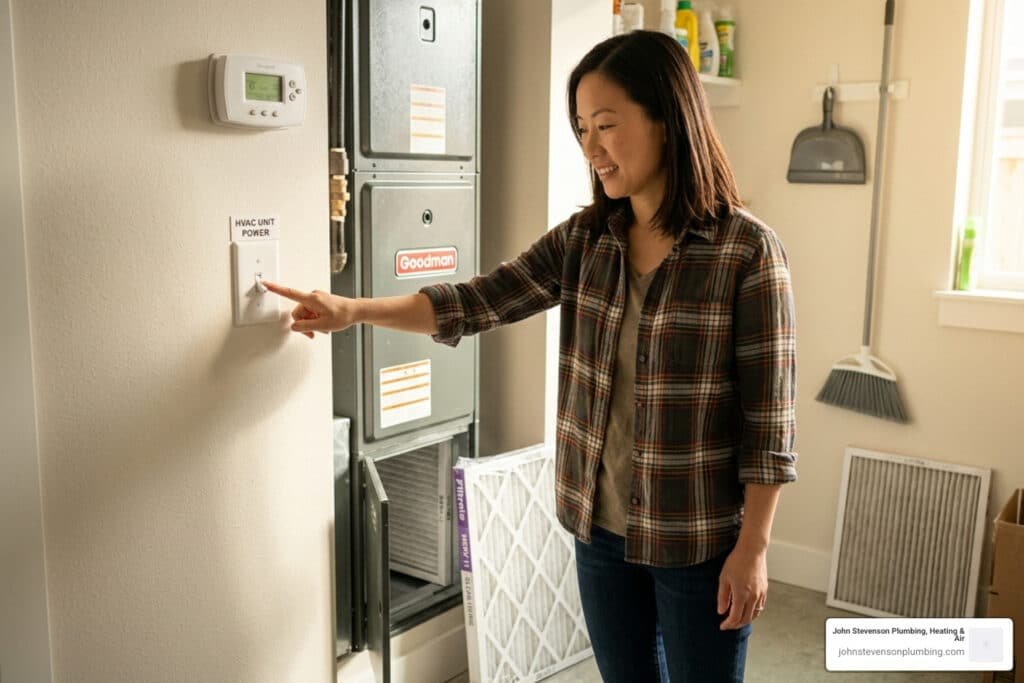
Your Quick-Start Spring Air Filter Replacement Guide
A spring air filter replacement guide helps you swap out your home’s dirty filter in just a few simple steps:
- Turn off your HVAC system before you begin.
- Locate the filter — usually in a return vent, furnace cabinet, or ceiling grille.
- Remove the old filter and note the airflow direction arrow.
- Clean out any dust from the housing with a dry cloth.
- Insert the new filter with the arrow pointing toward the blower/furnace.
- Close and secure the housing, then turn your system back on.
Spring in Carlsbad, CA brings warm breezes — but also a surge of pollen, coastal humidity, and lingering winter dust trapped inside your home. Your air filter has been working hard all season, and by the time spring arrives, it’s often clogged enough to strain your HVAC system and push dirty air right back into your living space. A quick filter swap is one of the easiest things you can do to protect your family’s health and keep your system running efficiently before the summer heat kicks in.
Why You Need to Swap Your Air Filter This Spring
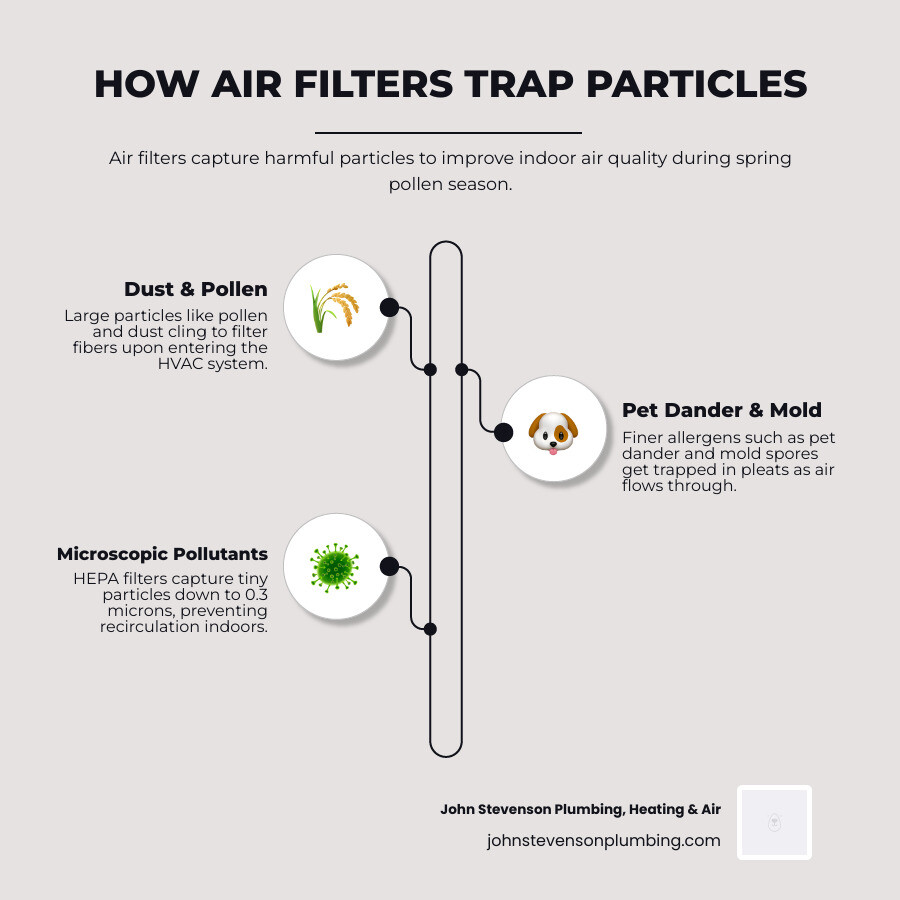
As we transition from the chilly mornings of winter to the vibrant bloom of a Southern California spring, our homes undergo a hidden transformation. During the winter, we tend to keep our doors and windows tightly shut. While this keeps us warm, it also traps dust, pet dander, and indoor pollutants inside our ductwork. When spring arrives, it brings a massive surge of pollen and allergens that find their way into our living spaces every time a door opens.
One of the most important reasons to prioritize a spring air filter replacement guide is the impact on your Indoor Air Quality. A filter that has been running all winter is likely saturated with debris. If you don’t swap it out, your HVAC system begins to act like a giant fan blowing those trapped pollutants back into your bedrooms and kitchen. This can lead to increased sneezing, itchy eyes, and respiratory discomfort for your family.
Furthermore, a clogged filter causes significant system strain. When air cannot flow freely through the filter, your air conditioner has to work twice as hard to pull in air. This doesn’t just increase your energy bills; it causes unnecessary wear and tear on the blower motor. By performing AC Maintenance early in the season, you prevent the system from overheating or freezing up when the first heatwave hits Carlsbad.
Lastly, spring humidity can lead to moisture buildup in neglected filters. This creates a breeding ground for mold spores. Swapping your filter ensures that the air circulating through your home is fresh, dry, and free of organic growth, keeping your home smelling clean and feeling comfortable.
Essential Steps in Your Spring Air Filter Replacement Guide
Replacing an air filter is one of the most rewarding DIY tasks because it is quick, affordable, and provides immediate results. However, doing it correctly is key to ensuring your HVAC system functions as intended.
Filter Orientation and Airflow Direction
The most common mistake homeowners make is installing the filter backward. Every air filter has a small arrow printed on the side frame. This arrow indicates the direction the air should flow. In almost all residential systems, the arrow should point toward the blower motor or the furnace unit. If you install it backward, the filter’s structural support (often a wire mesh) won’t be able to prevent the filter material from collapsing or whistling under the pressure of the air.
Housing Cleaning
Before you slide the new filter in, take a moment to look inside the housing. Over the months, dust and hair can accumulate around the edges of the filter slot. Use a dry microfiber cloth or a vacuum attachment to clear this out. This ensures a secure seal so that air doesn’t bypass the filter through the gaps. If air leaks around the edges, the filter can’t do its job, and your coils will get dirty much faster.
Locating Your Unit for a Spring Air Filter Replacement Guide
Finding your filter can sometimes feel like a game of hide-and-seek, especially in larger homes across Orange County and San Diego. Depending on how your home was built, your filter could be in one of several places:
- The Furnace or Air Handler Cabinet: This is common in homes where the HVAC unit is in a closet, garage, or attic. Look for a narrow slot with a removable cover right where the large return duct enters the unit.
- Return Air Grilles: Many homes have large intake vents located in the ceiling or high up on a wall. These grilles usually have two latches that allow the face to swing open, revealing the filter behind it.
- Floor Registers: In some older homes, the return might be located in a large floor grate.
If you are unsure where yours is located, a professional HVAC Maintenance visit can help identify all the filter locations in your home, as some systems actually require multiple filters.
Tools and Preparation for Filter Maintenance
For most modern systems, you won’t need any heavy machinery. However, it is helpful to have a few things on hand:
- A Screwdriver: Some filter covers are held in place by small screws or hex bolts.
- A Microfiber Cloth: For wiping down the exterior of the vent and the interior housing.
- The Correct Replacement Part: Check your old filter for the dimensions (e.g., 20x25x1). Using the wrong size will allow unfiltered air to enter your system.
- A Step Ladder: If your filters are located in the ceiling.
While you are at it, this is a great time to consider if your home needs Duct Cleaning. If you notice that your new filter turns gray or black within just a week or two, it’s a sign that there is significant debris sitting inside your ductwork that needs professional removal.
Choosing the Right Filter for Your Carlsbad Home
Not all filters are created equal. Depending on your family’s health needs and the environment in Carlsbad, you might want to upgrade from a basic “rock catcher” to something more robust.
| Filter Type | Best For | Particle Capture | Odor Reduction |
|---|---|---|---|
| Standard Pleated | General use | Dust, lint, large pollen | Minimal |
| Activated Carbon | Pet owners/Smokers | Dust, hair, VOCs | High (absorbs odors) |
| HEPA (High-Efficiency) | Allergy sufferers | 99.97% of tiny particles | Moderate |
When choosing, pay attention to the MERV rating (Minimum Efficiency Reporting Value). Ratings typically range from 1 to 16 for residential use:
- MERV 1-4: Basic filtration, protects the equipment but doesn’t do much for Indoor Air Quality.
- MERV 8-11: The “sweet spot” for most homes. These trap mold spores, fine dust, and pet dander without overly restricting airflow.
- MERV 13-16: Highly efficient, but can be too restrictive for older HVAC systems. Check with a technician before jumping to a high MERV rating to ensure your blower motor can handle it.
Recognizing the Signs of a Clogged Filter
How do you know if you need to follow this spring air filter replacement guide right now? Your HVAC system usually drops a few hints when it’s struggling to breathe.
- Reduced Airflow: If the air coming out of your vents feels weak or “thin,” the filter is likely blocked.
- Musty Smells: A dirty filter can trap moisture and organic matter, leading to a “dirty sock” smell whenever the AC kicks on.
- Visible Dust Buildup: If you find yourself dusting your furniture every two days, your filter is likely no longer capturing the particles circulating in the air.
- Unusual Noises: A whistling or humming sound near the intake vent often means the system is struggling to pull air through a clogged medium.
- Increased Energy Bills: When the system runs longer cycles to reach the thermostat setting, your bill will reflect that extra effort.
In automotive contexts, a clogged cabin filter can even cause windshield fogging because it can’t clear humidity from the air effectively. The same principle applies to your home; if your indoor air feels “heavy” or humid, your AC Maintenance is overdue.
Local Carlsbad Factors in Your Spring Air Filter Replacement Guide
Living in Carlsbad, Encinitas, or Oceanside presents unique challenges for air filtration. We aren’t just dealing with standard household dust; we have specific environmental factors:
- Coastal Humidity: High humidity can cause paper filters to dampen and sag, which can lead to mold growth if not changed regularly.
- Salt Air: Salt spray from the Pacific can be corrosive. While it mostly affects outdoor units, it can also contribute to a “sticky” film on indoor filters.
- Seasonal Pollen: The local flora in San Diego County blooms aggressively in the spring, putting a heavy load on your Indoor Air Quality systems.
- Construction Dust: With ongoing development in areas like San Marcos and Vista, fine silica and construction debris are often present in the air, clogging filters faster than the manufacturer’s suggested timeline.
Frequently Asked Questions About Air Filters
How often should I replace my home air filter?
For most homes in the Carlsbad area, we recommend replacing your filter every 60 to 90 days. However, if you have multiple pets, live near a construction site, or suffer from severe allergies, you should check it every 30 days. Statistics show that replacing a clogged filter can improve system efficiency and even boost local air quality significantly.
Can I clean and reuse a standard pleated filter?
Unless the filter is specifically labeled as “washable” or “reusable” (usually made of a plastic mesh or foam), the answer is no. Standard paper or cotton pleated filters are designed to be disposable. Attempting to wash them will destroy the fibers and potentially lead to mold growth within the filter material itself.
What happens if I install the filter backward?
If the filter is backward, the air pressure will push against the side of the filter that doesn’t have structural support. This can cause the filter to bend or collapse into the ductwork. Over time, this allows unfiltered air to hit your evaporator coils, which can lead to a very expensive repair bill for cleaning or replacing those coils.
Conclusion
Taking fifteen minutes to follow this spring air filter replacement guide is one of the best investments you can make in your home’s comfort and your family’s health this season. Whether you are in Carlsbad, Del Mar, or Irvine, a clean filter ensures that your HVAC system is ready to tackle the rising temperatures with ease.
At John Stevenson Plumbing, Heating & Air, we are committed to your comfort. Our 5-Star Service Guarantee means we provide thorough diagnostics and upfront pricing for all your HVAC needs. If you’ve swapped your filter and your system still isn’t performing quite right, or if you’d rather have a certified technician perform a full seasonal tune-up, we are here to help. We even provide a 24-hour satisfaction check-in to ensure everything is running perfectly.
Don’t let poor air quality dampen your spring. Schedule your spring HVAC service today and breathe easy knowing your home is in expert hands!