
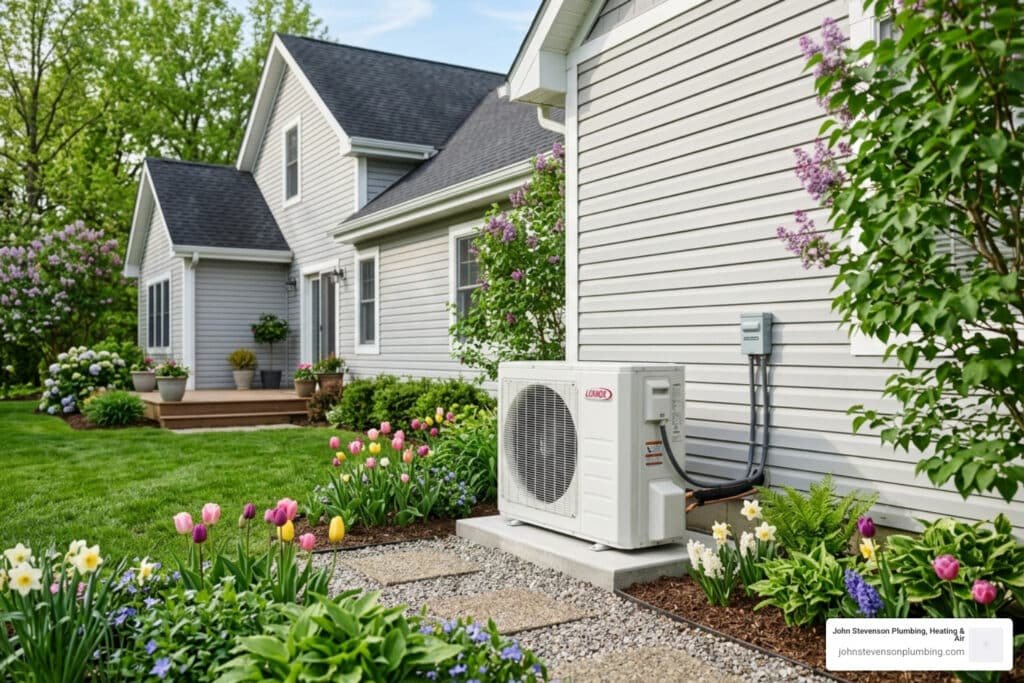
Why Spring Is the Right Time to Tackle HVAC Tasks
The hvac tasks to do every spring every homeowner should complete include:
- Replace the air filter – Swap in a fresh filter (MERV 8-13 recommended) to restore airflow and improve efficiency
- Clean the outdoor condenser unit – Remove winter debris and maintain at least 2 feet of clearance on all sides
- Test the thermostat – Switch to cooling mode and verify it responds accurately before the heat hits
- Flush the condensate drain line – Pour diluted white vinegar down the line to prevent algae clogs and water damage
- Inspect vents and ductwork – Check for obstructions, dust buildup, and any visible gaps or leaks
- Check refrigerant line insulation – Look for cracked or missing foam wrap on the lines running to your outdoor unit
- Schedule a professional tune-up – Book early in spring before technicians fill up for the summer rush
Your HVAC system has been running in heating mode all winter, or sitting mostly idle if you live in a mild climate. Either way, spring is when problems quietly hiding in your system tend to show up – often on the hottest day of the year, right when you need cool air most.
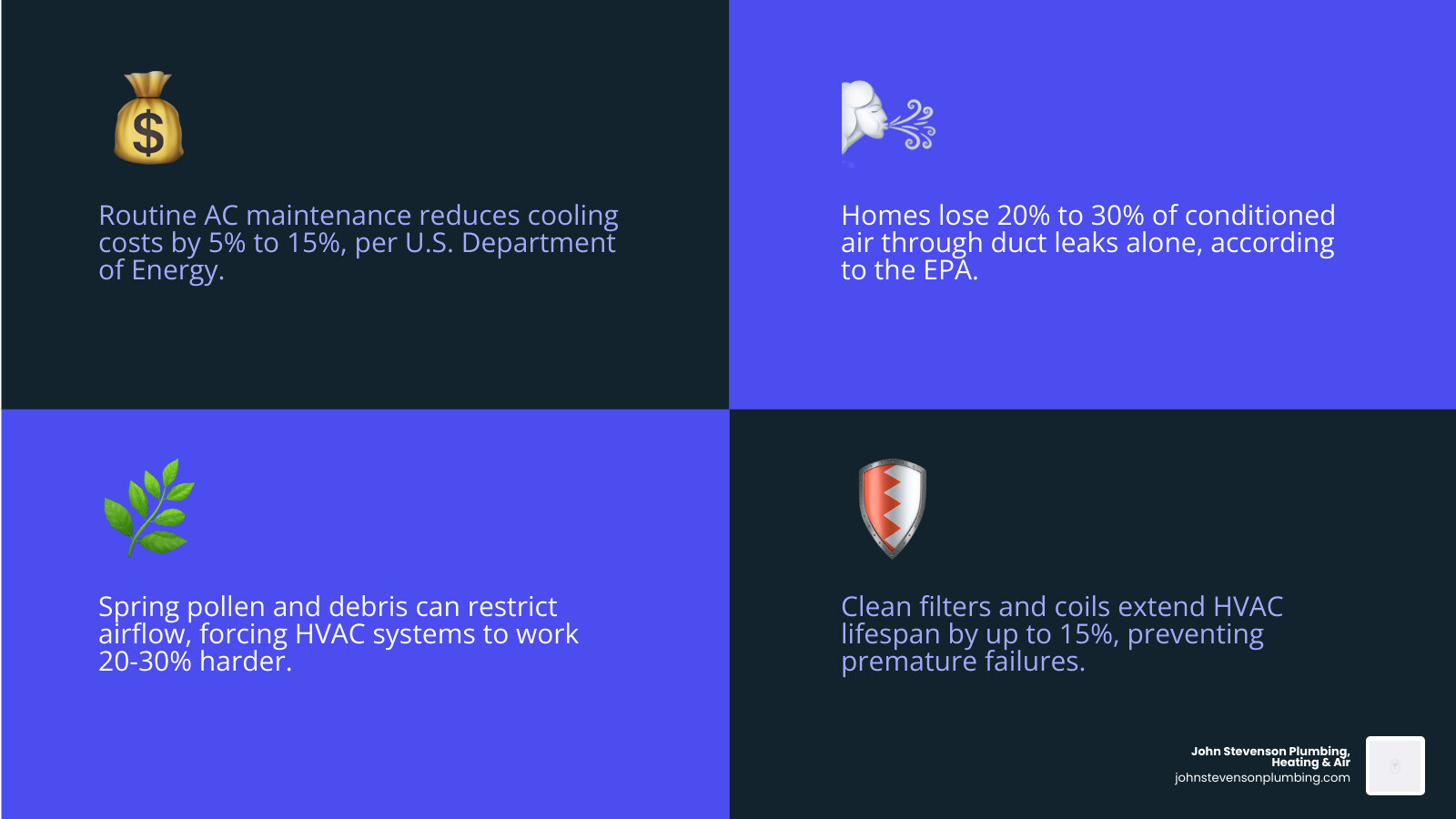
Here in Carlsbad, CA, spring brings rising temperatures, increased pollen, and humidity swings that put real pressure on your system. A dirty filter, a clogged drain line, or a condenser buried in debris can force your HVAC to work significantly harder – impacting performance and shortening the life of the equipment. According to the U.S. Department of Energy, routine AC maintenance can significantly improve cooling performance, and the EPA estimates that homes lose a significant portion of conditioned air through duct leaks alone.
The good news: most of these issues are easy to catch in spring, before they become unexpected summer breakdowns.
Essential hvac tasks to do every spring for Peak Performance
As the “spring thaw” arrives in Southern California, transitioning your home from heating to cooling requires more than just a flick of a switch. Performing a few essential hvac tasks to do every spring ensures that your system doesn’t just run, but runs efficiently. When a system is neglected, it consumes more power to achieve the same level of cooling, which can lead to a shorter system lifespan.
The timing for these tasks is critical. We recommend starting your spring maintenance in March or April. By handling AC Maintenance early, you beat the “first heatwave rush” when HVAC companies are flooded with emergency calls. Taking a proactive DIY approach to the basics allows you to identify minor hiccups before they escalate into total system failures.
Why Air Filter Replacement is One of the Top hvac tasks to do every spring
If you only do one thing for your HVAC system this season, let it be this: change your air filter. It is the single most impactful DIY task for maintaining Indoor Air Quality and system health.
During the spring, Southern California sees a significant spike in pollen and dust. If your filter is clogged with winter debris, your blower motor has to work twice as hard to pull air through the system. This restriction doesn’t just strain the system; it can actually cause your evaporator coils to freeze over, even on a warm day.
When selecting a filter, look at the MERV (Minimum Efficiency Reporting Value) rating:
- MERV 1-4: Basic filtration, mostly protects the equipment from large dust bunnies.
- MERV 8-11: The “sweet spot” for most homes, balancing high-quality filtration of pollen and pet dander without over-restricting airflow.
- MERV 13+: High-efficiency filters often recommended by ASHRAE for superior air quality, though you should ensure your system is powerful enough to handle the increased resistance.
Cleaning and Clearing the Outdoor Condenser Unit
Your outdoor unit (the condenser) is responsible for releasing the heat gathered from inside your home. If it’s covered in mud, dead leaves, or overgrown weeds, that heat has nowhere to go. This is especially true for Heat Pump Maintenance, where the outdoor unit works year-round.
Follow these steps to clear the area:
- Maintain Clearance: Ensure there is at least a 2-foot “dead zone” around the unit. Trim back any bushes, tall grass, or flowers that have crept closer during the rainy season.
- Remove Surface Debris: Clear away any leaves, twigs, or trash trapped against the sides of the unit.
- Gently Rinse the Fins: Use a standard garden hose (never a pressure washer, which can flatten the delicate metal fins) to rinse away dust and salt spray. Spray from the top down at a gentle angle to flush out the “valleys” between the fins.
Maximizing Efficiency with Thermostat and Ductwork Checks
Once the hardware is clean, it’s time to focus on the “delivery system” – your thermostat and ducts. Efficiency isn’t just about how well the AC creates cold air; it’s about how effectively that air reaches your living room. Proper Duct Cleaning and sealing can prevent the air loss common in many Carlsbad homes.
Testing Your Thermostat: Critical hvac tasks to do every spring
Before you actually need the cooling, run a “test flight.” Switch your thermostat to “Cool” and set the temperature about 5 degrees below the current room temperature. You should hear the indoor blower start and, within a minute, the outdoor compressor kick on.
If you are still using an old-fashioned manual slider or a non-programmable digital unit, spring is the perfect time for an upgrade. A smart thermostat can provide enhanced control over your home’s climate.
| Thermostat Type | Key Benefits |
|---|---|
| Manual | Requires constant human adjustment. |
| Programmable | Sets schedules for work/sleep; reduces unnecessary run time. |
| Smart (Wi-Fi) | Remote control, energy reports, and automatic “away” modes. |
If your system doesn’t respond or the air coming from the vents isn’t chilly after 10 minutes, you may need AC Repair Lake Forest to check for electrical issues or refrigerant leaks.
Inspecting Vents and Sealing Leaky Ductwork
Walk through every room in your house and check the supply and return vents. Ensure they aren’t blocked by new furniture, rugs, or curtains. Dust the grates with a vacuum attachment to keep that dust from circulating back into your lungs.
While you’re at it, take a peek at any visible ductwork in your attic or crawlspace. Look for disconnected sections or white “dust” patterns near joints, which indicate air leaks. Small gaps can often be sealed with specialized foil tape (not standard “duct tape,” which actually dries out and fails quickly). Consistent Heating Maintenance and duct inspections keep your airflow unobstructed and your system performance consistent.
Preventing Water Damage and System Failures
HVAC systems don’t just cool the air; they dehumidify it. That moisture has to go somewhere, and if the path is blocked, you’ll end up with water damage in your ceiling or a flooded utility closet. Ensuring your AC Installation remains water-tight is a vital part of your spring checklist.
Clearing the Condensate Drain Line to Prevent Clogs
The condensate drain line is typically a white PVC pipe that carries water from your indoor coil to the outside. Over the winter, algae, mold, and dust can create a sludge-like “goop” that blocks the pipe.
To prevent a backup:
- Locate the drain line access point (usually a T-shaped pipe near the indoor unit).
- Pour about a cup of distilled white vinegar down the line. This kills algae and prevents clogs.
- If you suspect a clog is already forming, use a wet-dry vacuum on the outdoor end of the pipe to suck out any obstructions.
Regular HVAC Maintenance of this line is the best way to avoid the dreaded “water leak from the ceiling” emergency.
Identifying Warning Signs That Require Immediate Attention
As you perform your hvac tasks to do every spring, keep your ears and nose open for “red flags.” If you notice any of the following, turn the system off and call for professional help:
- Unusual Noises: Grinding, squealing, or loud banging.
- Burning Smells: Electrical odors or the smell of melting plastic.
- Ice Formation: Any frost or ice on the copper refrigerant lines or the indoor coil.
- Short Cycling: The system turns on and off every few minutes without reaching the set temperature.
- Frequent Breaker Trips: If your AC keeps “popping” the circuit breaker, there is a dangerous electrical draw occurring.
If your heater was acting up at the end of winter, don’t ignore it just because it’s getting warm. Schedule Heating Repair now so the system is safe and ready for the next cold snap.
Why Professional Maintenance is the Ultimate Spring Task
While DIY tasks are great for routine care, they don’t replace the trained eye of a certified technician. A professional AC Maintenance San Diego visit involves technical checks that require specialized tools and EPA certifications – especially when handling refrigerants.
Whether you have a residential unit or manage a Commercial HVAC system, a professional tune-up ensures every component is tightened, calibrated, and cleaned to factory standards.
What to Expect During a Professional Spring Tune-Up
When our technicians arrive for a spring visit, we go far beyond just changing a filter. A comprehensive tune-up includes:
- Coil Cleaning: Deep cleaning both the evaporator (indoor) and condenser (outdoor) coils to maximize heat transfer.
- Electrical Tightening: Checking all wire connections for corrosion or looseness, which prevents many unexpected failures.
- Motor Lubrication: Ensuring all moving parts have reduced friction to prevent overheating.
- Safety Testing: Verifying that all safety switches and “limit” controls are functioning to protect your home.
- Refrigerant Check: Measuring the “charge” to ensure there are no slow leaks.
Even if you don’t use your furnace in the summer, Furnace Maintenance San Diego is often bundled into spring visits to ensure the blower motor – which both systems share – is in top shape.
Regional Considerations and Common DIY Mistakes to Avoid Carlsbad
Living in Carlsbad and the surrounding North County areas means dealing with specific environmental factors. Our proximity to the ocean brings salt air, which can accelerate corrosion on outdoor units. Additionally, our “May Gray” and “June Gloom” can lead to high humidity levels that make your Heat Pumps work extra hard to pull moisture out of the air.
Common Spring Mistakes to Avoid:
- Forgetting the Cover: If you used a winter cover on your outdoor unit, remove it before turning the AC on. Running a covered unit will damage the compressor quickly.
- Using a Pressure Washer: We see many bent fins caused by homeowners trying to “deep clean” their units with high-pressure water. Stick to the garden hose.
- Ignoring the “Off” Switch: Always turn off the power at the thermostat and the outdoor disconnect box before working on the unit.
- Skipping the Professional Check: Many homeowners assume that if the air is “kind of cool,” the system is fine. In reality, a system low on refrigerant will continue to run until the compressor fails completely, leading to a much more significant AC Repair.
Frequently Asked Questions about Spring HVAC Prep
Why is spring the ideal time for HVAC maintenance?
Spring is the “shoulder season.” Temperatures are mild, so you aren’t in a crisis if the system needs to be off for a few hours of maintenance. Additionally, HVAC technicians have more flexible schedules in March and April compared to the peak summer months of July and August.
What tools are needed for basic DIY spring HVAC tasks?
Most hvac tasks to do every spring require very basic tools:
- A new air filter.
- A garden hose with a spray nozzle.
- A vacuum with a brush attachment (for vents).
- Distilled white vinegar.
- A screwdriver (to open the condensate access or vent covers).
- Foil tape (for minor duct sealing).
What should be done if the HVAC system fails the initial spring startup test?
If your system doesn’t turn on, blows warm air, or makes a loud noise, turn it off immediately at the breaker. Check for a tripped circuit breaker or a blown fuse in the outdoor disconnect box. If those aren’t the issue, do not continue trying to “force” the system to start, as this can cause permanent damage to the motor or compressor. Call a professional for a diagnostic visit.
Conclusion
Taking the time to complete these hvac tasks to do every spring is the best insurance policy you can have for your home’s comfort. By cleaning the outdoor unit, replacing filters, and testing your thermostat early, you ensure a cool, stress-free summer for your family.
At John Stevenson Plumbing, Heating & Air, we are committed to keeping Carlsbad and San Diego County residents comfortable year-round. Our 5-Star Service Guarantee means you get thorough diagnostics and the peace of mind that comes with our 24-hour satisfaction check-ins. Our certified technicians are ready to help you transition into the warmer months with a system that runs like new.
Don’t wait for the first 90-degree day to find out your AC is struggling. Schedule your professional spring HVAC tune-up today and breathe easier knowing your system is ready for the heat!