
Why Knowing the Signs Your HVAC Filter Needs Changing Can Save You Money and Headaches
The signs your HVAC filter needs changing are easy to spot once you know what to look for — and catching them early can prevent costly repairs, higher energy bills, and poor indoor air quality in your Carlsbad, CA home.
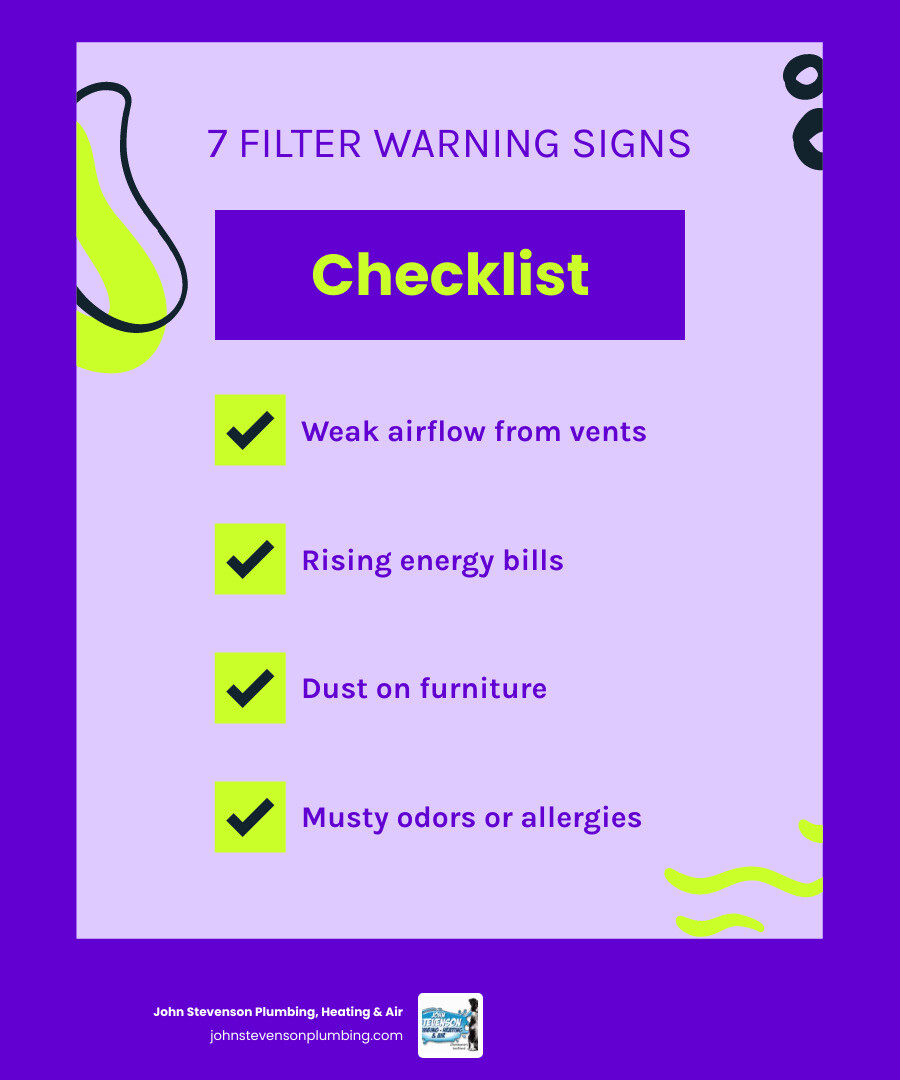
Here are the most common signs your HVAC filter needs changing:
- Weak or reduced airflow from your vents
- Rising energy bills without a clear reason
- More dust than usual settling on furniture and surfaces
- Musty or stale odors when the system runs
- Allergy symptoms flaring up indoors
- Your HVAC system short cycling (turning on and off more than normal)
- Visible dirt or gray buildup on the filter itself
Most HVAC filters should be replaced every 30 to 90 days, depending on filter type and household conditions. Homes with pets or allergy sufferers often need changes as frequently as every 30 days.
According to the U.S. Department of Energy, replacing a dirty filter can reduce your HVAC system’s energy consumption by 5% to 15%. That’s a meaningful saving from a task that takes less than five minutes.
The EPA also notes that indoor air can be two to five times more polluted than outdoor air — and a neglected filter makes that worse, not better.
If your system has been running harder lately, or your home just doesn’t feel as comfortable as it should, a dirty filter is often the first place to look.
7 Clear Signs Your HVAC Filter Needs Changing
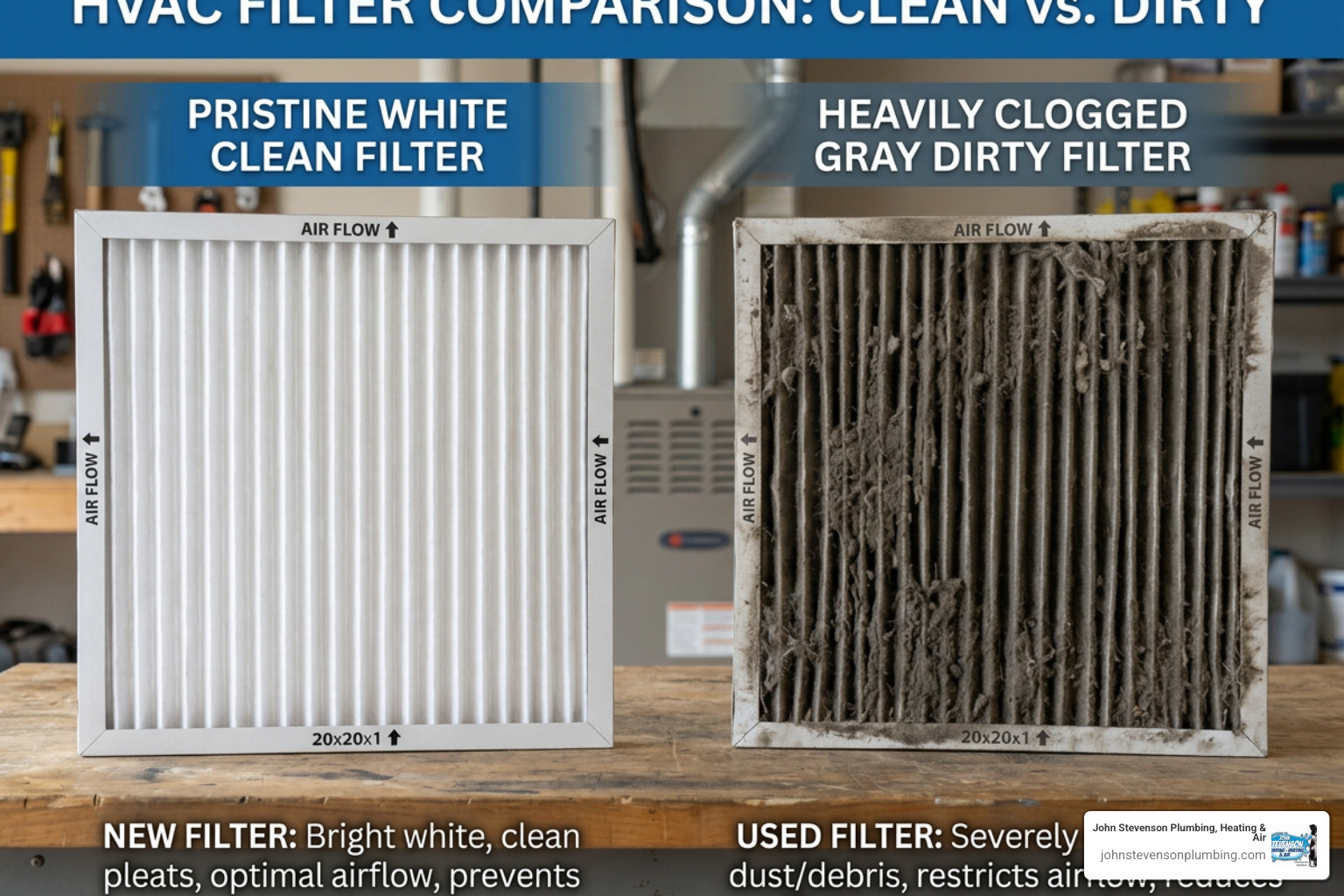
Our heating and cooling systems work tirelessly behind the scenes to keep us comfortable. Yet, because the air filter is tucked away out of sight, it is incredibly easy to forget. Over time, that filter acts like a trash can that slowly fills up with airborne debris. Once it reaches capacity, your home will start sending out distress signals.
Here are the seven most common signs your HVAC filter needs changing that you should never ignore:
1. Weak Airflow from Your Vents
Have you noticed that the air blowing out of your registers feels more like a gentle sigh than a strong breeze? When a filter is packed tight with dust, pet hair, and lint, it becomes a physical barrier. Your system’s blower motor has to struggle to push air through this dense wall of debris. If you hold your hand up to a vent and the airflow feels noticeably weaker than usual, a clogged filter is almost always the primary culprit.
2. A Sudden Spike in Your Energy Bills
If your utility bills are creeping upward but your daily habits haven’t changed, your HVAC system is likely working overtime. A dirty filter forces your system to run longer and work up to 15% harder just to circulate the same amount of air. That extra effort translates directly to higher energy consumption. Keeping your filter clean is one of the simplest ways to keep your monthly bills manageable.
3. Rapid Dust Accumulation on Household Surfaces
Do you find yourself dusting your coffee table, shelves, and TV stand only to see a thin gray layer settle right back down a day later? When an air filter is completely saturated, it can no longer trap new particles. Instead, those particles bypass the filter entirely or get blown right back out into your living spaces. If your home feels constantly dusty despite regular cleaning, your filter has likely stopped doing its job.
4. Musty, Stale, or Burning Odors
When your air conditioner or heater kicks on, the air should smell clean and neutral. If you are greeted by a musty, damp, or dusty odor, your filter may be holding onto moisture and organic debris, turning it into a breeding ground for mold or bacteria. In the cooler months, a heavily clogged filter can restrict airflow so much that the internal components of your furnace overheat, leading to a faint burning smell.
5. Frequent HVAC Short Cycling
Your heating and cooling system is designed to run in steady, predictable cycles to reach your thermostat’s set temperature. However, when airflow is severely restricted by a dirty filter, the system can quickly overheat or freeze up. To protect itself from damage, the system will shut down prematurely, only to turn back on again a few minutes later. This rapid turning on and off is known as “short cycling.” It places immense wear and tear on your equipment and drastically shortens its lifespan.
6. Worsening Allergy and Asthma Symptoms
If you or your family members are experiencing increased sneezing, congestion, watery eyes, or headaches indoors, your indoor air quality is likely suffering. A clean, high-quality filter is your home’s first line of defense against allergens like pollen, mold spores, and pet dander. Once the filter is full, these microscopic irritants continue to circulate through your rooms, triggering flare-ups.
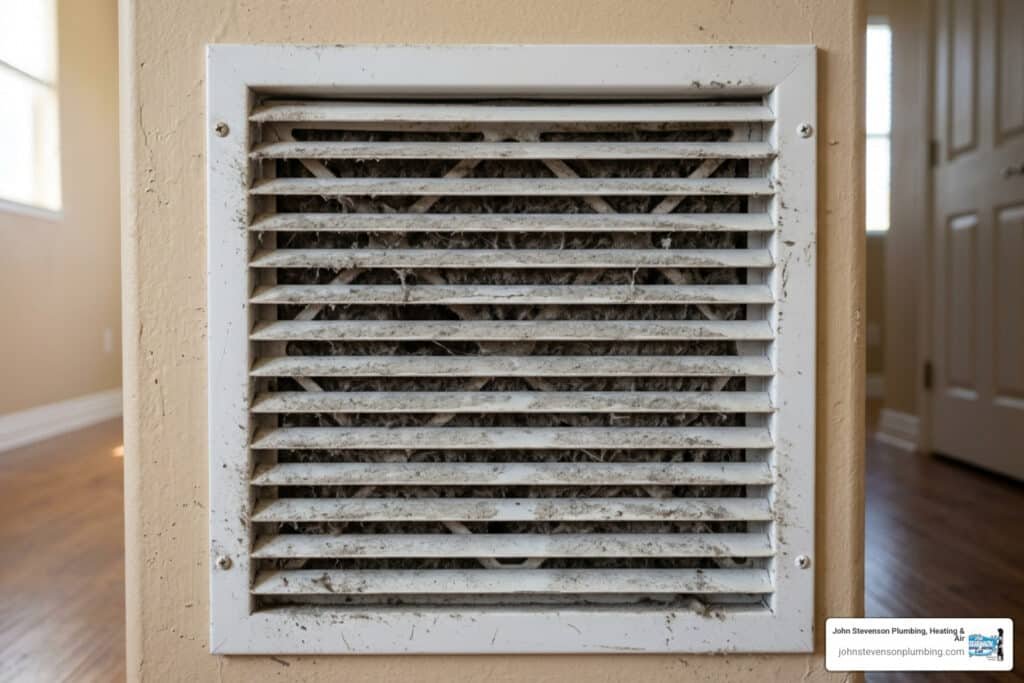
7. Visible Dust buildup Around the Return Vents
Take a look at the grilles of your return air vents. Do you see fuzzy gray rings of dust clinging to the metal slats? This is often a sign of “ghosting” or filter bypass. When the filter is too dirty to let air pass through easily, the system pulls air through any tiny gaps it can find around the filter frame, pulling heavy dust along with it and leaving visible deposits around your vents.
If you are noticing these issues as the seasons transition, it might be time for a fresh start. Learn more about why timing matters in our guide on Why You Need to Swap Your Air Filter This Spring.
How Often to Change Your Filter: Lifespan by Type and Household
While checking for physical symptoms is essential, having a baseline schedule keeps you proactive. As a general rule of thumb, standard 1-inch pleated filters should be checked monthly and replaced at least every 30 to 90 days. However, there is no one-size-fits-all timeline. The perfect replacement schedule for your home depends heavily on your household’s unique characteristics and the type of filter you use.
For a deeper dive into customizing your maintenance calendar, check out our resource on How to Determine How Often to Change HVAC Air Filter.
Household Factors That Accelerate the Signs Your HVAC Filter Needs Changing
Your daily life directly impacts how quickly your air filter fills up. If any of the following factors apply to your household, you will need to swap your filter much closer to the 30-day mark rather than waiting the standard 90 days:
- Pet Ownership: Dogs and cats constantly shed fur and microscopic dander. Dander is incredibly sticky and highly effective at clogging the fine mesh of pleated filters. If you have one pet, plan to change your filter every 60 days. If you have multiple pets, check it every 30 days.
- Allergy and Asthma Sufferers: If anyone in your home has respiratory sensitivities, keeping a pristine filter is vital. Changing the filter strictly every 30 days keeps indoor allergen levels to an absolute minimum.
- Household Size: More people (and busy households with kids running in and out) naturally stir up more dust, lint, and outdoor dirt, which quickly finds its way into your return vents.
- Local Climate and Environment: Living in Southern California, particularly in areas like Carlsbad, means dealing with unique environmental factors. Coastal breezes can carry fine sand and pollen, and dry seasons bring elevated dust levels. If there is construction nearby or active wildfire smoke in the region, your filter can clog in a matter of two to three weeks.
Filter Thickness: 1-Inch vs. 4-Inch Media Filters
The physical design and thickness of your filter play a massive role in how much dirt it can hold before performance drops.
| Filter Thickness | Typical Material | Lifespan (Standard Home) | Lifespan (Pets/Allergies) | Best Use Case |
|---|---|---|---|---|
| 1-Inch | Fiberglass or Thin Pleated | 30 to 90 Days | 30 Days | Standard apartments and smaller single-family homes with basic filter slots. |
| 2-Inch | Pleated Polyester | 60 to 90 Days | 45 to 60 Days | Mid-sized homes looking for slightly better filtration and longer intervals. |
| 4-Inch to 5-Inch | Deep Pleated Media | 6 to 9 Months | 3 to 4 Months | Larger homes, systems with dedicated media cabinets, and households prioritizing high air purity. |
- Fiberglass Filters: These are the flat, see-through, inexpensive filters. They are designed primarily to protect your HVAC equipment from large dust bunnies, but they do very little to clean your indoor air. They must be replaced every 30 days without fail.
- Pleated Polyester Filters: These filters feature folded pleats that drastically increase the surface area available to trap dust, pet dander, and mold spores. They offer a great balance of system protection and indoor air quality.
- HEPA Filters: High-Efficiency Particulate Air (HEPA) filters can trap 99.97% of particles as small as 0.3 microns. However, true HEPA filters are highly restrictive and usually require specialized whole-house filtration systems to avoid damaging standard residential blower motors.
- Understanding MERV Ratings: Minimum Efficiency Reporting Value (MERV) ratings range from 1 to 16 for residential systems. A higher rating means tighter filtration. For most Southern California homes, a MERV rating between 8 and 11 provides excellent air cleaning without putting excessive strain on your system.
What Happens If You Neglect a Dirty Air Filter?
Waiting too long to replace a dirty filter does far more than just let a little extra dust settle on your furniture. It can set off a chain reaction of mechanical failures that are stressful and expensive to resolve.
First, your system’s overall efficiency plummets. When the blower motor has to work twice as hard to pull air through a clogged filter, it consumes significantly more electricity, wearing out electrical contacts and capacitors prematurely.
Second, restricted airflow can cause your air conditioner’s evaporator coils to freeze. The evaporator coil relies on a steady stream of warm indoor air flowing over it to keep the refrigerant inside from getting too cold. Without that airflow, the temperature of the coil drops below freezing, causing condensation on the coil to turn to solid ice. This blocks all cooling entirely and can send water dripping into your home when the ice finally melts.
Third, the strain on your blower motor can cause it to overheat and burn out completely. Replacing a blower motor is a major repair that can leave your home without climate control during the peak of summer or winter.
Protect your system year-round by staying ahead of seasonal changes. Learn how to prepare your equipment in our guide on How to Prep Your HVAC for the Spring Thaw, and find out why early care is so valuable in The Secret to a Stress-Free Summer is a Spring HVAC Tune-Up.
How to Visually Inspect and Replace Your HVAC Filter
The absolute best way to know if your filter is spent is to take a look at it. This quick, visual check takes only a minute and gives you an undeniable answer.
If you are performing a broader seasonal deep clean of your home, make filter inspection a key part of your routine. You can find more tips on keeping your system clean in our Spring Cleaning for Your Pipes and Vents: A Comprehensive Checklist.
The Light Test: Confirming the Signs Your HVAC Filter Needs Changing
If you pull out your filter and aren’t quite sure if the discoloration warrants a replacement, use the simple “Light Test”:
- Remove the filter from its slot.
- Hold it up to a bright light source, such as a window, a ceiling light, or a flashlight.
- Analyze the light passage: If the light shines through the pleats easily, your filter still has some life left in it. If the light is completely blocked by a thick, felt-like layer of gray ash, dust, and hair, the filter is fully clogged and needs to be replaced immediately.
Step-by-Step Guide to Replacing Your Filter
Replacing your filter is a straightforward DIY task. Follow these steps to ensure a safe and proper installation:
- Step 1: Turn Off the HVAC System: Always turn off your heating and cooling system at the thermostat before removing the old filter. This prevents the blower fan from kicking on while the filter is out, which could suck loose dust and debris directly into the unprotected internal components of your system.
- Step 2: Locate the Filter: Your filter is typically located in a slot on the side or bottom of the indoor air handler unit (often in a closet, garage, or attic), or behind a large return air grille on a wall or ceiling.
- Step 3: Slide Out the Old Filter: Gently pull the old filter out. Note the direction of the arrow printed on the side of the frame — this indicates the correct airflow direction.
- Step 4: Check the Size: Look at the dimensions printed on the side of your old filter (e.g., 20x20x1). You must replace it with a filter of the exact same dimensions to prevent gaps.
- Step 5: Insert the New Filter: Slide the new filter in. Ensure the printed airflow arrow points toward the HVAC unit (away from the return duct). If your filter has a wire mesh support side, that side should always face toward the furnace or air handler to prevent the filter from bowing or collapsing under pressure.
- Step 6: Secure the Cover and Turn the System On: Re-secure the slot cover or return grille, turn your system back on at the thermostat, and listen for a few moments to ensure there are no whistling sounds, which could indicate a poor fit or gaps around the frame.
Best Practices for Remembering Regular Replacements
Because life gets busy, we recommend using these simple strategies to make sure your filter changes never slip through the cracks:
- The Sharpie Method: Keep a permanent marker next to your spare filters. Every time you install a new filter, write the current date clearly on the edge of the cardboard frame so you can see at a glance exactly how long it has been in use.
- Smart Thermostat Alerts: If you have a smart thermostat, navigate to the settings menu and enable filter change reminders. You can often set these to alert you based on calendar days or actual system runtime hours.
- Calendar Reminders: Set a recurring monthly alarm on your smartphone to check your filter on the first day of every month.
- Keep Spares on Hand: Buy your filters in packs of four or six. Having a spare ready to go in your closet removes the friction of having to run to the hardware store when you notice your current one is dirty.
Frequently Asked Questions About HVAC Filters
Is poor airflow caused by a dirty filter or a bigger HVAC issue?
While a dirty filter is the most common and least expensive cause of weak airflow, it isn’t the only possibility. If you replace your filter with a brand-new one and the airflow from your vents remains weak, you could be dealing with leaky or disconnected ductwork, a failing blower motor, or dirty evaporator coils. If a clean filter doesn’t resolve your airflow issues, it is time to have a professional technician perform a comprehensive diagnostic check.
Can a dirty filter cause my heating or cooling system to blow room-temperature air?
Yes, absolutely. When airflow is restricted, your furnace can quickly overheat, triggering a safety switch called the “limit switch” which shuts down the heating burners while keeping the blower fan running to cool the system down. This results in cold air blowing from your vents. In the summer, restricted airflow causes the AC coils to freeze, blocking the cooling process and causing the system to blow warm or room-temperature air.
How do pets and allergies affect my filter replacement schedule?
Pets introduce high volumes of hair and dander into your home’s air, which clogs filters much faster than standard household dust. If you have pets or suffer from moderate-to-severe allergies, you should plan to check your filter every 30 days and replace it as soon as you notice any gray discoloration. Keeping a fresh filter in place ensures that pet allergens are actively captured rather than recirculated through your living spaces.
Conclusion
Keeping a close eye on the signs your HVAC filter needs changing is one of the easiest, most cost-effective ways to protect your home’s comfort, keep your energy bills low, and safeguard your family’s health.
If you have replaced your filter and are still experiencing weak airflow, unusual odors, rising utility bills, or uneven temperatures, there may be an underlying issue with your system. In Carlsbad, CA, and the surrounding Southern California communities, you can count on John Stevenson Plumbing, Heating & Air Conditioning to keep your home’s climate control running flawlessly.
We back all of our work with our signature 5-Star Service Guarantee, which includes thorough diagnostics, upfront pricing, highly trained technicians, and a 24-hour satisfaction check-in to ensure you are completely happy with our work.
Don’t let a clogged system compromise your home’s comfort. Contact us today to schedule your professional HVAC Maintenance Services and keep your system running at peak performance year-round!