
Gas Line Leak Detection in Orange County, CA: Know the Signs
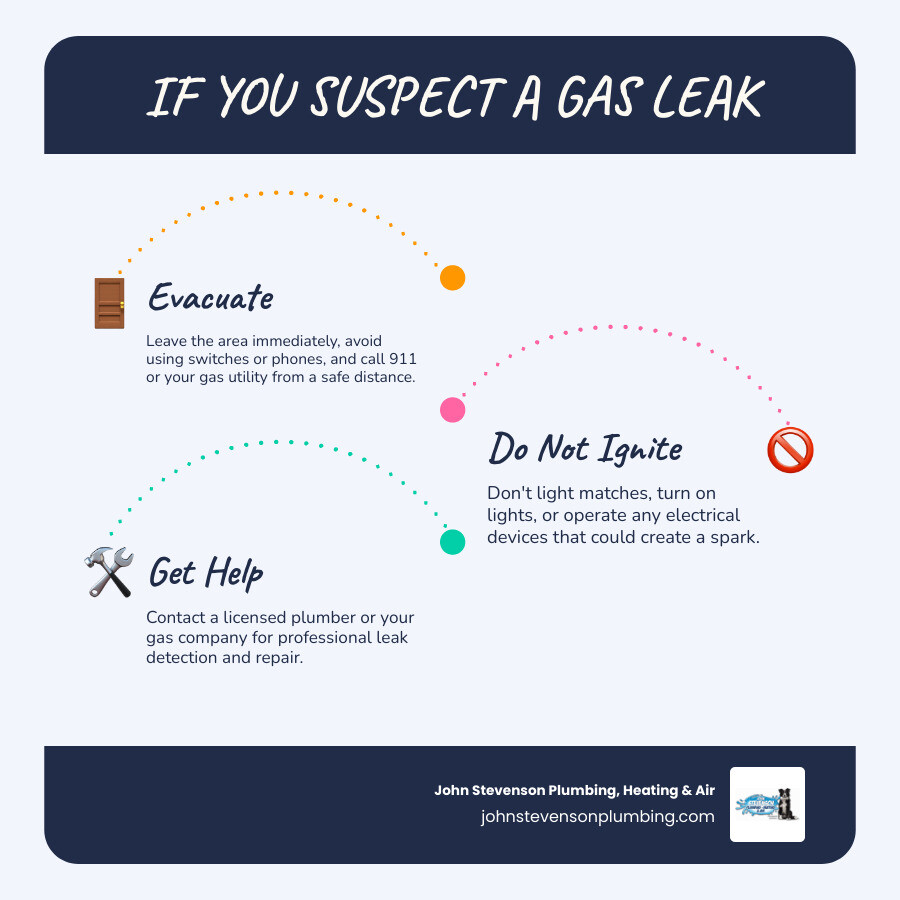
To tell if your gas line is leaking, watch for a rotten-egg smell, a steady hiss near a pipe or appliance, dying grass over a buried line, or a gas bill that rises without a clear reason. A yellow stove flame or soot can also signal an appliance problem, though neither proves a line leak. In Orange County, CA, you may need gas line leak detection even if you smell nothing. If you smell gas, hear hissing, or a fuel-gas alarm sounds, leave immediately. Do not use switches or your phone inside. Call your gas utility or 911 from a safe distance.
Learn about our gas line services or request help.
I’m John Stevenson, and if you notice these warning signs, contact us for gas line help after you are safely outside.
Key Warning Signs: How to Tell If Your Gas Line Is Leaking
Natural gas and liquid propane fuel millions of water heaters, furnaces, cooktops, and outdoor fire pits across Southern California. When contained within sturdy black iron, corrugated stainless steel tubing (CSST), or copper lines, fuel gas is safe and efficient. However, aging fittings, structural shifting, soil movement, or accidental punctures can compromise pipe integrity.
Recognizing the earliest warnings allows you to act before dangerous concentrations accumulate. While sensory detection is your first line of defense, a leak can manifest across several categories: environmental changes outside, mechanical indicators on your appliances, and physiological reactions among household members.
Odor Indicators and Mercaptan Odor Fade
In its natural state, processed natural gas (methane) is completely odorless, colorless, and tasteless. For public safety, utility suppliers introduce a chemical odorant called mercaptan (specifically t-butyl mercaptan or methyl mercaptan). This additive produces the familiar sulfur, rotting cabbage, or rotten egg scent designed to alert occupants to even minor leaks.
However, relying solely on your nose leaves a dangerous blind spot. In some scenarios, you might experience odor fade:
- Soil Absorption: When buried exterior gas pipes develop pinholes or cracks, the escaping gas filters up through layers of clay or soil. Minerals and microorganisms in the ground strip the mercaptan molecules from the methane, leaving an odorless gas to pool above ground.
- Oxidized Pipe Walls: In newly installed or heavily rusted interior steel pipes, unconditioned metal surfaces and iron oxide (rust) react chemically with mercaptan, adsorbing the odorant.
- Olfactory Fatigue: The human nose quickly becomes desensitized to continuous low-level odors. After just two minutes of exposure, your olfactory receptors stop sending strong warning signals to your brain—much like how you stop noticing a familiar household scent.
Auditory and Visual Clues on Appliances and Buried Lines
When odor is faint or absent, physical clues around your home and yard provide critical context.
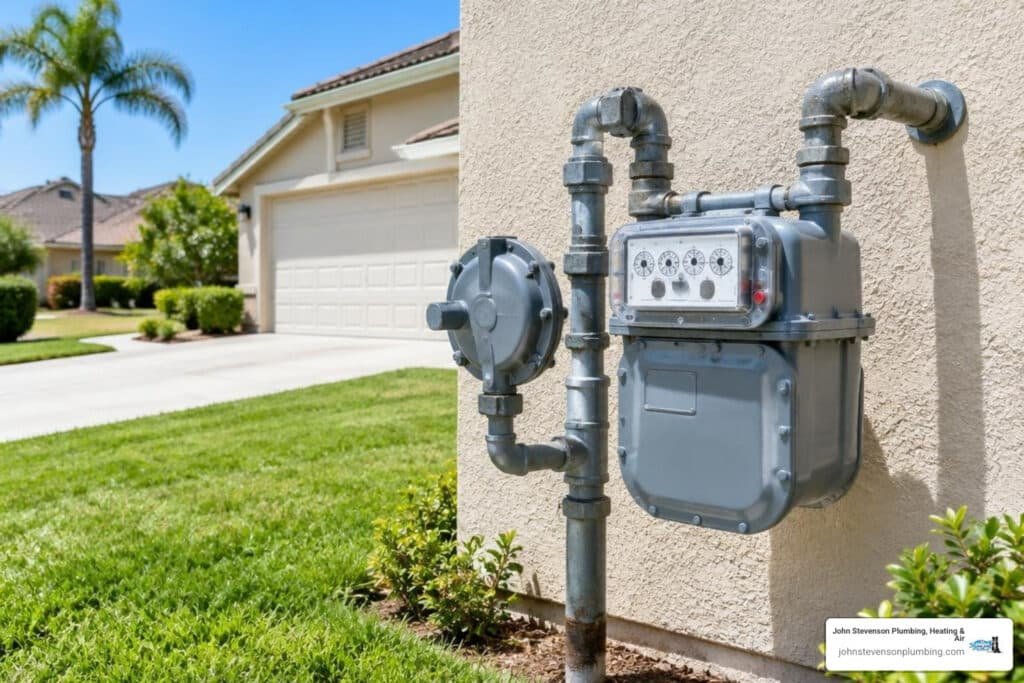
- Hissing or Whistling Sounds: A high-pressure leak escaping a joint, valve, or cracked appliance connector often produces a distinct hissing or whistling noise. You might hear this behind a dryer, near a water heater, or at the outdoor gas meter assembly.
- Bubbling Standing Water: During irrigation or seasonal rains, escaping gas from a buried line will push through saturated soil, creating continuous bubbles in standing puddles or wet mud.
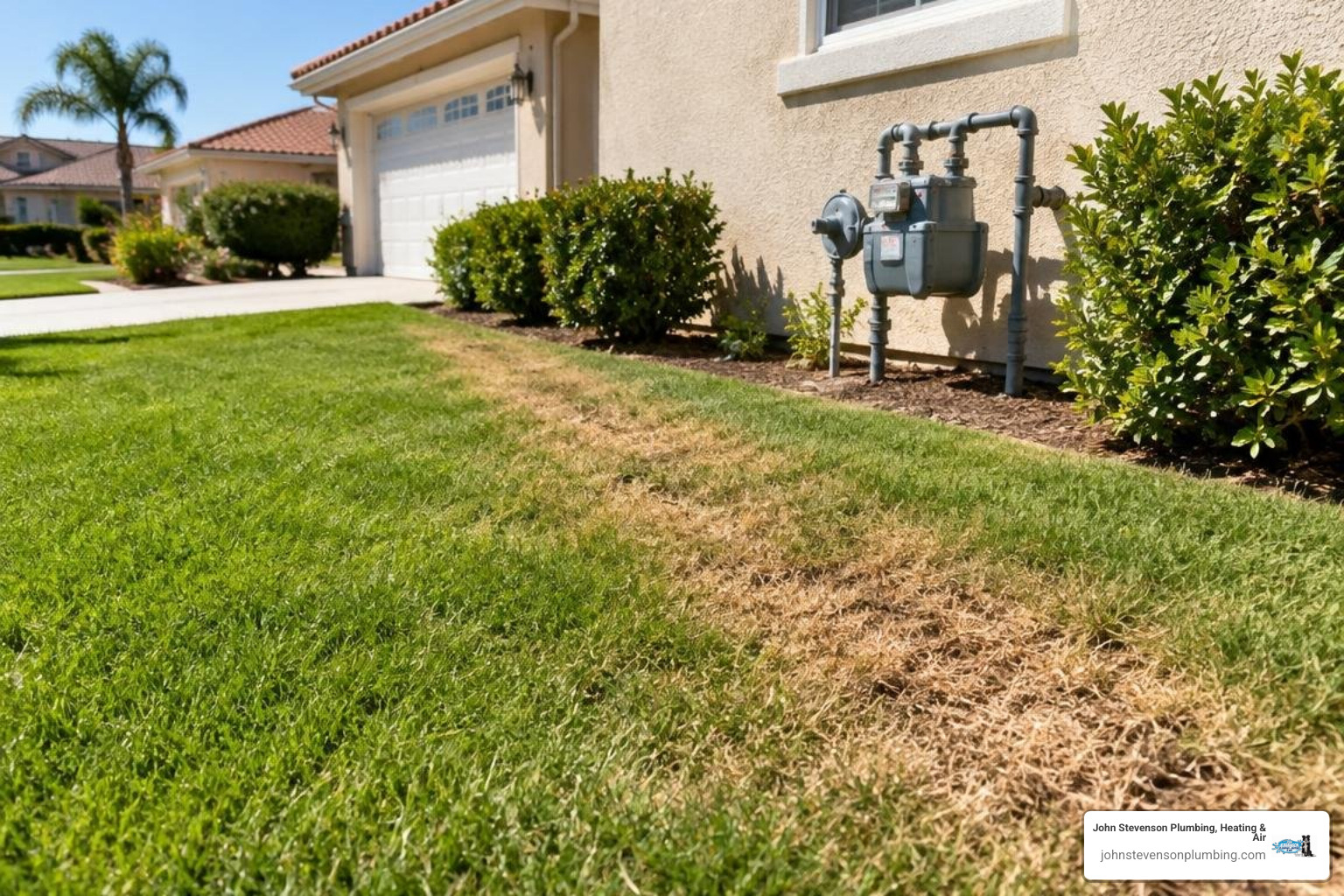
- Dead or Discolored Vegetation: Escaping hydrocarbons displace oxygen in root zones. If you spot a distinct strip of dead grass, brown shrubs, or wilting flower beds cutting across an otherwise healthy lawn directly over a utility path, suspect an underground pipe failure.
- Blowing Soil or Dust: High-pressure subterranean leaks can push loose dirt and dry dust into visible, dancing clouds above the ground.
- Abnormal Appliance Burners and Soot: Gas stove burners and furnace pilot lights should produce a crisp, stable blue cone. Lazy yellow or orange flames indicate incomplete combustion or pressure drops. While this often points to dirty burner ports, severe supply pressure variations warrant prompt inspection by Lake Forest gas line specialists or local technicians across our service area.
Physical Symptoms and How to Tell If Your Gas Line Is Leaking Without Smelling Odorant
When fuel gas enters an enclosed living area, it gradually displaces breathable oxygen. Prolonged low-level exposure causes symptoms that are easily mistaken for the seasonal flu, chronic fatigue, or tension headaches:
- Unexplained morning headaches that ease when you leave the house
- Dizziness, lightheadedness, or sudden brain fog
- Nausea, loss of appetite, and chronic fatigue
- Eye, nose, and throat irritation without an allergic cause
- Unusual behavioral changes in household pets, such as sudden lethargy, disorientation, vomiting, or persistent whining near an appliance
If multiple family members or pets develop identical symptoms simultaneously—and those symptoms resolve once everyone steps outdoors into fresh air—evacuate immediately and treat the situation as an active leak.
Safe Testing Methods and Fuel Gas Detection
If you notice subtle indicators—such as a small bump on your monthly gas statement without increased heater usage—and there is no strong odor or audible hissing, you can perform basic, non-invasive checks at accessible fittings.
How to Tell If Your Gas Line Is Leaking Using the Soapy Water Test
The soapy water bubble test is a time-tested diagnostic for exposed, accessible pipe joints, shutoff valves, and threaded connections.
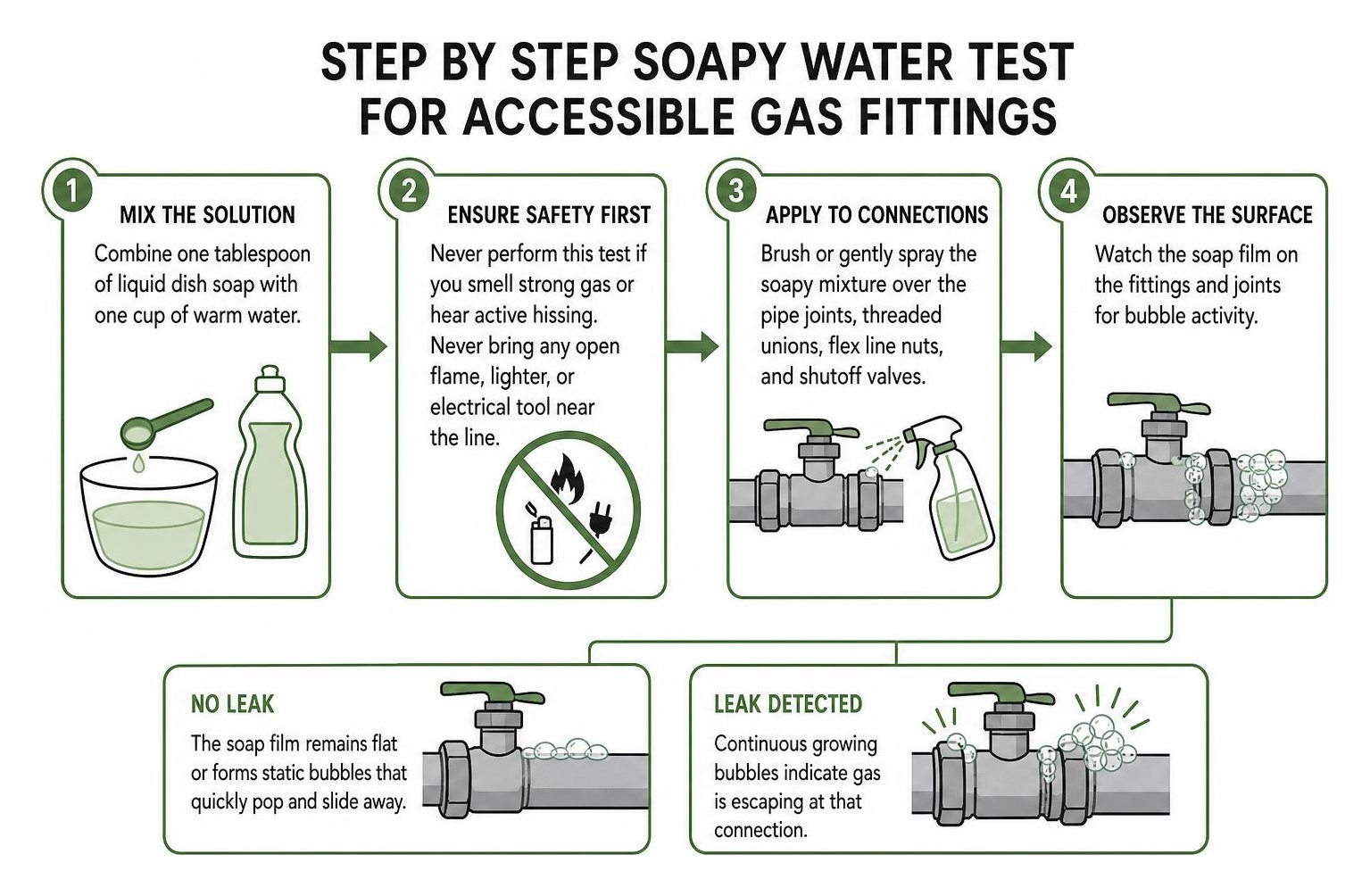
- Mix the Solution: Combine one tablespoon of common liquid dish soap with one cup of warm water in a clean spray bottle or bowl. Avoid ammonia-based cleaners, as harsh chemicals can corrode brass fittings over time.
- Ensure Safety First: Never perform this test if you smell strong gas or hear active hissing. Never bring any open flame, lighter, or electrical tool near the line.
- Apply to Connections: Brush or gently spray the soapy mixture over the pipe joints, threaded unions, flex line nuts, and shutoff valves.
- Observe the Surface:
- No Leak: The soap film remains flat or forms static bubbles that quickly pop and slide away.
- Active Leak: Escaping gas blows growing, expanding clusters of micro-bubbles that multiply continuously at the fitting seam.
- Clean the Pipe: Wipe the soap solution off metal surfaces with a damp cloth to prevent moisture-related surface oxidation.
Note: The soapy water test cannot verify concealed pipes behind drywall, under concrete slabs, or buried in yard soil.
Combustible Gas Detectors vs. Carbon Monoxide Alarms
A common point of confusion among homeowners is assuming a standard carbon monoxide (CO) detector will warn them of a gas line leak. It will not.
- Carbon Monoxide Alarms: These devices measure CO, a deadly, odorless byproduct created when an appliance burns fuel incompletely. A leaking gas pipe releases unburned raw fuel (methane or propane), which produces zero carbon monoxide until it is ignited.
- Fuel Gas Alarms (Combustible Gas Detectors): Designed under standards like NFPA 715, dedicated fuel gas detectors monitor ambient air for combustible hydrocarbons. Fixed alarms trigger an audible alert when gas concentrations reach 10% of the Lower Explosive Limit (LEL)—giving your family ample time to evacuate safely.
- Handheld “Sniffers”: Portable electronic sniffers use catalytic or semiconductor sensors to pinpoint leaks along pipe joints. Homeowners seeking reliable indoor protection can benefit from combined fuel gas and CO detectors or scheduled safety inspections from our team offering gas line plumbing in Irvine and surrounding Orange County neighborhoods.
Natural Gas vs. Propane: Critical Differences in Leak Behavior
Understanding what type of fuel supplies your property is essential, as natural gas and liquid petroleum propane behave completely differently when released into the atmosphere.
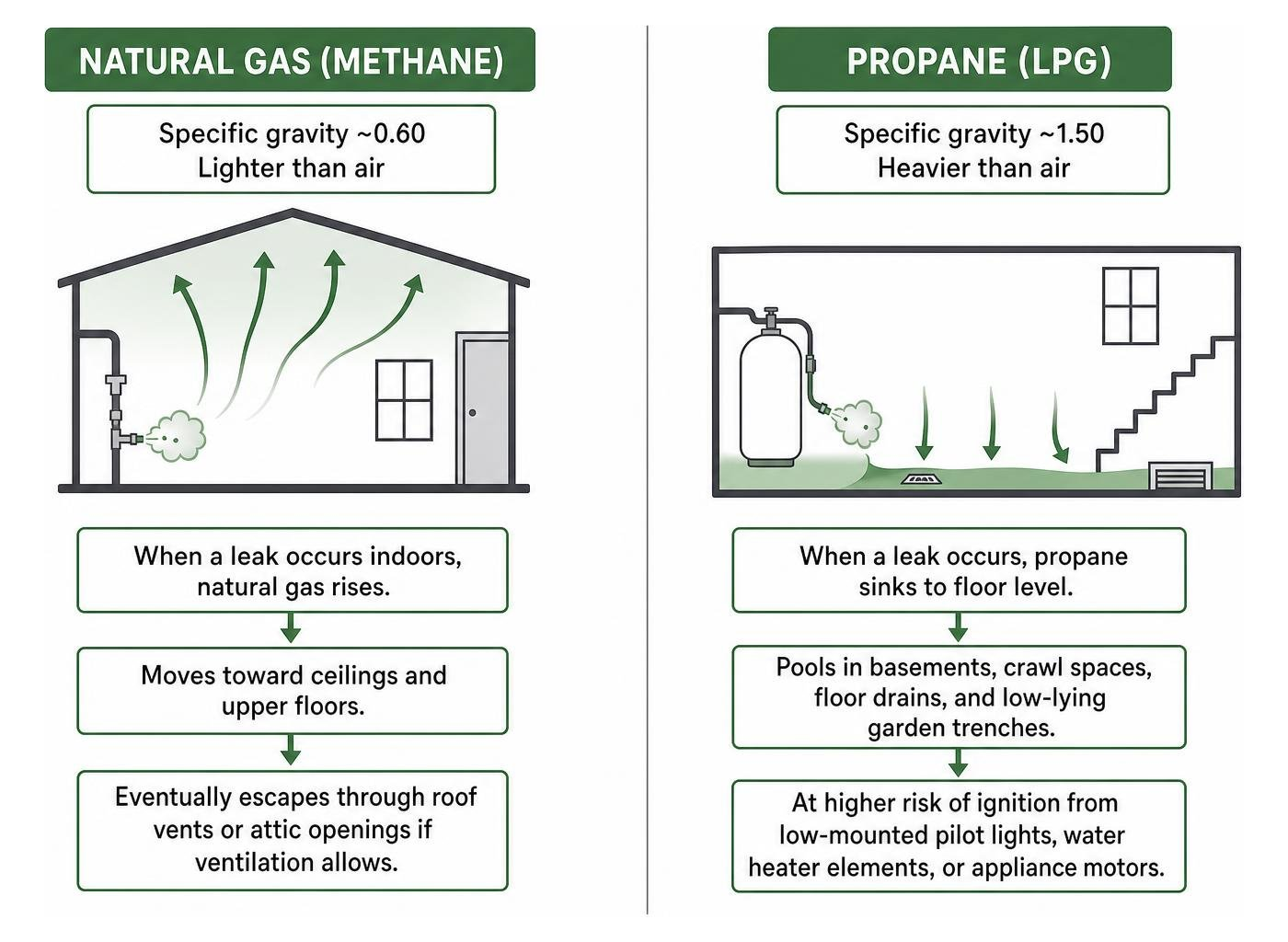
Natural gas has a specific gravity of roughly 0.60, making it lighter than air. When a leak occurs indoors, natural gas rises toward ceilings and upper floors, eventually escaping through roof vents or attic openings if ventilation allows.
Propane has a specific gravity of approximately 1.50, making it significantly heavier than ambient air. When a propane tank, regulator, or line fails, the gas behaves like an invisible liquid, sinking to floor level and pooling in basements, crawl spaces, floor drains, and low-lying garden trenches. This makes propane leaks particularly susceptible to ignition from low-mounted pilot lights, water heater elements, or appliance motors.
| Property / Behavior | Natural Gas (Methane) | Propane (LPG) |
|---|---|---|
| Specific Gravity (Air = 1.0) | ~0.60 (Lighter than air) | ~1.50 (Heavier than air) |
| Indoor Dispersion Pattern | Rises upward toward ceilings and attic spaces | Sinks downward, pooling along floors and basements |
| Outdoor Dispersion Pattern | Dissipates upward into atmosphere | Sinks into yard hollows, trenches, and storm drains |
| Primary Odorant | Mercaptan (Sulfur/Rotten Egg) | Ethyl Mercaptan (Rotten Cabbage/Skunk) |
| Main Supply Source | Underground municipal utility mains | Dedicated outdoor storage cylinders or bulk tanks |
| Critical Hazard Area | Enclosed upper rooms and ceiling cavities | Sub-floor crawl spaces, basements, and foundation pits |
Emergency Protocol: What to Do Immediately When You Suspect a Leak
A gas leak presents an immediate fire and explosion hazard. If you detect a strong odor, hear active hissing, or spot bubbling earth, treat the situation as an emergency.
The “No Spark” Rule
Even minute electrical arcs can ignite a pocket of combustible fuel:
- Never touch a wall switch, lamp, or appliance control.
- Do not plug in or unplug battery chargers.
- Do not use matches, candles, or lighters.
- Never start your car if it is parked inside an attached garage or right next to an outdoor leak.
Shutting Off the Main Meter Valve
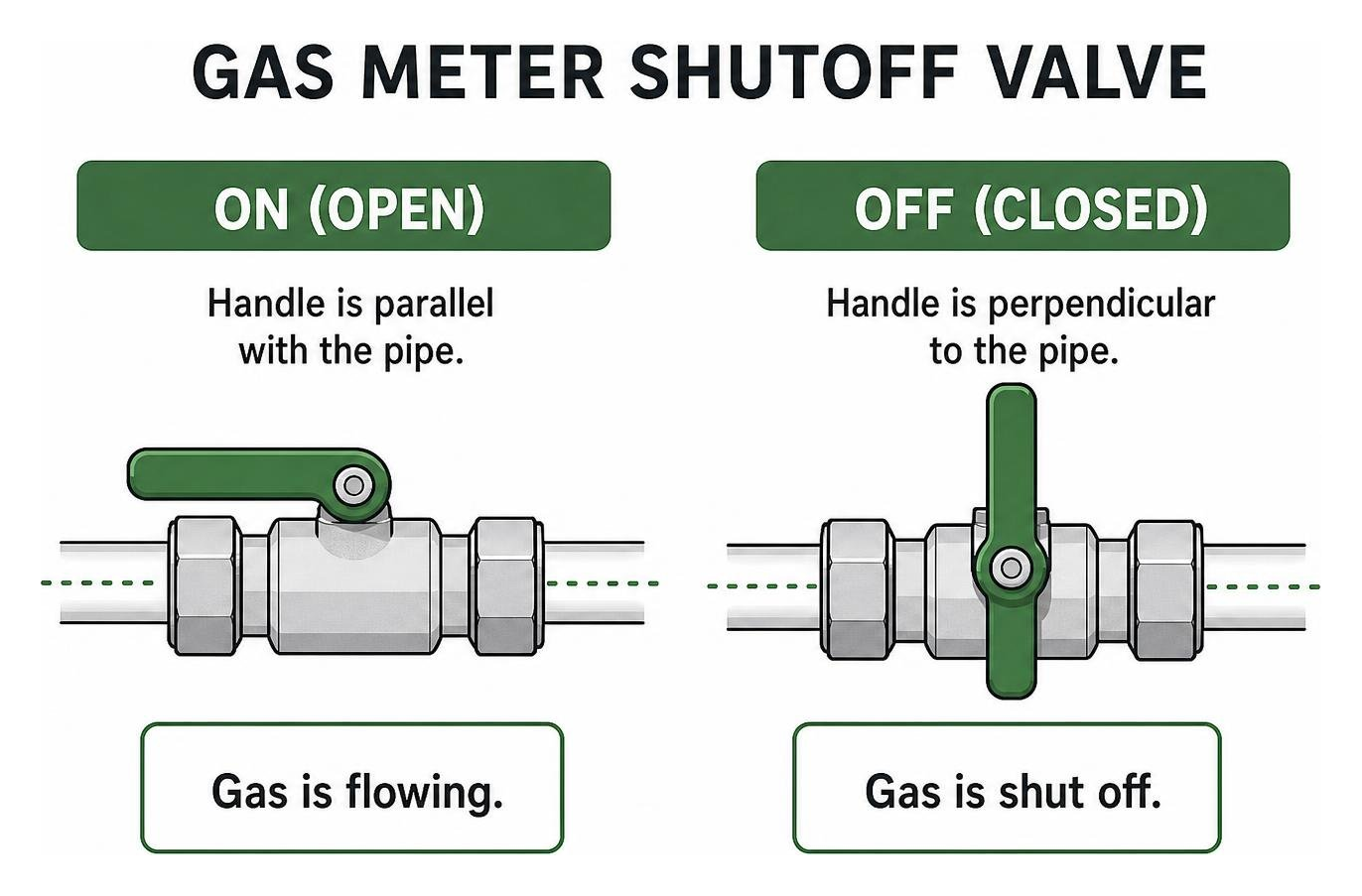
If the outdoor gas meter is easily accessible along your exit path and you have an adjustable wrench on hand, turn the valve a quarter-turn so the tang sits perpendicular (crosswise) to the pipe. This shuts off supply to the entire home. If the meter is obstructed or you smell heavy gas around it, skip this step and evacuate immediately.
Never attempt to turn the gas back on yourself after shutting it down. Restoring service requires formal pressure testing, line purging, and careful pilot relighting. Homeowners in coastal North County can always turn to our licensed Oceanside gas piping experts for post-emergency diagnostics and system restoration.
Professional Inspection, Repair Procedures, and Jurisdictions
Locating hidden pinhole leaks inside walls, through slab foundations, or under patio pavers requires specialized diagnostic tools beyond DIY methods.
Diagnostic Equipment Used by Licensed Plumbers
When a certified technician inspects your home’s gas distribution system, they utilize multiple complementary technologies:
- Electronic Combustible Gas Sniffers: Sensitive, calibrated probes that detect hydrocarbon concentrations down to single-digit parts per million (PPM).
- System Pressure Isolation Testing: The plumber caps the main supply, isolates appliances, and pressurizes the piping system with air or inert nitrogen. A calibrated test gauge monitors pressure decay over a set period. Any drop confirms an active leak somewhere in the line.
- Acoustic and Ultrasonic Detectors: Advanced listening devices amplify high-frequency friction noise generated by pressurized gas escaping microscopic cracks behind sheetrock or under soil.
Utility Company vs. Licensed Plumber Responsibilities
Understanding who fixes what prevents confusion during an outage:
- The Utility Company: Responsible for the underground main lines in the street, the service lateral running to your property, and the physical gas meter assembly itself. If a leak occurs before or at the meter, the utility handles repairs.
- The Homeowner: Responsible for all piping downstream of the meter outlet. This includes lines entering your home, branch pipes feeding furnaces and water heaters, outdoor barbecue runs, pool heater lines, and appliance shutoff valves.
If the utility company detects an interior leak, they will lock out the meter for safety. Restoring service requires a licensed plumbing contractor to isolate the line, complete repairs, pull any required local permits, pass a pressure inspection, and coordinate meter unlock. Homeowners across the region can rely on our dedicated team for prompt Carlsbad gas line repair and compliance testing.
Frequently Asked Questions About Gas Line Leaks
What does a gas leak smell like if mercaptan is absent?
If mercaptan has faded due to soil filtration or oxidized pipe reaction, natural gas may have a very faint petroleum, mineral-oil, or sweet hydrocarbon scent, but it is often completely undetectable to the human nose. In these instances, you must rely on auditory cues (hissing or whistling noises), environmental signs (bubbling mud, patches of dead vegetation), or physiological symptoms (headaches, nausea, dizziness, and pet lethargy).
Who is responsible for repairing a leaking gas line?
The utility provider is responsible for repairing leaks located on the main distribution lines, service runs up to your property, and the gas meter assembly. The property owner is responsible for all piping, fittings, valves, and appliance flex lines located past the outlet side of the gas meter. Any interior leaks or private yard line repairs must be completed by a licensed plumbing and gas-fitting professional.
Why do pilot lights keep going out on my gas appliances?
A pilot light or electronic burner ignition that repeatedly fails can signal inadequate gas supply pressure, potentially caused by an upstream line leak or a failing pressure regulator. It can also result from a faulty thermocouple, draft issues, or burner port debris. A licensed technician can perform pressure testing to verify your supply lines are intact and properly sized.
Conclusion
Your home’s gas infrastructure operates quietly every day, delivering reliable comfort for cooking, bathing, and heating. Because gas leaks present severe safety risks and do not always produce a classic rotten egg odor, staying vigilant about visual indicators, auditory clues, and physical symptoms is essential.
Never ignore dying lawn strips, hissing pipe fittings, or unexplained physical fatigue. If you suspect an active leak, evacuate your family and pets immediately, call 911 or your utility company from a safe distance, and never touch electrical switches.
At John Stevenson Plumbing, Heating & Air Conditioning, our licensed, certified technicians provide thorough diagnostics, upfront clarity, and our dependable 5-Star Service Guarantee across Carlsbad, San Diego County, and Orange County. When you need complete peace of mind, schedule expert gas line services with our trusted local team today.