

Should You Repair or Replace Your Main Sewer Line in Carlsbad?
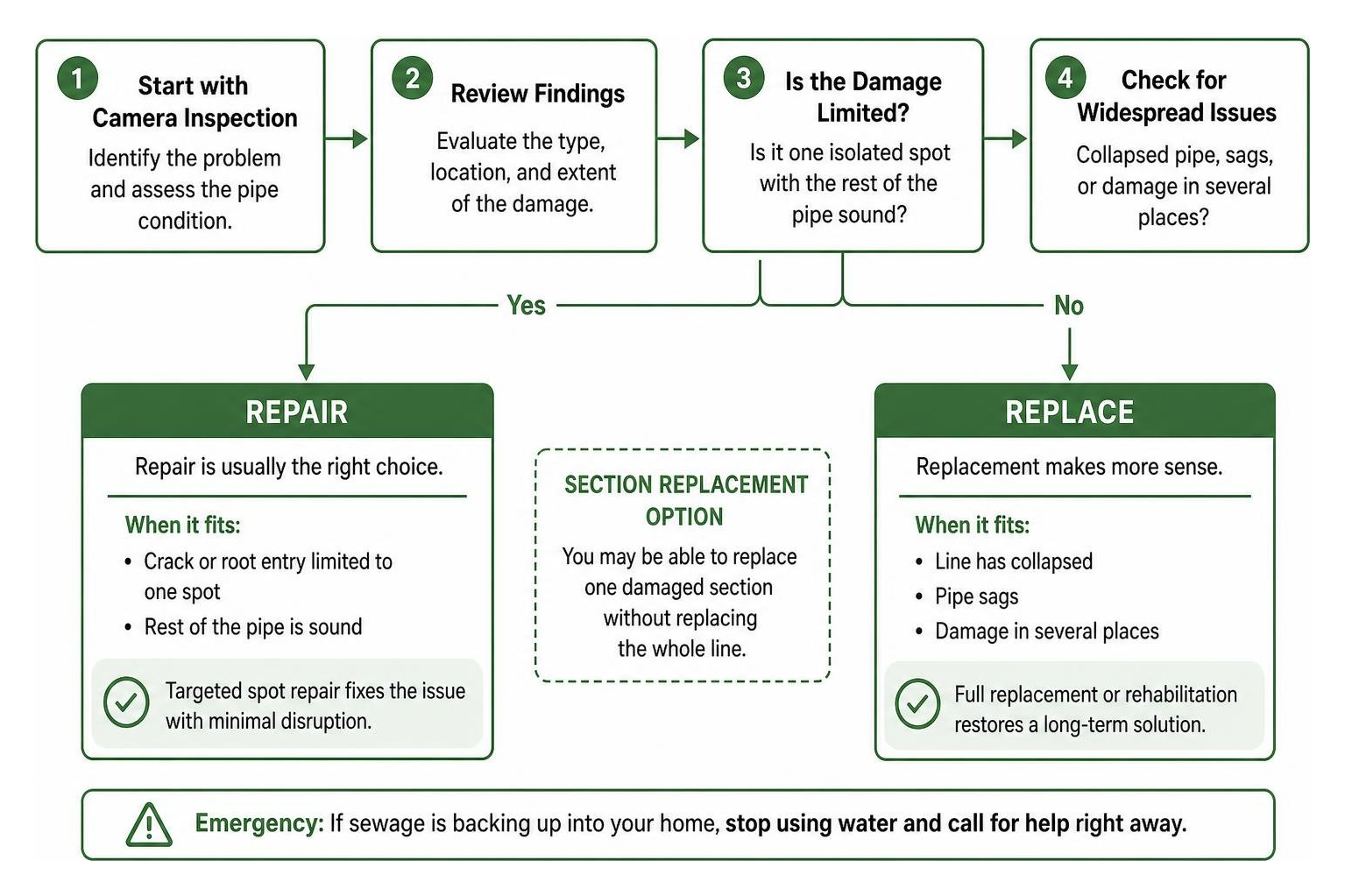
If you need sewer line repair in Carlsbad, CA, do not choose a full replacement based on slow drains alone. Start with a camera inspection. Repair is usually the right choice when a crack or root entry is limited to one spot and the rest of the pipe is sound. Replacement makes more sense when the line has collapsed, sags, or has damage in several places. You may also be able to replace one damaged section without replacing the whole line. If sewage is backing up into your home, stop using water and call for help right away.
Explore sewer line services in Carlsbad or schedule a sewer camera inspection.
I’m John Stevenson, and this guide will help you weigh the inspection findings, pipe condition, and long-term risks.
For a clear next step, schedule a sewer camera inspection.

Understanding the Core Differences Between Repair and Replacement
When underground plumbing acts up, understanding your sewer lateral is the first step toward a lasting resolution. Your sewer lateral is the privately owned pipeline running from your home’s foundation out to the public utility main in the street. Because you as the homeowner bear full responsibility for maintaining this pipe, confronting subterranean failures can feel daunting.
The fundamental distinction between repair and replacement comes down to scope, structural integrity, and longevity. A repair addresses single-point damage or localized defects without overhauling the entire line. In contrast, replacement involves installing a brand-new drainage lateral from the house out to the municipal connection or rehabilitating its full run.
In our coastal communities, localized ground shifting and mature ornamental trees frequently challenge subterranean infrastructure, making accurate diagnostics essential. When facing sewer line repair vs replacement, when to decide on a localized fix versus full replacement depends heavily on what an internal camera view reveals about your Carlsbad sewer lines.
Key Factors in Determining the Best Solution
Evaluating an underground sewer lateral requires assessing several physical variables:
- Total Damage Percentage: Industry guidelines, including environmental best practices, recommend full replacement whenever structural defects impact more than 40 to 50 percent of the total pipeline length.
- Pipe Grade and Alignment: If the pipe has settled unevenly, creating low spots or severe joint offsets, isolated patching cannot restore the natural downward slope required for gravity-fed flow.
- Nature of Tree Root Intrusion: Tree roots seeking moisture enter through small joint seams. An isolated hairline penetration is manageable, but widespread web-like root networks breaking through multiple joints indicate systemic decay.
- Soil Shifting and Compaction: Soil composition varies across coastal bluffs and inland valleys, where moisture fluctuations can exert heavy external pressure on aging lines.
When Targeted Spot Repair is Sufficient
A targeted repair is your most efficient option when the surrounding pipe structure remains healthy. If a video scope confirms that damage is confined to an isolated crack, a single offset joint, or localized root penetration—while the remaining pipe shows smooth walls and proper grade—there is no need to replace the entire lateral.
Opting for professional sewer line repair in these scenarios resolves the immediate flow issue with minimal turnaround time and leaves undisturbed yard areas intact.
When Full Sewer Lateral Replacement is Necessary
A complete overhaul becomes necessary when the pipe loses its underlying structural strength. Typical scenarios requiring comprehensive sewer line replacement include:
- Pipe Bellies (Sagging): Low spots where wastewater pools, collecting heavy solids and triggering recurring clogs.
- Structural Collapse: Completely crushed or sheared pipe walls that physical cleaning tools cannot pass.
- Extensive Channeling and Corrosion: Deep interior grooves and scale buildup that weaken pipe walls over decades.
- Chronic Systemic Backups: Multiple recurring blockages across different sections of the lateral within a short timeframe.
Sewer Line Repair vs Replacement When to Decide: The 50% Rule and Structural Factors
When it comes to sewer line repair vs replacement, when to decide often comes down to the “50% Rule” as a practical benchmark: if the cumulative scope of patching multiple defects approaches or exceeds half the length of the line, or if the pipe has exceeded its expected lifespan, investing in full replacement delivers far greater long-term value.
Repeated emergency drain service calls, recurring cleanout snaking, and potential indoor property restoration from unexpected backups quickly add up as ongoing hassles. A permanent fix secures your home’s equity and eliminates the ongoing worry of sudden plumbing failures.
| Factor | Spot Sewer Line Repair | Full Sewer Line Replacement |
|---|---|---|
| Typical Lifespan | 10 to 25 Years (dependent on host pipe) | 50 to 100 Years |
| Disruption Scope | Isolated spot excavation or cleanout access | Trenchless access pits or targeted yard trench |
| Landscape Impact | Minimal to moderate | Low (Trenchless) to Extensive (Open Trench) |
| Best Suited For | Single cracks, isolated joint root entry | Pipe bellies, collapses, severe corrosion, Orangeburg |
| Warranty Coverage | Component or spot repair guarantee | Comprehensive 50+ year manufacturer/workmanship |
Short-Term Fix vs Long-Term Structural Reliability
While a spot repair requires fewer immediate resources, its long-term value depends entirely on the condition of the remaining pipe. Patching an aged, brittle line often leads to another leak just a few feet away within a couple of years.
Conversely, installing a new continuous line resets the clock for your home’s main drainage system, preventing sequential property disruption and saving you from recurring landscape restoration work.
Using Pipe Age and Material for Sewer Line Repair vs Replacement When to Decide
Your sewer lateral’s base material dictates how it responds to repairs:
- Vitrified Clay: Common in mid-century construction, clay resists chemical degradation but is inherently brittle. Shifting soils easily crack clay collars, and after 50 to 60 years of use, older clay runs frequently warrant total replacement.
- Cast Iron: Durable against heavy loads, yet susceptible to internal rust tubercles, flaking, and bottom-channel rot after 40 to 50 years. Minor repairs can buy time, but systemic thinning requires full renewal.
- Orangeburg (Bituminized Fiber): Manufactured from wood pulp and coal tar pitch from the 1940s through the 1970s, this material deforms and delaminates when saturated. Orangeburg cannot be structurally repaired and requires immediate, complete replacement.
- Modern PVC and ABS: Modern plastic pipelines provide smooth interiors, flexible joints, and corrosion resistance. PVC systems under 40 years old are prime candidates for long-lasting localized repairs when physical damage occurs.
Modern Solutions: Trenchless Repair and Replacement Methods
Gone are the days when addressing an underground pipe automatically meant digging a massive trench across your manicured lawn, stone patio, or custom driveway. Today’s advanced trenchless options allow us to rehabilitate or replace underground lines through small access points, providing dependable solutions for homes across Encinitas, Oceanside, and surrounding coastal neighborhoods.
CIPP Pipe Lining for Spot and Full Repairs
Cured-In-Place Pipe (CIPP) lining restores failing pipelines from the inside out. We insert a flexible, epoxy-resin-saturated felt sleeve into the damaged host pipe through an existing cleanout. Once expanded and fully cured, this sleeve creates a smooth, jointless “pipe-within-a-pipe.”
CIPP liners effectively seal cracks and bridge gaps, restoring hydraulic flow with materials designed to last up to 50 years—all without disturbing your landscaping.
Trenchless Pipe Bursting for Full Lateral Replacement
When a sewer line has collapsed or suffered extensive fractures, pipe bursting provides a complete trenchless replacement without traditional excavation.
A high-powered hydraulic pulling machine pulls a conical bursting head through your existing, degraded pipe, fracturing the old material outward into the surrounding soil. Simultaneously, it pulls a seamless, continuous High-Density Polyethylene (HDPE) pipe directly behind it into the void, completing a durable sewer line installation that resists future root penetration.
Traditional Open-Trench Excavation
While trenchless methods are ideal for many properties, traditional excavation remains necessary in specific situations:
- Correcting severe pipe bellies or reverse-grade slope issues.
- Rebuilding completely collapsed lines where pulling cables cannot pass.
- Accessing complex city main connections situated under deep municipal rights-of-way.
Our team plans open-trench work carefully to protect your property and complete precise backfill compaction once the new line is set.
Step-by-Step Process to Diagnose Your Carlsbad Sewer Line
Resolving a stubborn sewer line problem requires moving methodically from clear diagnosis to a permanent solution:
- Initial Assessment: Review historical backup patterns, drain speeds, and home construction age.
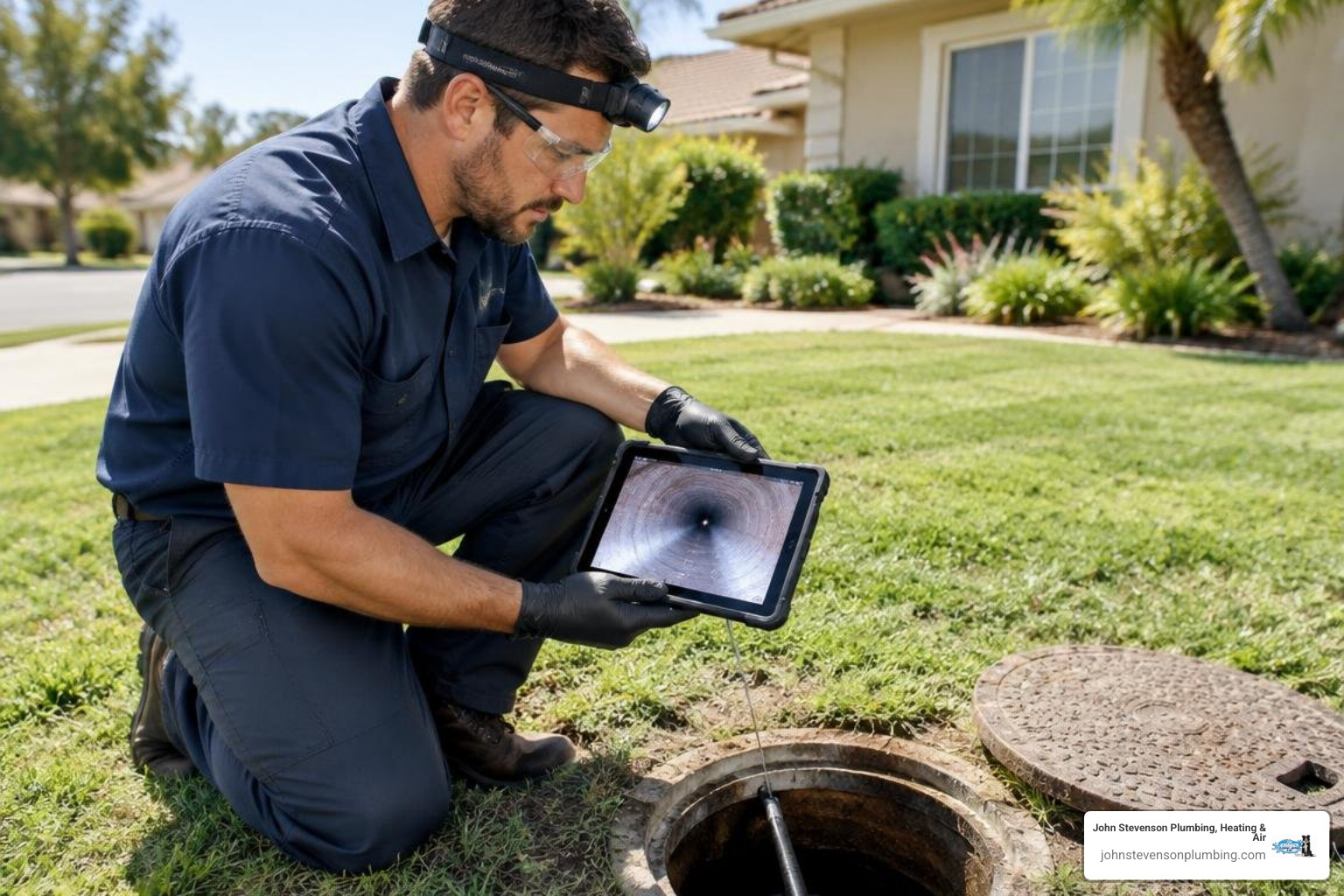
- Video Camera Scope: Insert a specialized high-definition camera through the exterior cleanout.
- Defect Mapping: Identify exact locations, depth measurements, and the structural severity of all cracks, offsets, or root intrusions.
- Evaluate Pipe Material: Determine host pipe composition (PVC, clay, cast iron, or Orangeburg).
- Compare Repair vs. Replacement Options: Assess whether targeted patching, CIPP lining, pipe bursting, or excavation fits the pipe’s overall condition.
- Execute the Solution: Complete the chosen repair or installation under local code standards and confirm the finished flow with a final post-work inspection.
Conducting a High-Definition Video Inspection
A professional camera scope is the definitive tool for evaluating underground pipelines. Rather than guessing what lies beneath your yard, we feed a specialized, self-leveling fiber-optic camera through your cleanout to capture real-time, high-definition footage of the entire lateral.
Before making any major service decisions, review our comprehensive guide to sewer camera inspections to learn how we document underground pipe issues, or consult our homebuyer’s sewer inspection guide if you are currently evaluating a new property purchase.
Identifying Signs of an Immediate Sewer Emergency
Some sewer lateral failures cannot wait for a scheduled evaluation. Be alert for these urgent warning signs:
- Simultaneous sewage backups across multiple low-level fixtures (toilets, tubs, floor drains).
- Persistent, strong sewer gas odors inside living spaces or near foundation walls.
- Sudden sinkhole depressions or unusually soggy patches appearing on your lawn.
- Unexplained wetness or damp spots along concrete slabs.
If you notice these red flags, shut off your main water supply immediately and follow our emergency sewer backup protocol to protect your home from interior water damage.
Frequently Asked Questions About Sewer Lines
How long does a sewer repair last compared to replacement?
A targeted spot repair on a modern, structurally sound PVC line can easily perform reliably for 15 to 25 years. However, patching an older cast iron or clay pipe that is already deteriorating often provides only 5 to 10 years of service before an adjacent section fails. A full sewer replacement using modern seamless HDPE or PVC delivers a service life of 50 to 100 years.
Does homeowners insurance cover sewer pipe repair or replacement?
Standard homeowner insurance policies typically exclude repairs related to normal aging, corrosion, and gradual root intrusion. Coverage is generally limited to sudden, accidental internal water damage caused by a backup. However, many insurance carriers offer optional sewer lateral endorsements that help cover subterranean line repairs—making it worthwhile to review your policy details.
Should I get a second opinion before approving a sewer replacement?
Yes. If a contractor recommends a full lateral replacement without showing you clear, real-time video footage of structural failure, we strongly advise requesting a second opinion. A reputable plumbing professional will always walk you through the camera recording, point out specific structural defects, and explain why a spot repair will or will not solve the underlying issue.
Conclusion
Deciding whether to repair or replace your main sewer lateral comes down to clear visual evidence, the age and material of your pipe, and a balance between upfront convenience and long-term peace of mind. Whether your home is located along the coast or further inland across North County San Diego, having clear diagnostic camera footage ensures you make an informed choice for your property.
At John Stevenson Plumbing, Heating & Air Conditioning, our licensed technicians provide clear diagnostics, upfront options, and dependable service backed by our 5-Star Service Guarantee. When you are ready for straightforward answers and lasting solutions, reach out to our team for expert sewer line repair and replacement services. We are proud to serve homeowners throughout Carlsbad and surrounding communities, including Mission Viejo, Poway, Rancho Bernardo, Rancho Santa Fe, Escondido, Del Mar, La Jolla, Lake Forest, Fallbrook, San Marcos, and Vista.