
Why Understanding What an HVAC Maintenance Visit Includes Can Save You Money and Stress
What an HVAC maintenance visit includes is something every homeowner should know before the next season hits — and before a small problem quietly turns into a costly breakdown.
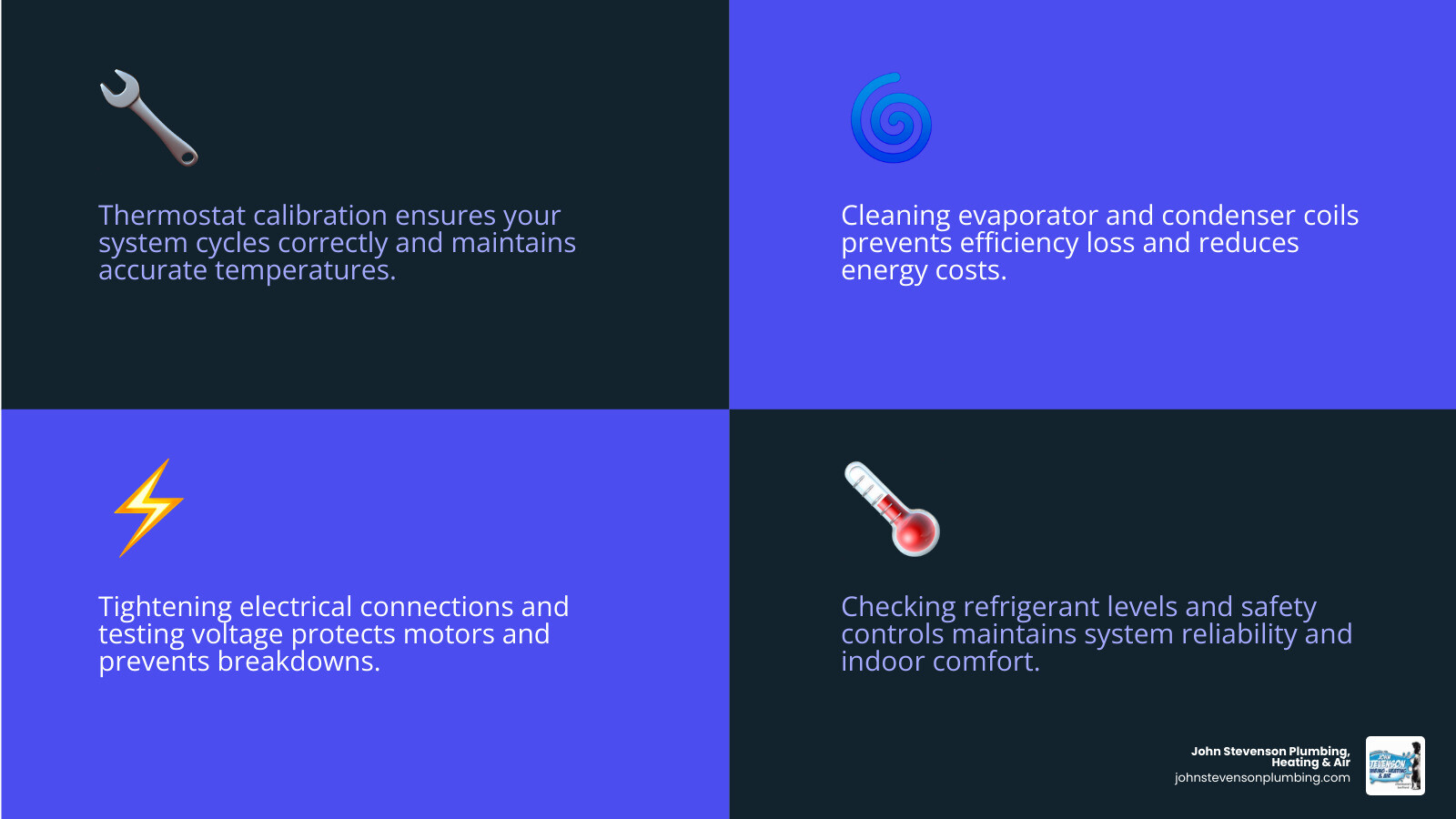
Here is a quick overview of what a standard professional HVAC maintenance visit covers:
- Thermostat calibration — verifying accurate temperature readings and proper cycle operation
- Electrical connections — tightening connections and checking voltage and amperage on all motors
- Air filter inspection and replacement — ensuring unrestricted airflow through the system
- Coil cleaning — cleaning both evaporator and condenser coils to prevent efficiency loss
- Refrigerant level check — verifying proper charge and inspecting for leaks
- Condensate drain inspection and flush — preventing clogs, water damage, and mold growth
- Blower motor and airflow assessment — checking for proper airflow and adjusting components as needed
- Lubrication of moving parts — reducing friction and wear on motors and bearings
- Heat exchanger inspection — checking for cracks or corrosion that could pose a carbon monoxide risk
- Safety controls test — confirming the system starts, operates, and shuts down correctly
A thorough visit typically takes between one and one-and-a-half hours per system. Anything significantly shorter may be a sign the technician is only doing a surface-level check rather than a complete tune-up.
For homeowners in Carlsbad, CA, where warm coastal weather means the air conditioning works hard for much of the year, staying ahead of maintenance is especially important. A neglected system does not just run less efficiently — research consistently shows that skipping regular service can reduce system efficiency by up to 15 percent annually and cut years off the life of your equipment.
Basic what does an hvac maintenance visit include glossary:
What Does an HVAC Maintenance Visit Include?
When a professional technician arrives at your home for a seasonal check-up, they do not just glance at your unit, swap a filter, and call it a day. A thorough maintenance visit is a highly technical, multi-point inspection designed to optimize performance, protect safety, and prevent premature equipment failure.
To truly understand what goes on behind those metal equipment panels, let’s break down the core components of a professional HVAC maintenance visit:
- Thermostat Calibration: Your thermostat is the brain of your comfort system. We verify that it is communicating correctly with your heating and cooling units. This includes testing the temperature accuracy against a calibrated digital thermometer, checking the cycle performance, and ensuring any smart-home integrations are functioning seamlessly.
- Electrical Connections Safety Check: Loose electrical connections are a major hazard and a common cause of system shutdowns. The technician will inspect and tighten all wiring connections, measure voltage, and track the amperage draw on all motors. Drawing too much amperage is a classic warning sign that a motor or capacitor is nearing the end of its life.
- Lubrication of Moving Parts: Friction is the enemy of mechanical longevity. We lubricate motor bearings and other moving parts where applicable to keep everything spinning smoothly, reducing wear and tear and helping your system run as quietly as possible.
- Condensate Drain Inspection and Flush: As your air conditioner cools your home, it pulls moisture out of the air. This moisture collects in a condensate pan and flows out through a drain line. Over time, algae, dust, and mold can clog this line, leading to water backups that can ruin your ceilings, drywall, or the system itself. We physically clear and flush the drain line to ensure water flows safely outdoors.
- Blower Component and Airflow Assessment: Proper airflow is critical to both comfort and efficiency. We inspect the blower wheel for dirt buildup, adjust blower components for optimal performance, and measure the temperature split (the difference in temperature between the air entering the system and the air leaving it) to ensure the heat exchange process is working perfectly.
- Static Pressure Measurement: Think of static pressure as the blood pressure of your HVAC system. It measures the amount of resistance your blower fan must overcome to push air through your ductwork. If the static pressure is too high—often due to dirty filters, crushed ducts, or poor duct design—it puts massive strain on your system.
- System Controls and Starting Cycle Verification: We test the safety and operating controls to make sure the system starts up, runs, and shuts down in the correct sequence.
Understanding these steps helps demystify the process. If you want to dive deeper into the overarching importance of these tasks, check out our guide on Everything You Need to Know About Annual HVAC Maintenance.
What does an HVAC maintenance visit include for cooling systems?
When we pivot to the cooling side of your system, the checklist becomes highly specialized to deal with the demands of Southern California summers.
- Coil Cleaning (Evaporator and Condenser Coils): Your air conditioner works by transferring heat. The indoor evaporator coil absorbs heat from your indoor air, and the outdoor condenser coil releases it outside. If either coil is coated in dust, pollen, or ocean salt spray, it cannot transfer heat effectively. This forces your system to run longer and work harder. We clean these coils to restore optimal heat transfer.
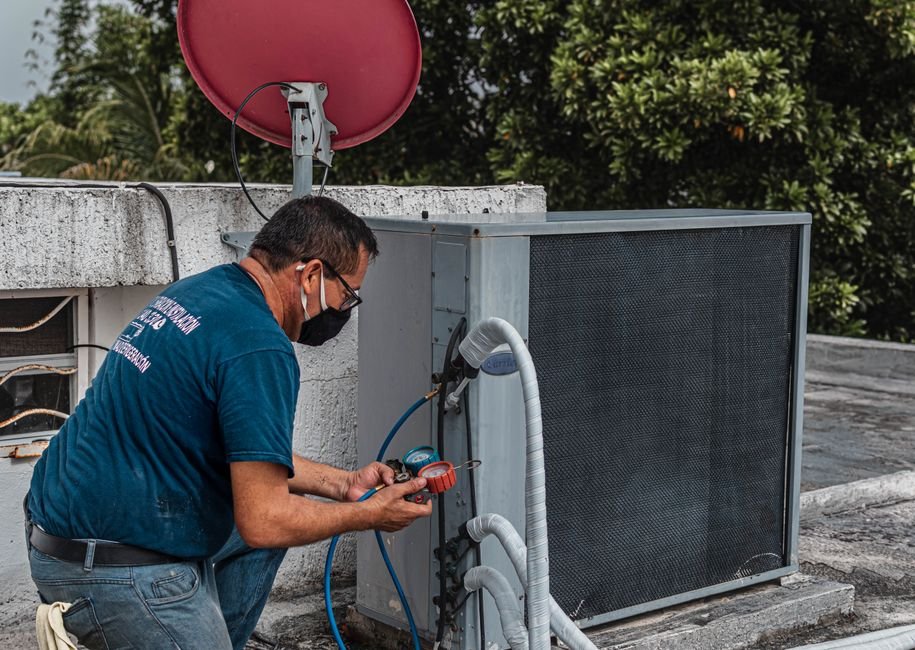
- Refrigerant Level and Leak Detection: Refrigerant is the lifeblood of your air conditioner. Contrary to popular belief, air conditioners do not “consume” refrigerant. If your system is low, it means there is a leak. We use advanced digital gauges to check your refrigerant levels, perform superheat and subcooling calculations to ensure the charge is exact, and check for signs of refrigerant leaks.
- Capacitor Testing: Capacitors are like tiny batteries that give your system’s motors the electrical boost they need to start and run. During the cooling check, we test these components because a failing capacitor can quickly lead to a seized compressor or blower motor.
Staying proactive on these cooling checks ensures your home remains an oasis of cool air. To get your system ready for the warmest months of the year, read our helpful tips on how The Secret to a Stress-Free Summer is a Spring HVAC Tune-Up.
What does an HVAC maintenance visit include for heating systems?
Even in mild coastal climates like Carlsbad and San Diego, winter nights can get chilly enough to make a reliable heating system essential. More importantly, heating maintenance is a critical safety issue.
- Heat Exchanger Inspection: In a gas furnace, the heat exchanger is the metal chamber where gas combustion takes place. If this metal cracks due to age, stress, or overheating, dangerous combustion gases—including carbon monoxide—can leak directly into your home’s breathing air. We use specialized cameras and tools to inspect the heat exchanger for microscopic cracks, soot, or corrosion.
- Gas Pressure and Piping Check: We inspect all gas connections and test the gas pressure entering and leaving the gas valve. Incorrect gas pressure can lead to incomplete combustion, soot buildup, and unsafe operating conditions.
- Burner and Ignition Assembly Cleaning: Dirty burners can cause delayed ignition or uneven heating. We clean the burner assembly and flame sensor to ensure safe, reliable ignition every time your thermostat calls for heat.
- Safety Switches and Venting Inspection: We test the limit switches, flame roll-out switches, and pressure switches that are designed to shut the system down immediately if unsafe conditions arise. We also inspect the venting and flue pipes to ensure all combustion exhaust is safely routed out of your home.
Seasonal Checklists and DIY vs. Professional Tasks
To keep your home comfortable year-round, HVAC maintenance should follow a seasonal rhythm. We recommend scheduling your air conditioning service in the spring and your heating service in the fall. This timing ensures your system is primed and ready before extreme temperatures arrive, and it helps you avoid the mid-season rush when technicians are busiest.
While professional service is indispensable, there are several tasks that you, the homeowner, can perform to keep your system running smoothly between visits. Let’s look at how to divide and conquer your HVAC care.
To learn more about preparing your home for seasonal transitions, you can read our guides on How to Prep Your HVAC for the Spring Thaw and Spring Cleaning for Your Pipes and Vents: A Comprehensive Checklist.
Here is a quick reference table to help you understand which tasks are safe for DIY and which require our certified professional hands:
| Maintenance Task | Homeowner (DIY) | Professional Technician | Why This Division Matters |
|---|---|---|---|
| Air Filter Replacement | Yes | Yes | Homeowners should replace standard filters every 1–3 months; technicians verify the MERV rating is appropriate for system static pressure. |
| Outdoor Unit Clearance | Yes | No | Homeowners must maintain a 2-foot clearance around the outdoor unit by trimming bushes and removing leaves. |
| Register & Vent Cleaning | Yes | No | Dusting and vacuuming supply registers keeps airflow unrestricted. |
| Coil Cleaning | No | Yes | Cleaning delicate evaporator and condenser coils requires specialized chemical washes and tools to avoid bending the aluminum fins. |
| Electrical Testing | No | Yes | Testing capacitors, relays, and measuring live motor amperage involves high voltage and serious safety risks. |
| Refrigerant Handling | No | Yes | Handling refrigerant requires EPA Section 608 certification by law; overcharging or undercharging can destroy the compressor. |
| Gas Line & Combustion Check | No | Yes | Testing gas pressure, burners, and heat exchangers is critical to preventing gas leaks and carbon monoxide exposure. |
| Condensate Drain Flush | Yes | Yes | Homeowners can pour vinegar down the line periodically; technicians use specialized vacuum lines or pressurized tools to clear stubborn blockages. |
The Benefits of Regular HVAC Maintenance
It is easy to adopt an “out of sight, out of mind” attitude toward your heating and cooling system. However, investing in regular maintenance yields massive returns for your wallet, your health, and your peace of mind.
- Substantial Energy Efficiency: A clean system is an efficient system. When dirt and dust coat your coils, clog your filters, and slow down your blower motor, your system has to run much longer to achieve your desired indoor temperature. Regular maintenance can improve your system’s operating efficiency by up to 15 percent, which translates directly into lower monthly utility bills.
- Extended System Lifespan: HVAC systems are a major investment. A neglected system often fails prematurely, sometimes lasting only 10 years. With consistent, professional care, a high-quality system can easily last 15 to 20 years, delaying the need for a costly replacement.
- Improved Indoor Air Quality (IAQ): Your HVAC system acts as the lungs of your home, constantly circulating air. If the indoor coils, blower wheel, and ductwork are coated in dust, mold, and pet dander, those pollutants are distributed throughout your living spaces. Thorough cleanings during maintenance visits dramatically reduce the allergens and irritants circulating in your home.
- Warranty Protection: This is a benefit many homeowners overlook. Most major HVAC manufacturers explicitly state in their warranty terms that the equipment must be professionally maintained every year to keep the parts warranty valid. If your compressor fails five years from now and you cannot provide documented proof of annual professional maintenance, the manufacturer may deny your warranty claim.
To help you decide how often your specific setup needs professional attention, check out our detailed look at the scheduling debate: Twice a Year or Once a Decade: How Often Your HVAC Needs Love.
Frequently Asked Questions About HVAC Maintenance
How often should I schedule professional HVAC maintenance?
We strongly recommend scheduling professional maintenance twice a year. If you have a standard split system (a separate air conditioner and furnace), you should schedule an air conditioning tune-up in the spring and a heating tune-up in the fall.
If you use a heat pump system that handles both heating and cooling year-round, it still needs bi-annual care because it works hard during both seasons. Regular bi-annual visits ensure your system is always optimized for the upcoming weather, preserving its efficiency and maximizing its overall longevity.
What are the red flags of a superficial maintenance visit?
A proper, comprehensive HVAC maintenance visit is a detailed process. Homeowners should watch out for these red flags that indicate a technician is cutting corners:
- The “In-and-Out” Visit: A thorough maintenance appointment should take between 1 and 1.5 hours per system. If a technician is done in 15 or 20 minutes, they have likely only performed a visual inspection without actually cleaning or measuring anything.
- No Tools or Gauges Used: If the technician never opens the indoor cabinet, does not use digital gauges to check the refrigerant charge, or fails to use a multimeter to test electrical components, they are not performing a true tune-up.
- No Written Performance Report: At the end of a professional visit, you should always receive a detailed digital or physical report documenting critical system metrics like static pressure, capacitor ratings, temperature splits, and safety test results. This acts as a health record for your system.
How does regular maintenance protect my manufacturer warranty?
When you purchase a new heating or cooling system, it typically comes with a manufacturer’s parts warranty. However, this warranty is not unconditional. Manufacturers require proof that the system was kept in good working order.
By scheduling annual professional maintenance and keeping the detailed service reports provided by your technician, you build a paper trail. If a major component fails during the warranty window, you can easily provide the manufacturer with the annual service proof required to validate your coverage and get your replacement parts covered.
Conclusion
Your home’s HVAC system is one of your most valuable investments, keeping your family safe, comfortable, and healthy through every Southern California season. Now that you know exactly what does an hvac maintenance visit include, you can make sure your system gets the high-quality, comprehensive care it deserves.
At John Stevenson Plumbing, Heating & Air Conditioning, we proudly serve Carlsbad, CA, and our surrounding communities across San Diego and Orange Counties. We are dedicated to providing thorough, professional HVAC maintenance that goes far beyond a simple visual check.
When you choose us, you benefit from our:
- 5-Star Service Guarantee — we are committed to your total satisfaction and perform 24-hour satisfaction check-ins.
- Upfront Pricing — you will always know exactly what to expect before any work begins.
- Certified Technicians — our highly trained, professional technicians have the skills and tools to keep your system running at peak performance.
Do not wait for the summer heat or a winter chill to find out if your system is up to the task. Schedule your professional Carlsbad HVAC maintenance today and experience the peace of mind that comes with professional, honest home care.