
How Dirty Is Too Dirty for an Air Filter? Here’s What You Need to Know
Knowing how dirty is too dirty for an air filter could be the difference between a system running smoothly and one heading toward a costly breakdown. Most homeowners in Carlsbad, CA don’t think about their air filter until something goes wrong — a spike in the energy bill, weak airflow from the vents, or an engine that just doesn’t feel right. By then, the filter has often been overdue for a change for weeks or months.
Here’s a quick-reference answer before we dig deeper:
An air filter is too dirty and needs replacing when:
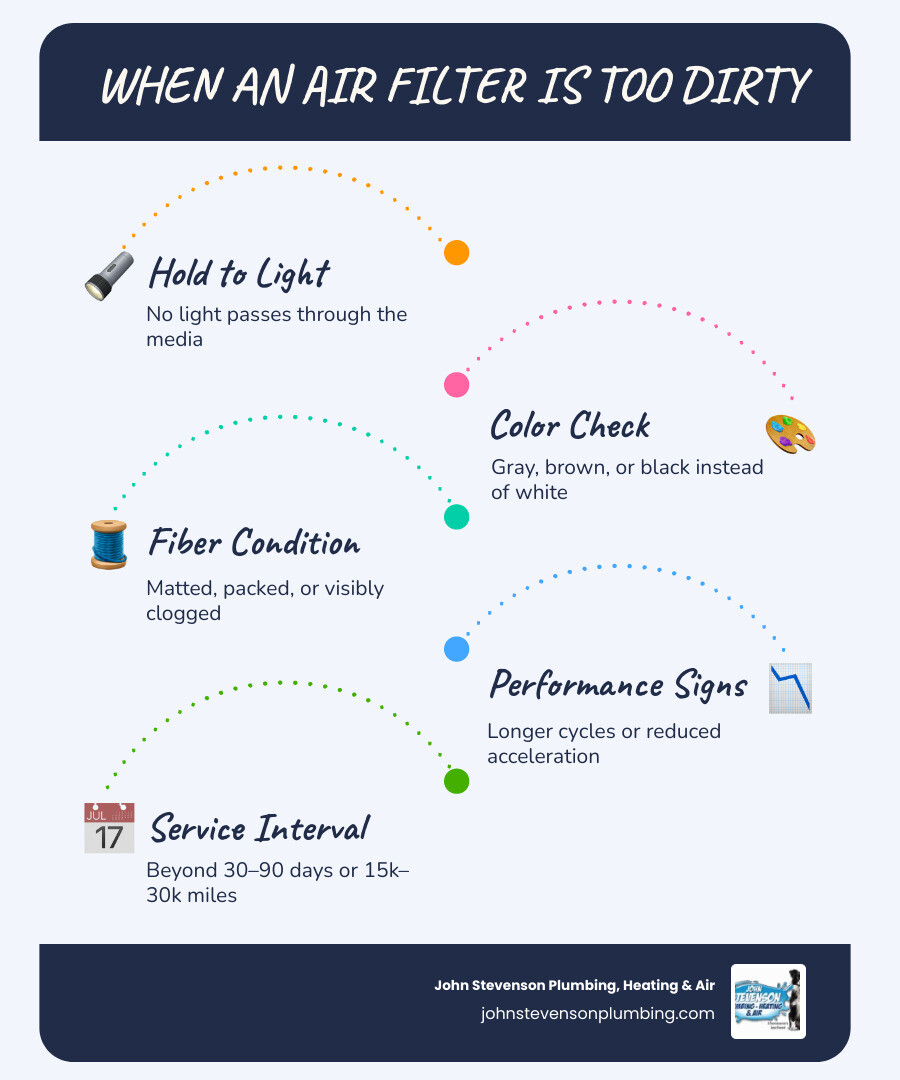
- You hold it up to light and cannot see any light passing through the media
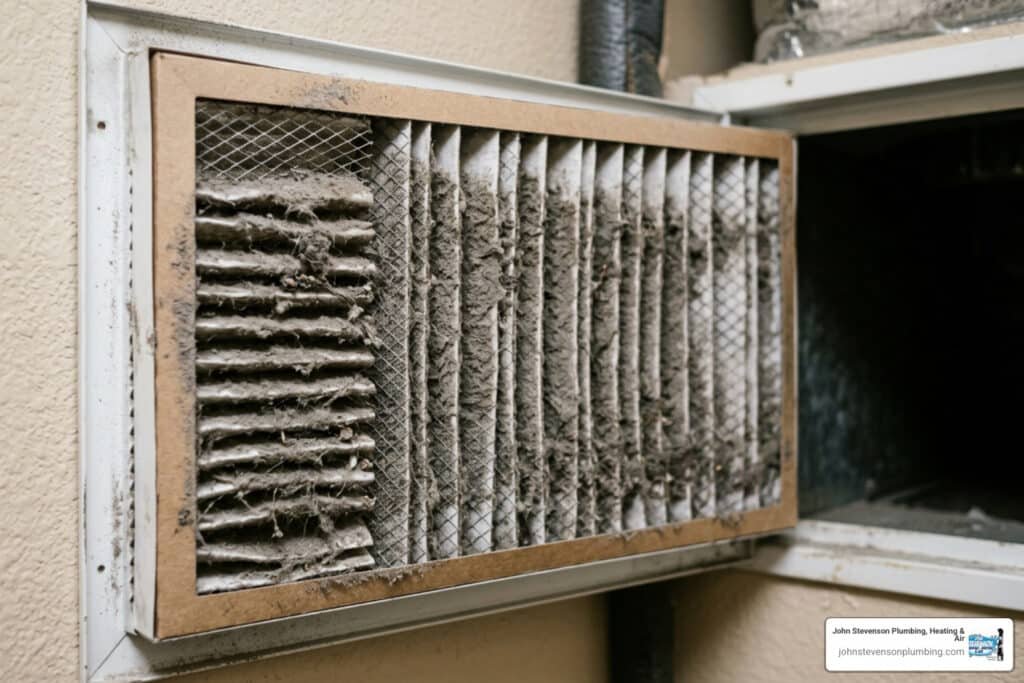
- The filter face has turned gray, brown, or black instead of its original white or off-white color
- The fibers or pleats look matted, packed down, or visibly clogged with dust and debris
- Your HVAC system is running longer cycles, heating or cooling unevenly, or your energy bill has risen without explanation
- Your vehicle shows reduced acceleration, rough idling, or increased fuel consumption
- The filter has been in place beyond its recommended interval — typically 30 to 90 days for home HVAC filters or 15,000 to 30,000 miles for engine air filters, depending on conditions
A simple rule of thumb: if you can’t see light through it, it’s time to replace it.
Air filters — whether in your car’s engine or your home’s HVAC system — do the same basic job. They trap dust, debris, pollen, and other particles before they reach sensitive components. When a filter gets too loaded to pass air freely, the system it protects has to work harder. That extra strain drives up energy use, accelerates wear, and in serious cases can cause real damage. According to the U.S. Department of Energy, a clogged HVAC filter can cause a system to use up to 15% more energy than it should.
The tricky part is that there’s no single universal answer to when a filter crosses the line — it depends on the type of filter, your environment, and what the filter is protecting. This guide breaks it all down so you know exactly what to look for and when to act.
Terms related to how dirty is too dirty for an air filter:
How Dirty Is Too Dirty for an Air Filter? The Visual and Performance Tests
Determining when an air filter has crossed the line from “doing its job” to “actively harming your system” requires more than just guessing based on how many days have passed on the calendar. Environmental loads vary wildly depending on whether you live near the coast in Carlsbad or further inland in San Diego, Carlsbad, or Escondido.
Fortunately, a few simple visual and performance assessments can tell you exactly when a filter has reached the end of its useful life.

The most reliable test is the sunlight or flashlight test. Remove the filter and hold it up directly between yourself and a strong light source, such as the sun or a bright work light. If the filter media blocks the light completely, it is too dirty. A healthy, functional filter will always allow some light to filter through its fibers, even if it has captured some dust. If you see a solid sheet of dark gray, brown, or black with zero light transmission, the filter is choked and must be replaced.
Another key indicator is the physical state of the filter media. Look for matted fibers, heavy lint accumulation, and warped or bent frames. When a filter becomes heavily restricted, the pressure drop across the media increases. This high pressure can pull the filter frame inward, causing it to warp or collapse, which allows dirty air to bypass the filter entirely. If you notice these signs your hvac filter needs changing, replace it immediately to prevent internal system contamination.
How Dirty Is Too Dirty for an Air Filter in Your Vehicle’s Engine?
Your vehicle’s engine requires a massive volume of clean air to maintain proper combustion. When inspecting an engine air filter, the visual test remains your first line of defense. Gently spread the pleats of the paper filter apart. If you see deep-seated layers of dirt, sand, insects, or dried mud at the bottom of the pleats, the filter is too dirty.
Unlike home HVAC filters, which mostly deal with indoor household dust, an engine air filter is exposed to harsh road grime, rubber particles, and outdoor soot. If you ignore a heavily clogged filter, you will eventually experience a noticeable performance drop. Early drivability issues include sluggish throttle response, a rough or vibrating idle, and a drop in overall engine power when climbing hills or accelerating onto the freeway. In extreme cases, a completely blocked engine filter can lead to engine stalling, trigger a “limp mode” warning on your dashboard, or display a Check Engine light due to airflow sensor errors.
How Dirty Is Too Dirty for an Air Filter in Your Home HVAC System?
In residential heating and cooling systems, the thickness and MERV rating of your filter determine how it handles dust loading. Standard 1-inch pleated filters have relatively little surface area, meaning they can become fully loaded and restrict airflow in as little as 30 to 60 days, especially in homes with pets or allergy sufferers. Higher-efficiency filters, such as MERV 13 pleated options, use synthetic fibers with an electrostatic charge to capture up to 75% of tiny airborne particles in the 0.3 to 1.0-micron range. While they excel at cleaning your air, their dense fiber structure means they can restrict airflow quickly if neglected.
To keep your system running safely, you need to understand how to determine how often to change hvac air filter based on your household’s unique conditions. If your HVAC system runs almost constantly to keep up with the summer heat in Orange County or the inland valleys, the filter will load up much faster. When a filter becomes too dirty, the restricted airflow forces the blower motor to draw more electricity, leading to a spike in energy consumption and placing immense mechanical strain on your heating and cooling equipment.
Real-World Effects of a Clogged Filter on Performance and Efficiency
Running a system with a clogged air filter has immediate, measurable consequences for your wallet and your equipment’s health. Whether it is an automotive engine or a home furnace, restricting the system’s ability to breathe forces it to consume more energy to achieve the same results.
When airflow is restricted, efficiency plummets. In home HVAC systems, a dirty filter forces the blower fan to run longer and work harder to move air through your home. This not only wastes energy but also accelerates mechanical wear, leading to premature parts failure and a shortened system lifespan. You can find more details on why keeping a clean filter is critical during seasonal transitions in our guide on why you need to swap your air filter this spring.
Engine Performance and Electronic Compensation
Modern fuel-injected and turbocharged engines handle restricted airflow differently than older carbureted engines. In an older carbureted car, a dirty air filter directly choked the engine’s air intake while the carburetor continued to supply the same amount of fuel. This resulted in a “rich” fuel mixture, which wasted gas, fouled spark plugs, and severely reduced fuel economy.
Modern vehicles rely on an Engine Control Unit (ECU) and a suite of sensors, including the Mass Airflow (MAF) sensor, to constantly monitor incoming air. If a dirty air filter restricts airflow, the ECU detects the drop in air volume and automatically reduces the amount of fuel injected into the cylinders to maintain the ideal 14.7:1 air-to-fuel ratio. While this electronic compensation prevents raw fuel from being wasted—meaning your fuel economy may only drop slightly—it results in a severe loss of engine horsepower and throttle responsiveness.
Furthermore, if a dirty filter is left in place too long, fine dust can bypass the filter edges and coat the delicate hot wire of the MAF sensor. This contamination causes the sensor to send incorrect readings to the ECU, leading to rough idling, misfires, and poor drivability.
HVAC System Strain and Energy Consumption
In your home heating and cooling system, the type of blower fan your system uses determines how it reacts to a dirty filter:
- Constant-Speed Fans: These traditional motors run at a single, fixed speed. As the air filter becomes clogged and airflow resistance increases, the volume of air moving through your home drops. Because less conditioned air is delivered, your system has to run much longer cycles to reach the temperature set on your thermostat, increasing your cooling energy use significantly.
- Variable-Speed Fans: These modern, energy-efficient motors adjust their speed to maintain a constant volume of airflow. When a filter gets dirty, a variable-speed fan detects the resistance and ramps up its motor speed to force air through the clog. While this keeps your home comfortable, it causes the fan’s energy consumption to skyrocket and places heavy electrical and thermal strain on the motor.
Regardless of the fan type, a severely restricted filter can drop system efficiency by 15% or more. Even worse, the lack of warm air moving over your air conditioner’s indoor evaporator coil can cause the coil’s temperature to drop below freezing. This leads to ice buildup on the coils, which blocks airflow completely and can send liquid refrigerant back to the outdoor compressor, causing catastrophic and expensive equipment damage.
Maintenance Schedules, Reusable Filters, and Cleaning Risks
To keep your home and vehicle running efficiently, it helps to compare the maintenance needs, lifespans, and risks associated with different filter types.
| Filter Type | Typical Lifespan | Common Maintenance Needs | Key Risks |
|---|---|---|---|
| Disposable Paper (Engine) | 15,000 – 30,000 miles | Inspect every 10,000 miles; replace when dark or clogged | Pleat collapse; restricted engine airflow if neglected |
| Reusable Oiled Cotton (Engine) | 50,000+ miles (with cleaning) | Wash and re-oil every 10,000 – 15,000 miles | Over-oiling can coat and ruin the MAF sensor; lower fine-particle filtration |
| 1-Inch Disposable Pleated (HVAC) | 30 – 90 days | Inspect monthly; replace when gray or matted | Airflow restriction; frozen coils; high energy bills |
| 4-to-5-Inch Media Filter (HVAC) | 6 – 12 months | Inspect every 3 months; replace when fully loaded | High initial cost; requires a compatible cabinet |
Establishing a proactive inspection routine is the easiest way to avoid the consequences of a neglected filter. Combining filter checks with other routine household tasks ensures you never run your systems under dangerous levels of restriction. For a complete look at how filter care fits into your home’s seasonal health, check out our article on everything you need to know about annual hvac maintenance.
The Risks of Cleaning Disposable Filters vs. Over-Oiling Reusable Filters
It is incredibly tempting to try and save a few dollars by extending the life of a dirty filter, but doing so often backfires. Attempting to clean a disposable paper or synthetic HVAC filter using a vacuum cleaner or compressed air is highly discouraged. Pleated filters, especially high-efficiency MERV 13 options, rely on a delicate web of synthetic fibers that carry a built-in electrostatic charge. Vacuuming or blowing compressed air through these filters collapses the pleats, tears the microscopic fiber pathways, and strips away the electrostatic charge. While the filter might look cleaner, its ability to trap fine, sub-micron particles is permanently destroyed, allowing dust and allergens to pass freely into your living space or engine. Washing a disposable paper filter with water is even worse, as moisture completely ruins the structural integrity of the paper, leading to mold growth and immediate filter failure.
On the other hand, reusable aftermarket filters (like oiled cotton gauze filters) present their own unique risks. While these filters can last for years if washed and re-oiled properly, many DIYers apply far too much oil during the servicing process. When the engine is running, the high-velocity intake air sweeps excess oil off the filter media and carries it directly onto the delicate wire of the mass airflow sensor. This oil coating bakes onto the sensor, causing inaccurate air-fuel calculations that lead to poor performance, engine hesitation, and check engine lights.
Cabin Air Filters vs. Engine Air Filters
Many vehicle owners confuse their engine air filter with their cabin air filter, but they serve entirely different purposes:
- Engine Air Filter: Located under the hood in the engine bay, this filter cleans the air entering the combustion chambers. Its primary job is to protect internal engine components from abrasive dust, dirt, and debris.
- Cabin Air Filter: Usually located behind the glove box or under the dashboard, this filter cleans the air that circulates through your car’s heating, ventilation, and air conditioning (HVAC) system. It prevents dust, pollen, mold spores, and road exhaust from entering the passenger cabin.
When a cabin air filter becomes dirty, it does not affect how your engine runs, but it heavily impacts passenger comfort. Signs of a clogged cabin filter include weak airflow from your dashboard vents, a noticeable increase in fan noise, and persistent musty or dusty odors inside the car. In damp Southern California coastal areas like Carlsbad or Encinitas, a neglected cabin filter can trap moisture, turning it into a breeding ground for mold and bacteria that blow directly into your breathing space.
Frequently Asked Questions About Air Filter Maintenance
Can a dirty air filter cause my car to stall or go into limp mode?
Yes, a severely clogged engine air filter can cause your vehicle to stall or enter “limp mode.” Your engine needs a precise balance of air and fuel to maintain combustion. If the filter is heavily restricted, the engine cannot draw in enough oxygen to keep running, especially at idle when air demand is low.
Additionally, if fine dust bypasses a damaged or overloaded filter and contaminates the Mass Airflow (MAF) sensor, the sensor may send highly inaccurate data to the ECU. When the ECU receives readings that conflict with other engine sensors, it often triggers a Check Engine light and forces the vehicle into “limp mode”—a safety setting that limits engine power and speed to protect the drivetrain from potential damage.
Is it ever safe to clean and reuse a disposable paper air filter?
No, it is never safe or effective to clean a disposable paper air filter. These filters are designed as single-use items. The paper and synthetic fibers are engineered to trap dirt deep within the media, not just on the surface.
Using compressed air or a vacuum cleaner only removes loose surface dust while pushing deeper particles further into the fibers, increasing airflow restriction. Furthermore, physical cleaning can easily create microscopic tears in the paper media. These tiny tears are invisible to the naked eye but are large enough to let damaging dirt and abrasive dust pass straight through into your home’s HVAC coils or your vehicle’s cylinders.
How do aftermarket performance filters compare to OEM filters?
Aftermarket performance filters and Original Equipment Manufacturer (OEM) filters are designed with different priorities:
- OEM Filters: Typically made of high-quality paper or dense synthetic fibers, OEM filters focus on maximum filtration efficiency. They are designed to trap the highest percentage of fine particles to provide maximum protection for your engine or HVAC system, though they may restrict airflow slightly more as they fill up.
- Aftermarket Performance Filters: These filters often use oiled cotton gauze or foam media designed to maximize airflow rate for slightly better throttle response or horsepower. However, this increased airflow often comes at the cost of lower filtration efficiency. Performance filters can allow more fine dust particles to pass through than a standard OEM paper filter, which may increase long-term wear on internal engine parts if used in highly dusty environments.
Conclusion
Whether you are looking out for your vehicle’s engine or trying to keep your home’s indoor air fresh and healthy, understanding how dirty is too dirty for an air filter is an essential part of responsible property maintenance. A clean filter keeps your systems running efficiently, protects expensive mechanical components, and keeps your monthly energy bills under control.
If you are a homeowner in Carlsbad, CA, or surrounding Southern California communities like Oceanside, Vista, San Marcos, or Encinitas, keeping your home’s heating and cooling system in top shape doesn’t have to be a guessing game. Regular filter checks are a great start, but professional maintenance ensures your entire system is running at peak performance. Preparing your system before the summer heat hits is the best way to avoid unexpected breakdowns; learn more in our guide on why the secret to a stress-free summer is a spring HVAC tune-up.
At John Stevenson Plumbing, Heating & Air Conditioning, we back our work with our signature 5-Star Service Guarantee, featuring thorough diagnostics, upfront pricing, certified technicians, and a 24-hour satisfaction check-in. Don’t wait for a clogged filter to freeze your coils or spike your energy bills. Schedule professional HVAC maintenance today and let our expert team keep your home comfortable all year long!