
Why Hair Clogs Are a “Hairy” Problem for Your Plumbing
The most effective ways to how to prevent hair clogs in shower drains come down to a few simple, consistent habits and tools:
- Install a hair catcher or mesh strainer over your drain to physically trap hair before it enters your pipes
- Brush your hair before showering to remove loose strands that would otherwise wash down the drain
- Remove collected hair after every shower and dispose of it in the trash
- Run hot water for 60-90 seconds after each shower to flush soap residue through the pipes
- Clean your drain weekly and do a deeper baking soda and vinegar treatment monthly
- Avoid oil-based hair and body products that combine with hair to form sticky blockages
If you’ve ever stood ankle-deep in soapy water waiting for your shower to drain, you already know how disruptive a hair clog can be. The average person loses 50 to 100 hairs during a single shower — completely normal, but those strands don’t just disappear. They tangle together inside your pipes, binding with soap scum, conditioner residue, skin oils, and hard water minerals to form stubborn, fibrous blockages that get worse over time.
Hair clogs are responsible for over 80% of shower drain problems, and unlike grease or mineral scale, hair doesn’t dissolve easily. It weaves itself into a mat that acts like a net, catching more and more debris with every shower. Left unchecked, what starts as slow drainage can turn into a full backup — and potentially lead to pipe damage that requires professional attention.
The good news? Most hair clogs are entirely preventable with the right habits and a few inexpensive tools. Here’s everything you need to know.
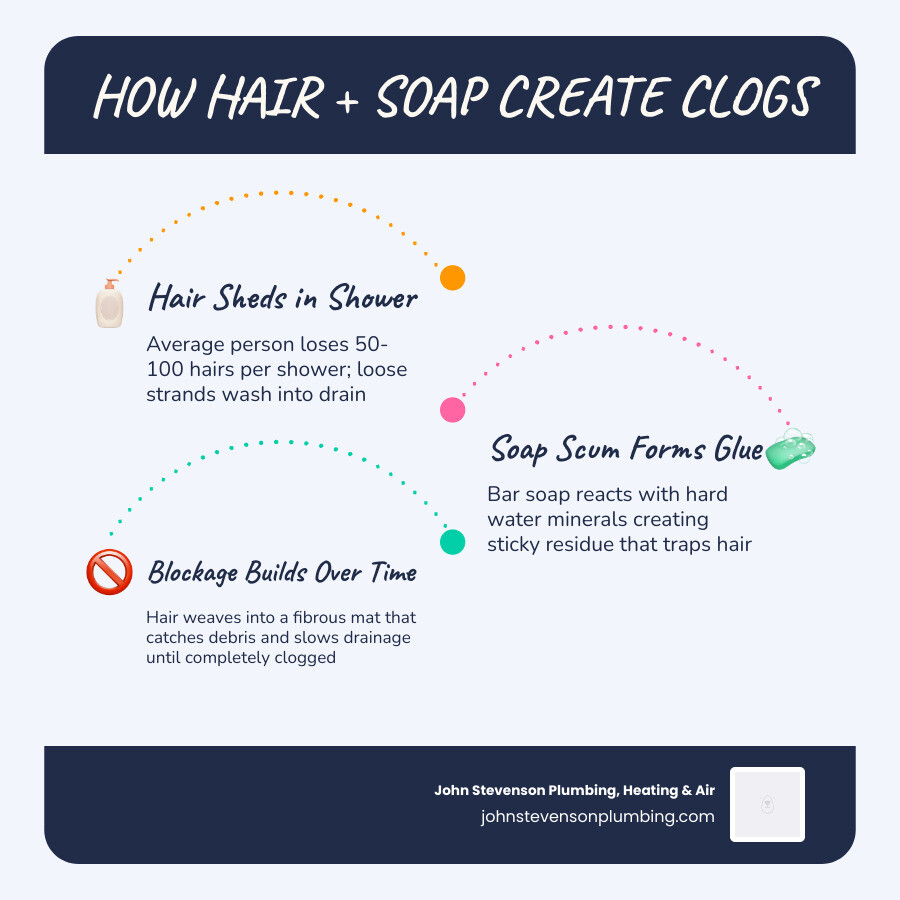
When we talk about hair clogs, we aren’t just talking about a few loose strands. Think of hair as the “rebar” in a concrete structure. On its own, hair is flexible and thin. But when it enters your drain, it meets soap scum—the sticky residue created when bar soaps react with hard water minerals. This combination creates a reinforced, fibrous mass that won’t budge.
In Southern California, where many of our customers in Carlsbad and San Diego deal with hard water, this buildup happens even faster. The minerals in the water make soap scum stickier, providing the perfect “glue” for those 50–100 hairs you shed every morning.
The Best Physical Barriers to Prevent Hair Clogs in Shower Drains
The single most effective way to how to prevent hair clogs in shower drains is to stop the hair from ever entering the pipe. This is where physical barriers come in. These tools are your first line of defense, and they are significantly cheaper than a service call for Drain Services.
There are several types of drain protectors on the market, each with its own pros and cons:
| Type of Protector | Best For | Pros | Cons |
|---|---|---|---|
| Stainless Steel Mesh | Standard flat drains | Highly durable; catches even fine hair | Can rust over several years; needs frequent cleaning |
| Silicone Suction Covers | Tiled shower floors | Stays in place; easy to wipe clean | Suction cups don’t work on textured tiles or grout lines |
| In-Drain Cylinders | Pop-up or “mushroom” drains | Hidden from view; catches hair out of sight | Can slow down water flow if not cleaned daily |
| Adhesive Mesh Stickers | Temporary use/Travel | Disposable; no cleaning required | Not eco-friendly; adhesive can leave residue |
Choosing the Right Drain Protector
When selecting a protector, consider your specific shower setup. If you have a flat drain, a stainless steel mesh cup is often the best choice because it sits flush against the floor. For those with pop-up stoppers that can’t be easily removed, a “mushroom” style protector that fits inside the drain opening is ideal.
You should also consider the volume of hair in your household. If multiple people with long hair use the same shower, you’ll want a high-capacity silicone cover that won’t clog up halfway through a single shower. At John Stevenson Plumbing, Heating & Air, we always recommend choosing a protector that is easy to remove, as you’ll be more likely to maintain the habit of cleaning it.
DIY Hair Catcher Alternatives
If you’re in a pinch—perhaps you’re visiting a rental in Oceanside or just moved into a new home in Lake Forest—you can use household items as temporary hair catchers:
- Used Dryer Sheets: A used fabric softener sheet can be placed over the drain. It acts as a fine filter that catches hair while letting water pass through. Just be sure to toss it immediately after the shower.
- The Washcloth Method: For pet bathing or a quick rinse, laying a thin washcloth over the drain can catch larger clumps of fur and hair.
- The Screen Mesh: If you have a piece of window screen mesh lying around, you can cut a small circle to fit over the drain as a temporary strainer.
While these are great for emergencies, they aren’t long-term solutions. For permanent protection, a dedicated professional-grade strainer is always the better bet.
Daily Habits for Long-Term Prevention
Prevention isn’t just about what you put on the drain; it’s about what you do before you even step into the shower. Incorporating a few simple steps into your daily routine can reduce the amount of hair hitting your Plumbing Services by up to 90%.

How to Prevent Hair Clogs in Shower Drains with Pre-Shower Brushing
Did you know that most of the hair shed in the shower was actually loose before you even turned on the water? When you wash your hair, the combination of water, shampoo, and physical scrubbing pulls those loose strands out.
By using a wide-tooth comb or a detangling brush before you shower, you can catch those loose hairs and dispose of them in the trash. This is especially important for those with long or curly hair. If you’re a Plumber in Lake Forest, you see the results of “the shower wall method”—where people stick loose hairs to the wall to keep them out of the drain. While this is better than letting them wash down, brushing beforehand is even more effective.
Managing Product Buildup
It isn’t just hair that causes clogs; it’s the “stuff” hair sticks to. To keep your drains clear, consider the products you use:
- Switch to Liquid Soap: Bar soaps are the primary cause of soap scum. Switching to a liquid body wash can significantly reduce the sticky residue inside your pipes.
- Watch the Conditioners: Many heavy conditioners contain waxes and polymers that are designed to coat the hair. Unfortunately, they also coat your pipes. Use only the amount you need and ensure you rinse the drain thoroughly.
- Avoid Oil-Based Scrubs: Those luxurious coffee or salt scrubs often contain heavy oils that solidify as they cool down in your pipes. If you use these, follow up with a long hot water flush.
Natural Maintenance Routines to Keep Drains Clear
Even with the best hair catcher, some debris will inevitably make it through. That’s why a regular maintenance routine is essential. You don’t need harsh chemicals to keep things flowing; in fact, we usually advise against them.
How to Prevent Hair Clogs in Shower Drains Using Natural Solutions
The classic baking soda and vinegar trick isn’t just for middle school science volcanoes—it’s a fantastic way to break down early-stage soap scum and deodorize your pipes.
The Monthly Deep Clean:
- Pour 1/2 cup of baking soda down the drain.
- Follow it with 1/2 cup of white vinegar.
- Cover the drain with a stopper or cloth and let it fizz for 15 minutes.
- Flush the drain with plenty of hot tap water.
This reaction helps break up the “glue” that holds hair mats together. For even better results, consider using a pipe-safe enzyme cleaner once a month. These cleaners contain natural bacteria that “eat” organic material like hair and skin oils without damaging your pipes. This is a much safer alternative to Drain Cleaning with caustic chemicals.
The Weekly Hot Water Flush
Every week, take a moment to run the hottest water your tap can provide for about 60 to 90 seconds. This simple act helps melt away any soap residue or oils that have started to settle on the pipe walls.
A Note on Boiling Water: While some DIY guides suggest pouring boiling water down the drain, we urge caution. If your home has PVC (plastic) pipes or older, fragile connections, boiling water can actually soften the plastic or damage the seals. Stick to the “hottest tap water” setting to be safe.
When to Call a Professional for Persistent Blockages
Sometimes, despite your best efforts, a clog forms deep within the plumbing system where a simple strainer or vinegar flush can’t reach. If you notice any of the following signs, it’s time to call in the experts:
- Gurgling Sounds: If your drain makes a “glug-glug” sound when the water stops, it’s a sign that air is struggling to pass a partial blockage.
- Slow Drainage in Multiple Fixtures: If both your shower and your sink are draining slowly, the problem is likely in the main branch line, not just the shower trap.
- Recurring Clogs: If you clear a hair clog only for it to return a week later, there may be a rough spot or a “snag” inside the pipe (like a tree root or a cracked pipe) that is catching hair as it passes.
- Sewage Odors: A persistent “rotten egg” smell usually indicates that organic matter is trapped and decomposing in the P-trap.
At John Stevenson Plumbing, Heating & Air, we use advanced tools like Hydro Jetting and camera inspections to see exactly what’s going on. A camera inspection can pinpoint the exact location of a clog, while hydro jetting uses high-pressure water to scrub the inside of your pipes clean, removing years of hair and soap scum buildup in minutes.
Frequently Asked Questions About Shower Clogs
Is it normal to lose hair in the shower?
Yes, it is completely normal. Most people shed between 50 and 100 hairs per day. Since much of this shedding happens during the friction of washing and conditioning, the shower is the most common place to see it. However, if you notice significantly larger clumps, it could be due to stress or medical conditions like telogen effluvium, but for your plumbing, the “normal” amount is still enough to cause a clog if not managed.
Can I use chemical cleaners for hair clogs?
We generally recommend against using harsh chemical cleaners like Drano as your first option. These chemicals are caustic and generate heat, which can damage PVC pipes and weaken older metal plumbing. Furthermore, they often fail to dissolve a dense hair mat completely, leaving you with a chemical-soaked mess that a plumber then has to deal with. Enzyme-based cleaners are a much safer, eco-friendly alternative.
How often should I clean my hair catcher?
Ideally, you should empty your hair catcher after every single shower. It only takes five seconds to grab the hair and toss it in the trash. If you leave it, the hair will begin to trap soap scum and skin cells, leading to biofilm growth (that slimy pink or black stuff) and unpleasant odors. A quick weekly rinse with a bit of dish soap will keep the catcher itself looking like new.
Conclusion
Managing hair clogs doesn’t have to be a full-time job. By installing a quality hair catcher, brushing your hair before you hop in the shower, and keeping up with monthly natural flushes, you can keep your plumbing flowing smoothly for years to come.
However, we know that life happens. If you find yourself facing a stubborn backup that DIY methods just won’t touch, John Stevenson Plumbing, Heating & Air is here to help. Serving Carlsbad, Orange County, and the surrounding San Diego communities, we offer a 5-Star Service Guarantee that ensures the job is done right the first time. From upfront pricing to thorough diagnostics, we take the stress out of “hairy” plumbing situations.
Don’t wait for your shower to turn into a swimming pool. Schedule your professional drain service today and let our certified technicians get your home back in flow!