
How Hard Water Affects Plumbing in Coastal Southern California — What Every Homeowner Should Know
How hard water affects plumbing in coastal southern california is something most homeowners in Carlsbad and surrounding communities deal with every single day — often without realizing it. Water here carries high levels of dissolved calcium and magnesium picked up as it travels through mineral-rich geology and long-distance supply systems like the Colorado River. The result is some of the hardest municipal water in the entire country, with readings in San Diego County regularly exceeding 270 ppm and Orange County water testing as high as 400 ppm — well above the national average of around 100 ppm.
Here is a quick look at what hard water does to your plumbing:
- Scale buildup inside pipes — minerals coat the interior walls, narrowing the diameter and reducing water pressure over time
- Accelerated corrosion — especially in copper and galvanized steel pipes, where mineral deposits trap particles that eat into the metal
- Water heater damage — sediment collects at the bottom of tanks and inside tankless heat exchangers, forcing the unit to work harder and wear out faster
- Appliance wear — dishwashers, washing machines, and ice makers all suffer reduced efficiency and shorter lifespans
- Pinhole leaks — localized corrosion from mineral scale combined with coastal salt air can cause small but damaging leaks in copper pipes
- Fixture and seal degradation — limescale builds up on faucets, showerheads, and valve seals, eventually causing them to fail
On top of all that, living near the coast adds another layer of stress. Salt air acts as an electrolyte that speeds up metal corrosion, and shifting sandy soil near the shoreline puts extra strain on underground pipes. For Carlsbad homeowners, that combination of hard water and coastal conditions creates plumbing challenges that inland homes simply do not face at the same level.
This guide breaks down exactly how and why hard water causes damage, which pipe materials hold up best, how your water heater and appliances are affected, and what you can do to protect your home’s plumbing for the long haul.
Why Coastal Southern California Has Exceptionally Hard Water
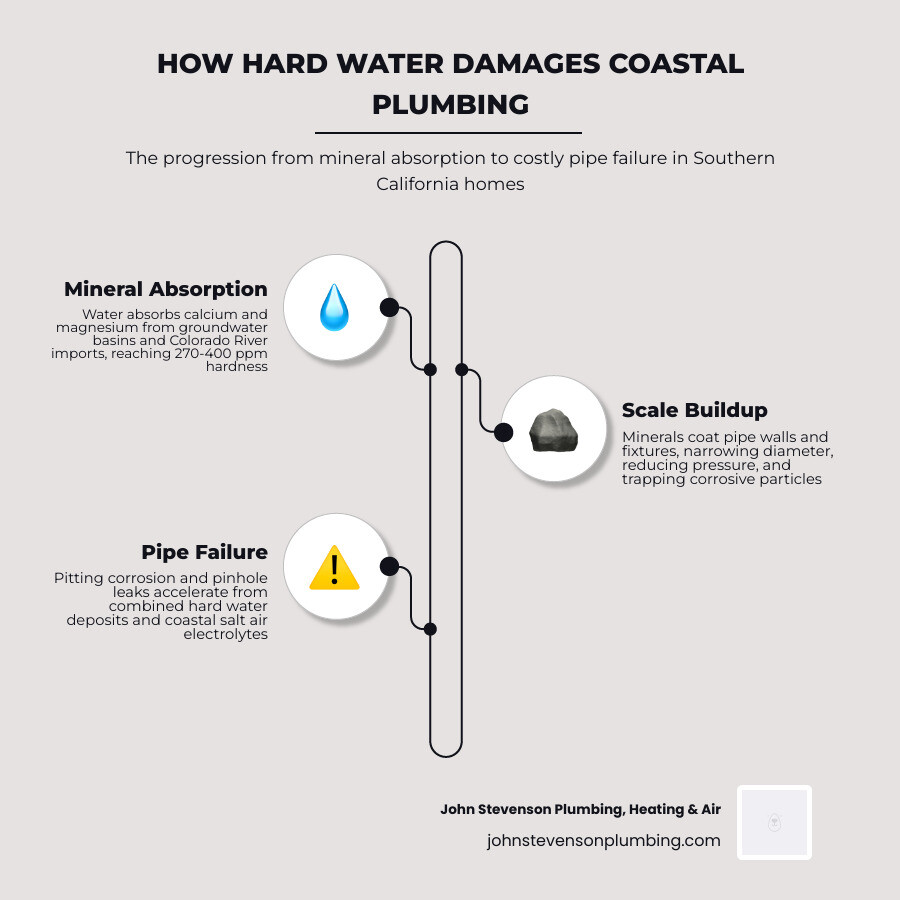
To understand why our water is so hard, we have to look at where it comes from. In coastal Southern California, we rely on a complex blend of local groundwater basins and imported water. A massive portion of our water is imported from the Colorado River and the State Water Project in Northern California.
As rainwater falls, it is naturally soft. However, as it travels hundreds of miles through open aqueducts, rivers, and rock formations, it behaves like a sponge. It dissolves and absorbs minerals along the way—primarily calcium and magnesium carbonate. By the time this water reaches municipal filtration plants and eventually flows into your Carlsbad or Oceanside home, it is heavily saturated with these minerals.
The Environmental Protection Agency (EPA) classifies water with more than 180 parts per million (ppm) of dissolved minerals as “very hard.” Let us look at how some of our local service areas stack up:
- San Diego County (including Carlsbad, Oceanside, Encinitas, and Vista): Water hardness consistently ranges from 200 to over 270 ppm.
- Orange County (including Laguna Niguel, Lake Forest, and Mission Viejo): Hardness levels routinely test between 250 and 400 ppm, making it some of the hardest municipal water in the state.
- Inland and Valley areas (like Escondido and San Marcos): Hardness levels average between 225 and 275 ppm.
When you compare these numbers to the national average of roughly 100 ppm, it becomes clear why local homeowners face such significant plumbing issues. Understanding your home’s Water Quality is the first step in diagnosing why your faucets constantly sport a white crust and why your water pressure might not be what it used to be.
The Double Whammy: How Salt Air and Coastal Climates Accelerate How Hard Water Affects Plumbing in Coastal Southern California
If hard water is a slow-moving storm, coastal living is the wind that whips it into a frenzy. In beachside communities like Del Mar, Solana Beach, and Newport Beach, plumbing systems do not just fight mineral scale from the inside; they also fight salt-laden marine air from the outside.
Salt air contains sodium chloride, which acts as a powerful electrolyte. When metal pipes—particularly copper—are exposed to this salty atmosphere, the rate of oxidation skyrockets. This creates a highly corrosive environment on the exterior of your pipes.
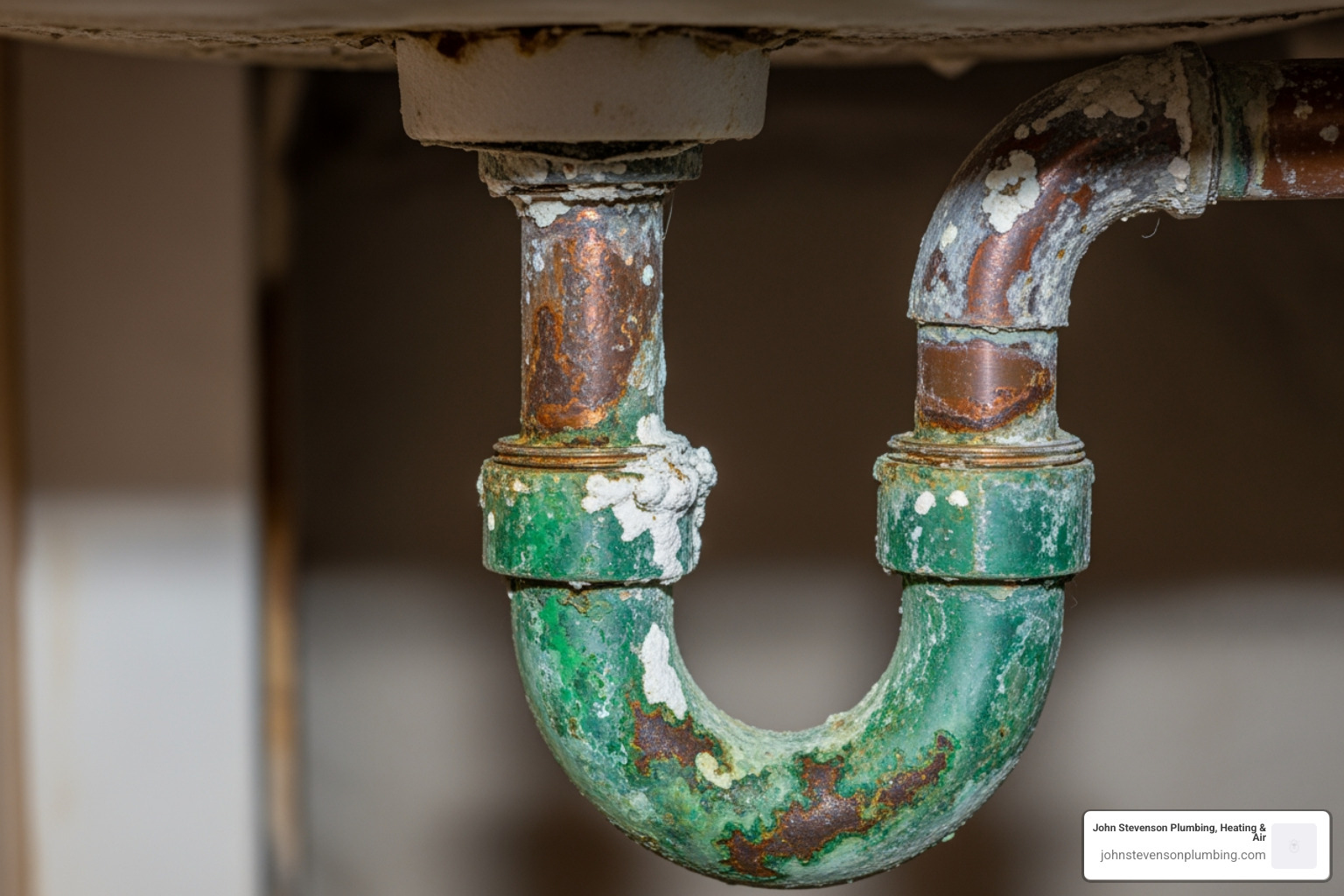
At the same time, hard water is running through the inside of those same pipes. As calcium and magnesium precipitate out of the water, they form scale deposits. This scale does not coat the pipe evenly. Instead, it forms patchy, rough structures that trap tiny pockets of oxygen, chlorine, and acidic compounds against the pipe wall. This internal process, known as pitting corrosion, works in tandem with the external salt air corrosion. The pipe is essentially being eaten away from both sides at once.
Furthermore, the physical geography of coastal Southern California presents unique structural challenges:
- Sandy Soil & Soil Subsidence: Sandy coastal soils shift and settle far more than inland clay or bedrock. This shifting can cause pipes to sag, bend, or experience high physical stress at joints and fittings.
- High Water Tables: Beachfront properties often sit over incredibly high water tables. This moisture can contain brackish water that attacks buried main lines and sewer pipes, compounding the risk of a sudden leak.
When you combine shifting foundations, external salt air corrosion, and internal mineral scaling, you have a recipe for premature plumbing failure. If you suspect your home is suffering from these combined forces, scheduling professional Leak Detection Repair can help locate hidden issues before they turn into costly water damage behind your walls.
Copper, PEX, and Galvanized Steel: How Hard Water Affects Plumbing in Coastal Southern California Piping
Different piping materials react uniquely to the harsh combination of hard water and coastal climates. If your home was built before the 1980s, or if it has been repiped recently, the materials behind your walls dictate how vulnerable your system is to failure.
Copper Piping
Copper has long been the gold standard of plumbing, but it has a vulnerable side. In coastal environments, thin-walled Type M copper is highly susceptible to pinhole leaks. The rough mineral scale created by hard water causes micro-abrasions along the inner pipe walls as water flows. Over time, these abrasions strip away the copper’s natural protective oxidized layer, allowing localized pitting corrosion to form. Type L copper has thicker walls and lasts longer, but it is still vulnerable to the same chemical attacks.
Galvanized Steel
Common in older homes throughout San Diego and Orange County, galvanized steel pipes are incredibly prone to clogging. Hard water scale adheres easily to the rough interior of steel. Over the decades, this scale builds up like plaque in an artery, eventually restricting water flow to a tiny fraction of its original volume. Even worse, the zinc coating on these pipes degrades over time, leading to severe rust that discolors your water.
PEX Piping (Cross-linked Polyethylene)
Modern PEX piping is highly resistant to both hard water scale and salt air. Because PEX is a flexible plastic, minerals have a very difficult time adhering to its smooth interior walls. Additionally, PEX does not rust, corrode, or react to salt air, making it an exceptional choice for coastal repiping projects.
To help you visualize how these materials compare, here is a breakdown of their coastal performance:
| Pipe Material | Resistance to Hard Water Scale | Resistance to Salt Air Corrosion | Lifespan in Coastal Zones | Primary Failure Risk |
|---|---|---|---|---|
| Type M Copper | Moderate | Low | 15–25 Years | Pinhole leaks, pitting corrosion |
| Type L Copper | Moderate | Moderate | 25–40 Years | Joint corrosion, slow pitting |
| Galvanized Steel | Very Low | Low | 30–50 Years (Most are failing now) | Total clogs, rusted water, joint failure |
| PEX Piping | High | Excellent | 40–50+ Years | UV degradation (if exposed to sunlight) |
If your home is still relying on aging galvanized steel or failing copper, it may be time to consider a professional Piping Repiping service to upgrade your home to durable, scale-resistant materials.
Recognizing the Signs: How Hard Water Affects Plumbing in Coastal Southern California Homes
You do not need x-ray vision to know if hard water is taking a toll on your home. There are several everyday warning signs that point directly to mineral damage:
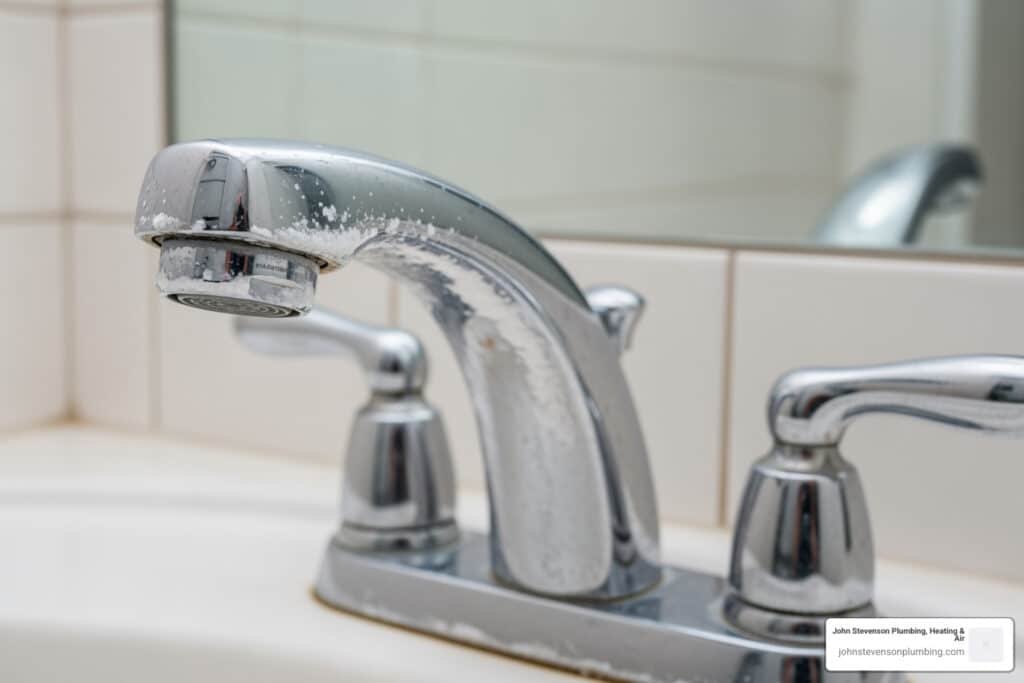
- White Crust and Limescale: If your showerheads look like they are growing white, chalky barnacles, that is calcium carbonate. This buildup clogs individual spray nozzles and ruins the finish on your fixtures.
- Reduced Water Pressure: If your shower feels more like a sad drizzle than a refreshing waterfall, mineral scale is likely narrowing the water lines or clogging the aerators.
- Slow-Draining Sinks: Soap does not lather well in hard water. Instead, it binds with calcium to create “soap scum.” This sticky residue coats your drain lines, trapping hair and debris to cause frequent clogs.
- Cloudy Glassware: If your glasses come out of the dishwasher looking foggy or covered in white spots, that is a classic sign of high mineral content.
- Mysterious Damp Spots (Pinhole Leaks): If you notice warm spots on your floor, musty smells, or unexplained water stains on your drywall, hard water may have finally eaten through a copper line.
Ignoring these warning signs can lead to sudden, expensive emergencies. If you notice any of these symptoms in your home, reaching out for professional Plumbing Repair can nip the problem in the bud before it escalates.
The Impact on Water Heaters and Modern Appliances
Nowhere is the impact of hard water felt more acutely than in your home’s appliances. When hard water is heated, the chemical bond holding the minerals in solution breaks down. This causes calcium carbonate to precipitate out of the water rapidly—a process known as precipitation hardening.
Traditional Tank Water Heaters
In standard tank water heaters, these minerals sink to the bottom of the tank, forming a thick layer of sediment. This sediment acts as a literal thermal blanket over the burner or heating element. To heat the water, the system has to heat that thick layer of rock first. This forces the heater to run longer and hotter, which search-intents high energy bills and causes the tank metal to overheat, fatigue, and eventually crack.
Tankless Water Heaters
Modern tankless water heaters are incredibly efficient, but they have incredibly tight tolerances. When water passes through the copper heat exchanger, temperatures quickly exceed 140°F. This triggers rapid precipitation hardening, coating the narrow heat exchanger tubes with scale. Within just a few years of untreated hard water exposure, a tankless system can overheat, suffer a massive drop in efficiency, or shut down entirely due to system errors.
Dishwashers and Washing Machines
Your laundry and kitchen appliances are not spared either. Scale coats the heating elements of your dishwasher, forcing it to use more electricity to reach sanitizing temperatures. It also clogs water inlet valves, leading to slow fills and premature pump failures.
To keep these systems running smoothly, it is vital to invest in specialized Water Heater Services and keep up with routine maintenance. If you own a high-efficiency system, professional flushing is highly recommended to protect your investment. You can learn more about how to safeguard these modern units by exploring our dedicated page on Tankless Water Heaters.
Long-Term Solutions: Water Softeners and Filtration Systems
Living in coastal Southern California does not mean you have to accept ruined pipes and short-lived appliances. There are highly effective ways to treat your water and protect your home.
Whole-Home Water Softeners (Ion Exchange)
The most reliable way to combat hard water is with an ion exchange water softener. These systems route incoming water through a tank filled with negatively charged resin beads. The beads hold sodium ions. Because calcium and magnesium have a stronger positive charge, they swap places with the sodium as the water passes through. The minerals are trapped in the tank, and beautifully soft water flows to your taps.
Water Descalers and Conditioners
For homeowners who prefer salt-free options, water conditioners use physical media or electromagnetic waves to change the crystalline structure of the minerals. While this does not remove the minerals, it prevents them from sticking to the inside of your pipes and heating elements.
Water Filtration Systems
Combining a water softener with a whole-house carbon filter ensures you remove not only hard minerals but also chlorine, sediment, and common municipal water treatment byproducts. This protects your family’s skin, improves the taste of your drinking water, and shields your plumbing seals from chemical degradation.
Implementing a preventative strategy that includes professional Water Descaling and high-quality Water Filtration will extend the life of your plumbing by decades.
Frequently Asked Questions about Coastal SoCal Hard Water
What is the average water hardness in coastal Southern California?
Water hardness along the Southern California coast is among the highest in the nation. In San Diego County, municipal water averages between 200 and 270+ ppm. In coastal Orange County, hardness levels can soar to between 300 and 400 ppm. Any reading over 180 ppm is officially classified as “very hard” by water quality experts.
Can hard water cause pinhole leaks in copper pipes?
Yes. While calcium and magnesium themselves are not corrosive, the uneven mineral scale they deposit inside copper pipes traps oxygen and corrosive elements like chlorine against the metal. This leads to localized pitting corrosion. In coastal areas, this internal pitting combined with external salt air exposure frequently results in pinhole leaks. If you suspect a leak, getting professional Pipe Repair quickly is essential to prevent mold and structural rot.
How often should I flush my water heater in a coastal home?
Because of our exceptionally high mineral levels, we recommend flushing traditional tank water heaters at least once a year. For tankless water heaters in high-hardness coastal zones, an annual professional flush with a food-grade descaling solution is absolutely critical to keep the heat exchanger from clogging and failing.
Protect Your Coastal Home with the Local Experts
Dealing with the unique plumbing challenges of coastal Southern California requires local expertise. At John Stevenson Plumbing, Heating & Air Conditioning, we have spent years helping homeowners in Carlsbad, Encinitas, Oceanside, and throughout San Diego County defend their properties against the destructive effects of hard water and coastal salt air.
We stand behind our work with our signature 5-Star Service Guarantee, which includes:
- Thorough, honest diagnostics
- Clear, upfront pricing before any work begins
- Fully certified, highly trained technicians who respect your home
- A 24-hour satisfaction check-in to ensure the job was done right
Do not let hard water quietly destroy your pipes, water heaters, and appliances. Contact us today to learn more about our comprehensive Water Quality solutions and schedule your home’s water test!