
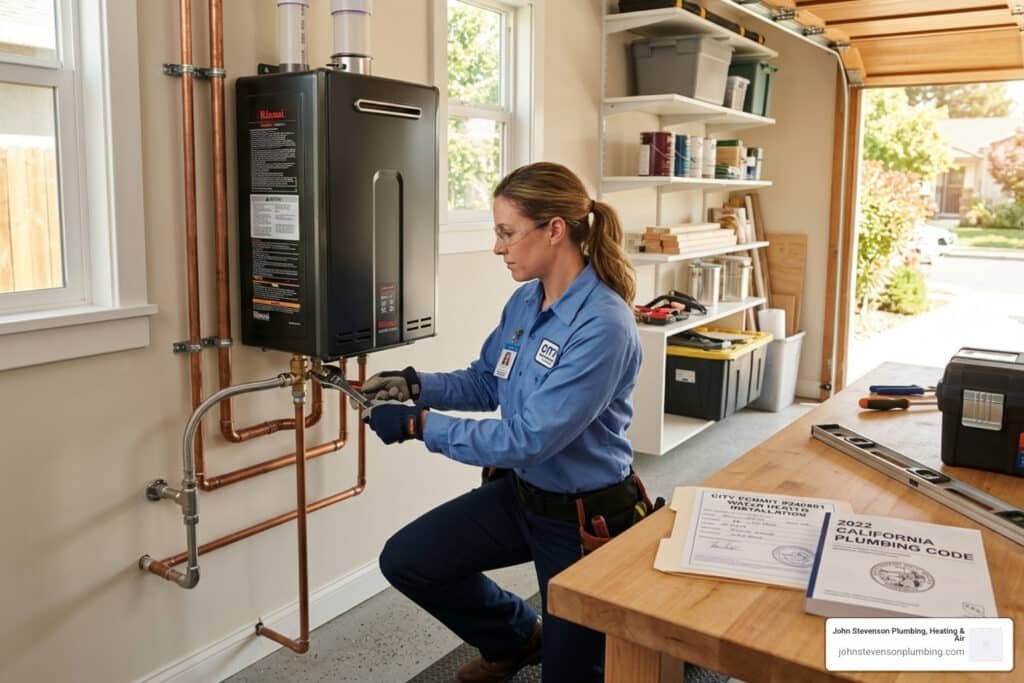
Do I Need a Permit to Replace a Water Heater in California? Here’s What You Need to Know
Do I need a permit to replace a water heater in California? Yes — in virtually every city and county across the state, a permit is required before replacing a water heater. This applies whether you’re swapping out a gas tank unit, installing an electric model, or switching to tankless. California law treats water heater replacement as a plumbing installation, which means it falls under the California Plumbing Code and triggers local building department oversight.
Here’s a quick summary of what that means for you as a homeowner:
- Permit required: Yes, statewide, for all water heater replacements
- Who can apply: Licensed contractors or homeowners (owner-builder)
- When to apply: Before work begins (emergencies may allow retroactive permits)
- Where to apply: Your local city or county building department
- Inspection required: Yes, a final inspection must be completed after installation
- Consequences of skipping: Fines, code violations, insurance issues, and home sale complications
It might feel like an extra hurdle when your water heater gives out — especially if you’re dealing with cold showers and a flooded utility closet. But the permit process exists for real safety reasons: improper installations can cause gas leaks, carbon monoxide poisoning, and serious water damage. The inspection that comes with your permit is what catches those problems before they become emergencies.
This guide walks you through everything you need to know — from California code requirements to the step-by-step permit process — so you can get your water heater replaced safely, legally, and without surprises.
Do I need a permit to replace a water heater in California?
The short answer is a resounding yes. Under the California Building Code and the California Plumbing Code, a permit is a statewide mandate for any water heater replacement. While the state sets the baseline, local jurisdiction authority—meaning your specific city or county building department—manages the actual issuance and enforcement of these permits.
Whether you are looking into Water Heaters in San Diego or upgrading a unit in Carlsbad, the law remains consistent. The primary drivers behind these regulations are health and safety. A water heater isn’t just a tank of water; it’s a pressurized vessel connected to gas or high-voltage electricity. If installed incorrectly, it can become a literal explosive hazard or a source of silent, deadly carbon monoxide.
Beyond immediate physical safety, permits provide essential property protection. They ensure that the installation meets current standards for venting, drainage, and structural support. This documentation proves to future buyers and insurance companies that the work was done to code, protecting your home’s equity and your family’s well-being.
Is a permit required to replace a water heater in California for emergency repairs?
We know that water heaters rarely choose a convenient time to fail. If your tank bursts on a Saturday night, you shouldn’t have to wait until Monday morning for a government office to open before restoring your hot water. California cities recognize this reality through emergency guidelines.
Most jurisdictions allow for a “retroactive permit” process. This means you can proceed with an emergency replacement to restore essential services, provided you or your contractor notify the city and apply for the permit within a very short window—often the next business day or within 24 hours of the installation. If you find yourself in this situation, our team specializing in Water Heater Repair in Oceanside can handle the installation immediately while ensuring the paperwork follows close behind. Safety is always the first priority, but legal compliance must follow quickly to close the loop.
Do I need a permit to replace a water heater in California if I am switching to tankless?
Switching to Tankless Water Heaters is a popular move for California homeowners looking for endless hot water and better energy efficiency. However, the permit requirements for these units are often more stringent than a standard “like-for-like” replacement.
When moving to tankless, the city will look closely at several factors:
- Gas Line Capacity: Tankless units require a much higher BTU input than standard tanks, often necessitating a larger gas line or a high-pressure regulator.
- Venting Upgrades: These units usually cannot use the old chimney or vent; they require specialized stainless steel or PVC venting that must be routed to the exterior.
- Electrical Load: Even gas tankless units require an electrical outlet for the control board, and full electric tankless models may require a significant upgrade to your home’s electrical panel.
Because of these complexities, Tankless Water Heater Services almost always require a more detailed permit application to ensure your home can safely handle the new energy demands and meet modern energy efficiency standards.
Essential California Plumbing Code Requirements for Your Installation
The reason an inspector comes to your house is to check off a specific list of safety features required by the California Plumbing Code. If you are planning a Water Heater Installation in Lake Forest, these are the non-negotiable items:
Seismic Straps (Earthquake Bracing)
Living in California means preparing for the “Big One.” All water heaters must be securely anchored to the wall to prevent them from toppling over during an earthquake. Code requires two heavy-duty straps: one located in the top third of the unit and another in the bottom third. These must be bolted into the wall studs, not just the drywall.
18-Inch Garage Elevation
If your water heater is located in a garage, the “ignition source” (the pilot light or heating element) must be elevated at least 18 inches above the floor. This is a critical fire safety measure because gasoline vapors or other flammable fumes are heavier than air and settle near the floor. Raising the unit prevents these vapors from being ignited by the water heater.
Temperature and Pressure (T&P) Relief Valves
Every water heater must have a T&P valve. This is a safety device that opens if the internal temperature or pressure gets too high. The discharge piping from this valve must be made of approved materials (like copper or CPVC) and must drain to the outside of the building, terminating between 6 and 24 inches above the ground. It cannot drain into a crawlspace or a pan.
Expansion Tanks and Drip Pans
If your home has a “closed” plumbing system (common if you have a pressure regulator or backflow preventer), an expansion tank is required. This small tank absorbs the extra pressure created when water heats up and expands. Additionally, if the heater is located in an attic or a living area where a leak could cause structural damage, a drip pan with a dedicated drain line to the exterior is mandatory.
The Risks of Skipping the Permit Process
It might be tempting to save a little time by skipping the permit, but the long-term risks far outweigh the short-term convenience.
| Feature | Permitted Installation | Unpermitted Installation |
|---|---|---|
| Safety Verification | Professional inspector confirms code compliance | No third-party safety check; high risk of errors |
| Insurance Coverage | Fully covered in case of failure | Claims may be denied if fire/flood is caused by unpermitted work |
| Home Resale | Smooth transaction with clear records | Buyers may demand “permit-ization” or price drops |
| Legal Standing | No risk of fines | Potential for “Code Violation” fees up to several hundred dollars |
Skipping the permit can lead to serious safety hazards, including carbon monoxide leaks from improper venting or gas leaks from loose connections. Furthermore, when you go to sell your home, savvy home inspectors will check for that permit. If it’s missing, you may be forced to pay for the permit, an inspection, and potentially expensive “rework” to bring an old installation up to current standards. Our Water Heater Services in Mission Viejo ensure that you never have to worry about these complications.
How to Navigate the Permit and Inspection Process
Navigating the bureaucracy doesn’t have to be a headache. Most cities in our service area, from Carlsbad to San Diego, have streamlined the process for residential water heaters.
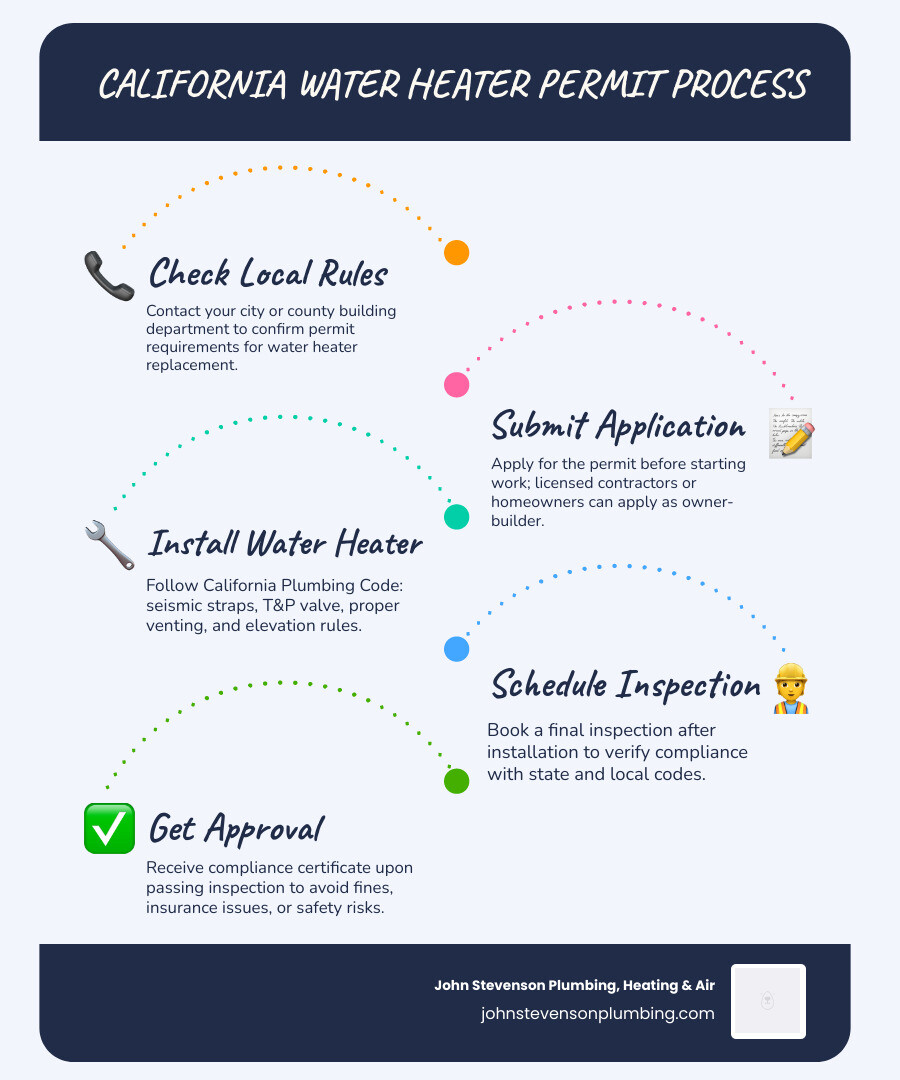
Step 1: The Application
For a standard replacement, many cities offer “over-the-counter” permits. In places like Dublin or Mountain View, these can be issued in as little as 15 minutes. You or your contractor will fill out a simple form detailing the type of unit and its location.
Step 2: Contractor vs. Homeowner Responsibility
While homeowners can legally pull their own permits as an “owner-builder,” we generally recommend letting your licensed professional handle it. When we provide Water Heater Services in Orange County, we take on the responsibility of filing the paperwork and ensuring the installation is ready for the inspector. If you pull the permit yourself, you are legally responsible for any mistakes made during the installation.
Step 3: The Installation
Once the permit is in hand (or the emergency work is done), the unit is installed according to California Plumbing Code. This includes all the seismic strapping, venting, and safety valves discussed earlier.
Step 4: The Final Inspection
After the work is finished, an inspection must be scheduled. The inspector will visit your home to verify that everything is up to code. If you’ve used a reputable service for Water Heater Repair in San Diego, this part is usually quick and painless. Once the inspector signs off, you’ll receive a compliance certificate, which you should keep with your home records.
Frequently Asked Questions about California Water Heater Permits
Can I pull my own permit as a homeowner in California?
Yes, you can. This is known as an “owner-builder” permit. However, be aware that by doing so, you assume all liability for the project. You must ensure the work meets all technical codes. If the installation fails an inspection, you are responsible for fixing it. Most homeowners find that the peace of mind offered by professional Water Heater Repair in Rancho Bernardo is worth avoiding the technical stress of DIY permitting.
How long does the permit and inspection process take?
The permit itself is often issued the same day or within a few business days for standard replacements. Scheduling the inspection depends on your local building department’s workload, but most inspections can be scheduled within 2 to 5 business days of the project completion. Some cities even offer evening or weekend inspection windows for residential water heater work.
Do electric water heaters have different permit rules than gas models?
Yes. While gas heaters focus heavily on venting and gas line safety, electric models require an electrical permit. This ensures the wiring is the correct gauge for the heater’s amperage and that the circuit breaker is properly sized. If you are upgrading to a modern heat pump water heater, as is often seen in Water Heater Repair in Ramona, there may also be specific energy efficiency standards (Energy Factor) that the unit must meet to comply with California’s Title 24 energy codes.
Conclusion
When it comes to the question, “do i need a permit to replace a water heater in california,” the answer is clear: it is a legal and safety necessity. From protecting your family against the risks of fire and gas leaks to ensuring your home remains a valuable asset during a future sale, the permit process is your best friend.
At John Stevenson Plumbing, Heating & Air, we take the stress out of the equation. Our certified technicians are experts in the California Plumbing Code and local requirements across Carlsbad, San Diego, and the surrounding areas. With our 5-Star Service Guarantee, we provide thorough diagnostics, upfront pricing, and a full commitment to doing the job right—and legally—the first time.
If you’re ready to upgrade or need an emergency replacement for your Water Heaters in San Diego, don’t risk a “bootleg” installation. Give us a call today, and we’ll handle everything from the first strap to the final city sign-off.