
Why Spring Is the Right Time to Check Your Plumbing
spring plumbing inspection tips can save you from costly surprises — here’s a quick overview of what to check before issues get out of hand:
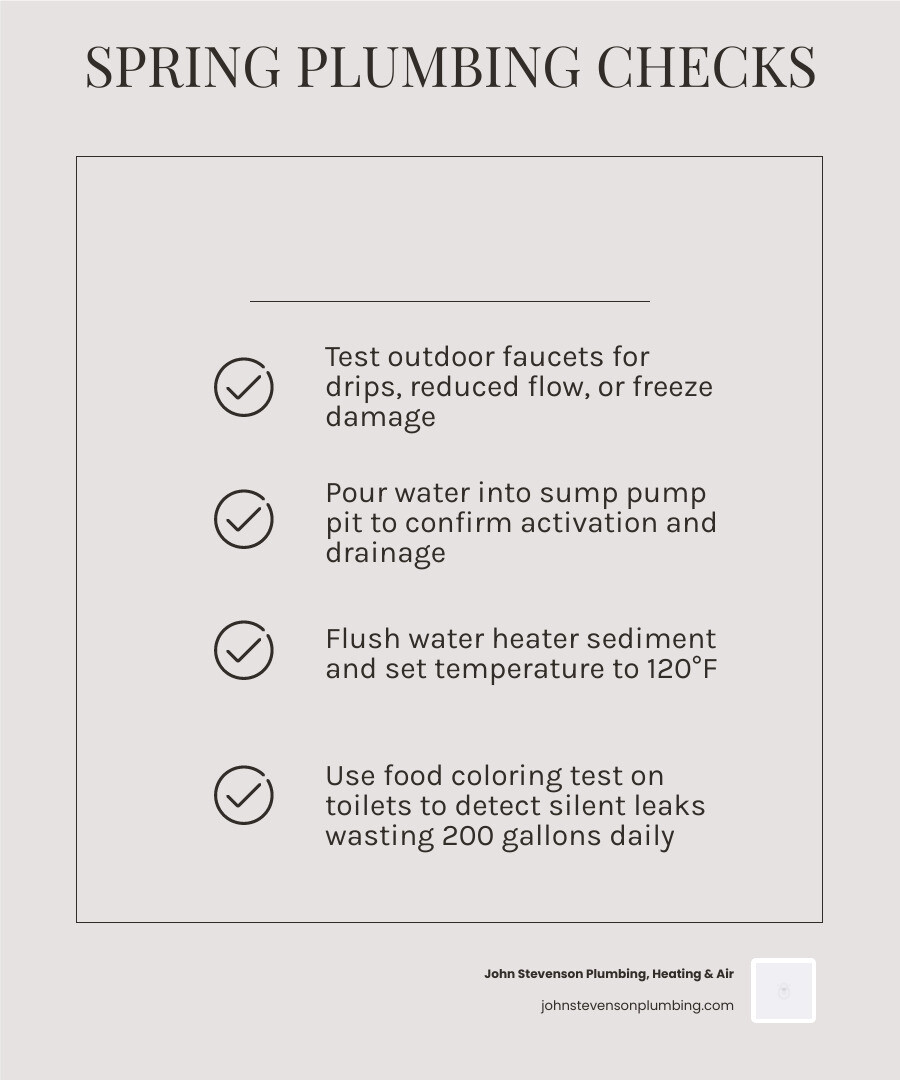
- Outdoor faucets and hose bibs — Look for drips, reduced flow, or signs of freeze damage
- Sump pump — Pour a bucket of water into the pit to confirm it activates and drains
- Water heater — Flush sediment, check the temperature (120°F), and listen for unusual sounds
- Toilets and fixtures — Use the food coloring test to catch silent leaks wasting up to 200 gallons daily
- Water pressure — Use a gauge to confirm pressure stays between 40–60 PSI
- Drains and sewer lines — Watch for slow drains, gurgling, or foul odors that signal deeper problems
- Gutters and downspouts — Clear debris and confirm water drains at least 5 feet from your foundation
- Washing machine hoses — Replace rubber hoses older than five years with braided stainless steel
Winter is hard on your home’s plumbing — even when nothing obviously breaks. Pipes expand and contract through cold nights and warmer days, quietly loosening joints, stressing seals, and creating hairline cracks that only show up once the water starts flowing again in spring. By the time you notice a leak or a slow drain, the damage may already be spreading.
The good news? A simple seasonal walkthrough catches most of these problems early. Water damage repairs cost American homeowners an average of $3,000 per incident, and regular maintenance can prevent up to 70% of plumbing failures. A few hours of attention now can protect your home — and your wallet — all year long.
This guide walks you through every key area of your plumbing system, from outdoor faucets to sewer lines, so you know exactly what to look for this spring.
Why Post-Winter Plumbing Maintenance is Essential in Carlsbad
Living in coastal California, we might not face the sub-zero blizzards of the Midwest, but our plumbing still feels the shift in seasons. Even in places like Carlsbad, Encinitas, or Oceanside, the fluctuating temperatures of winter can take a toll. When water inside a pipe gets cold, the pipe itself contracts; as it warms back up in the spring sun, it expands. This constant “breathing” of the metal or plastic can lead to loosened joints and tiny hairline cracks.
Proactive maintenance is the best defense against a sudden disaster. Research shows that proactive plumbing care can extend the lifespan of your entire system by up to 10 years. Considering that water damage costs American homeowners an average of $3,000 per incident, spending a little time on Spring Plumbing Inspection Tips is a smart investment. In fact, regular maintenance can prevent up to 70% of all plumbing failures.
Common Signs of Winter Pipe Damage
Sometimes the damage isn’t as obvious as a geyser in the front yard. Keep an eye out for these subtle “red flags” that indicate your pipes struggled through the winter:
- Visible Bulges: If an exposed pipe in your garage or crawlspace looks slightly “swollen,” it likely experienced high pressure from a partial freeze.
- Water Discoloration: Rusty or brown-tinted water when you first turn on the tap can indicate internal corrosion or a breach in the line.
- Reduced Flow: If your showerhead suddenly feels more like a drizzle than a downpour, a hidden leak might be siphoning off your water pressure.
- Persistent Condensation: While some “sweating” is normal, excessive moisture on pipes can hide small pinhole leaks.
If you spot any of these signs, it is time to look into professional Plumbing Repair before a small crack becomes a major flood.
Outdoor Maintenance: Protecting Your Foundation and Landscape
Your plumbing system doesn’t stop at your front door. In fact, some of the most important spring plumbing inspection tips involve your home’s exterior. Proper drainage is the difference between a dry basement and a structural nightmare.
When spring rains arrive in San Diego County, your gutters and downspouts become your home’s primary defense system. If they are clogged with winter debris, water will overflow, pooling around your foundation. This can lead to soil erosion, basement seepage, and even foundation cracks. We recommend ensuring all downspouts direct water at least 5 to 10 feet away from your home’s foundation to keep your crawlspace or basement bone-dry.
Outdoor Faucets and Spring Plumbing Inspection Tips
One of the most common “hidden” spring problems occurs at the hose bib (your outdoor faucet). If a hose was left attached over winter, water trapped inside may have frozen and cracked the internal pipe. You might not notice this until the first time you turn the knob in April.
To test this, place your thumb over the faucet opening to create pressure and turn the water on. If the flow is weak or if you hear water running inside the wall, you likely have a cracked pipe. Additionally, spring is the time to prepare your irrigation and sprinkler systems. Inspect every sprinkler head for cracks and ensure your Backflow Prevention Testing is up to date to prevent contaminated yard water from entering your clean drinking supply.
Clearing Gutters and Downspouts
Don’t let a handful of leaves cause a thousand-dollar flood. Take a ladder and clear out the “winter muck” from your gutters. While you’re up there, check for leaks in the gutter seams. If water is dumping directly onto the ground next to your house, it can saturate the soil and put immense hydrostatic pressure on your plumbing lines and foundation. A clear path for rainwater is essential for a healthy plumbing ecosystem.
Essential Indoor Checks for Sump Pumps and Water Heaters
Inside the home, two heavy hitters deserve your attention: the sump pump and the water heater. These units work the hardest during the transition from winter to spring.
Water Heater Maintenance and Spring Plumbing Inspection Tips
During winter, your water heater has to work overtime to heat the frigid incoming water. This extra work often results in sediment buildup—minerals like calcium and magnesium that settle at the bottom of the tank. This sediment acts as an insulator, making the burner work harder and eventually “cooking” the bottom of the tank, which leads to premature failure.
A key part of Water Heater Services is a seasonal flush. Draining just a few gallons of water from the bottom valve can remove this “sludge.” While you’re at it:
- Check the Temperature: Set it to 120°F. This is the “sweet spot” for energy efficiency and preventing accidental scalding.
- Inspect the Anode Rod: This “sacrificial” rod attracts corrosive elements so your tank doesn’t rust. If it’s eaten away, replace it to add years to your heater’s life.
- Listen for Noises: Banging or popping sounds are sure signs of heavy sediment buildup.
Testing Sump Pump Reliability
If your home has a sump pump, spring is its “game time.” With the potential for heavy spring rains in areas like Vista or San Marcos, you need to know it will kick on when needed.
Perform the “Bucket Test”: Pour about five gallons of water into the sump pit. The float switch should rise, the pump should activate, and the water should disappear quickly. Ensure the discharge line is clear of debris and that the pump makes no unusual grinding noises. Since spring storms can knock out power, we highly recommend a battery backup system so your pump keeps working even when the lights go out.
Detecting Hidden Leaks and Optimizing Water Efficiency
Did you know a leaky toilet can waste up to 200 gallons of water every single day? That is enough to fill a small swimming pool over the course of a month. Detecting these “silent killers” of your utility bill is a top priority for any spring inspection.
The easiest way to find a silent leak is the Water Meter Test. Turn off every faucet, shower, and appliance in your house. Go outside and look at your water meter. If the little dial is still spinning, you have a leak somewhere in your system. This is when you should call for professional Leak Detection & Repair to pinpoint the exact location behind your walls.
| Fixture Type | Standard Water Usage | WaterSense Fixture Usage | Potential Annual Savings |
|---|---|---|---|
| Toilet | 3.5 – 7.0 Gallons Per Flush | 1.28 Gallons Per Flush | 16,000+ Gallons |
| Showerhead | 2.5+ Gallons Per Minute | 2.0 Gallons Per Minute | 2,700+ Gallons |
| Faucet | 2.2 Gallons Per Minute | 1.5 Gallons Per Minute | 700+ Gallons |
Monitoring Water Pressure and Usage
High water pressure might feel great in the shower, but it’s a nightmare for your pipes. Home water pressure should ideally be between 40 and 60 PSI. Anything consistently above 80 PSI can stress your pipe joints and cause appliances like your dishwasher or water heater to fail early. You can check this yourself with a simple pressure gauge from a hardware store, or ask us to check it during a Water Quality Services visit.
Inspecting Appliances and Fixtures
Don’t forget the hoses hidden behind your washing machine and dishwasher. Rubber hoses are prone to cracking and “bubbling” as they age. If your washing machine hoses are more than five years old, replace them with braided stainless steel hoses. They are much more durable and far less likely to burst while you’re away at work. Also, take a moment to unscrew your faucet aerators (the little mesh screens) and soak them in vinegar to remove mineral buildup from the winter.
Addressing Slow Drains and Sewer Line Health
Spring is a season of growth—and that includes tree roots. As the ground warms and softens, tree roots aggressively seek out moisture, often finding it in the tiny cracks or joints of your sewer line.
If you notice multiple slow drains in your home, or if you hear a “gurgling” sound coming from the toilet when you run the sink, you might be dealing with a sewer line obstruction. We offer specialized Drain Cleaning Services and Hydro Jetting to clear out these stubborn blockages before they cause a backup.
Identifying Sewer Line Red Flags
Sewer problems are not just inconvenient; they can be health hazards. Watch out for these serious red flags:
- Foul Odors: The smell of rotten eggs or sewage near drains or in the yard.
- Lush Patches of Grass: If one area of your lawn is suddenly much greener and faster-growing than the rest, it might be “fertilized” by a leaking sewer pipe.
- Sewage Backups: If water comes up into the bathtub when you flush the toilet, stop using the water immediately and call a pro.
A professional camera inspection can look deep inside your pipes to see if shifting spring soil or thirsty roots have caused damage.
When to Call a Professional for Spring Plumbing Inspection Tips
While many of these spring plumbing inspection tips are DIY-friendly, some things require a professional’s touch. If you encounter discolored water, a sudden drop in pressure across the whole house, or the sound of running water when everything is off (a classic sign of a slab leak), it’s time to bring in the experts.
A professional inspection provides peace of mind that a simple walkthrough can’t. We use specialized tools like acoustic leak detectors and thermal imaging to find problems hidden deep within your floors and walls. If you are ready to ensure your home is protected, Contact Us for a comprehensive system check.
Your Comprehensive Spring Plumbing Checklist
To make things easy, here is your “cheat sheet” for a successful spring inspection:
- Indoor Visual: Check under every sink for dampness or mold.
- Outdoor Faucet Test: Run the water and check for leaks behind the wall.
- Water Heater Flush: Drain a few gallons to remove sediment.
- Sump Pump Cycle: Perform the bucket test and check the backup battery.
- Pressure Test: Ensure your home is between 40-60 PSI.
- Drain Flow Check: Run all faucets simultaneously to check for slow drainage.
- Toilet Dye Test: Put food coloring in the tank and wait 30 minutes to see if it leaks into the bowl.
Frequently Asked Questions about Spring Plumbing
How can I tell if my outdoor faucets are damaged?
The best way is to turn the faucet on and then partially block the flow with your thumb. If you hear water spraying or dripping inside the wall of your house, the pipe has a freeze-crack. You should also look for water stains on the interior drywall near where the outdoor faucet is located.
What is the ideal water pressure for my home?
Most residential systems are designed for 40 to 60 PSI. If your pressure is over 80 PSI, you risk blowing out seals in your faucets and damaging your appliances. If it’s too high, we can install a pressure-reducing valve (PRV) to keep your system safe.
Why is my water heater making a banging noise?
That noise is usually caused by “kettling.” It happens when sediment builds up at the bottom of the tank. Steam bubbles get trapped under the layer of sediment and “pop” as they escape, creating a loud banging or rumbling sound. A professional flush can often resolve this.
Conclusion
Taking the time to follow these spring plumbing inspection tips is the best way to transition your home from the cold of winter to the warmth of summer. At John Stevenson Plumbing, Heating & Air, we believe in being proactive. Our 5-Star Service Guarantee ensures that every diagnostic is thorough and every repair is done right the first time.
Whether you’re in Carlsbad, Irvine, or Rancho Bernardo, don’t wait for a drip to become a flood. Proactive maintenance can prevent 70% of plumbing failures and keep your system running smoothly for an extra decade. Schedule your professional inspection today and enjoy a worry-free spring!