
My AC is making strange noises; what do they mean and who can help in Carlsbad?
If you’re dealing with ac making strange noises what they mean can feel like a mystery — but these sounds are actually your system communicating a problem. Modern air conditioners are built to run quietly, so when yours starts banging, buzzing, hissing, or squealing, something is off.
Here’s a quick reference so you know what you’re hearing:
| AC Noise | Most Likely Cause | Urgency |
|---|---|---|
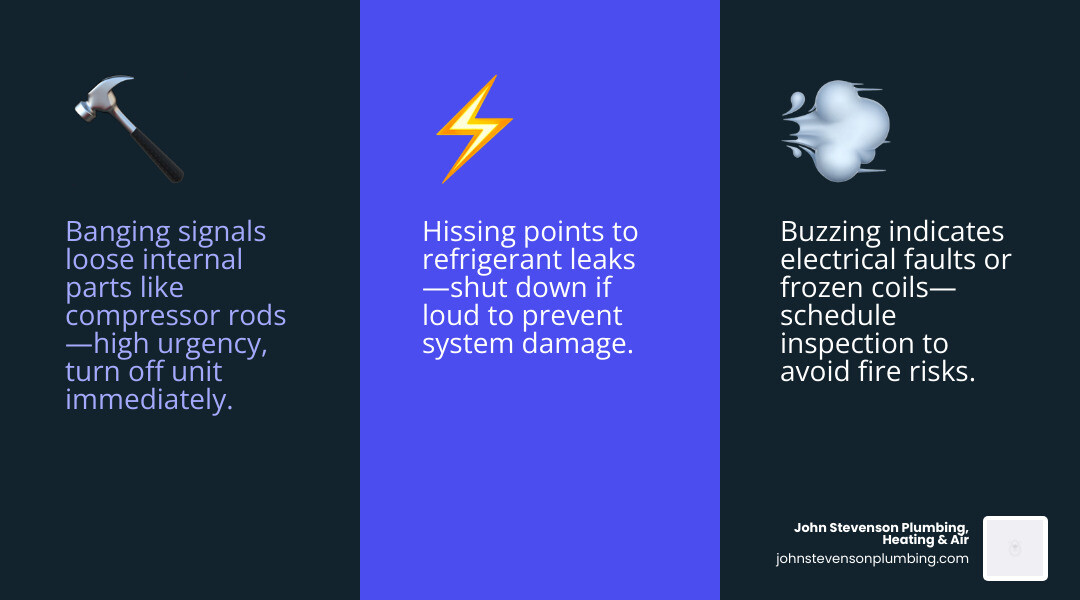
| Banging / Clanking | Loose or broken internal parts, compressor issue | High — turn off unit |
| Buzzing / Humming | Electrical fault, frozen coils, failing capacitor | High — schedule inspection |
| Squealing / Screeching | Worn belt, bad motor bearings, high pressure | High — check immediately |
| Hissing / Whistling | Refrigerant leak, leaky ducts, blocked vents | High — shut down if hissing loudly |
| Clicking (persistent) | Faulty relay, bad capacitor, failing thermostat | Moderate — call a technician |
| Rattling | Loose panels, debris in unit, worn hardware | Low to moderate — inspect soon |
| Gurgling / Dripping | Clogged condensate drain, refrigerant bubbling | Moderate — schedule service |
A single soft click when your AC starts or stops is completely normal — that’s just the contactor engaging. A gentle hum and light whoosh of air moving through vents are also signs of healthy operation. But loud, new, or persistent sounds are your system’s way of waving a red flag.
Ignoring these noises doesn’t just mean discomfort. It can force your system to work harder and turn a simple fix into a major breakdown — or even a full system failure. AC systems can last 15 to 20 years when properly maintained, but that lifespan shortens fast when warning signs go unaddressed.
This guide walks you through each noise type, what’s likely causing it, what you can safely check yourself, and when it’s time to call in a professional — especially if you’re a homeowner in Carlsbad, CA, where warm weather means your AC doesn’t get much of a break.
A Guide to Your AC Making Strange Noises What They Mean
When your cooling system is operating at peak performance, it should blend into the background of your daily life. You might hear a soft “whoosh” as air travels through the ducts or a steady, low-level hum from the outdoor condenser, but anything beyond that is considered abnormal. Understanding ac making strange noises what they mean is the first step toward protecting your investment.
Air conditioners are complex machines with many moving parts. Over time, vibration, heat, and simple wear and tear can cause components to shift or fail. In our experience serving Southern California, we’ve found that catching these “audio clues” early can be the difference between a quick AC Repair and a premature AC Maintenance failure.
Banging and Clanking: Loose Internal Parts
If your air conditioner sounds like it’s hosting a construction site, you likely have a “mechanical” emergency. Banging or clanking sounds usually indicate that a part has come loose or broken entirely within the sealed system.
The most common culprit is the compressor. Inside the compressor, parts like connecting rods, piston pins, or internal springs can break or become detached. When these metal pieces fly around inside the casing, they create a loud, rhythmic banging sound. Alternatively, a clanking noise might come from an unbalanced blower assembly or a loose fan blade hitting its housing.
Because these sounds involve heavy metal parts moving at high speeds, continuing to run the unit can cause catastrophic damage. If you hear this, reach out for Emergency AC Repair immediately to prevent the entire system from seizing up.
Buzzing and Humming: Electrical or Mechanical Issues
A buzzing sound is often the “alarm bell” for electrical problems. While a very light hum is normal, a loud or persistent buzz usually points to one of the following:
- Faulty Capacitors: These are like small batteries that give your motors the “kick” they need to start. When they fail, the motor may hum loudly because it’s trying to start but can’t.
- Contactor Relays: This is the switch that tells your outdoor unit to turn on. If it’s wearing out, it can chatter or buzz.
- Electrical Arcing: This happens when electricity jumps between loose wires—a serious fire hazard.
- Frozen Evaporator Coils: If your air filter is clogged, the coils can freeze over, causing the system to produce a distinct buzzing or vibrating sound as it struggles to move air.
Don’t ignore the buzz. These issues often relate to the “brain” and “nerves” of your system. Our San Diego HVAC Services team can quickly diagnose whether the issue is a simple wire or a failing motor.
Squealing and Screeching: High Pressure or Belt Wear
Squealing sounds are rarely subtle. They often sound like “nails on a chalkboard” and can be heard from across the house. In older systems, this is frequently a sign of a worn-out fan belt that has become frayed or slipped out of alignment. High humidity—common in coastal areas like Carlsbad—can also cause belts to expand and contract, leading to these high-pitched sounds.
In newer, beltless systems, screeching usually points to failing motor bearings in the blower motor or the outdoor condenser fan. However, there is a more dangerous cause: high internal pressure. If the compressor reaches a dangerously high pressure level, it may emit a “screaming” or screeching sound. This is a safety issue. If you hear this, shut the system down and contact AC Repair Lake Forest or your local technician right away.
Airflow and Drainage: Hissing, Whistling, and Gurgling
Not all strange noises are “metal-on-metal.” Some of the most common sounds are related to the fluids and air moving through your system. These sounds often indicate that the “breathing” or “plumbing” of your AC is restricted. Proper HVAC Maintenance is the best way to keep these fluid systems running quietly.
Hissing and Whistling: Refrigerant Leaks and Airflow Problems
Hissing and whistling are often grouped together, but they usually signal very different problems.
Hissing is almost always a sign of a refrigerant leak. Your AC uses a pressurized chemical (refrigerant) to move heat. If a crack develops in the evaporator coils or the copper lines, the gas escapes under high pressure, creating a hissing sound. This is bad for the environment and bad for your compressor, which can’t operate without the correct pressure.
Whistling, on the other hand, is usually an airflow issue. If your air filter is extremely dirty, the blower motor has to “suck” air through a tiny space, creating a whistling or “whooshing” sound. It can also happen if too many vents are closed or if there are leaks in your ductwork. If you’re in the OC area and hear these sounds, AC Repair Mission Viejo specialists can help pinpoint if the sound is coming from your ducts or your coils.
Gurgling and Dripping: Condensate Line Obstructions
Because air conditioners remove humidity from the air, they produce a lot of water. This water is supposed to collect in a drain pan and flow out through a condensate line.
- Gurgling: This often sounds like someone finishing a drink with a straw. It usually means there are air bubbles in your refrigerant line (which shouldn’t be there) or that your condensate drain line is partially clogged, causing water to glug as it tries to pass through.
- Dripping: While some dripping into a pan is normal, a loud, persistent “splash” usually means your drain pan is full or overflowing because the exit line is blocked by algae, dust, or hard water minerals.
If you notice water pooling around your indoor unit along with these sounds, AC Repair Irvine experts can flush your lines to prevent water damage to your home.
Troubleshooting Tips for Homeowners in Carlsbad
Before you panic and assume you need a brand-new system, there are a few safe “DIY” checks you can perform. Sometimes, ac making strange noises what they mean is simply that the unit needs a little basic cleaning or tightening.
| Check | What to Look For | Fix |
|---|---|---|
| Air Filter | Hold it up to the light; if no light passes through, it’s clogged. | Replace with a new filter. |
| Outdoor Unit | Check for sticks, leaves, or debris inside the fan cage. | Turn off power and carefully remove debris. |
| Panel Screws | Look for loose metal panels vibrating against the frame. | Tighten screws with a screwdriver. |
| Registers/Vents | Ensure at least 80% of your home’s vents are open. | Open blocked vents and clear furniture away. |
If these steps don’t silence the noise, it’s time to stop the DIY and call in the pros. Trying to fix internal hardware or electrical components yourself can void your warranty and lead to dangerous situations. If you find yourself constantly troubleshooting, it might be time to consider a new AC Installation to enjoy the silence of modern technology.
When to Call a Professional for AC Making Strange Noises What They Mean
Knowing when to step back is vital for your safety and the health of your HVAC system. You should immediately call for San Diego HVAC Services if you encounter any of the following:
- Burning Smells: If a noise is accompanied by the scent of ozone or burning plastic, you have an electrical failure. Shut off the breaker immediately.
- Persistent Clicking: A single click is fine, but constant clicking suggests a control board or relay failure that could prevent the system from starting entirely.
- Rapid Cycling: If your AC turns on and off every few minutes while making noise, it is “short-cycling,” which puts immense strain on the compressor.
- Tripped Breakers: If your AC makes a loud noise and then trips the circuit breaker, do not keep flipping it back on. This is a sign of a “grounded” compressor or a major electrical short.
Preventing Future Issues with Regular Maintenance
The best way to “fix” a noisy air conditioner is to make sure it never gets noisy in the first place. In Carlsbad and the surrounding areas, our air is often filled with salt spray, dust, and pollen, all of which can gum up your system’s components.
Regular AC Maintenance is like an oil change for your car. It allows a technician to catch small issues—like a slightly loose bolt or a fraying belt—before they turn into a “banging” or “screeching” emergency.
How Maintenance Stops Your AC Making Strange Noises What They Mean
During a professional HVAC Maintenance visit, we perform several tasks specifically designed to keep your system quiet:
- Lubrication: We apply specialized oil to motor bearings to prevent the friction that causes squealing and grinding.
- Coil Cleaning: Removing dirt from the coils prevents the “whooshing” and “buzzing” sounds associated with restricted airflow and frozen systems.
- Refrigerant Check: We ensure your levels are exact, which prevents the “hissing” and “gurgling” of leaks or bubbles.
- Electrical Tightening: We check all wire connections and contactors to eliminate electrical buzzing and prevent arcing.
- Component Monitoring: We inspect the compressor and fan blades for signs of wear, ensuring everything is balanced and secure.
Frequently Asked Questions About Noisy AC Units
Is it safe to run my AC if it’s making a loud banging noise?
No. A loud banging noise usually indicates that a metal part has come loose or broken inside the compressor or blower motor. If you continue to run the unit, that loose part can act like shrapnel, destroying other vital components. Turn the system off at the thermostat and call a technician.
Why does my AC click repeatedly when it tries to turn on?
If your AC clicks but won’t start, it’s usually an electrical communication issue. The thermostat is sending a signal, but the “contactor” (the switch) or the “capacitor” (the starter) isn’t responding correctly. This is a common repair that should be handled by a certified pro.
Can weather conditions in Carlsbad cause my outdoor unit to rattle?
Absolutely. High winds can blow debris like twigs or small stones into the outdoor condenser. Additionally, heavy rain or hail hitting the metal casing can be quite loud. However, if the rattling persists after the weather clears, a panel screw may have vibrated loose, or a fan blade might be slightly out of alignment.
Conclusion
At John Stevenson Plumbing, Heating & Air, we know that your home is your sanctuary, and a noisy air conditioner is a major disruption to your peace of mind. Whether you’re in Carlsbad, San Diego, or anywhere in Orange County, our team is dedicated to providing the “5-Star Service Guarantee.” This means you get thorough diagnostics and a 24-hour satisfaction check-in to ensure your home is as quiet and comfortable as it should be.
Don’t let a small “click” turn into a major “clank.” If your system is over 15 years old and the noises are becoming a constant headache, it might be time to discuss an AC Replacement. Newer models are significantly quieter and more energy-efficient.
Ready to silence the screeching? Contact us today, and let’s get your home back to the “Symphony of Silence.”