
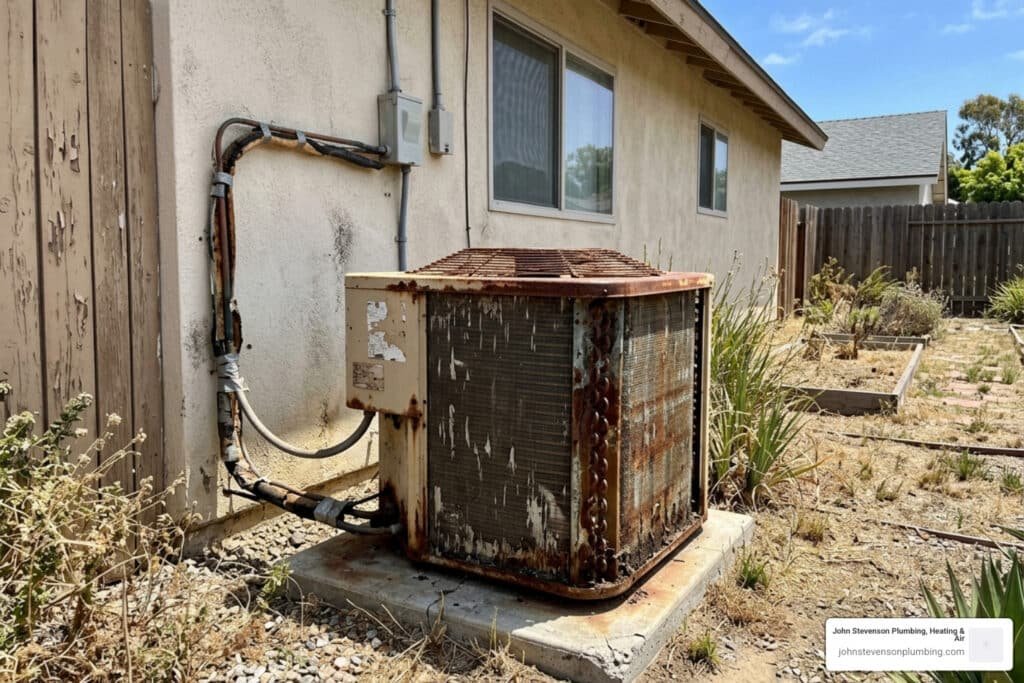
My air conditioner is struggling to keep my home cool. Is it worth fixing an old unit, or should I consider a new system in Carlsbad?
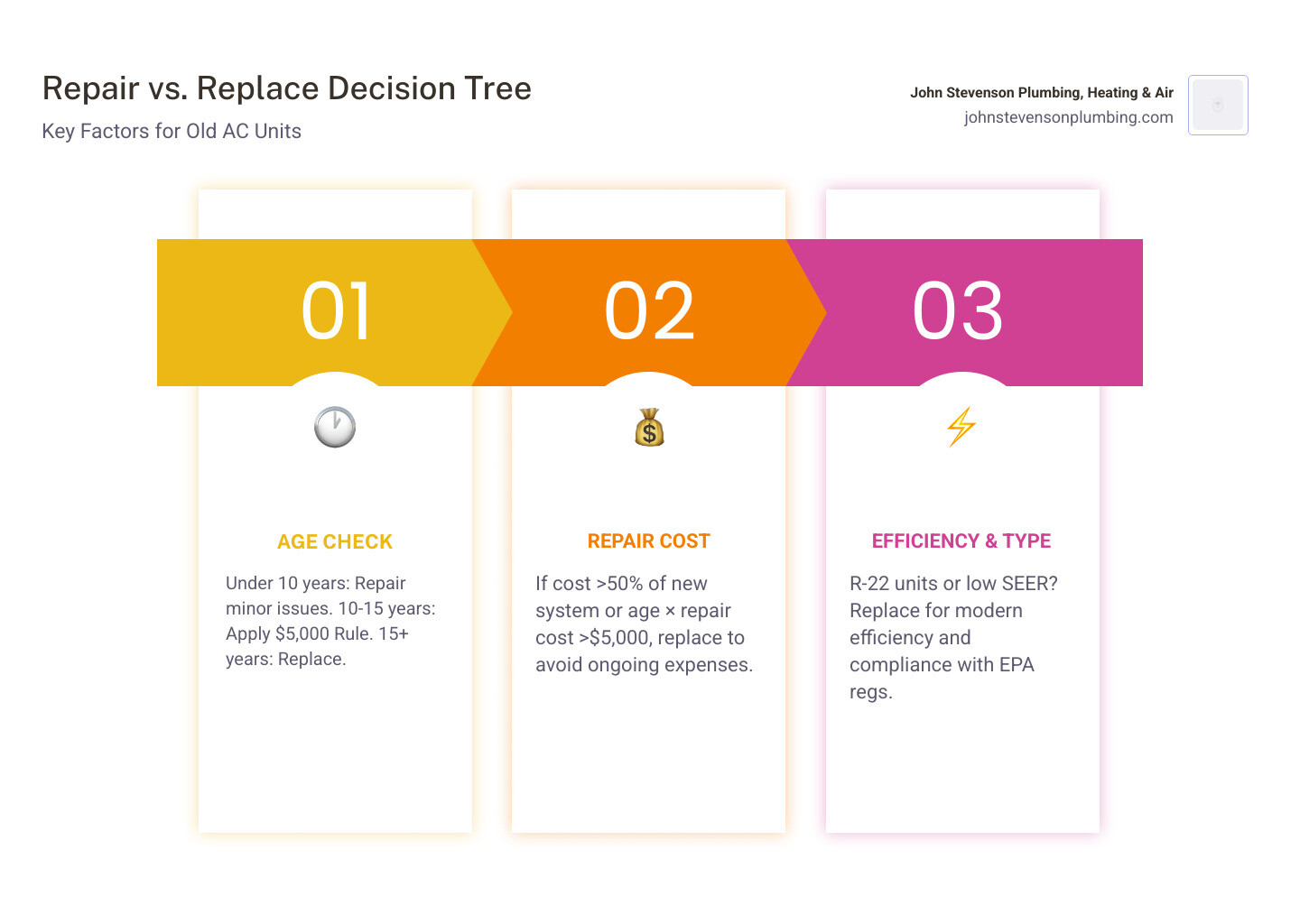
Is it worth fixing an old air conditioner? The answer depends on the age of your unit, the complexity of the repair, and the overall efficiency of the system. Use the quick guide below to evaluate your situation.
Quick Answer: Repair or Replace?
| Situation | Recommendation |
|---|---|
| Unit is under 10 years old, minor repair needed | Repair |
| Unit is 10-15 years old, moderate repair needed | Evaluate age vs. system reliability |
| Unit is 15+ years old, major repair needed | Replace |
| Unit uses R-22 refrigerant | Replace |
| Repair involves major component failure on an aged unit | Replace |
| Rising energy usage + frequent breakdowns | Replace |
Now for the full picture.
Living in Carlsbad, CA means your air conditioner works hard for a good chunk of the year. When it starts struggling, the decision you face is a real one: continue maintaining an aging system, or transition to a more reliable replacement? Most homeowners dread this moment. One repair leads to another, energy efficiency drops, and suddenly you’re wondering if the system has reached its limit.
Here’s the reality: most residential air conditioners last between 10 and 15 years. Once a system starts pushing past that window, repairs can become a recurring burden rather than a smart long-term solution. But that doesn’t mean every old unit should be scrapped on the spot. There’s a logical way to think through this decision, and that’s exactly what this guide walks you through.
Understanding the Average Lifespan of a Cooling System
When we talk about the “lifespan” of an air conditioner, we are generally looking at a window of 10 to 15 years. While some units in milder parts of San Diego County might stretch to 20 years with impeccable care, that is the exception, not the rule. In coastal areas like Oceanside or Carlsbad, the salt air can accelerate component erosion, making that 10-15 year estimate even more critical.
As a system ages, it undergoes inevitable wear and tear. The compressor—the “heart” of your AC—begins to lose its efficiency. Electrical components become brittle, and the coils can develop microscopic leaks. This is why the importance of regular AC Maintenance cannot be overstated. A well-maintained unit might hum along happily at year 12, while a neglected one might face a catastrophic failure by year 8.
Think of your AC like a car. A 10-year-old car with high mileage might still get you to work, but you wouldn’t be surprised if the alternator or the transmission started acting up. Eventually, the effort of keeping that car on the road exceeds the reliability of the vehicle itself. The same logic applies to HVAC Maintenance for local homes. We often see “middle-aged” units that are still viable, but once they hit that 15-year mark, they are officially on “borrowed time.”
Is It Worth Fixing an Old Air Conditioner? The Age and Reliability Assessment
If you find yourself staring at a repair recommendation, how do you decide if it’s a smart fix or a poor use of resources? In the HVAC industry, we look at the intersection of age and the severity of the mechanical failure.
To use this framework, consider the age of your air conditioner alongside the frequency of recent issues. If the unit is over a decade old and requires a major component replacement, it is generally considered a better long-term move to replace the unit.
The Logic in Action:
- Scenario A: You have a 10-year-old unit that needs a simple capacitor. Since this is a minor component, it is often worth scheduling the professional AC Repair services.
- Scenario B: You have a 12-year-old unit that needs a new blower motor or compressor. Given the age and the significance of the part, you are likely better off investing in a new, efficient system.
This approach helps homeowners move past the emotional stress of a breakdown and look at the long-term viability of the equipment. Repairing an old unit is often just delaying an inevitable replacement rather than ensuring long-term comfort.
Is it worth fixing an old air conditioner when it uses R-22?
If your air conditioner was manufactured before 2010, there is a high probability it uses R-22 refrigerant (often called Freon). This is a major “red flag” for any repair.
The EPA officially phased out the production and import of R-22 in 2020 because of its environmental impact. Today, the only R-22 available is reclaimed or recycled from old systems. This scarcity has caused the availability of R-22 to plummet. If your older unit has a refrigerant leak, the process to find the leak, fix it, and refill the system can be extremely difficult and resource-intensive.
When a unit uses R-22, even a minor leak often signals the end of the system’s life. Transitioning to a modern system using R-410A (or the newer R-454B) isn’t just about being “green”—it’s about moving to a sustainable refrigerant that is readily available. If you are looking for AC Repair in Carmel Valley and your unit is an R-22 model, we will almost always recommend a replacement for your long-term peace of mind.
Is it worth fixing an old air conditioner with a low SEER rating?
SEER stands for Seasonal Energy Efficiency Ratio. Think of it like the “miles per gallon” for your air conditioner. Older units typically have SEER ratings of 8 or 10. As of 2023, the new standard is SEER2, and most modern entry-level units start at 14.3 or 15 SEER2.
Upgrading from an old 10 SEER unit to a modern 16+ SEER2 unit can significantly reduce your cooling energy consumption. If your summer utility bills in San Marcos or Irvine are rising, you could be losing efficiency every single month just because your old unit is outdated.
When you look at our Cooling Services overview, you’ll see that modern systems use variable-speed compressors and advanced motors that don’t just save energy—they provide much better humidity control and more consistent temperatures throughout your home.
Critical Signs Your Unit Is Beyond a Simple Fix
Sometimes, the decision isn’t just about the math; it’s about the “symptoms” your AC is showing. If you notice any of the following, your unit might be waving a white flag:
- Frequent Breakdowns: If you’ve had to call us twice in the last two summers for different issues, your system is likely experiencing cascading failures. Once one major part goes, the others often follow.
- Rising Energy Bills: If your usage habits haven’t changed but your bills are creeping up year-over-year, your internal components are likely working much harder than they should to produce the same amount of cold air.
- Ineffective Cooling or Humidity Issues: Does your house feel “sticky” even when the AC is running? Older, single-stage units are notorious for failing to remove humidity as they age.
- Strange Noises: Grinding, squealing, or heavy clanking often points to a failing compressor or blower motor. These are not “simple fixes.”
- Obsolete Parts: For units over 15 or 20 years old, manufacturers may no longer produce replacement parts. If we can’t get the part, we can’t fix the machine.
- Short Cycling: If your AC turns on and off every few minutes, it’s putting massive strain on the system and failing to cool the home properly. This often leads to expert AC Installation being the only logical next step.
The Major Repair Threshold and Matched System Efficiency
Another industry standard we use is the threshold of repair severity. Quite simply, if the repair for an aged unit involves a primary component with no remaining warranty, you should consider a replacement. Investing in a unit that has no warranty and a lower efficiency rating is rarely a wise move for long-term home comfort.
When you do decide to replace, it’s vital to think about “matched systems.” Your HVAC system consists of an indoor air handler (or furnace) and an outdoor condenser. While it might be tempting to just replace the outdoor AC unit, this can lead to massive inefficiencies.
Benefits of a Matched System Replacement:
- Warranty Coverage: New systems typically come with 10-year parts warranties, giving you total peace of mind.
- Maximum Efficiency: A new outdoor unit paired with an old indoor coil will never reach its rated SEER2 efficiency.
- Rebates and Tax Credits: Under the Inflation Reduction Act, many homeowners in areas like Carlsbad and Escondido can qualify for federal tax credits and local utility rebates for high-efficiency heat pumps. These incentives are often only available for full, matched system installs.
| Feature | Repairing Old Unit | Replacing with New System |
|---|---|---|
| Reliability | Uncertain | High (10-year warranty) |
| Energy Usage | High (Inefficient) | Significantly Lower |
| Refrigerant | R-22 (Scarce/Phased Out) | Modern (Available/Eco-friendly) |
| Air Quality | Basic filtration | Advanced allergen trapping |
If you are exploring AC Replacement options, always ask about how the indoor and outdoor units work together to maximize your investment.
Frequently Asked Questions About Aging AC Units
How do I calculate if a repair is worth the investment?
The best way is to evaluate the age of the unit against the severity of the mechanical failure. If the repair is minor (like a contactor) and the unit is under 12 years old, a fix is often appropriate. If the repair is major (like an evaporator coil) and the unit is over 10 years old, it’s almost always better to replace. You should also factor in your monthly energy consumption. A new unit can provide significant energy savings that help offset the transition over time.
Should I replace my furnace at the same time as my air conditioner?
In many cases, yes. Because the furnace and the AC share the same blower motor and ductwork, replacing them together ensures they are perfectly matched for airflow and efficiency. Plus, you may save on labor by having the team do both at once rather than scheduling a separate installation later when the old furnace fails. If your furnace is also 15+ years old, replacing it alongside the AC is the smartest move.
What are the environmental benefits of upgrading to a new system?
Modern units use refrigerants with much lower Global Warming Potential (GWP) than old R-22 systems. Additionally, because new units use significantly less electricity, they reduce the carbon footprint of your home. Many modern systems are also much quieter, reducing noise pollution in your neighborhood.
Conclusion
Deciding is it worth fixing an old air conditioner doesn’t have to be a guessing game. By evaluating the system’s age, checking your refrigerant type, and looking at your energy usage, the “right” choice usually becomes clear. While a new system is a significant investment, the peace of mind, lower monthly energy consumption, and improved home comfort often make it the most logical path forward for Carlsbad homeowners.
At John Stevenson Plumbing, Heating & Air, we take the stress out of this decision. Our 5-Star Service Guarantee means you get a thorough diagnostic and clear communication before any work begins. Our certified technicians are there to find the best solution for your specific home and budget. Whether you need a quick fix to get through the week or a full system overhaul, we provide 24-hour satisfaction check-ins to ensure you are happy with the results.
Don’t spend another summer sweating over an unreliable unit or a sky-high energy bill. Schedule your AC Repair today and let our experts give you an honest assessment of your system’s health. Whether you’re in Encinitas, Rancho Bernardo, or Yorba Linda, we’re here to keep you cool.