
What Is a Ductless Mini Split System? A Quick Answer for Carlsbad Homeowners
What is a ductless mini split system is one of the most common HVAC questions homeowners ask when exploring alternatives to traditional central air — and the answer is simpler than you might think.
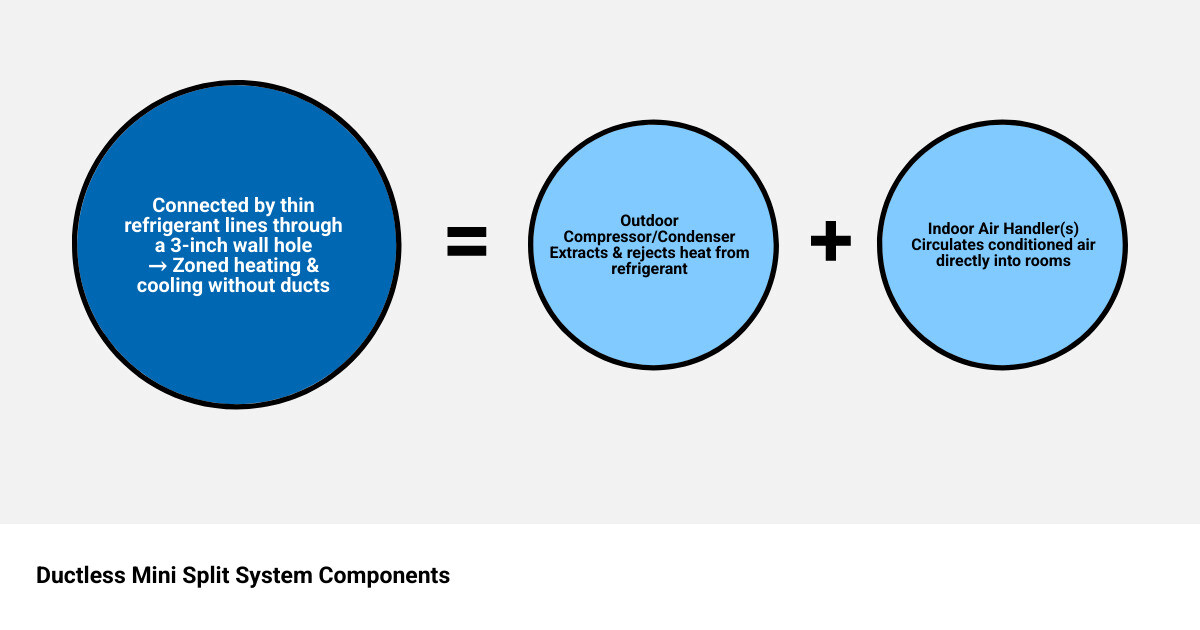
A ductless mini split system is a heating and cooling system that works without ductwork. It connects an outdoor compressor unit to one or more indoor air handlers through a small conduit, delivering conditioned air directly into specific rooms or zones.
Here’s a quick breakdown of what makes it different:
- No ducts required — refrigerant lines run through a small 3-inch hole in the wall
- Two main components — an outdoor compressor/condenser and one or more indoor air-handling units
- Zoned comfort — each indoor unit controls the temperature in its own space independently
- Heating and cooling in one — most systems function as heat pumps, reversing the cycle to heat in winter
- High efficiency — no ductwork means no energy lost through leaky ducts, which can waste over 30% of energy in traditional systems
- Quiet operation — outdoor units can run as quietly as 46 decibels, similar to a normal conversation
If you live in an older home, have a room addition, or simply want more control over your comfort, a ductless mini split is worth understanding inside and out. The sections below walk you through everything — how it works, what it costs to run, and whether it’s the right fit for your Carlsbad home.
Understanding the Basics: What is a Ductless Mini Split System?
When we talk to our neighbors in Carlsbad, Oceanside, and Vista, we find that many people are surprised by how elegant the solution actually is. At its core, a ductless mini split is an air-source heat pump. While traditional central air relies on a massive network of metal ducts to push air through your attic or crawlspace, a ductless system skips the “middleman” entirely.
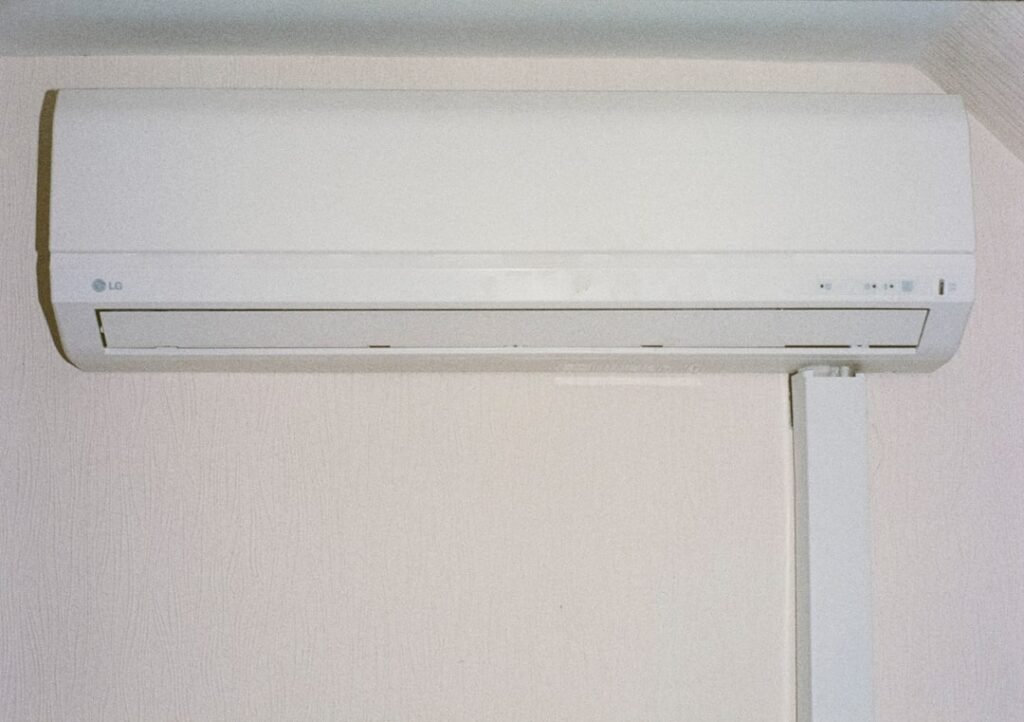
The system is comprised of two primary physical parts. Outside your home, we install an outdoor condenser unit. This is the “muscle” of the operation, containing the compressor. Inside, we mount one or more air-handling units (often called “heads”) directly on the wall or ceiling. These components are linked by a conduit that houses the power cable, refrigerant tubing, and a condensate drain.
Because there is no ductwork, the installation is remarkably non-invasive. We only need to drill a small, 3-inch hole in the exterior wall to pass the conduit through. This makes it a perfect choice for those who want to avoid a major construction project. If you’re looking for more technical details on the equipment we use, you can explore our page on Ductless Mini-Splits.
Defining what is a ductless mini split system for Carlsbad homes
In our coastal climate, versatility is key. Whether you are in Encinitas or San Marcos, your home’s layout determines the best configuration.
- Single-Zone Systems: These are designed for one specific area. If you have a sunroom that gets too hot or a primary bedroom that never stays cool enough, a single indoor unit connected to one outdoor compressor is the answer.
- Multi-Zone Configurations: This is where the technology truly shines. A single outdoor unit can actually power multiple indoor units—up to five or even eight depending on the brand. This allows you to create “zones” throughout your home, each with its own thermostat.
Choosing between single-zone and multi-zone setups
Deciding on the right setup depends on your goals. Are you trying to fix one “problem room,” or are you looking for a whole-home solution?
In a multi-zone setup, you have incredible flexibility. You can have a high-wall unit in the living room, a floor-mounted console in the guest room, and a discreet ceiling cassette in the kitchen. Each of these can be set to a different temperature. This is a game-changer for families where one person wants it “arctic cold” while another prefers a “gentle breeze.”
How the Refrigerant Cycle Powers Your Comfort
To understand what is a ductless mini split system, you have to look at the science of heat transfer. These systems don’t actually “create” cold air; they move heat from one place to another.
In the summer, the indoor unit absorbs the heat from your room air and transfers it to the refrigerant. That refrigerant travels through the lines to the outdoor unit, where the heat is released into the atmosphere. In the winter, the process reverses. Even when it feels chilly outside in places like Poway or Escondido, there is still heat energy in the air. The system extracts that heat and pumps it into your home.
Why what is a ductless mini split system matters for energy efficiency
One of the biggest technological leaps in these systems is inverter technology. Think of a traditional central AC like a light switch—it’s either 100% on or 100% off. This leads to those annoying temperature swings and high energy spikes every time the motor kicks in.
Inverter technology is more like a cruise control system for your car. It allows the compressor to speed up or slow down incrementally to maintain a perfectly steady temperature. This precision is why mini splits can achieve incredible efficiency ratings, sometimes reaching up to 28.1 SEER2 (Seasonal Energy Efficiency Ratio) and 11.9 HSPF2 (Heating Seasonal Performance Factor).
Key efficiency factors include:
- Zero Duct Loss: Since air doesn’t travel through ducts, you avoid the 30% energy loss typical of central systems.
- Zoned Operation: You aren’t wasting energy cooling the guest room when no one is in it.
- Advanced Filtration: Many units feature multi-stage filters that capture allergens and dust, improving air quality while the system runs.
Performance in extreme weather conditions
While we enjoy mild weather in Orange County and San Diego, some of our inland neighbors in places like Ramona or Pauma Valley deal with more extreme temperatures. Modern ductless systems are engineered for these challenges.
Select high-performance models can provide heating at 80% capacity even when outdoor temperatures drop to -22°F. On the flip side, they can maintain 100% cooling capacity when it’s a blistering 130°F outside. This means that no matter what the Santa Ana winds bring, your home remains a sanctuary.
The Top Benefits of Going Ductless in Southern California
If you’ve ever lived with a window unit, you know the struggle: they are loud, they block your view, and they invite security risks. A ductless mini split solves all of those problems while providing a level of quiet you have to hear to believe.
Many indoor units operate as low as 20 decibels—that’s quieter than a whisper in a library. Even the outdoor units are designed to be neighbor-friendly, often running at just 46 decibels. For context, a typical conversation is about 50 to 60 decibels. This is especially important in high-density areas like La Jolla or Irvine, where keeping the peace with neighbors is a priority.
Eliminating the downsides of traditional ductwork
Traditional ductwork is the “hidden energy thief” of the American home. Over time, ducts can leak, sag, or become infested with dust and dander. Research shows that ductwork in central forced air systems can account for more than 30% of energy consumption for air conditioning.
When you choose a Ductless Mini Split Installation, you are removing that inefficiency entirely. You get 100% of the air you pay for, delivered directly into the room.
Versatile applications for every room
Where does a mini split make the most sense? Almost anywhere!
- Home Additions: If you’re adding a new room in Carlsbad, extending the existing ductwork can be a nightmare. A mini split is a standalone solution.
- Garage Workspaces: Turn your garage into a comfortable gym or workshop in Oceanside without affecting the rest of the house’s climate.
- Older Homes: In historic areas like Del Mar or parts of San Diego where there is no room for bulky ducts, mini splits preserve the architectural integrity of the home.
- Guest Houses and ADUs: Provide independent climate control for your guests or tenants.
Comparing Ductless Mini Splits to Central Air Systems
When deciding between these two options, it helps to see them side-by-side.
| Feature | Ductless Mini Split | Central Air (Ducted) |
|---|---|---|
| Energy Loss | Less than 5% (No ducts) | Up to 30-40% (Leaky ducts) |
| Installation | Quick (1-2 days), non-invasive | Complex, requires ductwork |
| Zoning | Built-in (Room-by-room) | Difficult/Expensive to add |
| Noise Level | Whisper quiet (20-46 dB) | Loud (Duct “pinging” and fan noise) |
| Space | Minimal (Wall/Ceiling mounted) | Requires attic/closet space |
Avoiding significant energy loss
The math is simple: ductless systems can reduce energy consumption by up to 40% over a conventional system. Because central air has to push air through long stretches of (often uninsulated) ductwork, the air loses its “cool” (or “heat”) before it even reaches your living space. Ductless systems deliver that air directly, ensuring maximum thermal efficiency.
Aesthetic and security advantages
We often hear concerns about the look of the units. However, modern designs are sleek and discreet. Beyond the standard high-wall units, there are ceiling cassettes that sit flush with the ceiling, and floor consoles that look much like a traditional radiator but with a modern flair.
From a security standpoint, mini splits are far superior to window units. A window AC provides an easy entry point for intruders and ruins your home’s curb appeal. A mini split only requires a 3-inch hole that is high off the ground and securely sealed, keeping your home in Rancho Santa Fe or Scripps Ranch safe and beautiful.
Professional Installation and Maintenance Requirements
A ductless system is a high-tech piece of machinery. While there are “DIY kits” on the market, we strongly advise against them. Professional installation is the only way to ensure your system reaches its full 15-to-20-year lifespan.
Why professional sizing is critical
One of the most common mistakes is improper sizing. If a unit is too large for the room, it will “short-cycle,” turning on and off constantly. This wears out the compressor and fails to remove humidity properly. We perform detailed “load calculations” to determine exactly how many BTUs each room needs.
Furthermore, professional installation ensures that the refrigerant lines are vacuumed and charged correctly. Any moisture or air left in those lines can lead to a system failure within just a few years. At John Stevenson Plumbing, Heating & Air, our 5-Star Service Guarantee means we don’t just “slap it on the wall”—we ensure it’s optimized for your specific home.
Simple steps for homeowner maintenance
While we handle the technical side, there are a few things you can do to keep your system running smoothly:
- Clean the Filters: Most mini splits have easy-access mesh filters. We recommend checking them every month. Just pop them out, rinse them in the sink, let them dry, and put them back.
- Clear the Outdoor Unit: Make sure leaves, dirt, or shrubs aren’t blocking the airflow around your outdoor condenser.
- Annual Inspections: Just like a car, your HVAC system needs a professional tune-up once a year to check electrical connections and clear the condensate drain lines.
Frequently Asked Questions about Ductless HVAC
Do mini splits require venting or produce carbon monoxide?
No. Because ductless mini splits are all-electric, there is no combustion involved. Unlike a gas furnace, they do not produce carbon monoxide or any other harmful gases. They do not require a flue or chimney; they simply require a drain line for the moisture (condensation) they pull out of the air.
How long do these systems typically last?
With proper maintenance and professional installation, a high-quality ductless system can reliably serve your home for 15 to 20 years. This is comparable to, and often longer than, the lifespan of a traditional central AC unit.
Can I control different rooms at different temperatures?
Absolutely. This is the “mini” in mini split. Each indoor unit has its own thermostat. You can use a remote control, a wall-mounted thermostat, or even a smartphone app to set the kitchen to 72 degrees while the home office stays at 68. Many systems even integrate with smart home voice commands.
Conclusion
Understanding what is a ductless mini split system is the first step toward a more comfortable, energy-efficient home. Whether you’re looking to cool a single room in Carlsbad or want to overhaul the comfort of your entire house in Solana Beach or Mission Viejo, these systems offer a flexible, quiet, and powerful solution.
At John Stevenson Plumbing, Heating & Air, we pride ourselves on being the local experts in ductless technology. Our certified technicians serve areas from Yorba Linda down to San Diego, providing thorough diagnostics and upfront pricing. We stand by our work with a 24-hour satisfaction check-in to ensure your new system is performing perfectly.
Ready to experience the “spot conditioning” magic of a ductless system? Schedule your ductless mini split consultation today and let us help you find the perfect fit for your home.