
Unlocking the Mystery: How a Heat Pump Works for Your Carlsbad Home
For a quick understanding of how does a heat pump work, here’s the basic process:
- Heat Transfer, Not Generation: Unlike traditional heating systems that burn fuel to create heat, a heat pump simply moves existing heat from one place to another.
- Refrigerant as the Key: It uses a special chemical fluid, called refrigerant, that can absorb and release heat as it changes between liquid and gas states.
- Winter Warmth: To heat your home, the refrigerant absorbs heat from the outdoor air (even on cold days) and then releases that heat indoors.
- Summer Coolness: To cool your home, the process reverses: the refrigerant absorbs heat from inside your home and expels it outside.
- Energy Efficiency: This method of moving heat is incredibly efficient, providing comfortable temperatures with less energy consumption.
For homeowners in Carlsbad, CA, dealing with unpredictable weather or an inefficient HVAC system can be a major headache. You might be wondering how does a heat pump work to keep your home comfortable year-round. These innovative systems offer both heating and cooling, making them a popular choice for modern homes. A heat pump uses a clever method to transfer heat, rather than creating it, which can significantly improve your home’s energy efficiency. If you’re looking for a reliable and expert solution to your heating and cooling needs in Carlsbad, CA, understanding this technology is the first step towards a more comfortable and cost-effective home.
For a deeper dive into modern HVAC solutions, check out our Main HVAC Services. Ready for an upgrade or repair? Contact Us Today to schedule an appointment.
How Does a Heat Pump Work?
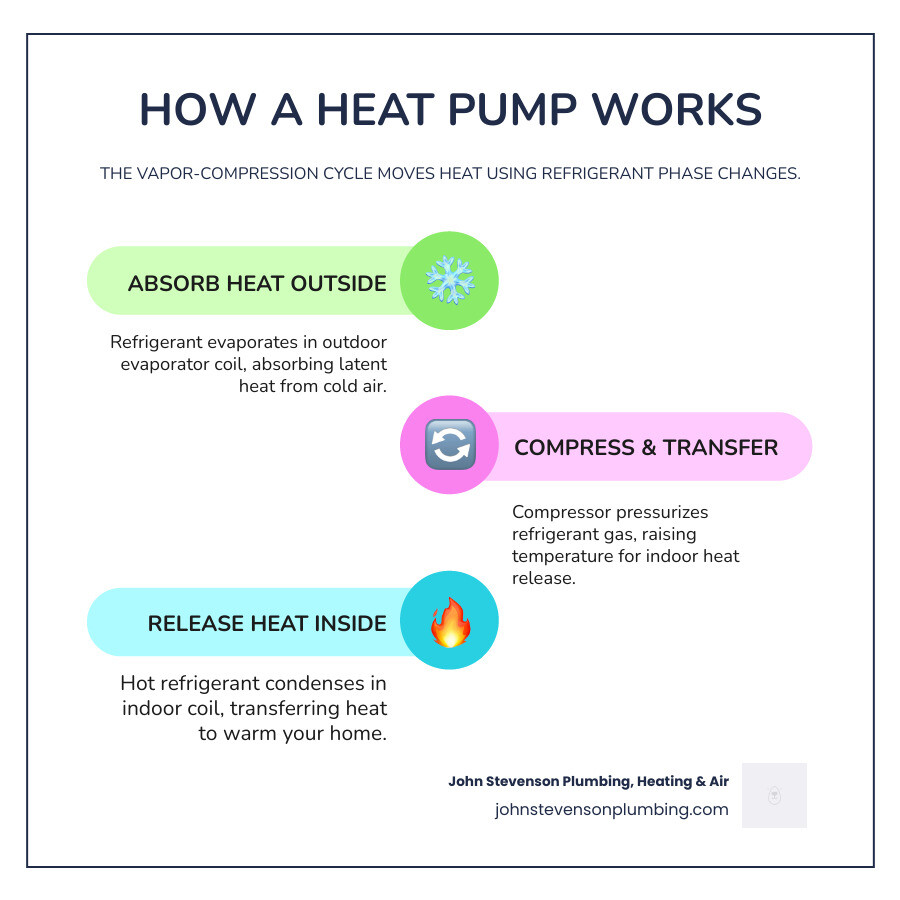
To understand the magic behind these systems, we have to look at the vapor-compression cycle. This sounds like a mouthful of science jargon, but it’s actually the same technology that keeps your milk cold in the refrigerator. The secret weapon is the refrigerant, a substance that boils at incredibly low temperatures.
When people ask us, “how does a heat pump work when it’s freezing outside?” we explain the concept of latent heat. Even when the air feels chilly to us, there is still thermal energy present. In fact, heat exists in all matter until you hit “absolute zero” (-459°F). The heat pump uses its refrigerant to find that heat in a heat source (like the outdoor air) and move it to a heat sink (your living room).
The process relies on phase changes. By manipulating the pressure of the refrigerant, we can force it to turn from a liquid to a gas (absorbing heat) or from a gas back to a liquid (releasing heat). It’s a continuous loop that defies the natural tendency of heat to move from hot to cold by using a little bit of mechanical work. This versatility is why many homeowners are switching to Heat Pumps for year-round comfort.
The Core Components of a Heat Pump System
A heat pump isn’t just one box; it’s a team of specialized components working in perfect harmony. Here is the “starting lineup” of a standard system:
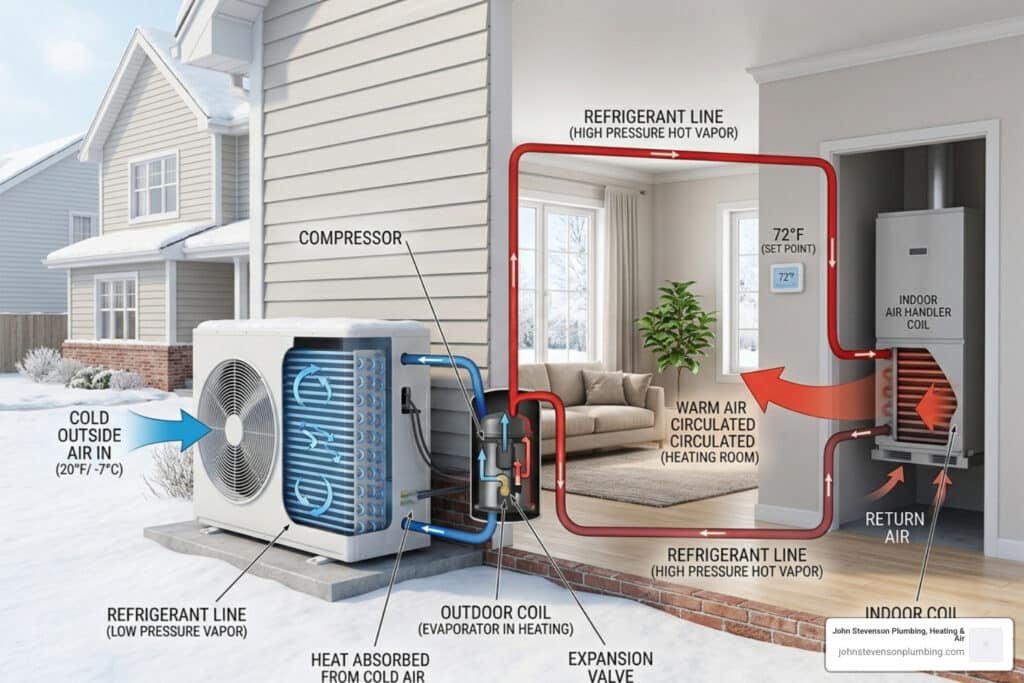
- The Compressor: Located in the outdoor unit, this is the “heart” of the system. It squashes the gaseous refrigerant, raising its temperature and pressure significantly.
- The Condenser Coil: This is where the refrigerant sheds its heat. In heating mode, this happens inside your home; in cooling mode, it happens outside.
- The Evaporator Coil: This coil handles the opposite job. It allows the refrigerant to expand and evaporate, soaking up heat from its surroundings like a sponge.
- The Expansion Valve: Think of this as a nozzle. It regulates the flow of refrigerant, causing a sudden drop in pressure that makes the refrigerant get very, very cold.
- The Reversing Valve: This is the “brain” that sets a heat pump apart from a standard air conditioner. It flips the direction of the refrigerant flow, allowing the system to switch between heating and cooling.
- Refrigerant Lines: These copper tubes connect the indoor and outdoor units, carrying the lifeblood of the system back and forth.
- The Air Handler: This is the indoor component (often in a closet or attic) that uses a fan to blow air across the coils and through your home’s Heating ducts.
Heating and Cooling: One System for Every Season
The beauty of a heat pump is its dual personality. It’s like having a furnace and an air conditioner in one sleek package. By using the reversing valve, we can change the function of the indoor and outdoor coils.
| Feature | Heating Mode (Winter) | Cooling Mode (Summer) |
|---|---|---|
| Outdoor Coil Function | Evaporator (Absorbs Heat) | Condenser (Releases Heat) |
| Indoor Coil Function | Condenser (Releases Heat) | Evaporator (Absorbs Heat) |
| Refrigerant State Indoors | Hot High-Pressure Gas | Cold Low-Pressure Liquid |
| Goal | Move Thermal Energy Inside | Move Thermal Energy Outside |
This seamless transition ensures seasonal comfort without needing two separate, bulky systems. For many in our service areas like Mission Viejo or Irvine, this simplifies Heating Services and cooling maintenance significantly.
How does a heat pump work in the winter?
In the winter, the heat pump performs a feat that seems almost impossible: it finds heat in the “cold” outdoor air. The reversing valve directs the cold, liquid refrigerant to the outdoor coil. Because the refrigerant is much colder than the outdoor air (even if it’s 30°F outside), the air actually warms the refrigerant!
This causes outdoor evaporation, turning the refrigerant into a low-pressure gas. The compressor then takes that gas and squeezes it into a pressurized gas that is incredibly hot—often over 100°F. This hot gas travels to your indoor unit, where indoor condensation occurs. As the gas turns back into a liquid, it releases all that “stolen” outdoor heat into your home. This process is why Heat Pumps are so popular in Southern California’s milder winters.
How does a heat pump work in the summer?
When the Carlsbad sun starts beating down, the heat pump simply flips its reversing valve. Now, it functions exactly like a high-efficiency air conditioner. The indoor coil becomes the evaporator, performing indoor evaporation. As warm air from your house is blown over the cold coils, the refrigerant absorbs heat, leaving the air much cooler and drier.
The refrigerant then carries that heat to the outdoor unit. Through outdoor condensation, the heat is rejected into the atmosphere. An added bonus of this cooling cycle is humidity control. As the warm indoor air hits the cold coils, moisture condenses out of the air (just like on a cold soda can), making your home feel much more comfortable on those sticky summer days.
Why Heat Pumps Are More Efficient Than Traditional Systems
The biggest “wow” factor of a heat pump is its efficiency. Traditional electric heaters or gas furnaces have a maximum theoretical efficiency of 100% (or slightly less due to exhaust loss). This means for every $1 of energy you put in, you get $1 of heat out.
Heat pumps, however, can achieve a Coefficient of Performance (COP) of 3 to 4. In plain English, that means they can be 300% to 400% efficient. They aren’t “creating” energy; they are just using a small amount of electricity to “move” a large amount of heat. This drastically reduces your carbon footprint because you aren’t burning fossil fuels on-site.
There are several types of systems we install depending on your home’s needs:
- Air-Source Heat Pumps: The most common type, which swaps heat with the outside air.
- Ground-Source (Geothermal): These use the steady temperature of the earth to exchange heat, offering even higher efficiency.
- Ductless Mini-Splits: Perfect for homes without existing ductwork, these allow for “zoning” different rooms.
Maintenance and Performance in Cold Climates
A common myth is that heat pumps stop working when it gets cold. While older models struggled, modern cold climate technology has changed the game. Many units can now operate effectively down to -22°F.
In very cold weather, you might notice your outdoor unit frosting over. Don’t panic! The system has a built-in defrost cycle that temporarily reverses the flow to melt the ice, ensuring the coils stay clear and efficient.
To keep these high-tech machines running at their peak, regular Heat Pump Maintenance is vital. We recommend:
- Filter Changes: Check them monthly. A clogged filter makes the system work twice as hard.
- Bi-Annual Inspections: Have a professional check the refrigerant levels and electrical components before the peak of summer and winter.
- Clear Debris: Ensure leaves, snow, or dirt aren’t blocking the airflow of the outdoor unit.
Frequently Asked Questions about Heat Pumps
Can a heat pump cool a house in 100-degree weather?
Absolutely. While efficiency can dip slightly when temperatures climb above 90°F, modern systems are designed for high-temperature performance. When looking at how does a heat pump work in extreme heat, look for a high SEER2 (Seasonal Energy Efficiency Ratio) rating. This indicates the unit’s ability to reject heat even when the outdoor air is scorching.
Does a heat pump bring outside air into the house?
No. This is a common misconception. The heat pump circulates recirculated air from within your home. The only thing moving between the inside and outside is the refrigerant inside the sealed copper lines. If you want fresh air, you would need a separate ventilation system, but the heat pump itself focuses on temperature and indoor air quality through filtration.
What is the average lifespan of a heat pump?
With proper care, you can expect a 15-year life expectancy. Some well-maintained units can last up to 20 or 25 years. Because these systems run year-round (unlike a furnace that rests all summer), the maintenance impact on system reliability cannot be overstated. Regular tune-ups are the best way to protect your investment.
Conclusion: Expert Care for Your Carlsbad Home
Understanding how does a heat pump work is the first step in taking control of your home’s comfort and energy bills. Whether you are in Oceanside, Vista, or right here in Carlsbad, these systems offer a sustainable, high-efficiency way to stay cozy in the winter and cool in the summer.
At John Stevenson Plumbing, Heating & Air, we are your local Carlsbad HVAC experts. We don’t just “fix” things; we provide peace of mind through our 5-Star Service Guarantee. This includes thorough professional diagnostics, upfront pricing so there are never any surprises, and a 24-hour satisfaction check-in to ensure you are happy with our work.
If you’re ready to see if a heat pump is right for your home, or if your current system needs a professional eye, we’re here to help. From expert Heat Pump Installation to routine maintenance, our certified technicians have the skills to keep your home running smoothly.
Looking for more information on specific areas? Check out our dedicated pages for Heat Pumps in Mission Viejo or Heat Pumps in Lake Forest. Let us help you unlock the full potential of your home’s HVAC system today!