
Why Tree Roots Get Into San Diego Sewer Lines
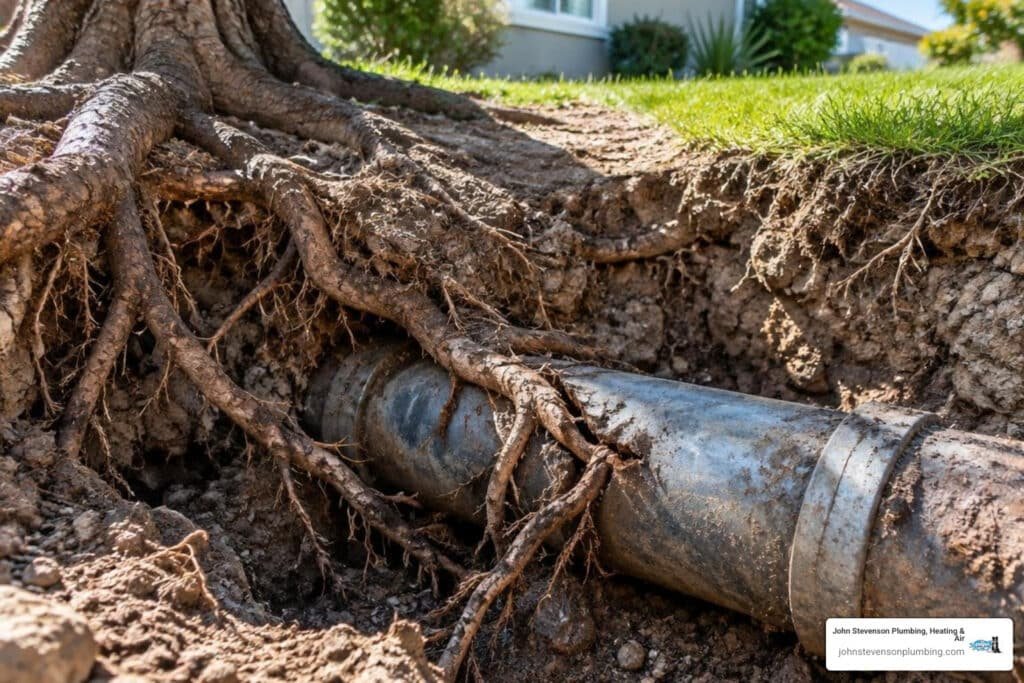
Tree roots usually enter a sewer pipe through a loose joint or crack. Once inside, they grow and catch waste, which can slow drains or cause a backup. If several drains in your San Diego, CA, home are slow, arrange a camera inspection to find the entry point. If sewage is backing up, stop using water until the line is checked. Root cutting may restore flow, but lasting sewer line repair means sealing or replacing the damaged pipe so roots cannot enter through the same opening again.
Learn about sewer line repair or request a sewer camera inspection.
I’m John Stevenson; if you suspect roots in your line, request a sewer camera inspection to find out what needs fixing.
Tree Root Damage to Sewer Lines Explained: How Intrusion Happens
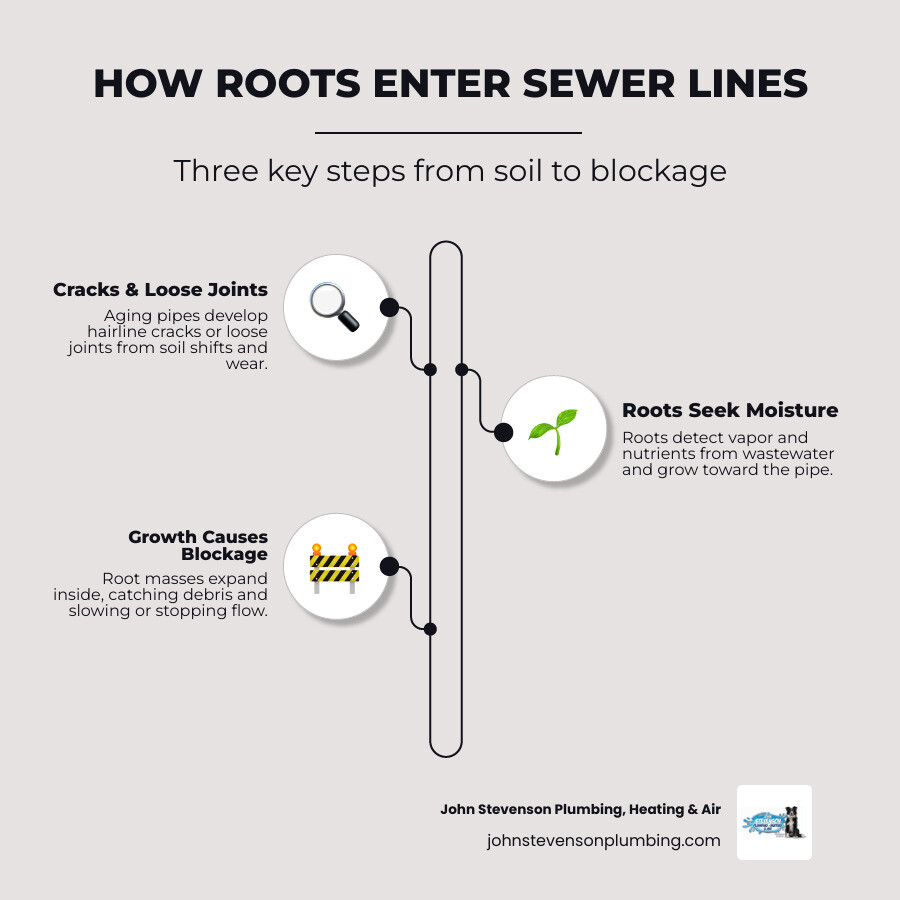
Understanding why underground drainage systems struggle against neighborhood greenery starts with having tree root damage to sewer lines explained from both a biological and structural perspective. Many homeowners assume that aggressive roots act like subterranean drill bits, boring directly through impenetrable, solid pipe walls. In reality, roots are biological opportunists that exploit structural weaknesses already present in aging infrastructure.
Underneath your yard, buried sewer laterals are constantly carrying warm, nutrient-loaded wastewater away from your home. Over time, ground shifting, seismic tremors, soil settlement, and the natural aging of materials create microscopic fissures, hairline cracks, or loose joint connections along the line.
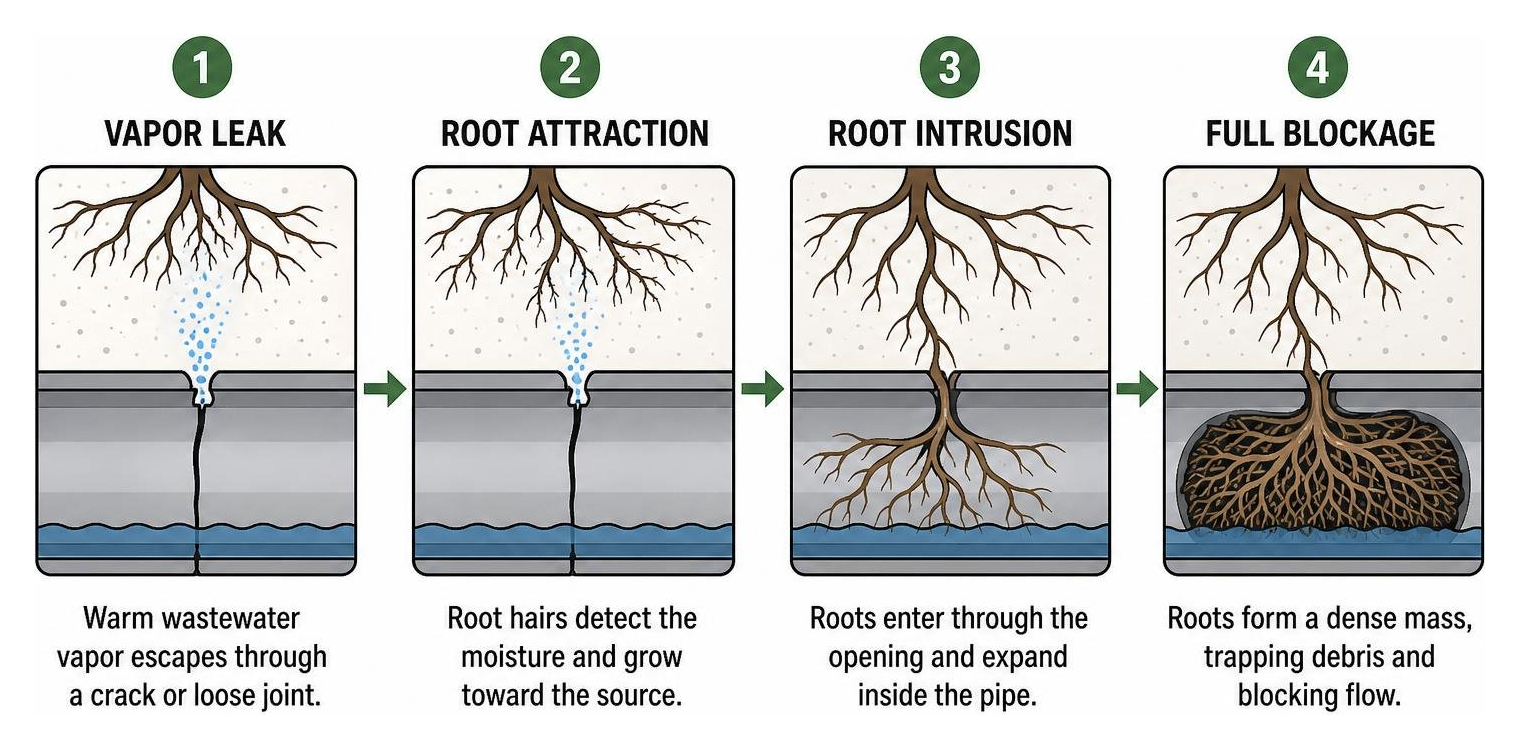
When warm water runs through your plumbing, microscopic plumes of water vapor escape through these tiny imperfections into the surrounding, often dry Southern California soil. Because surrounding ground temperatures fluctuate, these escaping vapor plumes establish a distinct thermal and moisture gradient. Nearby root systems sense this concentrated path of hydration and direct their growth toward the source.
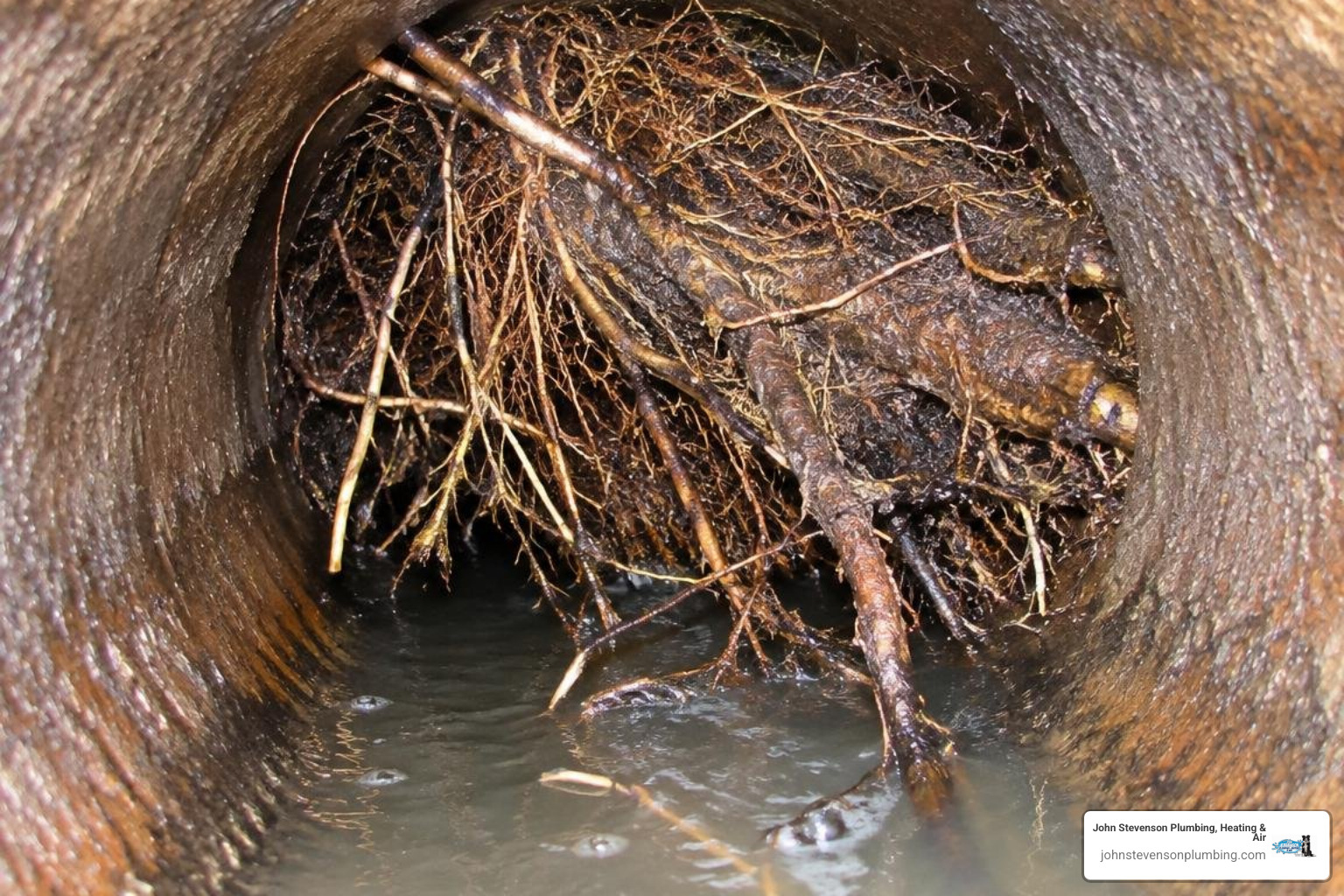
Once fine root tips find the structural breach, they slip right through the opening. Once inside, they find an endless buffet of moisture, oxygen, and dissolved minerals, causing them to expand rapidly and form dense, fibrous networks that trap solid waste and restrict flow.
Why Roots Seek Out Buried Sewer Pipes
The mechanism driving this relentless subterranean intrusion is known as hydrotropism—the natural biological tendency of plant roots to grow toward moisture. Trees rely on broad root architectures rather than deep taproots to gather essential resources. In fact, most mature trees allow their taproots to wither away over time, leaving wide-spreading lateral root systems that concentrate within the top two to three feet of soil.
At the very tips of these lateral roots are microscopic, single-cell root hairs. These delicate cells sit in direct contact with surrounding soil particles, constantly seeking water and dissolved nutrients like potassium, nitrogen, and phosphorus. Because root cells also require oxygen to respire, the warm, air-filled, humid interior of an active drainage pipe creates an ideal environment.
When condensation forms along the exterior and interior perimeter of a cracked clay tile or decaying cast iron pipe, it acts like a beacon. The single-cell root hairs penetrate the smallest hairline fracture. Once inside, cell division accelerates, transforming microscopic strands into thick, woody root masses that can quickly fill the entire diameter of the pipe.
Tree Root Damage to Sewer Lines Explained: High-Risk Trees in San Diego
San Diego’s warm, coastal Mediterranean climate encourages lush, year-round landscaping. However, many ornamental and shade trees popular throughout Southern California possess extraordinarily aggressive, moisture-seeking root systems.
When planted in close proximity to underground utilities, certain tree species present a significantly elevated risk of sewer line infiltration:
- Ficus (Ficus microcarpa / Ficus benjamina): Renowned for invasive, fast-growing, and dense lateral root networks that can easily shift surrounding soil and exploit nearby sewer joints.
- Eucalyptus Varieties: Widely distributed across San Diego County, these massive trees demand vast quantities of water to support their canopy, sending lateral roots spreading tens of feet beyond their drip lines.
- Jacaranda (Jacaranda mimosifolia): Beloved for their vibrant purple blooms in late spring, Jacarandas develop broad, thirsty surface root networks that quickly seek out underground utility leaks.
- Weeping Willow (Salix babylonica): Naturally adapted to riparian riverbeds and wetlands, willows should never be planted near residential plumbing lines due to their hydrotropic root growth.
- Silver Maple and Sweetgum: Both species produce shallow, wide-reaching root architectures that readily home in on escaping sewer vapor.
Understanding the mature spread of these species helps ensure proper separation between new plantings and your underground drainage system.
Warning Signs of Root Intrusion in Your Plumbing System
Because sewer laterals sit several feet beneath the surface, root blockages often develop unseen for months before causing noticeable disruptions. Recognizing subtle early symptoms allows you to intervene before a catastrophic backup damages your home.
Common warning signs of underground root invasion include:
- Multiple Slow Drains: When a single sink slows down, the issue is typically a localized hair or soap clog. When tubs, showers, and sinks throughout your entire lower level drain sluggishly at the same time, the main sewer lateral is likely restricted.
- Gurgling Fixtures: Trapped air bubbles created by an advancing root mass cause toilets and shower drains to bubble or gurgle when water discharges elsewhere in the home.
- Recurring Line Stoppages: If you clear a drain using basic mechanical snaking only to have the exact same blockage return weeks later, roots are likely trapping toilet paper and solid waste at an unsealed pipe fracture.
- Foul Sewer Gas Odors: Damaged pipes can allow noxious sewer gases to escape upward through your soil or escape backward through indoor trap seals.
- Unusually Green or Lush Lawn Patches: A cracked, leaking sewer pipe acts as an underground irrigation system. If you notice a distinct, vibrant green stripe across your grass, wastewater may be leaching into the subsoil.
- Depressions or Soft Spots in the Yard: Escaping sewage washes away supporting soil around the lateral, causing soil sinkholes or soggy patches near the buried line.
If you are currently experiencing waste flowing backward into bathtubs or floor drains, it is critical to review what to do during a sewer backup to minimize structural property damage and protect your family’s health.
Early Indicators vs. Severe Line Blockages
Differentiating between minor, developing root intrusions and severe, structural sewer failures is essential for choosing the right plumbing solution.

In the early stages, fine root hairs act like a strainer, intermittently slowing water flow as debris snags and slowly washes away. However, as the roots absorb nutrients and thicken into woody cords, they exert immense outward radial pressure on the pipe walls.
In late-stage infestations, the sheer mass of the expanding root bundle can dislodge pipe joints, crush brittle clay walls, and create severe pipe bellies (low points that hold standing water). Left unaddressed, hydrostatic backpressure increases until sewage backs up into the lowest fixtures in your home, turning a routine pipe maintenance visit into an urgent structural emergency.
Diagnosing and Clearing Root Infiltrations
Guesswork has no place in modern sewer line diagnostics. Because symptoms of root intrusion mimic those of pipe bellies, foreign object obstructions, and collapsed conduits, getting visual confirmation inside the line is always the first step.
To accurately evaluate the condition of your pipes, our certified technicians feed a specialized, illuminated, high-definition fiber-optic camera through an accessible cleanout. Reading our guide on everything you need to know about sewer camera inspections outlines how this diagnostic equipment works.
During a dedicated sewer camera inspection, we pinpoint the exact depth, location, pipe material, and severity of root intrusion in real time.
Clearing Roots with Hydro Jetting
Once a video inspection confirms the presence of roots and verifies that the pipe is structurally sound enough to withstand cleaning, the line must be thoroughly cleared before any repairs begin.
While traditional mechanical cable machines (rooters) punch a temporary hole through the center of a blockage, they often leave the outer perimeter of the root ball intact. To scrub the interior walls clean, we utilize professional hydro jetting services.
Hydro jetting propels streams of water at pressures up to 4,000 PSI through specialized, forward-facing and rotating cutting nozzles. This high-pressure stream slices thick root masses flush against the inner pipe wall, scours away accumulated grease and scale, and flushes all residual debris out to the municipal main. While hydro jetting provides excellent immediate relief, it is important to remember that cleaning alone does not seal the pipe breach; without structural repair, roots will re-enter the joint over time.
Repair and Replacement Methods for Damaged Pipes
After clearing the root mass, the underlying structural breach must be permanently sealed. Choosing between trenchless restoration and traditional excavation depends entirely on the remaining structural integrity of your pipe lateral.
| Feature / Consideration | Trenchless Epoxy Pipe Relining | Traditional Sewer Line Replacement |
|---|---|---|
| Primary Method | Internal Cured-In-Place Pipe (CIPP) sleeve | Open-trench ground excavation |
| Landscape Impact | Minimal (access via small cleanouts) | High (trenches through lawns/driveways) |
| Joint Elimination | Creates a smooth, continuous, jointless pipe | Utilizes newly connected PVC segments |
| Structural Requirement | Host pipe must retain its round shape | Suitable for collapsed, crushed, or bellied lines |
| Long-Term Longevity | 50+ year structural design life | 50+ year structural design life |
Trenchless Epoxy Pipe Relining
For sewer lines that have suffered joint intrusion or cracking but still maintain their overall circular shape, trenchless rehabilitation is often the preferred, non-invasive solution.
Using Cured-In-Place Pipe (CIPP) technology, we pull an epoxy-saturated felt liner through the existing damaged host pipe. Once positioned across the damaged section, an internal bladder inflates the liner against the pipe walls while the resin cures into a solid, impenetrable structural tube.
Investing in epoxy pipe lining creates a seamless, joint-free barrier inside your existing line. Because the cured epoxy creates a continuous barrier from your home to the municipal connection, it eliminates the joints and micro-cracks that allow vapor to escape, keeping roots out for decades.
Full Sewer Line Replacement
If root expansion has caused a complete pipe collapse, severe structural offsets, or extensive pipe deterioration, the host pipe may not be able to support a trenchless liner. In these cases, a full replacement is the safest, most durable route.
A comprehensive sewer line replacement involves carefully excavating the failed sewer lateral and replacing it with heavy-duty, modern PVC or high-density polyethylene (HDPE) piping. These modern piping materials feature smooth interiors that resist mineral buildup and tightly sealed, solvent-welded joints that stop root penetration.
Preventing Future Root Intrusion in San Diego Yards
Protecting your plumbing infrastructure against underground root intrusion requires ongoing attention, especially in mature neighborhoods with expansive tree canopies across coastal San Diego and Orange County.
- Map Utility Lines Before Planting: Always identify your primary sewer lateral before adding large trees or structural shrubs to your yard. Maintain a minimum buffer zone of at least 10 to 15 feet between aggressive shade trees and buried utility lines.
- Select Low-Risk Landscaping: Opt for slow-growing, drought-tolerant species with well-behaved, deep-seeking root systems that naturally resist invasive horizontal spreading.
- Install Subsurface Physical Root Barriers: When planting near utilities, bury durable, high-density polyethylene vertical root barriers to guide root growth downward and away from your plumbing lines.
- Address Hairline Cracks Promptly: Never ignore minor drainage slowdowns. Fixing minor joint separations early keeps small issues from turning into major structural failures.
Tree Root Damage to Sewer Lines Explained: Preventative Maintenance Strategies
Taking a proactive approach to sewer line care helps catch root activity long before sewage backs up into your home:
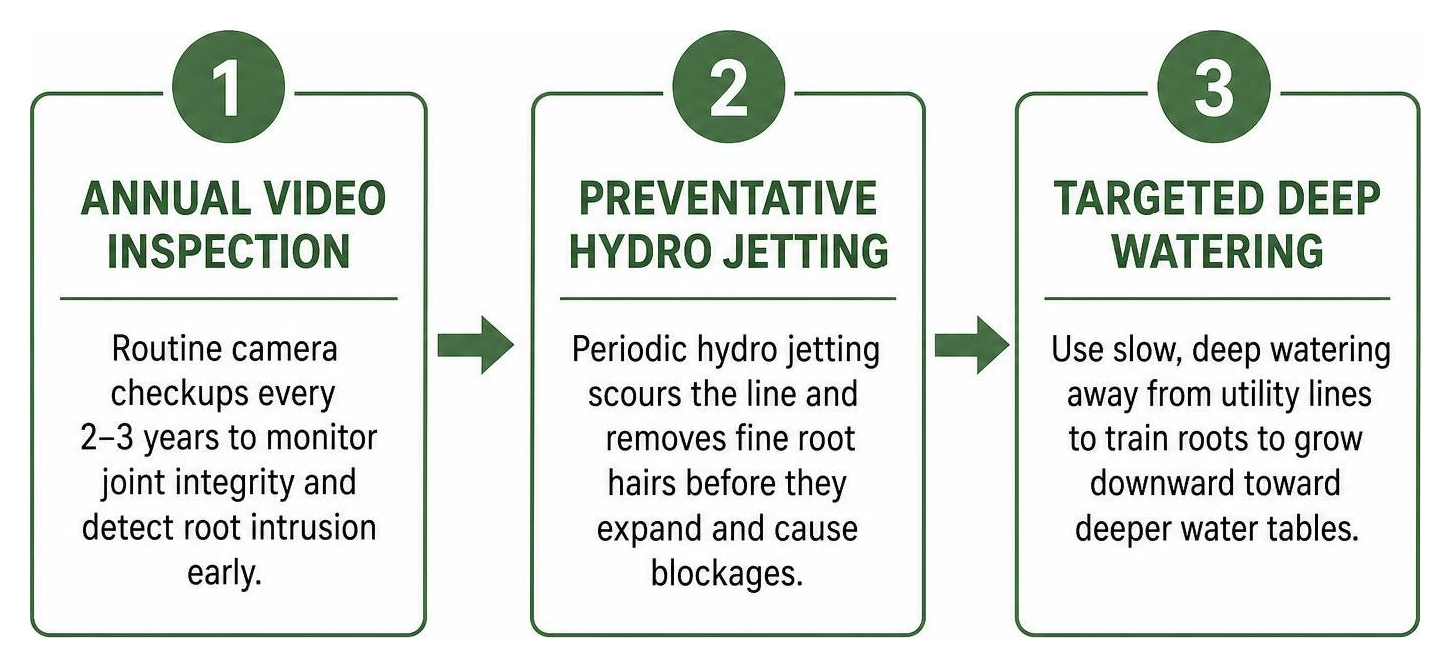
- Schedule Routine Camera Checkups: Homes built prior to the 1980s that still rely on original clay tile or cast iron laterals should have a video inspection every two to three years to monitor joint integrity.
- Perform Preventative Line Scouring: Periodic hydro jetting removes fine root hairs before they have the chance to expand and catch waste.
- Practice Deep Root Irrigation: Rather than using frequent, shallow sprinkler cycles that encourage roots to spread near the surface, use slow, deep watering techniques away from utility lines. This trains root systems to grow downward toward deeper water tables.
Frequently Asked Questions About Tree Roots in Sewer Pipes
Can removing roots from a sewer line fix the problem permanently?
No. Clearing roots using mechanical snaking, rotational cutters, or high-pressure hydro jetting restores flow by removing the blockage inside the pipe, but it does not repair the initial crack or loose joint where the roots entered. Because the pipe continues to leak moisture and nutrients into the surrounding soil, roots will regrow through the same opening over time. Lasting protection requires sealing the entry point with epoxy lining or replacing the damaged pipe section.
Does homeowner insurance cover sewer line damage from roots?
Standard homeowners insurance policies typically exclude damage caused by gradual wear, age, or natural root intrusion. However, many insurance carriers offer optional service-line endorsements or dedicated sewer-backup riders that help cover repairs for sudden backups or pipe collapses. We recommend reviewing your policy terms with your insurance provider.
Can the sewer line be repaired without cutting down the tree?
In most cases, yes. You generally do not need to remove a mature tree to resolve a root problem. Because roots only infiltrate pipes that are already cracked or leaking, repairing the structural breach with seamless trenchless epoxy lining or modern PVC eliminates the moisture plume entirely. Once the pipe is sealed, the tree can remain in place without posing a continued threat to your plumbing.
Conclusion
Tree root intrusion is fundamentally a symptom of aging, compromised underground pipes rather than a landscaping problem. When older clay, iron, or composite lines develop joint separations and hairline cracks, surrounding vegetation naturally seeks out the escaping moisture. Understanding how roots enter your line—and recognizing early warning signs like slow drains and gurgling fixtures—empowers you to address issues before an emergency backup occurs.
At John Stevenson Plumbing, Heating & Air Conditioning, our licensed and certified technicians are proud to provide homeowners across Carlsbad, San Diego County, and Orange County with dependable sewer solutions backed by our 5-Star Service Guarantee. Whether your home needs an exploratory video camera inspection, thorough hydro jetting, or trenchless epoxy rehabilitation, we deliver thorough diagnostics, clear solutions, and lasting peace of mind.
If you suspect roots are invading your plumbing system, turn to our team for lasting sewer line repair services to protect your home today.