
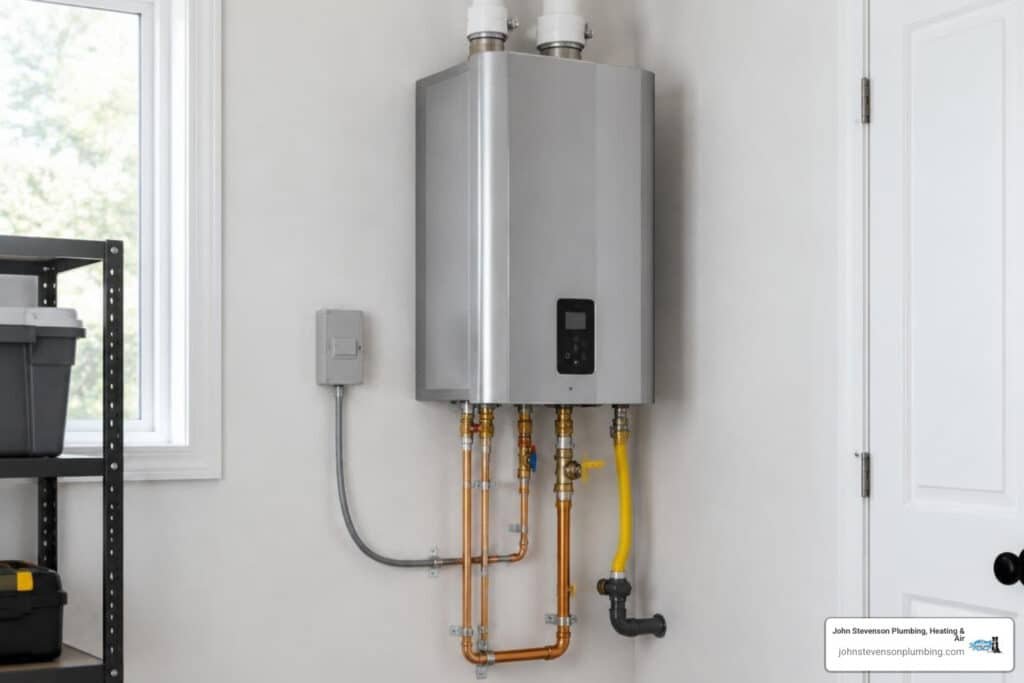
How Often to Service a Tankless Water Heater in Carlsbad, CA
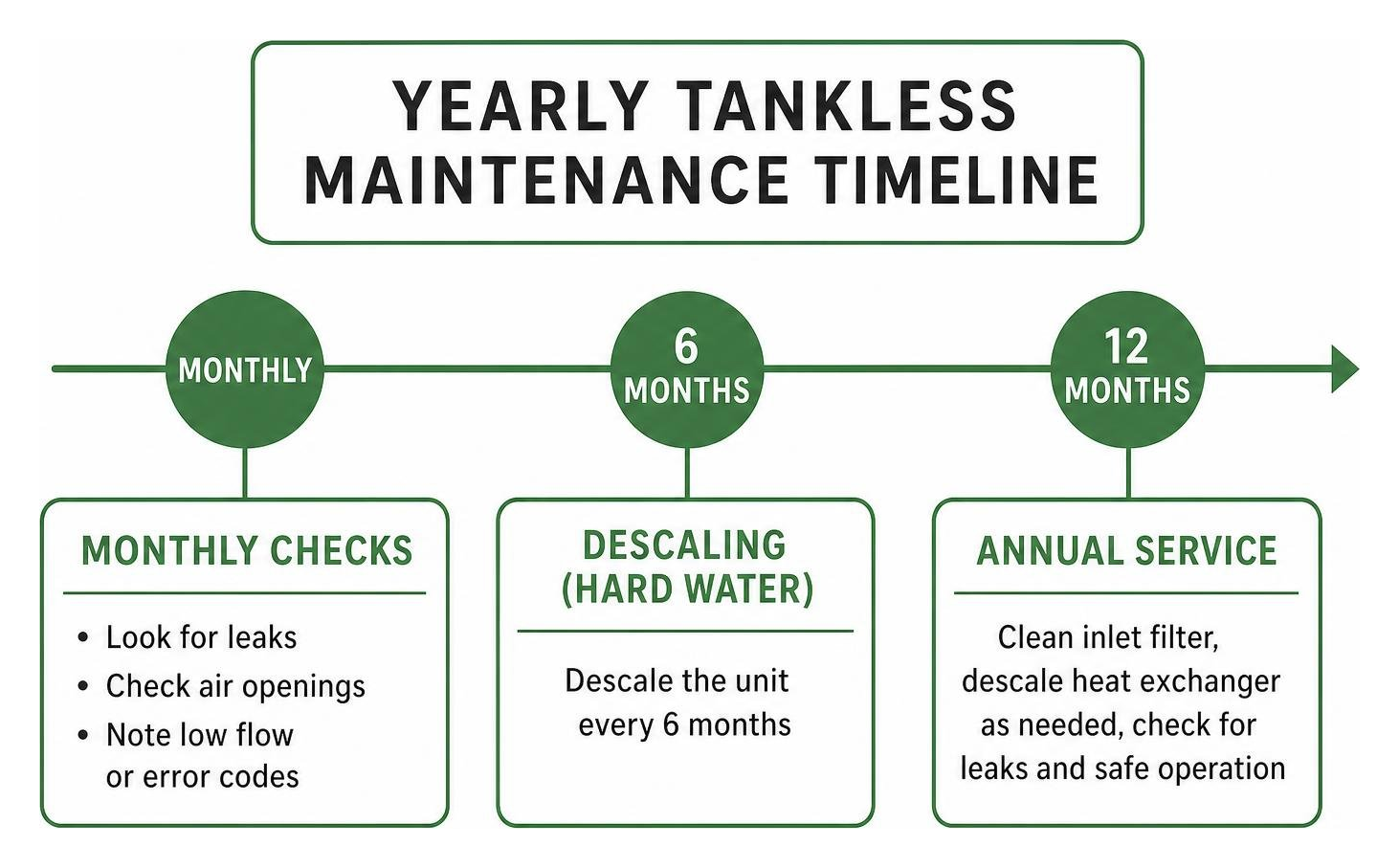
For most Carlsbad, CA homes, schedule tankless water heater service once a year. The visit should include cleaning the inlet filter, descaling the heat exchanger as needed, and checking for leaks and safe operation. If your water is hard or your household uses a lot of hot water, ask whether the unit needs descaling every six months. Each month, look for leaks, blocked air openings, lower hot-water flow, or error codes. These small checks can help you catch trouble before it disrupts your hot water. Your model’s manual and warranty give the final word on timing.
Learn about tankless water heaters in Carlsbad or schedule tankless water heater service.
I’m John Stevenson, and I’ll show you which checks you can do yourself and when to call for service.
Need help keeping your hot water steady? Book tankless water heater service.
The Ideal Tankless Water Heater Maintenance Schedule
A tankless water heater is an impressive piece of modern engineering. Unlike traditional storage tanks that constantly reheat dozens of gallons of standing water, a tankless unit heats water on demand using high-powered burners or electric elements. Because cold water passes through narrow heat exchanger passages in seconds, proper upkeep is essential to keep those passageways clear, maintain optimal water flow, and prevent premature equipment breakdown.
A well-maintained tankless system can last 15 to 20 years, whereas a neglected system can suffer major heat exchanger failure in just a few short years. To protect your investment, we recommend structuring your upkeep around a comprehensive tankless water heater maintenance schedule combining quick homeowner checks with regular, professional diagnostics.
Monthly and Quarterly DIY Upkeep Checks
You do not need a toolbox full of specialized equipment to keep an eye on your water heater. Performing a few simple inspections every month or quarter helps you spot minor irregularities before they turn into disruptive plumbing emergencies:
- Monthly Visual Inspection: Take a quick look around the exterior of your wall-mounted unit. Check the pipe fittings, shut-off valves, and condensate drain lines (for condensing models) for any signs of moisture, drips, or white mineral crusting. Listen for unusual humming, whistling, or rattling sounds while someone runs a hot-water faucet.
- Monthly Exhaust and Intake Check: Ensure the external air intake and exhaust terminations on the outside of your home remain free of leaves, dust, insect nests, or outdoor storage items. Obstructed airflow can lead to incomplete combustion and unexpected system shutdowns.
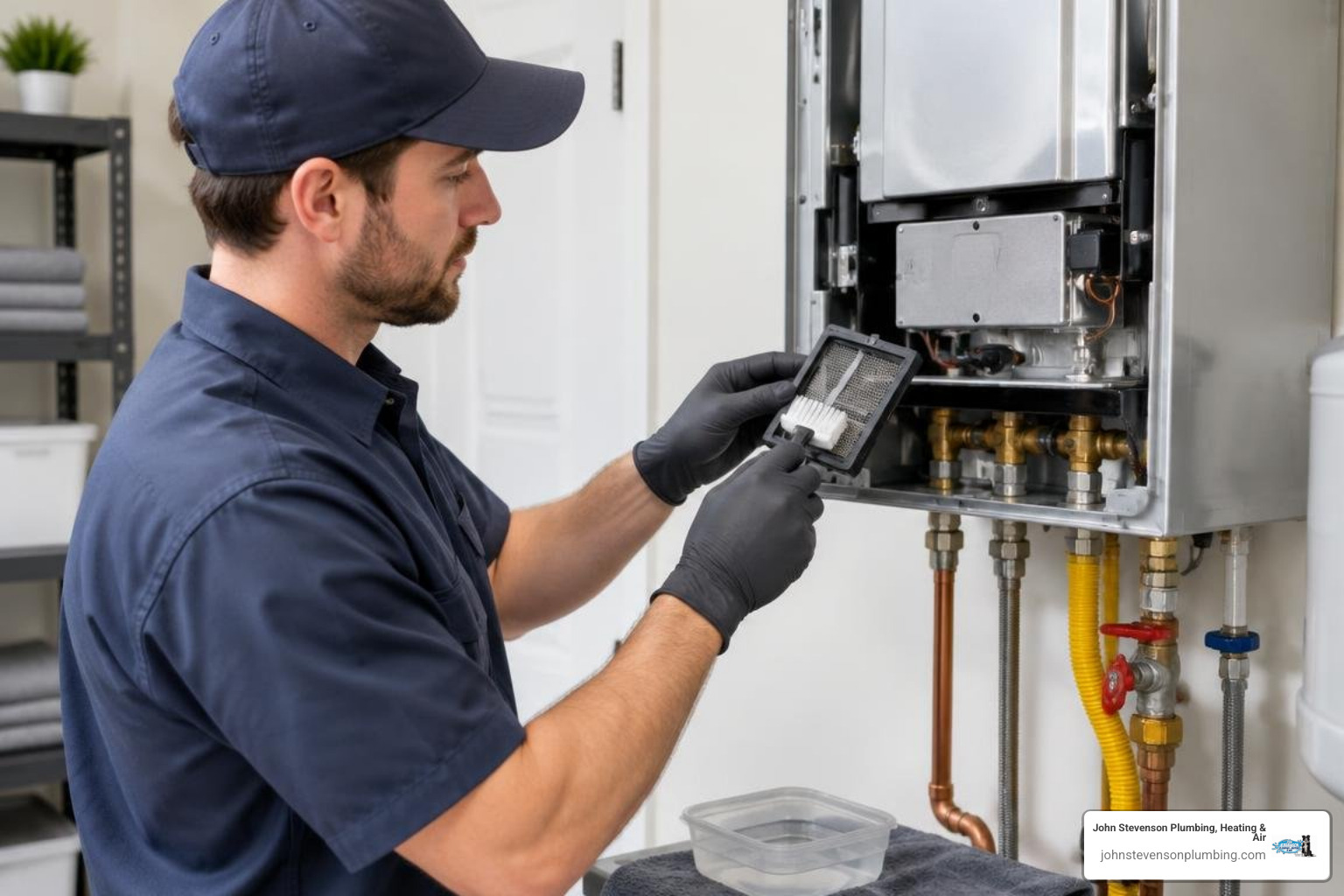
- Quarterly Sediment Screen Cleaning: Most tankless units feature a cold water inlet filter designed to trap larger debris and sand from municipal water lines. After shutting off the cold water isolation valve and relieving unit pressure, unthread the filter screen, rinse it under cold running tap water with a soft nylon brush, and secure it back in place.
- Quarterly Temperature Verification: Make sure your digital controller displays an appropriate temperature. For most households, what temperature you should set your water heater at ranges between 120°F and 125°F to ensure comfortable bathing while preventing accidental scalds and minimizing internal scale formation.
Tailoring Your Tankless Water Heater Maintenance Schedule to Local Water Hardness
Water quality across Southern California, including Carlsbad and surrounding coastal communities, contains notable levels of dissolved minerals like calcium and magnesium. When hard water is heated rapidly inside a tankless unit’s heat exchanger, these minerals precipitate out of the liquid and solidify into a rock-hard layer of limescale.
Scale acts as an unwanted thermal insulator. A layer of scale just a fraction of an inch thick forces the burners to fire hotter and longer to heat the same volume of water, increasing wear and tear on internal components and eliminating the efficiency advantages that prompted you to go tankless. You can explore detailed guide to tankless water heater efficiency over time to see how maintaining high efficiency protects your household comfort.
The table below outlines how regional water hardness dictates how often you should flush and descale your equipment:
| Water Hardness Level | Mineral Content (Grains Per Gallon – GPG) | Recommended Flushing & Descaling Frequency | Key Action Items |
|---|---|---|---|
| Soft Water | Less than 3.5 GPG | Every 12 to 24 Months | Annual filter cleaning, general inspection, standard descaling |
| Moderate Water | 3.5 to 7.0 GPG | Every 12 Months | Annual chemical descaling, bi-annual filter screen inspection |
| Hard Water | 7.0 to 10.5 GPG | Every 6 to 9 Months | Semi-annual descaling, quarterly screen rinse, monitor flow rate |
| Very Hard Water | Above 10.5 GPG | Every 6 Months | Frequent descaling, consider whole-home water conditioning |
Annual Professional Servicing and Warranty Protection
While monthly filter rinses are well within reach for most homeowners, manufacturers like Rinnai, Navien, Rheem, and Noritz expect comprehensive annual servicing performed by licensed technicians. In fact, many equipment warranties explicitly exclude heat exchanger damage or component failures caused by unaddressed scale accumulation or improper gas combustion.
During a professional tune-up, our licensed plumbers perform crucial diagnostic procedures, including:
- Combustion Analysis and Gas Pressure Verification: We test manifold pressure and clean the gas burner assembly to ensure complete, clean fuel combustion without dangerous carbon buildup.
- Safety and Pressure Relief Valve Testing: We manually inspect and test the Temperature & Pressure (T&P) relief valve to make certain it opens smoothly and seals tightly without persistent dripping.
- Sensor and Flow Meter Calibration: We inspect the flame sensors, ignition electrodes, and internal flow turbine to confirm accurate temperature regulation and smooth burner ignition under varied household demand.
- Condensate Neutralizer Inspection: For high-efficiency condensing units, we verify that acidic condensate is properly neutralized before it enters your home’s drainage lines.
- Diagnostic Code Review: We pull historical operating data and error code histories directly from the internal circuit board to correct hidden intermittent faults.
When you need dependable, certified support, turning to professional water heater services in Carlsbad ensures your system stays compliant with local plumbing codes and manufacturer warranty standards.
How to Descale and Flush a Tankless Water Heater
Descaling removes the stubborn calcium and magnesium crust that builds up directly on the heat transfer surfaces. Over time, heavy mineral deposits narrow the water channels, restrict hot water flow to your showers and faucets, and cause the heat exchanger to overheat.
Step-by-Step Heat Exchanger Descaling Process
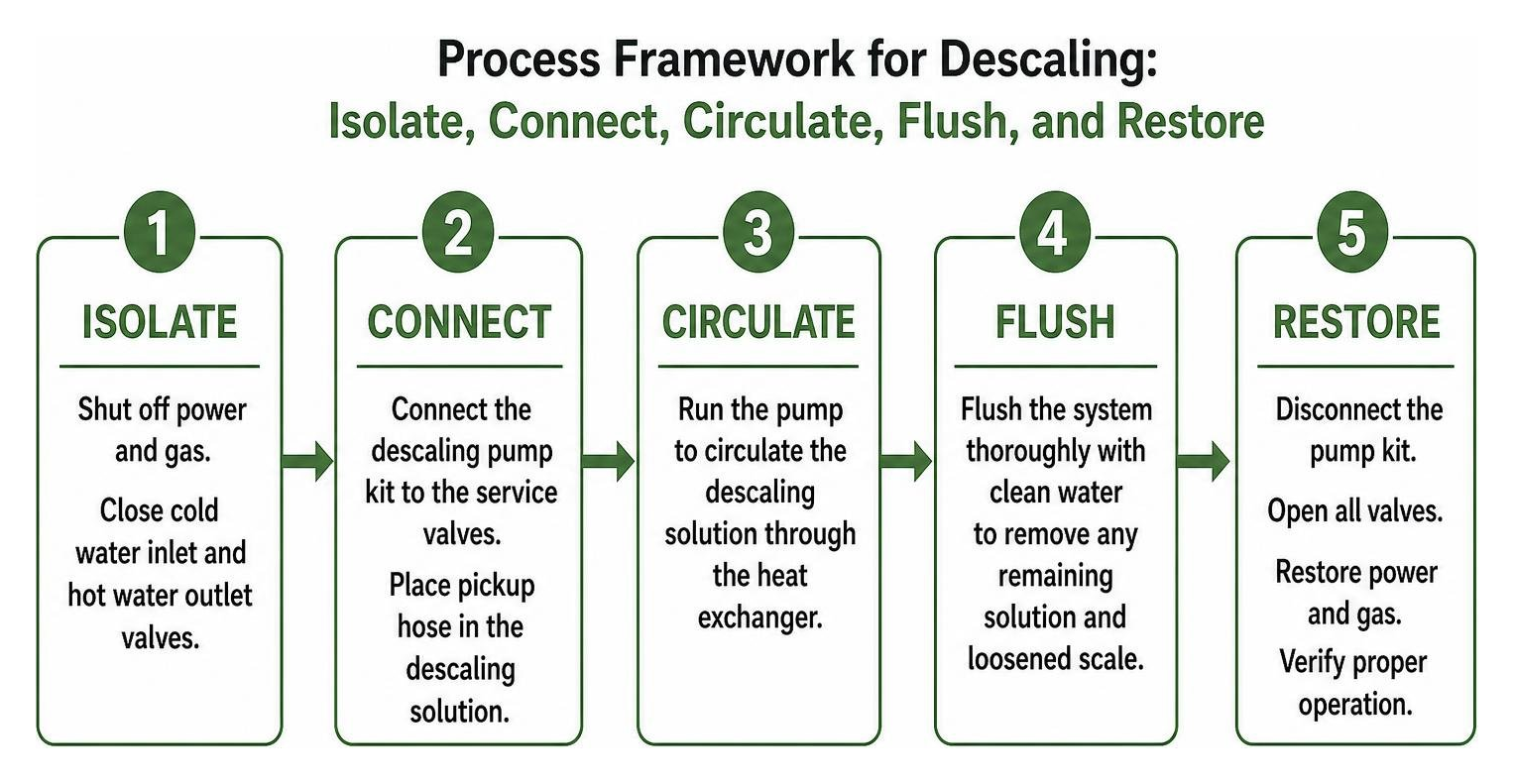
If your unit is equipped with dedicated service isolation valves (threaded hose connections located directly beneath the unit), descaling can be completed using a specialized pump kit and non-toxic descaling solution:
- Power Down the Unit: Turn off the electrical power supply to the water heater (unplug it or switch off the dedicated circuit breaker) and turn the gas isolation valve to the off position.
- Isolate the Water Supply: Close the main cold water inlet valve and the main hot water outlet valve on the service kit to stop household water from entering the heater.
- Attach the Service Hoses: Remove the protective caps from the purge ports. Connect one washing machine hose from the discharge outlet of a small submersible utility pump to the cold water service port. Connect a second hose from the hot water service port, placing the open end freely into a 5-gallon bucket.
- Prepare the Descaling Solution: Place the submersible pump into the bucket and pour in four gallons of food-grade virgin white vinegar or an approved non-toxic, citric-acid-based commercial tankless descaling solution.
- Circulate the Solution: Open both purge port service valves. Plug in the submersible pump and allow the cleaning solution to circulate continuously through the heat exchanger for 45 to 60 minutes. The solution will dissolve mineral deposits, often turning slightly cloudy or bluish-green as it cleans the copper or stainless steel pathways.
- Freshwater Purge: Turn off and remove the pump. Discard the used cleaning solution. Close the cold water purge valve, open the main cold water supply valve, and let clean municipal water run through the heat exchanger and out the hot water purge port into an empty bucket for 3 to 5 minutes to flush out all remaining acidic residue.
- Clean the Filter Screen: While the unit is isolated, remove and rinse the cold water inlet filter screen before reinstalling it securely.
- Restore Normal Operation: Close the hot water purge valve, remove the hoses, reinstall the purge port caps tightly, and open both main hot and cold isolation valves. Open a hot water faucet in your home to purge any trapped air bubbles from the plumbing lines. Finally, restore the gas supply and electrical power.
Understanding these steps helps discover practical ways to extend the life of your water heater and prevent expensive premature replacements.
Integrating Regular Flushes into Your Tankless Water Heater Maintenance Schedule
Adhering to a predictable flushing routine ensures that scale never has the opportunity to harden into an impenetrable layer. If you live in an area with hard municipal water and high daily hot water demand, scheduling a flush every 6 to 9 months keeps your system running like new.
For homeowners seeking seamless upkeep without the hassle of handling pumps and chemical buckets, our team provides comprehensive Carlsbad tankless water heater maintenance solutions to take care of the entire process quickly and safely.
Warning Signs of System Failure and Scale Accumulation
Tankless water heaters rarely fail without warning. When mineral accumulation reaches critical levels or internal sensors begin to drift out of calibration, the unit will display distinct performance red flags.
Keep an eye out for these common warning signs:
- Temperature Fluctuations (“Cold Water Sandwiches”): If your shower suddenly turns lukewarm or cold before slowly reheating, your unit’s flow sensors or heat exchanger pathways may be choked with mineral deposits, preventing steady heat transfer.
- Reduced Hot Water Flow Rate: If your cold water pressure remains strong across all fixtures but your hot water dribbles slowly from showerheads and faucets, severe scale accumulation is likely constricting the internal diameter of the heat exchanger or clogging the inlet screen.
- Unusual Kettle or Whistling Sounds: When scale covers the heating surfaces, water trapped underneath the mineral crust instantly flashes into steam bubbles. This localized overheating produces a distinctive whistling, popping, or tea-kettle rumbling sound.
- Recurring Error Codes: Modern units feature self-diagnostic controllers that monitor exhaust temperatures, ignition performance, and water flow. Frequent error codes related to ignition failure, high exhaust temperature, or flame rod issues indicate the need for immediate service.
- Spikes in Gas or Electric Bills: If your utility costs are climbing without an increase in household hot water usage, the unit is burning extra energy to overcome the insulating barrier created by internal limescale.
If you notice any of these symptoms, reviewing our guide on how to diagnose a failing water heater can help you determine whether a simple descaling flush will restore performance or if more extensive repairs are required.
Common Maintenance Mistakes Homeowners Should Avoid
While tankless upkeep is straightforward, simple oversights can damage delicate internal parts or lead to costly emergency service calls:
- Skipping the Annual Flush: Assuming that because water is flowing the unit does not need maintenance is the fastest way to ruin a heat exchanger. Limescale damage is cumulative and often irreversible once heat exchanger metal cracks from thermal stress.
- Using Harsh Chemical Cleaners: Never use muriatic acid, bleach, or standard household drain cleaners to flush a tankless system. These aggressive chemicals corrode copper heat exchangers, degrade internal rubber O-rings, and contaminate your drinking water supply. Stick strictly to food-grade white vinegar or manufacturer-approved descaling solutions.
- Ignoring Error Codes by Simply Resetting Power: Power-cycling your water heater resets the display board, but it does not fix the underlying mechanical issue. Repeatedly clearing an overheating or ignition error code without addressing the root cause can result in total system shutdown.
- Dry Firing the Burners: After completing a descaling flush, always open the water valves and run a hot water faucet to purge all air from the internal plumbing before turning the gas and power back on. Turning the burners on while the heat exchanger contains trapped air pockets can warp the heating core in seconds.
- Overtightening Isolation Valves and Filter Caps: Plastic filter screens and brass service valves require a secure, snug fit. Forcing them with oversized wrenches can strip valve threads or crack filter housings, causing slow leaks inside the cabinet.
Frequently Asked Questions About Tankless Water Heater Maintenance
Can I perform tankless water heater maintenance myself?
Yes, handy homeowners can easily perform monthly visual inspections, clean the cold water inlet sediment screen, and carry out basic descaling flushes using a submersible pump kit and white vinegar. However, comprehensive annual maintenance involves gas burner inspection, manifold pressure testing, exhaust venting checks, and safety valve diagnostics. These specialized tasks should always be handled by a licensed, certified plumbing professional to ensure household safety and keep manufacturer warranties valid.
What is the difference between flushing and descaling a tankless water heater?
While the terms are often used interchangeably, a freshwater flush simply pushes clean water through the unit to remove loose sediment, sand, or rust particles from the piping. Descaling, on the other hand, involves continuously circulating an acidic solution (such as food-grade vinegar or citric acid) through the heat exchanger for 45 to 60 minutes. This chemical process breaks down and dissolves hardened calcium and magnesium scale bonded to the metal heat transfer surfaces.
How do I know if my heat exchanger is clogged with scale?
The clearest indicators of a scale-clogged heat exchanger include a noticeable reduction in hot water flow rate compared to cold water fixtures, water that fails to reach the set temperature, rumbling or whistling noises during operation, and system error codes indicating high internal temperatures. If your unit regularly shuts down mid-shower, severe scale buildup is likely triggering the internal high-limit safety sensors.
Keep Your Hot Water Flowing Smoothly
A tankless water heater is an exceptional investment in everyday home comfort, providing on-demand hot water while conserving valuable energy. By adhering to a steady maintenance schedule, cleaning intake filters, and scheduling professional annual tune-ups, you can ensure your system delivers reliable performance for up to two decades.
At John Stevenson Plumbing, Heating & Air Conditioning, our licensed and certified technicians specialize in complete water heater diagnostics, precision descaling, and factory-authorized maintenance. Backed by our 5-Star Service Guarantee, we provide thorough inspections and a 24-hour satisfaction check-in on every visit.
Whether your home is in Carlsbad, Oceanside, Encinitas, Vista, San Marcos, or anywhere across San Diego County and Orange County, we are here to help. Contact us today to schedule professional tankless water heater maintenance and enjoy uninterrupted hot water all year long.