
Why Knowing How to Extend the Life of Your Water Heater Can Save You Time and Money
If you want to know how to extend the life of your water heater, here’s the short answer:
- Flush the tank annually to clear sediment buildup
- Inspect and replace the anode rod every 3-5 years
- Set the thermostat to 120°F to reduce mineral buildup and energy use
- Test the T&P relief valve once a year
- Install a water softener or sediment filter if you have hard water
- Schedule a professional inspection every 1-2 years
- Address leaks, noises, or discolored water promptly before they become bigger problems
Most homeowners in Carlsbad, CA and across San Diego County don’t think about their water heater until the hot water runs out — usually at the worst possible moment. The truth is, a water heater that gets regular attention can last well beyond its expected lifespan. One that gets ignored often fails years too soon.
Traditional tank water heaters typically last 8-12 years. Tankless models can push 20 years with the right care. The difference between a unit that hits the top of that range and one that doesn’t usually comes down to one thing: consistent maintenance.
In Southern California, hard water is a real factor. The minerals in the water supply — calcium and magnesium — settle at the bottom of your tank, force your heater to work harder, and quietly shorten its life. That makes maintenance even more important here than in softer-water regions.
This guide walks you through everything you need to know to get the most years out of your water heater, whether you have a tank, tankless, or heat pump system.
How to Extend the Life of Your Water Heater With the Right Maintenance Routine
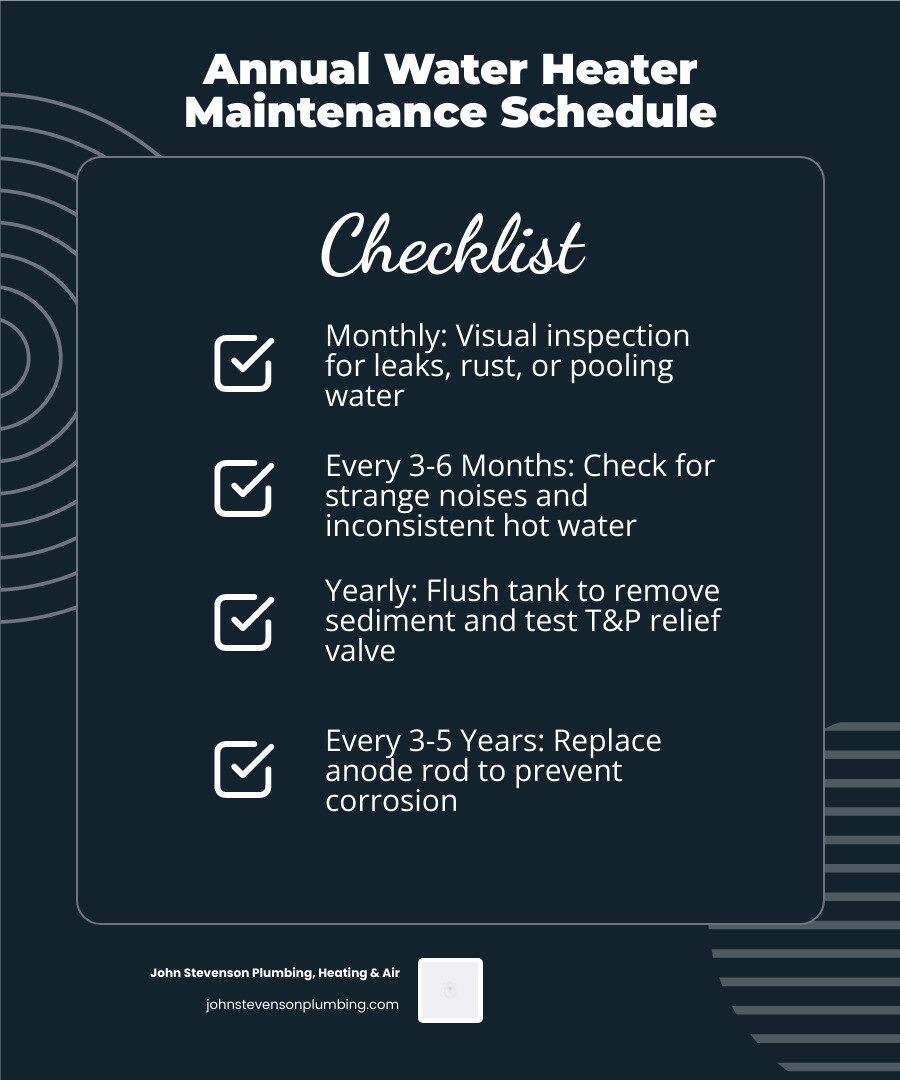
Establishing a routine is the single most effective way to ensure your home stays comfortable. As we head into May 2026, we’ve seen that homeowners who treat their water heater like their car—performing regular “oil changes” in the form of flushes and inspections—rarely deal with the “ice-cold shower” surprise.
A solid maintenance schedule prevents minor issues from snowballing into catastrophic tank failures. By catching a small leak or a depleted anode rod early, we can often save a unit that would otherwise be destined for the scrap heap.
| Water Heater Type | Average Lifespan (Neglected) | Average Lifespan (Maintained) |
|---|---|---|
| Traditional Tank | 6–8 Years | 10–15 Years |
| Tankless (On-Demand) | 8–12 Years | 20+ Years |
| Heat Pump (Hybrid) | 8–10 Years | 13–15 Years |
How to extend the life of your water heater with quick checks every 3 to 6 months
You don’t need to be a licensed plumber to perform basic visual inspections. Every few months, take a walk to your utility closet or garage and look for these red flags:
- Active Leaks: Look for pooling water around the base. Even a small damp spot can indicate a failing gasket or a pinhole leak in the tank.
- Corrosion: Check the pipes connecting to the top of the heater. If you see white, crusty mineral buildup or rust, it’s a sign that slow leaks are eating away at the metal.
- Strange Noises: If your heater sounds like it’s boiling marbles or popping, that is the sound of sediment buildup. The burner is heating the sediment, which traps steam and causes those loud “thumps.”
- Venting: For gas heaters, ensure the vent pipe is securely attached and free of obstructions. Proper venting is critical for both the unit’s health and your family’s safety.
Average lifespan by water heater type
Understanding what you’re working with is the first step in Choosing the Right Water Heater for Your Home.
Traditional Tank Heaters are the workhorses of Carlsbad homes. They hold a large volume of water and keep it hot 24/7. Because they are constantly exposed to water and heat, they are the most susceptible to corrosion, usually lasting about a decade.
Tankless Heaters are different. Since they only heat water on demand, they don’t suffer from the constant “standing water” corrosion that tank models do. With annual descaling, these can easily last two decades.
Heat Pump (Hybrid) Heaters are incredibly efficient, often reducing energy usage by up to 75%. Because they use a compressor and refrigerant, they have a few more moving parts than a standard electric tank, but their lifespan is comparable to or slightly better than traditional models when the air filters are kept clean.
The most common reasons water heaters fail early
Why do some water heaters die at year six while others live to year fifteen?
- Sediment Buildup: In areas like San Diego and Orange County, minerals settle at the bottom. This creates an insulating layer that makes the burner run longer and hotter to reach the water, eventually overheating the tank metal until it cracks.
- Hard Water: High levels of calcium and magnesium act like sandpaper on your internal components.
- Corrosion: Once the “sacrificial” anode rod is gone, the water begins eating the steel tank itself.
- Pressure Stress: If your home’s water pressure is too high, or if you don’t have an expansion tank, the constant “breathing” of the tank as it expands and contracts under pressure leads to metal fatigue.
Tank Water Heater Maintenance That Adds Years to the System
If you have a standard tank, there are four pillars of maintenance you need to know. These aren’t just suggestions; they are the difference between a reliable appliance and a flooded garage. For those in our service area, our Plumbing Services – Water Heaters team often finds that a little preventative care goes a long way.

How to extend the life of your water heater by flushing the tank the right way
Flushing your tank removes the “mud” (sediment) that settles at the bottom. We recommend doing this annually, though if you live in a particularly hard-water area like Fallbrook or Oceanside, every six months is better.
- Safety First: Turn off the power (at the breaker for electric) or the gas (set the dial to ‘Pilot’).
- Close the Cold Water: Turn the shut-off valve on the cold water inlet pipe.
- Connect a Hose: Attach a standard garden hose to the drain valve at the bottom of the tank. Run the other end to a floor drain or outside.
- Open a Faucet: Turn on a hot water faucet somewhere in the house to prevent a vacuum from forming.
- Drain: Open the drain valve. Let the water flow until it runs clear. If the water looks like chocolate milk, you’ve waited too long!
- Refill: Close the drain valve, turn the cold water back on, and wait for the tank to fill before turning the power or gas back on. Never dry-fire an electric heater (turning it on before it’s full), or you will burn out the elements instantly.
Why the anode rod matters and when to replace it
Think of the anode rod as your water heater’s bodyguard. It is a long rod made of magnesium, aluminum, or zinc that hangs inside the tank. Its sole purpose is to corrode so the tank doesn’t have to.
Over 3 to 5 years, the rod will eventually dissolve. Once it’s gone, the water starts attacking the steel tank walls. If you notice a “rotten egg” smell in your hot water, or if the water looks slightly rusty, your anode rod is likely depleted. Replacing this $30–$50 part can easily add five years to your unit’s life.
The best water heater temperature for safety, efficiency, and longevity
Many manufacturers ship water heaters set to 140°F. For most homes, this is too high. We recommend setting your thermostat to 120°F.
Lowering the temperature does three things:
- Reduces Scale: Mineral buildup happens much faster at higher temperatures.
- Saves Money: You can save up to 10% on your energy bills by dropping those 20 degrees.
- Safety: 120°F is hot enough to kill most bacteria (like Legionella) but cool enough to prevent accidental scalding, especially important for homes with children or seniors.
What the T&P relief valve does and how to test it safely
The Temperature and Pressure (T&P) relief valve is the most important safety feature on your heater. If the tank overheats or the pressure gets too high, this valve opens to prevent the tank from literally exploding.
To test it, place a bucket under the discharge tube and lift the silver lever. Water should flow out freely. When you let go, the flow should stop immediately. If no water comes out, or if it keeps dripping after you close it, the valve is faulty and needs immediate replacement.
How Hard Water Shortens Water Heater Life in Southern California
Southern California is famous for many things, but “soft water” isn’t one of them. From Irvine down to San Diego, our water is rich in minerals. While these minerals are safe to drink, they are a nightmare for plumbing appliances.
What hard water does inside a water heater
When hard water is heated, the calcium and magnesium “precipitate” out of the liquid and turn into solid crystals. These crystals stick to the heating elements (in electric heaters) or settle on the bottom (in gas heaters).
This creates a “scale” that acts as a thermal barrier. In an electric unit, the heating element has to get much hotter than intended to penetrate the scale, which eventually causes the element to burn out. In a gas unit, the bottom of the tank becomes a hotspot, causing the metal to fatigue and eventually leak.
Water treatment options that help protect the heater
If you’re tired of replacing your water heater every few years, it might be time to look at the water itself. You can learn more about this in our guide: Don’t Get Into Hot Water Over Your Heater’s Lifespan.
- Water Softeners: These use ion exchange to remove calcium and magnesium entirely. This is the “gold standard” for protecting your plumbing.
- Sediment Filters: A whole-home sediment filter catches the larger particles before they ever enter your water heater.
- Scale Inhibitors: These systems don’t remove minerals but change their chemical structure so they don’t stick to the inside of your tank or pipes.
Simple upgrades that reduce wear over time
Beyond the water quality, a few hardware upgrades can make a big difference:
- Expansion Tanks: If you have a “closed” plumbing system (common in newer Carlsbad homes), an expansion tank gives the water a place to go as it expands during heating, preventing pressure spikes.
- Pipe Insulation: Insulating the first 3–6 feet of hot and cold water pipes reduces heat loss and prevents the heater from cycling as often.
- Vacation Mode: If you’re heading out of town for a week, use the “vacation” setting on your gas valve. There’s no reason to keep 50 gallons of water at 120°F when no one is home to use it.
Tankless and Heat Pump Water Heater Maintenance Differences
As technology evolves, many homeowners in our area are switching to high-efficiency models. While these units are fantastic, they require a different flavor of TLC.
Key maintenance differences between tank and tankless water heaters
A tankless unit doesn’t have a big vat of water to flush, but it does have a heat exchanger with very narrow passages. If scale builds up in a Tankless Water Heater, it can shut the whole system down.
Instead of a simple flush, tankless units require descaling. This involves circulating a food-grade vinegar solution through the unit for about an hour to dissolve mineral deposits. We also recommend cleaning the inlet water screen, which catches pebbles and debris from the city water main.
Heat pump water heater care that helps it last longer
Heat pump water heaters are essentially a water tank with a small air conditioner sitting on top. Because they pull heat from the surrounding air, they need to breathe.
- Clean the Air Filter: Most units have a filter that needs to be rinsed every 3 to 6 months. If it’s clogged, the compressor has to work harder, shortening its life.
- Clearance: Don’t stack boxes around your heat pump heater. It needs a specific volume of air to operate efficiently.
- Condensate Drain: Because these units dehumidify the air, they produce water. Ensure the condensate drain line is clear so water doesn’t back up into the unit.
Why professional maintenance helps every type last longer
While many of these tasks are DIY-friendly, having a professional technician from John Stevenson Plumbing, Heating & Air Conditioning perform an annual tune-up provides peace of mind.
We don’t just drain the water; we perform a comprehensive diagnostic. We check the gas pressure, test the electrical draw of the elements, and use specialized tools to ensure the T&P valve is operating within safe parameters. This is especially helpful in places like Irvine, where local water conditions can be tricky. Check out our Guide to Irvine Water Heater Technicians for more on why local expertise matters.
When DIY Is Fine and When It’s Time to Call a Professional
We love a proactive homeowner, but we also want you to stay safe. Water heaters involve high-voltage electricity, natural gas, and scalding water—a “triple threat” if things go wrong.
Safe DIY water heater maintenance tasks for homeowners
If you are comfortable with basic tools, you can handle:
- Visual inspections for leaks and rust.
- Lowering the thermostat temperature.
- Insulating exposed hot water pipes.
- Cleaning the air filter on a heat pump model.
- Performing a “bucket test” on the T&P valve.
Signs you should call a plumber instead of troubleshooting alone
If you encounter any of the following, put the wrench down and give us a call:
- Gas Smells: If you smell “rotten eggs” near a gas heater, leave the house and call a pro immediately.
- Electrical Issues: If your water heater is constantly tripping the circuit breaker.
- Burner Issues: If the flame on your gas heater is orange or yellow instead of crisp blue, it’s producing carbon monoxide.
- Persistent Rumbling: If you’ve flushed the tank and it still sounds like a construction site, the sediment may have hardened into “scale,” which requires professional removal.
- Active Leaks from the Tank: If the tank itself is leaking (not just a pipe or valve), it usually cannot be repaired.
Signs it’s time to replace the water heater instead of repairing it
Sometimes, the best way to “extend” the life of your hot water system is to know when to let go. You can read our full breakdown here: How to Decide if Your Water Heater is a Keeper or a Goner.
If your unit is over 12 years old and starts leaking from the bottom, it’s time. In California, there are specific rules to follow, including California Plumbing Code Water Heater Rules and Earthquake Bracing Requirements. We also handle the paperwork to ensure you stay compliant with California Water Heater Replacement Permits.
Frequently Asked Questions About How to Extend the Life of Your Water Heater
How often should you flush a water heater in hard water areas?
In Southern California (Carlsbad, Oceanside, Vista), we recommend a flush every 6 to 12 months. If you have a large family and use a lot of hot water, the 6-month mark is safer to prevent sediment from hardening.
Can maintenance really add years to a water heater?
Absolutely. A neglected water heater in San Diego County might only last 6 to 8 years before the sediment and corrosion take it out. A well-maintained unit can easily reach 12 to 15 years. That’s nearly double the value for your investment.
Which water heater type usually lasts the longest?
Tankless water heaters are the longevity champions, often lasting 20+ years. This is because they don’t store water, which significantly reduces the risk of tank failure and corrosion. For more on the benefits, see Why Homeowners Are Going Tankless to Save Money.
Conclusion
Taking care of your water heater doesn’t have to be a chore. By following these simple steps—flushing the tank, checking the anode rod, and keeping an eye on the temperature—you can ensure your home has a reliable supply of hot water for years to come.
At John Stevenson Plumbing, Heating & Air Conditioning, we’ve been serving the Carlsbad and greater Orange County communities for years. Our 5-Star Service Guarantee means you get thorough diagnostics, upfront pricing, and certified technicians who treat your home with respect. Plus, we always follow up with a 24-hour satisfaction check-in to make sure everything is running perfectly.
Whether you need a quick annual flush or you’re ready to upgrade to a high-efficiency system, we’re here to help. More info about water heater services.