

Need a Spring HVAC and Plumbing Checklist for Your Carlsbad Home?
A solid spring hvac and plumbing checklist helps you catch small problems before they turn into major summer headaches. Here’s a quick overview of what it covers:
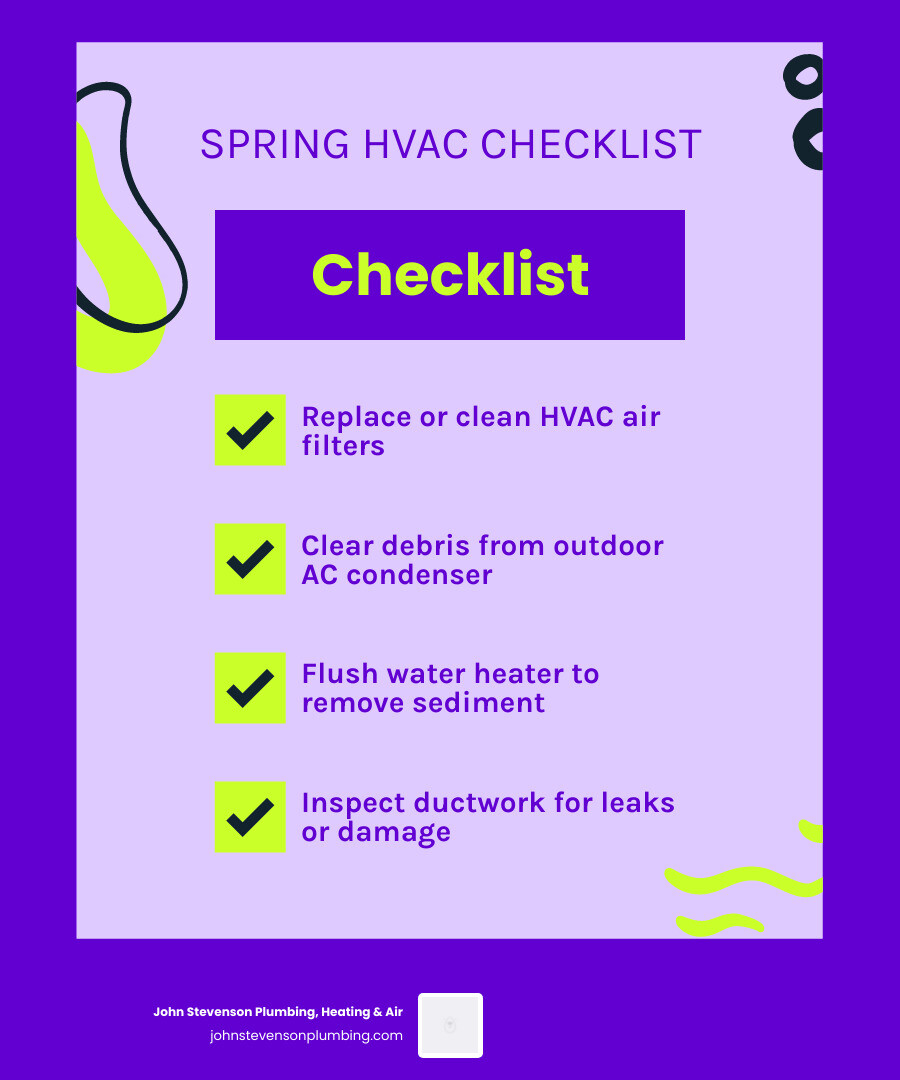
Spring HVAC and Plumbing Checklist — Quick Reference:
- Replace or clean HVAC air filters
- Clear debris from the outdoor AC condenser unit
- Test your thermostat and switch to cooling mode
- Flush your water heater to remove sediment
- Inspect outdoor faucets and hose bibs for freeze damage
- Clear condensate drain lines
- Check under sinks and around fixtures for leaks
- Test your sump pump
- Inspect ductwork for leaks or damage
- Schedule a professional tune-up before peak summer demand
Winter is hard on home systems — even in Carlsbad, CA. Temperature swings, increased heating use, and cooler nights all take a toll on your HVAC equipment and plumbing. By the time spring arrives, dust has built up inside your air handler, sediment has settled in your water heater, and outdoor faucets may have developed small cracks you haven’t noticed yet.
The stakes are real. A neglected HVAC system can run 15–25% less efficiently, and leaky ducts alone can waste 20–30% of the cooled air your system works hard to produce. On the plumbing side, an undetected leak or a failing water heater can quickly lead to serious home damage.
Spring is the ideal window to get ahead of all of it — before the first heat wave hits and service schedules fill up fast.
Essential Steps for Your Spring HVAC and Plumbing Checklist
When the flowers start blooming in Carlsbad and Encinitas, most of us think about yard work or organized closets. However, your home’s internal “organs”—the pipes and vents—need just as much attention. Starting with a comprehensive spring hvac and plumbing checklist ensures your home remains a sanctuary of comfort rather than a source of stress.
The first and most impactful DIY task is checking your air filters. A dirty filter is the leading cause of HVAC inefficiency. When air can’t flow freely, your system works harder, consuming more energy and putting unnecessary strain on the motor. We recommend checking these monthly and replacing them every one to three months.
Next, head outside to your condenser unit. During the winter, wind can blow leaves, twigs, and dirt into the delicate fins of the unit. For proper AC Maintenance, you should ensure there is at least two feet of clear space around the entire unit. This “breathing room” is essential for heat exchange. If the coils are buried under a layer of winter grime, your system’s efficiency can drop by 30% or more.
Our team at John Stevenson Plumbing, Heating & Air emphasizes that HVAC Maintenance isn’t just about the machine; it’s about the environment. Clearing away overgrown vegetation and debris prevents the system from overheating when the San Diego sun starts beating down in July.
How do I prepare my AC for the Carlsbad summer?
Preparing for a Southern California summer requires a bit more than just “turning it on and hoping.” If you want to avoid a mid-July breakdown, start with a gentle cleaning of the condenser coils. After shutting off the power at the breaker, you can use a garden hose to rinse away dust—just be careful not to use a pressure washer, which can flatten the fragile aluminum fins.
If you notice bent fins, a fin comb can be used to straighten them, restoring proper airflow. However, if you see signs of oil leaks or frayed wiring, it is time to call for AC Repair. We also suggest inspecting the refrigerant lines—those copper pipes running from the unit to the house. They should be heavily insulated. If the foam insulation has rotted away or been chewed by critters, your system loses cooling power before the air even reaches your living room.
Why is a spring HVAC and plumbing checklist vital for indoor air quality?
Spring is notorious for allergens. If your vents are filled with dust and pet dander from a long winter indoors, your AC will simply recirculate those particles. Maintaining high Indoor Air Quality starts with the right filter. Consider a filter with a MERV rating between 8 and 11; these are effective at catching pollen and mold spores without suffocating your system’s airflow.
If you find that dust settles on your furniture immediately after cleaning, it might be time for Duct Cleaning. Over years of operation, ducts can accumulate significant debris. A spring cleaning of your ventilation system ensures that the air you breathe is as fresh as the spring breeze outside.
Optimizing Your Cooling System and Ductwork
Your thermostat is the brain of your home’s climate control. As part of your spring hvac and plumbing checklist, test it early. Switch it to “cool” and set the temperature five degrees below the current room temp. You should hear the click of the relay and feel cool air within a few minutes.
If your thermostat is an older manual model, spring is the perfect time for a Thermostat Installation upgrade. Smart thermostats can support better energy efficiency by optimizing your cooling schedule based on when you are actually home. This is a key component of modern energy efficiency, ensuring you aren’t cooling an empty house in Oceanside or Vista.
In some cases, if your system is over 15 years old and struggling to keep up, a professional evaluation might suggest that AC Installation of a newer, high-efficiency unit is the most practical long-term move.
Is my ductwork leaking conditioned air in my Carlsbad home?
The Department of Energy estimates that the average forced-air system loses 20% to 30% of its conditioned air through leaks in the ductwork. That is air you’ve paid to cool that ends up in your attic or crawl space.
While we often focus on Heating Maintenance and Furnace Maintenance in the winter, the same ducts carry your summer relief. You can perform a basic visual inspection by looking for disconnected sections or “blowing” dust near joints. If you find a leak, use professional-grade foil tape—not standard cloth duct tape, which dries out and fails—to seal it. For a truly airtight system, a professional pressure test is recommended.
How can I prevent clogs using a spring HVAC and plumbing checklist?
Plumbing maintenance isn’t just about faucets; it’s about how water leaves your home. Spring rain and increased AC use (which creates condensation) put a heavy load on your drains. Standard Drain Cleaning can prevent major backups.
One often-overlooked item on the spring hvac and plumbing checklist is the AC condensate drain. Your AC removes gallons of water from the air every day. If the drain line clogs with algae or sludge, it can back up and cause major water damage to your floor or ceiling. Pouring a cup of diluted vinegar down the drain line can help keep it clear. For tougher clogs in your main sewer lines caused by spring root growth, Hydro Jetting is a powerful solution that clears pipes back to “like-new” condition.
Protecting Your Home with a Spring Plumbing Inspection
Winter “freeze-thaw” cycles can be sneaky. Even in our milder climate, outdoor pipes can expand and contract, leading to hairline fractures.
Check your outdoor faucets (hose bibs) by placing your thumb over the opening and turning the water on. If you can easily stop the flow, there may be a leak inside the pipe behind the wall. This requires immediate Leak Detection & Repair to prevent mold and structural rot. Inside the home, check under every sink for dampness or “musty” smells, which are early warning signs of a slow leak.
Don’t forget the sump pump! With spring showers on the horizon, pour a five-gallon bucket of water into the sump pit to ensure the float switch activates and the pump clears the water quickly.
What are the signs of a hidden plumbing leak?
If you suspect a leak but can’t find it, try the water meter test. Turn off all water in the house and check your meter. Wait two hours without using any water; if the meter has moved, you have a leak.
Another trick is the toilet dye test. Drop a few drops of food coloring into the toilet tank. If color appears in the bowl after 30 minutes (without flushing), your flapper valve is leaking. A running toilet can waste hundreds of gallons of water a month, quietly spiking your utility bills.
How do I maintain my water heater for better efficiency?
Sediment—minerals like calcium and magnesium—settles at the bottom of your water heater over time. This creates a “blanket” between the burner and the water, forcing the unit to work much harder. This buildup can reduce efficiency by up to 30%.
Our Water Heater Services always include a recommendation for an annual flush. To do this yourself, connect a garden hose to the drain valve and run it to a safe drainage area. This clears out the “gunk” and extends the life of your unit. If you hear “popping” or “rumbling” sounds, that’s the sound of sediment, and you may need Water Heater Repair to replace the anode rod or heating elements. Finally, ensure your temperature is set to 120°F to prevent scalding and save energy.
Frequently Asked Questions about Spring Maintenance
When is the best time to schedule a professional tune-up?
Early spring (March and April) is the “golden window.” This is the shoulder season when HVAC companies aren’t yet swamped with emergency “no-AC” calls. Scheduling early ensures you get a convenient appointment time and gives you a chance to fix any issues before the first 90-degree day hits Carlsbad.
What are the warning signs of low refrigerant?
Your HVAC system shouldn’t “lose” refrigerant—it’s a closed loop. If it’s low, you have a leak. Signs include:
- Frost or ice forming on the copper refrigerant lines.
- The AC runs constantly but the air from the vents feels lukewarm.
- A hissing or bubbling sound near the unit.
- A sudden, unexplained spike in your electricity bill.
How often should I replace my HVAC filters?
While the standard advice is every three months, homeowners in San Marcos or Escondido with pets or high-pollen gardens should check them every 30 days. If the filter looks gray and fuzzy, it’s time for a change. Using high-quality filters during peak allergy season can significantly reduce sneezing and discomfort indoors.
Conclusion
Taking the time to complete a spring hvac and plumbing checklist is one of the smartest investments you can make in your home. It’s about more than just comfort; it’s about protecting your property and avoiding the hidden wear and tear of the seasons.
At John Stevenson Plumbing, Heating & Air, we are proud to serve homeowners throughout Carlsbad, San Diego, and Orange County with our 5-Star Service Guarantee. Whether you need a quick drain check or a comprehensive system tune-up, our certified technicians provide thorough diagnostics and upfront communication you can trust.
For ultimate peace of mind and year-round protection, consider joining Charlie’s Care Club or our Complete Comfort Club. Members receive regular maintenance, priority service, and exclusive benefits designed to help keep home systems in peak condition.
Don’t wait for the heat wave to arrive. Schedule your professional spring maintenance today and breathe easy all season long!