
Need an inspection rather than an explanation? See our sewer camera inspection service for San Diego County — complimentary with every main line snaking.
What Is a Sewer Line Camera Inspection — and Do You Need One?
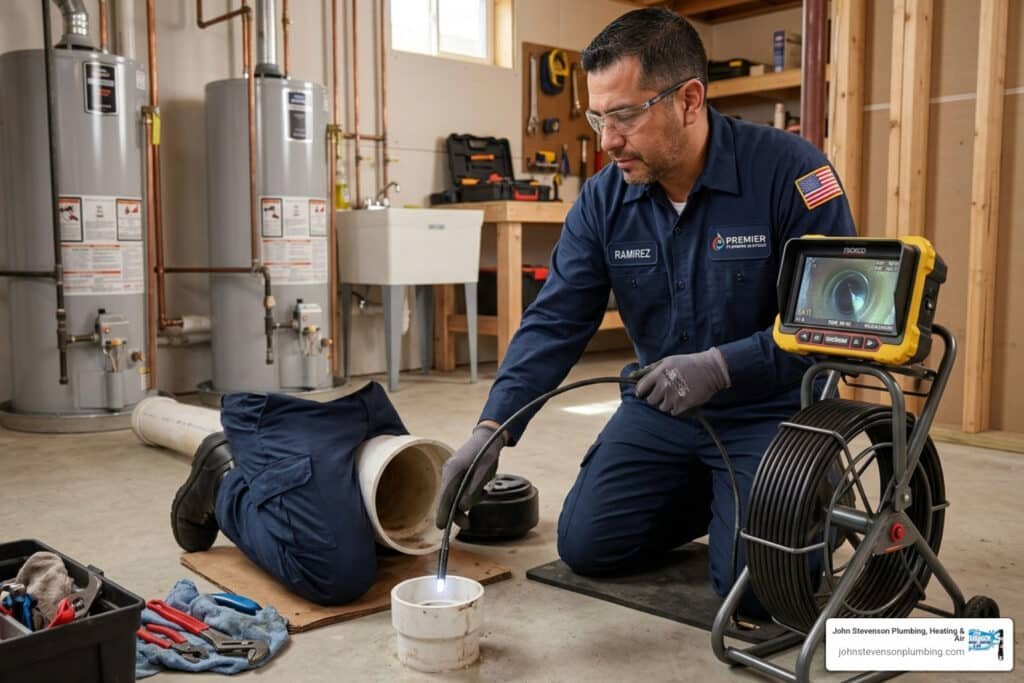
A sewer line camera inspection is a non-invasive diagnostic procedure where a licensed plumber feeds a waterproof, high-definition camera mounted on a flexible cable through your home’s sewer pipes to visually inspect their condition from the inside — without digging up your yard.
Here’s a quick summary:
- What it is: A real-time video inspection of your underground sewer and drain pipes
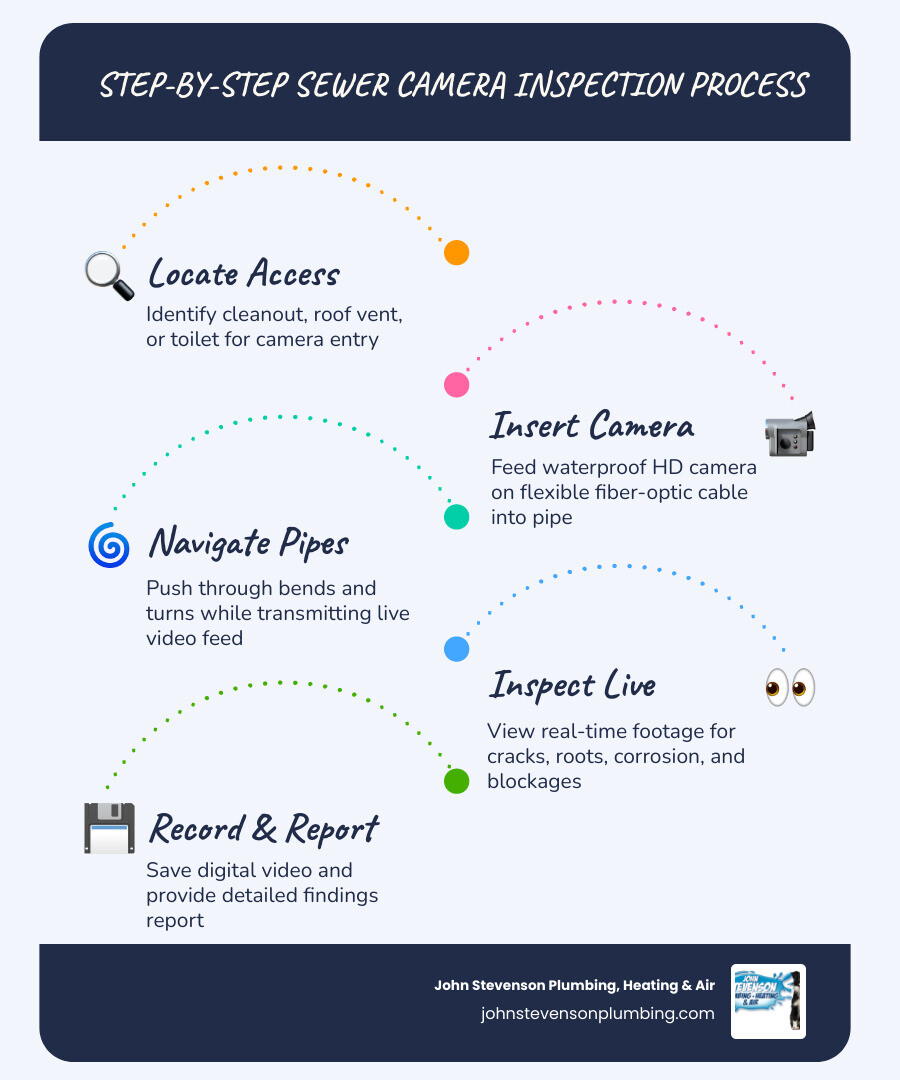
- How it works: A small camera on a flexible rod is inserted through a cleanout or access point and pushed through the line
- What it finds: Tree root intrusion, cracks, pipe bellies, corrosion, blockages, and misaligned joints
- Who needs it: Homeowners with recurring clogs, slow drains, foul odors, or anyone buying a home
- How long it takes: Typically 30 to 60 minutes for a residential property
For Carlsbad homeowners, sewer problems rarely announce themselves until serious — and expensive — damage has already set in. A slow drain today can mean a collapsed pipe tomorrow. The challenge has always been knowing what’s actually happening underground without tearing up your landscaping or concrete to find out.
That’s exactly what modern sewer camera technology solves. Instead of guesswork and exploratory digging, a licensed technician can now thread a high-resolution camera through your pipes and see every crack, root, and blockage in real time — on a live video monitor. It’s one of the most practical diagnostic tools available to homeowners in Southern California today.
What is a sewer line camera inspection?
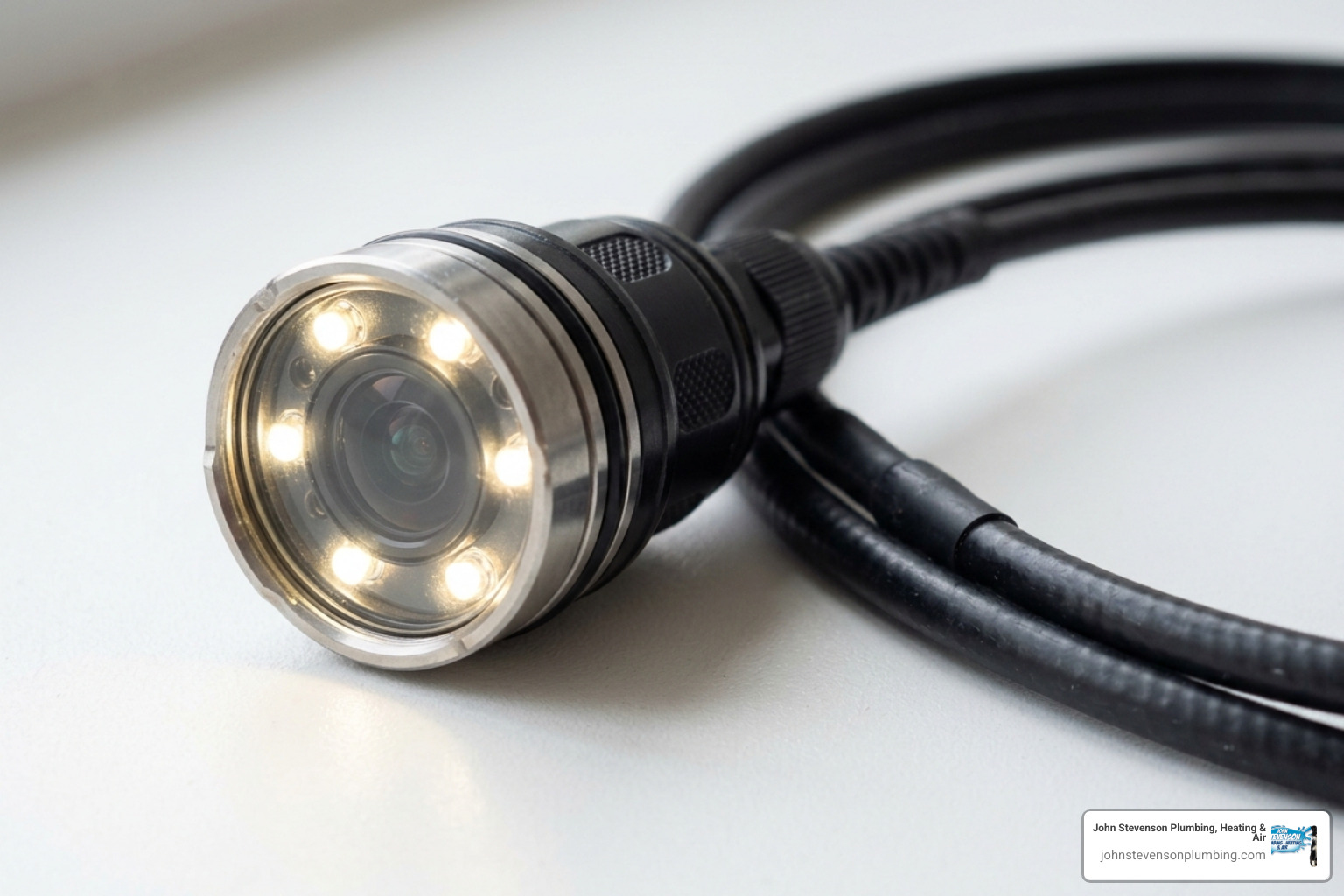
At its core, what is a sewer line camera inspection? Think of it as a colonoscopy for your home’s plumbing. We use a specialized, waterproof camera attached to a long, fiber-optic cable. This cable is rigid enough to be pushed through long stretches of pipe but flexible enough to navigate the various bends and turns that make up your Sewer Lines.
As the camera travels through the line, it transmits a real-time, high-definition video feed to a monitor held by our technician. This allows us to perform visual diagnostics of your underground pipe health without moving a single shovelful of dirt. In May 2026, this remains the gold standard for identifying structural issues, blockages, and the general material condition of your lateral sewer line—the privately owned pipe that connects your home to the municipal main or septic tank.
How the inspection process works in Southern California homes
The process begins by identifying the best entry point. Most modern homes in San Diego and Orange County have a “cleanout”—a capped pipe located outside the house that provides direct access to the main sewer line. If a cleanout isn’t available, we can often access the system through roof vents or by temporarily removing a toilet to use the flange.
Once the camera is inserted, our team carefully maneuvers it through the Drains, watching the monitor for any signs of trouble. This is a critical part of our Drain Services because it eliminates the “blind” approach to plumbing. We can see exactly how many feet into the pipe the camera has traveled, which helps us map the exact location of any defects.
Technology behind a sewer line camera inspection
The equipment we use is far from a standard webcam. These professional-grade cameras are equipped with:
- LED Illumination: Powerful, waterproof lights that cut through the pitch-black environment of a sewer pipe.
- High-Resolution Sensors: To catch even the smallest hairline cracks or the beginning stages of corrosion.
- Sonde Technology: This is a built-in radio transmitter located in the camera head.
This technology is a game-changer for Plumbing Repair. Without it, a plumber might know there is a clog but wouldn’t know if it was caused by a toy, a thicket of roots, or a pipe that has completely collapsed.
Mapping your pipeline with precision
One of the most valuable aspects of this service is “surface locating.” While the camera is underground, the radio transmitter (sonde) sends out a signal. Our technicians use a signal receiver wand above ground to “follow” the camera.
By doing this, we can mark the exact spot on your lawn or driveway where a problem exists. We can also determine the precise depth of the pipe. This level of accuracy ensures that if a Plumbing Repair is eventually needed, we only dig exactly where necessary, saving your landscaping from unnecessary destruction.
Common plumbing problems detected by video diagnostics
A camera inspection can reveal a “rogue’s gallery” of plumbing issues. Depending on when your home was built, your pipes might be made of different materials, each with its own set of common failures.
| Pipe Material | Common Issues Detected | Estimated Lifespan |
|---|---|---|
| Clay | Root intrusion at joints, cracking, crushing | 50-100 years (vulnerable joints) |
| Cast Iron | Internal rusting (scaling), bottom rot, corrosion | 50-60 years |
| PVC (Plastic) | Shifting, “bellies” (sagging), joint leaks | 100+ years |
Beyond material-specific issues, we often find “bellies.” A pipe belly is a sagging section where the soil has shifted, causing the pipe to dip. Because sewer systems rely on gravity, waste gets trapped in these low spots, leading to frequent backups. When we identify these, we can provide a targeted plan for Sewer Line Repair to restore proper flow.
In areas like Scripps Ranch, where terrain can be uneven, identifying these structural shifts is vital for Sewer Line Repair In Scripps Ranch Ca John Stevenson Plumbing Heating Air.
Identifying root intrusion with a sewer line camera inspection
Tree roots are the number one enemy of sewer lines in Southern California. Roots are naturally drawn to the moisture and nutrients found inside your pipes. If you have older clay pipes—which were standard until the mid-1980s—roots can enter through the small gaps in the joints.
Once inside, they grow rapidly, acting like a net that catches grease and toilet paper. A camera inspection allows us to see these “root balls” before they cause a total backup. If the damage is extensive, we may discuss Sewer Line Replacement options to prevent the roots from returning.
Detecting corrosion and scale buildup
If your home was built before 1970, there is a high probability you have cast iron pipes. Over time, these pipes rust from the inside out, creating a rough surface known as “scale.” This scale catches debris and narrows the diameter of the pipe, much like a clogged artery.
In some cases, the corrosion is so severe that the bottom of the pipe has completely rotted away. For homeowners in San Marcos or Oceanside dealing with these aging systems, we often recommend Repiping Services In San Marcos Ca John Marcos Ca John Stevenson Plumbing Heating Air 3 to modernize the home’s infrastructure.
When should Carlsbad homeowners schedule an inspection?
You shouldn’t wait for a geyser in your front yard to call for an inspection. Here are the most common “red flags” that indicate it’s time to see what’s happening underground:
- Frequent Backups: If you’re plunging your toilets or clearing your drains more than once a month, there is likely a structural issue.
- Foul Odors: The smell of rotten eggs or “sewer gas” inside or outside the home often indicates a crack or a vent issue.
- Lush, Green Patches: Is one part of your lawn suspiciously greener and faster-growing than the rest? Sewage acts as a fertilizer, and a leaking pipe might be feeding your grass.
- Soggy Spots or Sinkholes: Damp depressions in the yard are a sign that water is escaping the line and eroding the soil.
- Gurgling Noises: If your drains sound like they’re “gasping for air,” it’s often a sign of a partial blockage.
Furthermore, if you are buying a home—especially one built before 1984—a sewer scope is essential due diligence. Standard home inspections usually don’t cover the underground sewer line. Discovering a collapsed clay pipe after you’ve already closed can lead to a very expensive surprise. Knowing the state of the line can help you plan for Sewer Line Installation or repairs during the negotiation phase.
Frequently Asked Questions about sewer scopes
How long does a professional inspection take?
For a standard residential property, a sewer line camera inspection usually takes between 30 to 60 minutes. This includes the time to locate an access point, run the camera the full length of the lateral line (usually to the street), and review the footage with the homeowner. We provide a digital recording of the session so you have a permanent record for insurance or future maintenance.
What are the limitations of a camera inspection?
While incredibly powerful, cameras aren’t magic. If the pipe is completely full of murky, standing water or thick grease, the camera “sees” nothing but black or white. In these cases, we may need to perform a quick cleaning first. Additionally, a camera can see a crack, but it cannot technically “see” water leaking out into the soil. If we suspect a hidden leak in a pipe that looks structurally sound, we might recommend secondary hydrostatic pressure testing.
What repair options are available after an inspection?
Once we have the visual evidence, we can choose the most cost-effective solution:
- Hydro Jetting: Using high-pressure water to blast away grease, scale, and small roots.
- Trenchless Pipe Bursting: Pulling a new pipe through the old one, which avoids digging a long trench through your yard.
- Epoxy Relining: Creating a “pipe within a pipe” by coating the interior with a durable resin.
- Traditional Repair: Excavating a specific section to replace a collapsed or bellied pipe.
For those in areas like Mission Viejo, we offer specialized Sewer Lines services tailored to the local soil conditions and common pipe types.
Conclusion
At John Stevenson Plumbing, Heating & Air, we believe in “diagnosing before prescribing.” A sewer line camera inspection is the most honest way to show you exactly what is happening under your Carlsbad home. Our 5-Star Service Guarantee means you’ll get a thorough diagnostic, upfront pricing, and the peace of mind that comes with seeing the problem for yourself on our high-definition monitors.
Don’t let a small clog turn into a major excavation project. Whether you’re buying a new home or dealing with a stubborn drain, our certified technicians are ready to help. Schedule your professional sewer line camera inspection today and take the guesswork out of your home’s health.