
That Rotten Egg Smell From Your Kitchen Sink Is Telling You Something
If your kitchen sink smells like rotten eggs, here is the short answer before we go any further:
Most common causes at a glance:
- Dry or dirty P-trap – the water seal under your sink has evaporated or is coated in sludge, letting sewer gas escape
- Bacteria and organic buildup in the drain – food particles, grease, and soap scum are decomposing inside your pipes
- Dirty garbage disposal – trapped food debris is rotting inside the unit, often under the rubber splash guard
- Blocked plumbing vent stack – a clogged roof vent creates negative pressure that pulls sewer gas up through your drains
- Water heater issue – if only your hot water smells, the anode rod inside your water heater may be reacting with sulfur in the water
In most cases, the smell is not coming from your water supply at all. It is coming from the drain, and that is actually good news – drain-side problems are usually fixable without major repairs.
That said, not every fix is the same, and using the wrong method can make things worse or even damage your pipes. The smart move is to diagnose the source first, then act.
Here in Carlsbad, CA, our team at John Stevenson Plumbing, Heating & Air Conditioning sees this problem regularly – I’m John Stevenson, and in this guide I’ll walk you through exactly how to find the source of the smell and fix it the right way.
Why Your Kitchen Sink Smells Like Rotten Eggs: Common Causes
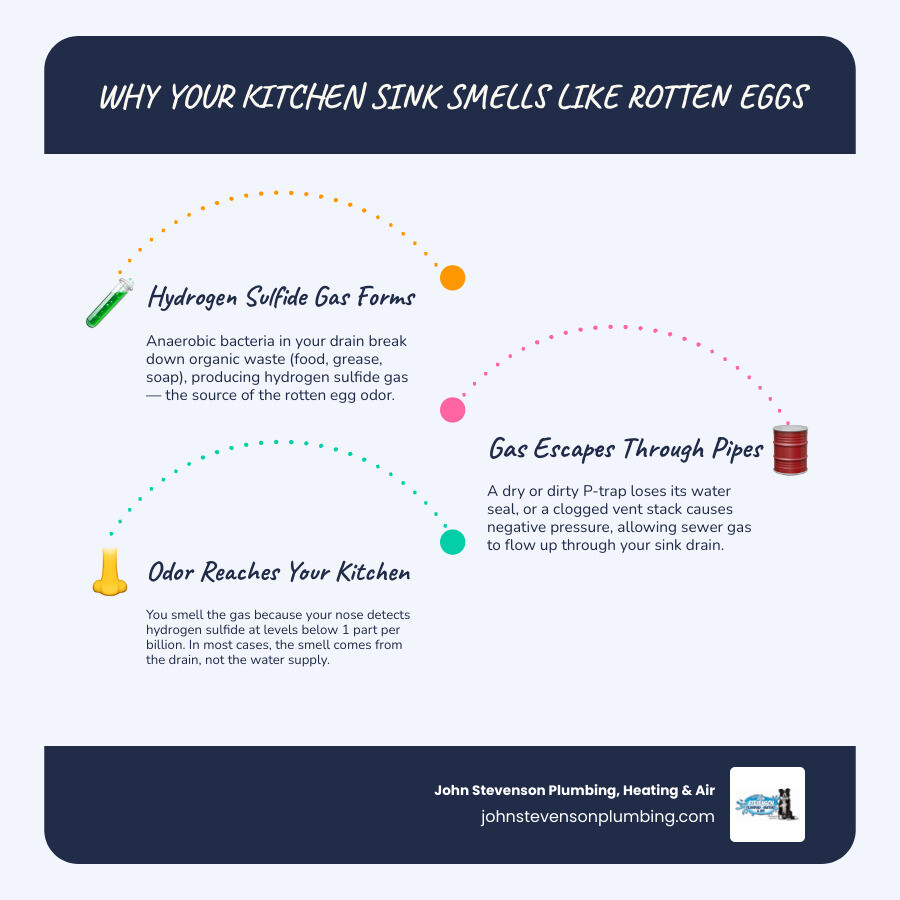
When your kitchen sink smells like rotten eggs, the offensive odor is almost always hydrogen sulfide gas. This gas is a primary component of sewer gas, and the human nose is incredibly sensitive to it, capable of detecting it at concentrations of less than one part per billion. Understanding how this gas forms and escapes into your kitchen is the first step toward reclaiming a fresh-smelling home.
In the low-oxygen environment of your home’s wastewater pipes, anaerobic bacteria thrive. These bacteria feed on organic waste, such as food scraps, soap scum, fats, oils, and grease. As they break down these materials, they produce hydrogen sulfide as a metabolic byproduct. If this gas is allowed to escape into your living space, it brings that unmistakable, stomach-churning sulfur stench with it.
While a bad smell is highly unpleasant, ignoring it can lead to more serious household issues. Overlooking persistent drain odors or slow-draining water can mask underlying pipe damage or leaks. For a deeper look at the subtle signs your plumbing system might be struggling, check out our guide on Don’t Ignore These Warning Signs Hidden Water Damage 101.
Why Your Kitchen Sink Smells Like Rotten Eggs in the Morning
If you find that your kitchen sink smells worst first thing in the morning, you are dealing with a classic case of overnight stagnation. Throughout the day, regular water usage constantly flushes through your pipes, diluting and washing away the gases produced by bacteria.
However, when the household goes to sleep, the water in your pipes sits completely still for eight hours or more. This stagnant, warm environment allows bacterial activity to accelerate dramatically. The bacteria multiply, feeding on the sticky biofilm buildup—a living mat of bacterial slime, grease, and decaying food particles that coats the inside of your drain and disposal. By morning, the concentrated hydrogen sulfide gas rises out of the drain, greeting you when you walk into the kitchen.
The Role of a Dry or Dirty P-Trap
Your plumbing system relies on a simple yet brilliant component to keep sewer gases out of your home: the P-trap. This is the U-shaped pipe located directly beneath your sink basin.
The P-trap is designed to constantly hold a small amount of standing water. This water acts as a continuous physical barrier—a trap seal—that prevents sewer gases from traveling up from the main sewer lines and out of your drain. However, the P-trap can fail in two main ways:
- Evaporation: If a sink is rarely used, such as a bar sink or a guest unit, the water in the trap can completely evaporate over time, especially during warm Southern California summers. Once the water barrier is gone, sewer gases flow freely into your home.
- Debris Accumulation: If the P-trap is dirty, it becomes coated in a thick layer of decomposing organic sludge. In this case, the smell isn’t bypassing the water barrier; it is being generated directly inside the trap itself.
Garbage Disposal Food Buildup and Debris
The garbage disposal is a major culprit for kitchen odors. Many homeowners assume that because a disposal grinds food up, everything is washed away cleanly. In reality, tiny food particles, fibrous vegetable strands, and grease frequently become trapped inside the grinding chamber.
Crucially, a large portion of the odor-causing decay occurs on the underside of the rubber splash guard (the black baffle at the sink opening). This rubber flap is constantly splashed with food waste, yet its underside is rarely cleaned, making it a perfect breeding ground for smelly bacteria. Additionally, grease can coat the blades, trapping more organic decay over time.
How to Diagnose the Source of the Sulfur Odor
Before pouring cleaning solutions down the drain, you must determine whether the smell is coming from the drain itself or from your water supply. Treating the drain will do nothing if the issue actually lies within your water lines or water heater.
Performing the Glass-of-Water Test
The “glass-of-water test” is a simple, highly effective DIY diagnostic tool to isolate the source of the smell:
- Go to your kitchen faucet, turn on the water, and fill a clean glass.
- Immediately walk out of the kitchen and into another room that has no plumbing fixtures (such as your living room or hallway).
- Take a sniff of the water in the glass.
If the water in the glass smells completely normal, your water supply is clean. The sulfur smell is coming from the sink drain or the garbage disposal. When you turn on the faucet, the falling stream of water physically pushes air out of the drain basin, forcing the trapped gas up into your face, which makes it seem like the water itself smells.
If the water in the glass does smell like rotten eggs, the issue is in your water supply. If the smell only occurs when running hot water, the sacrificial magnesium anode rod inside your water heater is likely reacting with naturally occurring sulfates in the water to produce hydrogen sulfide gas. If the smell is present in both hot and cold water, it may indicate a broader water quality issue or a localized line problem. For complex leak or pipe issues that might be contributing to water contamination, you can learn more about professional diagnostics in A Comprehensive Guide to How Leak Detection Technology Works.
Signs Your Kitchen Sink Smells Like Rotten Eggs Due to Venting Issues
Every drain in your home is connected to a plumbing vent stack that exits through your roof. This vent stack regulates air pressure within the pipes, allowing waste water to flow smoothly and directing sewer gases safely out of the house.
If the vent stack becomes blocked by bird nests, leaves, or debris, the plumbing system cannot breathe. As water rushes down your pipes, it creates negative pressure (a siphoning effect) that literally sucks the water out of your sink’s P-trap. Without that water barrier, sewer gas floods your kitchen.
You likely have a venting issue if:
- You hear distinct gurgling or bubbling sounds from your sink or toilet when water drains elsewhere in the house.
- The rotten egg smell is present in multiple drains throughout the home, not just the kitchen sink.
- Drains throughout the house are running sluggishly despite being clear of physical hair or food clogs.
Maintaining your home’s venting system is a key part of seasonal home care. For a complete overview of how to keep your system clear, review our Spring Cleaning for Your Pipes and Vents a Comprehensive Checklist.
Step-by-Step DIY Fixes for a Smelly Drain
If your diagnostics confirm that the rotten egg smell is coming from the drain or garbage disposal, you can resolve roughly 80% of these cases in under an hour using safe, natural DIY methods.
| Method | Best For | Pros | Cons |
|---|---|---|---|
| Baking Soda & Vinegar | General organic buildup & light odors | Natural, non-toxic, cleans pipe walls | Can temporarily stress very old, corroded metal joints |
| Boiling Water Flush | Melting grease & flushing dry traps | Free, simple, highly effective on grease | Can melt or warp PVC joints; do not use on plastic pipes |
| Ice & Rock Salt Grind | Cleaning garbage disposal blades | Physically scrapes away stubborn residue | Excessive use can cause minor pipe corrosion |
| Enzyme Cleaners | Long-term preventative maintenance | Safe for all pipes, breaks down biofilm naturally | Requires several hours to work; not an instant fix |
How to Use Baking Soda and Vinegar Safely
The foaming chemical reaction between baking soda (sodium bicarbonate) and white vinegar (acetic acid) is excellent for breaking loose the sticky biofilm lining your pipes.
- Pour 1/2 cup of baking soda directly down your kitchen sink drain.
- Follow it immediately with 1 cup of white vinegar.
- Cover the drain with a plug or a wet cloth to force the carbon dioxide gas and fizzing action down into the pipes rather than up into your kitchen.
- Let the mixture sit and work for 15 to 30 minutes.
- Flush the drain thoroughly with hot tap water.
Note: While popular, avoid using boiling water to flush this mixture if you have PVC (plastic) plumbing under your sink, as boiling water can soften plastic joints.
When to Use Boiling Water or a Plunger
Boiling water is highly effective at melting congealed fats, oils, and grease (FOG) that have coated your pipes. However, only use boiling water if you are certain your home has metal (copper or cast iron) drain pipes. If you have PVC pipes, stick to hot tap water to prevent warping the pipe connections.
If you have a double kitchen sink and suspect a partial clog is trapping rotting food, you can use a plunger to clear it:
- Place a plug or a wet rag firmly over one of the drain openings to create a seal.
- Fill the other sink basin with a few inches of water.
- Place a cup plunger over the open drain and plunge vigorously up and down to break loose the physical blockage.
Cleaning and Deodorizing the Garbage Disposal
If the rotten egg smell is isolated to your garbage disposal, you need to clean the grinding chamber and the splash guard.
- Scrub the Splash Guard: Put on dish gloves, apply grease-cutting dish soap to an old toothbrush, and thoroughly scrub the underside of the black rubber splash guard flaps. You will likely remove a significant amount of smelly, dark slime.
- The Ice and Salt Scrub: Toss 2 cups of ice cubes and 1/2 cup of coarse rock salt into the disposal.
- Turn on the cold water stream and run the disposal for 30 seconds. The ice and salt will physically scour the grinding blades and chamber walls, knocking loose solidified grease and food debris.
- Citrus Freshness: Finish by tossing in a few lemon or orange peels and grinding them with cold water to leave a fresh scent.
How to Prevent Kitchen Sink Odors From Returning
Once you have eliminated the sulfur smell, establishing simple, consistent maintenance habits will ensure it does not return.
Best Practices for Daily Sink Maintenance
Preventing odors is far easier than curing them. Integrate these simple habits into your daily kitchen routine:
- Use a Mesh Strainer: Always keep a fine mesh strainer in your sink drain to catch food particles, coffee grounds, and debris before they can enter your plumbing. Empty the strainer into the trash or compost bin regularly.
- Scrape Plates Fully: Scrape all plates and cookware thoroughly into the trash before rinsing them in the sink.
- Never Pour Grease Down the Drain: Liquid grease, cooking oils, and butter will solidify inside your cold pipes, trapping food and creating an odor-producing grease trap. Pour grease into an old can, let it cool, and throw it in the trash.
- Always Use Cold Water with the Disposal: When running your garbage disposal, always use a strong stream of cold water. Cold water keeps grease in a solid state, allowing the disposal blades to chop it up and flush it away cleanly. Hot water melts grease, causing it to coat the pipes further down the line. Keep the water running for 15 seconds after turning off the disposal.
- Flush Unused Drains: Run the water for 30 seconds weekly in infrequently used sinks (like guest bathrooms, wet bars, or basement sinks) to keep the P-trap water barrier from evaporating.
For more detailed strategies on stopping clogs before they start, read our expert advice on how to Stop the Clog Before It Starts.
Common Mistakes to Avoid When Troubleshooting
Many homeowners inadvertently damage their plumbing while trying to resolve a smelly sink. Avoid these common mistakes:
- Using Harsh Chemical Drain Cleaners: Store-bought chemical drain cleaners are highly corrosive. They can eat through older metal pipes, melt plastic PVC joints, and damage garbage disposal seals, all while failing to clear the underlying organic biofilm.
- Pouring Boiling Water Down PVC Pipes: As mentioned, boiling water can easily deform PVC pipe joints under your sink, leading to hidden leaks.
- Ignoring Active Leaks: If you notice dampness under your sink cabinet, your P-trap may have a slow leak. A leaking P-trap can lose its water level, allowing sewer gas to bypass the barrier.
Keeping an eye out for minor drips is essential to preventing major water damage. For seasonal inspection advice, check out our Stop the Drip With These Spring Plumbing Inspection Tips.
When to Call a Professional Plumber
While most minor drain odors can be resolved with basic DIY steps, certain situations require the expertise of a licensed professional. You should contact us at John Stevenson Plumbing, Heating & Air Conditioning if:
- The Smell Persists: If you have thoroughly cleaned the drain, disposal, and P-trap, but the rotten egg smell returns within a day or two, you likely have a deeper systemic issue.
- Multiple Drains Smell: If you smell sulfur or sewer gas in multiple bathrooms or your laundry room, the issue is likely a blocked main vent stack or a compromised main sewer line.
- You Hear Gurgling: Persistent gurgling sounds indicate that sewer gases are actively bypassing your P-traps due to pressure imbalances.
- You Suspect a Sewer Line Break: A cracked cast iron sewer pipe in your crawlspace or slab can release strong sewer odors into your home.
When we handle persistent drain odors, we don’t guess. We utilize advanced diagnostic tools to pinpoint the exact cause of the issue. To learn more about how we inspect deep within your pipes without tearing up your walls or yard, read Everything You Need to Know About Sewer Camera Inspections.
Frequently Asked Questions About Smelly Sinks
Is a sulfur smell from the drain dangerous to my health?
In the very low concentrations typically found in a home kitchen, hydrogen sulfide gas is generally not dangerous, though it can cause mild headaches, eye irritation, or nausea if you are exposed to it for prolonged periods. However, sewer gas also contains other compounds like methane, which can be a fire hazard in extreme cases. Any persistent sewer gas smell should be addressed promptly to ensure a healthy, safe home environment.
Can I use bleach to clear a smelly kitchen drain?
We do not recommend using bleach as a primary drain cleaner. While bleach can kill surface bacteria, it is harsh on plumbing pipes and can damage the rubber seals inside your garbage disposal. Furthermore, if bleach mixes with other common household cleaning agents (like ammonia or vinegar) inside your pipes, it can produce highly toxic chloramine gas. Natural enzyme cleaners or baking soda and vinegar are much safer and more effective.
Why does the sulfur smell get worse after it rains?
Heavy rainfall can overwhelm local municipal sewer systems, causing pressure changes within the city’s main sewer lines. This increased pressure can push sewer gases up through your home’s drainage system and past weak or dry P-trap seals. Additionally, heavy rain can wash leaves and debris into your roof’s plumbing vent stack, blocking air flow and causing sewer gas to back up into your kitchen.
Conclusion
A kitchen sink smelling like rotten eggs is a clear warning sign from your plumbing system. Whether the cause is as simple as a dirty garbage disposal, an evaporated P-trap, or a more complex issue like a blocked roof vent, finding the source is the key to a permanent fix.
If you have tried DIY cleaning methods and the stubborn odor continues to linger, do not let sewer gases compromise the comfort of your home. At John Stevenson Plumbing, Heating & Air Conditioning, we proudly serve Carlsbad, CA, and surrounding Southern California communities with expert plumbing and drain solutions.
All of our work is backed by our signature 5-Star Service Guarantee, featuring thorough diagnostics, upfront pricing, certified technicians, and a 24-hour satisfaction check-in. Let our friendly, licensed professionals restore comfort and freshness to your kitchen.
Ready to say goodbye to stinky drains for good? Contact us today to schedule our professional Drain Services!