
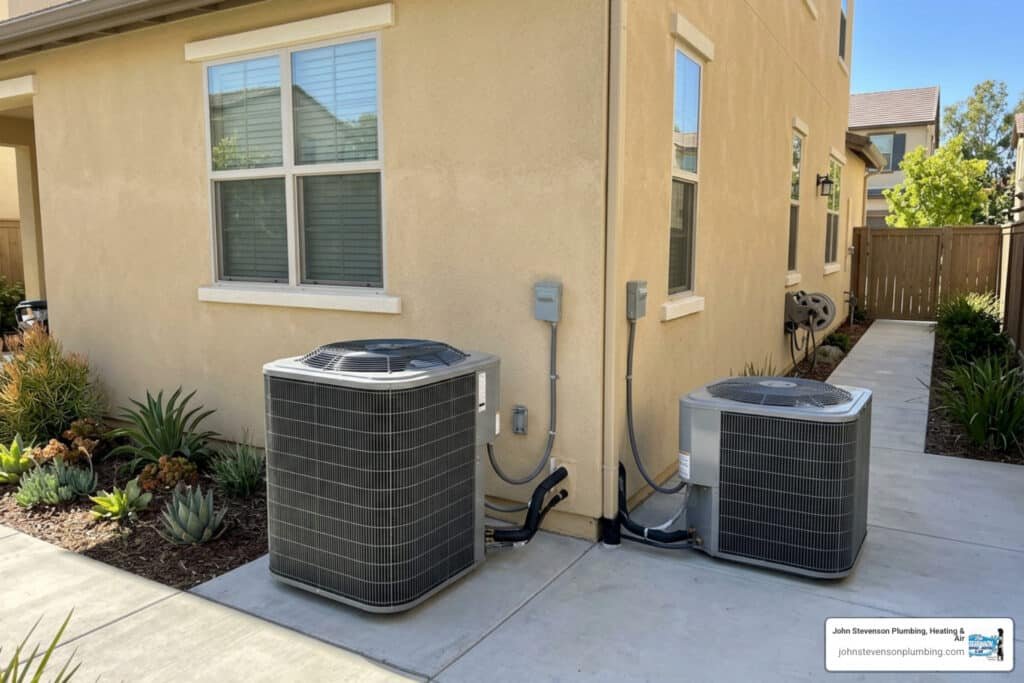
What “Single Stage vs Variable Speed AC Explained” Really Means for Carlsbad Homeowners
Single stage vs variable speed AC explained simply comes down to how your compressor controls cooling output. Here is a quick breakdown:
| Feature | Single-Stage AC | Variable-Speed AC |
|---|---|---|
| Compressor operation | 100% on or completely off | Adjusts from ~25% to 100% capacity |
| SEER2 rating | 13 to 15.1 | Up to 26 |
| Temperature consistency | ±2 to 3°F swings | Within ±0.5°F |
| Humidity removal | Baseline | Up to 400% more than single-stage |
| Noise level | 70-76 dB | 55-68 dB |
| Best for | Tighter budgets, mild climates | Long-term comfort, humid or hot climates |
If you are shopping for a new air conditioner in Carlsbad, CA, you have probably run into terms like single-stage, two-stage, and variable-speed — and it is easy to feel lost. These terms describe how your AC compressor works, and the difference has a direct impact on your energy bills, indoor comfort, and how well your home handles Southern California’s coastal humidity and heat. Choosing the wrong system for your home can mean uneven temperatures, higher monthly costs, and a unit that wears out faster than it should.
This guide breaks down everything you need to know to make a confident, informed decision.
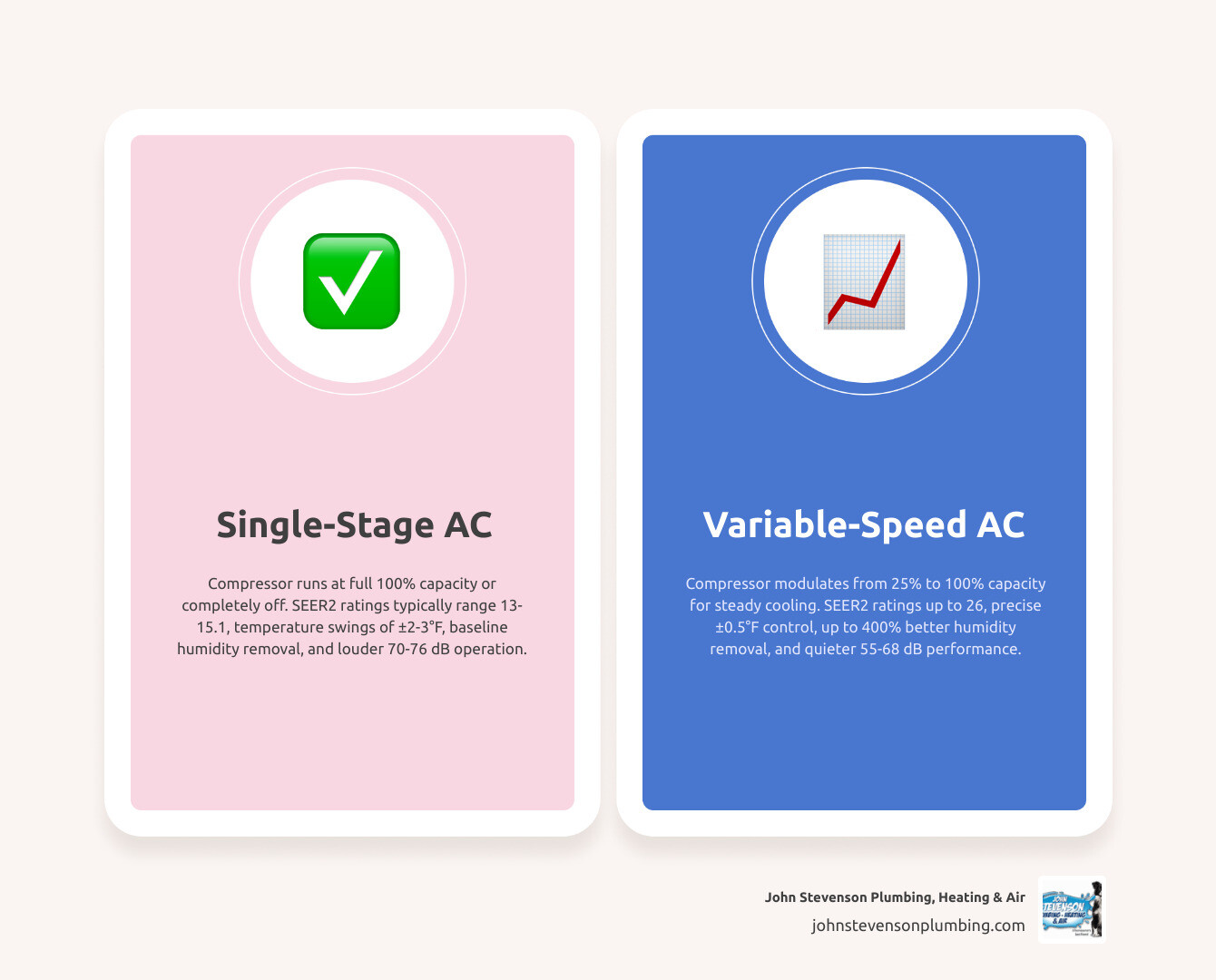
Single stage vs variable speed ac explained vocab explained:
- choosing the right ac for a southern california home
- how to choose the right ac system for your home
- what size air conditioner do i need
Single Stage vs Variable Speed AC Explained: The Core Differences
To understand how these systems differ, it helps to think of your air conditioner’s compressor as the heart of the system. The compressor is responsible for pumping refrigerant through the system to absorb heat from inside your home and release it outdoors. The primary distinction between compressor types is how many “speeds” or “stages” they have.
Traditional air conditioners rely on a single-stage compressor, which operates on a simple on-or-off basis. Modern high-efficiency systems utilize inverter technology to power a variable-speed compressor, which can adjust its cooling capacity continuously to match the exact temperature requirements of your home.
When evaluating these technologies, you are deciding between a system that blasts cold air at full capacity until it shuts off, and a system that runs quietly in the background, making micro-adjustments to maintain a perfectly steady climate. Knowing what to look for when buying a new AC unit involves weighing these core mechanical differences against your budget and comfort goals.
How a Single-Stage Compressor Operates
A single-stage compressor has only one speed: 100% capacity. When your thermostat detects that the indoor temperature has risen above your setpoint, it sends a signal to the AC to turn on. The system immediately starts running at full blast, dumping cold air into your home until the thermostat is satisfied. Once the target temperature is reached, the system shuts off completely.
This on-and-off cycle repeats multiple times throughout the day. Because the system can only run at maximum power, it often cools the home very quickly and then shuts down, a phenomenon known as short cycling. This frequent cycling creates noticeable temperature swings, keeps humidity levels higher, and places a significant amount of stress on the electrical and mechanical components of your system. If you notice your current system turning on and off every few minutes, it is helpful to learn how to know if your AC is going bad before the heatwave hits so you can plan for a replacement before the peak of summer.
How a Variable-Speed Compressor Operates
A variable-speed compressor, often called an inverter-driven compressor, operates more like a dimmer switch than a standard light switch. Instead of shutting off completely or running at full power, it can modulate its output anywhere from 25% to 100% capacity in tiny, precise increments.
When a variable-speed system turned on, it rarely needs to run at 100% capacity unless it is responding to an extreme outdoor temperature spike or a sudden indoor heat load (like hosting a large family gathering). Most of the time, the system operates continuously at a lower capacity, such as 30% or 40%. By running almost constantly at a slower, steadier pace, it maintains a highly consistent indoor temperature, consumes significantly less electricity, and provides exceptional dehumidification.
Comparing Performance, Efficiency, and Home Comfort
When comparing single-stage, two-stage, and variable-speed systems, the differences in daily performance and long-term operating costs are substantial. Below is a detailed performance comparison to help visualize how these options stack up:
| Performance Metric | Single-Stage AC | Two-Stage AC | Variable-Speed AC |
|---|---|---|---|
| Capacity Settings | 1 (100% only) | 2 (typically 65% and 100%) | Infinite modulation (25% to 100%) |
| Typical SEER2 Range | 13 to 15.1 | 15.2 to 17 | 17 to 26+ |
| Relative Energy Savings | Baseline | 15% to 20% savings | 20% to 50% savings |
| Temperature Consistency | ±2°F to 3°F fluctuations | ±1°F to 2°F fluctuations | Within ±0.5°F of setpoint |
| Humidity Control | Moderate | Good | Superior (up to 400% more moisture removal) |
| Average Noise Level | 70 to 76 dB | 65 to 72 dB | 55 to 68 dB |
Energy Efficiency and SEER2 Ratings
The energy efficiency of an air conditioner is measured by its Seasonal Energy Efficiency Ratio 2 (SEER2) rating. Higher SEER2 ratings indicate a more efficient system that uses less electricity to cool your home.
Single-stage systems typically feature SEER2 ratings ranging from 13 to 15.1. While these systems meet federal minimum efficiency standards, they consume more power because they must start up at full capacity every time they cycle on. Air conditioners draw the most electrical current during the startup sequence; because single-stage units cycle on and off frequently, they generate regular energy spikes that inflate your utility bills.
In contrast, variable-speed systems can achieve SEER2 ratings over 17 and up to 26. Because they run continuously at lower speeds, they avoid the frequent, energy-intensive startup cycles. In fact, upgrading from an older, inefficient single-stage unit to a modern variable-speed system can reduce your cooling energy consumption by 20% to 50%. For homeowners in Carlsbad, Encinitas, and San Diego, navigating these ratings is a key part of choosing the right equipment, as detailed in our comprehensive guide to choosing the right AC for a Southern California home.
Temperature Consistency and Humidity Control
One of the most noticeable differences in home comfort is how each system regulates temperature and indoor moisture. Single-stage systems are notorious for creating a “sawtooth” temperature pattern. The system blasts cold air, drops the temperature slightly below the thermostat setting, shuts off, and then allows the indoor air to warm up several degrees before turning back on. This results in temperature swings of ±2°F to 3°F, leaving rooms feeling alternately chilly and warm.
Variable-speed systems maintain an incredibly stable indoor climate, typically keeping the temperature within a tight ±0.5°F window of your thermostat setting. You will not experience hot or cold spots as you move from room to room.
Dehumidification is another area where variable-speed technology excels. In coastal areas like Carlsbad, Oceanside, and Coronado, indoor humidity can make a home feel warmer than it actually is. Because a variable-speed system runs longer, slower cycles, air is continuously drawn across the cold evaporator coil. This extended contact allows the system to remove up to 400% more moisture than a single-stage system under worst-case conditions. Lower humidity levels also allow you to set your thermostat a couple of degrees higher while maintaining the same level of comfort, saving you even more on energy costs.
Noise Levels and System Lifespan
Noise can be a major factor, especially if your outdoor condenser unit is located near a bedroom window, patio, or outdoor living space. Single-stage outdoor units are relatively loud, typically operating between 70 and 76 decibels (dB)—roughly equivalent to the sound of a vacuum cleaner. Every time the system kicks on, you will hear a loud metallic clatter as the compressor starts up at full speed.
Variable-speed systems are whisper-quiet. Because they run at lower capacities, the outdoor unit usually operates between 55 and 68 dB, which is comparable to a quiet conversation or a gentle rainfall. The startup is gradual and silent, eliminating the sudden blast of noise associated with older systems.
System lifespan is also directly impacted by compressor technology. While a properly maintained single-stage system can last 15 years or more, the constant stress of starting up at 100% capacity causes faster wear and tear on electrical contacts, fan motors, and the compressor itself. Variable-speed systems start up slowly and experience fewer electrical surges, which naturally reduces mechanical fatigue. Regardless of which system you choose, implementing proper care is essential; you can learn how to extend the life of your AC unit to protect your investment over the long haul.
Sizing, Installation, and Upgrading Requirements
Choosing between a single-stage and variable-speed air conditioner is not just about picking a model off a shelf. High-performance systems require specialized installation techniques, precise system matching, and a thorough assessment of your home’s existing infrastructure.
Why System Sizing Matters for Single Stage vs Variable Speed AC Explained
A common mistake is assuming that a more advanced compressor type can compensate for an improperly sized system. In reality, proper system sizing is far more critical to your comfort and system longevity than the type of compressor you choose.
To determine the correct size for your home, a professional technician must perform a detailed Manual J load calculation. This calculation takes into account your home’s square footage, ceiling height, insulation levels, window placement, and local climate conditions. For a quick look at how this process works, read our guide on how to calculate required AC size in 4 easy steps.
If an AC system is oversized, a single-stage unit will short-cycle rapidly, causing extreme temperature swings, poor dehumidification, and premature equipment failure. Even an advanced variable-speed system will perform poorly if it is oversized, as it will be forced to shut down frequently rather than running its signature long, efficient cycles. If your current unit is struggling with these issues, it may be time to evaluate how to decide if your AC needs a tune-up or a retirement party.
Upgrading to a Variable-Speed System
If you decide to upgrade from an older single-stage system to a variable-speed system, the process involves more than just swapping out the outdoor condenser. Variable-speed outdoor compressors require fully compatible indoor equipment to function correctly.
- Matched Indoor Air Handler or Furnace: The indoor blower motor must be a variable-speed Electronically Commutated Motor (ECM) that can communicate directly with the outdoor compressor. If you connect a variable-speed outdoor unit to an old, fixed-speed indoor blower, the system will not be able to modulate airflow, completely neutralizing the efficiency and comfort benefits of the upgrade.
- Communicating Thermostat: Variable-speed systems rely on smart, communicating thermostats that constantly share data between the indoor and outdoor equipment. A standard, non-communicating thermostat cannot send the complex signals required to adjust compressor speeds in fine increments.
- Ductwork Evaluation: Because variable-speed systems run longer cycles at lower air velocities, your ductwork must be clean, properly sealed, and insulated. In older homes with uninsulated ductwork running through hot attics, slow-moving cold air can cause condensation to form on the outside of the ducts, potentially leading to water damage and mold issues.
Before making a major decision, it is wise to compare the costs of keeping an older system running versus upgrading. You can do this by doing the math on old AC repair vs buying a new system.
Making the Final Decision: Single Stage vs Variable Speed AC Explained
To determine which system is right for your Southern California home, consider your long-term living plans, climate needs, and comfort priorities:
- When Single-Stage Makes Sense: A single-stage system is an excellent, reliable option if you are working with a tighter upfront budget or if you plan to sell your home in the near future. It is also highly effective for rental properties where you want to minimize initial capital outlay and keep future repair components simple and straightforward.
- When Variable-Speed is Worth It: A variable-speed system is the gold standard for “forever homes” where you plan to live for many years. The monthly utility savings, whisper-quiet operation, and incredible humidity control make it a highly rewarding investment. It is also ideal for multi-story homes in Carlsbad, Vista, or San Marcos that suffer from uneven temperatures between floors, as well as for family members who suffer from severe allergies or asthma and benefit from continuous air filtration.
If your current system is showing its age, keep an eye out for the signs your AC system is reaching end of life: 7 key indicators to avoid being left without cooling during a summer heatwave.
Frequently Asked Questions About AC Compressor Stages
Can I use a variable-speed AC with my existing older furnace?
In almost all cases, no. Variable-speed outdoor compressors must communicate with a variable-speed indoor blower motor to modulate airflow. Older furnaces typically use fixed-speed blower motors that cannot communicate with high-efficiency outdoor units. To get the full comfort and efficiency benefits of a variable-speed system, you will need to install a fully matched, compatible indoor air handler or furnace.
Do variable-speed AC units last longer than single-stage units?
Yes, variable-speed units often enjoy a longer operational lifespan when properly installed and maintained. Because they start up gradually and run continuously at lower speeds, they experience far fewer power surges and startup cycles. Startup is the most stressful part of an air conditioner’s operation; by reducing these cycles, variable-speed systems experience less mechanical wear and tear over time.
How does uninsulated ductwork affect a variable-speed AC?
Because variable-speed systems run long, slow cooling cycles, the cold air spends more time traveling through your ductwork. If your ducts are uninsulated and run through a hot attic, this slow-moving cold air can cool the metal ductwork down to its dew point. This can cause moisture to condense on the outside of the ducts, leading to water stains on ceilings and potential mold growth. It is highly recommended to have your ductwork inspected, sealed, and insulated before upgrading to a variable-speed system.
Conclusion
Understanding single stage vs variable speed AC explained helps you choose the perfect balance of comfort, efficiency, and upfront cost for your home. While single-stage systems remain a reliable and cost-effective option for many homeowners, variable-speed systems offer unparalleled temperature consistency, whisper-quiet operation, and superior humidity control that makes a massive difference in our coastal Southern California climate.
At John Stevenson Plumbing, Heating & Air Conditioning, we are committed to helping our neighbors in Carlsbad, San Diego County, and Orange County find the perfect home comfort solutions. Our experienced, certified technicians will perform a precise load calculation to ensure your new system is sized perfectly for your home, backed by our outstanding 5-Star Service Guarantee.
Ready to upgrade your home comfort? Schedule professional AC installation with John Stevenson Plumbing, Heating & Air Conditioning today, or give us a call to discuss which system is the perfect fit for your family.