
My Air Conditioner is Struggling to Cool. Who in Carlsbad Specializes in Replacing Aging AC Systems?
The signs your AC system is reaching end of life can sneak up on you — and in Carlsbad’s warm coastal climate, a failing unit rarely waits for a convenient moment to give out.
Here’s a quick look at the most common warning signs:
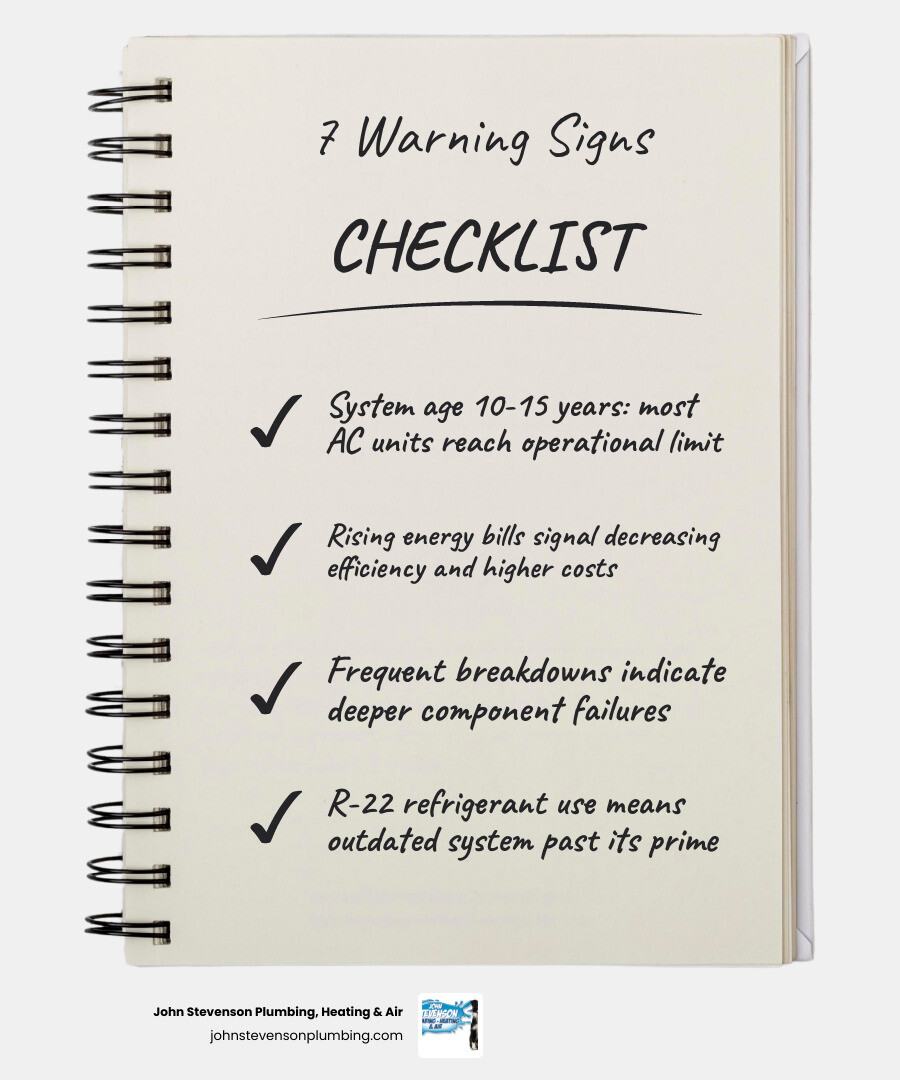
- System age over 10-15 years — most central AC units reach their limit around this range
- Rising energy bills — your system works harder but delivers less cooling
- Frequent breakdowns — multiple repairs in a single season signal deeper problems
- Constant running without cooling — the system runs but can’t keep up
- Strange noises or smells — grinding, squealing, or musty odors from vents
- Uneven cooling — some rooms stay hot no matter what
- R-22 refrigerant use — a strong indicator your system is past its prime
Most homeowners don’t catch these warning signs until the AC quits on the hottest day of summer. By then, you’re making rushed decisions under pressure. The good news is that your system almost always gives you warning before it fails completely — you just need to know what to look for.
This guide walks you through seven clear indicators that your AC may be on its way out, so you can plan ahead instead of scrambling.
Glossary for signs your ac system is reaching end of life:
Understanding AC Lifespan in Carlsbad, CA
When considering how long an air conditioner will keep your home comfortable, location plays a massive role. In Carlsbad and the surrounding Southern California coastal areas, we enjoy beautiful ocean views, but our heating and cooling systems pay a price.
The average lifespan of a residential central air conditioner is typically 10 to 15 years. However, coastal humidity and salt air can accelerate this timeline. The salty marine layer acts as a corrosive agent, slowly degrading the delicate aluminum condenser coils on your outdoor unit. This corrosion reduces the system’s ability to transfer heat, forcing it to work harder and wear out faster than a system installed further inland.
When you factor in Southern California’s intense summer heatwaves, an aging system is put under immense strain. If your system has not received steady service, its functional limit might arrive closer to the 10-year mark. To understand how your unit measures up against average expectations, you can read more about how long does a central ac system last to see if your system is on borrowed time.
If you suspect your system is struggling under Carlsbad’s coastal conditions, exploring our professional Cooling Services can help you determine whether a quick fix or a system upgrade is the right path forward.
7 Signs Your AC System Is Reaching End of Life
Recognizing when your air conditioner is on its last leg is the best way to avoid a hot, sticky emergency. Air conditioners rarely fail suddenly without dropping a few hints first.
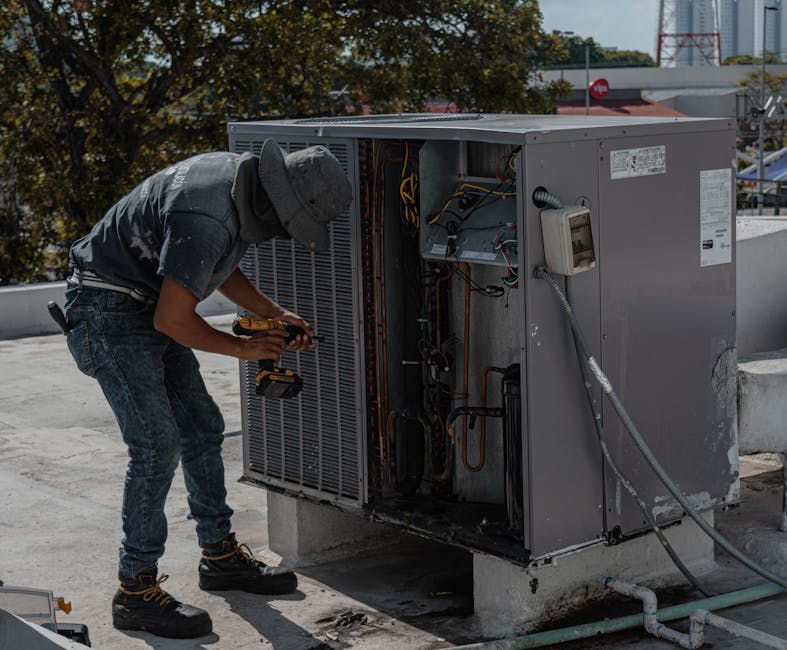
By performing system diagnostics and paying attention to subtle drops in performance, you can spot the warning signs early. Here are the seven key indicators that your air conditioner is nearing the end of its operational life.
1. Your System is Over 10-15 Years Old
While a well-maintained air conditioner can occasionally push past the 15-year mark, most units reach their functional limit between 10 and 15 years. As equipment ages, the physical wear and tear on internal components like the compressor, fan motor, and electrical contactors becomes cumulative.
Older units simply weren’t built with the advanced, highly durable materials used in modern HVAC manufacturing. If your system was installed over a decade ago, it is likely running on obsolete technology that drains more power while delivering less cooling. Squeezing extra years out of a heavily worn system often leads to a cycle of frequent, temporary fixes. For an honest look at the limitations of nursing an old unit, check out The Cold Hard Truth About Fixing Your Ancient Air Conditioner.
2. Rising Energy Bills and Decreasing Efficiency
Have you noticed your monthly utility bills steadily climbing, even though your cooling habits haven’t changed? This is a classic sign of age-related efficiency loss.
As internal components wear down, the compressor has to work twice as hard to pump refrigerant, and the blower motor consumes more electricity to move air. This drop in efficiency is especially noticeable when comparing older SEER (Seasonal Energy Efficiency Ratio) ratings to modern standards. A system manufactured 12 to 15 years ago might have a SEER rating of 10 or 13, but due to wear, it may now operate at an equivalent of 7 or 8 SEER. Modern units boast much higher baseline efficiencies, meaning a replacement can immediately lower your monthly energy consumption.
3. Frequent Breakdowns and Constant Repairs
It is normal for an air conditioner to need an occasional tune-up or a minor repair over its lifespan. However, if you feel like you know your HVAC technician by their first name, it’s a major red flag.
If you are scheduling repairs multiple times a year—such as replacing a capacitor in the spring, patching a leak in the summer, and replacing a fan motor in the fall—your system is experiencing systemic component failure. Stacking repair bills are a sign that the unit’s structural integrity is compromised. Instead of dealing with temporary patches, investing in a reliable new system is often the more dependable choice. If your system is currently giving you trouble, you can schedule a professional AC Repair to get an accurate diagnosis of its condition.
4. The AC Runs Constantly Without Cooling
An air conditioner is designed to run in cycles, cooling your home to the thermostat’s set temperature and then shutting off. If your system runs continuously without ever catching up—even on relatively mild Southern California days—something is wrong.
Constant running is often caused by a failing compressor, clogged coils, or significant refrigerant leaks. When the compressor begins to fail, it can no longer pressurize the refrigerant effectively, preventing the system from absorbing heat from your home. This continuous operation puts extreme strain on all other electrical components, accelerating the countdown to a complete system breakdown. If you are experiencing this issue right now, read our guide on What to Check First When Your AC Runs Constantly Without Cooling to rule out simple issues like dirty air filters.
5. Strange Noises, Smells, and Poor Air Quality
Your air conditioner should operate with a gentle, predictable hum. If you start hearing sounds that were never there before, your system is trying to tell you something:
- Grinding or Screeching: Often points to failing motor bearings or a damaged compressor.
- Squealing: Usually indicates a worn-out fan belt or an issue with the blower motor.
- Clicking or Chattering: Can signal electrical issues, failing relays, or loose components.
In addition to strange noises, pay attention to smells. Musty odors coming from your vents usually point to biological growth or mold inside the dark, damp evaporator coil area or within the ductwork. If you smell a metallic, burning odor, it indicates overheating electrical components or old, failing wiring. These issues directly compromise your indoor air quality, circulating dust, mold spores, and allergens throughout your living spaces.
6. Uneven Cooling and Humidity Issues
An aging air conditioner loses its capacity to distribute air evenly and manage indoor humidity. You might notice that your living room feels like an icebox while your upstairs bedrooms remain uncomfortably warm. These hot and cold zones occur because a failing blower motor or an underperforming compressor can no longer push a consistent volume of conditioned air through your ductwork.
Furthermore, air conditioning plays a vital role in dehumidification. In Carlsbad, coastal moisture and high humidity can make a home feel sticky and warm, even at lower temperatures. An old, dying AC system struggles to extract this moisture from the air, leaving your indoor environment feeling clammy and stale.
7. Your System Uses Outdated R-22 Refrigerant
If your air conditioner was manufactured before 2010, there is a very high chance it relies on R-22 refrigerant (commonly known as Freon). Due to environmental regulations regarding ozone depletion, the U.S. Environmental Protection Agency (EPA) completely banned the production and import of R-22.
Because R-22 is no longer produced, servicing a system with a refrigerant leak has become incredibly difficult and complex. Technicians must rely on scarce, recycled R-22 supplies, making a simple recharge highly impractical. If your old system develops a refrigerant leak, retrofitting it to use modern, eco-friendly R-410A is rarely practical. Finding out that your system uses R-22 is one of the strongest signs your AC system is reaching end of life and needs a replacement.
Repair vs. Replace: Deciding the Future of Your Cooling System
When faced with a failing air conditioner, every homeowner asks the same question: Should I repair it one more time, or is it time to invest in a replacement?
To make an objective decision, we recommend evaluating the age of your system alongside the frequency of its breakdowns. If your system is nearing the end of its typical lifespan and requires frequent attention just to keep running, investing in a replacement is often the more reliable long-term solution.
For a deeper look at these considerations, you can read our guide on Doing the Math on Old AC Repair vs. Buying a New System or learn How to Decide If Your AC Needs a Tune-Up or a Retirement Party.
| Factor | Repair the System | Replace the System |
|---|---|---|
| Equipment Age | Best for units under 10 years old. | Best for units over 10-15 years old. |
| Repair Frequency | One-off, minor component issues (e.g., a capacitor). | Multiple breakdowns in a single season. |
| Energy Efficiency | Efficiency remains low or continues to decline. | Up to 40% reduction in peak cooling energy bills. |
| Refrigerant Type | Uses modern R-410A refrigerant. | Uses obsolete, banned R-22 refrigerant. |
| Reliability | High risk of future component failures. | Covered by brand-new manufacturer warranties. |
How to Prepare for an AC Replacement in Southern California
Deciding to replace your air conditioner before it completely breaks down gives you a massive advantage. Instead of dealing with an emergency in the middle of a July heatwave, you can take your time, research your options, and schedule the installation at your convenience.
Proactive planning allows you to schedule your installation during the off-season (such as early spring or fall) when HVAC schedules are lighter. This ensures a faster turnaround time and minimal disruption to your daily life.
When planning your replacement, a proper installation is just as important as the equipment itself. A certified technician should always perform a Manual J load calculation to determine the exact cooling capacity your home needs based on its square footage, insulation, window placement, and local climate. Installing an oversized or undersized system will lead to short-cycling, uneven temperatures, and premature equipment wear.
To help you navigate this process, read our expert tips on What to Look for When Buying a New AC Unit and learn How to Know If Your AC Is Going Bad Before the Heatwave Hits.
Frequently Asked Questions About AC End of Life
How can regular maintenance prevent early signs your ac system is reaching end of life?
Regular maintenance is the single most effective way to protect your cooling investment. Scheduling an annual professional tune-up allows a technician to clean dirty coils, verify electrical connections, lubricate moving parts, and catch minor wear before it turns into a major system failure. Simple tasks like replacing your air filters every 1 to 3 months prevent airflow restrictions that force your compressor to overheat. To keep your system running efficiently for as long as possible, explore our guide on how to extend the life of your ac unit.
What are the most common physical signs your ac system is reaching end of life?
Beyond performance drops, look for visible physical clues on and around your unit. Standing water or active moisture leaks around the indoor evaporator coil or outdoor condenser often point to blocked condensate lines or freezing coils. Ice buildup on the copper refrigerant lines indicates a serious airflow restriction or a refrigerant leak. Finally, look for heavy rust, corrosion, or a rusted-through drain pan, which are common in our coastal environment and can lead to severe water damage in your home.
Is it safe to run an air conditioner that is dying?
Running a severely failing air conditioner carries notable risks. A system that short-cycles or runs constantly can overheat, leading to electrical hazards, melted wiring, or a complete compressor burnout. Additionally, if the unit has mold growth on the coils or is circulating heavy dust, it can significantly compromise your indoor air quality, triggering respiratory issues for your family. If your system is showing multiple warning signs, it is always safest to turn it off and have it evaluated by a certified technician.
Conclusion
Recognizing the signs your AC system is reaching end of life is the key to maintaining a comfortable, stress-free home. Whether you are dealing with rising energy bills, frequent repairs, or an outdated R-22 system, being proactive saves you time, money, and summer discomfort.
At John Stevenson Plumbing, Heating & Air Conditioning, Inc., we are proud to be Carlsbad’s trusted HVAC experts. Our highly trained, certified technicians are dedicated to keeping Southern California homes cool and comfortable. We back all of our work with our signature 5-Star Service Guarantee, which includes thorough diagnostics, transparent solutions, and a 24-hour satisfaction check-in to ensure your system is running flawlessly.
If you suspect your air conditioner is ready for retirement, don’t wait for the next heatwave to make the decision for you. Contact us today to schedule a comprehensive system diagnostic or explore our professional HVAC Services to find the perfect cooling solution for your home.