
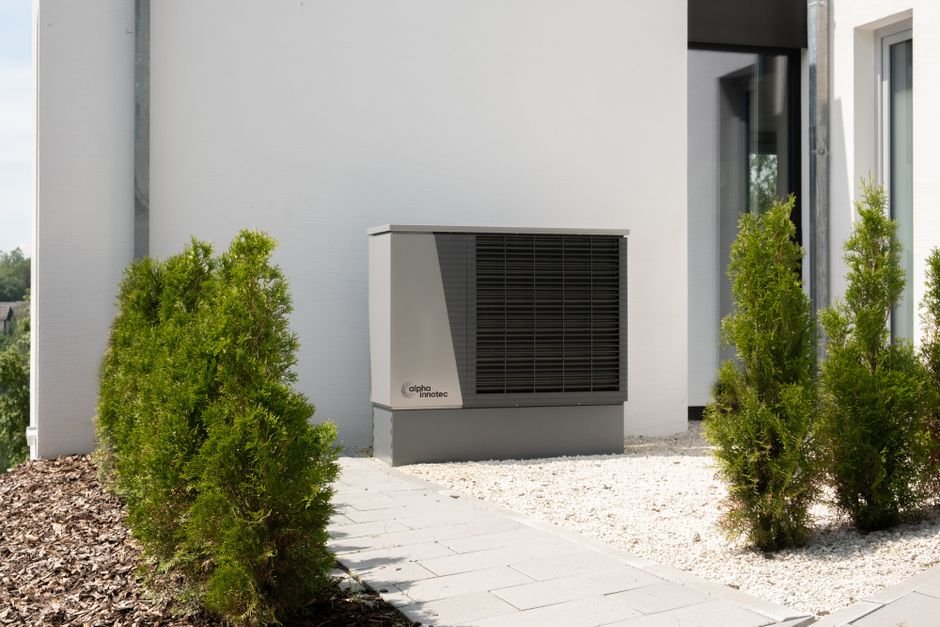
Are Heat Pumps Good for Southern California? Here’s the Short Answer
Are heat pumps good for Southern California homes? Yes — for most homeowners, they are an excellent fit. Southern California’s mild winters and long, hot summers create nearly ideal conditions for heat pump performance. You get efficient heating and cooling from one system, lower energy bills, and access to generous rebates that make the switch more affordable than ever.
Here’s why heat pumps work so well in SoCal:
- Mild winters mean heat pumps rarely struggle — they operate at peak efficiency when outdoor temps stay above freezing, which is almost always the case along the coast and in the valleys
- Hot summers are where heat pumps shine, delivering up to 24% more cooling output than a standard air conditioner for the same energy input
- Year-round dual function replaces both your furnace and AC with a single system
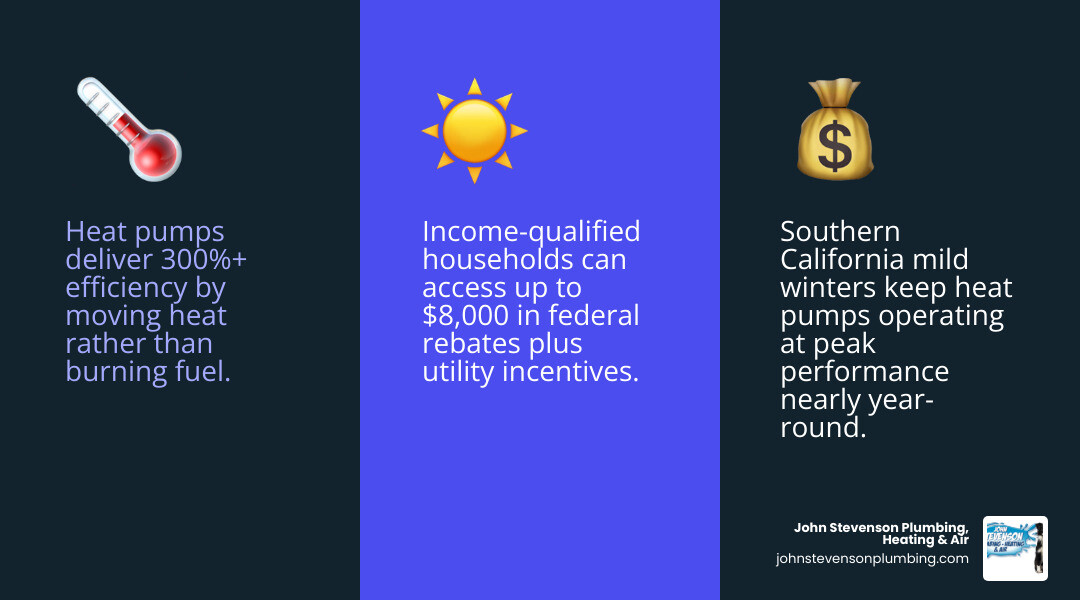
- 300%+ efficiency compared to 80–96% for a gas furnace — heat pumps move heat rather than burn fuel to create it
- Strong incentives — income-qualified households can access up to $8,000 in federal rebates, plus utility programs through LADWP, SCE, and SDG&E
The one exception worth noting: homes in high-desert areas like Apple Valley or mountain communities can see cold snaps that challenge standard heat pump models — though cold-climate units handle even those conditions well.
If you’re in Carlsbad or anywhere in San Diego County or Orange County, a heat pump is almost certainly worth a serious look.
Are heat pumps good for southern california vocabulary:
Are Heat Pumps Good for Southern California Climates?
To understand why heat pumps are such a great fit for our region, it helps to look at the unique Mediterranean climate of Southern California. We enjoy mild winters where temperatures rarely drop to freezing, paired with warm, dry summers that are increasingly interrupted by intense heat waves.
Historically, many homes in coastal areas like Carlsbad, Encinitas, and Solana Beach did not even have central air conditioning. In fact, statistics show that nearly 1 in 7 households in Southern California Edison’s service territory and nearly 1 in 5 in LADWP territory lack any cooling system at all. However, as local temperatures continue to rise, having a reliable cooling system has transitioned from a luxury to an absolute necessity.
Heat pumps are uniquely suited to solve this problem. Because they operate by transferring heat rather than generating it through combustion, they are incredibly efficient. In the winter, they extract ambient heat from the outdoor air and move it indoors. In the summer, the process reverses: they extract heat from inside your home and pump it outside, acting exactly like a high-efficiency air conditioner.
Because our winters are so mild, a heat pump in Southern California rarely has to work hard to find heat in the outdoor air. This allows the system to operate at its absolute highest efficiency year-round. If you want to dive deeper into how this technology benefits local properties, check out The Definitive Guide to Heat Pump Benefits for Homeowners and discover Why Your San Diego Home Is Begging for a Heat Pump Upgrade.
Why are heat pumps good for Southern California coastal areas?
If you live along the coast in places like Del Mar, La Jolla, Oceanside, or Newport Beach, you are very familiar with the “June Gloom” and the thick marine layer that rolls in off the Pacific. This brings high humidity levels that can make your home feel damp and sticky, even when outdoor temperatures are relatively mild.
Modern heat pumps equipped with variable-speed inverter compressors are absolute champions at managing coastal humidity. Unlike traditional air conditioners that turn fully on and fully off in loud, abrupt cycles, a variable-speed heat pump can run continuously at a lower speed. This long, steady run cycle allows the system to consistently pull moisture out of your indoor air, providing superior dehumidification and keeping your home dry and comfortable.
Furthermore, coastal environments present unique challenges like salt-air corrosion, which can quickly degrade standard outdoor HVAC units. When installing a system near the ocean, it is vital to select units with specialized corrosion-resistant coatings (such as epoxy or tin-coated coils) and to stay on top of regular maintenance to wash away salt deposits. To keep your coastal system running perfectly, explore our specialized guide on San Diego HVAC Services Heat Pump Maintenance.
Why are heat pumps good for Southern California inland valleys?
As you move inland to communities like Escondido, Poway, Irvine, Mission Viejo, and Yorba Linda, the climate changes dramatically. The cooling breeze of the ocean fades, and summer temperatures regularly climb into the triple digits.
In these inland valleys, the cooling capacity of your HVAC system is put to the ultimate test. Fortunately, premium heat pumps are engineered to handle extreme heat. In fact, a top-tier air-source heat pump can deliver up to 24% more cooling output than a standard air conditioner for the exact same amount of electrical energy input.
Inland homeowners are also uniquely positioned to maximize their investment by pairing a heat pump with rooftop solar panels. Because heat pumps run entirely on electricity, you can use your solar power to run your heating and cooling systems. By practicing “load shifting”—cooling your home slightly extra during peak solar production hours and storing that thermal energy—you can reduce your reliance on the grid and bring your monthly utility bills close to zero. Learn more about how inland communities are making this transition by reading Why Irvine Is Warming Up to Professional Heat Pump Installation.
Heat Pumps vs. Traditional HVAC Systems
When comparing a heat pump to a traditional HVAC setup—which typically consists of a gas furnace for heating and a separate central air conditioner for cooling—the differences in efficiency and environmental impact are staggering.
Traditional gas furnaces operate at an efficiency rating of 80% to 96% AFUE (Annual Fuel Utilization Efficiency). This means that for every dollar you spend on natural gas, between 4 and 20 cents is completely wasted and vented out of your chimney.
In contrast, heat pumps can easily reach efficiencies of 300% to 400% or more. This means they produce three to four times more heat energy than the electrical energy they consume. They achieve this seemingly impossible math because they are simply relocating existing heat rather than burning fuel to create it. To learn more about this simple scientific process, check out The Simple Way a Heat Pump Heats and Cools Your Home.
Here is a quick look at how these systems compare across key performance metrics:
| Feature / Metric | Modern Heat Pump System | Traditional Gas Furnace + AC |
|---|---|---|
| Heating Efficiency | 300% to 400%+ (COP of 3.0 to 4.0+) | 80% to 96% AFUE |
| Cooling Efficiency | High (Typically 15 to 24+ SEER2) | Standard (Typically 13 to 18 SEER2) |
| Energy Source | 100% Electricity (Solar-compatible) | Natural Gas (Heating) & Electricity (Cooling) |
| Carbon Footprint | Extremely low; zero direct emissions | Higher; relies on fossil fuel combustion |
| Safety Risks | None (No risk of carbon monoxide leaks) | Low to moderate (Requires gas line & venting) |
| System Components | One outdoor unit, one indoor air handler | Separate outdoor AC condenser & indoor furnace |
By eliminating natural gas combustion from your home, you also completely eliminate the risk of carbon monoxide leaks, creating a safer indoor living environment for your family. Additionally, as California moves aggressively toward carbon reduction goals, swapping a gas-burning furnace for an electric heat pump significantly shrinks your household’s carbon footprint.
Ducted vs. Ductless Heat Pumps for SoCal Homes
One of the greatest advantages of heat pump technology is its installation flexibility. Depending on the design, age, and existing infrastructure of your Southern California home, you can choose between a ducted central system or a ductless mini-split system.
Ducted Heat Pumps
If your home in Carlsbad, San Marcos, or Rancho Santa Margarita already has a central ductwork system in good condition, a ducted heat pump is often the most straightforward upgrade. We simply replace your old gas furnace and central AC condenser with a high-efficiency heat pump outdoor unit and an indoor air handler that connects directly to your existing ducts.
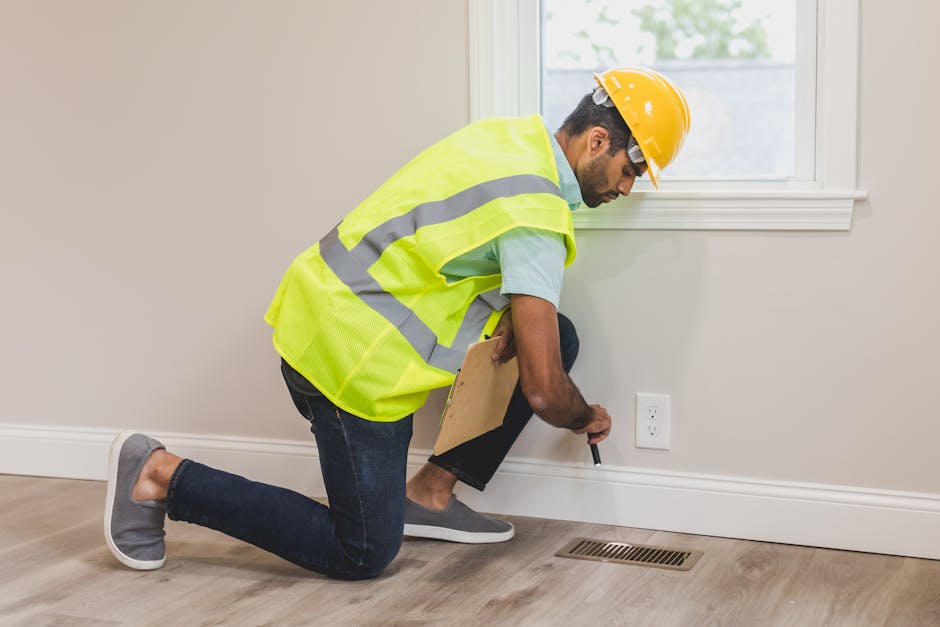
This allows you to maintain clean, hidden heating and cooling throughout your entire home without altering your interior design. However, before proceeding with this option, it is critical to have our technicians perform a thorough duct inspection. Older ducts often suffer from high static pressure, poor sizing, or leaks. Sealing and insulating your ducts ensures your new heat pump can operate at its peak rated efficiency.
Ductless Mini-Split Heat Pumps
For older homes, historic properties, or home additions in areas like Leucadia, Carmel Valley, or historic parts of San Diego, installing bulky ductwork is often highly invasive and incredibly expensive. In these scenarios, ductless mini-split heat pumps are the perfect solution.
A ductless system consists of a single outdoor condenser connected to one or more sleek, wall-mounted or ceiling-recessed indoor air handlers via small refrigerant lines. This setup offers incredible benefits:
- Zoned Comfort: Each indoor unit has its own thermostat, allowing you to heat or cool individual rooms only when they are in use.
- Extreme Efficiency: By eliminating the energy losses associated with leaky ductwork (which can account for 20% to 30% of a typical system’s energy waste), mini-splits can achieve ultra-high ratings of up to 30 SEER2.
- Architectural Preservation: No need to tear open plaster walls or lower beautiful historic ceilings to run ductwork.
To explore which system design is right for your unique floor plan, visit our San Diego HVAC Services Heat Pump Installation page.
California Rebates, Incentives, and Future-Proofing
There has never been a better time to upgrade to a heat pump in Southern California. The state of California is pushing hard for home electrification, aiming to install 6 million heat pumps statewide by 2030. To support this goal, California will ban the sale of new residential gas furnaces and water heaters starting in 2030.
By upgrading in 2026, you are not only future-proofing your home before equipment shortages or regulatory deadlines hit, but you can also take advantage of historically high financial incentives. Depending on your household income and your local utility provider, you can stack multiple rebates to dramatically lower your net installation costs:
- Federal HEEHRA Rebates: Under the High-Efficiency Electric Home Rebate Act, income-qualified single-family households (under 80% of the area median income) can receive up to $8,000 in direct rebates for heat pump HVAC installations. Households making between 80% and 150% of the median income can qualify for up to $4,000.
- TECH Clean California: This statewide initiative provides substantial incentives directly through participating licensed contractors to make heat pump installations more accessible.
- Utility Company Rebates: Local utilities like San Diego Gas & Electric (SDG&E) offer generous incentives for homeowners transitioning away from fossil fuels.
Navigating these programs can feel overwhelming, but we are here to handle the heavy lifting for you. We make sure all qualifying incentives are identified and applied properly to maximize your savings.
To learn more about how you can take advantage of these programs, explore these helpful guides:
- How the IRA Makes Your California Home Efficiency Upgrade Much Cheaper
- Navigating the California Energy Rebate Application Process Like a Pro
- Don’t Sweat the Cost with These California HVAC and Water Heater Rebates
- San Diego Homeowners Can Save Big on Heat Pumps with SDG&E Incentives
Frequently Asked Questions About Southern California Heat Pumps
Do heat pumps work during rare Southern California cold snaps?
Yes, absolutely. While Southern California is famous for its sunshine, inland areas like Ramona, Escondido, and Fallbrook can experience chilly winter nights that dip into the 30s or low 40s.
Modern heat pumps utilize advanced inverter-driven compressors that can easily extract heat from outdoor air even when temperatures drop well below freezing. During rare frosty mornings, your heat pump may occasionally run a brief “defrost cycle” to melt any light frost accumulation on the outdoor coils. This is completely normal and only lasts a few minutes. For reliable winter performance, you can trust our team to install and service your system properly—learn more at Heating Services Heat Pumps.
Can I use my existing ductwork for a heat pump system?
In many cases, yes. If your home’s existing ductwork is properly sized, insulated, and in good structural condition, it can easily be paired with a new ducted heat pump system.
However, heat pumps typically require slightly higher airflow than older gas furnaces. Our certified technicians will perform a comprehensive static pressure and duct leakage test during your home consultation. If we find significant leaks, we may recommend duct sealing or minor modifications to ensure your new system operates quietly and efficiently. Check out our localized resources for Heating Air Conditioning Mission Viejo CA Heat Pumps to see how we assess ducted systems in your neighborhood.
How long do heat pumps typically last in coastal environments?
When properly installed and regularly maintained, a standard air-source heat pump will typically last between 10 and 15 years, while a high-quality ductless mini-split system can often reach 15 to 20 years.
In coastal communities like Carlsbad, Oceanside, and Del Mar, salt air and moisture can accelerate corrosion on the outdoor condenser’s delicate aluminum fins. To maximize your system’s lifespan, we highly recommend choosing units with marine-grade protective coatings and scheduling professional maintenance twice a year. Regular cleanings wash away corrosive salt deposits and keep your system running at peak efficiency.
Conclusion
If you are wondering, are heat pumps good for Southern California, the answer is a resounding yes. From Carlsbad to Newport Beach, and Escondido to Mission Viejo, our Mediterranean climate is practically tailor-made for this highly efficient, dual-action technology. Whether you want to lower your monthly utility bills, pair your HVAC with rooftop solar, improve your indoor air quality, or future-proof your home ahead of California’s 2030 gas appliance bans, a heat pump is a smart, forward-thinking investment.
At John Stevenson Plumbing, Heating & Air Conditioning, we are proud to serve Carlsbad, San Diego County, and Orange County with premier HVAC solutions. Every installation we perform is backed by our signature 5-Star Service Guarantee, which includes thorough upfront diagnostics, transparent pricing, certified technicians, and a 24-hour satisfaction check-in to ensure you are completely happy with your new system.
Ready to make the switch to cleaner, more efficient home comfort? Contact us today to schedule your professional home consultation, or learn more about our local services by visiting our Heating Air Conditioning Lake Forest CA Heat Pumps page. Let us help you upgrade your home comfort today!