
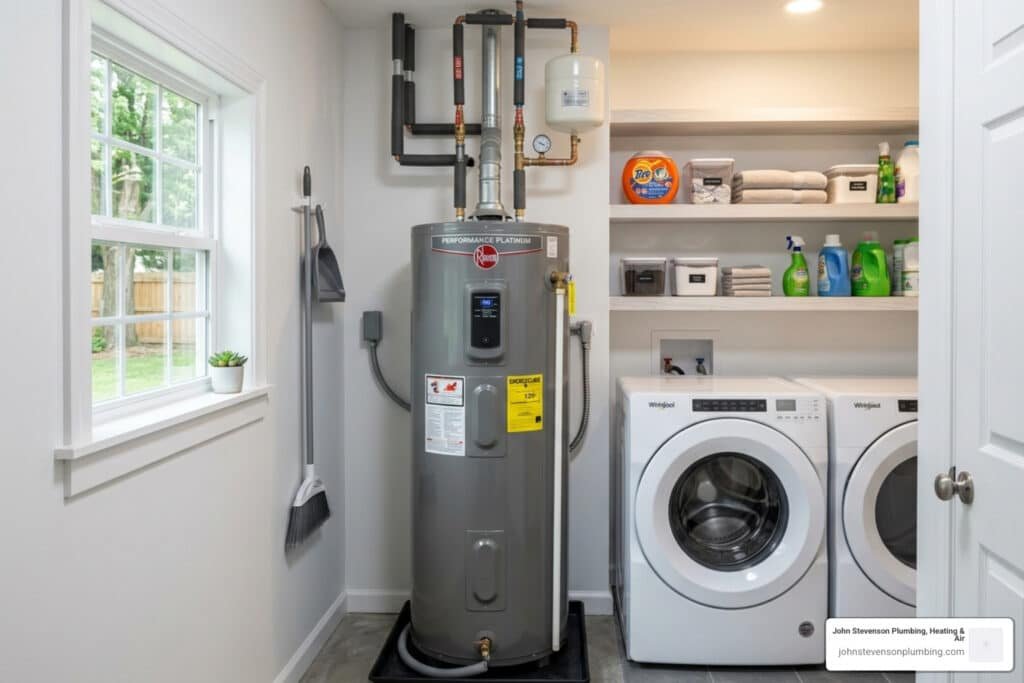
Why Knowing How to Choose the Right Water Heater Saves You Money and Headaches
Knowing how to choose the right water heater is one of the most important home decisions you can make — and most homeowners in Carlsbad, CA only think about it when cold water starts coming out of the tap. Water heating is the second-largest energy expense in most homes, accounting for nearly 20% of monthly energy use. Pick the wrong unit and you’re paying too much to run it, running out of hot water at the worst times, or replacing it again sooner than you should.
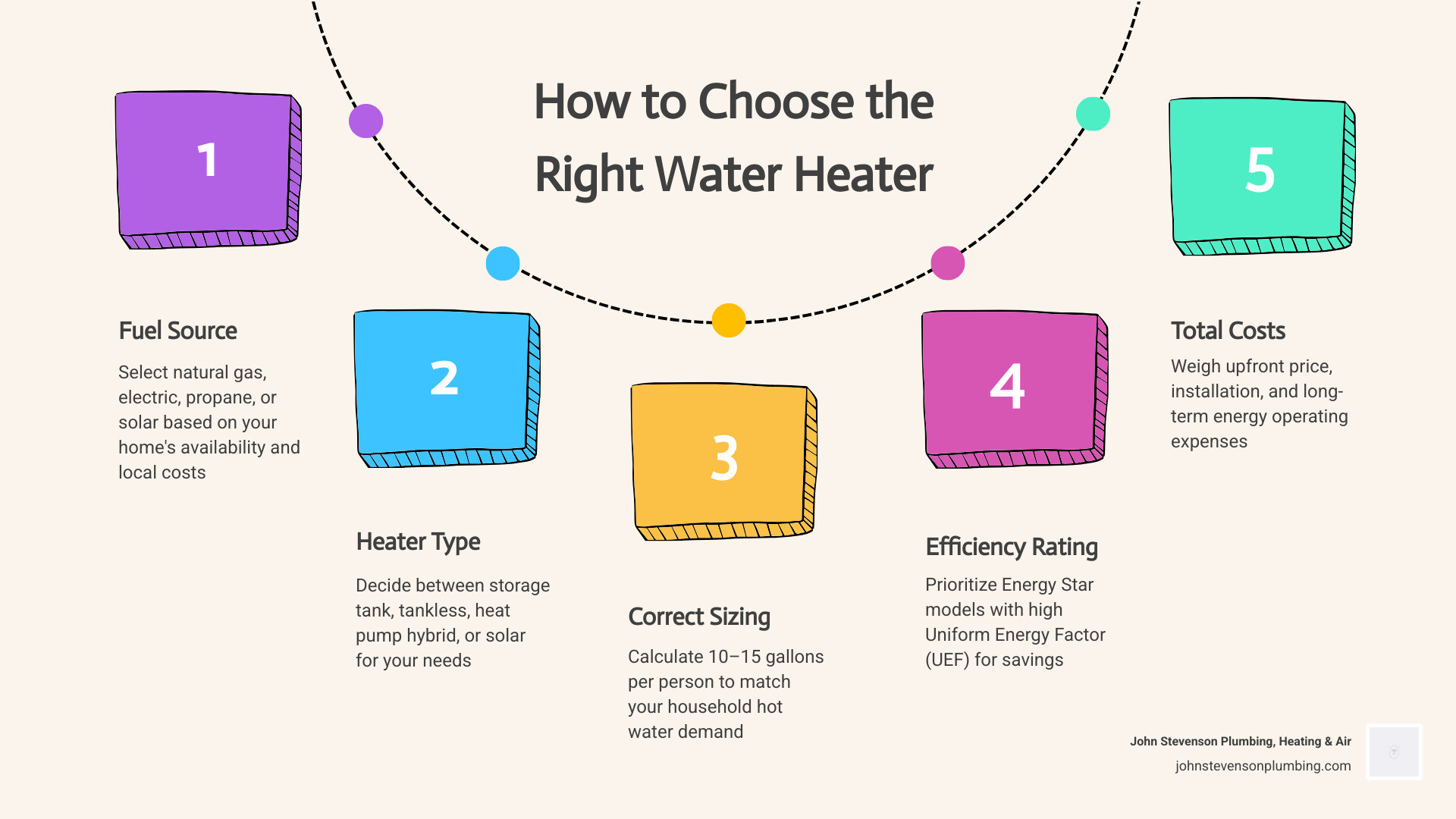
The good news? With a little guidance, the decision is straightforward. Here’s a quick overview of the key steps:
- Identify your fuel source — natural gas, electric, propane, or solar
- Choose your type — storage tank, tankless, heat pump (hybrid), or solar
- Size it correctly — plan for roughly 10–15 gallons per person in your household
- Check efficiency ratings — look for Energy Star certification and a high Uniform Energy Factor (UEF)
- Compare total costs — factor in upfront price, installation, and long-term operating costs
- Know when to replace — most water heaters last 10–20 years; don’t wait for a flood
The sections below break each of these steps down in plain language so you can make a confident, informed choice.
Comparing Water Heater Types and Fuel Sources
When we help our neighbors in San Diego and Orange County navigate how to choose the right water heater, the first fork in the road is deciding between a traditional tank and a modern tankless system. As of April 2026, technology has advanced significantly, offering more efficient ways to keep your showers warm without breaking the bank.
Storage Tank Models
These are the most common units you’ll see in homes across Carlsbad and Vista. Water Heaters Plumbing Services for storage tanks involve a large insulated cylinder that keeps a “ready reserve” of hot water—typically 20 to 80 gallons—at a set temperature.
- Pros: Lower upfront purchase price and reliable performance for large families who need a big “dump” of water all at once.
- Cons: They suffer from “standby heat loss,” meaning the unit turns on to reheat the water even when you aren’t using it.
Tankless Water Heaters
If you’re tired of the “first one in the shower gets the hot water” race, Tankless Water Heaters might be your best bet. These units heat water on demand as it flows through a heat exchanger.
- Pros: They provide a continuous supply of hot water, take up very little wall space, and can last 20 years or more—double the lifespan of many tank models.
- Cons: They require specific venting and sometimes gas line or electrical upgrades during installation.
Heat Pump (Hybrid) Technology
These are the “super-stars” of efficiency in Southern California. Instead of generating heat directly, a heat pump moves heat from the surrounding air into the water. In our warm climate, they are incredibly effective. A hybrid electric heat pump can be four times more efficient than a standard electric tank. For those in the coastal areas, San Diego Water Heater Services often recommend these to homeowners looking to slash their electricity bills.
Fuel Sources: Gas vs. Electric
Your choice of fuel often depends on what is already piped into your home.
- Natural Gas: Generally, gas water heaters cost about half as much to run as standard electric models. They also have a faster “recovery rate,” meaning they can heat a tank of cold water much quicker.
- Electric: While standard electric tanks can be more expensive to operate, they are often easier to install because they don’t require complex venting. However, plug-in heat pump models are changing the game, offering 5x the efficiency of gas tanks while plugging into a standard 120-volt outlet.
- Propane: Common in more rural parts of our service area like Fallbrook or Pauma Valley, propane offers a bigger BTU boost per dollar than electricity for tankless units.
- Solar: Utilizing the abundant Southern California sunshine, solar water heaters use collector panels on the roof. While they have the highest upfront cost, they offer the lowest long-term operating costs.
If you are unsure which fuel type is currently in your home or what would be best for a transition, our team providing Water Heater Services in Orange County can perform a thorough diagnostic of your current setup.
Sizing and Efficiency Considerations for Southern California Homes
Getting the size right is the difference between a relaxing morning and a shivering surprise. If the unit is too small, you’ll run out of hot water; if it’s too large, you’re paying to heat water you never use.
Sizing for Storage Tanks: The First-Hour Rating
For tank models, don’t just look at the gallon capacity. Look at the First-Hour Rating (FHR). This tells you how much hot water the heater can deliver during a busy hour (like when everyone is getting ready for work and the dishwasher is running).
| Household Size | Recommended Tank Capacity (Electric) | Recommended Tank Capacity (Gas) |
|---|---|---|
| 1–2 People | 30 Gallons | 30 Gallons |
| 2–3 People | 40 Gallons | 40 Gallons |
| 3–4 People | 50 Gallons | 40–50 Gallons |
| 5+ People | 80 Gallons | 50–75 Gallons |
When performing Water Heater Installation in San Diego, we typically suggest a 50-gallon gas unit for a family of five to ensure peak hour demand is met.
Sizing for Tankless: Gallons Per Minute (GPM)
Tankless units are sized by flow rate. A typical shower uses about 2 gallons per minute (GPM). If you want to run two showers and a washing machine (which uses about 2 GPM) at the same time, you need a unit that can handle at least 6 GPM. Most gas tankless units can provide up to 11 GPM, which is plenty for most homes in Lake Forest or Oceanside. If you’re looking for Water Heater Installation in Lake Forest, we can help calculate your home’s specific flow requirements.
Understanding Efficiency Ratings
When you are researching how to choose the right water heater, you will see the Uniform Energy Factor (UEF). The higher the UEF, the more efficient the heater.
- Energy Star Certification: Always look for this label. It ensures the unit meets strict efficiency guidelines set by the Department of Energy.
- Standby Heat Loss: This is a major factor for tank heaters. Modern units have better insulation (often making them slightly wider than older models), which helps keep the water hot longer.
For residents in specialized communities, such as those seeking Water Heater Installation in Torrey Pines, CA, we focus on high-efficiency models that comply with the latest California energy standards. Our Tankless Water Heater Services in Orange County are specifically designed to help homeowners maximize these efficiency gains.
When to Replace Your Unit and Maintenance Essentials
Most water heaters will last between 10 and 20 years. However, if you live in an area with hard water—common in parts of San Diego County—that lifespan can be cut short by sediment buildup.
Signs of Failure
Don’t wait for a flood to act. Contact us for Water Heater Repair in San Diego if you notice:
- Rusty Water: This suggests the inside of your tank is corroding.
- Strange Noises: Popping or rumbling sounds are caused by sediment “boiling” at the bottom of the tank.
- Leaking at the Base: This is often a “death knell” for a tank heater and requires immediate attention.
Maintenance Checklist for Longevity
To get the most out of your investment, we recommend a few simple tasks:
- Annual Tank Flushing: This removes sediment that settles at the bottom, which can otherwise cause the tank to overheat and fail. If you need Water Heater Repair in Oceanside, CA, we often find that a simple flush can restore efficiency.
- Anode Rod Inspection: This “sacrificial” rod hangs inside the tank and attracts corrosive elements so the tank doesn’t rust. It should be checked every 2–3 years.
- T&P Valve Testing: The Temperature and Pressure relief valve is a safety feature. We check these regularly during Water Heater Repair in Lake Forest to ensure your tank doesn’t become over-pressurized.
- Descaling Tankless Coils: Tankless units don’t have tanks to flush, but they do need to be descaled annually to remove mineral buildup from the heating elements.
Whether you’re in the North County area and need Water Heater Repair in Rancho Bernardo or further east seeking Water Heater Repair in Ramona, CA, regular maintenance is the only way to ensure your unit reaches that 20-year milestone.
Frequently Asked Questions About How to Choose the Right Water Heater
How do I know how to choose the right water heater size for my family?
We generally recommend a gallon-per-person ratio of 10 to 15 gallons. However, you also have to consider your “peak demand.” If everyone in your house showers between 7:00 AM and 8:00 AM, you’ll need a higher First-Hour Rating or a tankless unit with a high GPM. We can help you count your fixtures and calculate the recovery rate needed for your specific lifestyle. If you’re in the South County area, our Water Heater Services in Mission Viejo can provide a custom sizing assessment.
Is a tankless unit the best option when learning how to choose the right water heater?
It depends on your priorities. If you value space-saving design and never want to run out of hot water again, tankless is excellent. They are very popular for Tankless Water Heaters in Lake Forest because they can be mounted on exterior walls, freeing up closet space inside. However, if you have a very large family and a tight budget, a high-capacity storage tank might be more practical.
What advanced features should I look for in a new water heater?
Modern technology has brought some incredible features to the market:
- Wi-Fi Connectivity: Allows you to track energy usage and set “vacation mode” from your phone.
- Leak Detection Sensors: These can automatically shut off the water supply if a leak is detected, preventing thousands of dollars in water damage.
- Digital Temperature Control: Provides precise adjustments to prevent scalding (we recommend 120°F).
- Mixing Valves: These allow you to store water at a higher temperature in the tank to kill bacteria, then mix it with cold water before it hits your tap, effectively increasing your hot water capacity.
Conclusion
At John Stevenson Plumbing, Heating & Air Conditioning, we know that how to choose the right water heater is a decision that affects your comfort every single day. Since 1990, we’ve been helping homeowners in Carlsbad and throughout Southern California find the perfect balance between upfront value and long-term efficiency.
Our 5-Star Service Guarantee means you get thorough diagnostics, upfront pricing, and a 24-hour satisfaction check-in to ensure your new system is performing perfectly. Our certified technicians are experts in both traditional and tankless technology, ensuring your installation is safe, up to code, and optimized for your home’s specific needs.
Ready to upgrade your home’s comfort? Whether you need a quick repair or a brand-new installation, we are here to help. Explore our Water Heater Services in Orange County or contact us today to schedule your consultation. Let us help you keep the hot water flowing for years to come!