
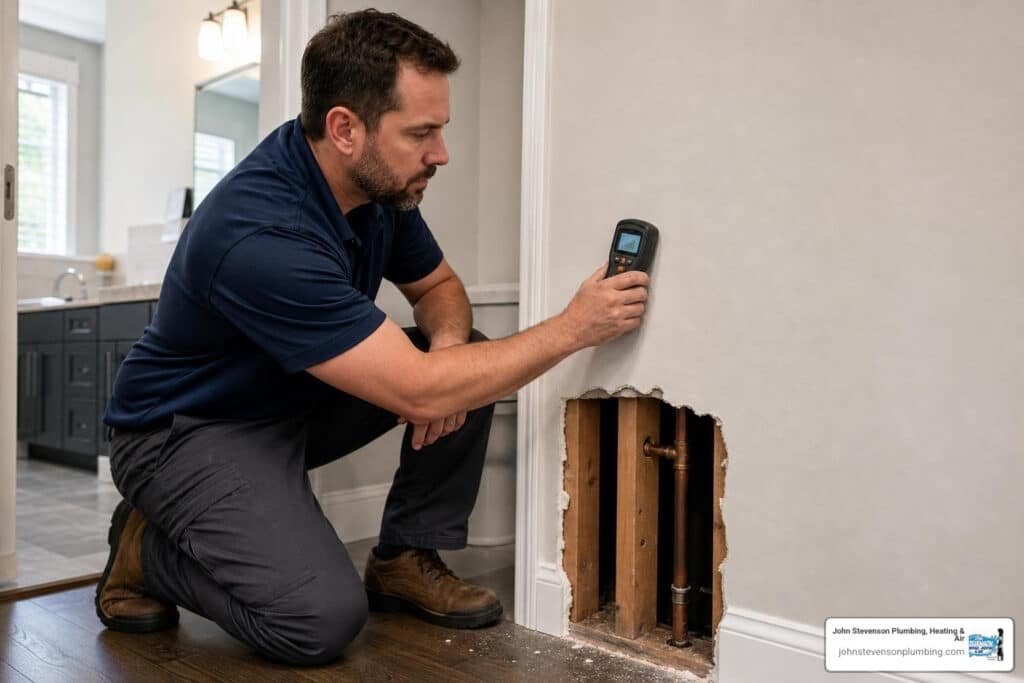
Why Knowing How to Detect a Water Leak Behind Walls Can Save Your Home
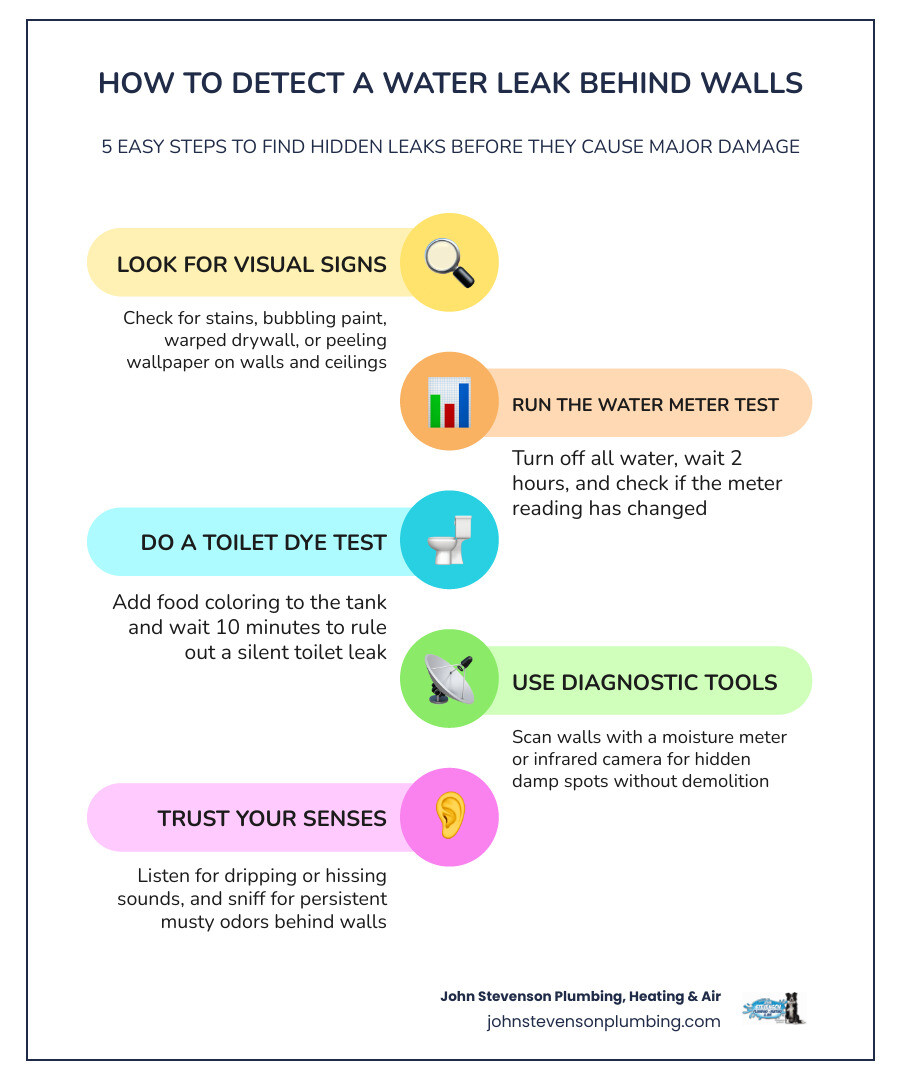
Knowing how to detect a water leak behind walls could be the difference between a simple plumbing fix and a costly renovation. Here is a quick overview of the most reliable methods:
- Look for visual signs – stains, bubbling paint, warped drywall, or peeling wallpaper on your walls and ceilings
- Run the water meter test – turn off all water, wait 2 hours, and check if your meter reading has changed
- Do a toilet dye test – add food coloring to the tank and wait 10 minutes to rule out a silent toilet leak
- Use a moisture meter or infrared camera – scan walls for hidden damp spots or cold zones without cutting into drywall
- Trust your senses – listen for faint dripping or hissing sounds, and sniff for persistent musty odors
Hidden leaks are sneaky. A slow drip behind your drywall can go unnoticed for months while silently soaking into wood framing, feeding mold, and driving up your water bill. According to EPA guidelines, a family of four typically uses no more than 12,000 gallons of water during cold months — so if your usage is running significantly higher than that, a hidden leak may already be at work. Worse, mold can begin growing within just 24 to 48 hours of moisture exposure, meaning a small, ignored leak can quickly become a serious health and structural problem.
For Carlsbad homeowners especially, the combination of coastal humidity and older plumbing systems can make wall leaks both more common and harder to spot before real damage sets in.
I’m John Stevenson, and in this guide my team walks you through five practical steps to find a hidden wall leak before it finds you.
How to detect a water leak behind walls glossary:
- how leak detection technology works
- how plumbers find hidden water leaks
- signs of a hidden water leak in your home
1. Spot the Warning Signs of a Hidden Water Leak in Your Home
Because plumbing pipes are tucked away out of sight, they often rely on physical clues to tell you something is wrong. If you aren’t actively looking, a slow drip can quietly saturate your structural framing for months. Understanding the physical indicators of moisture buildup can save you thousands of dollars in restoration.
When water escapes from a pipe inside a wall, the surrounding materials act like a sponge. Drywall, wood, and wallpaper will slowly absorb the moisture, resulting in visible and textural changes. Keep an eye out for these telltale signs:
- Peeling Paint and Bubbling Wallpaper: Water weakens the adhesive bond between paint or wallpaper and the drywall beneath it. If you notice paint cracking, flaking, or ballooning outward, moisture is likely trapped directly behind it.
- Discoloration and Stains: Water stains typically appear as light brown, yellow, or dark gray patches on your walls or ceilings. These stains often expand over time as the leak continues.
- Warped Baseboards and Trim: Wooden baseboards and crown molding will warp, cup, or buckle when exposed to persistent dampness.
- Damp Drywall: If a wall feels soft, spongy, or physically cold to the touch, it has already absorbed a significant amount of water.
- Musty Odors: A persistent, earthy, or damp smell in a specific room—even when everything looks dry on the surface—is a strong indicator that mold is actively growing inside the wall cavity.
To protect your home from these hidden hazards, it helps to understand what these visual changes mean. You can read more about identifying these early alerts in our guide on how to Don’t Ignore These Warning Signs Hidden Water Damage 101.
Distinguishing a Plumbing Leak from Roof or Foundation Issues
Not every wet spot on a wall points to a broken water pipe. External factors can also allow water to migrate into your living space. To avoid calling the wrong professional, you need to determine where the water is coming from.
- Rainwater Intrusion vs. Plumbing Leaks: If you hear dripping sounds or notice damp drywall only during and immediately after a rainstorm, you are likely dealing with rainwater intrusion. Clogged downspouts, damaged roof shingles, or failing window seals can force rainwater down the inside of your walls.
- Wet Attic Insulation: Check your attic. If the insulation directly beneath your roof deck is damp or if you see water stains on the roof rafters, the issue is likely a roof leak rather than a pressurized water line.
- Foundation Cracks: If dampness is localized near the bottom of your basement or ground-floor walls where they meet the concrete floor, groundwater may be seeping through foundation cracks. Southern California homes, particularly in coastal areas like Carlsbad, are subject to shifting soil and coastal humidity, which can stress concrete foundations over time.
- Plumbing Leak Signs: Pressurized plumbing leaks are constant. They do not stop when the rain ends. If your water stains continue to grow during dry weather, or if you hear a continuous hissing or trickling sound inside the wall when no one is using water, a plumbing pipe is the culprit.
Regular home maintenance is your best defense against both internal and external water intrusion. For practical advice on seasonal home maintenance, check out our Stop the Drip with These Spring Plumbing Inspection Tips.
2. Use Your Water Meter to Confirm a Hidden Leak
If you suspect a leak but cannot find a wet spot, your municipal water meter is the single most reliable diagnostic tool at your disposal. It acts as a watchful guardian over your home’s entire plumbing system, registering even the smallest amount of water movement.
An unexplained water bill spike is often the first clue that water is escaping somewhere in your home. As noted, a typical family of four uses no more than 12,000 gallons of water per month during the cooler seasons. If your usage has jumped significantly past this average without any change in your daily habits, you have an active leak. Even a slow drip can waste dozens of gallons of water a day, while a larger hidden line break can waste hundreds of gallons over a short period.
Before you start tearing into your drywall, you can easily use the water meter to confirm whether water is actively escaping from your pipes. Learn more about the initial steps of this process in our resource on How to Find Hidden Water Leaks the Right Way.
How to Detect a Water Leak Behind Walls Using the Meter Test
Performing a water meter test is straightforward and requires no specialized plumbing tools. Follow these steps to verify a leak:
- Turn Off All Water Fixtures: Walk through your house and ensure all faucets, showers, washing machines, and dishwashers are completely turned off. Make sure no one uses any water during the test.
- Locate Your Water Meter: In Southern California communities like Carlsbad, Oceanside, and Lake Forest, your water meter is typically located near the street or sidewalk boundary line, housed inside a concrete box with a heavy plastic or metal lid.
- Check the Leak Indicator: Open the meter cover. Many modern digital and analog meters feature a dedicated leak indicator dial. This is often a small, brightly colored triangle, star, or gear wheel that spins rapidly when even a tiny amount of water passes through the meter. If this dial is spinning while all indoor water is shut off, you have a leak.
- Perform the 2-Hour Wait Period: If your meter does not have a mechanical leak indicator, write down the exact numbers on the odometer display. Leave the main shut-off valve open, but do not use any water for at least two hours.
- Recheck the Reading: After two hours, look at the meter reading again. If the numbers have changed, water is escaping somewhere within your plumbing system.
3. Rule Out Silent Toilet Leaks Before Tearing Into Drywall
Before you assume a mysterious water loss is located behind your drywall, you must rule out the most common culprit in residential plumbing: a silently leaking toilet.
Toilets can waste massive amounts of water without ever overflowing or making a sound. A worn-out toilet flapper or a misaligned fill valve can allow hundreds of gallons of water to slip quietly from the tank into the bowl and down the drain every single day. If your water meter test indicated a leak, testing your toilets first can save you from performing unnecessary wall inspections.
To perform a toilet dye test, follow these simple steps:
- Remove the Tank Lid: Carefully lift the ceramic lid off your toilet tank and set it aside.
- Add Food Coloring: Drop 5 to 10 drops of dark food coloring (blue, red, or green work best) or a dedicated plumbing dye tablet directly into the water inside the toilet tank. Do not flush the toilet.
- Wait and Observe: Keep everyone away from the toilet and wait about 10 to 15 minutes.
- Inspect the Bowl: Look inside the toilet bowl. If the colored water from the tank has seeped down into the bowl without you flushing, your flapper valve is failing to seal properly.
Another common toilet issue that can be mistaken for an in-wall pipe leak is a failing wax ring. The wax ring seals the connection between the base of your toilet and the waste pipe in your floor. When this seal degrades, water will seep out from beneath the toilet base every time you flush. This moisture will quickly travel along the subfloor, often presenting as wet floorboards or water stains on the ceiling of the room directly below the bathroom.
4. How to Detect a Water Leak Behind Walls Using DIY Diagnostic Tools
If your water meter test confirms a leak and your toilets check out fine, it is time to focus on the walls. Fortunately, you do not have to rely entirely on guesswork or destructive demolition to find the source. Modern DIY diagnostic tools can help you narrow down the location.
Two of the most accessible tools for homeowners are moisture meters and infrared thermal cameras. These devices can identify moisture pockets and temperature changes behind your drywall without leaving a mark.
| Tool Type | How It Works | Ideal Use Case | Pros | Cons |
|---|---|---|---|---|
| Pinless Moisture Meter | Uses electromagnetic signals to scan up to 3/4 inch deep. | Scanning finished wood floors and delicate drywall without leaving holes. | Non-destructive, fast, covers wide areas quickly. | Can give false readings if metal studs or pipes are present. |
| Pin-Type Moisture Meter | Uses sharp metal pins to measure electrical resistance between two points. | Pinpointing the exact moisture percentage of drywall or subflooring. | Highly accurate, measures actual moisture depth. | Leaves tiny pinholes, can damage delicate surfaces. |
| Infrared Thermal Camera | Detects surface temperature differences caused by evaporative cooling. | Scanning entire walls or ceilings to find hidden cold zones. | Visualizes large areas instantly, highly non-invasive. | Expensive to purchase, requires basic training to interpret. |
How to Detect a Water Leak Behind Walls Without Demolition
Using a combination of non-invasive scanning tools allows you to find water accumulation before it ruins your drywall. When water leaks behind a wall, it naturally cools the surrounding drywall through a process called evaporative cooling. This temperature drop is invisible to the naked eye but stands out clearly on a thermal imaging camera.
When you scan a wall with an infrared camera, wet areas will appear as distinct blue or purple cold spots against the warmer yellow or red tones of dry drywall. Once you identify a suspected cold zone, you can use a pinless moisture meter to confirm whether that cold spot is actually damp drywall or simply an uninsulated wall cavity.
These advanced diagnostic methods are highly effective. To learn more about the science behind these tools, read our detailed guide explaining how leak detection technology works.
Pinpointing the Dampest Spot Before Cutting Drywall
If you plan to inspect the interior of the wall yourself, you should always pinpoint the dampest spot first to minimize the size of any hole you cut. Water rarely travels in a straight line; it often trickles along the outside of copper or PEX pipes, runs down wall studs, and pools in areas far from the actual leak source.
Once you have identified the general damp area using your moisture meter, take readings at several different spots on the wall. Mark the moisture levels lightly with a pencil. The spot with the highest moisture percentage is typically closest to the physical pipe leak.
If you decide to make an inspection hole:
- Shut Off the Power: Always turn off the electrical breaker to the outlets and switches in that specific wall before cutting.
- Use a Drywall Saw: Carefully score a small, 10-inch square using a utility knife and a drywall saw. Avoid cutting deep into the wall to prevent striking electrical wires or plumbing lines.
- Inspect with a Flashlight: Shine a flashlight through the inspection hole. Look for active dripping, mineral scale deposits, or green corrosion on copper pipes. In pre-1980 homes with older galvanized steel or cast iron pipes, look for rust or weeping joints where the metal has corroded from the inside out.
5. Know When to Call a Professional for Advanced Leak Detection
While DIY tools can help you confirm the presence of a leak, locating the exact source behind a wall or beneath a concrete slab often requires professional intervention. Pressurized water leaks can quickly cause structural wood rot, compromise the integrity of your home’s framing, and necessitate expensive mold remediation if left unaddressed.
Professional plumbers have access to commercial-grade acoustic listening devices that can hear the faint, high-frequency hissing of water escaping from a pipe under pressure. They can also perform pressure tests to isolate specific plumbing loops and pinpoint the exact pipe section that has failed.
In Southern California, slab leaks are a particularly common issue due to shifting soil conditions and hard water scale deposits. If you suspect a leak under your concrete foundation or deep within your sewer lines, our team can perform high-definition camera inspections to locate the issue without tearing up your flooring. You can learn more about this process in our guide covering Everything You Need to Know About Sewer Camera Inspections.
Frequently Asked Questions about Hidden Water Leaks
What are the risks of ignoring a hidden water leak?
Ignoring a hidden water leak can lead to severe structural failure as wooden studs rot and drywall loses its structural integrity. Additionally, water leaking near electrical outlets or wiring can cause tripped breakers, flickering lights, and serious electrical fire hazards. Over time, you may also face expensive mold remediation and find that your homeowners insurance claim is denied due to long-term neglect.
How quickly does mold grow after a wall leak?
Mold can begin growing within 24 to 48 hours of moisture exposure. Once mold spores colonize damp drywall and wood framing, they can spread rapidly throughout your home’s wall cavities, deteriorating building materials and releasing toxic spores into your indoor air.
Can a thermal camera see water behind drywall?
A thermal camera does not “see” water directly, but it detects the temperature differentials caused by evaporative cooling. Because wet drywall is colder than dry drywall, moisture accumulation shows up on a thermal scan as distinct blue and purple cold spots, providing a highly effective, non-invasive diagnostic tool.
Conclusion
Detecting a hidden water leak early is the best way to protect your home from structural damage, mold growth, and high water bills. By utilizing visual checks, performing a water meter test, and ruling out silent toilet leaks, you can stay ahead of plumbing issues before they turn into major disasters.
If you suspect a leak behind your walls but cannot pinpoint the source, the experienced team at John Stevenson Plumbing, Heating & Air is here to help. We serve Carlsbad, Lake Forest, Mission Viejo, and surrounding Southern California communities with our signature 5-Star Service Guarantee. This means you can expect thorough diagnostics, upfront pricing, certified technicians, and a 24-hour satisfaction check-in to ensure the job is done right.
Don’t wait for a slow drip to become an expensive restoration project. Schedule professional leak detection and repair services today with our certified local plumbers.