
How to Tell If Your Furnace Is Going Bad in Carlsbad
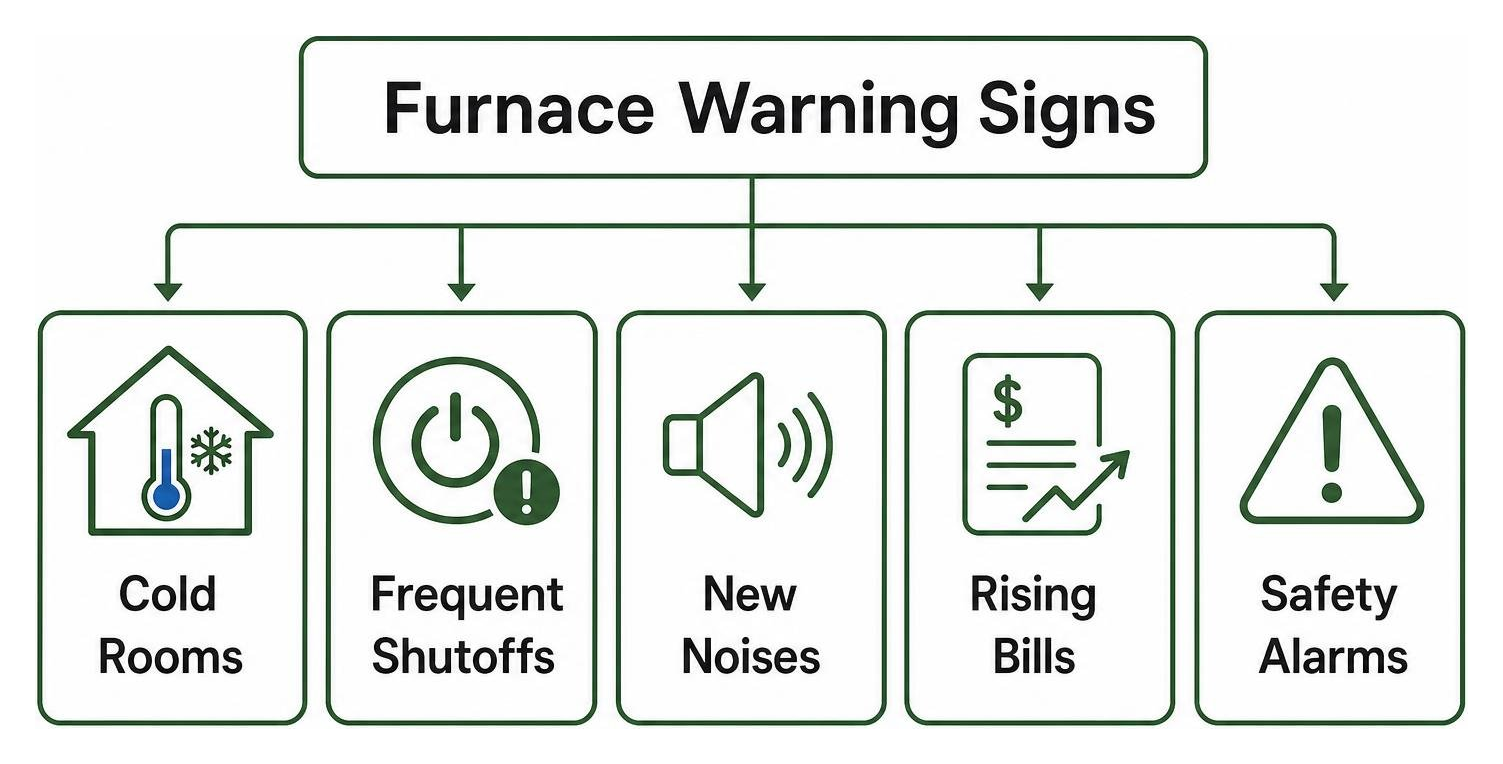
To tell if your furnace is going bad, watch for rooms that stay cold, frequent shutoffs, new banging or squealing sounds, and heating bills that rise without a clear reason. Check the air filter and make sure vents are open, but do not open the burner compartment. If a carbon monoxide alarm sounds or you smell gas, leave the home and call emergency services or your gas utility from outside. For other warning signs, arrange an inspection. If the furnace is aging or needs repeated repairs, furnace replacement in Carlsbad, CA, may be worth considering.
Explore heating services in Carlsbad or request furnace installation help.
I’m John Stevenson; if your furnace is showing these signs, ask us about furnace replacement.
How to Know When Your Furnace Is Going Bad: 8 Critical Warning Signs
As we head into cooler evenings in October 2026, homeowners throughout Southern California begin switching on their heating systems for the first time in months. A furnace rarely breaks down without giving a few subtle hints first. Knowing what to watch for can mean the difference between a simple scheduled tune-up and an unexpected mid-winter breakdown. When your system starts struggling to maintain indoor comfort, relying on comprehensive heating services helps protect both your family’s safety and your monthly budget.
A struggling furnace shows symptoms in two main ways: physical red flags you can see or smell, and operational quirks you can hear or feel. Let’s break down these critical warning signs into physical and operational issues so you can take action before your system stops working altogether.
Recognizing Physical Symptoms and How to Know When Your Furnace Is Going Bad
Physical warning signs are often directly tied to the combustion process, airflow balance, or the structural integrity of your heating equipment.
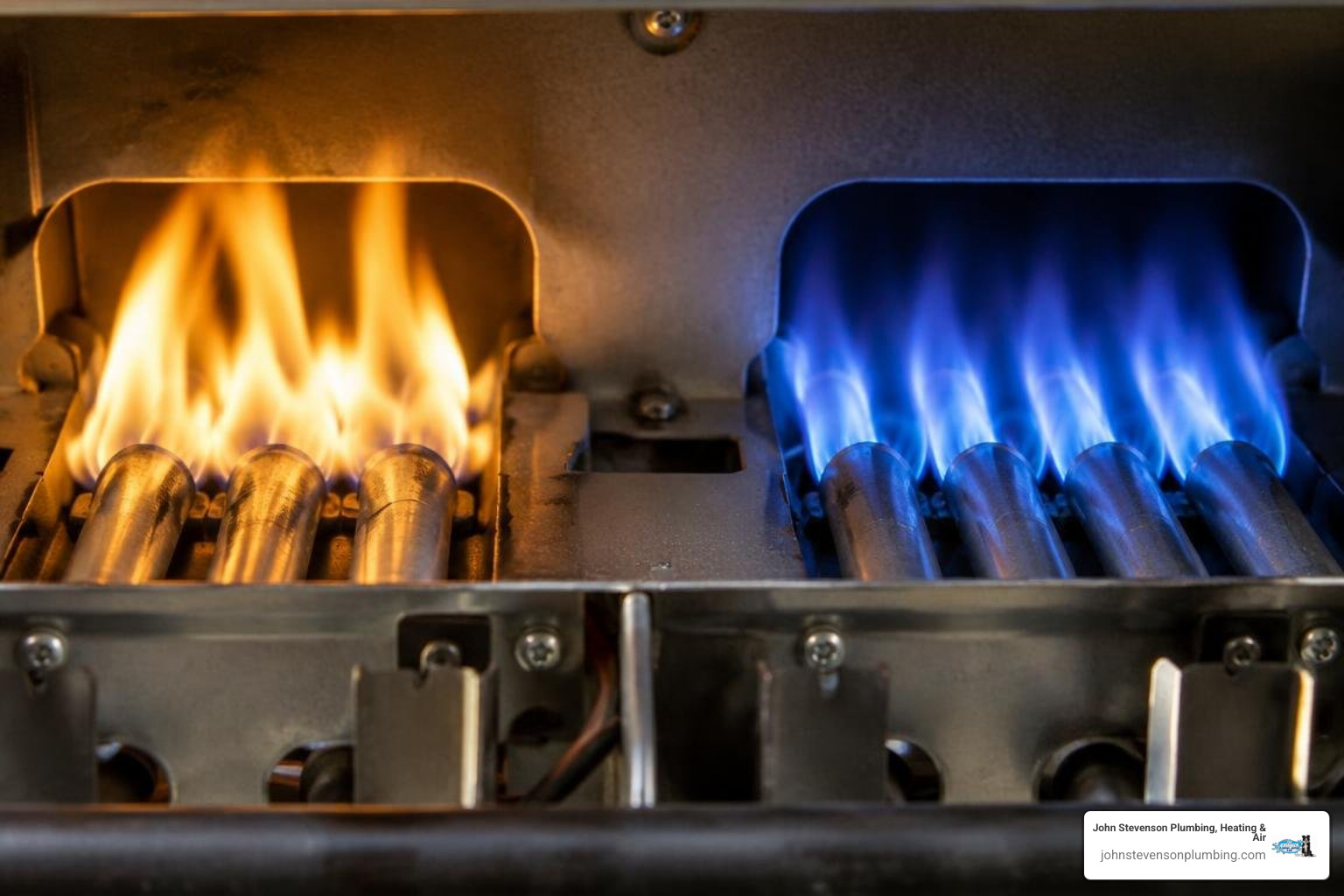
- A Yellow or Flickering Burner Flame: A healthy, properly burning natural gas furnace produces a crisp, steady blue flame. A yellow, orange, or wavering flame indicates incomplete combustion. This means the fuel is not burning cleanly, which can generate dangerous levels of carbon monoxide (CO) or point to a compromised burner assembly.
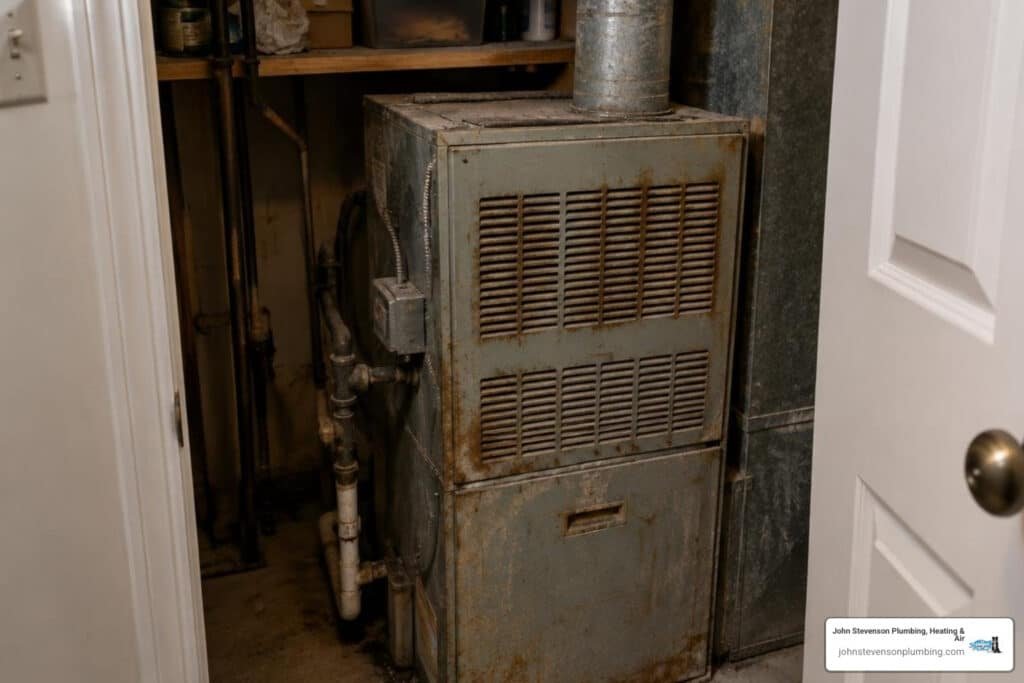
- Soot and Corrosion Around the Cabinet: If you notice black soot accumulating around the burner compartment, flue exhaust pipe, or register vents, your system is not venting exhaust gases properly. Similarly, visible rust flakes on the vent pipe or chassis indicate excess moisture buildup and potential metal fatigue.
- Moisture or Water Pooling Near the Unit: While modern high-efficiency condensing furnaces produce normal condensation that drains away, standing water around a standard furnace is a red flag. It often signals a blocked condensate drain line, a cracked collector box, or venting failures.
- Carbon Monoxide Detector Activation or Physical Discomfort: If your CO alarms sound, or family members experience unexplained flu-like symptoms, dizziness, or headaches that improve when leaving the house, evacuate immediately. A cracked heat exchanger can allow toxic exhaust gases to mix with the clean air circulating through your home. If you notice these physical hazards, scheduling San Diego heating repair right away is critical for your household’s safety.
Operational Red Flags: How to Know When Your Furnace Is Going Bad Rapidly
Operational symptoms generally involve how the heating system runs, cycles, and distributes warm air throughout your living spaces.
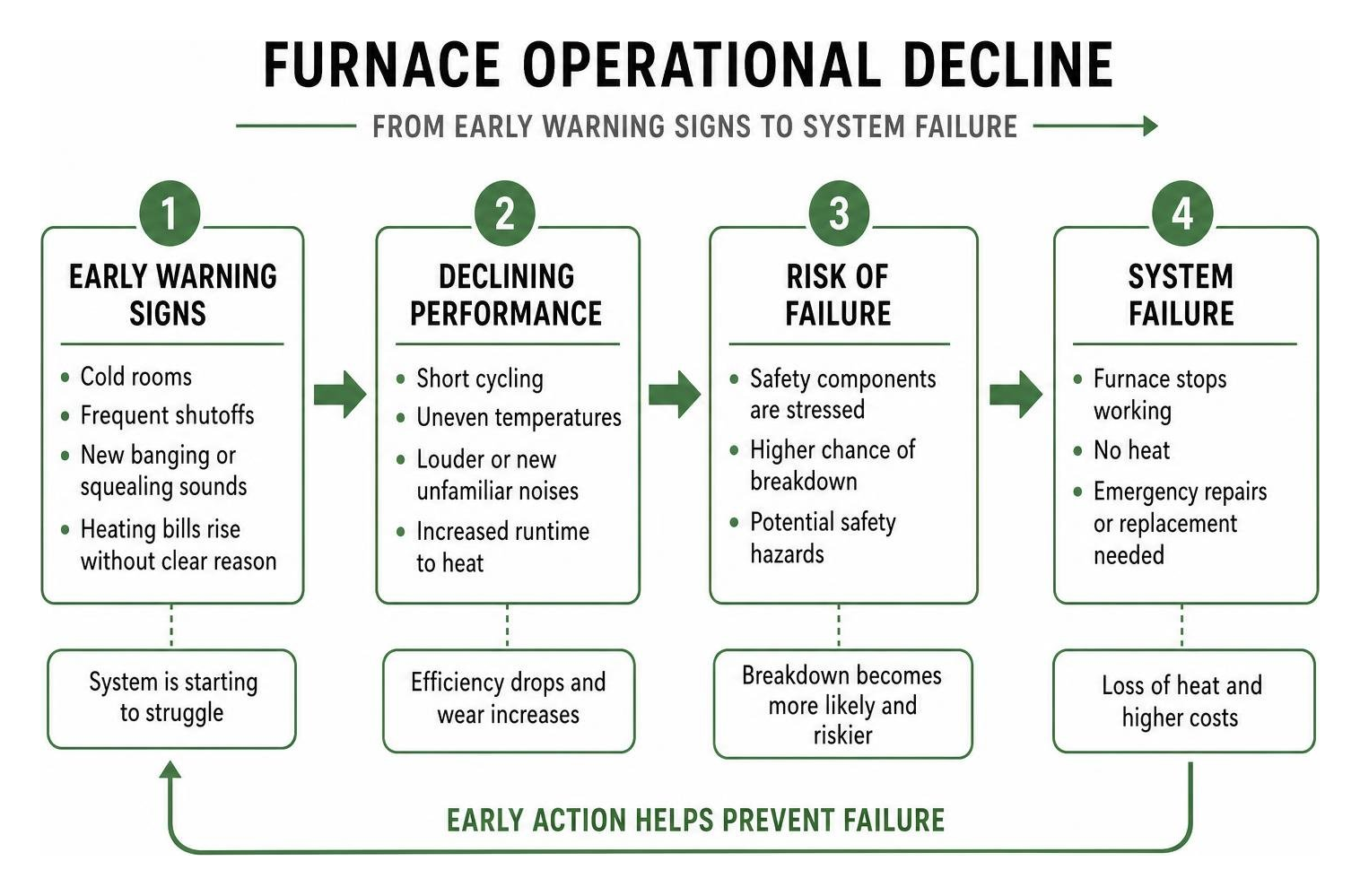
- Loud, Unfamiliar Operational Noises: While every heating system makes a soft hum when starting up, harsh sounds indicate internal distress. A loud boom or bang at startup indicates delayed ignition, where gas builds up in the combustion chamber before igniting. Squealing or screeching often points to a worn blower motor belt or dry motor bearings, while persistent rattling or metal scraping suggests loose components or failing blower wheel blades.
- Short Cycling (Frequent On-and-Off Running): If your furnace turns on for just two or three minutes and abruptly shuts down before reaching the set thermostat temperature, it is short cycling. This can stem from a dirty flame sensor, an overheating heat exchanger tripping the high-limit safety switch, or a restricted draft inducer motor.
- Uneven Room Temperatures and Loss of Heating Capacity: Are rooms at the far end of your house consistently chilly while areas near the utility closet are stuffy? When internal components wear out, the blower motor loses the static pressure needed to deliver balanced airflow across your ductwork.
- Unexplained Spikes in Utility Bills: If your gas or electric bills climb significantly without changes in your thermostat habits or extreme cold snaps, your system’s efficiency is dropping. Worn mechanical components force the equipment to run longer cycles to generate the same amount of heat. When these issues compound, reaching out for professional heating repair services helps pinpoint whether a targeted fix or a full system upgrade makes the most sense.
Repair vs. Replace: Applying Equipment Age and System Condition
Deciding whether to keep repairing an aging heating unit or invest in a modern replacement comes down to safety, equipment age, and cumulative repair demands. While no one looks forward to replacing major mechanical equipment, continuing to patch up a dying system can quickly drain your household budget.
Understanding the balance between equipment longevity and repair thresholds allows you to make a practical, forward-thinking choice for your home. When you are ready to evaluate new equipment, exploring modern heating installation services gives you a clear picture of available system efficiencies and features.
Equipment Age and System Condition Thresholds
In the HVAC industry, a proven guideline for homeowners is to weigh the age and condition of the system against the scope of any upcoming repair. If a repair is extensive and the unit is already past its prime, replacement is generally the smarter long-term choice.
| Factor | Favor Repairing the System | Favor Full System Replacement |
|---|---|---|
| Equipment Age | Under 10–12 years old with a clean service history | 15–20+ years old and operating past expected lifespan |
| Repair Scope | Minor component issue with no underlying system damage | Major repair involving core components or multiple failing parts |
| Frequency of Breakdowns | First issue in several seasons of reliable use | Multiple service calls required over the last 12–24 months |
| Heat Exchanger Condition | Structurally sound, clean combustion, no cracks | Cracked, rusted through, or leaking combustion gases |
| Comfort & Energy Delivery | Keeps rooms evenly warm with normal utility bills | Noticeable cold spots, constant cycling, and rising gas usage |
| Parts Availability | Standard replacement components readily in stock | Obsolete parts, discontinued controls, or long factory backorders |
To determine the exact age of your equipment, locate the rating plate inside the cabinet or on the outer side panel. Find the serial number and model number. Most major manufacturers encode the manufacture date directly into the first four digits of the serial number (for instance, “0812” frequently represents the 8th week of 2012, or August 2012, depending on the brand’s nomenclature). If you cannot decode the plate, our technicians can look up the manufacturer specifications during an inspection.
Southern California Climate and AFUE Efficiency Upgrades
While national heating guidelines assume punishing, sub-zero winters, our climate in Carlsbad, San Diego County, and Orange County presents a different operational profile. With fewer total heating degree days than colder northern regions, Southern California furnaces run fewer annual operational hours. However, coastal air brings marine layer moisture and salt air, which can accelerate exterior chassis rust, flue pipe corrosion, and burner oxidation over 15 to 20 years.
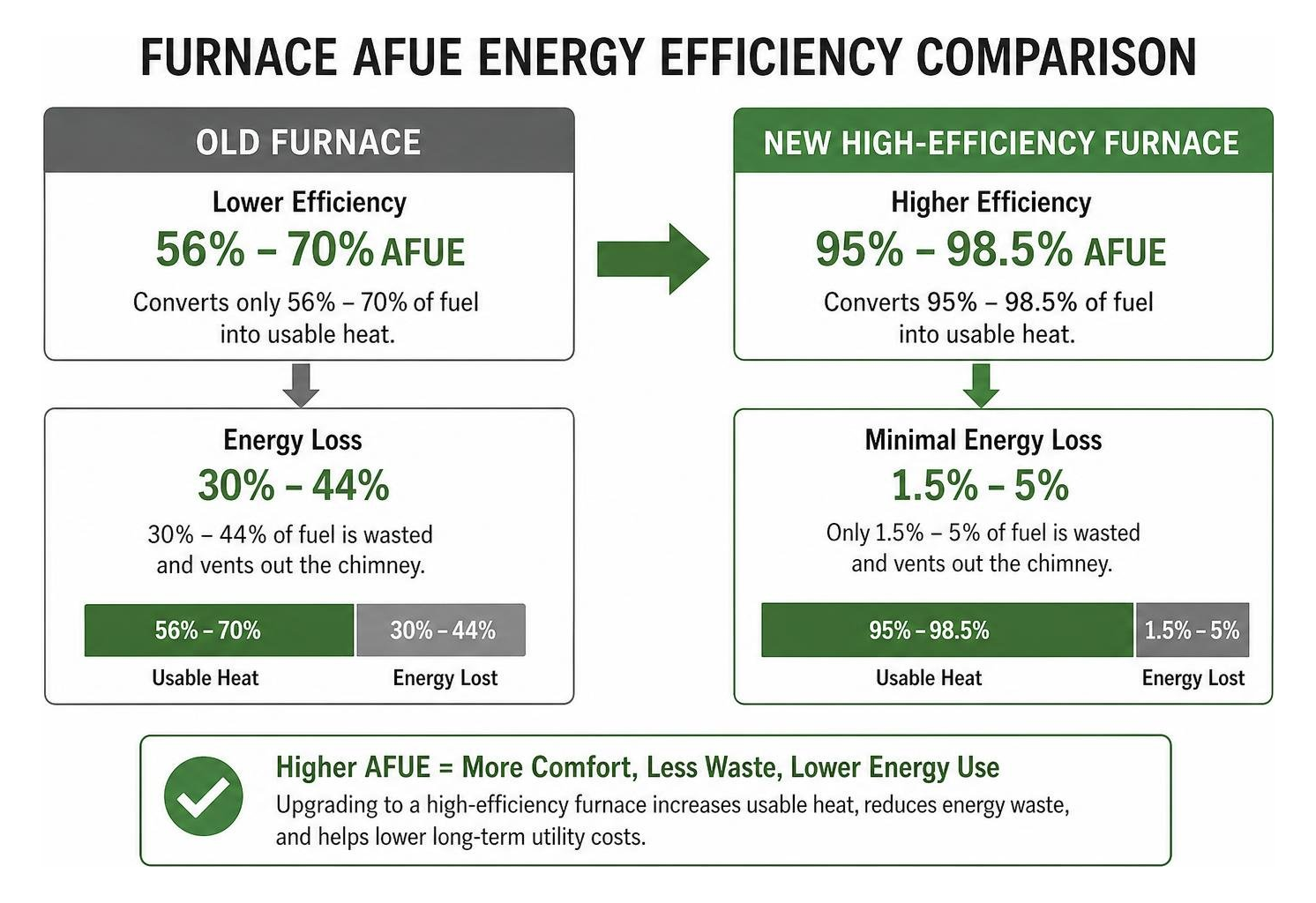
Upgrading an old system provides an immediate boost in Annual Fuel Utilization Efficiency (AFUE). Older baseline furnaces convert only 56% to 70% of their fuel into usable heat, venting the remaining 30% to 44% straight out the chimney pipe. Modern high-efficiency condensing furnaces achieve ratings between 95% and 98.5% AFUE.
Furthermore, current 2026 clean energy standards, federal energy efficiency tax credits, and local utility rebates offer attractive incentives when upgrading to qualifying high-efficiency gas furnaces or hybrid dual-fuel heat pump systems. These efficiency improvements deliver reliable warmth while keeping long-term energy consumption low.
Preventive Care: DIY Upkeep and Professional Inspections
The most effective way to prevent premature furnace failure is combining consistent, safe homeowner maintenance with annual professional servicing. Routine care keeps critical components from working under unnecessary stress.
Safe Homeowner Maintenance and Filter Changes
Homeowners can easily handle several basic maintenance tasks to protect their equipment:
- Replace Air Filters Every 60 to 90 Days: A clogged air filter restricts return airflow. This starves the heat exchanger of cool air, causing internal temperatures to spike and tripping high-limit switches. Check filters monthly during peak winter use.
- Keep Supply Registers and Return Grilles Unobstructed: Ensure furniture, drapes, and rugs are not blocking airflow vents across your home. Closing too many vents increases static pressure inside your ductwork, placing heavy strain on the blower motor.
- Check Thermostat Batteries and Calibration: If your system is cycling erratically, confirm your thermostat has fresh batteries and is set to the correct heating mode before assuming the furnace is broken.
- Maintain Clearance Around the Unit: Never store cardboard boxes, paint cans, solvents, or household clutter within three feet of your furnace cabinet or water heater.
For complete seasonal peace of mind, pairing these habits with regular heating maintenance keeps your equipment running smoothly and safely.
When to Schedule Certified Furnace Tune-Ups
While homeowners can change filters, internal mechanical and combustion components require professional expertise. Servicing gas lines, electrical controls, and burner assemblies without specialized tools can create safety hazards.
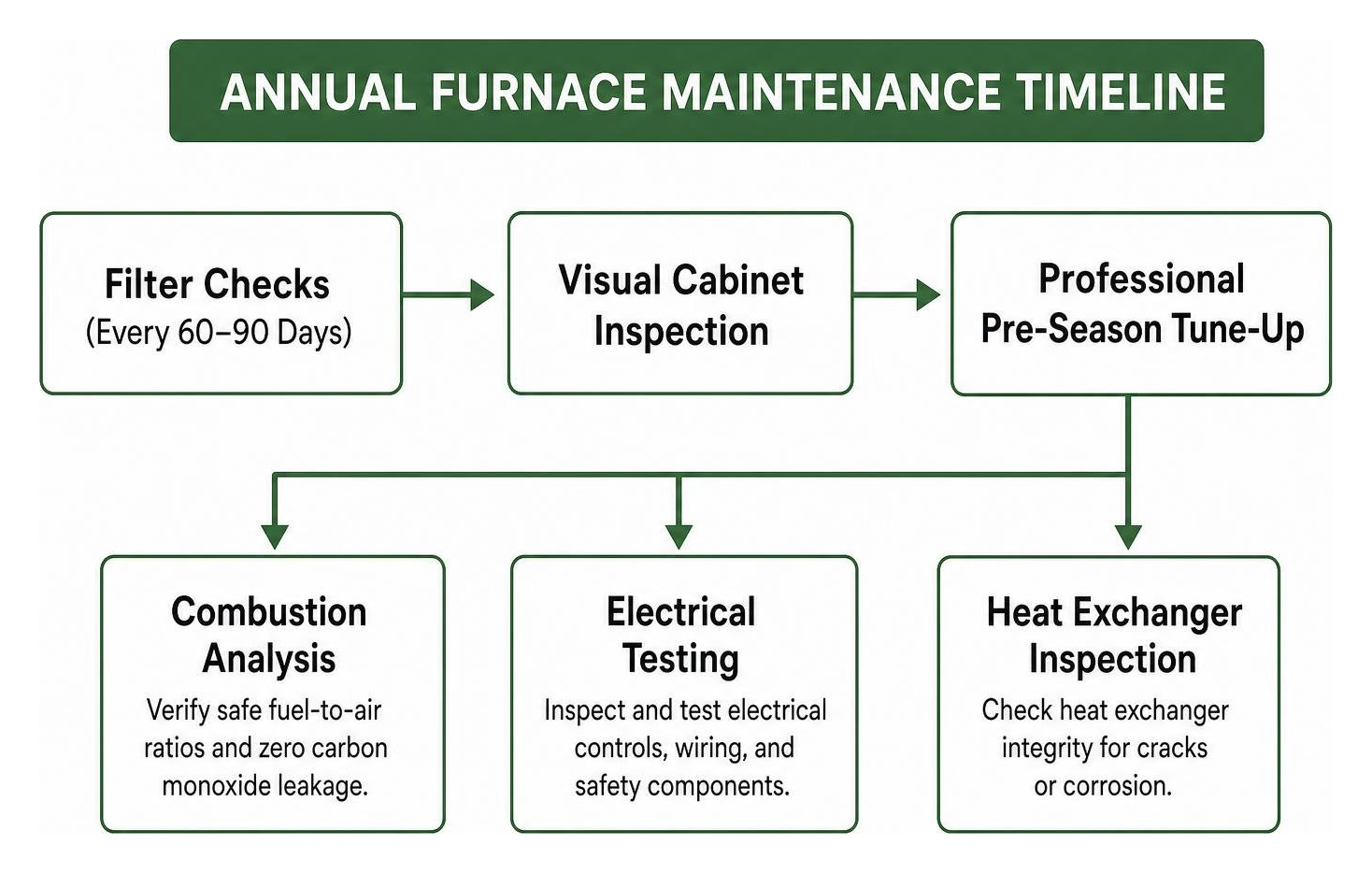
During a certified seasonal tune-up, our technicians perform key safety and performance checks:
- Electronic combustion analysis to verify safe fuel-to-air ratios and zero carbon monoxide leakage.
- Precision cleaning of the flame sensor rod, burner orifices, and ignition assembly.
- Blower wheel inspection, motor amp-draw testing, and bearing lubrication.
- Static pressure testing across duct connections and heat exchanger integrity checks using specialized optical borescopes.
- Electrical safety switch testing, including limit switches, rollout sensors, and flue pressure switches.
If your system is due for a thorough seasonal check, our team provides detailed San Diego furnace maintenance to keep every component operating at manufacturer specifications.
Frequently Asked Questions About Furnace Replacement
Homeowners often have questions about equipment longevity, component repairs, and modern heating options. You can find more helpful advice in our heating system FAQs.
Can a furnace safely last for 20 to 30 years?
While some older furnaces continue operating past the 20-year mark, doing so carries safety and efficiency risks. Over two to three decades, the repeated heating and cooling of the metal heat exchanger leads to micro-fissures and metal fatigue. Even if an older unit still turns on, its efficiency has likely dropped significantly compared to modern standards, and the risk of undetected carbon monoxide leaks increases with age.
What is the most expensive part to replace on a furnace?
The heat exchanger and the variable-speed blower motor assembly are the most complex and costly individual components to replace. If a unit is over 15 years old and suffers a cracked heat exchanger or a total blower assembly failure, the labor and component requirements make replacing the entire furnace a far more sensible investment than repairing the damaged part.
What tax credits or incentives are available for new furnaces in 2026?
Under current 2026 federal energy efficiency initiatives, homeowners who install qualifying high-efficiency natural gas furnaces (typically 95%+ AFUE models) or energy-efficient heat pump systems can claim federal Energy Efficient Home Improvement tax credits. Additionally, regional utility programs across Southern California often offer rebates for qualifying energy-efficient heating and air conditioning upgrades. Our team can help you identify which models qualify for these incentives.
Conclusion
Your home’s heating system should provide safe, reliable warmth throughout the cooler months without strange noises, safety scares, or sky-high utility bills. By paying attention to early warning signs, understanding equipment age and condition, and investing in routine care, you can avoid emergency breakdowns and plan your home upgrades on your own terms.
When it is time for an expert evaluation or an upgrade, John Stevenson Plumbing, Heating & Air Conditioning is here to help. Based right here in Carlsbad, CA, our licensed technicians serve homeowners across San Diego County, Orange County, and surrounding communities. Every installation and repair is backed by our 5-Star Service Guarantee, featuring thorough diagnostics, certified technicians, and a 24-hour satisfaction check-in.
If your aging heating system is struggling to keep up, contact us today to schedule your San Diego furnace installation or explore our comprehensive HVAC solutions across San Diego and Orange County.