
Do You Need to Winterize Plumbing in Southern California?
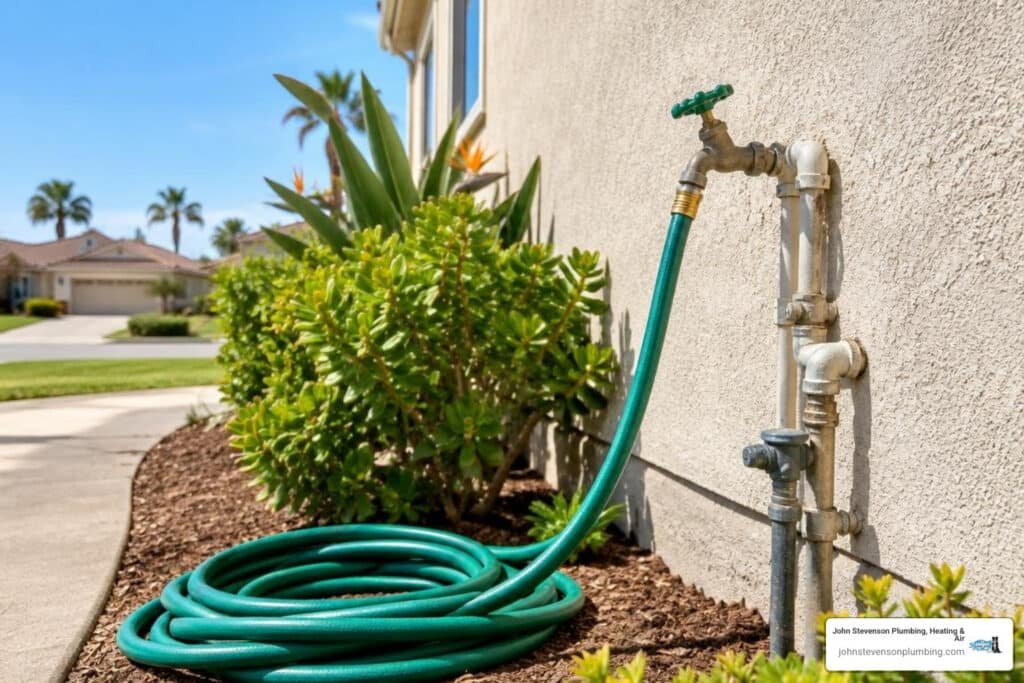
Most occupied Orange County homes do not need a full plumbing shutdown each winter. But a little maintenance matters: disconnect garden hoses, cover exposed outdoor faucets, and insulate pipes in unheated spaces. If your home will be vacant during a cold snap, shut off the water and ask a plumber whether the lines should be drained. Winter weather is usually mild near the coast, but an exposed pipe can freeze when temperatures fall to 32°F or below. A thermostat set to 55°F can help protect indoor pipes, but it may not warm pipes outdoors or in a garage.
Explore our plumbing services or get help with your home’s plumbing.
I’m John Stevenson, and I’ll help you choose winter steps that fit your home and your plans.
If you’re leaving home this winter, contact us to check your plumbing.
Do You Need to Winterize Plumbing in Southern California? Regional Climate and Freeze Risks
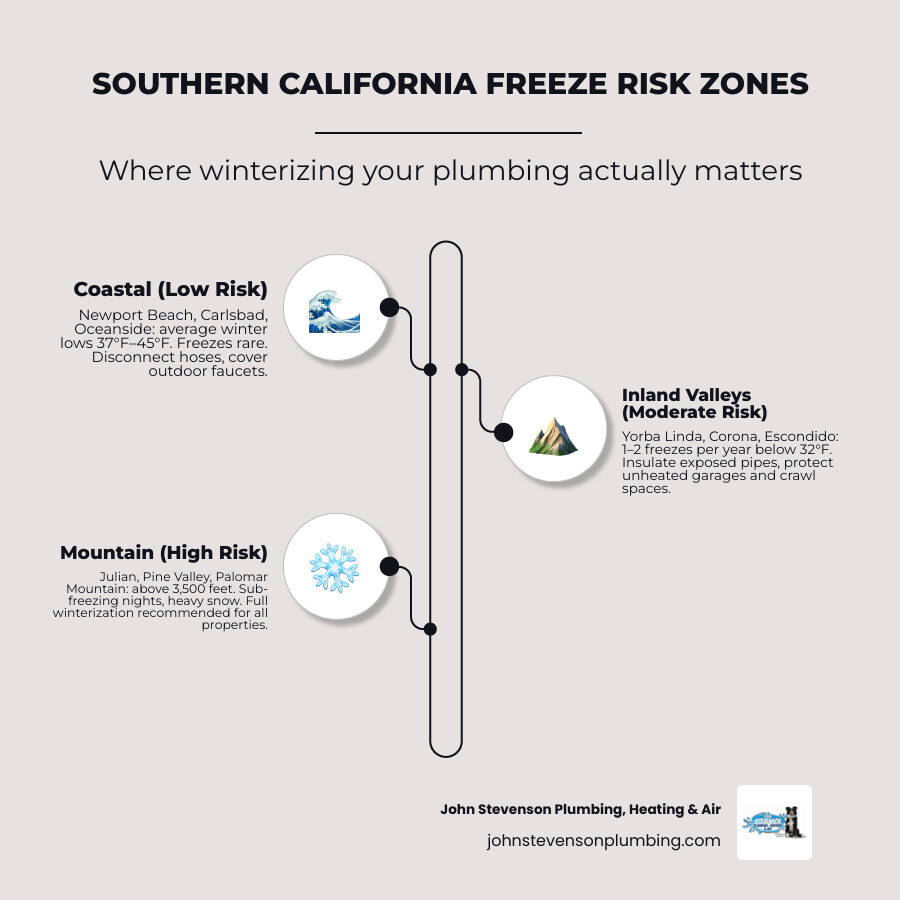
When deciding if you need to winterize plumbing in southern california, geography makes all the difference. Our region features diverse microclimates stretching from coastal beaches to high alpine peaks. While winter in coastal communities like Newport Beach, Oceanside, and Carlsbad brings average winter lows between 37°F and 45°F, inland valleys and mountain communities tell a different story.
Inland areas such as Yorba Linda, Corona, Poway, and Escondido experience freezing temperatures (32°F or lower) once or twice a year. Meanwhile, mountain communities located above 3,500 feet—such as Julian, Pine Valley, and Palomar Mountain—regularly face sub-freezing overnight lows and heavy snowfalls throughout the winter season.
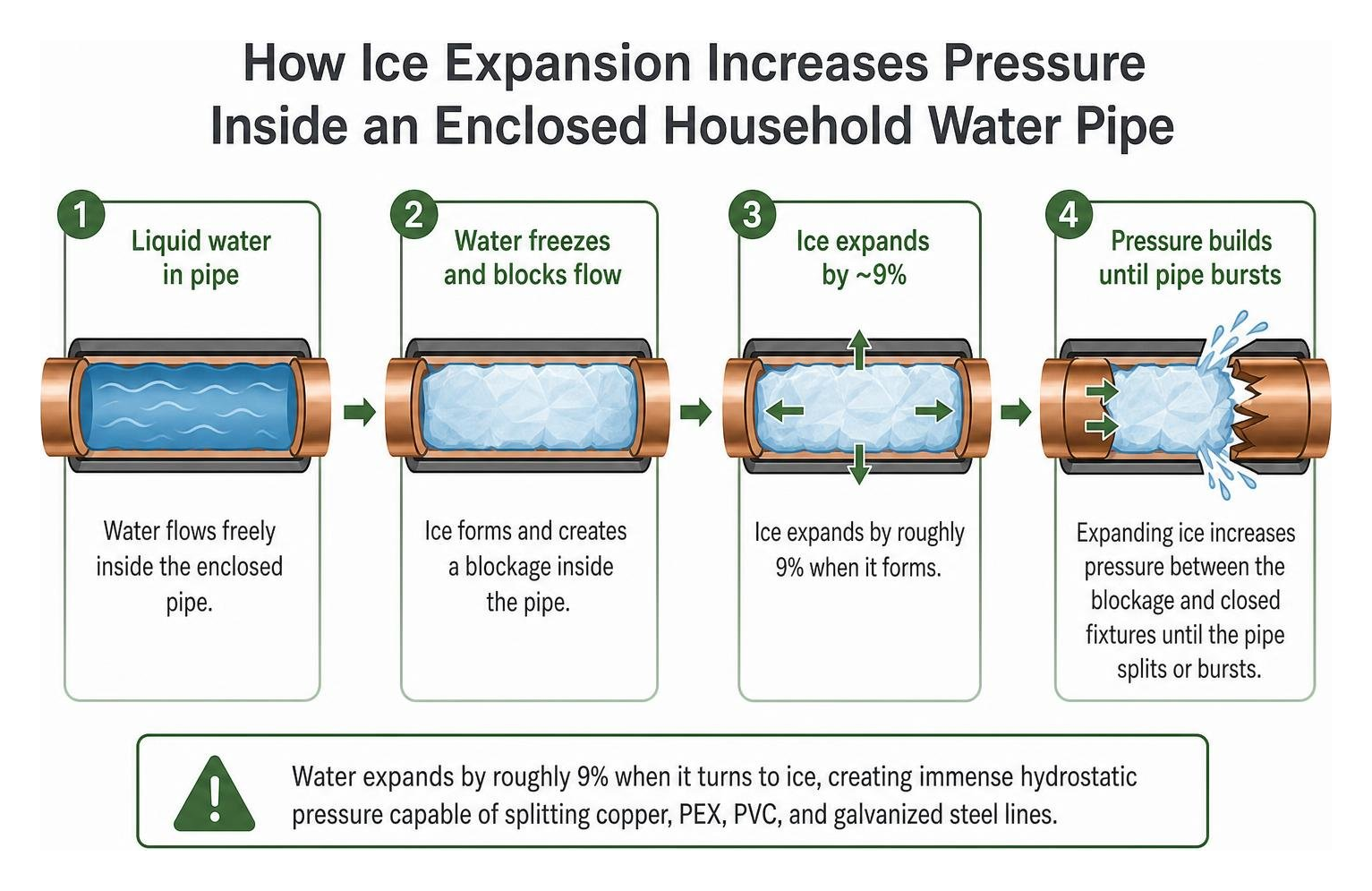
Relying purely on historical averages can be risky. Modern polar vortex patterns and extreme cold snaps can cause sudden temperature drops across the Southland. Water expands by roughly 9% when it turns to ice, creating immense hydrostatic pressure capable of splitting copper, PEX, PVC, and galvanized steel lines.
| Region Type | Typical Winter Lows | Freeze Risk Level | Recommended Action |
|---|---|---|---|
| Coastal (Carlsbad, Del Mar, Newport Beach) | 40°F – 50°F | Very Low | Disconnect garden hoses, insulate exterior spigots |
| Inland Valleys (Irvine, Escondido, Yorba Linda) | 32°F – 40°F | Moderate (1–2 freezes/year) | Wrap unheated garage pipes, insulate outdoor backflows |
| Mountain (Above 3,500 ft) (Julian, Palomar) | 15°F – 30°F | High (Frequent freezes) | Full pipe drainage, compressed air blowout, non-toxic antifreeze in traps |
Why Do You Need to Winterize Your Plumbing in Southern California Mountain and Inland Areas?
In higher elevations and frosty inland pockets, sub-freezing night temperatures target vulnerable structural areas. Southern California homes are often built on raised foundations with uninsulated crawl spaces, or feature copper piping routed through unheated attics and exterior wall cavities.
When water freezes inside an enclosed pipe, it creates a blockage. As the ice expands, pressure builds between the blockage and closed plumbing fixtures until the pipe wall bursts. Because these pipes often sit hidden behind drywall or beneath subflooring, a split pipe may not be noticed until the thaw begins. Understanding how to find hidden water leaks the right way is essential, as unnoticed leaks can cause severe drywall decay, mold growth, and structural rot.
Vacant Homes, Snowbirds, and RVs: Do You Need to Winterize Plumbing in Southern California While Away?
If you are a seasonal traveler heading out for winter or managing an unoccupied rental property in communities like Laguna Niguel, Mission Viejo, or Rancho Santa Fe, an unmonitored home carries elevated risk. An occupied home benefits from regular warm water usage, indoor heating, and quick human detection if a drip begins. A vacant property left unheated during an unexpected freeze can suffer continuous flooding for days before anyone notices.
There is also a major difference between winterizing an RV and winterizing a stationary residential home:
- RVs: Feature lightweight, thin PEX or flexible plastic lines routed directly along uninsulated exterior vehicle chassis walls. They require complete water heater bypass, fresh water tank draining, purging of black and grey holding tanks, opening low-point drain valves, and pumping non-toxic antifreeze through the internal lines.
- Vacant Residential Homes: Benefit from superior structural insulation. Winterization focuses on shutting off the main water source, opening interior and exterior taps to eliminate trapped pressure, draining low-point stop-and-waste valves, and protecting plumbing fixtures from storm impacts. For coastal homes, seasonal weather also brings runoff challenges, making it helpful to understand what plumbing issues homeowners should watch out for after rainstorms.
Vulnerable Plumbing Components: What Freezes First and How to Protect Them
Plumbing components freeze from the outside in. Knowing which fixtures are most vulnerable allows you to take targeted protective action before cold weather arrives:
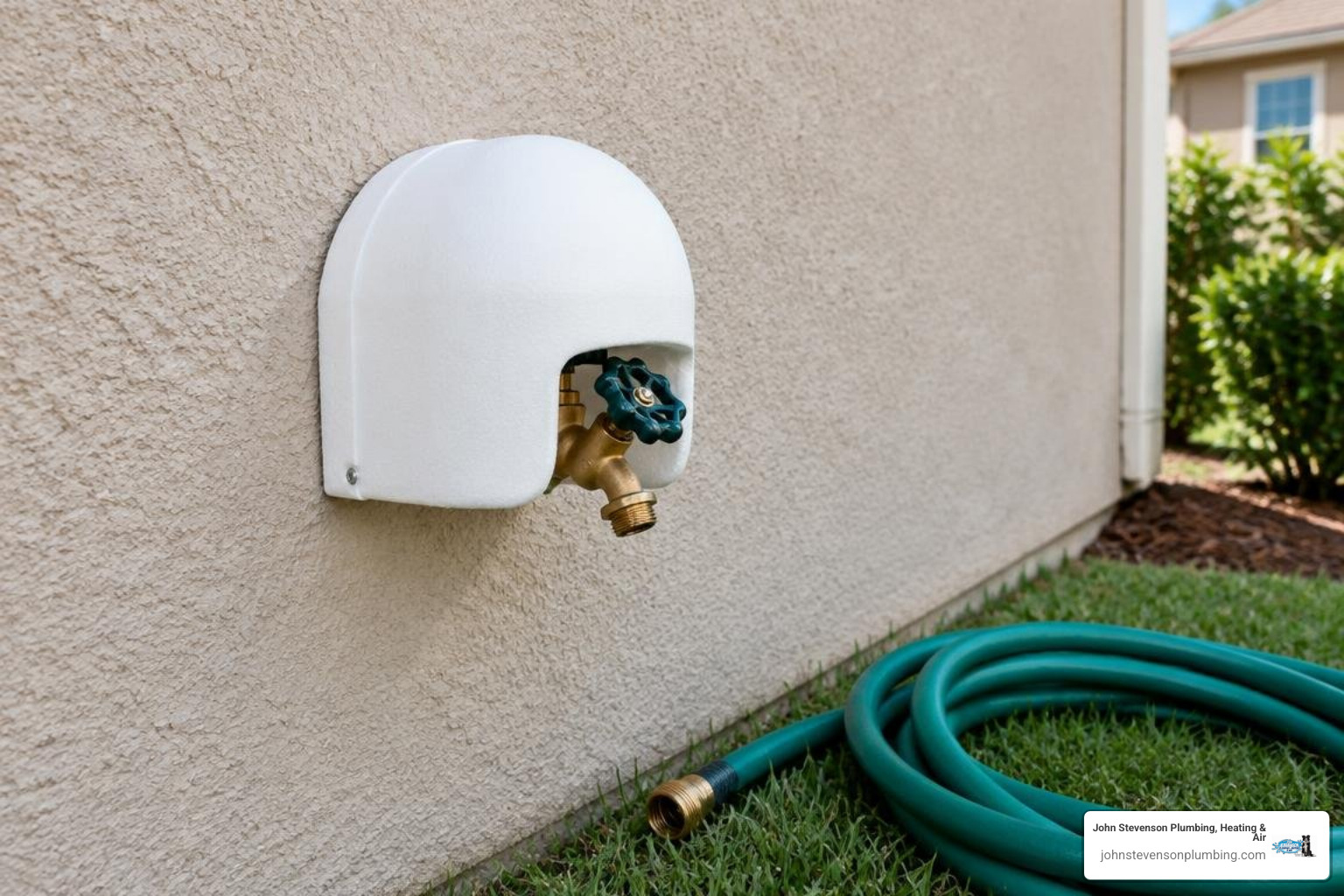
- Outdoor Hose Bibbs & Spigots: Exterior garden faucets are directly exposed to ambient night air and wind chill. An attached garden hose holds trapped water directly against the faucet valve seat, ensuring a freeze penetrates right into the interior wall pipe.
- Landscape Irrigation Systems & Backflow Preventers: Above-ground brass backflow assemblies and shallow plastic irrigation valves freeze quickly, cracking costly brass castings.
- Unheated Garage & Attic Lines: Water lines serving laundry rooms or routed across attic joists lack thermal protection from your home’s central heating.
- Fixture P-Traps & Toilet Bowls: The standing water seal that prevents sewer gases from entering your home can freeze solid in unheated, vacant properties.
- Water Heaters: Standard tank units and exterior-mounted tankless units have delicate internal valves and heat exchangers. In unconditioned garages, you can learn how to extend the life of your water heater by checking that exterior tankless units remain powered so their built-in electric freeze protection stays active. When updating your heating equipment, be mindful of state safety standards detailed in California plumbing code water heater rules.
Municipal Water Systems vs. Private Well Winterization
Winterizing steps differ significantly depending on whether your property connects to a municipal utility or draws from a private groundwater well:
- Municipal Water Connections: The homeowner shuts off the private master customer shut-off valve located near the home foundation or the curbside street meter. All indoor and outdoor fixtures are then opened to gravity-drain the system.
- Private Well Systems: Winterizing a well requires electrical and mechanical shutdowns. You must turn off the dedicated well pump circuit breaker to prevent the pump from running dry and burning its motor. Next, drain the pressure tank (which normally maintains a 40 to 60 PSI baseline). Extended non-use can cause mechanical pump seals to dry out, while stagnant ground water can allow anaerobic sulfur-reducing bacteria to develop, creating a rotten-egg odor upon return. Properties with well setups often benefit from exploring the ultimate guide to best water treatment for Southern California homes to safeguard water quality during extended seasonal shutdowns.
Step-by-Step Guide to Winterizing Your Home or Vacation Property
If you are leaving your Southern California home vacant during the colder months, follow this structured, top-to-bottom winterization checklist:
- Shut Off the Main Water Supply: Close your home’s main master shut-off valve or well pump breaker.
- Turn Off Water Heating Units: Switch gas water heaters to “Pilot” (or turn off electric breakers) before draining lines to prevent dry-firing and burning out heating elements.
- Open All Fixtures from Top to Bottom: Start on the highest floor of your home, opening all sink faucets, shower valves, and outdoor hose bibbs. Finish by opening the lowest-level drain valve to allow gravity to evacuate standing water.
- Blow Out Lines (Mountain & Freeze-Prone Properties): Connect an oil-free air compressor to your hose bibb via a blowout adapter. Regulate the air pressure to under 50 PSI to avoid damaging pipe joints, and cycle through each fixture until only air mist exits.
- Set the Thermostat: Leave your central heating set to a minimum of 55°F to ensure ambient warm air circulates through wall cavities.
- Open Vanity & Sink Cabinets: Keep under-sink cabinet doors open so conditioned room air can circulate around uninsulated supply lines and drain traps.
- Insulate Vulnerable Pipes: Wrap unheated garage lines and exterior faucets with closed-cell foam insulation tape.
If you suspect an unobserved leak during seasonal maintenance, understanding how leak detection technology works can help you pinpoint issues before they escalate.
Safe Antifreeze Application: Propylene Glycol vs. Automotive Coolant
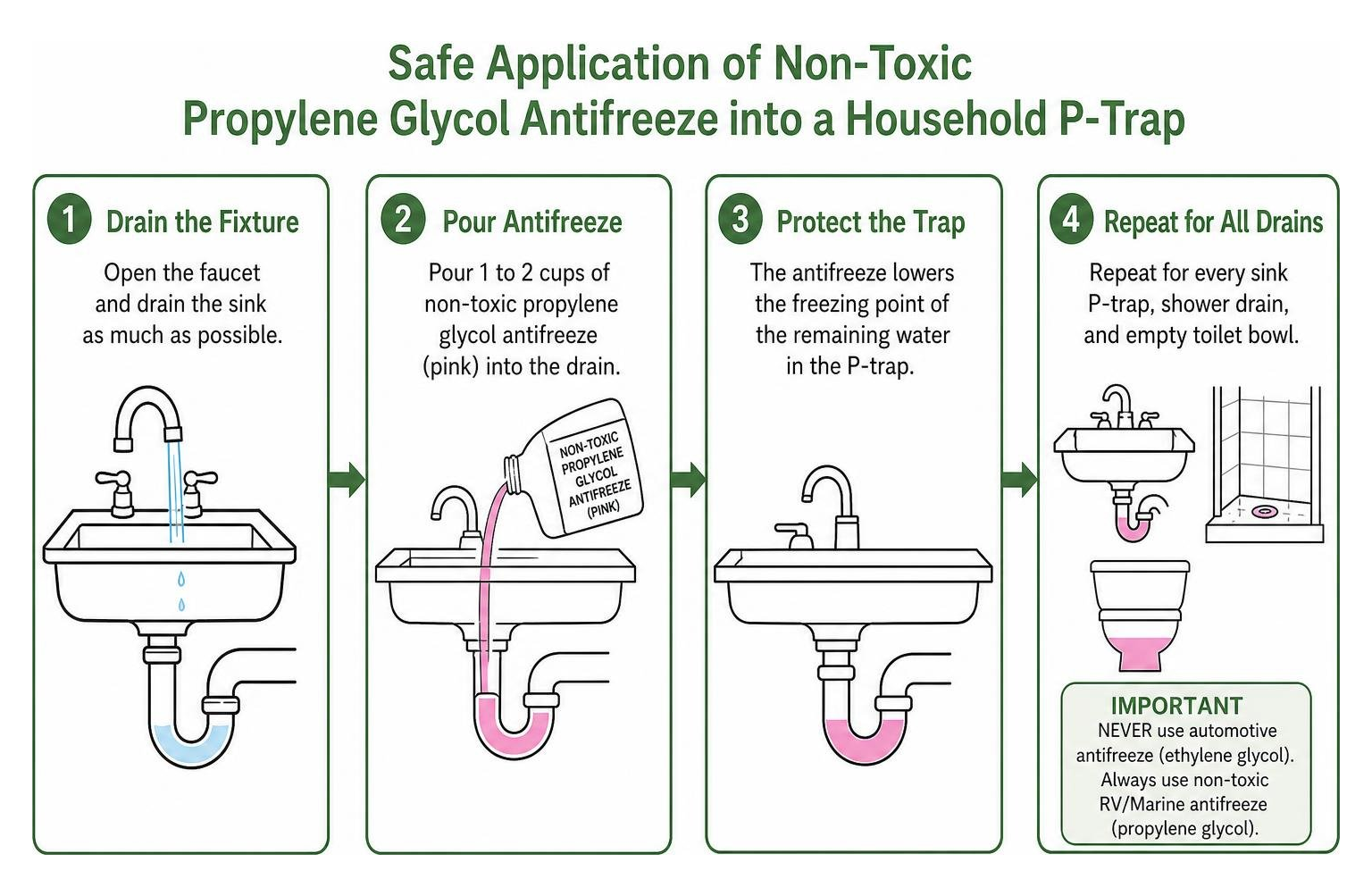
When winterizing drain lines in vacant or mountain properties, standing water remains trapped in sink P-traps, floor drains, and toilet bowls.
- NEVER Use Automotive Antifreeze: Automotive antifreeze contains ethylene glycol, an extremely toxic chemical that poses severe poisoning hazards to humans, pets, and local water tables.
- ALWAYS Use Non-Toxic RV/Marine Antifreeze: Choose pure, non-toxic propylene glycol antifreeze (typically dyed bright pink). It is environmentally safe, non-corrosive to plumbing plastics and metals, and formulated for potable plumbing drainage.
Pour 1 to 2 cups of pink propylene glycol antifreeze directly into every sink P-trap, shower drain, and empty toilet bowl. This lowers the freezing point of the residual water seal without drying out the rubber gaskets. If you encounter stale odors after traps sit, you can learn how to eliminate drain odor quickly in 3 simple steps once you restore normal water flow.
Spring De-Winterization and System Startup Procedure
When returning to your home in spring, take these steps to safely bring your plumbing system back online:
- Conduct a Visual Inspection: Check all visible pipes, valves, water heaters, and outdoor bibbs for hairline cracks or corrosion before turning the water on.
- Close All Open Faucets: Walk through the home and turn off every faucet, valve, and hose bibb that was left open for winter drainage.
- Open the Main Water Supply SLOWLY: Slowly turn the main shut-off valve a quarter-turn at a time. Opening it too quickly can send high-pressure shockwaves (water hammer) through empty pipes, damaging valves and fittings.
- Purge Air Pockets and Flush Lines: Open fixtures one by one to let trapped air escape smoothly. Run faucets for 5 to 10 minutes to flush out residual sediment and non-toxic antifreeze.
- Refill and Power the Water Heater: Ensure the water heater tank is completely full of water and flowing smoothly from hot water taps before restoring gas or electrical power.
- Inspect for Fixture Leaks: Check supply lines under all sinks and toilets. Reviewing spring plumbing inspection tips will help you confirm that your fixtures are leak-free for the warm season.
Smart Monitoring, Leak Prevention, and Homeowners Insurance Requirements
Modern smart home technology offers reliable remote protection for seasonal homes across Southern California:
- Smart Automatic Shut-Off Valves: Connected directly to your incoming water main, devices like Flo by Moen or Phyn monitor minute changes in flow rate and water pressure. If an abnormal continuous draw or sudden freeze burst occurs, the valve automatically shuts off water to the entire home and sends an alert to your smartphone.
- Wi-Fi Freeze and Leak Sensors: Place compact battery-powered sensors near water heaters, under kitchen sinks, and in unheated garage corners. They provide early warning alerts if ambient temperatures fall below 40°F or moisture contacts the sensor pins.
Smart monitoring also aligns with insurance policies. Many standard homeowners insurance policies include vacant property freeze exclusions. If a home is left unoccupied for more than 14 to 30 consecutive days during winter, insurance adjusters may require proof of “reasonable care”—such as maintaining heat at 55°F or shutting off and draining domestic water supplies—before approving water damage claims. Paying attention to hidden water damage warning signs can save thousands of dollars and ensure full policy compliance.
Frequently Asked Questions About Winterizing Plumbing in Southern California
Can I just keep my thermostat at 55°F instead of draining my pipes?
For occupied coastal and valley homes in Orange County and San Diego County, setting your thermostat to 55°F is generally effective for protecting indoor living space plumbing. However, thermostat heat does not reach unheated crawl spaces, exterior wall plumbing cavities, detached garages, or outdoor hose bibbs. Furthermore, if a severe winter storm knocks out electrical power, your furnace will shut down. For extended winter vacations or mountain properties, fully draining the plumbing lines provides the most reliable protection.
What should I do if my pipes freeze during an unexpected cold snap?
If you turn on a faucet during a cold morning and only get a trickle, act immediately:
- Shut Off the Main Water Valve: Always turn off your main water shut-off first. If the pipe has split, keeping the valve open will cause flooding as soon as the ice blockage thaws.
- Open the Faucet: Leave the affected faucet open so melting water and steam can escape safely.
- Apply Gentle, Safe Heat: Warm the frozen section using a hair dryer, electric heating pad, or towels soaked in hot water. Work from the faucet end backward toward the freeze.
- NEVER Use an Open Flame: Never use propane torches, heat guns, or open flames, which pose severe fire hazards and can cause thermal shock that shatters copper and plastic pipes.
- Inspect Closely: Once water flow is restored, carefully inspect the entire line for pinhole leaks or stress cracks.
How do I prevent frozen pipes in an occupied Orange County home during winter?
For homeowners living in communities like Aliso Viejo, Lake Forest, Irvine, or Vista, full drainage is rarely necessary during normal winter occupancy. Follow these simple steps during chilly nights:
- Disconnect all garden hoses and install insulated foam covers over outdoor hose bibbs.
- Wrap exposed irrigation backflow devices and exterior pipes with weatherproof insulation tape.
- Keep garage doors completely closed to shelter water heaters and laundry plumbing.
- Open kitchen and bathroom vanity doors on exterior-facing walls to allow warm air to circulate around plumbing traps.
- Allow a single indoor faucet located farthest from your water main to maintain a steady, pencil-lead-thin drip during freezing nights to relieve line pressure.
Conclusion
Plumbing winterization in Southern California is all about understanding your local microclimate and property use. While occupied coastal homes in Carlsbad and Newport Beach only need simple precautions like disconnecting garden hoses and insulating exterior faucets, vacant seasonal properties and mountain homes require thorough water shutdowns, line drainage, and drain trap protection.
Taking these proactive measures gives you peace of mind that your plumbing system remains secure through every season. For expert seasonal inspections, water heater protection, smart leak prevention systems, and comprehensive plumbing services, trust our certified technicians at John Stevenson Plumbing, Heating & Air Conditioning to keep your home running smoothly.