
What Is Hydro Jetting and How Does High-Pressure Drain Cleaning Work?
Hydro jetting is an advanced pipe-cleaning method that uses pressurized water to scrub the inside of your sewer lines. Unlike traditional mechanical tools that simply poke a hole through a stubborn blockage, hydro jetting cleans the entire interior diameter of the pipe.
The system relies on specialized machinery consisting of a large water reservoir, a heavy-duty commercial motor, a high-pressure pump, a flexible reinforced hose, and custom-engineered nozzles. For residential plumbing systems, water pressure typically ranges between 1,500 and 4,000 pounds per square inch (PSI), with flow rates calibrated between 2 and 8 gallons per minute (GPM).
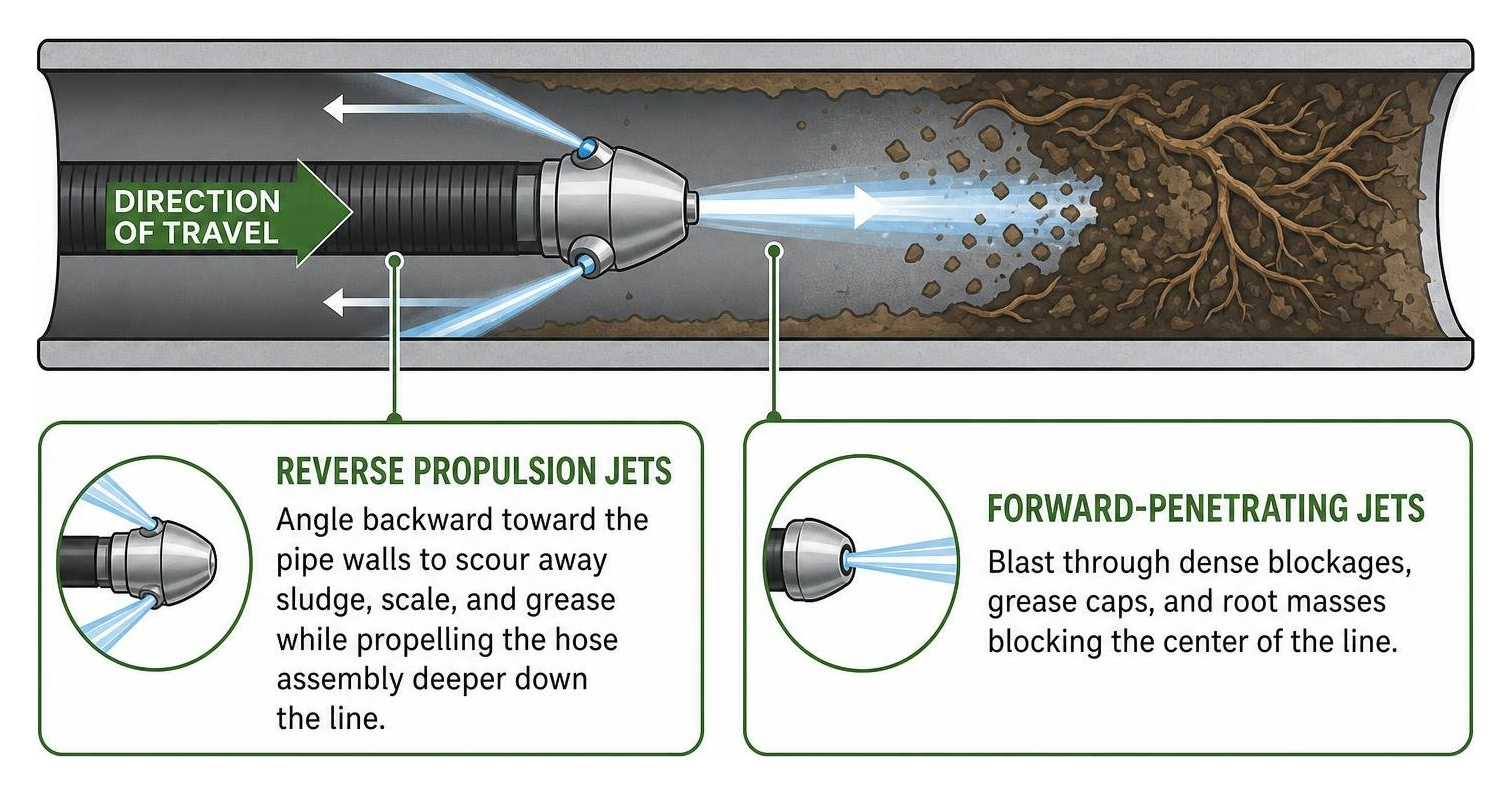
The magic happens at the nozzle tip. Specialized nozzles use a dual-action spray configuration:
- Forward-Penetrating Jets: Blast through dense blockages, grease caps, and root masses blocking the center of the line.
- Reverse Propulsion Jets: Angle backward toward the pipe walls to scour away sludge, scale, and grease while physically propelling the hose assembly deeper down the line.
When you contact our plumbing team in Carlsbad offering hydro jetting, our certified technicians calibrate the pressure and water volume specifically to match your home’s pipe material and diameter. This precision enables us to shear tree roots, emulsify hardened fats, oils, and grease (FOG), and strip mineral scale off pipe walls without harsh chemicals. Homeowners across San Diego County and Orange County rely on our expert drain cleaning and hydro jetting services to restore full capacity to their main lines.
How Specialized Nozzles Tackle Tough Sewer Blockages
Not all sewer clogs are created equal. A blockage caused by invasive ficus roots requires a completely different cleaning profile than a line choked with cooking grease. Hydro jetting uses interchangeable, precision-engineered nozzle heads to tackle specific debris:
- Rotary & Spinning Nozzles: Spin at high speeds to deliver a 360-degree scouring action against the pipe walls, washing away waxy grease cakes and sticky biofilms.
- Penetrating Tips: Feature a tight forward jet designed to pierce rock-hard obstructions, packed wet wipes, or thick silt plugs.
- Root-Cutter & Chain-Knocker Heads: Utilize mechanical spinning chains or razor-sharp water streams that act as a liquid saw, slicing invasive tree roots flush with the pipe joints.
- Flushing Nozzles: Maximize volume (GPM) to push dislodged sand, gravel, and heavy scale out toward the municipal main.
By aligning our equipment with NASSCO (National Association of Sewer Service Companies) standards, we restore your pipe’s original interior diameter rather than leaving residual buildup behind.
Hydro Jetting vs. Sewer Camera Inspection: Why Diagnostics Come First
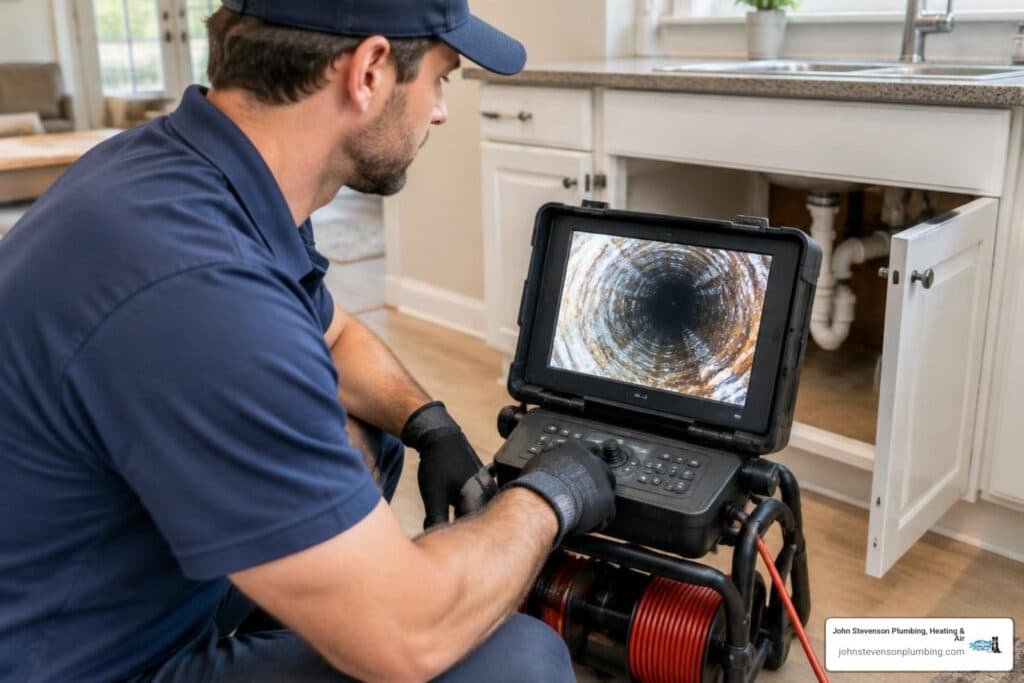
While hydro jetting is exceptionally powerful, applying high-pressure water without inspecting the line first is like operating without an X-ray. A sewer camera inspection is a vital diagnostic step that must take place before hydro jetting begins.
During a comprehensive sewer camera inspection, we feed a fiber-optic, self-leveling video camera down your sewer lateral. This inspection confirms:
- Blockage Identification: Exactly what is causing the backup (grease, paper, roots, or a foreign object).
- Location and Depth: The precise location of the obstruction in your yard or foundation.
- Structural Integrity: Whether the pipe is intact or suffering from cracks, collapses, joint offsets, or severe corrosion.
If an older line is collapsed or fractured, applying thousands of PSI of water pressure could worsen the damage. Obtaining these vital insights on sewer camera inspections protects your home and ensures hydro jetting is the safe, correct solution.
Core Benefits of Hydro Jetting for Sewer Lines
Understanding the true benefits of hydro jetting for sewer lines helps homeowners make informed decisions when faced with recurring plumbing emergencies. While standard methods provide a temporary path for wastewater to pass, high-pressure jetting provides a complete reset for your entire drainage infrastructure.
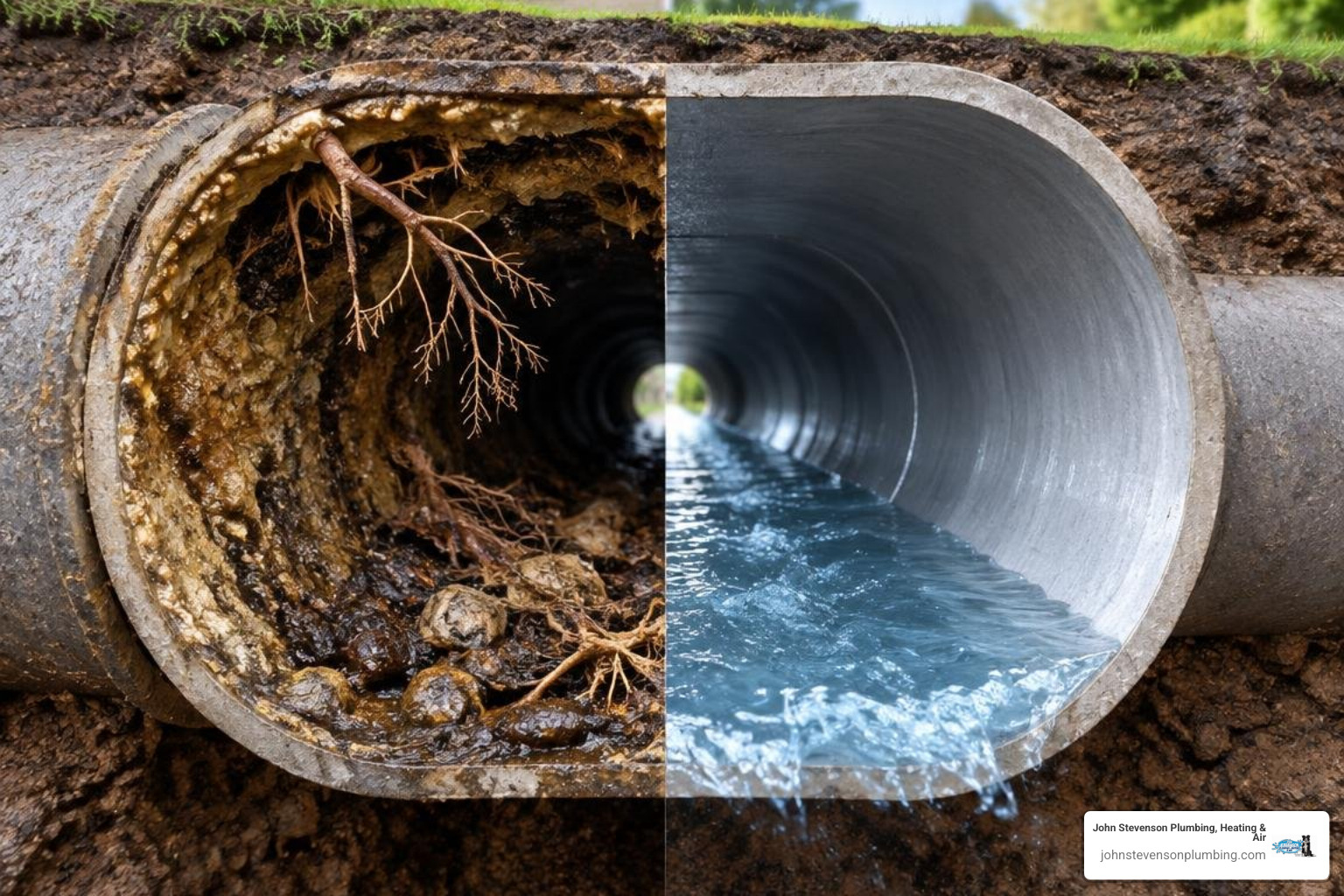
When choosing between mechanical snaking and water jetting, the biggest difference is coverage. A mechanical snake punches a 2-inch hole through a 4-inch pipe, leaving sticky residue, grease coatings, and root fringes clinging to the sides. Hydro jetting scours 100% of the pipe wall, flushing out foul-smelling bacterial biofilms and providing long-lasting clearance that keeps your plumbing running smoothly for years.
Long-Term Benefits of Hydro Jetting for Sewer Lines
Homeowners often wonder how hydro jetting compares to conventional methods over time. Because snaking leaves residual debris behind, hair and grease quickly catch on the remaining buildup, often causing clogs to return within weeks or months. Clearing the line thoroughly in a single session helps prevent repeated service calls, emergency weekend visits, and severe water damage.
| Cleaning Feature | Mechanical Drain Snaking | Conventional Drain Clearing | Professional Hydro Jetting |
|---|---|---|---|
| Cleaning Coverage | Punctures hole through clog | Clears immediate pathway | 360-degree pipe wall scouring |
| Grease & Sludge Removal | Poor (smears against walls) | Minimal on heavy buildup | Complete emulsification & flush |
| Tree Root Mitigation | Tears center; leaves fringes | Partial root clearing | Cuts roots flush with joint |
| Typical Longevity | Several weeks to a few months | Short-term relief | 2 to 5+ years of clear flow |
| Pipe Safety | Safe for most sound pipes | Safe for sound pipes | Safe when paired with camera inspection |
Environmental and Pipe Longevity Benefits of Hydro Jetting for Sewer Lines
Hydro jetting is one of the most environmentally responsible plumbing services available. It uses pure, pressurized tap water to clean pipes without relying on harsh chemicals. This keeps contaminants out of the Southern California groundwater supply, protects local coastal ecosystems, and preserves household plumbing lines.
In addition to protecting the environment, hydro jetting extends the lifespan of older cast-iron and clay sewer pipes. Over decades, cast iron develops tuberculation—a rough, corrosive buildup of iron scale and mineral deposits that catches waste. Hydro jetting safely scrubs away this corrosive layer, smoothing the interior walls and adding 10 to 20 years of service life to your existing pipes. Furthermore, a standard residential jetting session uses only 50 to 150 gallons of water, making it a fast and water-efficient way to deep-clean your plumbing.
When to Choose Hydro Jetting vs. Alternative Drain Solutions
Hydro jetting is not required for every simple bathroom sink clog, but it is the top solution for severe, deep-seated main sewer line problems.
Knowing what steps to take during a sewer backup is essential when waste starts backing up into multiple fixtures. If you notice persistent clogs, investing in early preventative care and preventing severe drain clogs with professional sewer line cleaning can protect your home from messy, unexpected sewer backups.
Warning Signs That Your Sewer Line Needs High-Pressure Cleaning
If your sewer lateral is struggling with severe grease buildup, mineral scale, or root intrusion, your home will usually provide several warning signs:
- Simultaneous Multi-Fixture Backups: Water backing up into your bathtub or shower when you flush the toilet or run the washing machine.
- Chronic, Recurring Slow Drains: Sinks, tubs, and floor drains that drain slowly despite repeated snaking.
- Gurgling Sounds: Bubbling and gurgling noises coming from toilet bowls or secondary drains when running appliances.
- Foul Sewage Odors: Persistent sewer gas or rotten-egg smells coming from interior drains or around your yard.
- Soggy or Unusually Green Lawn Patches: Wet spots or lush patches of grass above your buried sewer line, pointing to roots feeding on sewer line leaks.
When Hydro Jetting Is Not Recommended or Potentially Harmful
Hydro jetting is exceptionally safe when applied to sound plumbing, but it is not a universal cure-all. Before scheduling service, review our checklist for when hydro jetting is not recommended to understand when alternative methods are needed.
High-pressure jetting is not recommended for:
- Fractured or Broken Clay Pipes: Extreme water pressure can blow out cracked sections or wash away supporting soil.
- Fully Collapsed or Crushed Lines: Once a pipe loses its structural shape, water cannot restore it.
- Orangeburg (Bituminized Fiber) Pipe: Installed between the 1940s and 1970s, this pressed wood-pulp and tar piping easily delaminates, blisters, and collapses under high pressure.
- Severely Deteriorated Galvanized Steel: Fragile, paper-thin metal pipes can puncture under high-pressure cleaning.
When a camera inspection reveals that your line is structurally compromised, our certified technicians will walk you through options for professional sewer line repair or long-term full sewer line replacement options.
The Professional Hydro Jetting Process and Maintenance Timelines
When you schedule professional hydro jetting with John Stevenson Plumbing, Heating & Air Conditioning, our certified technicians complete the job using a thorough, organized process that takes just 1 to 3 hours.
Attempting to DIY hydro jet your main sewer line with an electric pressure-washer attachment or low-grade rental unit is risky. Rental units rarely provide the combination of PSI and GPM required to clear main laterals, and high-pressure water poses severe fluid-injection hazards if handled without professional safety training. Choosing our team for professional drain cleaning solutions guarantees that your system is serviced safely, efficiently, and up to code.
Step-by-Step Professional Service Workflow
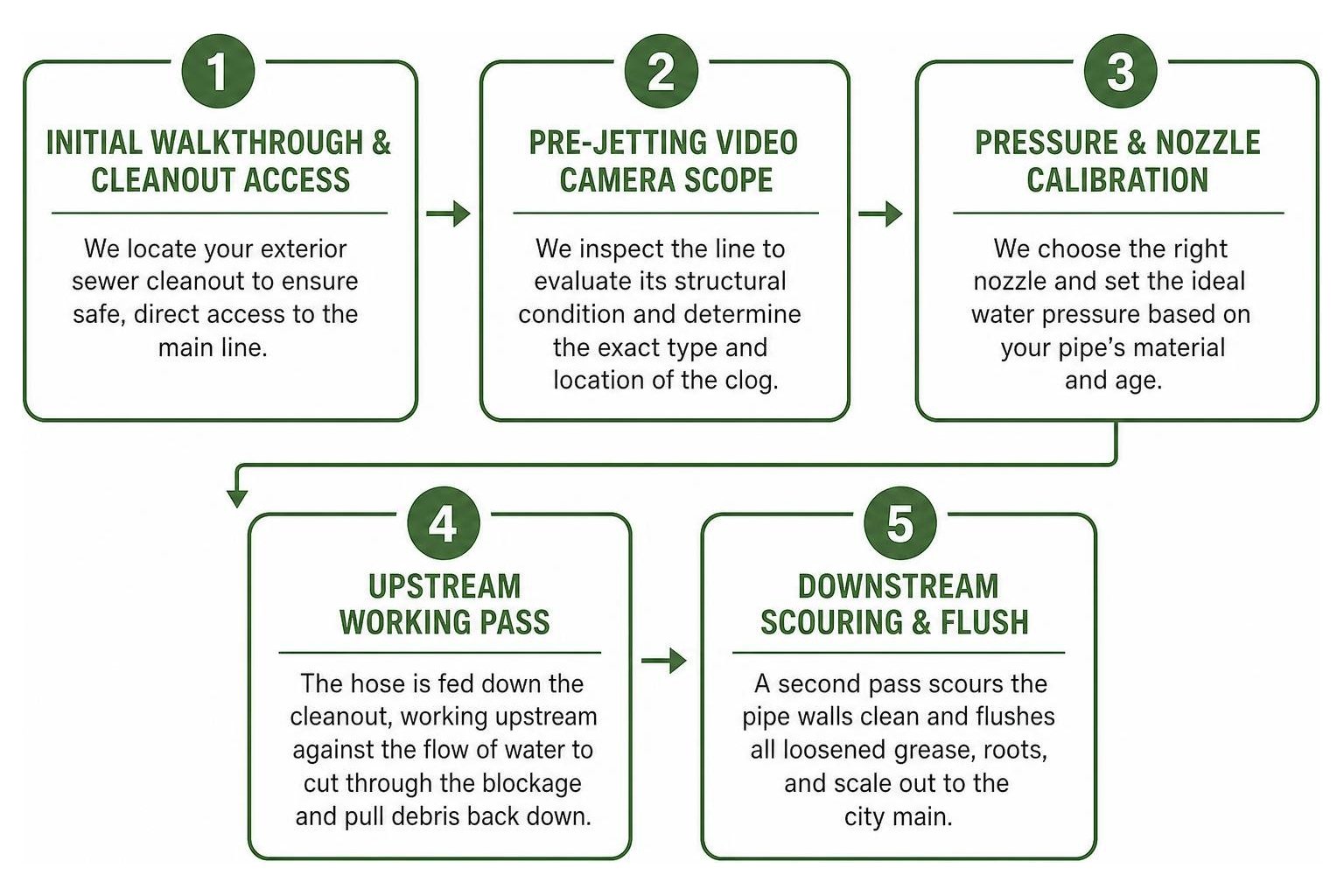
- Initial Walkthrough & Cleanout Access: We locate your exterior sewer cleanout to ensure safe, direct access to the main line without bringing dirty hoses through your living spaces.
- Pre-Jetting Video Camera Scope: We inspect the line to evaluate its structural condition and determine the exact type and location of the clog.
- Pressure & Nozzle Calibration: We choose the right nozzle and set the ideal water pressure based on your pipe’s material and age.
- Upstream Working Pass: The hose is fed down the cleanout, working upstream against the flow of water to cut through the blockage and pull debris back down.
- Downstream Scouring & Flush: A second pass scours the pipe walls clean and flushes all loosened grease, roots, and scale out to the city main.
- Post-Jetting Verification Scope: We run the video camera down the line a second time to confirm the pipe is completely clear and verify its structural integrity.
Recommended Maintenance Schedules for Residential and Commercial Properties
To prevent unexpected sewer emergencies, properties benefit from scheduled preventative hydro jetting:
- Standard Single-Family Residences: Every 3 to 5 years for proactive maintenance.
- Homes with Mature Trees Near Sewer Lines: Every 18 to 24 months to keep invasive roots from building up inside pipe joints.
- Older Cast-Iron Systems: Every 2 to 3 years to remove recurring mineral scale and tuberculation.
- Restaurants & Commercial Kitchens: Quarterly or semi-annually to manage heavy fats, oils, and grease (FOG) accumulation.
Frequently Asked Questions About Hydro Jetting
Can hydro jetting remove invasive tree roots from sewer lines?
Yes. When paired with specialized rotating root-cutting or chain-knocker nozzle heads, hydro jetting shears fine, moderate, and hairline tree roots flush against the pipe joints. While it clears out the root mass, it does not seal the tiny crack where the root entered, so regular maintenance, sewer repair, or pipe replacement may be recommended to prevent future regrowth.
How long do the cleaning results of hydro jetting last?
For a typical residential home with good drain habits, the results of a hydro jetting service last between 2 and 5 years. Because the process removes 100% of the sticky residue and grease from the pipe walls, waste flows freely without catching on residual buildup.
Is hydro jetting safe for older plumbing pipes?
Hydro jetting is safe for older PVC, ABS, copper, clay, and cast-iron pipes, provided they are structurally sound. However, it should never be performed on cracked, collapsed, or Orangeburg pipes. This is why our team always performs a thorough sewer camera inspection before starting any high-pressure cleaning work.
Reliable Sewer Hydro Jetting Services in Carlsbad
Sewer line backups can be frustrating, but you do not have to settle for temporary, short-term fixes. Hydro jetting clears away years of stubborn grease, heavy scale, and invasive roots, restoring your plumbing lines to peak performance.
At John Stevenson Plumbing, Heating & Air Conditioning, we provide reliable plumbing and sewer solutions to homeowners in Carlsbad, San Diego County, and Orange County. Our certified technicians use advanced diagnostic cameras and high-pressure jetting equipment to protect your home’s plumbing.
With our 5-Star Service Guarantee, you receive clear diagnostics, certified technicians, and a 24-hour satisfaction check-in on every visit. Schedule expert Carlsbad drain services with our team today to keep your home’s sewer lines clear and trouble-free.