
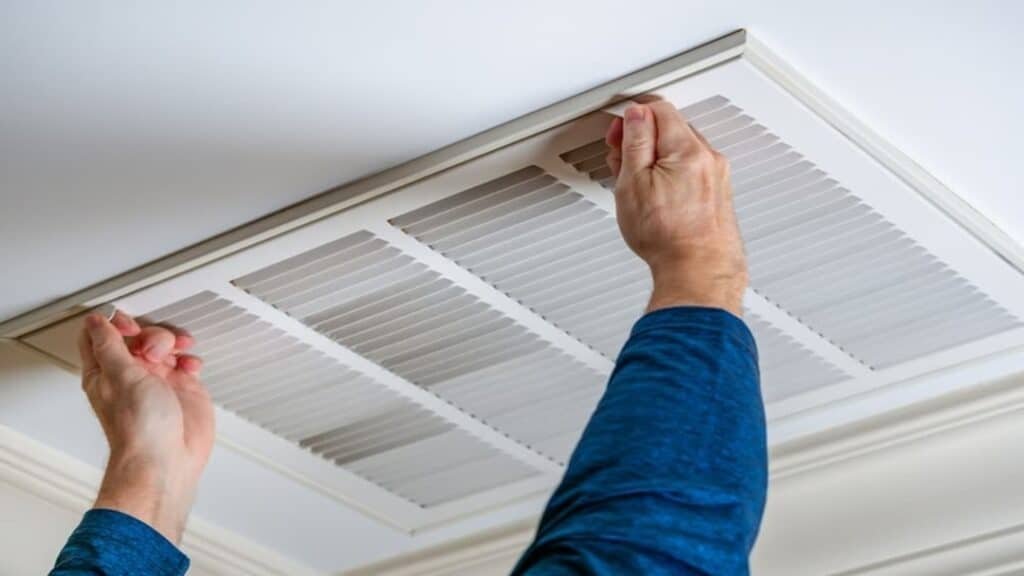
Why Knowing How Often to Change Your HVAC Air Filter Matters for Your Home
How often should you change your HVAC air filter is one of the most common — and most important — maintenance questions a homeowner can ask. The short answer depends on a few key factors, but here is a quick reference to get you started:
| Household Situation | Recommended Change Frequency |
|---|---|
| Standard home, no pets, no allergies | Every 90 days |
| Home with one pet or mild allergies | Every 60 days |
| Multiple pets, allergies, or asthma | Every 20-45 days |
| Vacation or lightly used home | Every 6-12 months |
| Fiberglass (1-inch) filter, any home | Every 30 days |
| 4-5 inch media filter | Every 3-12 months |
Most homeowners in Carlsbad, CA do not think about their air filter until something goes wrong — the energy bill spikes, the air feels stuffy, or the system stops keeping up. By that point, the filter has likely been restricting airflow for weeks. According to the U.S. Department of Energy, swapping out a clogged filter can improve your HVAC system’s efficiency by 5 to 15%, and it can boost your indoor air quality by 20 to 30%. That is a significant return on a simple, routine task.
The tricky part is that there is no single schedule that works for every home. Your filter’s lifespan depends on the type of filter you use, how many people and pets live in your home, local air quality conditions, and how hard your system runs. Southern California homeowners face added variables like wildfire smoke and dry, dusty air that can shorten filter life faster than standard guidelines suggest.
This guide walks you through every factor so you can build a filter schedule that actually fits your home.
How often should you change your HVAC air filter?
For most homes, the best baseline is simple:
- 1-inch fiberglass filters: about every 30 days
- 1-inch pleated filters: about every 60 to 90 days
- 4- to 5-inch media filters: about every 3 to 12 months
- Vacation or very low-use homes: often every 6 to 12 months, with periodic checks
That said, “every 3 months” is only a starting point, not a law of nature. Filters do not own calendars. They load up based on airflow, dust, and how much your system actually runs.
If your system runs heavily during warm inland stretches or during smoky conditions in Orange County and San Diego County, your filter may need attention sooner. And if you leave the fan set to ON instead of AUTO, the filter is working even when heating or cooling is not.
How often should you change your HVAC air filter in a typical home?
In a typical occupied home with no pets and no major indoor air issues, a 90-day replacement schedule is a good rule for a quality pleated filter. But we still recommend checking it monthly.
A typical schedule looks like this:
- Standard 1-inch fiberglass filter: replace every month
- Standard 1-inch pleated filter: replace every 2 to 3 months
- Thicker media filter: check every month, replace based on condition and manufacturer guidance
A monthly check matters because two homes with the same filter can have very different results. One may stay fairly clean for 90 days. Another may look gray and packed in 45.
If you want a seasonal reminder, spring and fall are great times to reset your filter routine. Our article on Why You Need to Swap Your Air Filter This Spring is a helpful companion read.
Why there is no one-size-fits-all filter schedule
Several factors can shorten filter life fast:
- Pets that shed hair and dander
- Family members with allergies or asthma
- More people in the home
- Nearby construction or remodeling dust
- Wildfire smoke or poor outdoor air quality
- Running the HVAC fan continuously
- Long cooling seasons and heavy system runtime
That is why a generic schedule can miss the mark. Think of filter replacement more like checking tire pressure than celebrating a holiday. The timing depends on real-world conditions.
What changes your filter replacement schedule the most?
The biggest schedule changers are not mysterious. They are the things that add more particles to your air or force more air through the system.
The top factors are:
- Pets
- Number of occupants
- Allergies or asthma
- Home size and airflow volume
- Outdoor air quality
- Construction dust
- Smoking indoors
- Fan setting and total HVAC runtime
If you are focused on cleaner air overall, our indoor air quality services page covers more ways we help homeowners improve comfort and filtration.
How pets, allergies, and occupancy affect how often should you change your HVAC air filter
Pets are one of the biggest reasons filters clog early. Fur, dander, and dirt tracked in from outside all add to the load.
A practical guide:
- One pet: inspect monthly, expect replacement around every 60 days
- Multiple pets: inspect monthly, often replace every 20 to 45 days
- Allergy or asthma household: inspect monthly, and often replace every 20 to 45 days
- Large family or high occupancy home: expect faster loading than a lightly occupied home
Children and sensitive adults often react sooner to poor indoor air, so these homes benefit from more frequent checks and better filters. If symptoms flare when the system turns on, that is a clue your filter may already be overdue.
How home size, fan setting, and HVAC runtime change filter life
Bigger homes usually move more air, and more air means more particles hitting the filter. But smaller homes are not automatically off the hook. A small home with a small filter can still need frequent changes because the filter has less surface area.
Also important:
- Fan set to AUTO: filter works when heating or cooling runs
- Fan set to ON: filter works all the time
- Peak summer use: filters can load much faster
- Homes with one return pulling lots of air: filters may clog sooner
If your fan runs continuously for extra circulation, expect to change filters more often. It is great for air mixing, but it is not a free lunch for the filter.
When wildfires, dust, and nearby construction mean faster changes
This is especially relevant in Southern California. During wildfire events, ash and fine smoke particles can fill filters quickly. Clean filters become even more important during these periods because they can help keep a large share of airborne contaminants out of your living space.
You should inspect your filter sooner than usual if:
- Wildfire smoke has been present in your area
- You live near active construction
- You are remodeling indoors
- Winds have been blowing dust into the home
- You have recently done drywall sanding, cutting, or flooring work
In these conditions, a “normal” 90-day schedule can become a 30-day schedule fast. Sometimes an immediate replacement after a smoke event or dusty project is the smartest move.
Which filter type lasts longer and how MERV rating affects timing
Filter type matters a lot. In many homes, it is the single biggest factor in how often replacement is needed.
| Filter Type | Typical Lifespan | Filtration Level | Notes |
|---|---|---|---|
| 1-inch fiberglass | About 30 days | Basic | Low dust-holding capacity |
| 1-inch pleated | About 60-90 days | Better | Good balance for most homes |
| 4- to 5-inch media | About 3-12 months | Better to high | Larger surface area, longer life |
| Washable/reusable | Clean monthly | Varies | Must dry fully before reinstalling |
For homeowners exploring filtration upgrades, our air filtration services page offers more guidance.
Fiberglass vs pleated filters: replacement frequency and performance
Fiberglass filters are the basic option. They are usually thinner, catch larger particles, and fill up quickly. In most homes, they should be replaced every 30 days or less.
Pleated filters have more surface area, trap smaller particles better, and typically last longer. In an average home, a pleated 1-inch filter often makes it 60 to 90 days.
In plain English:
- Fiberglass = shorter lifespan, lighter filtration
- Pleated = longer lifespan, better dust capture
- Thicker pleated media = longest lifespan in compatible systems
For most homeowners, pleated filters are the better all-around choice because they improve particle capture without requiring constant replacement.
How MERV rating influences how often should you change your HVAC air filter
MERV measures how effectively a filter captures particles. Higher MERV usually means finer filtration, but it can also mean more airflow resistance if the system is not designed for it.
General guidance:
- MERV 8 to 11: a strong fit for many homes
- MERV 12 to 13: often helpful for allergy concerns if the system supports it
- Very high MERV: may require more attention to airflow and compatibility
A higher MERV filter may load with particles faster because it is catching more of them. But if the filter also has more media surface area, it may still last as long as a lower-rated filter. The key is not just MERV alone. It is MERV plus thickness plus system design.
Using a filter with too much resistance for your system can hurt comfort, reduce airflow, and strain components. Higher is not always better.
Thicker 4- to 5-inch media filters vs standard 1-inch filters
A 4- or 5-inch media filter has much more dust-holding capacity than a 1-inch filter. That extra depth gives it more surface area, so it can often last anywhere from 3 months to a year depending on usage.
Examples from the research show this clearly: some 5-inch filters are rated around 12 months, while some 1-inch high-efficiency filters may need replacement around every 3 months.
The takeaway is simple:
- Thicker filters usually last longer
- Thickness must match what your HVAC cabinet is designed to accept
- You should still inspect monthly even if the filter is rated for long life
How to tell when your air filter needs to be changed
Time is one clue. Condition is the real answer.
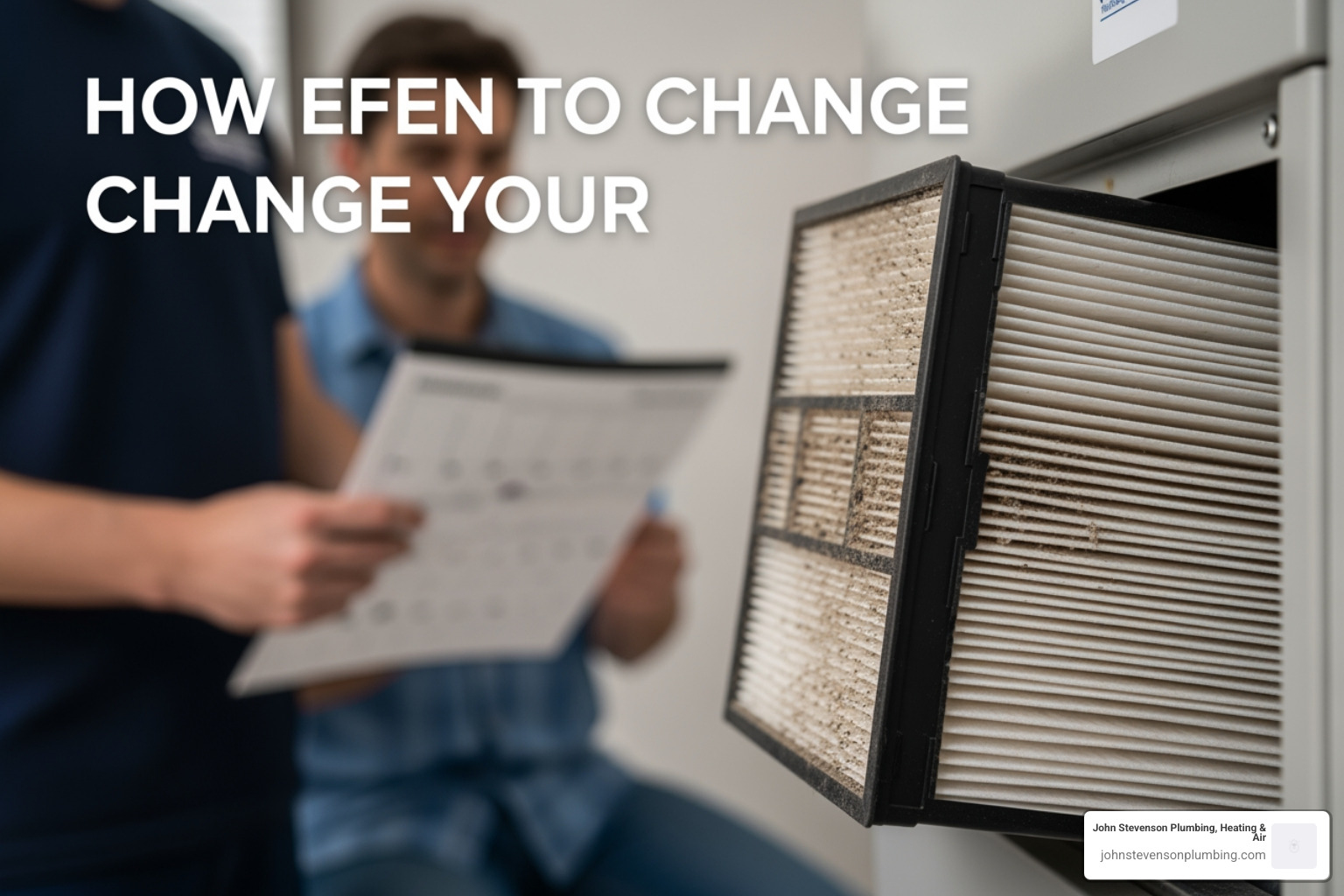
The best way to visually inspect an air filter
The easiest method is the light test:
- Turn off the system.
- Remove the filter.
- Hold it up to a bright light.
- If light barely passes through, it is likely time to replace it.
Also look for:
- Gray or dark discoloration
- Visible dust packed into pleats
- Hair, lint, or debris on the surface
- A missing replacement date on the frame
We recommend checking monthly and writing the installation date on the filter frame. That tiny habit saves a lot of guesswork later.
Warning signs your HVAC filter is clogged
A dirty filter often shows up in the house before you look at the filter itself.
Common warning signs include:
- Weak airflow from vents
- More dust collecting on furniture
- Allergy symptoms getting worse indoors
- Uneven temperatures between rooms
- Longer cooling or heating cycles
- Musty smell when the system starts
In severe cases, restricted airflow can contribute to frozen evaporator coils in cooling mode or put extra strain on the blower motor.
What happens if you do not change your air filter regularly
Neglecting the filter can affect both comfort and equipment health.
Possible consequences include:
- 5 to 15% lower system efficiency
- Higher energy use
- Poorer indoor air quality
- Extra wear on motors and components
- Overheating or airflow-related issues
- More breakdown risk over time
A dirty filter is a lot like skipping oil changes in your car. It may not cause an immediate crisis, but it quietly raises the odds of bigger problems.
If you want help tying filter changes into a bigger maintenance routine, our AC maintenance services are designed to keep systems running efficiently.
Filter schedules for special homes and buildings
Not every property follows the same pattern. Low-use homes, multi-unit buildings, and commercial spaces all need their own schedule.
Best filter change schedule for low-use, vacation, and second homes
If a home is lightly occupied and the HVAC system runs less often, the filter can last longer. In many vacation or second homes, 6 to 12 months is reasonable.
Still, we recommend:
- Inspecting at least every 90 days
- Replacing sooner after wildfire smoke or dust events
- Changing before peak heating or cooling season if the old filter has been sitting for months
Low occupancy helps, but a filter should never be left in place indefinitely just because the home was quiet.
How often commercial or multi-unit buildings should change filters
Commercial and multi-unit properties need more structured schedules because occupancy density and operating hours are usually higher.
A good rule of thumb:
- Check monthly
- Replace based on loading, occupancy, and operating hours
- Use fixed schedules where indoor air standards or building policies require them
Office spaces, schools, hospitality properties, and healthcare-adjacent environments often need tighter filter management than single-family homes. In multi-unit buildings, common-area systems may load quickly because they serve many occupants.
For property-wide HVAC support, see our Orange County HVAC services and San Diego HVAC services.
Tips to maintain optimal HVAC filter performance and indoor air quality
A good filter only helps if it is installed and maintained properly.
Best practices:
- Use the correct size
- Make sure the airflow arrow points in the right direction
- Ensure the filter fits snugly without gaps
- Keep the return area clean
- Check filters monthly, even if they are long-life models
- Replace after unusually dusty events
- Pair filter changes with regular HVAC tune-ups
If dust buildup keeps returning quickly, it may be worth looking deeper at the duct system and overall air quality strategy. Learn more about duct cleaning and indoor air quality solutions.
Frequently Asked Questions about HVAC air filter replacement
Do you really need to change your air filter every 3 months?
Not always. Every 3 months is a common guideline for a standard pleated filter in an average home. But fiberglass filters usually need monthly replacement, while thicker media filters may last much longer. If you have pets, allergies, high dust, or heavy HVAC runtime, 3 months may be too long.
Should you change filters more often in summer or wildfire season?
Yes. During peak cooling season, your system runs more, so the filter works harder. During wildfire smoke events, filters can load much faster with fine particles and ash. In both cases, inspect sooner than usual and replace when airflow or appearance says it is time.
Can the wrong filter hurt airflow and comfort?
Yes. A filter that is too restrictive for your system can reduce airflow, make rooms feel less comfortable, and add strain to HVAC components. For most homes, MERV 8 to 11 is a strong balance, but the best fit depends on the system and household needs.
Conclusion
The best answer to how often should you change your HVAC air filter is this: start with a baseline, then adjust for real life. For many homes, that means 30 days for fiberglass, 60 to 90 days for pleated 1-inch filters, and 3 to 12 months for deeper media filters. But pets, allergies, wildfire smoke, dust, fan settings, and heavy runtime can all shorten that timeline.
Our advice is simple: check your filter monthly. That one habit protects airflow, supports cleaner indoor air, and helps your HVAC system do its job without unnecessary strain.
If you want expert help keeping your system in top shape, John Stevenson Plumbing, Heating & Air Conditioning is here to help homeowners across our Southern California service area with dependable maintenance and indoor comfort solutions. You can also learn more about long-term system care through our HVAC maintenance page.