
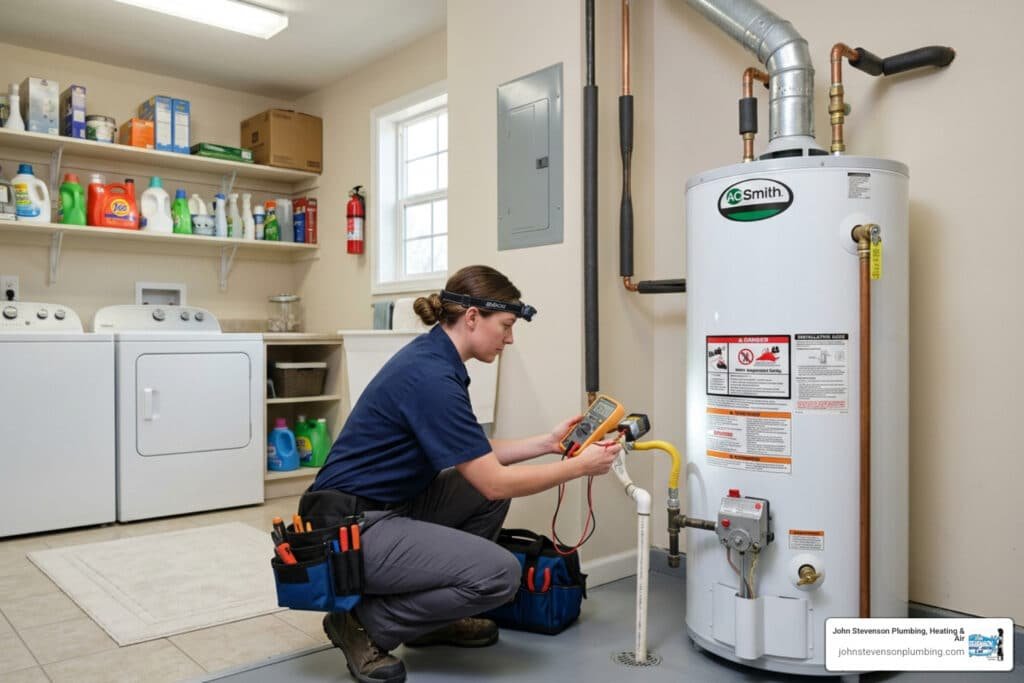
Warning Signs Your Water Heater Is Going Out (And What to Do)
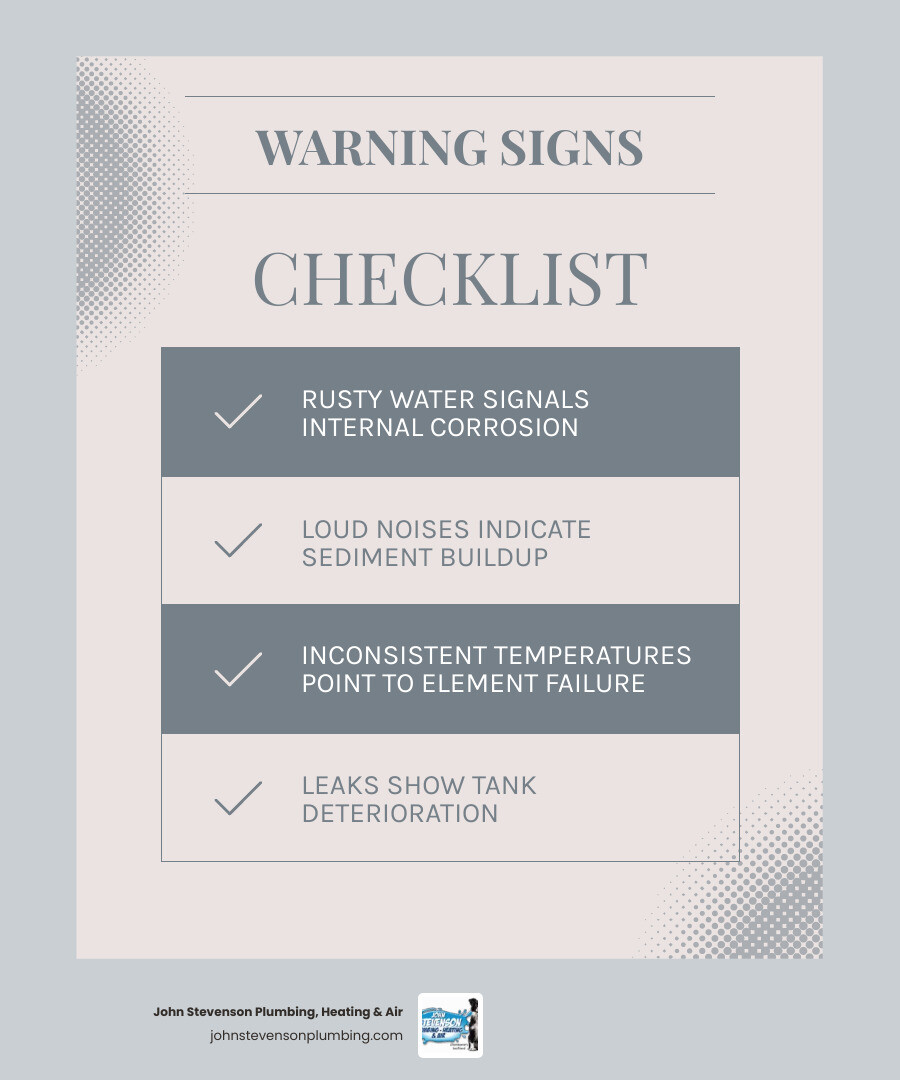
The most common signs your water heater is going out include the following:
- Rusty or discolored hot water — often signals internal tank corrosion or a failing anode rod
- Loud popping, rumbling, or banging noises — typically caused by sediment buildup at the bottom of the tank
- Inconsistent or lukewarm water temperatures — may point to a failing heating element or thermostat
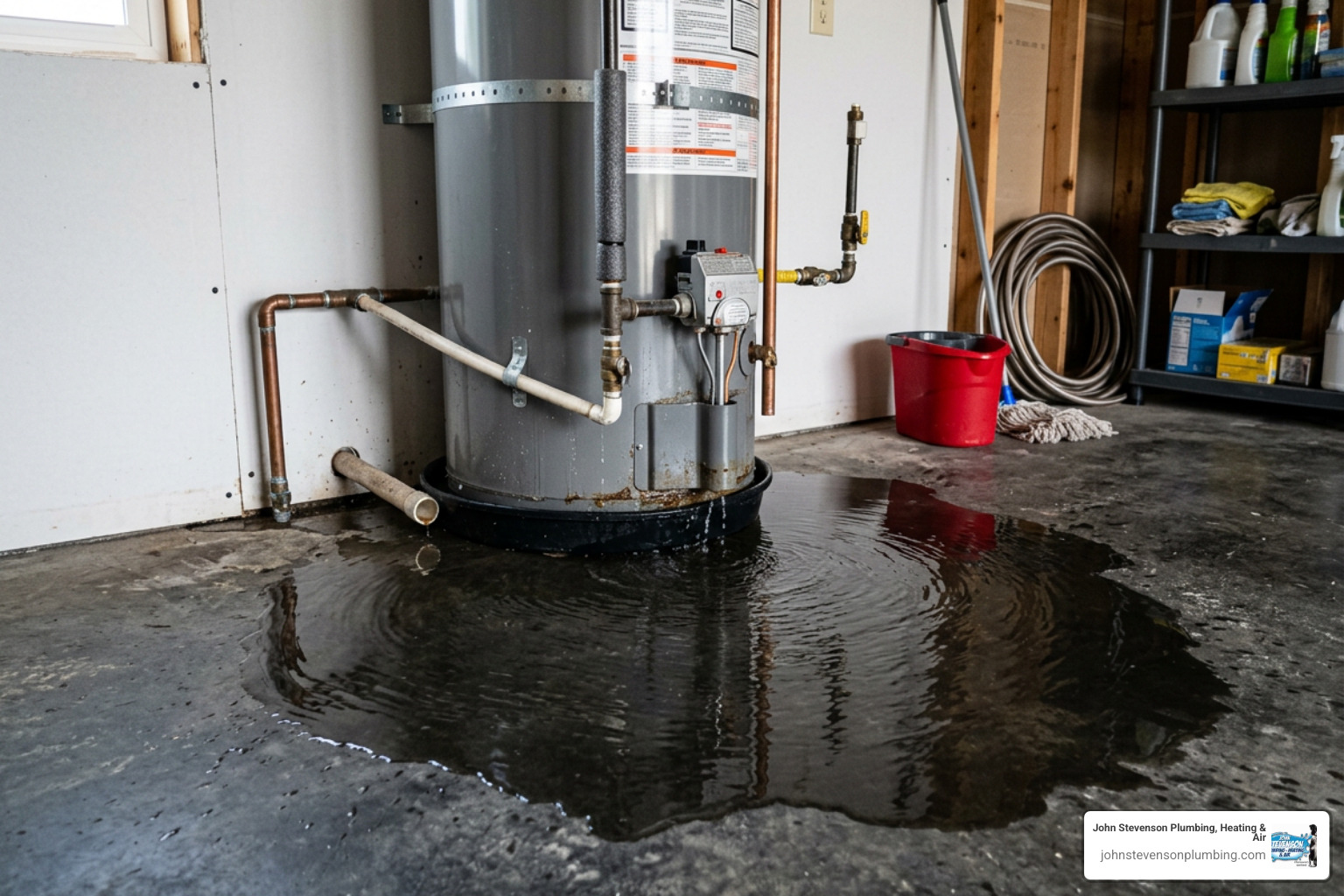
- Water pooling around the base of the unit — a strong indicator of a tank leak or cracked vessel
- Rising energy bills with no change in usage — sediment forces the heater to work harder, burning more energy
- Frequent repairs — multiple fixes in a short period usually mean the unit is near the end of its life
- Age over 10 years — most traditional tank water heaters last 8 to 12 years before performance declines significantly
Your water heater works quietly in the background every single day — for hot showers, dishwashing, laundry, and more. Unlike your air conditioner or furnace, it never gets a season off. That constant demand means wear builds up gradually, and most units start showing warning signs long before they completely fail.
The problem is that those early signals are easy to dismiss. A little less hot water here, a faint noise there. But by the time you’re standing in a cold shower or finding water spreading across your garage floor, the situation has already become an emergency — and emergency replacements almost always cost more and cause more disruption than a planned one.
Knowing what to watch for gives you the upper hand. Below, we’ll walk through the clearest signs that your water heater is on its way out, what’s actually causing each symptom, and when it’s time to call a licensed plumber in Carlsbad.
Signs your water heater is going out vocab explained:
Understanding the Lifespan of Your Water Heating System
When evaluating if your water heater is on its deathbed, the very first thing to look at is the calendar. While a well-maintained unit can sometimes surprise you with its longevity, age remains the single most reliable predictor of impending failure.
To understand why water heaters have a finite shelf life, it helps to understand how they interact with Southern California’s local environment. In Carlsbad, San Diego County, and Orange County, our municipal water supply is notoriously hard. It carries heavy concentrations of dissolved minerals like calcium and magnesium. Over time, these minerals precipitate out of the water, settling at the bottom of your tank and forming a thick, stubborn layer of scale.
This mineral buildup acts as an insulating blanket between the burner (or heating element) and the water. The system must run longer and hotter to heat the water through this crust. This extra thermal stress causes the metal tank to expand and contract repeatedly, eventually causing microscopic fractures in the glass lining. Once the water makes contact with the steel outer shell of the tank, rust takes over, and the countdown to a catastrophic leak begins.
To find out exactly where your system stands, you can check its manufacture date. This information is encoded in the serial number on the manufacturer’s label. Typically, the first letter of the serial number represents the month (A for January, B for February, etc.), and the next two digits represent the year of manufacture. If you discover your unit was manufactured more than a decade ago, it is officially on borrowed time.
For more details on tracking your unit’s age and preparing for a transition, read our guide on Don’t Get Into Hot Water Over Your Heater’s Lifespan.
Lifespan Differences: Tank vs. Tankless
Different types of water heaters have distinct lifespans and maintenance requirements. Understanding these differences helps you decide whether to stick with a traditional setup or upgrade to a high-efficiency alternative.
| Water Heater Type | Average Lifespan (Unmaintained) | Lifespan with Regular Maintenance | Primary Energy Source | Key Advantage |
|---|---|---|---|---|
| Traditional Tank (Gas) | 6 to 10 years | 10 to 15 years | Natural Gas / Propane | Lower upfront installation |
| Traditional Tank (Electric) | 8 to 12 years | 12 to 17 years | Electricity | Simple operation |
| Tankless Systems | 10 to 15 years | 20+ years | Gas or Electricity | Endless hot water, space-saving |
| Heat-Pump (Hybrid) | 8 to 12 years | 13 to 18 years | Electricity / Air Heat | Up to 5x more energy-efficient |
While traditional tank systems are the most common in Southern California, tankless systems are rapidly gaining popularity. Because tankless water heaters do not store a large volume of water constantly, they are not subject to the same structural corrosion risks as metal tanks. However, they are still vulnerable to mineral scale buildup in their heat exchangers, meaning they still require regular flushing to reach their full 20-year potential.
Key Signs Your Water Heater Is Going Out
A water heater rarely fails silently. It leaves clues that, if caught early, can save you from a major household disaster. Recognizing these signs your water heater is going out is key to transitioning from a reactive emergency replacement to a planned, stress-free upgrade.
If you’re trying to determine whether a quick fix will buy you another year or if you need to start shopping for a new unit, check out our decision framework on How to Decide if Your Water Heater is a Keeper or a Goner.
Rusty Water and Signs Your Water Heater Is Going Out
If you turn on your bathtub faucet and are greeted by a stream of tea-colored or rusty water, your water heater is sending a clear distress signal. This discoloration typically indicates that the metal tank is corroding internally.
Every tank water heater is equipped with a sacrificial anode rod. This rod is made of magnesium or aluminum and is designed to attract corrosive elements in the water so that they attack the rod instead of the steel tank. Think of it as a lightning rod for rust. However, anode rods typically deplete within 3 to 5 years. Once the anode rod is fully consumed, the water begins eating away at the tank’s steel walls.
To determine if the rust is coming from your water heater or your main plumbing lines, perform a quick “two-bucket test”:
- Fill a white bucket with cold water from your bathtub faucet.
- Fill a second white bucket with hot water from the same faucet.
- Compare the two. If both are rusty, the issue lies in your home’s piping or the municipal water supply. If only the hot water is discolored, the interior of your water heater tank is actively rusting away.
Once a tank starts rusting internally, there is no way to reverse the damage. The structural integrity of the steel is compromised, and replacement is the only safe option.
Loud Noises and Signs Your Water Heater Is Going Out
Have you started hearing strange popping, rumbling, or banging sounds coming from your utility closet or garage? Many homeowners describe these noises as sounding like a boiling pot of popcorn or someone tapping on the tank with a hammer.
These sounds are directly caused by sediment buildup. As hard water is heated, dissolved calcium carbonate solidifies and settles to the bottom of the tank. Over several years, this sediment forms a thick, hardened crust.
When the burner at the bottom of a gas water heater ignites, or when the lower electric element heats up, water becomes trapped beneath this crust of sediment. This trapped water quickly superheats and boils, turning into steam bubbles that pop violently as they escape through the sediment layer.
While these noises are annoying, they also represent a physical threat to your system. The intense localized heat trapped beneath the sediment can cause the bottom of the tank to overheat and warp. For electric units, the sediment can bury the lower heating element, causing it to burn out repeatedly. If your water heater is already making loud rumbling sounds, a simple flush may not be enough to dissolve the hardened crust, and the physical stress may have already caused microscopic cracks in the tank.
Inconsistent Temperatures and Fluctuating Hot Water
Another classic sign of a failing water heater is a sudden drop in hot water capacity or erratic temperature swings. If your morning shower starts hot but turns lukewarm within five minutes, your system is struggling.
In electric water heaters, this is often caused by a failed upper or lower heating element. If the upper element fails, the water at the top of the tank never gets hot. If the lower element fails, you will get some hot water initially, but the overall capacity of the tank will be cut in half, leading to very short hot-water runs.
In gas units, inconsistent temperatures can stem from a failing thermostat or a broken dip tube. The dip tube is a plastic pipe that directs incoming cold water down to the bottom of the tank to be heated. If the dip tube cracks or disintegrates, incoming cold water mixes with the hot water at the top of the tank, resulting in lukewarm water at your faucets.
While heating elements, thermostats, and dip tubes can be repaired or replaced on a relatively young unit, these symptoms in a system over 10 years old usually point to a broader systemic failure.
The Hidden Risks of Ignoring a Failing Water Heater
It is tempting to ignore a noisy or slightly lukewarm water heater, especially when life is busy. However, delaying a replacement carries significant financial and physical risks. A standard water heater holds 40 to 80 gallons of pressurized water. If the tank ruptures, that water will dump into your home within minutes.
Because many water heaters in Carlsbad and Orange County are located in garages, closets, or indoor utility rooms, a sudden tank failure can quickly destroy drywall, ruin framing, and lead to mold growth. These sudden failures often result in thousands of dollars in water damage restoration. Additionally, insurance policies frequently deny claims if they find the leak was caused by long-term, neglected wear-and-tear rather than a sudden, unpredictable event.
To ensure your home remains safe and up to code, it is vital to understand the local regulations. Southern California homes must adhere to strict guidelines regarding installation, venting, and safety valves. You can read more about these requirements in our guide, Don’t Get Burned by California Plumbing Code Water Heater Rules.
Safety Hazards and California Compliance
Beyond water damage, failing water heaters present serious safety hazards. For gas-powered units, a faulty burner or cracked venting can lead to incomplete combustion, releasing carbon monoxide (CO) into your home. Carbon monoxide is an odorless, colorless gas that can be fatal.
Furthermore, a stuck or blocked Temperature and Pressure (T&P) relief valve can turn a water heater into a safety hazard. The T&P valve is designed to release water if the internal temperature or pressure exceeds safe limits. If this valve is blocked or corroded shut, and the thermostat fails, pressure can build inside the tank until it ruptures.
Living in Southern California also means we must prepare for seismic activity. California Plumbing Code requires all water heaters to be properly anchored and braced to resist earthquake motion.
If your unit is not secured with approved heavy-duty straps attached to the wall studs, a tremor can tip the unit over, rupturing gas lines and water pipes, which can lead to fires or flooding. To make sure your system is secure, read The Ultimate Guide to California Earthquake Bracing for Water Heaters.
Proactive Maintenance to Extend Your System’s Lifespan
The best way to avoid an emergency replacement is to take care of the system you currently have. Proactive maintenance can easily double the lifespan of a traditional tank water heater, keeping it running efficiently and safely.
An effective maintenance routine includes:
- Annual Tank Flushing: Draining your water heater at least once a year removes loose sediment before it can harden into a crust. This keeps your system running quietly and preserves its heating efficiency.
- Anode Rod Inspections: Check your sacrificial anode rod every 3 to 5 years. If the rod is depleted to the point where the wire core is visible, replacing it immediately can save your tank from rusting.
- Testing the T&P Valve: Gently lift the lever on the T&P valve once a year to ensure water flows out of the discharge pipe, then release it to make sure it snaps shut and seals completely.
- Setting the Right Temperature: Keep your water heater thermostat set to 120°F. This temperature is hot enough to prevent harmful bacterial growth while reducing mineral scaling and preventing accidental scalding.
By staying on top of these simple tasks, you can protect your investment and avoid unexpected cold showers. For a step-by-step walkthrough on keeping your system in top shape, check out our resource on How to Extend the Life of Your Water Heater.
Frequently Asked Questions About Water Heater Failure
Is it better to repair or replace an aging water heater?
When deciding between repair and replacement, we recommend using the 50 percent rule. If the cost of the repair exceeds 50% of the cost of a brand-new water heater installation, replacement is generally the smarter financial move.
Additionally, consider the age of your unit. If your water heater is over 10 years old and requires a costly repair (such as a new control valve or heating element), investing money into a system that is already near the end of its lifespan is often a poor investment. Upgrading to a new, high-efficiency model will lower your monthly energy bills and provide long-term reliability.
Can a failing water heater cause health risks?
Yes. If your water heater’s thermostat is set too low (below 120°F), or if sediment buildup prevents the water from reaching proper temperatures, it can create a breeding ground for bacteria, including Legionella.
Another common issue is a strong rotten egg smell coming from your hot water. This odor is caused by sulfate-reducing bacteria reacting with a depleted magnesium anode rod inside the tank. While not always toxic, it makes bathing and cooking highly unpleasant and indicates that your system needs professional attention.
What should I do immediately if my water heater starts leaking?
If you discover water pooling around the base of your water heater, take these steps immediately to limit damage:
- Turn off the power source: For a gas water heater, turn the gas control valve to the “OFF” position. For an electric water heater, switch off the dedicated circuit breaker in your electrical panel.
- Shut off the water supply: Locate the cold water shutoff valve at the top of the unit (usually a blue lever or a wheel valve) and turn it clockwise to stop the flow of water into the tank.
- Call a professional: Contact a licensed plumber immediately to assess the leak and prepare for a safe repair or replacement.
Conclusion
A failing water heater does not have to turn into a household emergency. By keeping an eye out for key warning signs—like rusty water, strange rumbling noises, fluctuating temperatures, and minor leaks—you can take control of the situation before a major breakdown occurs.
At John Stevenson Plumbing, Heating & Air Conditioning, we have spent years helping homeowners throughout Carlsbad, San Diego County, and Orange County keep their plumbing systems running safely and efficiently. Whether you need a routine annual flush, an anode rod replacement, or an upgrade to a high-efficiency tankless system, our team is here to help.
Don’t wait for a cold shower or a flooded garage to take action. Contact us today to Schedule Water Heater Services in Orange County and Carlsbad and let our certified technicians restore your home’s comfort and peace of mind.