
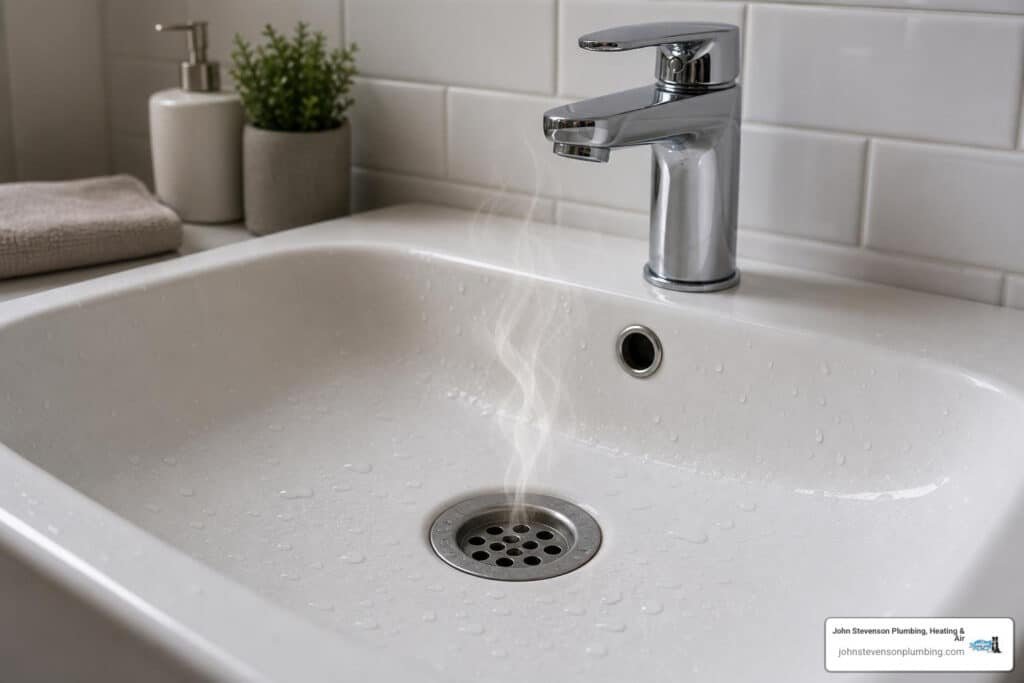
That Sewer Smell Coming from Your Bathroom Drain Is Telling You Something
A sewer smell coming from a bathroom drain is one of the most common plumbing complaints homeowners in Carlsbad face — and the good news is that most causes are straightforward to fix. Here is a quick look at what is likely happening and what to do first:
Most common causes and fastest fixes:
- Dry P-trap — Run water for 30–60 seconds down any drain that sees little use
- Biofilm and hair buildup — Remove the drain cover and clear debris with a zip tool
- Sink overflow buildup — Pour 1/4 cup of bleach into the overflow hole and rinse after an hour
- Blocked vent pipe — Check the roof vent for leaves, nests, or debris
- Failing toilet wax ring — Check for a rocking toilet or odor concentrated at the toilet base
- Cracked sewer line — Call a plumber if multiple drains gurgle or back up at once
That rotten-egg odor is not just unpleasant — it is a signal that sewer gas has found an open path into your home. Left unaddressed, it can become a health concern. But in most cases, a few targeted changes will eliminate the smell the same day.
I’m John Stevenson, and in this guide I’ll walk you through exactly how to track down the source and fix it for good.
What Causes a Sewer Smell Coming from a Bathroom Drain?
To permanently eliminate a sewer smell coming from a bathroom drain, we first need to understand the mechanical defenses built into your home’s plumbing. Your bathroom drains are not just open pipes leading straight to the Carlsbad municipal sewer system. If they were, your home would be completely uninhabitable due to the constant backup of toxic sewer gases.
Instead, your plumbing relies on a delicate balance of gravity, water barriers, and air pressure to keep sewer odors where they belong: outside and underground.
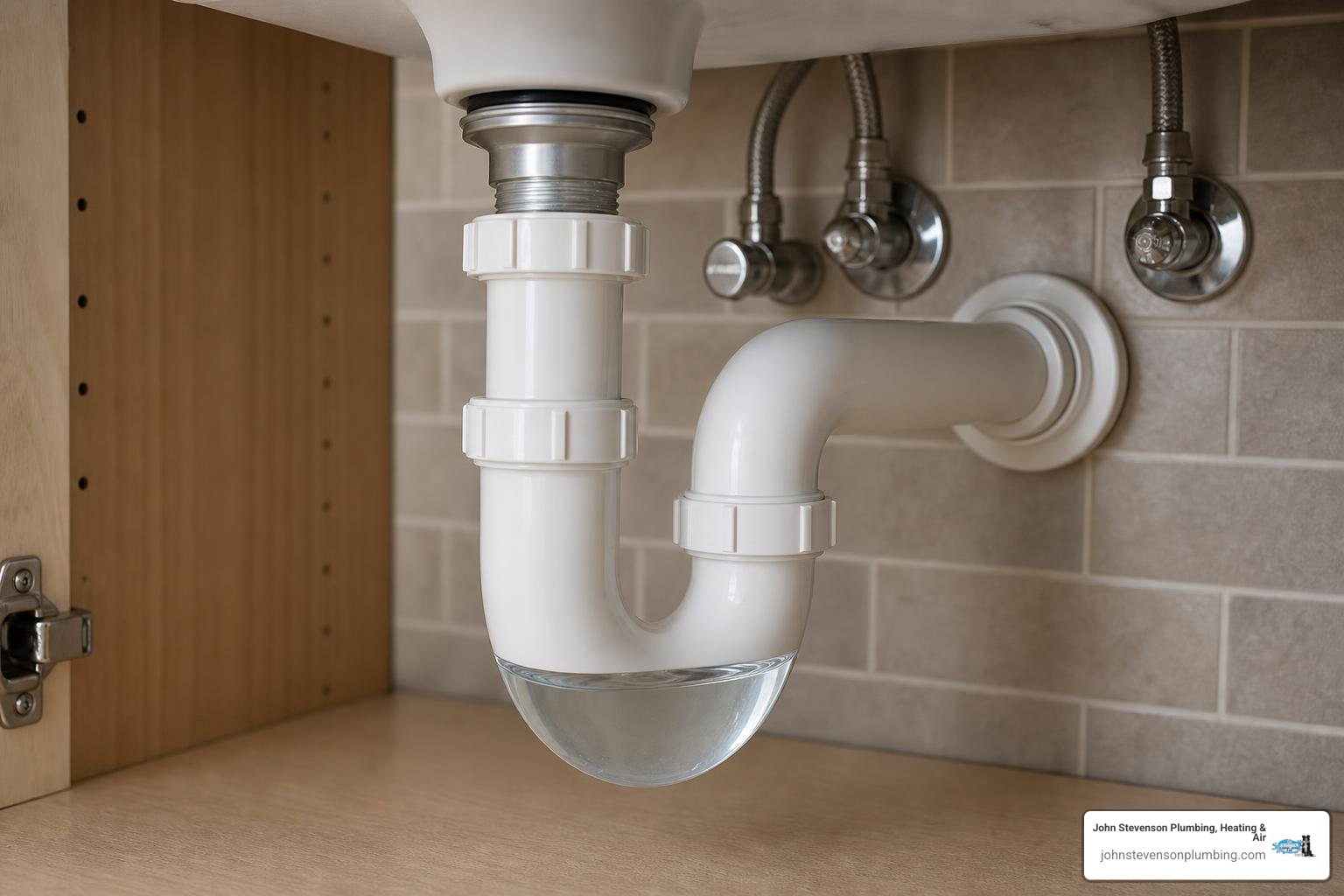
The primary defense mechanism is the U-shaped pipe located directly beneath your sink, tub, or shower drain, known as the P-trap. The unique curve of the P-trap is designed to capture and hold a small, permanent pool of water every time you run a faucet. This standing water acts as an airtight seal. Sewer gas traveling up from the main line hits this water barrier and is safely blocked from entering your living space.
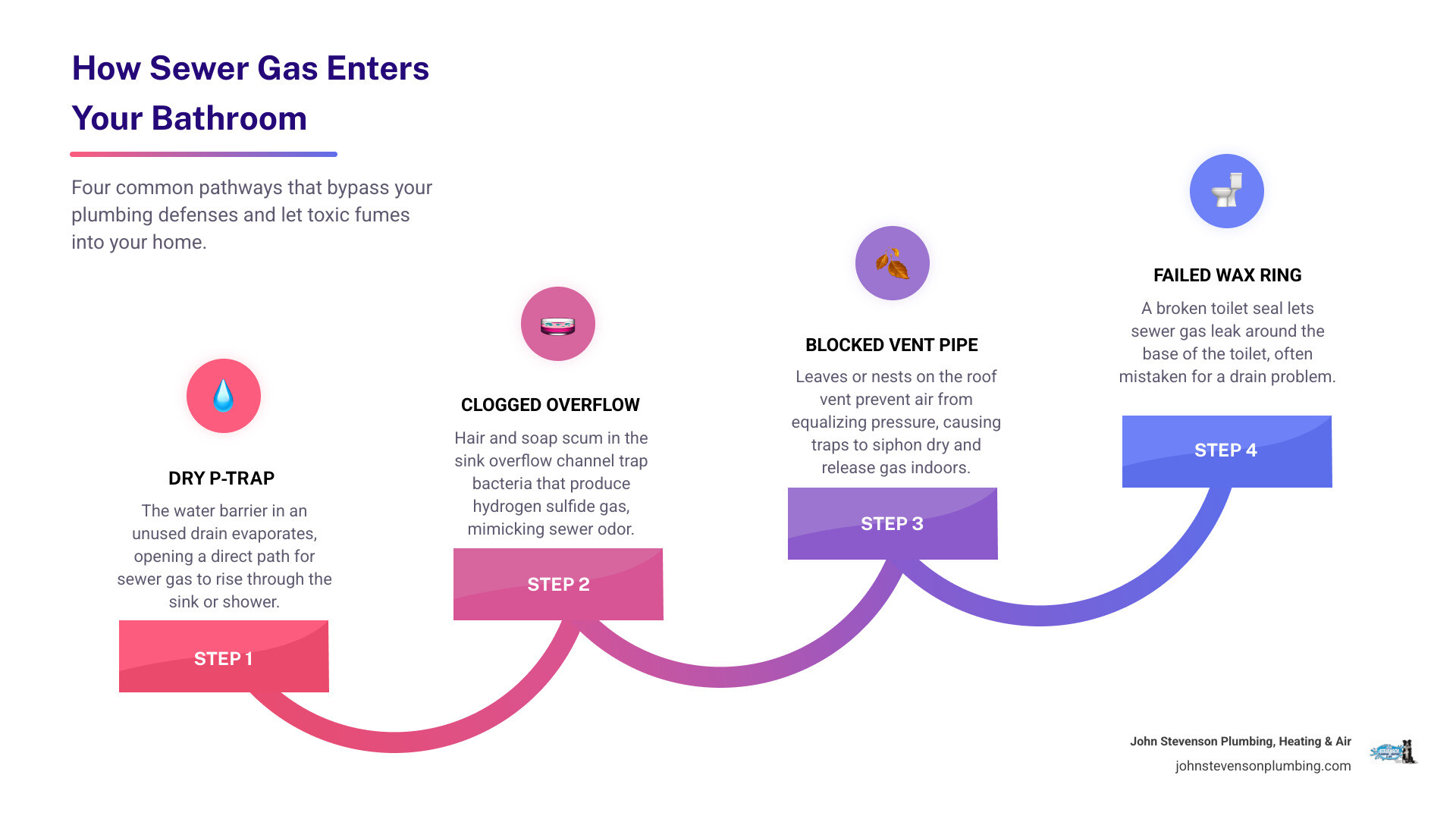
However, several common issues can compromise this barrier, leading to a noticeable sewer smell coming from a bathroom drain:
- Evaporation: If a guest bathroom, secondary shower, or powder room sink sits unused for weeks, the water seal inside the P-trap will slowly evaporate, breaking the seal and opening a direct highway for sewer gas.
- Capillary Siphoning: Hair clogs dangling over the edge of the P-trap’s internal curve (the weir) can act like a tiny candle wick. Through capillary action, these long strands of hair slowly draw water out of the trap and send it down the drain line, eventually lowering the water level enough to break the airtight seal.
- Biofilm Accumulation: Sometimes, the smell is not actually sewer gas from the main line, but a localized odor caused by decomposing organic matter, soap scum, hair, and toothpaste clinging to the walls of your drain pipe.
To keep these components in top shape throughout the year, check out our guide on Stop the Drip With These Spring Plumbing Inspection Tips.
How a Dry P-Trap Triggers a Sewer Smell Coming from a Bathroom Drain
A dry P-trap is the single most common culprit behind a sudden sewer smell coming from a bathroom drain. In our beautiful Southern California climate, warm temperatures and dry air can accelerate the evaporation of the water seal inside idle drains. This is especially common in guest bathrooms, pool house changing rooms, or vacation properties that sit vacant for extended periods.
When the 2-to-4-inch water barrier inside the trap evaporates, there is absolutely nothing stopping gases like hydrogen sulfide, methane, and ammonia from drifting upward into your bathroom.
Fortunately, there is a simple “mineral oil hack” to prevent this in rarely used drains. By pouring a tablespoon of standard mineral oil down the drain after refilling the trap, you create a thin, floating barrier on top of the water. Because oil does not evaporate, it seals the water beneath it, preserving your P-trap’s water barrier for months at a time.
Biofilm and Clogged Drains
If the smelly drain is one you use every single day, evaporation is highly unlikely. In these active fixtures, the culprit is almost always a thick, sticky layer of biofilm.
Every time you wash your hands, brush your teeth, or shower, you wash away soap, skin cells, hair, shaving cream, toothpaste, and body oils. This mixture clings to the drain stopper, the strainer, and the upper walls of the drain pipe. Over time, bacteria feed on this organic accumulation, multiplying rapidly and forming a slimy black or orange film known as biofilm.
As these bacteria feast on your biological leftovers, they release sulfurous gases that smell remarkably like rotten eggs. This localized odor is easily mistaken for a main sewer line failure, but it is actually a hygiene issue occurring in the first few inches of your pipe.
To prevent these sticky situations before they take hold of your plumbing, read our helpful tips on how to Stop the Clog Before It Starts.
3 Quick DIY Changes to Eliminate Bathroom Drain Odors
Before you panic and call in a professional, there are three highly effective, non-invasive DIY changes you can make to neutralize odors and restore fresh air to your bathroom.
Many homeowners instinctively reach for chemical drain cleaners when they smell something foul. However, we strongly advise against using harsh, caustic commercial chemicals. These products generate intense heat that can warp plastic PVC pipes, corrode older metal lines, and fail to address the root mechanical issues. Plus, they pose a severe chemical burn hazard to you and any plumber who may need to work on your pipes later.
Instead, we recommend mechanical cleaning and natural deodorizers. For a deeper look at your clearing options, read our guide on Snake or Spray Choosing the Best Way to Clear Your Clogs.
Change 1: Refill and Seal Your Dry P-Traps
The absolute fastest fix for a sewer smell coming from a bathroom drain is to simply run the water.
- Go to the smelly fixture and run warm water from the faucet for 30 to 60 seconds. If it is a bathtub or shower, run the showerhead.
- For floor drains (often found in laundry rooms or basement areas), slowly pour a quart of clean water directly down the grate.
- If the drain is rarely used, pour one tablespoon of mineral oil or water-safe pink RV antifreeze down the drain immediately after refilling it to slow down future evaporation.
If a dry trap was the sole cause of your odor, the incoming water will immediately recreate the physical barrier, and the smell should dissipate within an hour as the bathroom ventilates.
How do I stop a sewer smell coming from bathroom drain overflows?
If you have thoroughly cleaned your sink’s main drain but a persistent, musty sulfur smell remains, you are likely overlooking a hidden bacterial breeding ground: the sink overflow channel.
The overflow is the small hole located near the top rim of your bathroom basin. Its purpose is to prevent flooding if the drain stopper is closed while the faucet is running. Because water rarely rises high enough to enter this hole, the internal overflow channel almost never receives a thorough flushing. Instead, it accumulates soap overspray, toothpaste splatter, and damp dust, creating a dark, moist paradise for mold, mildew, and biofilm.

To clean this hidden pathway safely:
- Insert a small, flexible bottle brush or pipe cleaner into the overflow hole to physically break up any thick slime or debris.
- Carefully pour 1/4 cup of household liquid bleach or an enzyme-based drain cleaner directly into the overflow hole. (You can use a small funnel to prevent splashing onto your bathroom fixtures).
- Let the cleaning agent sit for approximately one hour to completely sanitize the channel and kill odor-causing bacteria.
- Flush the channel thoroughly by pouring several cups of hot water down the overflow hole.
Change 3: Clear Minor Clogs and Hair Buildup
When hair and soap scum combine, they create a dense, sponge-like clog that traps decomposing organic material. To clear this out mechanically without damaging your pipes:
- Remove the Stopper: Pull out or unscrew your sink pop-up stopper or shower drain cover.
- Use a Zip Tool: Insert a cheap, barbed plastic drain cleaning tool (often called a “zip-it” tool) down into the drain. Twist it gently and pull it straight back up. You will likely retrieve a clump of hair and soap residue.
- Scrub the Area: Use an old toothbrush dipped in warm water and dish soap to scrub away any visible biofilm clinging to the underside of the drain flange and stopper.
- Deodorize with Baking Soda and Vinegar: Pour 1/2 cup of baking soda down the drain, followed immediately by 1/2 cup of white distilled vinegar. The natural fizzing reaction will help loosen stubborn grease and soap scum. Let it bubble for 30 minutes, then flush the line with a kettle of boiling water (or very hot tap water if you have plastic PVC pipes).
If you are dealing with a more stubborn clog deeper in the line, you can compare professional clearing methods in our comparison article Hydro Jetting vs Snaking Cost Comparison 101.
Advanced Plumbing Issues Behind Persistent Sewer Gas
If you have refilled your P-traps, scrubbed away the biofilm, sanitized your overflows, and the sewer smell coming from a bathroom drain still returns after a few days, you are dealing with a structural or venting failure within your home’s waste system.
These advanced issues allow sewer gas to bypass your P-traps entirely or physically pull the water out of them. To understand how plumbers locate these hidden leaks, read How to Find Hidden Water Leaks the Right Way.
Blocked or Damaged Vent Pipes
Every drain line in your home must be connected to a plumbing vent pipe (or vent stack) that extends upward through your roof. These vents serve two critical purposes: they allow sewer gases to escape harmlessly into the outdoor air, and they bring fresh air into the plumbing system to equalize pressure.
Think of a plumbing vent like the tiny hole on the lid of a travel coffee mug. Without that hole, fluid cannot flow smoothly because a vacuum is created. When your roof vent is blocked by bird nests, fallen leaves, tennis balls, or ice, the rushing water from a toilet flush or a draining washing machine creates a powerful vacuum inside your waste lines. This negative pressure will physically suck (siphon) the water straight out of your bathroom P-traps as it searches for air, leaving the traps dry and allowing sewer gas to pour into your home.
If you suspect your vent system is struggling, check out our Spring Cleaning for Your Pipes and Vents a Comprehensive Checklist to see how to maintain these lines.
Failing Toilet Wax Rings
Your toilet does not sit directly on your bathroom floor; it rests on a metal or plastic collar called a closet flange. To create a completely airtight and watertight seal between the bottom of the toilet bowl and the waste pipe, a sticky wax ring is compressed between them.
If this wax ring dries out, crumbles, or is broken because the toilet is loose and rocks slightly when you sit on it, sewer gas will escape from beneath the toilet base. Because gas rises, you might mistake this smell as coming from a nearby sink or shower drain. A key indicator of a failed wax ring is an odor that intensifies immediately after flushing, or subtle water staining on the flooring around the base of the toilet.
Cracked Sewer Lines and Main-Line Backups
The most serious cause of a persistent sewer odor is a cracked, collapsed, or blocked main sewer line buried beneath your yard or concrete slab. In Southern California, invasive tree roots from thirsty landscaping can easily penetrate older clay or cast-iron sewer lines, creating structural blockages.
When a main sewer line is cracked or backed up, wastewater cannot flow away from your home. Instead, it pools in the lower sections of your plumbing, pushing heavy sewer gases backward through your drains. This is often accompanied by slow-draining fixtures throughout the entire house and distinct gurgling sounds coming from your toilets when you run the shower.
To learn more about identifying hidden structural damage before it ruins your flooring, read Don’t Ignore These Warning Signs Hidden Water Damage 101.
Is Sewer Gas Dangerous to Your Health?
Yes, sewer gas is not just a cosmetic nuisance; prolonged exposure can pose genuine health hazards. Sewer gas is a complex mixture of several gases generated by the natural decomposition of human waste.
At low concentrations, the primary concern is hydrogen sulfide, which is highly toxic but easily identified by its signature “rotten egg” smell. However, at prolonged or high exposure levels, hydrogen sulfide can cause “olfactory fatigue,” a dangerous condition where your nose loses the ability to detect the smell even as the concentration of the gas continues to rise.
| Sewer Gas Component | Characteristics & Flammability | Low-Exposure Symptoms | High-Exposure Risks |
|---|---|---|---|
| Hydrogen Sulfide | Smells like rotten eggs; highly toxic and flammable. | Eye irritation, sore throat, cough, shortness of breath. | Olfactory fatigue, rapid unconsciousness, respiratory failure. |
| Methane | Odorless, colorless; highly flammable (5%–15% volume in air). | Dizziness, headache, mild nausea due to oxygen displacement. | Suffocation (asphyxiation), severe explosion hazard. |
| Ammonia | Sharp, pungent chemical odor; highly irritating to mucous membranes. | Eye watering, nose and throat irritation, coughing. | Chemical burns to the respiratory tract, pulmonary edema. |
| Carbon Monoxide / Dioxide | Odorless, colorless; displaces oxygen in confined spaces. | Headaches, confusion, rapid heart rate, fatigue. | Loss of consciousness, brain damage, asphyxiation. |
If you are experiencing a persistent sewer smell coming from a bathroom drain, monitor your family and pets for the following physical symptoms:
- Unexplained, dull headaches that improve when you leave the house
- Frequent nausea, dizziness, or lightheadedness
- Persistent sinus irritation, coughing, or watering eyes
- Fatigue and difficulty concentrating
Note: If you ever experience a sudden, incredibly strong sewer odor accompanied by dizziness or a feeling of lightheadedness, evacuate your home immediately, leave the door open for ventilation, and call for emergency assistance.
Frequently Asked Questions About Bathroom Odors
Why does my shower drain smell like rotten eggs?
This is usually caused by the activation of biofilm bacteria. When you turn on a hot shower, the warm water warms up the cold pipes and physically disturbs the sticky accumulation of hair, soap scum, and body oils lining the drain. This sudden heat and moisture accelerate the metabolic activity of the bacteria living in the biofilm, causing them to rapidly release volatile sulfur compounds (hydrogen sulfide) that rise up into your face.
Can a blocked roof vent cause sewer odors in my bathroom?
Absolutely. When your roof’s plumbing vent is blocked, the negative pressure created when water drains through your pipes has nowhere to pull air from except your indoor fixtures. This vacuum actively sucks the water out of your sink, shower, or tub P-traps. Once the water barrier is gone, sewer gas flows freely from the main line into your living space. If you hear a distinct “gurgling” or bubbling sound from your toilet or sink while another drain is emptying, your vent is likely blocked.
Is it safe to use chemical drain cleaners to get rid of the smell?
We strongly advise against it. Chemical drain cleaners rely on aggressive caustic agents (like sodium hydroxide or sulfuric acid) to melt blockages. These chemicals generate extreme heat that can melt thin-walled plastic PVC pipes, corrode older metal plumbing, and severely pollute our local Southern California waterways. Furthermore, they only provide a temporary mask for odors caused by mechanical failures like dry traps, failed seals, or blocked vents. Mechanical clearing with a zip tool or professional hydro jetting is always the safer, more permanent solution.
Conclusion
A sewer smell coming from a bathroom drain is a problem that should never be ignored. Whether it is a simple dry P-trap in a guest bathroom, a stubborn buildup of biofilm, or a more serious structural issue like a blocked roof vent or a cracked sewer line, finding the root cause is essential for your comfort and your family’s health.
At John Stevenson Plumbing, Heating & Air Conditioning, we have spent decades helping homeowners across Carlsbad, San Diego County, and Orange County resolve their most stubborn plumbing headaches. Our team of fully certified, highly trained technicians operates under our exclusive 5-Star Service Guarantee — which means you get thorough diagnostics, upfront and transparent pricing, friendly service, and a 24-hour satisfaction check-in to ensure the job was done right.
If you have tried the DIY changes in this guide and are still dealing with a persistent odor, we are here to help. We can perform advanced diagnostic services, including:
- Everything You Need to Know About Sewer Camera Inspections to visually inspect the interior of your main line for cracks or root intrusion.
- A Comprehensive Guide to How Leak Detection Technology Works to pinpoint hidden sewer pipe failures behind your drywall or beneath your concrete slab.
- Advanced drain clearing solutions, and we even offer our Ultimate Checklist for When Hydro Jetting Is Overkill to help you choose the right service for your home.
Don’t let sewer odors compromise your home’s comfort. Schedule Professional Drain Services in Carlsbad with the experts at John Stevenson Plumbing, Heating & Air Conditioning today!