
When a Smelly Drain Means a Bigger Plumbing Problem in Your Home
When a smelly drain means a bigger plumbing problem, the difference often comes down to a few key warning signs. Here’s a quick way to tell what you’re dealing with:
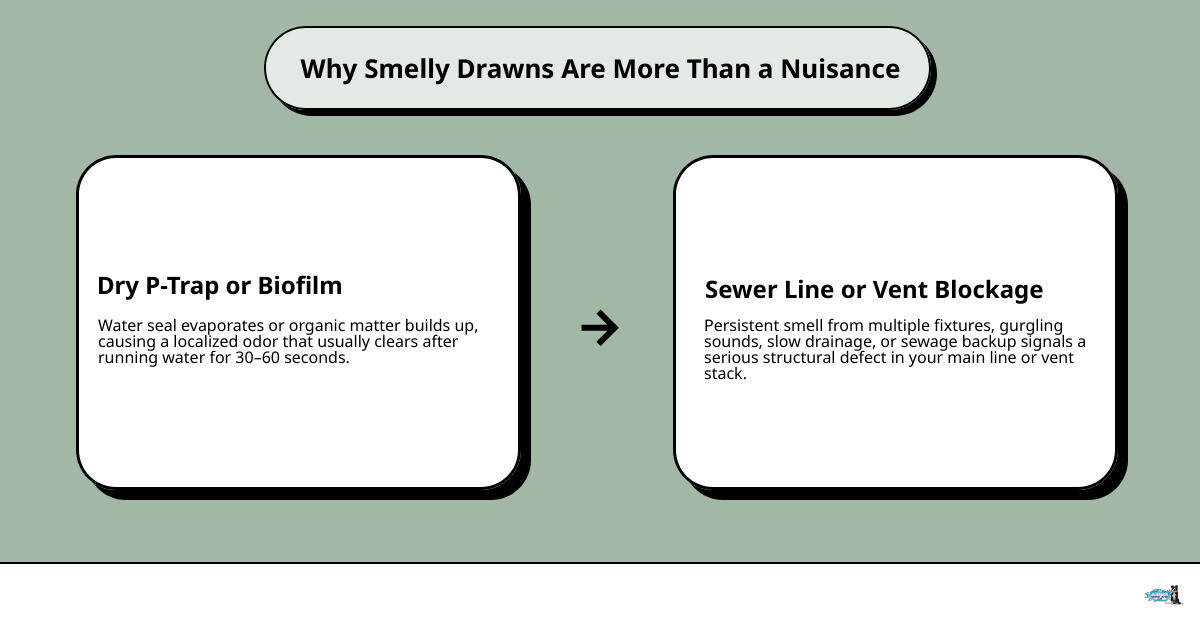
- Likely minor – Smell comes from one unused sink or floor drain, disappears after running water for 30–60 seconds, and doesn’t return. This is usually a dry P-trap.
- Possibly serious – Smell persists after running water, comes from multiple fixtures, or is accompanied by slow drainage.
- Probably a major issue – You hear gurgling toilets, notice sewage backing up into low-level drains, or smell raw sewage throughout the house.
- Call a plumber now – Smell is present in a regularly used fixture, gets worse during heavy water use, or keeps coming back after basic fixes.
A faint drain odor isn’t always cause for alarm. But a smell that lingers, spreads, or comes with other symptoms — like gurgling sounds or sluggish drains — is your plumbing system telling you something is wrong beneath the surface. Roughly 1 in 5 property complaints involve persistent drain odours, and the root cause is often more than just a dirty pipe. It could be a blocked vent, a cracked sewer line, or a main-line blockage that no amount of store-bought cleaner will fix.
As John Stevenson, I’ve seen Carlsbad homeowners waste weeks on quick fixes that only mask the real problem — and I want to help you avoid that.
Minor Odors vs. Serious System Defects
To properly evaluate a foul odor rising from your plumbing, you first need to understand how your drainage system is designed to keep smells out of your living space. Every drain fixture in your home — from the kitchen sink to the shower and laundry tub — relies on a curved section of pipe beneath it known as a P-trap.
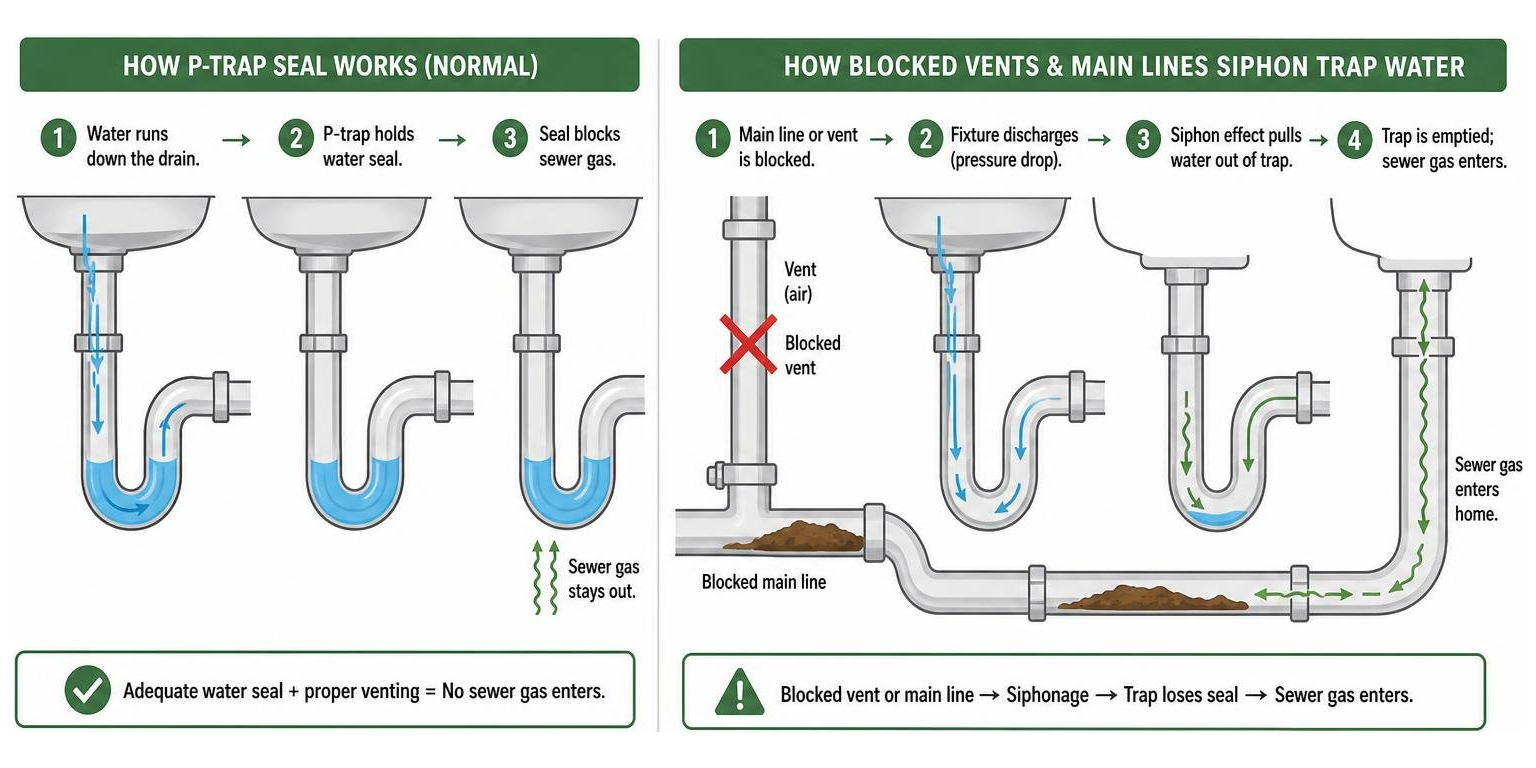
This simple section of pipe holds a small standing pool of water. That water acts as a continuous liquid barrier, sealing off the pipe network so that foul-smelling sewer gases stay inside the drainage lines where they belong. When the system operates smoothly, water seals the line, and waste flows out. However, when a smelly drain means a bigger plumbing problem, this barrier is either being compromised from above by organic decay or broken from below by structural defects.
Dry P-Trap Evaporation
The most basic cause of a sewer gas smell is a dried-out P-trap. When a guest bathroom sink, basement floor drain, or laundry sink sits unused for weeks, the standing water inside the trap gradually evaporates into the air. Once the water level drops below the curve of the pipe, the airtight seal vanishes, giving sewer gas a clear highway straight into your room.
Fixing a dry trap is simple:
- Run tap water down the drain for 30 to 60 seconds to replenish the water trap seal.
- Wait 15 to 20 minutes for any residual sewer gas in the room to dissipate.
- For infrequently used drains, add a teaspoon of mineral oil or cooking oil on top of the water. Oil doesn’t evaporate easily, so it sits on top of the liquid layer and seals the water underneath from drying out.
If running water resolves the smell permanently, you had a minor dry trap issue. But if a fixture you use every day suddenly smells like a dry trap, water is likely being sucked out by atmospheric pressure imbalances deeper in your system — a clear indicator of a wider venting problem.
Biofilm and Organic Buildup
Another common cause of isolated drain odors is the accumulation of organic debris. Over time, kitchen drains collect food waste, grease, and fats, while shower and bathroom drains gather hair, body oils, and soap scum. Microscopic bacteria colonize these residues, forming a slimy coating inside the top few inches of the pipe known as biofilm. Over 90% of household kitchen drains support thick biofilms, which frequently harbor bacterial cultures like E. coli and Salmonella.
As these bacteria break down organic waste, they release foul gases, including hydrogen sulfide (which smells like rotten eggs). You might notice a sour smell specifically when you turn on warm water, as the rising steam warms the organic residue and lifts the odor into the air.
While unpleasant, localized biofilm is not a structural emergency. Cleaning it requires physical removal — such as using a plastic barbed zip tool to pull out hair mats and scrubbing accessible pipe walls — followed by flushing the line with natural cleansers like baking soda, vinegar, and hot water.
When a Smelly Drain Means a Bigger Plumbing Problem in the Sewer Main
When bad smells persist despite regular water usage and routine pipe cleaning, the issue is no longer isolated to the fixture. When a smelly drain means a bigger plumbing problem, the trouble usually lies deep inside the main sewer line or lateral connection.
Main sewer lines can fail or become obstructed due to several critical factors:
- Tree Root Intrusion: Underground roots seek out moisture and nutrients, creeping into pipe joints and hairline cracks. Once inside, they act as a net, trapping paper and solids until the line freezes up.
- Pipe Sagging or “Bellies”: Shifts in soil beneath your home’s foundation can cause buried sewer pipes to sink, creating a low spot where standing water and sludge accumulate instead of flowing away.
- Physical Pipe Breaches: Aging materials, clay pipe deterioration, or shifting ground cause cast iron or PVC pipes to crack, snap, or offset.
When wastewater flow is restricted in the main line, decaying sewage settles in the underground system rather than washing out to municipal utility lines. The resulting gases build pressure and travel upward into every connected branch line in your home. If you suspect an underground obstruction or broken pipe is driving odors into your living areas, scheduling Everything You Need to Know About Sewer Camera Inspections will help pinpoint the exact depth, location, and structural integrity of the line without disturbing your yard.
Diagnostic Patterns: Identifying Plumbing Vent and Sewer Line Issues
Determining whether you are dealing with a quick surface fix or a complex system failure comes down to pattern recognition. Your plumbing relies on balanced water flow and continuous air circulation. By observing how fixtures across your home interact when you run water or flush toilets, you can spot serious plumbing defects early.
Recognizing Vent Pipe Blockages
Plumbing vents are an essential,, part of your home’s drainage architecture. These vertical pipes extend upward through your home and exit through the roof. They serve two vital purposes:
- They exhaust sewer gases safely into the open air above your house.
- They equalize air pressure inside the drainage pipes, allowing wastewater to flow freely without creating a vacuum.
Think of a plumbing vent like holding your thumb over the top of a drinking straw filled with water — the liquid stays trapped inside until you release your thumb to let air in. When your roof vent stack gets blocked by leaves, bird nests, debris, or winter ice, wastewater rushing down the drain creates a powerful suction vacuum behind it.
To satisfy this vacuum, the system pulls air through the path of least resistance: your indoor fixture drains. This air suction physically pulls the standing water seal right out of your P-traps — a process known as trap siphoning.
Classic signs of a blocked plumbing vent stack include:
- Gurgling or Glug-Glug Noises: Sinks, showers, or toilets make deep bubbling sounds when nearby fixtures drain.
- Recurring Dry Traps: A frequently used bathroom sink or shower drain loses its water trap seal repeatedly.
- Cross-Fixture Odors: Running the washing machine or flushing an upstairs toilet causes a sudden blast of sewer odor in a ground-floor bathroom shower.
If you suspect seasonal debris or weather has altered your vent performance, running through a Spring Cleaning for Your Pipes and Vents a Comprehensive Checklist can keep your vertical air intake clear and functional.
Symptoms When a Smelly Drain Means a Bigger Plumbing Problem
When a sewer smell is tied to structural main-line issues or widespread drainage failure, the symptoms rarely stop at a single sink. System-wide defects display distinct red flags across multiple fixtures simultaneously:
- Multi-Drain Involvements: Odors emerge from the kitchen, guest bath, and laundry room around the same time.
- Sluggish Flow System-Wide: Water takes a long time to empty from tubs, showers, and sinks across different areas of the house.
- Basement or Low-Level Backups: Wastewater or dark, foul fluid backs up into the lowest drains in the building (such as floor drains, basement showers, or ground-level tubs) when water is run on upper floors.
- Worsening Odors During Heavy Water Usage: Running water appliances like dishwashers or laundry cycles forces strong sewage smells out of nearby floor and sink drains.
Ignoring these combined warnings places your house at serious risk of structural contamination and hidden water damage. Catching these early signs is critical; reviewing Don’t Ignore These Warning Signs Hidden Water Damage 101 will help you identify moisture issues before rot or toxic mold spreads into your subfloors.
Physical Indicators of Pipe Leaks and Line Failures
Beyond sound and smell, broken underground pipes or concealed wall leaks often leave physical clues around your home and yard.
- Unusually Lush Green Grass Patches: If a section of your lawn near the foundation looks noticeably greener, taller, or thicker than the surrounding turf, nutrient-rich sewage may be leaking underground from a cracked lateral sewer line.
- Soggy Ground or Foundation Depressions: Underground leaks saturate the soil, causing ground sinkholes, damp mud spots during dry weather, or cracking along nearby concrete walkways and foundation slabs.
- Persistent Indoor Mold or Wall Discoloration: A leaking drain branch behind drywall saturates timber studs and insulation. This creates unexplained dark stains, peeling paint, or a damp basement smell that persists regardless of how often you clean.
Detecting a leak early prevents extensive damage to your home. If you notice structural moisture or suspect an isolated leak behind plaster or tile, check out How to Detect a Water Leak Behind Walls with These 5 Easy Changes and follow our steps on How to Find Hidden Water Leaks the Right Way.
Health Risks and Why DIY Cleaners Fail
Dismissing persistent sewer smells as a minor cosmetic inconvenience can compromise your household’s safety and damage your home’s infrastructure.
Health Hazards of Sewer Gas Exposure
Sewer gas is a complex mixture of volatile organic compounds and gases produced by decomposing domestic waste. Its primary components include hydrogen sulfide, methane, ammonia, and trace amounts of carbon monoxide.
While occasional low-level exposure from a dry P-trap is mostly just unpleasant, continuous indoor exposure poses real health hazards:
- Hydrogen Sulfide Toxicity: Characterized by a pungent “rotten egg” smell, hydrogen sulfide can cause eye irritation, sore throat, coughing, shortness of breath, headaches, nausea, dizziness, and fatigue.
- Respiratory Complications: Studies show that as many as 1 in 6 home respiratory complaints are linked to unaddressed indoor mold, bacterial films, or drainage contaminants.
- Flammability and Asphyxiation Risks: Methane is odorless, but in high concentrations within enclosed spaces, it displaces breathable oxygen and creates potential fire and explosion hazards.
If anyone in your home experiences unexplained dizziness, persistent nausea, or eye irritation accompanied by strong sewer smells, step into fresh air immediately and seek professional assistance to evaluate your plumbing system.
Why Store-Bought Cleaners Fail When a Smelly Drain Means a Bigger Plumbing Problem
When faced with a smelly drain, many homeowners buy bottle after bottle of harsh chemical drain cleaners. Unfortunately, caustic chemical gels usually fail to resolve recurring odors — and often make the problem worse:
- Inability to Scour Pipe Walls: Liquid gels flow straight down the path of least resistance. They cut a narrow channel through soft center clogs, but leave the surrounding bacterial biofilm and decay intact along the inner walls of the pipe.
- Pipe Material Damage: Chemical cleaners rely on heat-generating reactions (often using sodium hydroxide or sulfuric acid) to break down waste. This extreme heat can warp PVC joints, degrade rubber seals, and accelerate corrosion in older cast iron or galvanized pipes.
- Zero Impact on Vents or Main Line Failure: Chemical drain cleaners cannot clear a bird nest out of a roof vent stack, repair a broken underground pipe joint, or cut through tree root masses in the main line.
Relying on chemical solutions for deep plumbing failures creates a false sense of security while pipe deterioration continues behind your walls. For a safer, physical clearing approach, read our guide on Snake or Spray Choosing the Best Way to Clear Your Clogs to learn when mechanical clearing tools are the right tool for the job.
Professional Diagnostic Tools and Preventative Drain Care
When basic DIY checks reveal that a smelly drain means a bigger plumbing problem, modern diagnostic tools allow certified technicians to quickly find the root cause without invasive tearing or guesswork.
How Professional Plumbers Diagnose Hidden Sewer Leaks
At John Stevenson Plumbing, Heating & Air Conditioning, our licensed technicians serving Carlsbad, Oceanside, Encinitas, and communities across San Diego and Orange Counties use advanced, non-destructive tools to inspect your drainage system:
- CCTV Video Camera Inspections: A high-resolution, waterproof camera attached to a flexible fiber-optic cable is fed through your cleanout or drain line. Live footage displayed on an outdoor monitor shows exact pipe conditions, locating bellies, root intrusions, joint separations, or scale buildup.
- Smoke Testing: Non-toxic, highly visible diagnostic smoke is forced under gentle pressure into your home’s drain and vent network. If a pipe is cracked behind a wall, a wax ring is failed, or a vent line is disconnected, the smoke trickles out of the precise breach location, pinpointing hard-to-find gas leaks instantly.
- Pressure and Static Testing: Technicians isolate sections of pipe to check whether the system can hold pressure, identifying micro-fractures in underground lateral lines.
Understanding these modern methods removes the fear of mystery leaks; dive deeper with A Comprehensive Guide to How Leak Detection Technology Works.
Preventative Actions to Protect Your Drainage System
Taking preventative steps stops minor odors from developing into emergency plumbing issues. Homeowners who follow regular maintenance schedules experience significantly fewer callouts and avoid major plumbing damage over time.
The table below contrasts standard DIY preventative habits with professional care:
| Maintenance Task | Homeowner DIY Action | Professional Plumbing Care |
|---|---|---|
| Trap Maintenance | Flush infrequently used guest sinks and floor drains with clean water bi-weekly. Add mineral oil to long-term unused drains. | Inspect P-trap assemblies, mechanically clear heavy mineral scale, and check pipe joint seals. |
| Organic Debris Control | Flush kitchen drains monthly using baking soda, vinegar, and hot water. Use sink strainers to catch hair and food particles. | Perform specialized hydro jetting to thoroughly scour grease, scale, and biofilm off pipe walls. |
| Vent Inspection | Inspect roof vent openings visually from ground level for visible foliage or nesting debris. | Thoroughly clear vent stack blockages from the roof level and run snake augers through vents. |
| System Health Check | Monitor drains for gurgling sounds, sluggish drainage, or recurring smells. | Conduct video camera line surveys to detect offset joints, tree root intrusion, and structural pipe wear. |
To keep your system running smoothly year-round, check out our guide on how to Stop the Clog Before It Starts. Knowing which cleaning methods suit your system is key; read our breakdown on Hydro Jetting vs Snaking Cost Comparison 101 and review the Ultimate Checklist for When Hydro Jetting Is Overkill to choose the right drain cleaning approach for your home.
Frequently Asked Questions About Smelly Drains
Can baking soda and vinegar permanently eliminate drain smells?
Baking soda and vinegar are great for mild surface deodorizing, but they will not permanently eliminate recurring sewer odors. The fizzing reaction between sodium bicarbonate and acetic acid loosens minor grease and freshens localized surface scum. However, it lacks the physical force to break down thick hair mats, cut through tree roots, clear main line blockages, or fix roof vent issues. If the odor returns a day or two after flushing with baking soda and vinegar, your system requires physical cleaning or professional diagnostic evaluation.
Why does my drain gurgle when I flush the toilet?
A drain that gurgles when you flush the toilet indicates air pressure imbalance inside your drainage network, usually caused by a blocked roof vent stack or a developing restriction in the main sewer line. When the toilet flushes, a large volume of water moves through the main drain line. If air cannot enter through the roof vent stack to balance the system pressure, the rushing water pulls air through nearby sink or shower P-traps instead. The gurgling sound is air bubbling through the standing water seal in those traps, which often leaves the trap dry and allows sewer gas into the room.
Is sewer gas coming from my drain dangerous to breathe?
Brief, low-level exposure to sewer gas — such as walking into a room with a newly dried-out P-trap — is unlikely to cause lasting harm, though it can trigger minor headaches or sour stomachs. However, continuous exposure to sewer gas in enclosed living areas is dangerous. Sewer gas contains toxic hydrogen sulfide and flammable methane. Prolonged inhalation can cause eye irritation, sore throat, coughing, nausea, dizziness, and respiratory issues. If you notice strong, continuous sewer odors that do not disappear after refilling your P-traps, open windows for ventilation and call a licensed plumber to identify and fix the leak.
Conclusion
A smelly drain is your plumbing system’s early warning sign. While an unused sink with an evaporated P-trap or a bit of buildup under a shower strainer is a simple fix, persistent odors should never be ignored. When a smelly drain means a bigger plumbing problem, signs like system-wide slow drains, gurgling toilets, or smells across multiple fixtures point to venting failures, main line blockages, or cracked underground pipes.
Protect your home, health, and indoor comfort by acting before a minor smell escalates into an expensive emergency backup. If you live in Carlsbad, San Diego County, or Orange County, contact John Stevenson Plumbing, Heating & Air Conditioning today. Our licensed technicians provide thorough diagnostics and our 5-Star Service Guarantee to keep your home’s drainage running safely. Book your camera survey or pipe inspection today with our experts in Professional Drain Services.