
What Plumbing Problems Should You Check for After a Carlsbad Rainstorm?
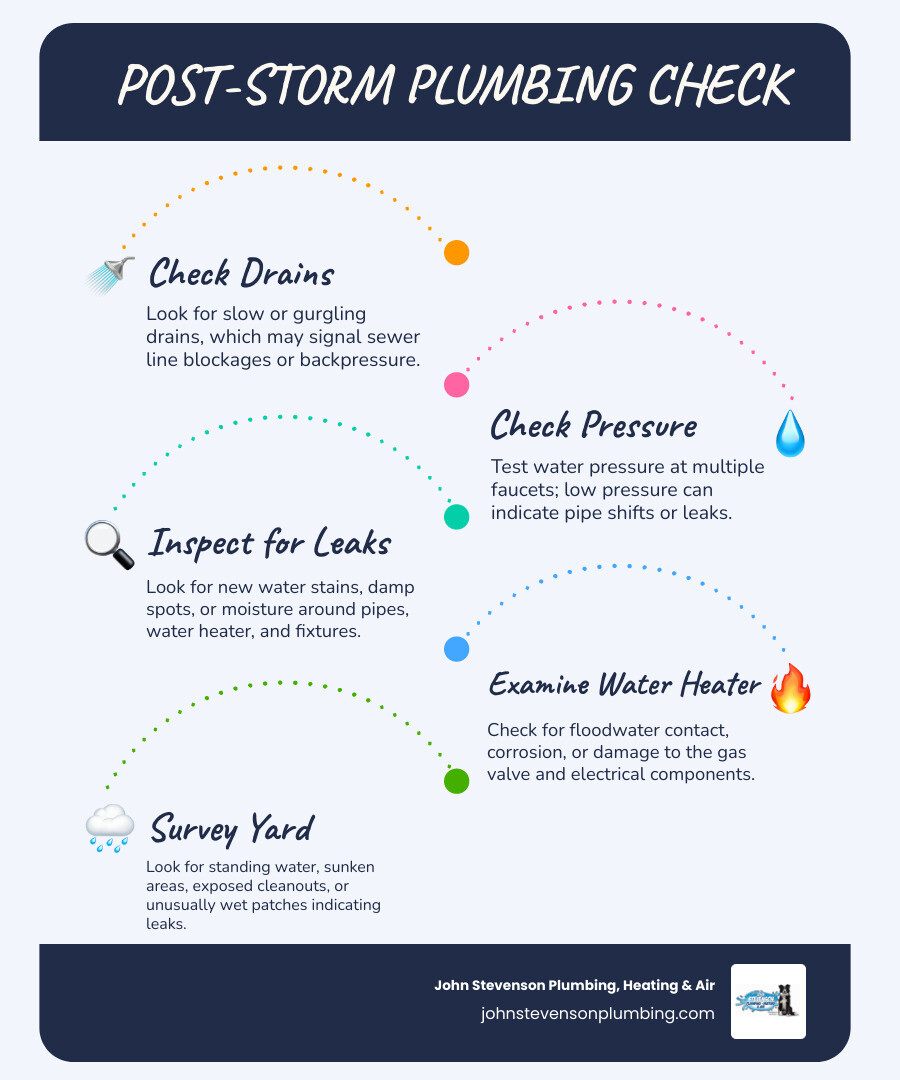
After heavy rain, look for slow or gurgling drains, low water pressure, new water stains, and wet or sunken spots in the yard. Check around the water heater, outdoor faucets, and exposed pipes for leaks or floodwater. These signs can point to a blocked sewer line or damaged water pipe, even if your home did not flood. If sewage is backing up or water is spreading indoors, stop using the plumbing and get help right away. For less urgent changes, plumbing repair in Carlsbad, CA, starts with finding the cause before it gets worse. Knowing which plumbing problems after a storm to look for can help you catch hidden damage before it turns into a larger repair.
Explore our plumbing services or request emergency plumbing help.
I’m John Stevenson, and if you notice a warning sign after a storm, contact us for plumbing help.
Crucial Plumbing Problems After a Storm What to Look for First
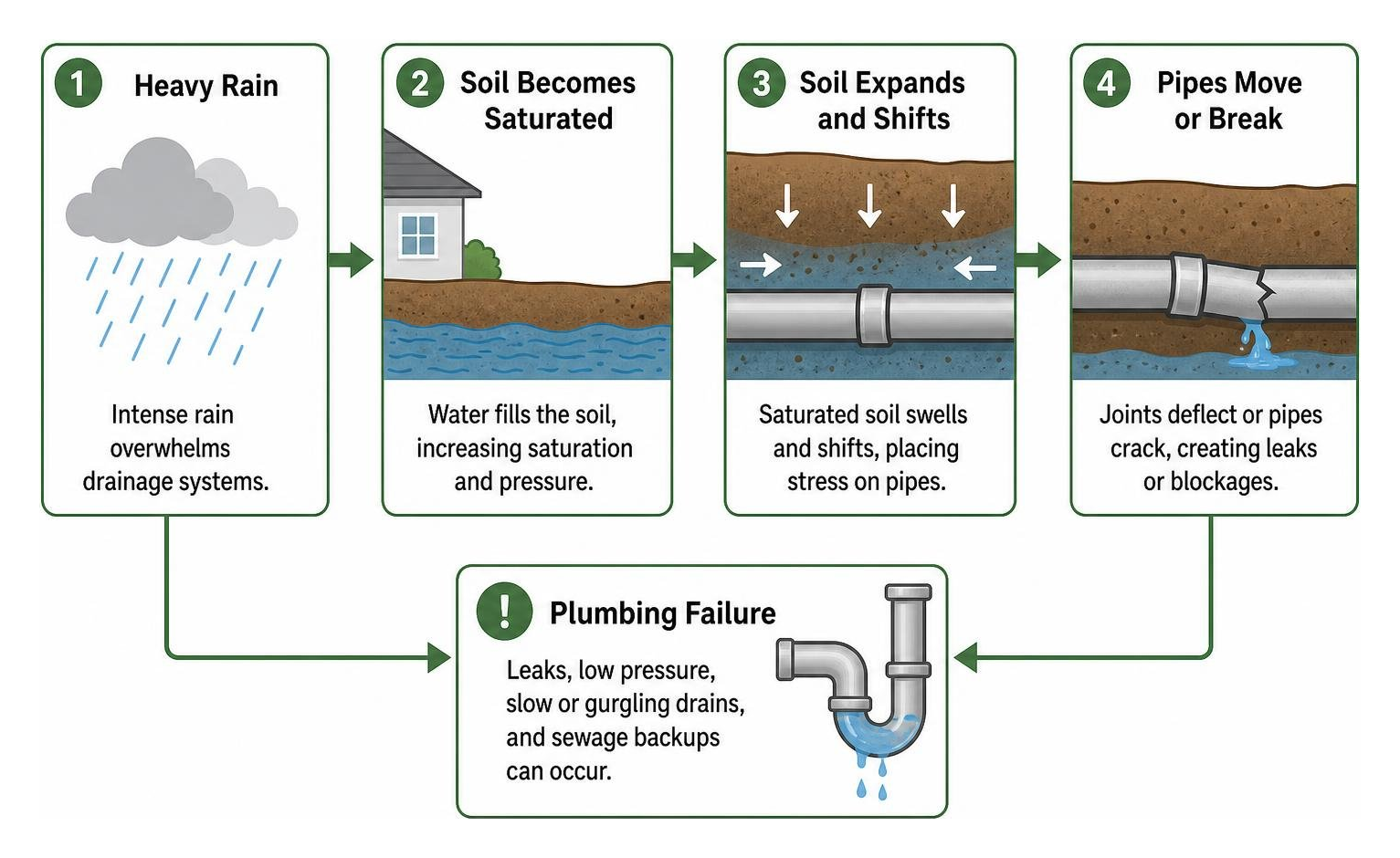
When severe weather rolls across coastal Southern California, the damage to your home is not always visible on your roof or siding. Underneath your lawn and behind your drywall, subterranean forces are hard at work. Heavy precipitation causes stormwater surges that rapidly oversaturate the earth, generating immense hydrostatic pressure against foundation walls and buried piping.
To safeguard your living space, start by reviewing our guide on how homeowners don’t get flooded by repairs with this post-storm checklist. Saturated soil swells and shifts, placing severe physical stress on your lines. This movement can easily deflect joints or crush aged materials. Knowing the crucial plumbing problems after a storm what to look for first ensures you catch minor system shifts before they evolve into full-scale structural disasters.
Sewer Line Backpressure, Overloaded Mains, and Gurgling Drains
During intense downpours, municipal stormwater and drainage systems operate at maximum capacity. When public networks are overwhelmed, excess water has nowhere to travel, creating immense hydraulic backpressure that pushes back into private lateral lines.
If you have ever asked, “why does my drain back up when it rains?” this neighborhood-wide surcharge is often the primary culprit. As wastewater and air struggle to escape through saturated lines, your plumbing fixtures will begin to “talk” to you. You may hear distinct bubbling or gurgling sounds from your toilets when running a bathroom sink or washing machine.
In severe cases, contaminated water pushes upward through the lowest points of your home, causing basement, garage, or ground-floor drain seepage. If this occurs, knowing immediate sewer backup what to do procedures—such as stopping all fixture usage immediately—is critical to protect your household from hazardous bio-contaminants.
Main Water Supply Shifts and Unexplained Low Water Pressure
Subterranean water supply pipes depend on stable ground. Saturated, shifting coastal soil creates localized movement that puts immense strain on supply lines. If a pipe shifts significantly or bends past its structural tolerance, hairline cracks and full fractures develop underground.
When your primary line leaks beneath the surface, you will experience sudden, unexplained drops in household water pressure across every faucet. While some post-storm pressure drops are tied to temporary municipal supply maintenance, persistent low flow usually indicates a private break.
Our team specializes in underground diagnostics and comprehensive water line install & repair to restore clean, pressurized water to your home while eliminating subterranean leaks before they destabilize your landscaping or foundation.
Submerged Water Heaters and Power Outage Damage
Water heaters located in ground-level closets, garages, or basements are vulnerable when localized storm pooling occurs. If floodwater reaches your water heater, you must never simply relight it or turn it back on once the water recedes.
Look closely at the water heater’s outer jacket for a visible “mud line,” which marks the highest water level reached during the storm. Silt-laden water damages sensitive components:
- Gas Control Valves: Floodwater corrodes internal springs and safety shut-offs. According to federal safety standards and equipment manufacturers, flood-exposed gas valves must be replaced rather than dried out.
- Electronic Ignitions: Modern gas systems and tankless units rely on electronic circuitry that shorts out when submerged.
- Internal Insulation: Once wet, internal tank insulation stays damp indefinitely, rusting the tank from the outside in.
- Electrical Heating Elements: Submerged wiring and thermostats on electric units create severe shock hazards.
If your appliance was exposed to rising water, schedule professional water heater repair to ensure the entire system is inspected and restored safely.
Indoor and Outdoor Warning Signs of Post-Storm Plumbing Failure
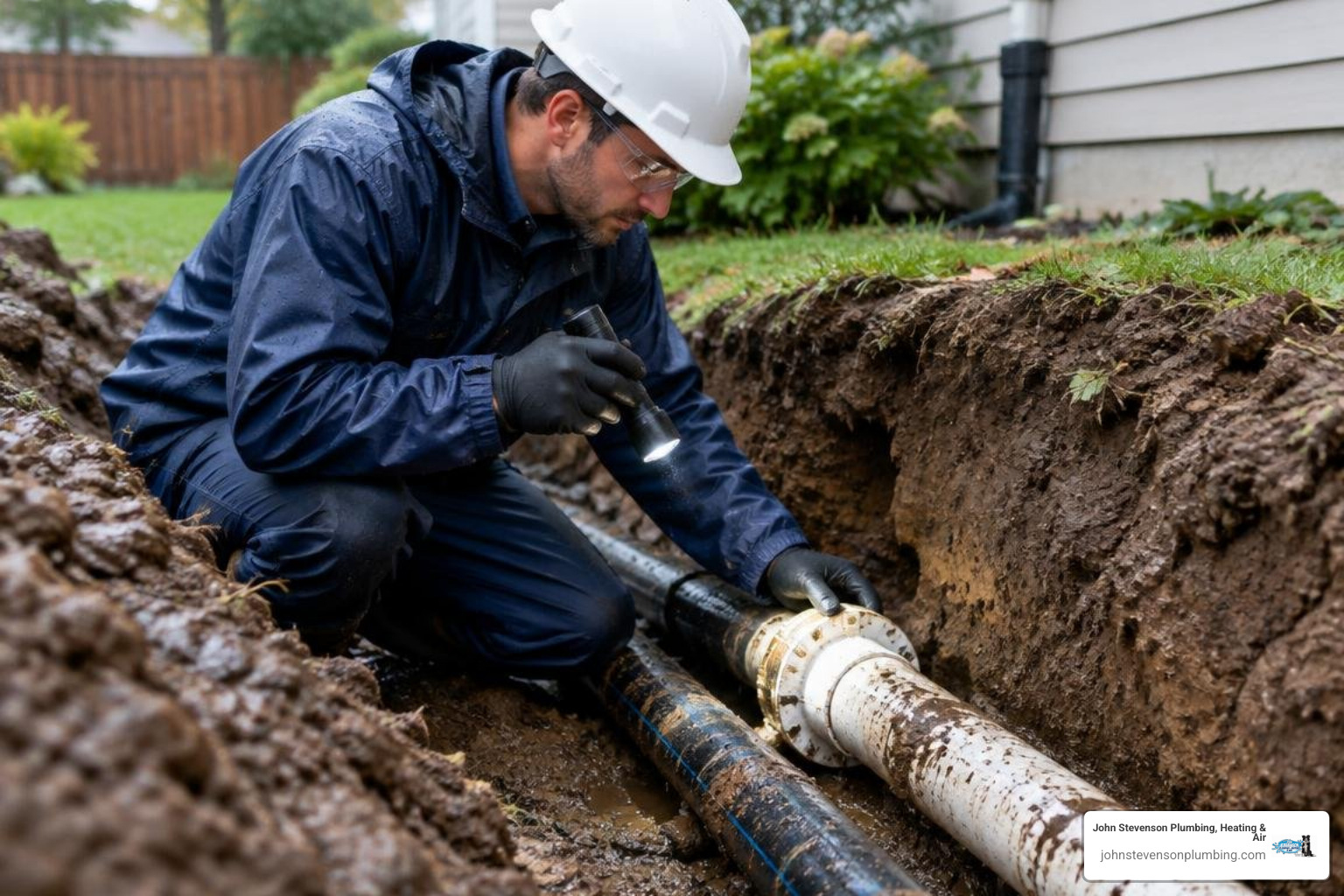
Plumbing damage can manifest in subtle ways across your property. Conducting a structured walkthrough both inside and outside your residence allows you to spot structural compromises before moisture causes extensive rot or mold.
Yard and Drainage Shifts: Plumbing Problems After a Storm What to Look for Outdoors
Your yard often tells the story of underground pipe health before signs appear inside your home. Take a slow walk around your perimeter and look for these warning signs:
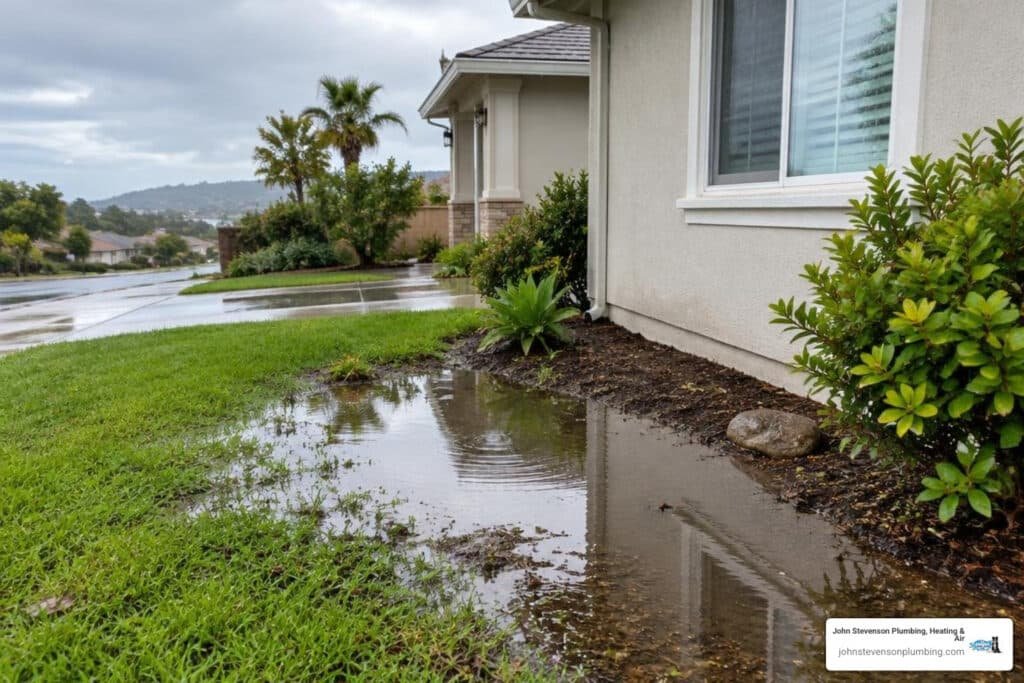
- Spongy, Soggy Patches: If you notice isolated soft or muddy spots on your lawn days after the rain has stopped, an underground supply pipe or sewer lateral may be leaking.
- Sinkholes and Ground Depressions: Soil settling over broken sewer lines can collapse inward, creating distinct sunken troughs.
- Displaced Water Meter Boxes: Check your curbside meter box. If it is tilted, flooded, or sinking, the supply pipe connections underneath may be strained or fractured.
- Damaged Irrigation and Hose Bibs: High winds and falling branches frequently snap exposed hose bibs and backflow preventers, leading to constant water loss.
- Missing Cleanout Caps: Storm runoff can dislodge sewer cleanout caps, allowing dirt, leaves, and debris to wash straight into your drainage lines. Professional drain cleaning can clear these blockages before they cause an indoor backup.
- Septic System Buoyancy: For properties on septic systems, fully saturated soil creates upward hydrostatic pressure. An empty tank can literally float out of the ground, snapping inlet and outlet pipes in the process.
Structural and Pipe Damage: Plumbing Problems After a Storm What to Look for Inside
Inside the home, hidden pipe fractures lead to subtle architectural changes. Water that escapes from stressed lines behind walls or beneath the floor will migrate along structural framing.
To protect your home, learn how to find hidden water leaks the right way. Key indicators include:
- Warped or bubbling baseboards near bathrooms and kitchens.
- Discoloration, yellowing rings, or peeling paint on ceilings and drywall.
- Persistent musty odors coming from floorboards or wall cavities.
- Warm spots on ground-level flooring, which point toward compromised hot-water copper lines embedded in concrete. Familiarize yourself with the best slab leak signs and symptoms for homeowners to address beneath-the-floor piping breaks quickly.
Sump Pump and Battery Backup Failure
For homes equipped with basement or crawlspace drainage pits, your sump pump is your primary defense against moisture intrusion. Storm-related power outages often leave these systems without electrical power right when they are needed most.
Inspect your sump pit immediately after severe weather. Check if the mechanical float switch is stuck on debris washed into the basin. If your primary pump lost power, verify whether your battery backup engaged and whether its control panel indicates a low or depleted charge. Mechanical motor burnout can also occur if the pump ran continuously for hours against a high volume of water.
Step-by-Step Safety Checks for Homeowners After Severe Weather
Completing a post-storm safety assessment prevents costly secondary damage. Always prioritize your personal safety before touching equipment or attempting diagnostic checks.
How to Safely Check for Hidden Leaks Using the Water Meter Test
One of the most effective diagnostic procedures you can perform on your own is the static water meter test. This five-minute evaluation verifies whether pressurized water is escaping anywhere between your municipal meter and your fixtures:
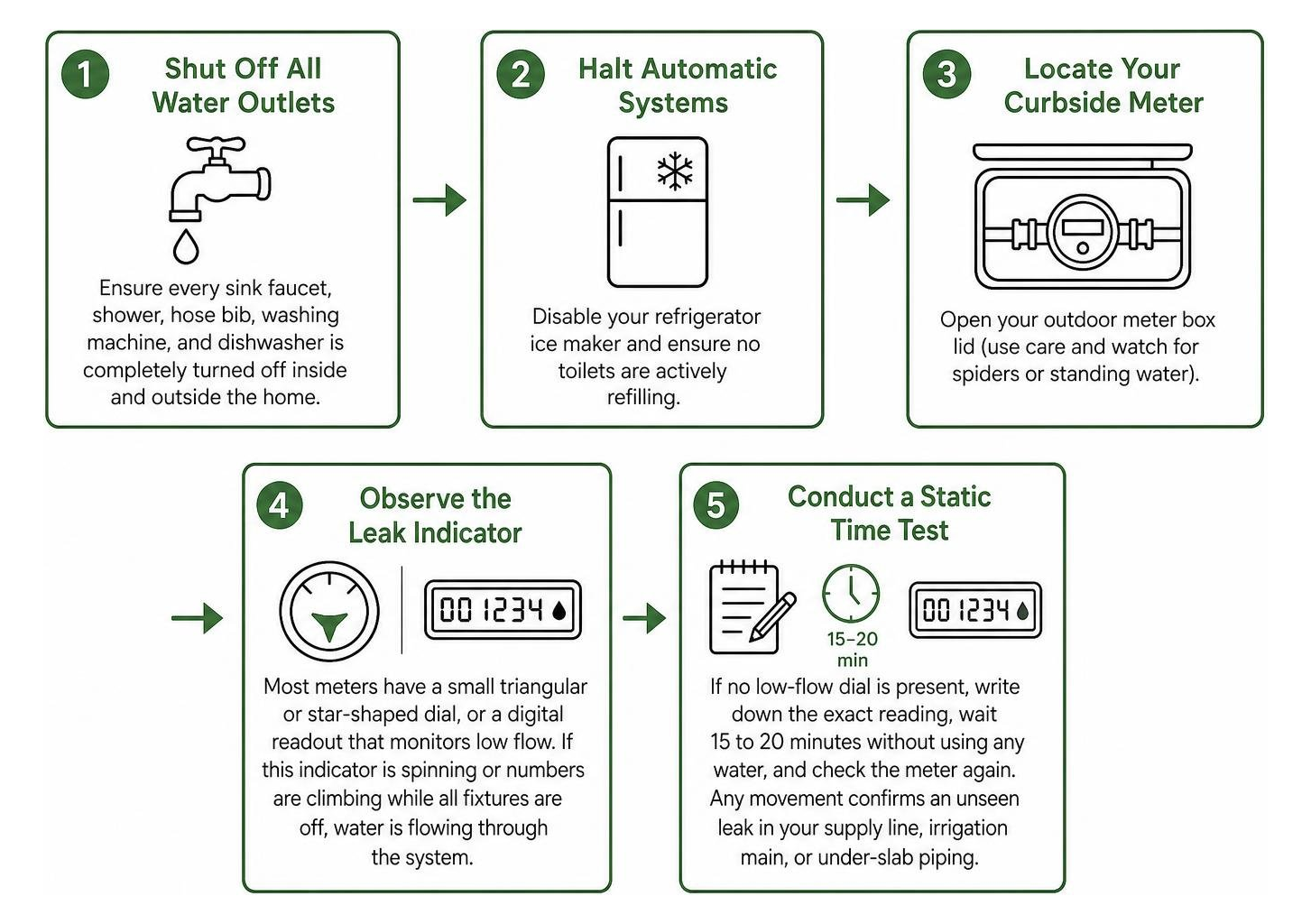
- Shut Off All Water Outlets: Ensure every sink faucet, shower, hose bib, washing machine, and dishwasher is completely turned off inside and outside the home.
- Halt Automatic Systems: Disable your refrigerator ice maker and ensure no toilets are actively refilling.
- Locate Your Curbside Meter: Open your outdoor meter box lid (use care and watch for spiders or standing water).
- Observe the Leak Indicator: Most modern meters have a small triangular or star-shaped dial, or a digital readout that monitors low flow. If this indicator is spinning or numbers are climbing while all fixtures are off, water is flowing through the system.
- Conduct a Static Time Test: If no low-flow dial is present, write down the exact reading, wait 15 to 20 minutes without using any water, and check the meter again. Any movement confirms an unseen leak in your supply line, irrigation main, or under-slab piping.
Handling Gas Odors, Contaminated Water, and Boil Water Notices
Severe storms introduce secondary hazards that extend beyond water leaks. High winds, fallen trees, and lightning strikes can affect utility connections. Corrugated stainless steel tubing (CSST) gas lines, for instance, can develop microscopic pinholes from nearby lightning strikes during severe weather.
- Gas Leak Protocol: If you smell a distinct sulfur or “rotten egg” odor near your gas meter, furnace, or water heater, do not operate light switches, open garage doors, or use your phone inside. Evacuate the house immediately and contact your local gas utility from a safe distance outside.
- Drinking Water Precautions: If local municipal water networks lose pressure (typically dropping below 20 psi), groundwater contaminants can enter the distribution pipes, triggering a boil water notice.
- Purification Rules: During a boil water notice, keep water at a rolling boil for at least one full minute to ensure it is microbiologically safe for drinking, brushing teeth, and food preparation.
- Post-Advisory Recovery: Once municipal authorities lift the advisory, flush every household tap with cold water for several minutes, clear out aerator screens, dump ice maker batches, and replace all inline water filtration cartridges.
When to Call an Emergency Plumber vs. Scheduling a Routine Inspection
Not every post-storm issue requires immediate middle-of-the-night emergency response, but certain scenarios demand rapid intervention to prevent severe property loss and health risks.
| Issue Scenario | Recommended Response | Immediate Action to Take |
|---|---|---|
| Active Sewage Backup in Fixtures | Emergency Dispatch | Cease all water use; clear occupants from the affected area; contact an emergency plumber in Carlsbad. |
| Burst Indoor Water Pipe | Emergency Dispatch | Shut off your home’s main water valve immediately; disconnect electricity to the affected room. |
| Flooded Gas Water Heater | Emergency Dispatch | Shut off the gas valve supplying the unit; do not attempt to light the pilot or restore power. |
| Slow-Draining Sink or Tub | Schedule Routine Service | Avoid using chemical drain cleaners; monitor other fixtures for secondary backups. |
| Single Fixture Low Pressure | Schedule Routine Service | Unscrew and clean out the faucet aerator screen to remove dislodged mineral sediment. |
| Occasional Gurgling in Yard Drains | Schedule Inspection | Book a comprehensive sewer camera inspection to check for tree root intrusion or displaced line joints. |
Frequently Asked Questions About Storm-Related Plumbing Issues
Can heavy rain damage underground plumbing without visible surface flooding?
Yes. Heavy rainfall saturates the earth deep underground, creating expansive soil pressure. In Southern California, coastal clay soils expand as they absorb water, shifting and applying direct mechanical force against buried sewer and supply lines. This movement can shear joints, pull apart pipe connections, and encourage nearby tree roots to push into compromised pipes, all without standing surface water.
Why is my tap water discolored or cloudy after a major storm?
Discolored or brown tap water is typically caused by sediment agitation within main supply pipes. When municipal water distribution networks experience rapid pressure fluctuations or line repairs due to weather, settled minerals like iron and manganese get stirred into the flow. While usually non-toxic, run your outdoor hose bibs or cold indoor taps for several minutes until the stream clears. If the discoloration persists, it may indicate a private underground break drawing in surrounding soil.
How soon after a rainstorm should I inspect my plumbing?
You should conduct a basic visual walkthrough within the first 24 hours after a major storm passes. Check your water meter, walk the yard perimeter for soft spots, and test fixture drainage speeds. Some hidden issues, such as slow foundation leaks or minor sewer joint fractures, may take several days to produce noticeable indoor water stains or drain gurgling, so monitor your system closely throughout the following week.
Conclusion
Storm recovery involves more than simply clearing fallen branches and drying off the patio. Saturated soils, hydraulic backpressure, and utility disruptions can place extraordinary stress on your home’s plumbing framework. By catching slow drains, hidden supply fractures, and submerged appliance hazards early, you protect your property from expensive structural rot and hazardous water contamination.
At John Stevenson Plumbing, Heating & Air Conditioning, we provide dependable, licensed plumbing solutions across Carlsbad, San Diego County, Orange County, and surrounding Southern California communities. Whether you need advanced video leak detection, sewer repairs, water line replacements, or complete water heater care, our certified technicians back every job with our signature 5-Star Service Guarantee—featuring thorough diagnostics, clear service details, and 24-hour satisfaction check-ins.
If you suspect your system was compromised during recent heavy rains, explore our comprehensive home plumbing services and schedule your post-storm inspection today.