
Prepare Your Carlsbad, CA Cooling System Before Summer
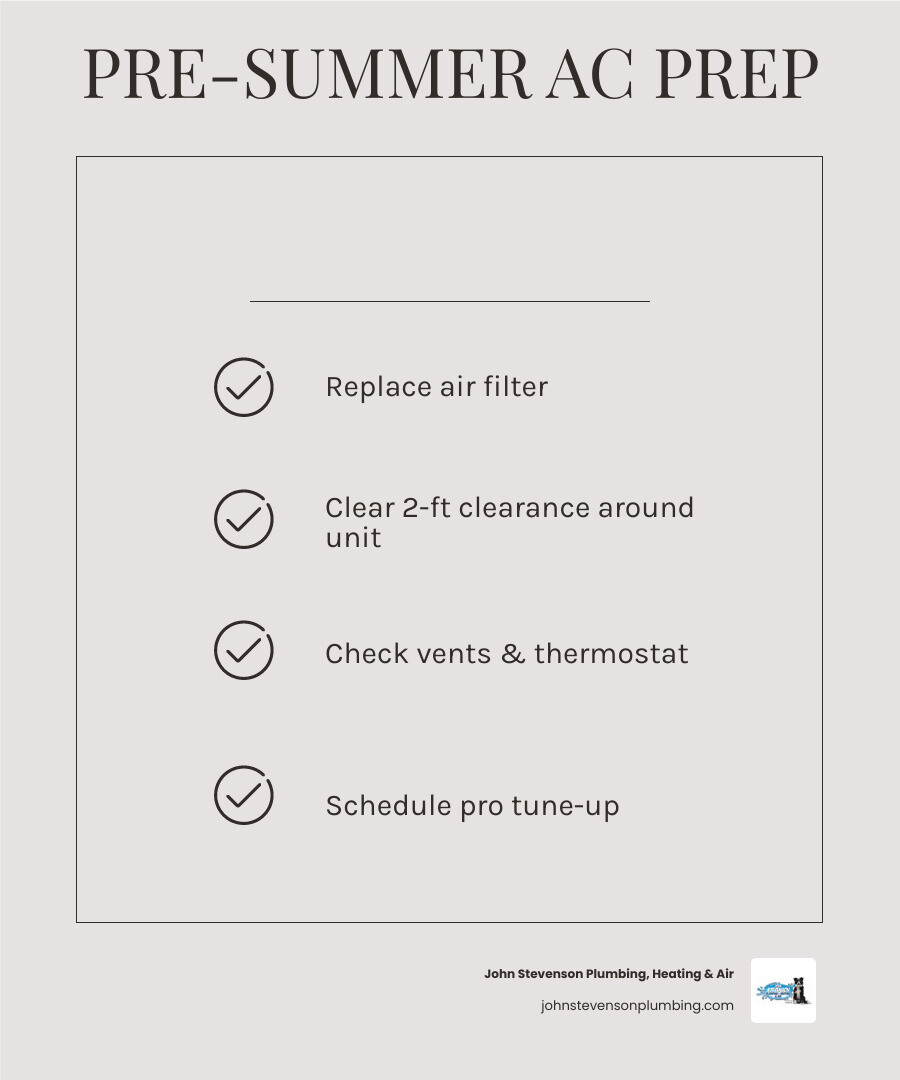
Summer heat can expose small AC problems just when you need cool air most. For AC maintenance in Carlsbad, CA, start in March or April: replace the air filter, clear plants and debris from around the outdoor unit, check that vents are open, and test the thermostat. If airflow is weak, the air feels warm, or the system runs without cooling your home, book a repair visit. Schedule a professional tune-up before the hottest days so a technician can check parts and performance you cannot safely check yourself.
Explore Carlsbad HVAC maintenance or schedule AC maintenance.
I’m John Stevenson, and if you want help getting your system ready, schedule an AC maintenance visit.
Step-by-Step Guide: Preparing Your Cooling System for a Southern California Summer
Southern California summers bring everything from coastal humidity to scorching inland heatwaves. When temperatures soar into the 90s and triple digits, your air conditioner becomes the hardest-working appliance in your home. Leaving your comfort to chance can result in unexpected breakdowns right when local service schedules are packed.
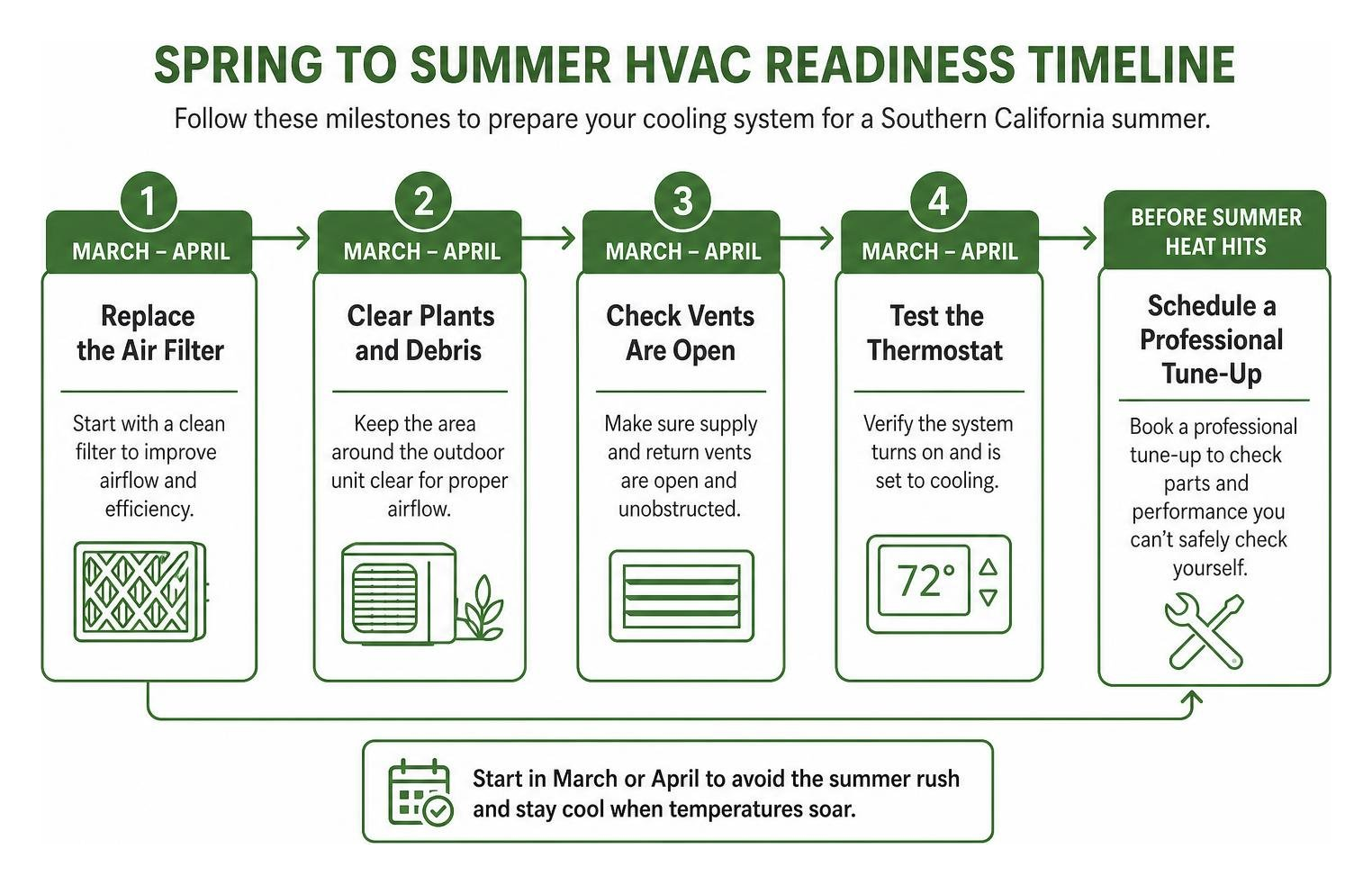
Taking a proactive approach by preparing your cooling system for a southern california summer ensures you stay ahead of the weather. The best time to start is early spring—ideally between March and April. During these milder months, you can easily test your equipment, optimize airflow, and resolve lingering wear from the previous year.
Starting early helps you avoid the dreaded summer rush. When the first major heatwave hits, HVAC technicians across San Diego and Orange County are flooded with emergency calls. By scheduling a spring HVAC tune-up, you ensure reliable performance, lower your seasonal energy bills, and keep your household perfectly cool.
Essential DIY Checklist for Preparing Your Cooling System for a Southern California Summer
As a homeowner, you can handle several straightforward maintenance tasks yourself to boost efficiency and safeguard your equipment.
Work through these essential steps every spring:
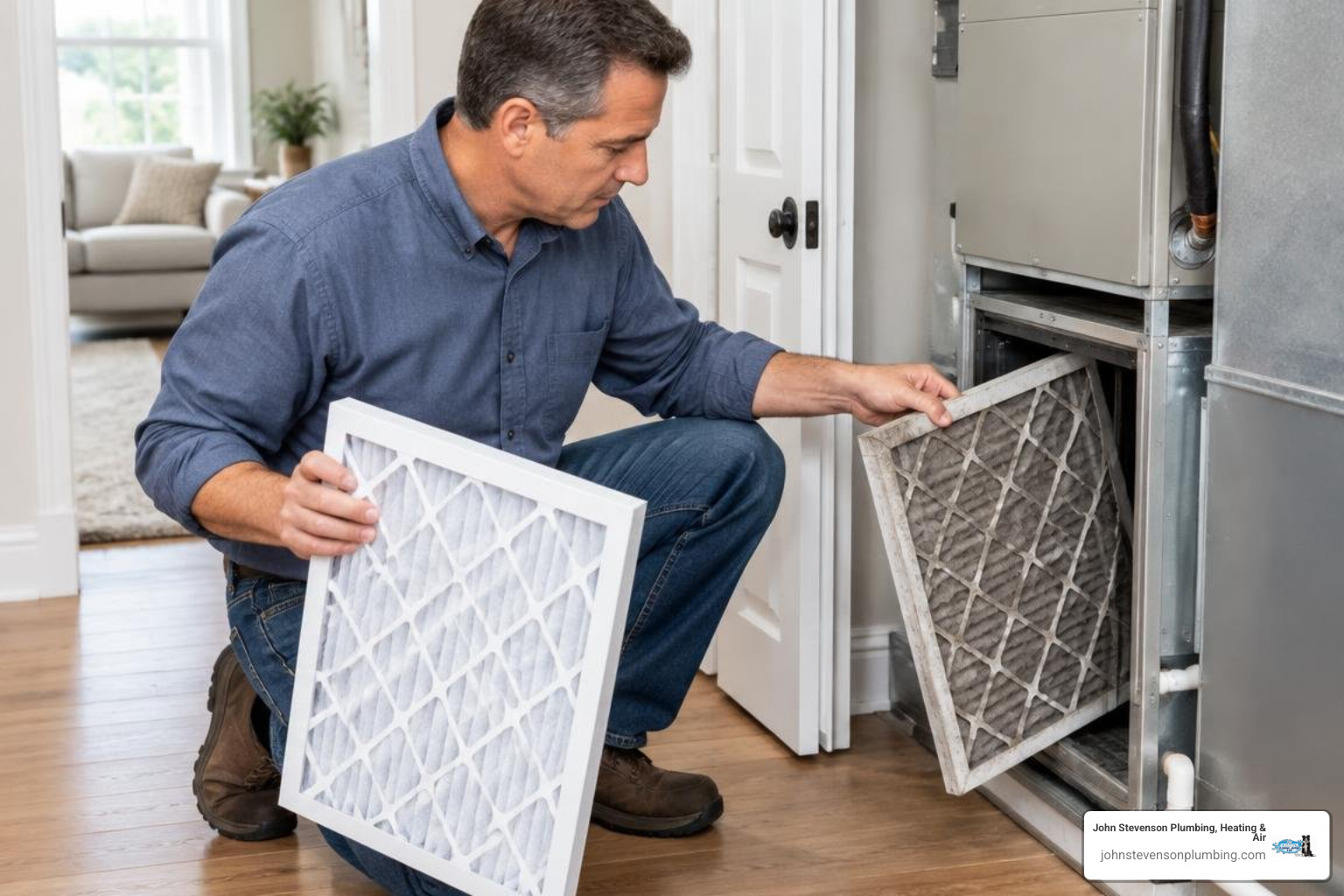
- Replace the Air Filter: According to the Department of Energy (DOE), swapping out a dirty, clogged filter for a clean one can lower your air conditioner’s energy consumption by 5% to 15%. Reduced airflow strains your blower motor and can cause your evaporator coil to freeze. Learn how to know when to replace a dirty air filter and check it monthly during heavy summer use.
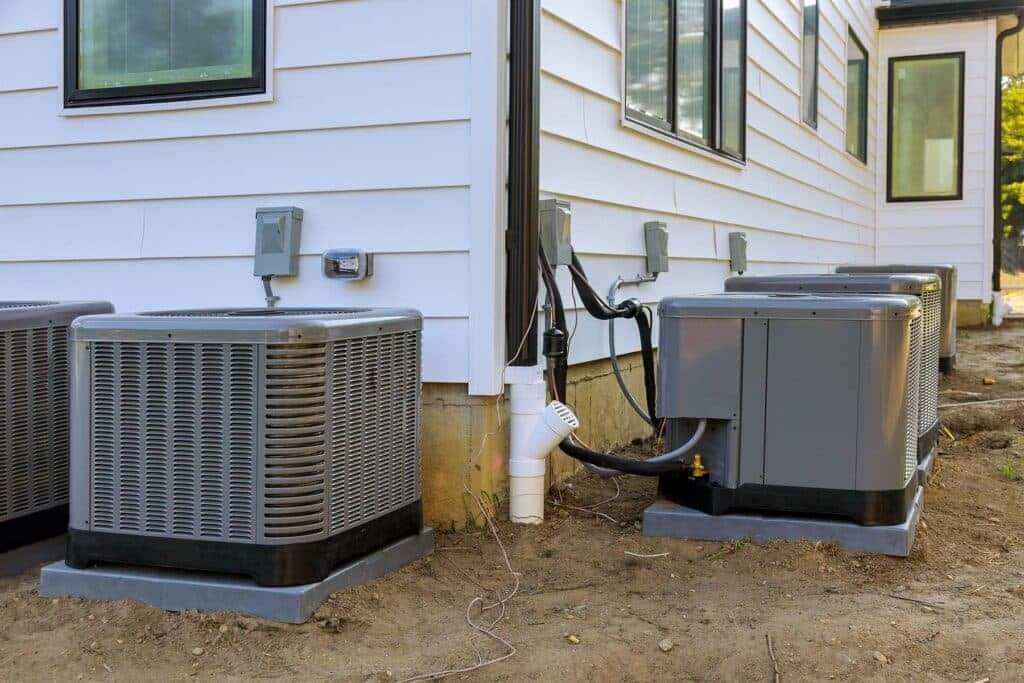
- Clear Outdoor Condenser Clearance: Head outside to inspect your condenser unit. Leaves, dirt, dried brush, and overhanging plants restrict critical heat rejection. Maintain at least 2 feet of clear space around the entire perimeter of the unit so air can circulate freely.
- Gently Rinse the Exterior Coils: Turn off power to the unit at the outdoor disconnect box. Using a standard garden hose with gentle pressure, rinse away dust and debris from the outside fins, spraying downward. Never use a pressure washer, as high pressure will bend the delicate aluminum fins and choke system airflow.
- Flush the Condensate Drain Line: Your AC removes humidity from indoor air, funneling moisture through a dedicated drain line. Over time, algae and mold can clog this pipe, leading to indoor water damage. Pour a cup of distilled white vinegar down the drain line access port to clear sludge and keep water flowing freely outside.
- Test and Calibrate Your Thermostat: Switch your thermostat to “Cool” and lower the setting five degrees below the current room temperature. Ensure the outdoor unit turns on smoothly and begins delivering cool air within a few minutes. If you still use an older manual model, upgrading through energy-efficient thermostat installation gives you automated scheduling and better temperature control.
- Inspect and Clean Supply Vents: Walk through each room to ensure all supply and return grilles are open and unobstructed by rugs, drapes, or furniture. If vents are coated in dust, vacuum the grilles. If you notice dust blowing from vents or musty odors when the fan kicks on, professional air duct cleaning can clear built-up contaminants.
Why Preparing Your Cooling System for a Southern California Summer Requires Professional Care
While DIY care keeps basic airflow clear, cooling systems rely on complex electrical and refrigeration components that require specialized tools and diagnostic expertise. Attempting advanced repairs without proper equipment can be dangerous and may void your manufacturer’s warranty.
| Maintenance Task | DIY Safe | Professional Required | Why It Matters |
|---|---|---|---|
| Air Filter Replacement | Yes | No | Maintains airflow; saves 5-15% on energy usage |
| Clearing Debris (2-ft Clearance) | Yes | No | Allows outdoor unit to release heat efficiently |
| Condensate Line Vinegar Flush | Yes | No | Prevents water backups and safety switch shutdowns |
| Electrical & Capacitor Diagnostics | No | Yes | Prevents sudden motor burnout and hard starting |
| Refrigerant Level & Leak Testing | No | Yes | Requires EPA Section 608 certification; ensures cooling |
| Blower Motor & Fan Amperage Checks | No | Yes | Protects motors from overheating under high loads |
| Static Pressure & Airflow Testing | No | Yes | ENERGY STAR notes proper airflow saves up to 15% |
During professional HVAC maintenance in Carlsbad, our certified technicians test start-and-run capacitors, verify electrical connections, lubricate moving parts, and measure the exact refrigerant charge. Federal law mandates EPA Section 608 certification to handle refrigerants, ensuring both safety and environmental compliance. Routine professional AC maintenance uncovers hidden component wear before it turns into a catastrophic mid-summer breakdown.
Recognizing Warning Signs Your AC Needs Repair Before Peak Heat
Testing your system during spring allows you to catch equipment issues while temperatures are still mild.
Watch for these common red flags:
- Weak or Restricted Airflow: If you barely feel air coming from your supply registers, you could have a failing blower motor, disconnected ductwork, or a frozen coil.
- Unusual Noises: Grinding, squealing, buzzing, or rattling sounds indicate loose belts, failing bearings, or electrical arcing. Use our AC noise translation guide to decode what your equipment is trying to tell you.
- Warm Air from the Registers: If your unit runs but blows room-temperature air, you may have a failed compressor capacitor, an airflow blockage, or a refrigerant leak.
- Constant Operation Without Cooling: When an air conditioner runs for hours without reaching your set temperature, it drives up electrical bills while wearing down critical components. Review what to check when your AC runs constantly without cooling to rule out simple thermostat and filter issues.
- Short Cycling: If the system turns on and off rapidly every few minutes, it may be overheating, oversized, or dealing with an electrical fault.
Ignoring these early symptoms will only accelerate equipment failure when July and August heatwaves arrive. Knowing how to spot a failing AC system allows you to schedule prompt air conditioning repair before you are left without cool air.
Maximizing Energy Efficiency During Heatwaves
Southern California homeowners often face high time-of-use electrical rates during summer afternoons. Running your air conditioner inefficiently can cause utility bills to climb. With a few strategic adjustments, you can maintain excellent indoor comfort while controlling energy use.
- Leverage Smart Thermostats: A programmable or Wi-Fi-enabled thermostat allows you to pre-cool your home during off-peak morning hours and automatically ease back cooling during peak periods. Discover the complete guide to smart thermostat benefits to see how automated setbacks cut energy waste.
- Shift Energy Consumption: Implement proven strategies for saving electricity during peak summer hours, such as running major appliances in the morning and utilizing ceiling fans to create a cooling wind-chill effect.
- Protect Indoor Air Quality: Summer warmth often traps dust, pollen, and coastal moisture inside modern, tightly sealed homes. Incorporating whole-home indoor air quality solutions—such as high-efficiency filtration and dehumidifiers—reduces strain on your cooling system while keeping your air fresh.
- Consider Targeted Zoned Cooling: If specific areas of your home, like home offices or upstairs bedrooms, stay uncomfortably warm, running central AC for the whole house can be wasteful. Installing ductless mini-split systems provides targeted, high-efficiency comfort exactly where you need it without duct losses.
Frequently Asked Questions About Summer Cooling Preparation
When is the ideal time to prep an air conditioner in Southern California?
The ideal window for pre-summer AC preparation is early spring, specifically throughout March and April. Scheduling your inspection during this timeframe ensures your system is clean, calibrated, and fully operational well before the first heatwaves arrive. It also guarantees flexible scheduling with local technicians before peak-season emergency demand sets in. To better understand maintenance intervals, explore everything you need to know about annual HVAC maintenance.
How do I know if my AC is cooling properly?
You can test cooling performance by measuring the system’s “temperature split” (the difference between the return air entering your system and the supply air blowing out of your vents). A healthy, properly charged air conditioner typically produces supply air that is 16 to 22 degrees Fahrenheit cooler than the return air. If your temperature split is under 15 degrees, or if your system runs continuously without reaching your thermostat setting, you likely have an airflow or refrigerant problem. Review problems you can avoid with timely maintenance to keep your system performing at its best.
Can I perform all AC maintenance tasks myself?
Homeowners can easily manage basic upkeep such as replacing air filters, clearing away yard debris, rinsing outer condenser panels, and checking thermostat batteries. However, critical safety and mechanical tasks—such as testing high-voltage capacitors, clearing complex drain clogs, measuring refrigerant pressures, and inspecting electrical contactors—must be handled by certified professionals. For a complete breakdown of professional checks, read our guide on what an HVAC maintenance visit includes.
Conclusion
Getting your air conditioner ready before the summer heat arrives protects your comfort, lowers energy bills, and prevents untimely breakdowns. A combination of straightforward homeowner tasks and a comprehensive professional tune-up ensures your system can handle whatever temperatures Southern California brings.
At John Stevenson Plumbing, Heating & Air Conditioning, Inc., we deliver complete peace of mind through our 5-Star Service Guarantee, licensed technicians, and 24-hour satisfaction follow-ups. Whether you need a seasonal checkup in Carlsbad, San Diego County, or comprehensive Orange County AC maintenance, our team is ready to help you enjoy a cool, worry-free summer. Contact us today to book your pre-summer cooling tune-up!