
Why Knowing Slab Leak Signs and Symptoms Could Save Your Home
The most common slab leak signs and symptoms homeowners notice are:
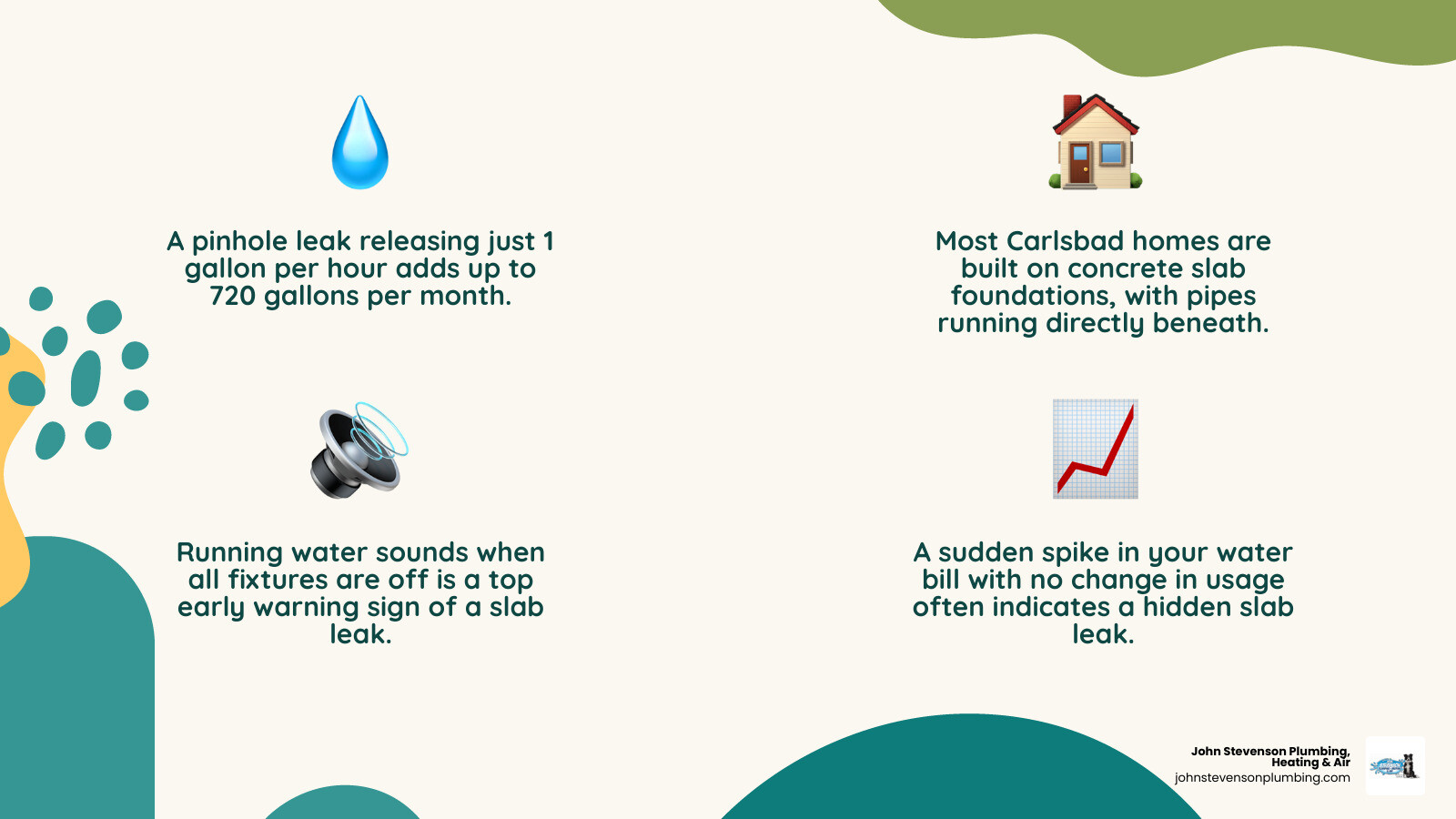
- Sudden spike in your water bill with no change in usage
- Sound of running water when all fixtures are off
- Warm or hot spots on tile, hardwood, or carpet floors
- Damp, wet, or soft spots on flooring or baseboards
- Musty odors or visible mold near floors or walls
- Low water pressure throughout the home
- Cracks in walls, floors, or your foundation
- Water meter still moving when all water is shut off
If you own a home in Carlsbad, CA, a slab leak is one of the most serious plumbing problems you can face — and one of the easiest to miss until real damage has already started. Most homes here are built on a concrete slab foundation, with water supply and drain lines running directly beneath that slab. When one of those pipes fails, water escapes silently underground where you can’t see it. By the time most homeowners notice something is wrong, the leak has often been running for weeks or even months.
A pinhole leak releasing just one gallon per hour adds up to 720 gallons per month — enough to slowly saturate the soil beneath your foundation, erode the ground supporting your home, and trigger settlement cracks that are expensive to fix. And the longer it goes undetected, the worse it gets.
Here at John Stevenson Plumbing, Heating & Air, we’ve helped countless Carlsbad homeowners catch slab leaks early — and this guide will show you exactly what to look for.
Slab leak signs and symptoms terms explained:
- how leak detection technology works
- how plumbers find hidden water leaks
- signs of a hidden water leak in your home
What is a Slab Leak and Why is it a Serious Threat?
To understand why a slab leak is so dangerous, you first have to understand how your home is built. In Southern California communities like Carlsbad, Oceanside, and Encinitas, most homes are built on a concrete slab foundation. Before that thick layer of concrete is poured, plumbers lay out the water supply and sewer lines directly in the dirt. Once the concrete is poured over them, those pipes are permanently encased beneath your home.
When one of these pipes develops a pinhole leak, crack, or complete break, it is called a slab leak. Because these pipes are pressurized, water doesn’t just drip; it sprays out under constant force.
Historically, older homes in our area were piped with copper pipes. While copper is durable, it is highly susceptible to chemical reactions with the surrounding soil and local water chemistry, eventually leading to corrosion and pinhole leaks. Modern homes or those that have undergone repiping often use PEX piping, which is flexible and highly resistant to corrosion, but even PEX can suffer from friction damage if it rubs against the abrasive concrete slab during thermal expansion.
If left untreated, the escaping water causes major issues:
- Soil Erosion: The constant stream of water washes away the supporting soil beneath your concrete slab.
- Foundation Settlement: As the soil washes away, voids form under the concrete. Without proper support, the heavy concrete slab will sink, tilt, or crack under the weight of your home.
- Structural Integrity Compromised: When the foundation shifts, it puts immense stress on your home’s framing, causing windows to stick, doors to swing open on their own, and load-bearing walls to crack.
To protect your home’s structural integrity, you must learn to recognize the early warning signs before major settling occurs. You can learn more about how hidden moisture compromises your property in our guide on why you shouldn’t ignore these warning signs of hidden water damage.
The Most Common Slab Leak Signs and Symptoms

Because slab leaks happen entirely out of sight, you have to rely on secondary clues to spot them. Identifying these early warning signs can mean the difference between a straightforward pipe repair and a massive structural restoration project.
Here are the primary slab leak signs and symptoms you should monitor:
- Water Bill Spikes: If your monthly water bill suddenly jumps without a corresponding increase in your household usage (like filling a pool or hosting guests), you likely have a hidden leak. Compare your current bill to the same month from the previous year to rule out seasonal differences.
- Running Water Sounds: When your home is completely quiet—such as late at night—stand in the center of your downstairs rooms. If you hear a faint, constant sound of running water, hissing, or rushing water behind your walls or beneath your feet when all faucets and appliances are off, a pipe is actively leaking.
- Musty Odors and Mold Growth: Water pooling under your slab will eventually wick upward through the porous concrete. This creates a dark, damp environment under your flooring—the perfect breeding ground for mold and mildew. If you notice a persistent musty smell or see visible mold along your baseboards, water is escaping somewhere close by.
If you suspect you have a leak but aren’t sure where to start, check out our professional tips on how to find hidden water leaks the right way.
Recognizing Hot Spots and Floor Warmth as Slab Leak Signs and Symptoms
One of the most unique and reliable indicators of a slab leak is a localized warm spot on your floor. This symptom is specific to leaks occurring on your hot water supply lines.
When a hot water line beneath the concrete slab develops a leak, the escaping hot water transfers its heat directly into the surrounding concrete. Through a process called heat transfer, that thermal energy migrates upward, warming your subfloor and your finished flooring.
You can easily perform a barefoot detection test. Walk slowly across your tile, hardwood, or carpeted floors without shoes or socks. If you suddenly step on an area that feels noticeably warmer than the rest of the room, you may have located a hot water slab leak.
For a more precise DIY diagnostic, you can use a basic handheld infrared thermometer. Scan your floors and look for localized temperature spikes. Because hot water leaks cause the hot water heater to run constantly to replace the lost hot water, you might also notice your water heater cycling on and off even when no one is taking a shower or running the washing machine.
Structural Damage and Low Water Pressure as Slab Leak Signs and Symptoms
As a slab leak worsens, the physical symptoms will begin to manifest in your home’s structure and utility performance.
A significant drop in low water pressure is a common indicator of a supply line leak. Because water is constantly escaping through the broken pipe beneath your slab, there is less pressure available to push water out of your faucets, showerheads, and appliances.
At the same time, the shifting soil beneath your home will begin to cause visible structural damage. Keep a close eye out for:
- Foundation cracks appearing in your concrete slab or outdoor patios.
- Wall cracks propagating outward from the corners of door frames or windows.
- Baseboard mold or warping along the bottom of your drywall.
To help you distinguish between a fresh water supply line leak and a sewer line leak, we have put together this comparison:
| Symptom | Fresh Water Supply Line Leak | Sewer / Drain Line Leak |
|---|---|---|
| Water Meter Movement | Yes, dial spins constantly | No movement on the freshwater meter |
| Floor Temperature | May feel hot (if hot water line) or cold | Typically matches ambient room temperature |
| Odors | Musty, earthy mold smells | Strong sewer gas, sulfur, or waste odors |
| Water Pressure | Often drops noticeably | No impact on incoming water pressure |
| Symptom Speed | Sudden spikes in water bills and fast pooling | Slow, gradual foundation shifting or soil dampness |
How to Perform a DIY Water Meter Test
If you notice any of the slab leak signs and symptoms listed above, you don’t have to guess whether you have a leak. You can perform a simple, highly accurate DIY water meter test to confirm your suspicions before calling in a professional.
Follow this step-by-step verification process to check your system:
- Turn Off All Water: Ensure every water-using fixture and appliance in your home is completely shut off. This includes faucets, showers, washing machines, dishwashers, and ice makers. Do not flush any toilets during the test.
- Locate Your Water Meter: In Southern California, your water meter is typically located near the street or sidewalk in a concrete box with a heavy metal lid. Carefully lift the lid using a large screwdriver or meter key.
- Locate the Leak Indicator: Look at the face of your water meter. Most meters have a small, highly sensitive dial or wheel known as a leak indicator (often shaped like a small red, blue, or silver triangle or star). This wheel spins even when a tiny amount of water passes through the meter.
- Observe the Indicator: If all water fixtures are off and the leak indicator is spinning, you have an active leak.
- Isolate the Leak with the Main Shutoff Valve: To determine if the leak is inside your home or in the main service line between the meter and your house, locate your home’s main water shutoff valve (usually located on the exterior wall where the main water line enters the house). Close this valve completely.
- Re-check the Meter: If the leak indicator stops spinning once the main shutoff valve is closed, the leak is located inside your home—most likely beneath your concrete slab. If the indicator continues to spin, the leak is in the underground service line in your yard.
By keeping close track of your water usage and performing this test, you can provide highly valuable information to our technicians when they arrive.
Professional Detection and Repair Options
Once a slab leak is confirmed, locating its exact position requires specialized, non-invasive technology. Gone are the days of plumbers blindly sledgehammering through your beautiful flooring to find a leak.
Our certified technicians utilize advanced diagnostic tools to pinpoint the leak within inches:
- Acoustic Listening Tools: Highly sensitive ground microphones and acoustic deck plates allow us to listen to the sound of pressurized water escaping from the pipe beneath several feet of concrete and flooring.
- Thermal Imaging: Infrared cameras allow us to visually map the heat signature of hot water leaks radiating through your slab, showing us the exact shape and source of the hot spot.
- Pressure Testing: By isolating different sections of your plumbing system and measuring pressure drops, we can determine exactly which line is compromised.
- Pipe Tracing: Electronic pipe locators send a signal down your copper or PEX pipes, mapping out their exact path beneath the concrete.
Once the leak is located, we will discuss the best repair options for your home’s specific situation:
- Spot Repair (Cut and Patch): If your plumbing is relatively new and in good condition, we can open a small, precise hole in the concrete slab to repair the damaged section of the pipe directly.
- Pipe Rerouting: This is often the most practical and least disruptive option. Instead of breaking up your floors, we abandon the leaking pipe beneath the slab entirely and run a brand-new, highly durable line through your walls or attic space.
- Whole-Home Repipe: If your home has older copper pipes that are experiencing systemic corrosion, a single spot repair is often just a temporary fix before another leak develops. A whole-home repipe replaces all aging lines with modern PEX piping, giving you long-term peace of mind.
- Epoxy Lining: For certain drain or sewer line leaks, we can insert an epoxy lining inside the existing pipe, sealing any cracks from the inside out without excavation.
For a deeper look into the science behind these methods, read our comprehensive guide to how leak detection technology works.
Causes, Prevention, and Insurance Coverage
Understanding what causes a slab leak can help you take proactive measures to prevent them from occurring in the future.
The most common causes include:
- Expansive Clay Soil: The soil throughout San Diego and Orange Counties contains highly reactive clay. This soil swells significantly when wet and shrinks when dry. This constant shifting puts immense shear stress on underground concrete slabs and the pipes encased within them.
- Hard Water Corrosion: Local municipal water can be mineral-heavy. Over time, hard water minerals react chemically with copper pipes, weakening the metal walls until pinhole leaks develop.
- High Water Pressure: Excessive water pressure strains your pipes. Keeping your home’s pressure between 40 and 60 psi is ideal.
To protect your plumbing, we recommend proactive water pressure monitoring and regular system inspections. For actionable maintenance tips, read our spring plumbing inspection tips to stop the drip.
Homeowners Insurance and Slab Leaks
One of the first questions Carlsbad homeowners ask us is: “Is a slab leak covered by my homeowners insurance?”
The answer depends on your specific policy, but standard homeowners insurance (HO-3) typically operates under these general guidelines:
- What is usually covered: The insurance company will often cover the water damage restoration costs (drying out damp carpets, repairing moldy drywall) and the “tear-out” costs required to access the leak (such as breaking through the concrete slab).
- What is usually NOT covered: The actual plumbing repair of the broken pipe itself is typically considered a maintenance issue and is excluded from coverage unless you have a specific service line endorsement.
Always contact your insurance agent as soon as you suspect a leak to document the damage and understand your coverage limits.
Frequently Asked Questions About Slab Leaks
What does a slab leak sound like?
A slab leak typically sounds like a constant, low-pitched hissing sound, a steady rushing of water, or a faint trickling sound. Because the sound is muffled by concrete and flooring, it is easiest to hear in a completely quiet room at night. The sound is caused by pressurized water vibrating the pipe as it forces its way out of a small crack or pinhole.
How long does it take to repair a slab leak?
Most professional slab leak repairs can be completed within one to two days. A simple spot repair or localized pipe rerouting is highly efficient and causes minimal disruption to your daily routine. If a whole-home repipe is required, the project may take several days, but we will always ensure your home has functional water services at the end of each day.
Is a slab leak covered by homeowners insurance?
Generally, standard homeowners insurance policies cover the secondary water damage restoration and the cost of tearing out the concrete slab to access the pipe. However, the cost of the actual plumbing repair to the pipe itself is usually not covered. We recommend reviewing your policy declarations page or contacting your insurance provider to verify your specific coverage.
Conclusion
A slab leak is not a problem that will resolve itself. Ignoring the early slab leak signs and symptoms will only lead to more extensive foundation shifting, mold growth, and structural damage over time.
If you suspect your home has a leak, trust the certified professionals at John Stevenson Plumbing, Heating & Air. We serve homeowners throughout Carlsbad, San Diego County, and Orange County with our industry-leading 5-Star Service Guarantee. This means you receive thorough diagnostics, upfront pricing, certified technicians, and a 24-hour satisfaction check-in on every job we perform.
Before you hire a technician, make sure you know what to look for in a local plumber to protect your home.
Don’t wait for a small pinhole leak to turn into a major foundation issue. Schedule professional leak detection and repair with us today, and let our team restore your peace of mind!