
Water Heater Repair or a New Unit: Which Saves More in San Diego?
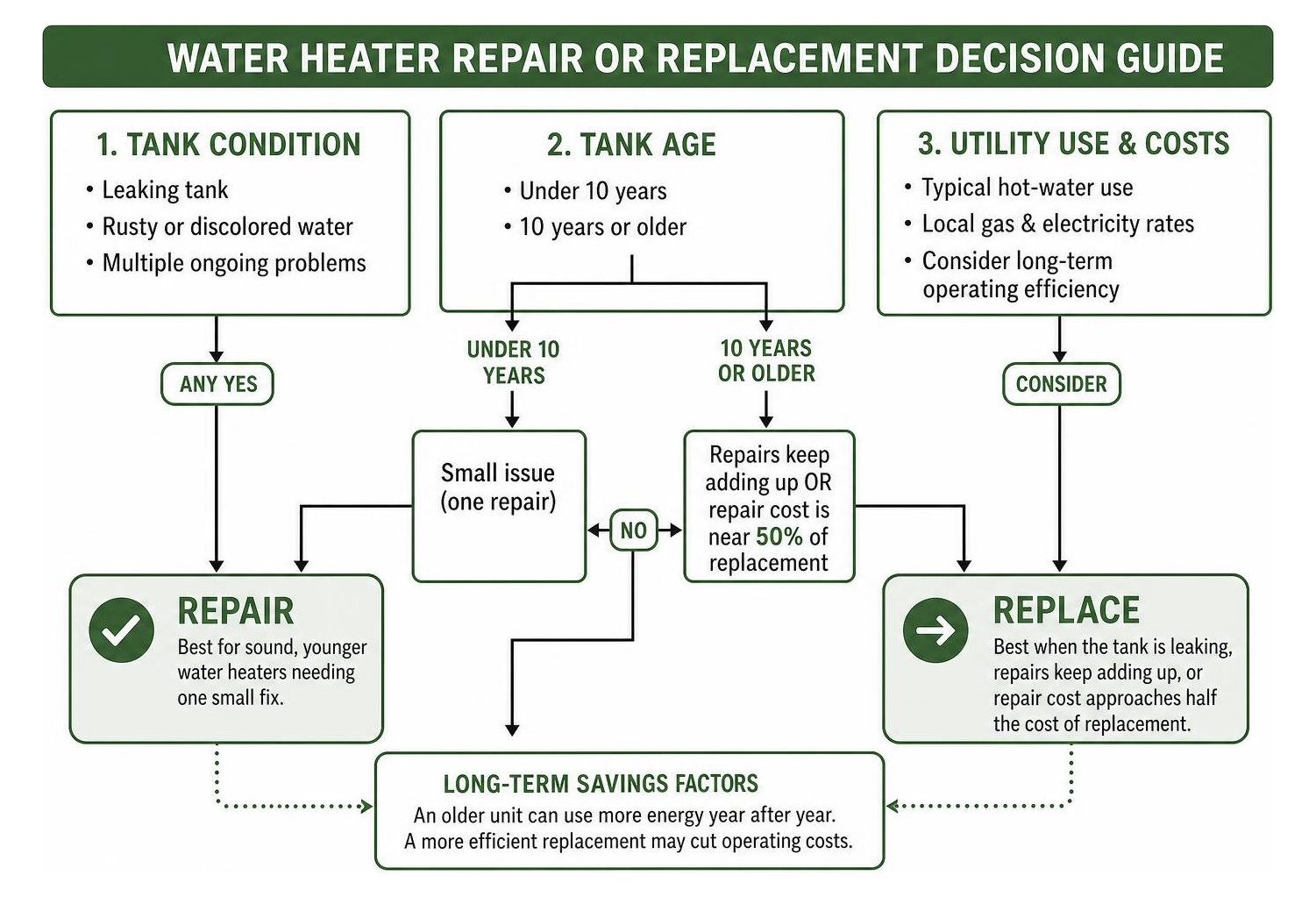
For long-term savings, repair a sound, younger water heater when it needs one small fix; consider a new unit when the tank is leaking, repairs keep adding up, or the repair approaches half the value of replacement. If you need water heater repair in San Diego, CA, the lowest utility bill may not come from the lowest upfront investment. An older unit can use more energy year after year, while a more efficient replacement may cut operating draw. The best choice depends on your heater’s age, the problem, your hot-water use, and local gas and electricity rates.
Explore water heater repair or water heater installation to plan your next step.
I’m John Stevenson; ask us about water heater installation if you want help weighing a repair against a new unit.
Water heating accounts for roughly 18% to 20% of the average home’s total energy consumption. When a system begins acting up, San Diego and Orange County homeowners often find themselves caught between an immediate fix and a major equipment upgrade. Weighing water heater repair vs new unit long term savings means looking beyond today’s service call to assess ongoing operating efficiency, utility rate exposure, and long-term reliability.
Evaluating Water Heater Repair vs New Unit Long Term Savings: The 50% Rule and Age Matrix
When your system malfunctions, a simple framework helps you determine whether to patch the existing system or invest in a replacement. Understanding how to know when to replace your water heater starts with assessing the expected lifespan of your equipment.
Standard atmospheric tank water heaters have an average lifespan of 8 to 12 years. High-efficiency tankless systems, by contrast, frequently deliver reliable service for 20 years or more. If a conventional storage unit is nearing its tenth year, internal parts and tank linings have experienced significant thermal stress and mineral exposure, making ongoing repairs an inefficient use of resources.
The fundamental industry guideline is the 50% Rule: if a proposed repair will exceed 50% of the value of installing a new unit, replacement is the more financially sound choice. For older tanks, this threshold drops even lower.
| System Age | Primary Condition | Recommended Action | Financial Strategy |
|---|---|---|---|
| 0–6 Years | Sound tank, minor component fault (element, sensor) | Repair | Protect capital; retain existing warranty coverage. |
| 7–9 Years | Sound tank, moderate component failure | Evaluate via 50% Rule | Repair minor issues; replace if repair value exceeds 30–40% of new unit value. |
| 10+ Years | Any mechanical failure or efficiency drop | Replace | Upgrade to high-efficiency technology to lower monthly utility bills. |
| Any Age | Leaking tank body or severe internal corrosion | Replace Immediately | Avoid structural failure and severe household water damage. |
Applying the 50% Rule to Estimate Water Heater Repair vs New Unit Long Term Savings
To make an informed decision, always secure written replacement proposals before approving a major repair on an aging system. A single-part failure on a 4-year-old water heater—such as an electric thermostat or gas thermocouple—is a straightforward fix that extends the system’s useful life without compromising efficiency.
When you schedule professional water heater repair, verify your existing manufacturer warranty. Many factory warranties cover parts and tank shells for 6 to 10 years from the installation date, though labor is often excluded after the first year. If a major assembly fails outside the warranty window, rolling that expenditure into a modern, warranted unit protects against compounding service calls.
How to Find Your System’s True Age via Serial Number
You cannot always rely on when you moved into your home to know how old your equipment is. Water heaters feature a manufacturer rating plate that contains the model and serial number. Decoding this sequence is the most accurate way to diagnose a failing water heater and assess remaining service life:
- Letter-Year Formats: Many major brands use a letter for the month (A = January, B = February, skipping ‘I’) followed by two digits for the year (e.g.,
D16represents April 2016). - Two-Digit Numeric Formats: Other manufacturers place the four-digit year or two-digit year directly at the start of the serial number (e.g.,
1824representing the 24th week of 2018).
If your serial number indicates the unit is approaching or exceeding a decade in service, planning a proactive upgrade prevents emergency disruptions.
The 10-Year Financial Breakdown: Gas Tank Repair vs. High-Efficiency Upgrades
Homeowners frequently fall into the “repair-and-hold” trap: paying for a repair on an 8-year-old system because it seems manageable, without factoring in efficiency degradation and future maintenance.
Reviewing a detailed guide to tankless water heater cost savings over time illustrates how operational efficiency offsets equipment upgrades over a 10-year period.
| System Type | Thermal Rating / Efficiency | Typical Annual Energy Consumption | 10-Year Operational Profile |
|---|---|---|---|
| Degraded 8-Year Gas Tank | ~0.50 Effective EF (sediment loss) | High natural gas usage | Declining performance; compounding repair risks |
| New Standard Gas Tank | 0.62–0.64 Uniform Energy Factor | Moderate natural gas usage | Baseline efficiency; standard utility baseline |
| High-Efficiency Tankless | 0.82–0.96 Uniform Energy Factor | Low natural gas usage on demand | Zero standby loss; 20+ year operating lifecycle |
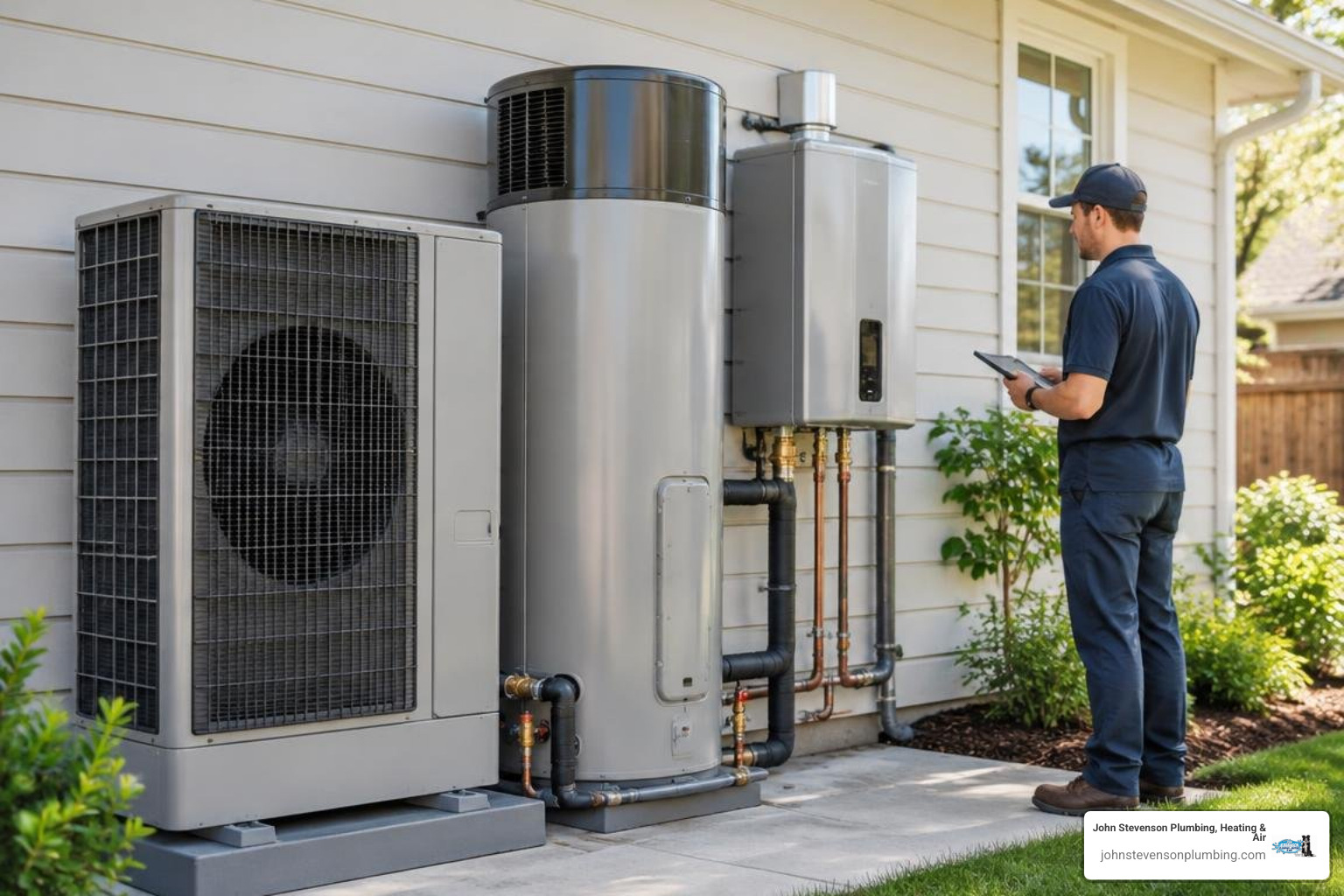
| Heat Pump Water Heater (HPWH) | 3.50–4.00+ Uniform Energy Factor | Ultra-low electrical draw | Up to 70% energy reduction vs standard electric |
Calculating Water Heater Repair vs New Unit Long Term Savings Across 10 Years
A 10-year-old gas water heater can lose 20% to 30% of its factory efficiency due to mineral accumulation on the tank bottom. This insulating sediment layer forces the burner to run longer and burn significantly more fuel just to heat the same volume of water.
When you choose a high-efficiency alternative, explore an in-depth guide to energy efficient water heater options to match heating capacity with your household demand. Modern heat pump water heaters pull ambient heat from surrounding air rather than generating thermal energy from scratch, keeping operational energy draw exceptionally low.
Maximizing 2026 Rebates, Tax Credits, and Utility Incentives
Local utility programs and regional electrification initiatives frequently offer rebates and incentives for energy-efficient upgrades. When planning a water heater installation in Carlsbad or surrounding communities, taking advantage of these programs significantly reduces your initial investment and accelerates your break-even timeline.
Hidden Costs of Delay: Tank Failure Risks and Operating Inefficiencies
Delaying replacement on an expired water heater introduces risks that extend well beyond higher monthly utility bills. To understand how to extend the life of your water heater, you must manage the two primary drivers of tank degradation: mineral scale and galvanic corrosion.
As hard water heats up, calcium and magnesium precipitate out of solution and settle at the base of the tank. Over several years, this build-up creates three distinct problems:
- Standby Thermal Loss: The burner must heat a dense layer of mineral stone before warming the water, dramatically lowering efficiency.
- Structural Metal Fatigue: Trapped heat beneath the sediment layer creates hotspots that warp and weaken the steel tank bottom.
- Catastrophic Rupture Risk: Once internal glass linings crack from thermal expansion and the sacrificial anode rod depletes, water attacks the outer steel shell.
A sudden tank rupture can release 40 to 80 gallons of scalding water within minutes, followed by an uninterrupted supply from your pressurized main line until someone shuts off the supply valve. The resulting water damage to flooring, drywall, and nearby living areas often requires extensive remediation.
Critical Warning Signs That Require Immediate Replacement
If you observe any of the following symptoms, schedule a professional assessment for water heater installation immediately:
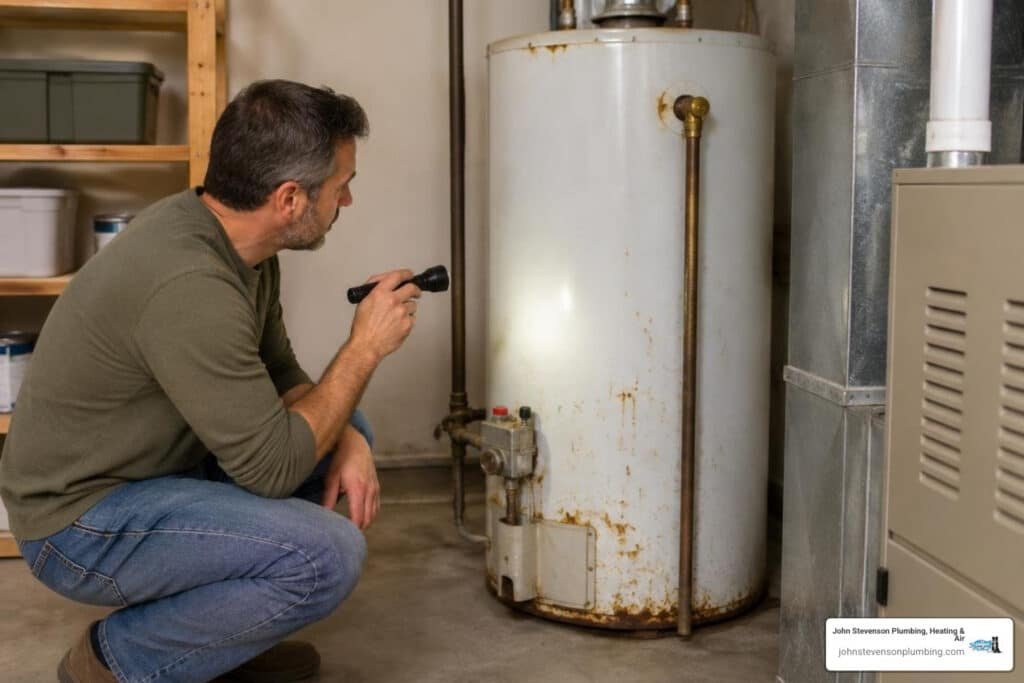
- Active Moisture at the Tank Base: Moisture around the base of the unit that does not originate from overhead fittings or the temperature-and-pressure (T&P) line indicates an internal vessel breach. Tank bodies cannot be patched.
- Discolored, Rust-Tinged Hot Water: Rust appearing exclusively on the hot water side indicates the inner tank lining has failed and steel oxidation is underway.
- Popping and Rumbling Sounds: Loud popping noises during a heating cycle indicate boiling water is trapped beneath heavy sediment.
- Recurring Pilot Outages or Burner Rollout: Blocked combustion chambers and warped combustion plates create venting and ignition issues.
Repairs That Are Still Worth Making on Younger Units
Not every equipment issue calls for a full replacement. On tanks under 8 years old with sound vessels, targeted water heater repair in Oceanside or your local community is often the most economical move:
- Thermocouple or Flame Sensor Cleaning/Replacement: Restores ignition reliability on gas systems.
- Thermostat and High-Limit Reset Swaps: Resolves electric temperature regulation problems.
- Upper or Lower Heating Element Replacement: Inexpensive fix for electric units that run lukewarm.
- T&P Valve and Drain Valve Replacements: Inexpensive brass component swaps that resolve external fitting leaks.
Frequently Asked Questions About Water Heater Economics
How much lower will my monthly utility bill be with a new heat pump water heater?
Upgrading from an older, degraded water heater to a high-efficiency heat pump model can reduce water heating energy consumption by up to 60% to 70%. Because heat pump systems carry Uniform Energy Factor (UEF) ratings above 3.5—compared to standard gas or electric units operating below 0.65 to 0.90—the reduction in monthly kilowatt-hour draw is noticeable on household utility bills.
Can a leaking water heater tank be repaired instead of replaced?
No. While leaks from external fittings, drain valves, or overhead copper pipes can be repaired, a leak originating from the steel tank body itself cannot be fixed. Water heaters operate under continuous internal pressure (typically 50 to 80 PSI). Once corrosion perforates the inner lining and outer vessel, replacement is required to maintain safety and prevent flooding.
Is a 10-year-old water heater worth fixing if the repair is minor?
A minor component fix on a sound 10-year-old tank can buy short-term time, but it should be paired with proactive replacement planning. At a decade of service, the risk of secondary failures and tank ruptures increases significantly. Directing repair funds toward a new, energy-efficient system generally delivers better value and protects against emergency damage.
Conclusion: Making the Right Financial Call for Your San Diego Home
Balancing immediate repair needs against long-term operating savings comes down to evaluating system age, current efficiency, and overall tank health. While minor repairs on young units preserve capital, continuing to patch an aging, sediment-laden water heater increases energy waste and exposes your home to water damage. Modern high-efficiency systems deliver steady utility savings that help offset your investment over time.
John Stevenson Plumbing, Heating & Air Conditioning provides full-service plumbing and HVAC solutions throughout Carlsbad, San Diego County, and Orange County. Whether you need thorough diagnostics, precision repairs, or high-efficiency installations, our certified technicians back every service call with transparent recommendations and our 5-Star Service Guarantee.
To find the most energy-efficient water heating solution for your home, schedule expert water heater services with our team today.