
The Main Household Culprits: What Causes Drains to Clog
Every drain in your home serves a different purpose, which means each fixture battles its own unique set of clog-forming materials. What causes drains to clog in a busy kitchen sink looks completely different under a microscope than what stops up a guest bathroom shower.
Understanding the nature of these materials—whether organic food waste, sticky hygiene residues, or non-flushable solids—is the first step toward keeping your plumbing lines flowing smoothly.
What Causes Drains to Clog in the Kitchen: Fats, Oils, and Starch
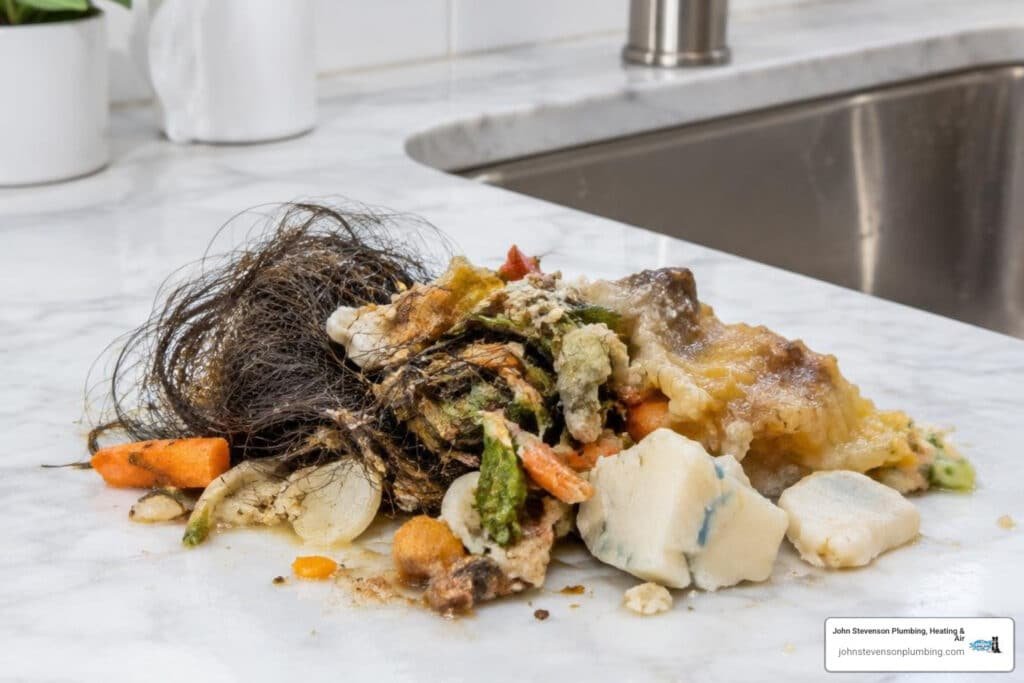
In the kitchen, the primary offender is what plumbers refer to as FOG: fats, oils, and grease. The Environmental Protection Agency (EPA) identifies fats, oils, and grease as a leading cause of sewer line blockages across the country.
When warm cooking grease, butter, or meat drippings are rinsed down the sink, they may flow easily through the garbage disposal while hot. However, as the grease travels further into your home’s cooler sub-floor piping, it rapidly chills, solidifies, and coats the interior walls of the pipe.
This sticky lining acts like flypaper for other kitchen waste:
- Coffee Grounds: Contrary to popular belief, coffee grounds do not sharpen disposal blades or clean drains; they clump together with grease to form dense, sediment-like dams.
- Fibrous Foods: Celery, corn husks, onion skins, and artichokes have tough strands that easily wrap around disposal impellers and catch on interior pipe joints.
- Starchy Expanders: Pasta, rice, and potato peels absorb residual water inside the pipe, swelling to several times their original size and choking off the drain line.
Over time, this trapped, decaying organic matter produces stubborn blockages and sour odors. If you are noticing persistent foul scents near your kitchen basin, understanding how to fix a kitchen sink smelling like rotten eggs can help you eliminate the decomposing organic matter before it creates a total line stoppage.
What Causes Drains to Clog in the Bathroom: Hair, Soap Scum, and Scale
Bathroom drains deal with a completely different chemical and physical environment. Here, the primary culprit is human and pet hair combined with traditional bar soap residue.
Hair strands possess tiny microscopic scales that easily snag on rough pipe joints, mechanical pop-up stoppers, and drain crossbars. Once a few strands catch, they create a natural web. According to plumbing industry flow data, a single 2-inch-diameter drain can accumulate enough hair mass to reduce water flow capacity by 50% or more before a homeowner notices standing water in the tub.
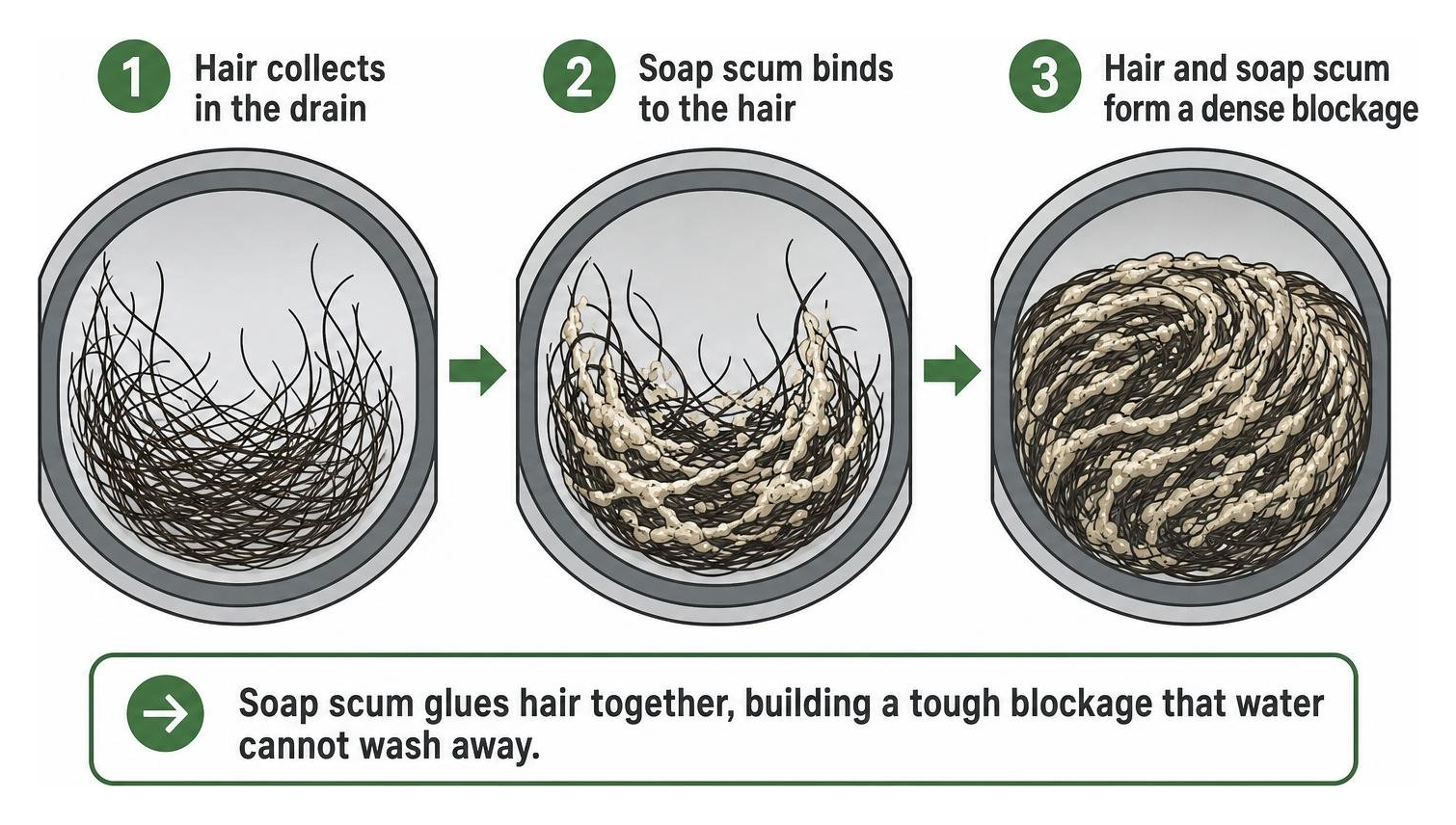
This hair web is bound together by soap scum. Traditional bar soaps contain animal or vegetable fatty acids that react with dissolved minerals in your water. In Southern California, the United States Geological Survey (USGS) classifies hard water as containing more than 120 milligrams per liter of dissolved calcium and magnesium.
When hard water minerals combine with soap fats, they precipitate out of the water as a sticky, insoluble curd. This curd glues the hair web together into a tough, rope-like biofilm that regular water flow cannot wash away. To protect your home’s fixtures from persistent scale formation, learning about the impact of hard water on residential plumbing systems can help you address the root mineral content in your supply.
Non-Flushable Items and Low-Flow Fixtures in Toilets
Toilets are engineered to move only two things: human waste and standard toilet paper. Modern toilet clogs are frequently caused by items marketed as “flushable.” In reality, wet wipes, baby wipes, and cleaning cloths do not disintegrate in water the way toilet paper does. They remain fully intact, catching on pipe offsets and creating immediate physical blockages.
Other common bathroom items that cause severe toilet and branch line blockages include:
- Feminine hygiene products (which expand rapidly when submerged in water)
- Paper towels and facial tissues (designed specifically to hold together when wet)
- Dental floss (which forms an unbreakable string mesh that snares paper and solids)
- Cotton swabs and cosmetic pads
Fixture age also plays a critical role. Early low-flow toilets manufactured in the 1990s were often associated with performance problems, such as weak flush velocity and smaller internal trapways that required a second flush to clear waste. When these older low-flow toilets are paired with thick multi-ply toilet paper or wipes, blockages occur regularly.
| Clog Factor | Kitchen Drains | Bathroom Drains |
|---|---|---|
| Primary Materials | Fats, oils, grease (FOG), coffee grounds, food scraps | Human/pet hair, dead skin cells, dental floss |
| Binding Agents | Congealed animal fat, cooking oils, expanding starches | Soap scum curd, hard water mineral scale |
| Common Symptoms | Gurgling sink, sour food odors, slow disposal clearing | Standing tub water, slow sink basin, moldy odors |
| Best Prevention | Scrape plates to trash, collect cooking oil in jars | Install fine mesh hair catchers, switch to liquid soap |
The Anatomy of Buildup: How Drain Clogs Form Over Time
A clogged drain almost never happens as the result of a single event. Instead, it is the final, visible stage of a slow, progressive narrowing process that takes weeks or months to develop inside your walls and floors.
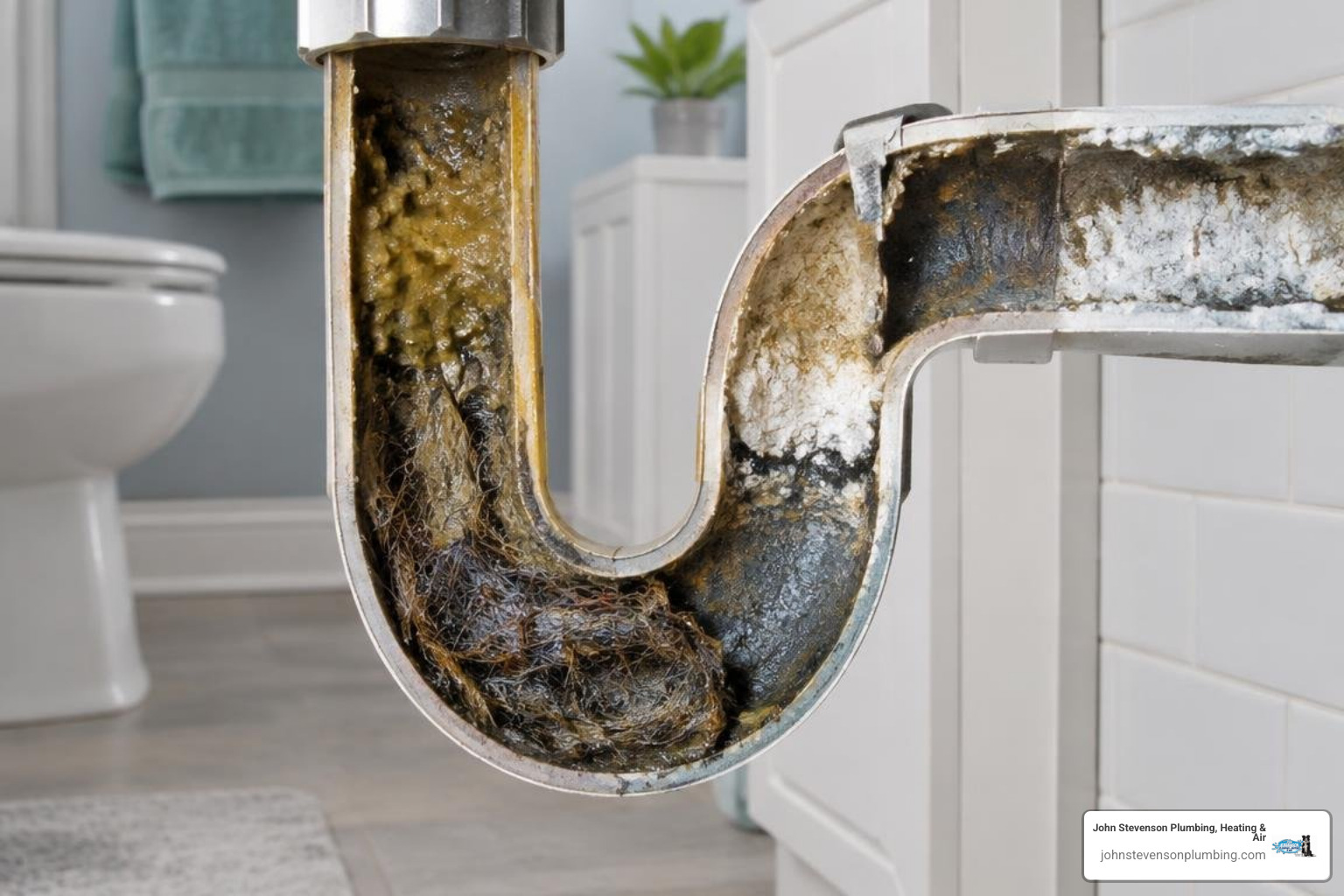
The Three Progressive Stages of Clog Formation
Drain blockages develop through a predictable three-stage cycle driven by internal pipe adhesion, particle cohesion, and fluid friction.
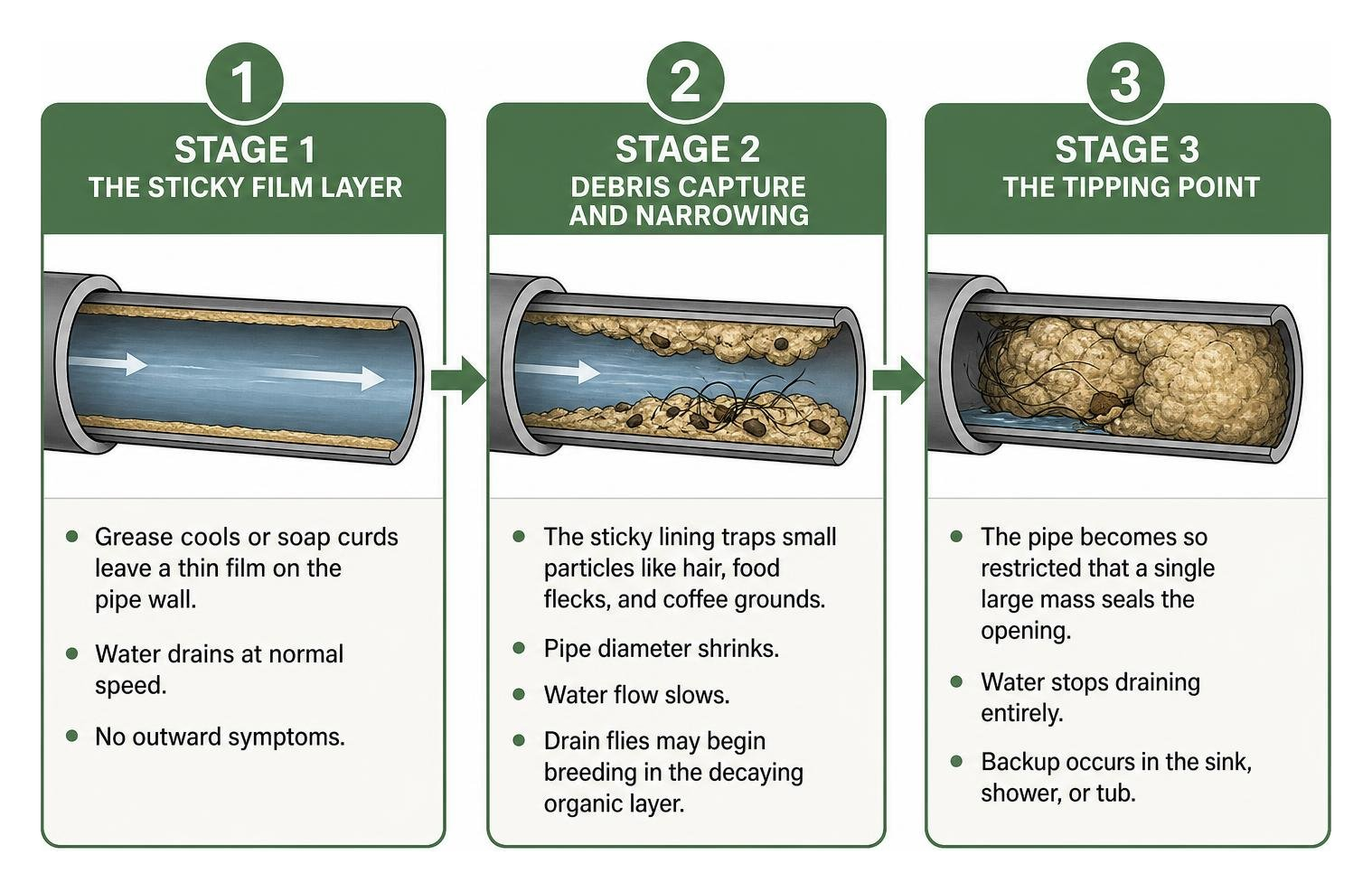
- Stage 1: The Sticky Film Layer: Hot water and liquid waste enter the pipe. As grease cools or soap curds precipitate against the cooler pipe surface, they leave behind a thin, microscopic film. At this stage, water drains at normal speed, and there are no outward symptoms.
- Stage 2: Debris Capture and Narrowing: The sticky lining creates physical catch points along the pipe walls. Small particles—such as loose hair, coffee grounds, and food flecks—become trapped in the film. As more material sticks, the effective interior diameter of the pipe shrinks. Water flow begins to slow noticeably, and small drain flies may begin breeding in the decaying organic layer. Reviewing how to evaluate your drains by identifying drain smell severity can help you catch this stage before total closure occurs.
- Stage 3: The Tipping Point: The interior diameter becomes so restricted that a single large mass—such as a clump of pasta or a wad of paper—completely seals the remaining opening. Water stops draining entirely, backing up into the sink, shower, or tub.
Pipe Age, Material, and Slope Deficiencies
How quickly a pipe reaches that final tipping point depends heavily on the pipe’s material and physical layout:
- Cast Iron and Galvanized Steel: Found in many older Southern California homes, these metal pipes naturally corrode over decades. Rust forms rough, jagged scales along the pipe walls, creating thousands of tiny hooks that grab hair and lint.
- PVC Piping: While smooth interior walls make plastic PVC highly resistant to buildup, PVC has low thermal tolerance. Pouring boiling liquids down PVC drains can soften the glue joints or warp thin-walled P-traps, creating low spots.
- Improper Pipe Slope: Gravity is the driving engine of residential drainage. The 2024 International Plumbing Code (IPC Section 704.1) requires horizontal drain pipes of 2 1/2 inches or smaller to maintain a uniform downward slope of at least 1/4 inch per foot.
When a horizontal pipe sags or lacks this proper pitch, wastewater loses its forward velocity. Water pools in these low spots, allowing heavy solids and grease to settle to the bottom rather than washing out to the municipal sewer. For homes with deteriorated piping that repeatedly catches debris, exploring whole-home repipe solutions for aging pipe systems provides a permanent, smooth-walled drainage foundation.
Deeper Line Obstructions: When Recurring Clogs Signal Structural Issues
When plunging or minor snaking clears a drain only for it to back up again two weeks later, the problem rarely lives inside the fixture itself. Instead, recurring clogs often point to systemic structural issues within your main building drain or underground sewer lateral.
Tree Root Infiltration and Pipe Shifting
The main sewer lateral connects your home’s plumbing system to the municipal sewer line under the street. Because warm wastewater carries moisture and nutrients, nearby tree and shrub roots naturally grow toward any tiny microscopic crack, offset joint, or loose seal in underground pipes.
Once root hairs enter a pipe joint, they expand rapidly inside the line, feeding on the effluent and forming dense, mop-like root masses. These roots catch toilet paper and solid waste, resulting in sudden, whole-house backups.
Ground movement and soil shifting can also cause pipe sections to shear, collapse, or create deep “bellies” that hold standing wastewater. When underground lines suffer physical damage, seeking professional sewer line repair options restores pipe integrity without guessing where the obstruction lies.
Blocked Plumbing Vent Stacks and Airflow Loss
Your drainage system relies on atmospheric air pressure to function. Every plumbing system includes vertical vent stacks that exit through your home’s roof, allowing air into the pipes as water rushes down them (similar to removing your finger from the top of a liquid-filled straw).
If a roof vent stack becomes blocked by leaves, bird nests, or debris:
- Wastewater moving down the drain creates a negative pressure vacuum behind it.
- The draining water fights this vacuum, causing sluggish drainage and loud gurgling noises from nearby sinks and toilets.
- The suction can pull the water seal out of your fixture P-traps, allowing toxic sewer gas odors to escape into your living spaces.
If wastewater begins rising simultaneously across multiple low fixtures, follow the steps on what to do during a sewer backup to prevent hazardous property contamination.
Safe Clearing vs. Costly Mistakes: DIY Drain-Clearing Pitfalls
When confronted with a slow drain, many homeowners reach for harsh commercial chemical drain openers. However, liquid chemical cleaners create significant long-term risks for your plumbing system.
Chemical openers rely on caustic chemicals like sodium hydroxide (lye) or concentrated sulfuric acid to generate intense chemical heat and dissolve blockages. This chemical reaction presents several hidden hazards:
- Thermal Deformation: The heat generated by caustic chemicals can easily soften, warp, or melt PVC drain pipes and loosen glued joints beneath your sinks.
- Corrosion Acceleration: In older homes with cast iron or galvanized lines, caustic chemicals eat away at oxidized metal pipe walls, turning a minor clog into an active sub-floor leak.
- Health and Safety Hazards: If a chemical opener fails to clear a blockage, your sink basin fills with standing caustic acid. This creates an extreme chemical burn hazard for anyone who later uses a plunger or mechanical auger.
- Boiling Water Limitations: While hot tap water is beneficial for regular flushing, pouring rolling boiling water directly down a drain can crack porcelain sink basins or warp thin plastic P-traps.
Rather than relying on harsh chemicals that risk damaging your plumbing infrastructure, you can review professional options by choosing between mechanical snaking and hydro jetting to clear blockages safely without pipe harm.
Proven Methods to Prevent Clogs and Keep Drains Clear
Preventing drain clogs comes down to establishing simple, consistent household habits that stop debris before it ever enters your plumbing system.
- Install Fine Mesh Strainers: Place removable stainless steel or silicone mesh catchers over every kitchen basin, bathroom sink, tub, and shower drain. Empty these catchers into the trash after each use.
- Practice the “Cool and Scrape” Grease Rule: Never pour liquid fats or pan drippings down the sink. Pour cooking grease into an old can or glass jar, allow it to solidify, and dispose of it directly in your household waste or green waste organics bin.
- Wipe Plates Before Washing: Use a dry paper towel to wipe greasy plates, skillets, and baking dishes before rinsing them in the sink.
- Maintain the “Three Ps” Rule for Toilets: Only flush pee, poop, and standard toilet paper. Keep a small trash can in every bathroom for wipes, dental floss, feminine products, and facial tissues.
- Flush with Hot Tap Water Weekly: Run hot tap water down kitchen and bathroom drains for 60 seconds once a week to help push soft soap and light grease films all the way out to the main line.
Adopting proactive steps to stop clogs before they start keeps your drains flowing freely and prevents sudden plumbing emergencies.
For heavily used lines or homes with persistent grease accumulation, scheduling professional hydro jetting maintenance scours the entire inner circumference of your pipes using high-pressure water, restoring the line to like-new capacity.
Frequently Asked Questions About Drain Clogs
Why does my drain keep clogging in the exact same spot?
When the same fixture clogs repeatedly, it almost always indicates an unresolved underlying defect. Clearing a drain with a small hand auger often merely punches a small hole through the center of a soft blockage rather than removing the entire mass. Within days, passing debris catches on the remaining residue.
Alternatively, the pipe may have a structural defect—such as an internal rust ridge, an improper connection fitting, a broken pipe joint, or a sagging belly. Scheduling a high-definition sewer camera inspection allows a technician to pinpoint the exact internal condition of the line and prescribe a lasting repair.
Does pouring hot water down the sink prevent grease clogs?
While hot water keeps grease liquid as it enters the sink drain, it is not a permanent solution for grease disposal. As the hot water carries the liquid grease deeper into your underground drainage lines, the water rapidly cools to the temperature of the surrounding soil.
The grease cools alongside it, solidifying against pipe walls several feet down the line where it is much harder to reach. The only reliable way to prevent grease clogs is to keep fats and oils out of your drains entirely.
What are the signs that a clog is in the main sewer line instead of a single fixture?
A single fixture clog affects only the fixture you are using (such as one slow bathroom sink). In contrast, a main sewer line blockage impacts multiple drains across your home simultaneously.
Key warning signs of a main sewer lateral problem include:
- Water backing up into your bathtub or shower when you flush a nearby toilet
- The toilet bubbling, gurgling, or losing water when your washing machine discharges
- Multiple fixtures draining slowly on the ground floor at the same time
- Sewage odors coming from floor drains or lower-level plumbing fixtures
When these multi-fixture symptoms appear, stop running water immediately and call for professional drain cleaning services to clear the shared line safely.
Conclusion
Understanding what causes drains to clog gives you the power to protect your home’s plumbing from unexpected backups and messy overflows. By catching small warning signs early—such as slow drainage, gurgling pipes, or foul odors—you can address minor residue buildups before they turn into full pipe blockages.
When everyday household habits are not enough to restore smooth drainage, our team at John Stevenson Plumbing, Heating & Air Conditioning is here to help. Serving Carlsbad, San Diego County, and Orange County, we back our work with our 5-Star Service Guarantee—providing thorough diagnostics, certified technicians, and 24-hour satisfaction check-ins on every job.
If your home is battling a stubborn or recurring blockage, schedule professional blocked drain service today to get your plumbing lines flowing smoothly again.