
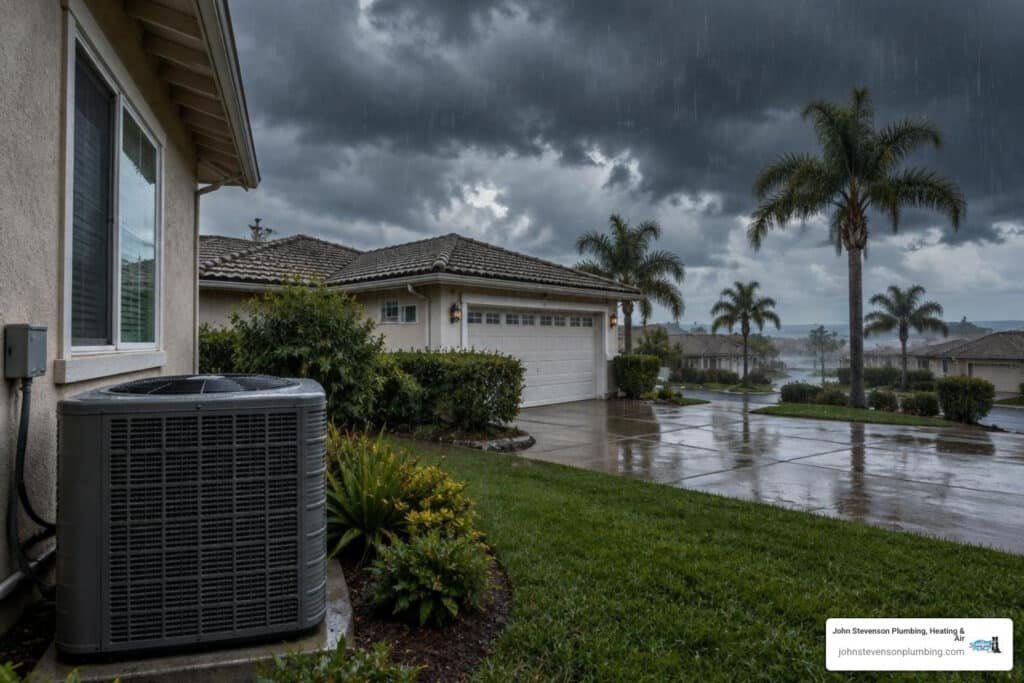
Should You Turn Off Your HVAC Before a Storm?
Yes. Before a severe storm or one likely to cause a power outage, turn your HVAC system off at the thermostat. This keeps the compressor from trying to run through brief outages and voltage dips. It does not fully disconnect the system or guarantee protection from lightning. In Carlsbad, CA, wind can also blow debris into the outdoor unit, while heavy rain can leave it standing in water. If you need HVAC repair in Carlsbad, CA, do not restart a damaged or flooded unit. Keep the heat on if shutting it off would make your home unsafe.
Explore HVAC services in Carlsbad or request emergency AC repair.
I’m John Stevenson, and I’ll walk you through what to do before and after a storm.
If your system may have storm damage, get emergency AC repair before turning it back on.
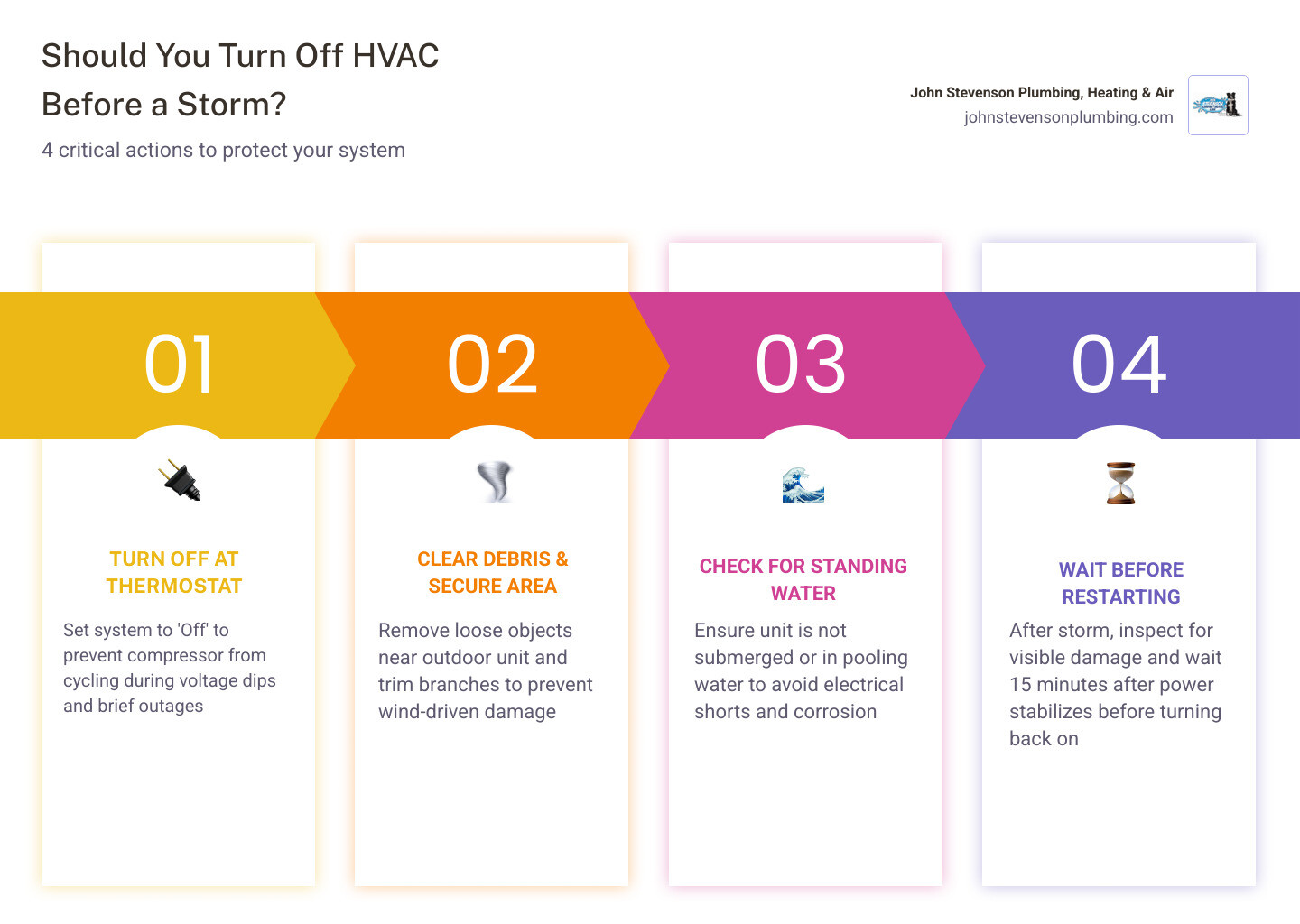
Should you turn off hvac before a storm vocab explained:
4 Critical Reasons to Power Down Your Climate Control System
When coastal weather turns severe across Southern California, atmospheric river conditions and localized windstorms bring erratic power fluctuations, coastal winds, and heavy rainfall. Your heating and cooling equipment contains intricate electrical assemblies, delicate aluminum fins, and high-pressure refrigerant lines designed for balanced operation—not extreme external shocks. Leaving equipment running during turbulent weather exposes it to severe mechanical strain and sudden electrical surges.
Understanding these hazards helps you safeguard your home comfort investment. When extreme weather threatens your neighborhood, reaching out to our team for San Diego HVAC services ensures your equipment remains protected year-round.
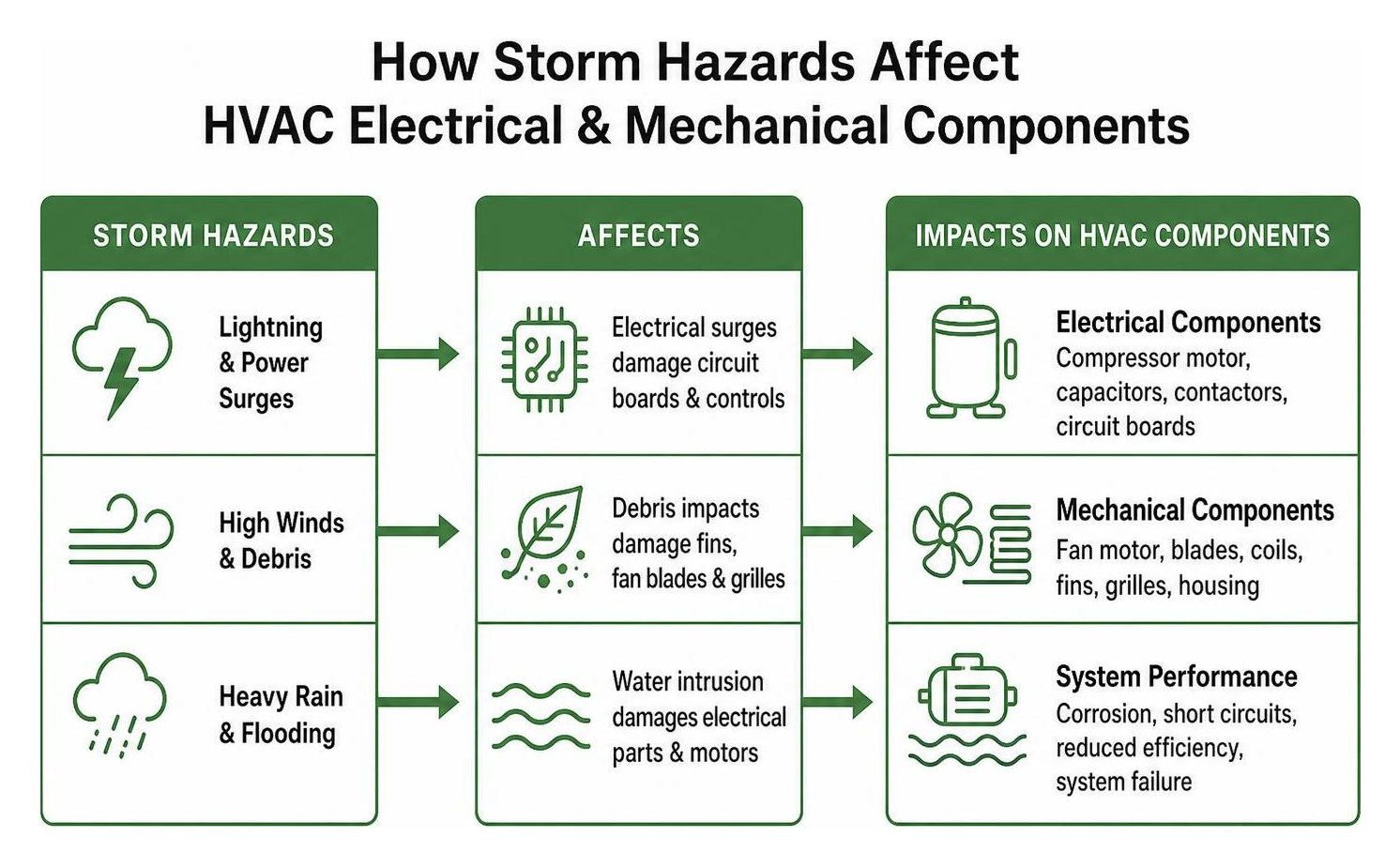
Preventing Compressor Burnout from Power Fluctuations and Lightning
During severe thunderstorms, lightning strikes and utility line disturbances create sudden voltage spikes that travel straight through neighborhood power grids. Your air conditioner’s compressor motor and sensitive circuit boards are exceptionally vulnerable to these electrical surges.
When utility power flickers, an active compressor tries to restart instantly against high head pressure. This creates massive mechanical resistance, rapidly overheating the motor windings and leading to dual-run capacitor failure or total compressor burnout. Powering down your unit prevents the system from attempting these damaging high-load restarts during brownouts and rapid power cycling. If your unit experiences power issues during turbulent weather, our team provides dependable HVAC in Carlsbad to diagnose and repair delicate electrical components.
Mitigating Severe Mechanical Damage from Flying Coastal Debris
Coastal squalls frequently generate gale-force gusts that turn loose yard items, palm fronds, and tree limbs into dangerous airborne projectiles. A 20-pound branch falling from 30 feet will crush condenser fins, bend fan blades, and damage refrigerant lines upon impact.
If your outdoor fan motor is spinning at full speed when debris penetrates the top grille, the spinning blades can shatter upon impact, slicing through condenser coils and venting expensive refrigerant into the atmosphere. Turning off your system ensures the fan blades remain stationary, drastically reducing the severity of impact damage if foreign objects enter the housing.
Protecting HVAC Components from Floodwater and Heavy Rain
Intense downpours can quickly overwhelm local soil absorption and residential drainage pathways, causing water accumulation around ground-level condenser pads. While outdoor units are engineered to handle normal rainfall, standing floodwater presents severe hazards:
- Submerged electrical components suffer immediate corrosion and short circuits.
- Silt, mud, and organic sediment pack between delicate aluminum fins, choking airflow.
- Contactor relays and start capacitors short out when exposed to standing water.
- High water levels can seep into sealed bearing housings, degrading crucial lubricants.
Keeping your unit off during deep water events prevents electrical current from flowing through wet components. Following severe weather, reviewing our post-storm home checklist helps you assess drainage pathways and prevent moisture-related failures before turning equipment back on.
Avoiding Escalating Damage from Premature System Restarts
Running a damaged system for even a few minutes can turn a minor repair into a complete system replacement. If an internal component—such as a fan motor bracket, run capacitor, or contactor—suffers damage during a storm, forcing the unit to run causes intense internal motor friction, electrical arcing, and catastrophic compressor seizure.
Switching off the system gives you the opportunity to inspect the outdoor equipment for physical misalignment or trapped debris before power is restored. Proactive habits prevent the cascade of failures often highlighted when examining problems caused by skipped HVAC maintenance.
Thermostat: How Should You Turn Off HVAC Before a Storm?
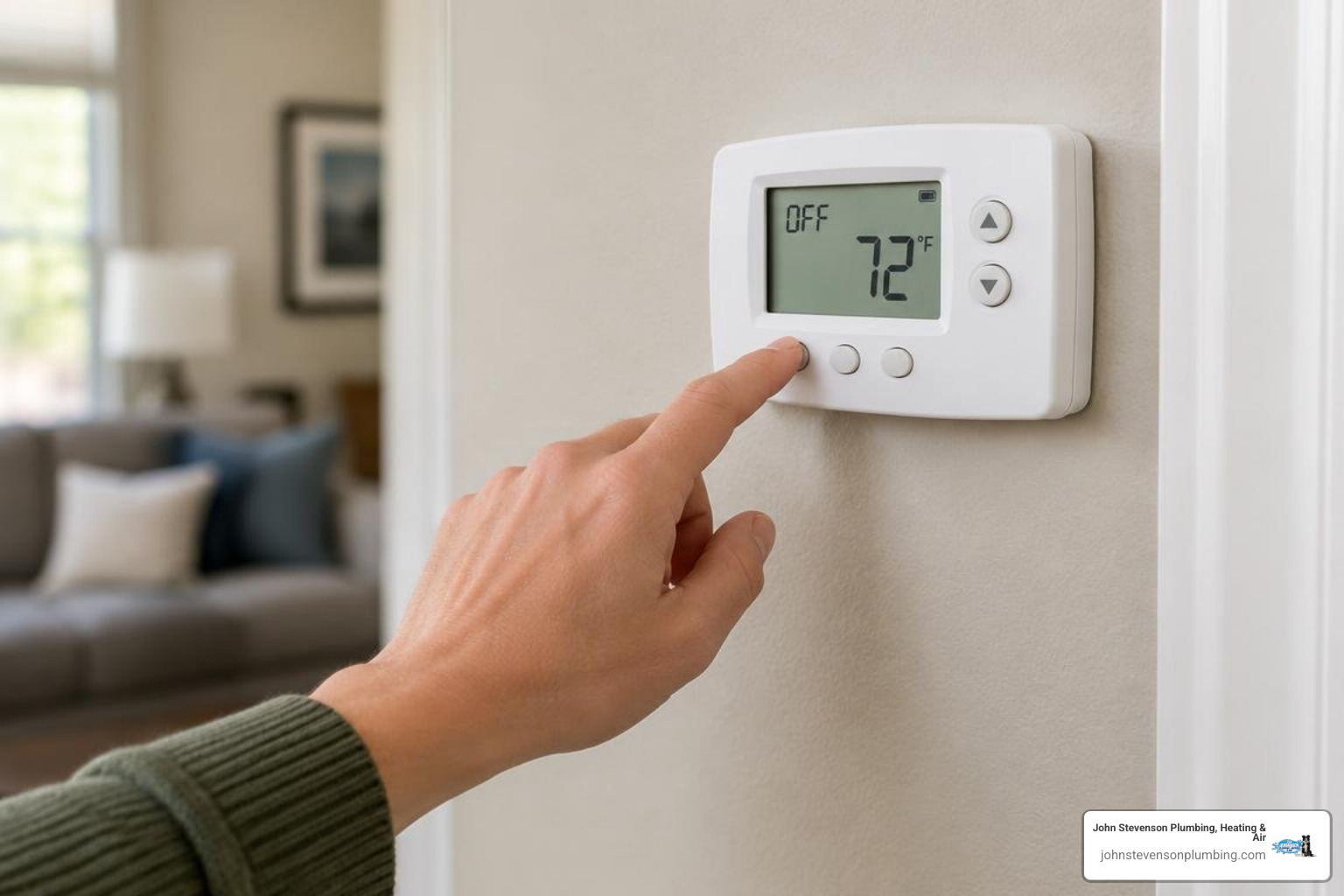
Many homeowners wonder about the best method for powering down their heating and cooling equipment before severe weather strikes. Setting your climate controls properly eliminates operational load and protects sensitive internal circuitry while keeping your home comfortable for as long as possible.
Thermostat Setting vs. Turning the System Off
Switching your thermostat to the “OFF” position halts active cooling or heating cycles, preventing the compressor, blower motor, and outdoor fan from running during brief grid interruptions. However, standby power still reaches the control board through low-voltage wiring.
While switching the unit off at the thermostat protects mechanical parts from rapid cycling and brownouts, it does not isolate the equipment completely from direct lightning strikes. For standard coastal storms with expected wind, rain, and minor power flickering, shutting down at the thermostat provides reliable protection against operational damage.
Step-by-Step Method: How to Turn Off HVAC at the Thermostat Before a Storm
To maintain comfortable indoor conditions while protecting your system, follow this practical pre-storm sequence:
- Implement a Pre-Cooling Strategy: Several hours before the storm arrives, lower your thermostat setpoint to create a 70-degree thermal buffer inside your home.
- Seal the Thermal Envelope: Close all windows, exterior doors, and window blinds to trap conditioned air inside.
- Switch to OFF: Once the storm is imminent, toggle your thermostat setting from “COOL” or “HEAT” directly to “OFF”.
- Turn the Fan Setting to AUTO or OFF: Ensure the continuous indoor fan is not running, keeping electrical contactors disengaged.
| Thermostat Action | Compressor Status | Fan Motor Status | Protection Level | Best Used For |
|---|---|---|---|---|
| Normal Operation (ON) | Cycles automatically | Runs as programmed | None | Clear weather conditions |
| Raised/Lowered Setpoint | Cycles under reduced load | Runs intermittently | Low | Mild temperature drops |
| System Switched to OFF | Completely stationary | Completely stationary | High (Operational) | Approaching thunderstorms and high winds |
How to Protect and Prep Your Outdoor Unit Before Weather Arrives
Preparing your outdoor condenser unit physically is just as crucial as managing its electrical controls. Creating a safe perimeter around your condenser prevents mechanical damage and maintains airflow reliability. Routine upkeep, such as scheduling regular annual HVAC maintenance, ensures your system remains sturdy and anchored before stormy seasons arrive.
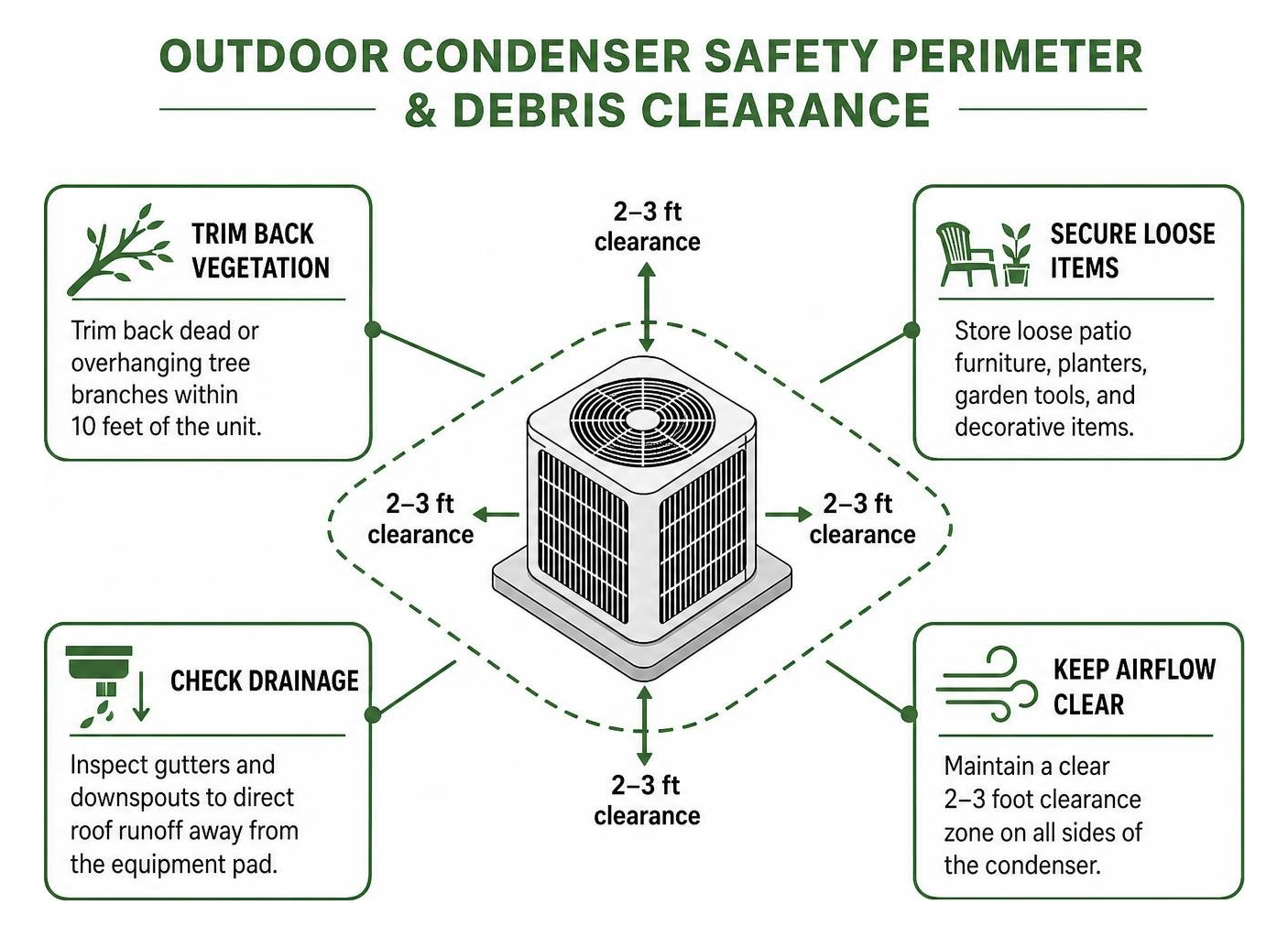
To protect your outdoor condenser:
- Maintain a clear 2-to-3-foot clearance zone on all sides of the cabinet.
- Trim back dead or overhanging tree branches within 10 feet of the unit.
- Store loose patio furniture, planters, garden tools, and decorative items in a garage or shed.
- Inspect gutters and downspouts to verify they direct roof runoff away from the equipment pad.
Physical Protection: Should You Turn Off HVAC Before a Storm and Cover the Unit?
Covering your outdoor unit with a durable, breathable cover or commercial tarp can shield delicate condenser fins from hail impact, flying gravel, and falling twigs. However, strict safety rules apply:
- Never cover an active system: An outdoor condenser must exhaust intense heat while running. Covering an operating unit traps heat, resulting in rapid motor burnout.
- Power down first: Only place a cover over the unit after switching the system off at the thermostat.
- Secure tightly: Fasten the cover with sturdy ratchet straps or bungee cords so coastal winds cannot whip the material against the cabinet.
- Allow ventilation: Leave the bottom few inches open to avoid trapping ground moisture, which accelerates internal component rust.
HVAC System Safeguards
Beyond physical barriers, modern system safeguards provide an extra layer of defense against unpredictable utility grid disturbances. Dual-run capacitors age over time, losing capacitance and making compressor starts harder during minor voltage dips. Having our technicians inspect aging capacitors and verify electrical connections ensures the entire assembly handles weather fluctuations smoothly.
For homeowners in nearby communities such as Oceanside, San Marcos, Encinitas, and Vista, maintaining clean coils and secure electrical wiring prevents unexpected breakdowns when storms pass.
Post-Storm HVAC Inspection and Safe Restart Protocol
Once severe weather subsides and utility power stabilizes, do not rush to flip your thermostat back on. Taking a few minutes to perform a methodical visual and operational inspection protects your equipment from severe hidden damage.
Follow this safe restart sequence:
- Remove Exterior Covers: Take off any tarps, canvas covers, or tie-down straps before restoring power.
- Clear Surrounding Debris: Remove fallen leaves, palm fronds, twigs, and mud accumulated around the condenser base.
- Inspect the Cabinet and Grille: Look for dented access panels, bent fan blades, or crushed coil fins.
- Check for Standing Water: Ensure floodwater has fully receded below the base pan of the outdoor unit.
- Inspect Flue and Exhaust Vents: For heating systems, confirm that outdoor exhaust flues and intake pipes are free from wind-blown debris or blockages.
- Restore Power at the Thermostat: Switch your thermostat back to “COOL” or “HEAT” and set your desired temperature.
- Monitor the First Cycle: Listen closely for abnormal rattling, buzzing, grinding sounds, or burning odors.
If your unit trips the circuit breaker immediately or emits unusual noises, turn the thermostat back off right away and schedule a professional HVAC maintenance inspection to resolve internal electrical or mechanical faults safely.
Frequently Asked Questions About Storm Preparedness for HVAC Units
How soon after a storm can you safely turn your HVAC system back on?
You can safely restart your system approximately 15 to 20 minutes after stable utility power has been restored, provided your visual inspection reveals no standing water, structural damage, or trapped debris. This brief waiting period allows the regional power grid to stabilize and balance line voltage before your compressor engages.
What other household appliances should be turned off or unplugged during a storm?
Major home appliances and sensitive electronics should also be safeguarded against storm-related power spikes. Consider unplugging:
- Washing machines and electric clothes dryers
- Desktop computers, monitors, and network routers
- Smart televisions and high-end audio receivers
- Microwave ovens and countertop cooking appliances
Plugging smaller electronic items into individual surge suppression strips provides localized defense while your primary systems remain off.
Is raising the thermostat temperature enough to protect the AC unit?
Raising the setpoint reduces the frequency of cooling cycles, but it does not protect the system if a brownout or power flicker occurs while the unit happens to be running. Switching the thermostat directly to “OFF” is the safest approach because it guarantees the compressor and fan motors will not attempt to cycle during unstable electrical conditions.
Conclusion
Taking proactive steps before severe weather reaches North County protects your heating and cooling equipment from expensive electrical burnout, fan damage, and flood-related corrosion. Simple measures—such as pre-cooling your home, switching the system off at the thermostat, and clearing away loose yard items—ensure your climate control system resumes normal operation smoothly once the skies clear.
At John Stevenson Plumbing, Heating & Air Conditioning, our licensed and certified technicians are committed to keeping your home safe and comfortable through every season. Backed by our 5-Star Service Guarantee, thorough diagnostics, and 24-hour satisfaction check-ins, we deliver dependable heating, cooling, and plumbing solutions tailored to your home.
Whether you need pre-season system maintenance, emergency repairs, or expert diagnostics following severe coastal weather, turn to our team for trusted Carlsbad HVAC and plumbing services today.