
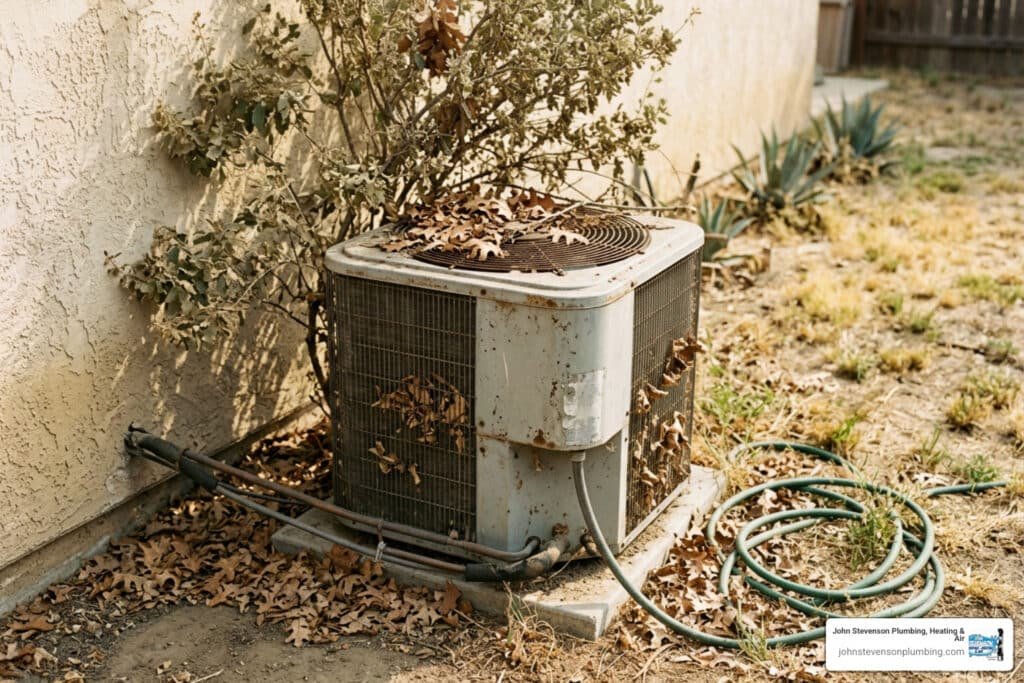
Why Skipping HVAC Maintenance Is a Costly Mistake for Carlsbad Homeowners
What happens if you skip HVAC maintenance is a question most homeowners only ask after something has already gone wrong — usually on the hottest afternoon in July or the coldest night of the year. Here’s a quick look at what you’re risking:
- Higher energy bills — neglected systems can use 10–25% more energy
- More frequent breakdowns — especially during peak summer and winter demand
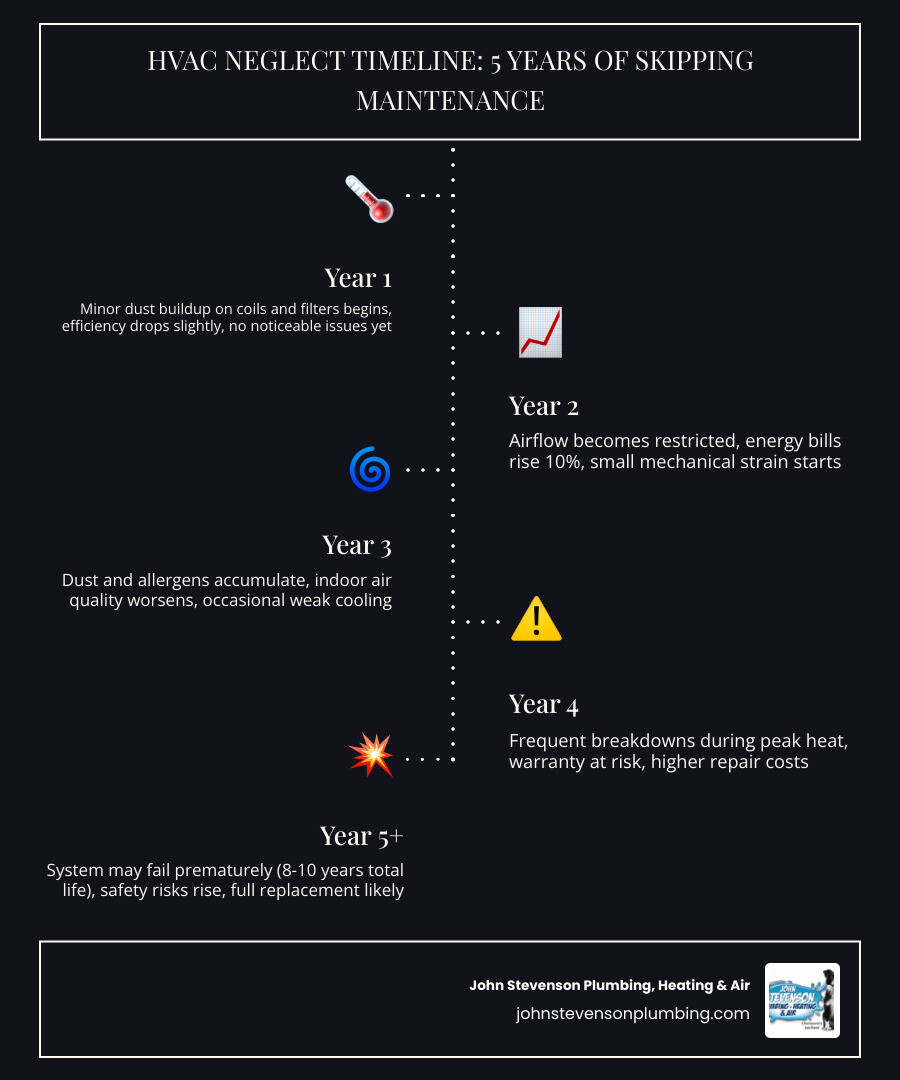
- Shorter system lifespan — poorly maintained systems can fail in 8–10 years instead of lasting 15–20
- Voided manufacturer warranty — most warranties require documented annual maintenance
- Poor indoor air quality — dirty filters and coils circulate dust, allergens, and mold
- Safety hazards — including carbon monoxide risks from cracked heat exchangers
- Uneven temperatures and comfort problems — weak airflow, hot spots, and short cycling
Most HVAC systems don’t fail overnight. They decline slowly and quietly — losing a little efficiency each season, working a little harder each month — until one day they stop entirely, often at the worst possible moment. In Carlsbad and across San Diego County, where air conditioning runs hard through long, warm seasons, that gradual decline adds up faster than most homeowners expect.
The good news is that all of these problems are largely preventable with routine care. The sections below break down exactly what goes wrong, how fast it happens, and what you can do about it.
Easy what happens if you skip hvac maintenance glossary:
- annual hvac maintenance is it worth it
- how often should you service your hvac system
- what does an hvac maintenance visit include
What Happens If You Skip HVAC Maintenance?
When you decide to put off your heating and cooling service, nothing dramatic happens the next day. Your home stays cool, the vents still blow air, and your thermostat looks normal. Because there is no immediate penalty, it is incredibly easy to relegate maintenance to the bottom of your home improvement to-do list.
However, beneath the surface of your indoor and outdoor units, a quiet decline begins. Without regular cleaning, calibration, and lubrication, your system starts working against physical resistance. Dust accumulation acts like a thermal blanket on your air conditioner’s evaporator coils and your furnace’s heat exchanger. This layer of grime blocks heat transfer, forcing the system to run longer cycles to reach your desired indoor temperature.
As these run cycles grow longer, mechanical strain multiplies. Motors run hotter, electrical connections begin to loosen from constant vibration, and moving parts lose their protective lubrication. What starts as a tiny layer of dust on a blower wheel eventually compounds into worn-out bearings, strained compressors, and fried electrical contacts.
To understand the full scope of what a professional technician does to prevent this slow decay, take a look at A Comprehensive Guide to What Does an HVAC Maintenance Visit Include.
The 7 Costly Problems of Neglecting Your Heating and Cooling
Skipping routine service forces your system to transition from a model of preventive care to reactive crisis management. Instead of a technician catching a loose wire or a slightly low refrigerant charge during a routine visit, these minor issues grow until they trigger a system-wide failure.
This transition is especially dangerous during periods of extreme weather. In Southern California, our coastal summer heatwaves place immense thermal stress on air conditioning systems. When the outdoor temperature spikes, an unmaintained system that was already struggling under the weight of dirty coils and restricted airflow is pushed past its breaking point.
Let’s explore the seven specific, costly consequences that happen when maintenance is ignored.
1. Skyrocketing Energy Bills and Efficiency Loss
The most immediate financial impact of skipped maintenance doesn’t come from a repair bill—it shows up quietly on your monthly utility statement.
According to industry data, a neglected HVAC system can lose up to 5% of its operating efficiency every single year it goes without service. Over time, this cumulative efficiency loss translates directly into 10% to 25% higher energy bills.
Why does this happen? The primary culprit is airflow restriction. When air filters are left unchanged, they become choked with dust, pet dander, and household debris. This forces your blower motor to consume significantly more electricity just to push air through the clogged barrier.
Furthermore, dirty outdoor condenser coils prevent the system from releasing the heat it absorbs from inside your home. The compressor must work double-time to achieve the same cooling effect, drawing massive amounts of power in the process. For a deeper look into how routine visits keep these utility spikes at bay, read Everything You Need to Know About Annual HVAC Maintenance.
2. Frequent and Expensive Emergency Breakdowns
There is a direct correlation between skipped maintenance and emergency service calls. In fact, industry statistics show that regular HVAC maintenance can reduce the risk of unexpected breakdowns by up to 80% during peak seasons.
Without annual check-ups, small component wear-and-tear quickly spirals. For example:
- A dirty flame sensor on your furnace will eventually fail to detect a flame, causing the system to shut down completely for safety.
- A slightly worn capacitor (the component that jumpstarts your motors) will eventually blow, leaving you without cool air in the middle of a hot summer afternoon.
- Clogged condensate drain lines will back up, triggering safety float switches that shut down your system (or worse, cause water damage to your ceiling).
These failures rarely happen on mild spring or fall days; they almost always occur during peak summer heat when your system is running continuously and local technicians are booking days or weeks in advance. To protect your home before the heat sets in, check out The Secret to a Stress-Free Summer is a Spring HVAC Tune-Up.
3. Severely Shortened System Lifespan
An HVAC system is a major financial investment for any homeowner. Under ideal conditions with regular professional care, a high-quality air conditioner or furnace is designed to last between 15 and 20 years.
However, when maintenance is neglected, that life expectancy is slashed nearly in half, with many systems suffering catastrophic mechanical failure within just 8 to 10 years.
Think of your HVAC system like a car. If you never change the oil, replace the filters, or check the fluids, the engine will eventually seize long before its time. In an air conditioner, the “engine” is the compressor. When forced to run constantly due to poor airflow or dirty coils, the compressor overheats and eventually burns out. Replacing a compressor is one of the most expensive repairs in the industry—often leading homeowners to replace the entire outdoor unit prematurely.
To learn more about what to expect as your system ages, read Will Your AC Survive the Decade: Average Lifespans Explained.
4. Voided Manufacturer Warranties
Many homeowners assume that if their relatively new HVAC system breaks down, the manufacturer’s warranty will cover the cost of replacement parts.
However, there is a major catch: almost all HVAC manufacturers require documented annual professional maintenance to keep their warranties valid.
If a major component like a compressor or heat exchanger fails in year five, the manufacturer will likely request service records proving the system was maintained annually by a licensed professional. If you cannot provide these records because you skipped maintenance, your claim can be denied. This turns a potentially covered repair into an expensive out-of-pocket disaster.
5. Compromised Indoor Air Quality and Health Risks
Your HVAC system does more than just regulate temperature; it is the primary filtration and ventilation system for the air your family breathes.
When maintenance is skipped, your ductwork and units become breeding grounds for indoor air pollutants. Dust, pollen, pet dander, and outdoor allergens accumulate inside the cabinet. If your air filter is full, the air bypasses the filter entirely, distributing these pollutants straight into your living spaces.
Additionally, our coastal climate in Southern California introduces humidity challenges. If your AC’s condensate drain line becomes clogged with dust and organic matter, it creates a dark, damp environment inside your indoor unit. This can lead to mold and mildew growth, which is then blown through your vents, triggering asthma, allergies, and respiratory issues for your family.
6. Safety Hazards Like Carbon Monoxide Leaks
While cooling systems carry electrical and refrigerant risks, heating systems present serious safety concerns if neglected.
If you have a gas furnace, it relies on a component called a heat exchanger to safely separate toxic combustion byproducts (like carbon monoxide) from the breathable air circulating through your home. Over time, soot buildup, clogged burners, and restricted airflow can cause the heat exchanger to overheat, expand, and eventually crack.
A cracked heat exchanger can allow carbon monoxide—an odorless, colorless, and potentially lethal gas—to leak directly into your home’s air supply. During a routine heating maintenance visit, technicians thoroughly inspect the heat exchanger for microscopic cracks, test safety limit switches, and calibrate burners to ensure safe, clean combustion.
7. Uneven Temperatures and Poor Home Comfort
Have you noticed that your upstairs bedroom is stifling hot while your downstairs living room feels like an icebox? Or perhaps certain rooms feel drafty and humid while others feel dry?
Skipping maintenance directly compromises your home comfort. Dust buildup on the blower fan blades reduces the volume of air your system can push through your ductwork, leading to weak airflow from your registers.
Furthermore, dirty sensors can cause “short cycling,” a phenomenon where the system turns on and off rapidly without ever completing a full cooling or heating cycle. This prevents the system from properly dehumidifying your home, leaving you with cold, clammy indoor air and frustrating hot and cold spots throughout your house.
Recognizing the Warning Signs of Overdue Maintenance
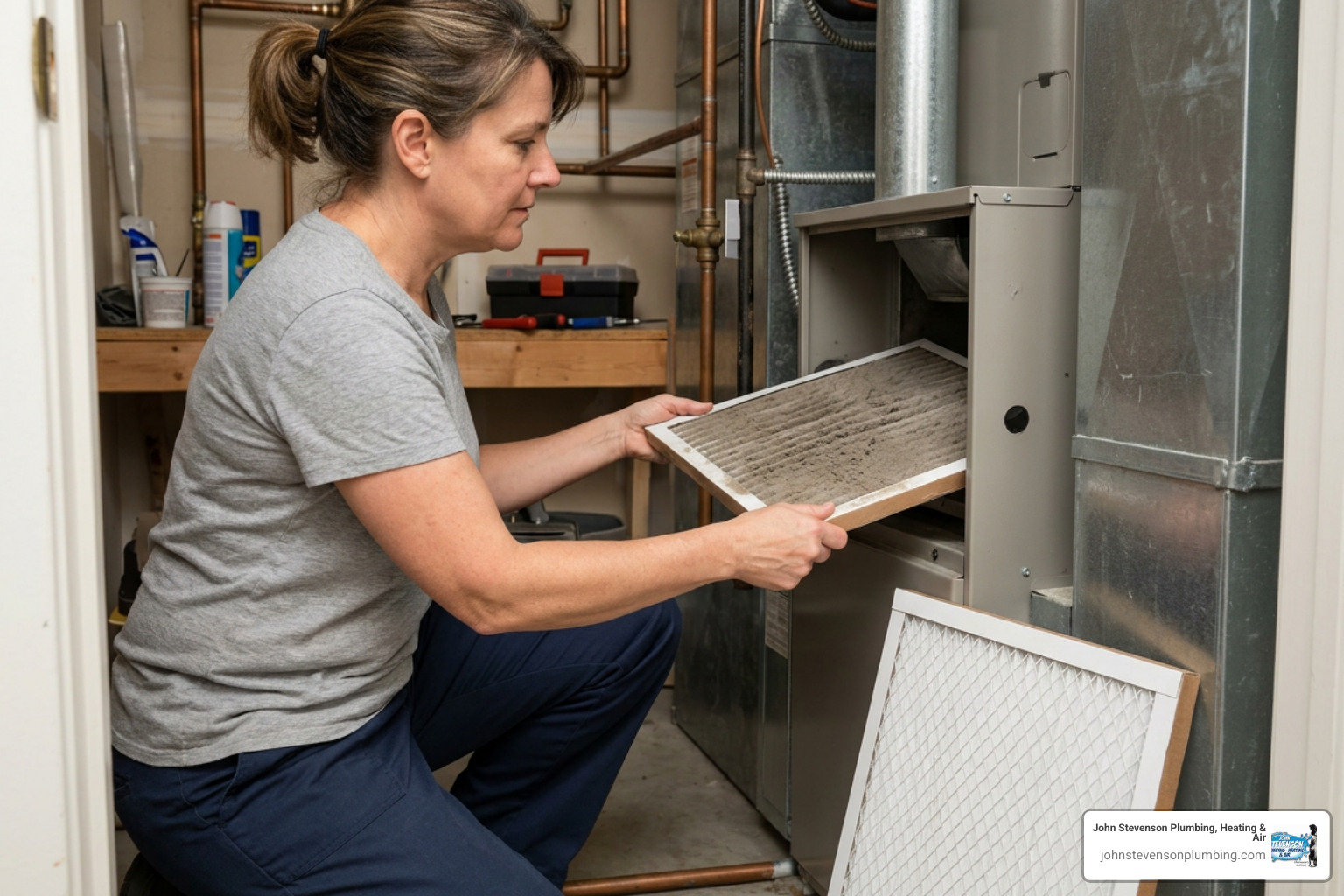
If you haven’t had your system serviced recently, it may already be sending out distress signals. Knowing how to spot these early warning signs can help you schedule a professional visit before a total system failure occurs.
Keep an eye and an ear out for these common red flags:
- Strange Noises: Squealing, banging, rattling, or buzzing sounds often point to loose belts, failing motors, or loose mechanical components.
- Weak Airflow: If you can barely feel air coming out of your vents, your blower motor may be struggling or your coils may be iced over.
- Unexplained Utility Spikes: If your energy bills are significantly higher than they were during the same month last year, your system is losing efficiency.
- Frequent Cycling: If your system turns on and off every few minutes, it is likely overheating or suffering from sensor drift.
To help you distinguish between normal operation and signs of neglect, refer to this comparison table:
| System Component | Normal, Maintained Operation | Signs of Neglect & Overdue Maintenance |
|---|---|---|
| Airflow | Strong, consistent stream of clean air | Weak, dusty airflow; whistling or rattling vents |
| System Cycle | Smooth, steady cycles (approx. 15-20 mins) | Rapid on/off cycles (short cycling) or running non-stop |
| Operating Sounds | Quiet, predictable hum of the fan and compressor | Loud squealing, grinding, metal-on-metal scraping, or thumping |
| Indoor Air Quality | Fresh, neutral-smelling air with minimal dust | Musty or dusty odors; rapid dust buildup on furniture |
| Energy Consumption | Stable utility bills relative to outdoor weather | Steadily rising energy bills despite similar usage patterns |
If your system is exhibiting multiple signs of neglect, it is important to evaluate whether a tune-up can save it or if it is time to look at replacement options. For more information on identifying these critical stages, read Signs Your AC System is Reaching End of Life: 7 Key Indicators.
Frequently Asked Questions About HVAC Neglect
Is it okay to skip HVAC maintenance if my system is new?
Even brand-new systems require routine maintenance. In fact, skipping maintenance on a new system is one of the quickest ways to void your manufacturer’s warranty. Furthermore, early professional tune-ups ensure your system was calibrated correctly from the start, preventing minor installation settlement issues from turning into premature wear.
What happens if you skip HVAC maintenance for more than a year?
If you skip maintenance for more than a year, your system will likely experience a 10% to 15% drop in operating efficiency, a significant buildup of dust on internal components, and an increased risk of mid-season breakdowns. Over time, this neglect compounds, leading to the “domino effect” where one failing part causes multiple other components to break down. To understand how often your system truly needs professional attention, read Twice a Year or Once a Decade: How Often Your HVAC Needs Love.
Is skipping maintenance ever a viable cost-saving strategy?
In the short term, it might feel like you are saving money by skipping a seasonal service visit. However, this is a classic “cost-shifting” mistake. The small amount saved by skipping maintenance is quickly wiped out by higher monthly energy bills, expensive emergency repair fees, and the massive expense of replacing your system 5 to 10 years earlier than necessary. For a detailed breakdown of the long-term math, check out Doing the Math on Old AC Repair vs Buying a New System.
Conclusion
Skipping HVAC maintenance is a gamble where the odds are heavily stacked against you. While it may save you a little time today, it almost always leads to higher energy bills, uncomfortable indoor temperatures, unexpected emergency breakdowns, and a system that fails years before its time.
At John Stevenson Plumbing, Heating & Air Conditioning, we have spent years helping homeowners across Carlsbad, Oceanside, Encinitas, Irvine, Lake Forest, and throughout San Diego and Orange Counties keep their homes comfortable and safe. We believe in making home maintenance completely stress-free, which is why we back all of our work with our 5-Star Service Guarantee. When you partner with us, you get thorough diagnostics, upfront pricing, highly trained certified technicians, and a 24-hour satisfaction check-in to ensure the job was done right.
Don’t wait for your system to stop working on the hottest day of the year. Schedule professional HVAC maintenance today with the team at John Stevenson Plumbing, Heating & Air Conditioning and give your family the reliable comfort and peace of mind they deserve!